Natural Spider Repellents: What Works and What Doesn’t
Learn which natural spider repellents have evidence, why peppermint is no guarantee, and how to block entry, remove webs, and protect pets.
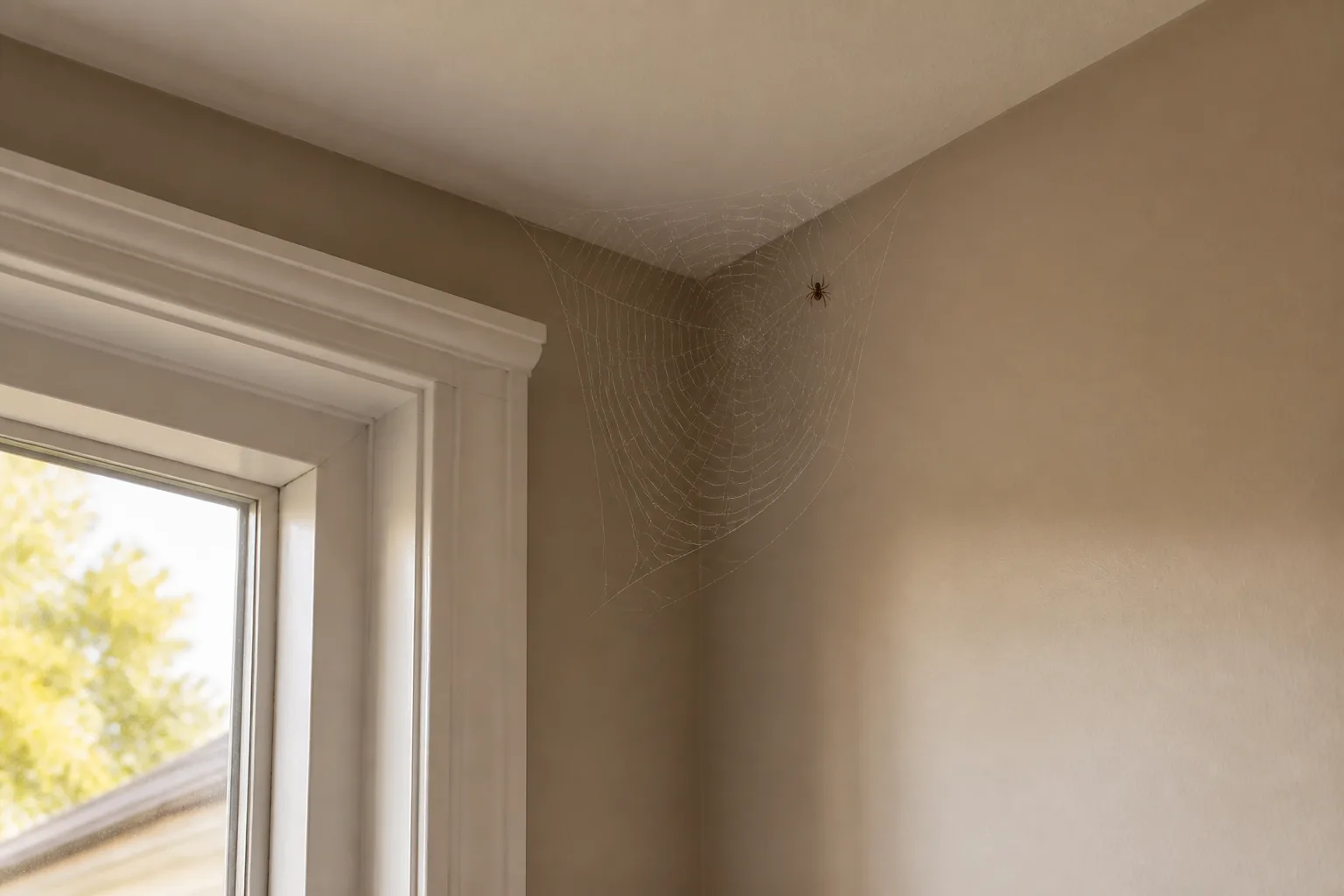
A spider in a bathtub or a web across a ceiling corner usually calls for a quick, targeted response, not a house-wide spray. For repeat sightings, the most dependable low-chemical plan is to remove webs and egg sacs, close openings, reduce sheltered hiding places, and limit the insects spiders hunt. Peppermint oil and chestnuts have shown avoidance effects in controlled studies on some species, but neither is a proven barrier for every spider or home.
If you want to act right now, cover an ordinary spider with a clear jar, slide stiff paper underneath, and carry it outside; if you would rather not approach it, vacuum it up and empty the canister or bag outdoors. Then note where it appeared. A spider sitting in an old web, one wandering across an open room, and several appearing near the same window point to different causes, so the next step should match the pattern.
The short answer: exclusion beats repellent sprays
No natural spider repellent reliably makes an entire home spider-free. University extension guidance instead recommends an integrated approach: remove webs and hiding places, reduce prey insects, use screens and seals to block entry, and capture individual spiders when needed. Those measures change the conditions that let spiders settle or wander indoors, so they continue helping after a scent has faded. The University of Minnesota Extension’s spider guidance notes that reducing spider numbers is possible, while making a home completely spider-free is neither practical nor necessary.
Start with the room where you saw activity, then work outward. If the spider was in an undisturbed corner with a dusty web, clean that web and check adjacent storage. If it was on the floor beside an exterior door, inspect the threshold, sweep, and door frame. If small flying insects gather at a window after dark, address the light and screen as well as the spider.
A spray that smells strong to people can still be a weak control method. Spiders vary in their behavior and sensory responses; a repellent may make a particular surface less appealing to one species in a laboratory choice test without stopping spiders from entering through another route. Physical exclusion and regular removal remain the practical foundation.
Decide whether to remove, release, or investigate
A single spider that wandered into a sink or across a room is usually an individual visitor, not proof of an infestation. Some web-building species live and reproduce indoors in quiet corners; hunting spiders may roam indoors accidentally, and spiders can also arrive in boxes, firewood, or stored belongings. The UC Statewide Integrated Pest Management Program explains that spiders may enter through openings or hitchhike on items, while house spiders may also have established indoor hiding places.
Observe from a comfortable distance before disturbing a web. A spider that stays in an irregular web under a shelf is likely using that corner to catch prey; one that keeps appearing at floor level may be moving through the building or coming from a basement, garage, or gap. Activity in one or two locations calls for focused cleaning and sealing rather than treatment of every room.
You can tolerate a web in an out-of-the-way area if you are comfortable with it. Spiders eat other arthropods, and most spiders encountered in homes are not aggressive; the Royal Horticultural Society’s spider fact sheet notes that they help limit insect populations and very rarely bite. If webs bother you, remove them routinely. If the spider’s appearance raises a genuine concern, avoid handling it and get a clear photo from a safe distance for identification through a local Extension service or pest professional.
Remove webs, spiders, and egg sacs safely
Cleaning is one of the most useful controls because it removes the spider, its retreat, captured prey, and sometimes egg sacs in a single pass. A vacuum with a hose and crevice attachment reaches high corners and behind furniture better than a quick sweep, but a broom or long duster works when you can see the whole web and the surfaces around it. The UMN Extension recommends removing webbing and egg sacs especially around windows, corners, and quiet storage areas.

Vacuum or sweep the web and its attachments
Move slowly and look at the web’s edges before you pull it down. Spider egg sacs can look like small round or oval silk bundles attached to a web, tucked under a shelf, or hidden in a corner; do not grab one with bare fingers just because it looks dusty. If there are several sacs, a suspected medically significant spider, or a nest in a hard-to-reach void, step back and ask a pest professional to inspect it rather than reaching behind stored items.
For a routine cleanup, use the hose to remove the spider, web, and sac together. Immediately empty a bagless vacuum outside into a sealed rubbish bag, or remove and seal a disposable vacuum bag. This extra step avoids leaving live insects, spiderlings, or web debris in a warm indoor vacuum; use the cleaner’s instructions for safe disposal and do not open the canister over an indoor bin.
Contain debris and avoid blind reaching
Wear gloves when moving boxes or cleaning garages, basements, sheds, and other dark storage zones. Keep your hands outside places you cannot see, such as inside folded tarps, shoes, cardboard boxes, and piled firewood. Shake out shoes and gloves that have been stored unused, and move objects with a tool or from the edges when the space may shelter spiders.
A jar-and-card method is a simple option for a visible, ordinary spider on a hard surface. Place the jar over it, slide stiff paper beneath the mouth, keep the paper pressed to the rim while lifting the jar, and release it outdoors away from the door. A long-handled catch tool can give you more distance if approaching a spider causes panic. Do not try to capture a spider by hand, pin it against the wall, or use this method when you suspect a dangerous species.
Close the routes spiders actually use
Spiders can squeeze through openings around doors, windows, foundations, utility penetrations, and vents; they may also arrive indoors in stored materials. Seal obvious access points and keep screens in good repair. A screen does double duty because it excludes some flying insects that spiders hunt as well as preventing spider entry. UC IPM lists sealing cracks and maintaining screens as core prevention measures.
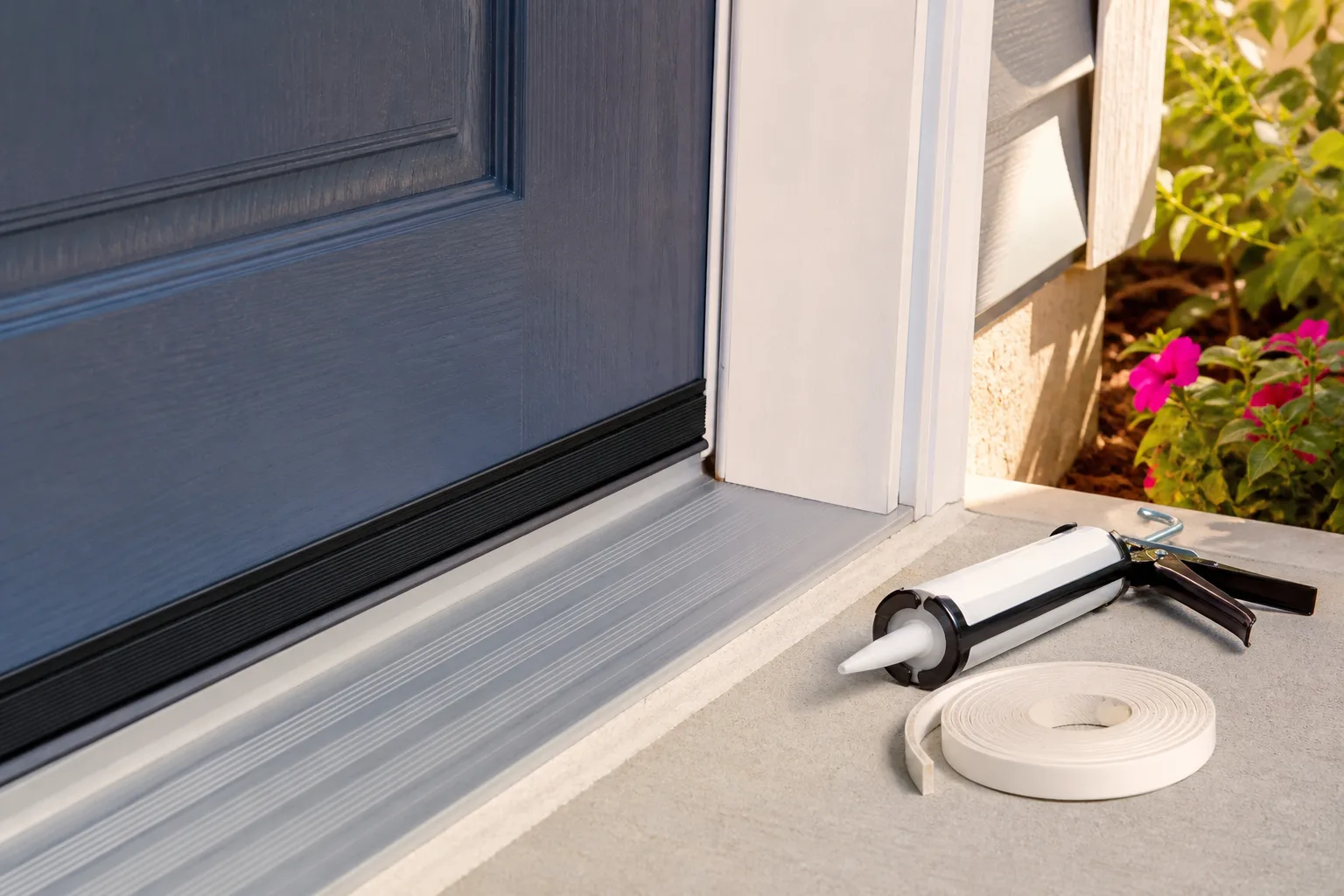
Repair screens, sweeps, and weather stripping
Inspect window screens for tears, loose spline, bent frames, and gaps where the frame meets the window. Repair a small hole with a screen patch or replace the panel if the mesh is loose over a larger area. Screen doors should close flush and latch without leaving a corner gap, especially during warm months when doors stay open.
At exterior doors, check the full length of the sweep against the threshold while the door is closed. If daylight shows underneath, replace or adjust the sweep so it contacts the floor without dragging so heavily that the door will not close. Weather stripping around the sides and top should compress when the door shuts; add or replace it if a strip is cracked, missing, or detached.
Seal gaps without blocking ventilation
Caulk small stationary cracks around trim and windows, and use an appropriate sealant for gaps where pipes or cables pass through a wall. Larger openings may need a fitted escutcheon, screen, door repair, or building-material fix rather than a smear of caulk. If you rent, photograph the gap and ask the property manager to repair it; entry-point repairs are often more useful than repeated scent spraying.
Do not seal an opening that is meant to ventilate an appliance, crawl space, attic, or drainage assembly. Keep designed vents open and repair their screens instead. If you cannot tell whether a gap is an intentional opening, check the appliance or building instructions before covering it, because blocking airflow or drainage can create a separate safety or moisture problem.
Make indoor hiding places less appealing
Spiders do well in places that stay quiet and undisturbed. Their webs catch prey in corners, closets, basements, crawl spaces, and storage rooms, so regular access and cleaning make those locations less useful as long-term shelter. Move loose papers, shopping bags, and spare cardboard out of floor corners and into lidded plastic bins, especially in garages and basements.
Store boxes on shelving when possible and leave a small gap between stored items and walls. That gives you room to inspect the perimeter and vacuum without dismantling a stack every time. When cardboard is necessary for moving or short-term storage, seal it and avoid keeping it in a damp, untouched corner for months.
Dust or vacuum behind furniture and appliances on a schedule that fits the room, not just when a web becomes obvious. A dusty web often indicates an old or abandoned web rather than a spider actively maintaining it; cleaning it still matters because it removes egg sacs, prey remains, and places a new spider might use. In rarely used closets, simply opening the door, moving stored objects occasionally, and vacuuming the corners interrupts the quiet conditions spiders prefer.
Reduce insects near doors and windows
Spiders settle where prey is available, so repeated webs near a bright porch light can reflect a concentration of night-flying insects rather than a spider problem alone. Turn off exterior lights when they are not needed, use a motion sensor or timer, or move the fixture away from the doorway and aim it toward the path. Where a light must stay on, an amber or warm-colored bulb may attract fewer insects than a cool, bright bulb, though the result depends on the fixture, brightness, and surrounding darkness.
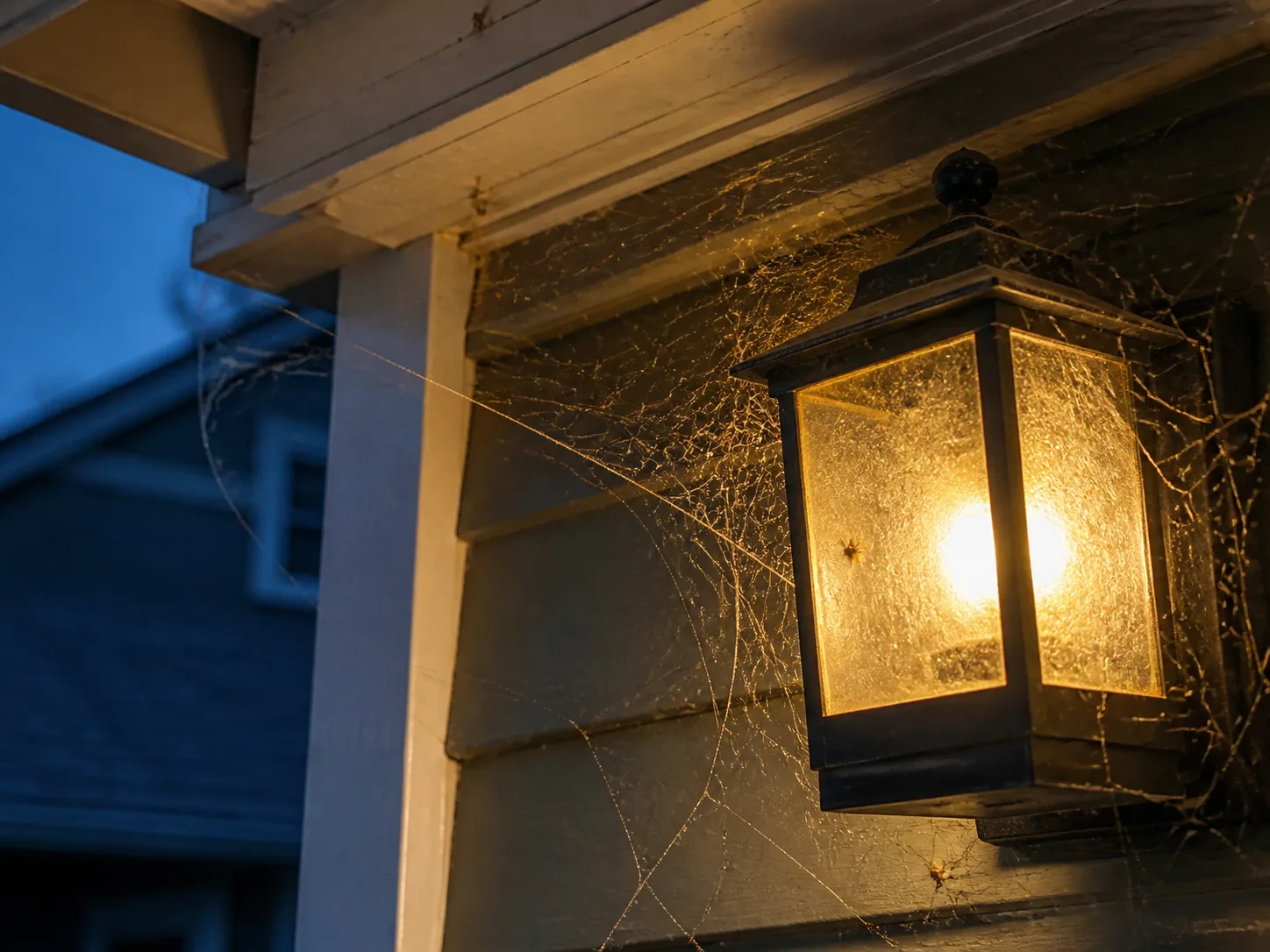
Keep window screens shut after dusk if insects gather at open windows. Clean spilled food, rinse recycling, and empty indoor rubbish on a routine that prevents flies and other small insects from accumulating. If gnats or drain flies are common, identify and address their source rather than trying to repel the spiders that are feeding on them; for example, check houseplant soil moisture or clean a drain according to the right pest’s needs.
Avoid using bug zappers or indiscriminate insect-killing devices right beside the entrance as a “spider fix.” They can attract or kill many insects without correcting the light, gap, or moisture conditions that made the area active. A screen, a properly fitted sweep, and a light placed farther from the door address the route and the prey pressure more directly.
Manage the outdoor strip beside your foundation
The immediate area beside the house can connect outdoor spider habitat to doors, windows, and vents. Move firewood, lumber, pots, leaf piles, and storage bins away from the foundation and keep shrubs or vines from touching siding and window frames. You do not need to eliminate spiders from your garden; simply avoid giving them undisturbed shelter directly beside the openings you use.
Sweep webs from exterior eaves, porch lights, and door frames when they return. Use a broom or hose from a safe position rather than reaching into deep eaves or loose siding. If you find a dense cluster of webs around one entrance, inspect nearby insect activity and the door seal before assuming a repellent is missing.
Outdoor lighting placement is often easier to improve than the bulb itself. A light mounted on a pole away from the house can illuminate a path while drawing insects away from a doorway; where relocation is impractical, direct the fixture away from the door and keep it on only when needed. UMN Extension advises reducing exterior lighting and trimming vegetation that contacts the building.
Do natural scents repel spiders?
There is some controlled evidence that particular compounds can change a spider’s movement, but that is not the same as showing that a homemade spray prevents spiders from entering a lived-in home. In a 2018 choice-test study, peppermint oil and chestnut fruit repelled two of three tested species, while a third species responded less; lemon oil had no effect. The study tested females of three species under controlled conditions, not a home-wide spray schedule. Read the study abstract indexed by PubMed with that distinction in mind.
A second study, published in 2025, found that catnip, cedarwood, cinnamon, citronella, and clove oils significantly deterred activity in female wolf spiders in behavioral tests. It did not establish that household use keeps all common indoor species out, or determine a safe, dependable do-it-yourself dilution for occupied homes. That narrower result is useful science, but it is not a license to treat every room or assume every “natural” scent works the same way. The 2025 wolf-spider study abstract explicitly calls for more research across spider species.
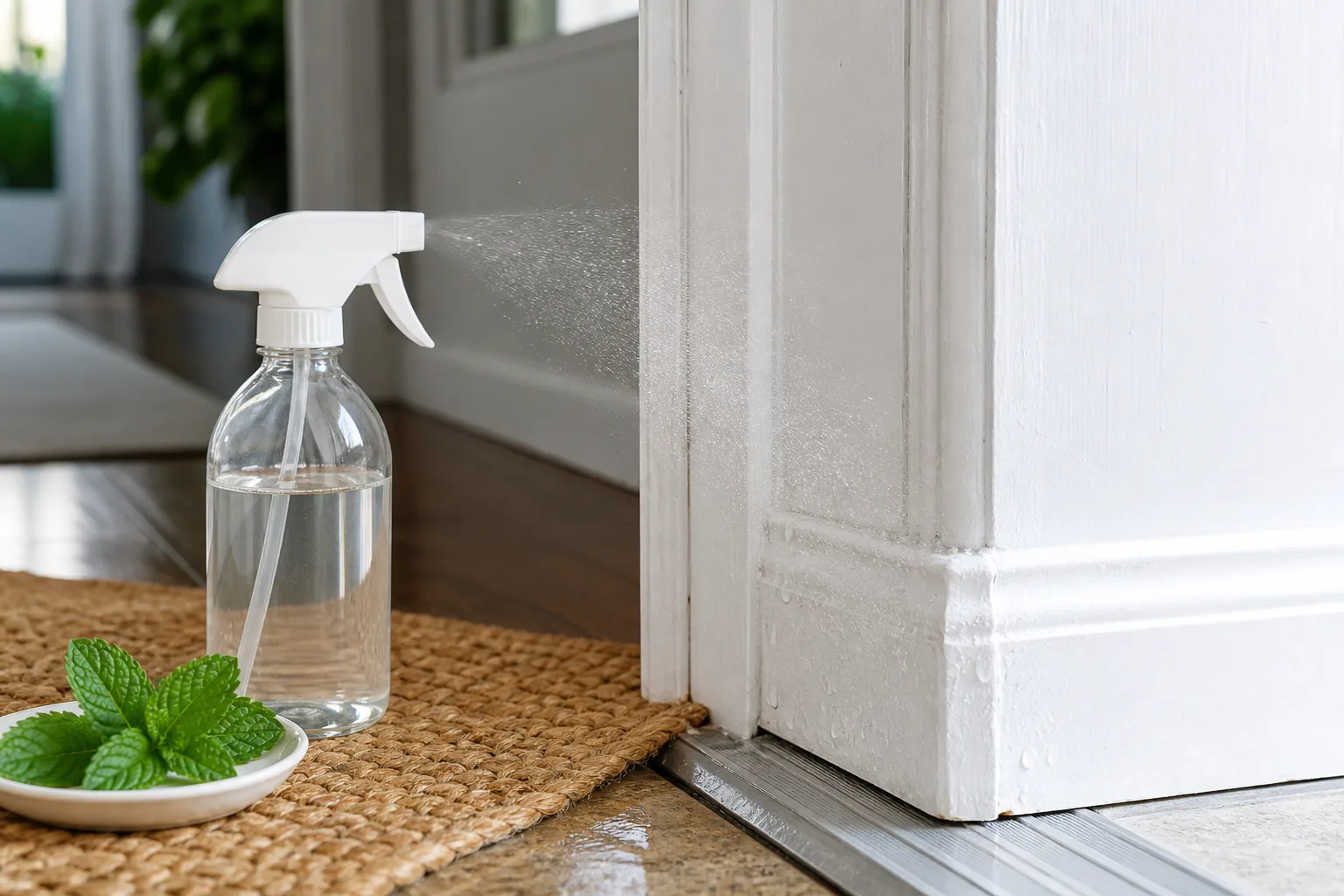
Peppermint and chestnuts have limited evidence
Peppermint oil is often promoted as a spider repellent because one study observed avoidance in some species. That finding supports the possibility that mint volatiles influence some spiders; it does not show that peppermint plants, mint leaves, cotton balls, or a lightly scented water spray create a lasting barrier in a house. A spider can still walk past a treated area, enter from another gap, or ignore a scent that has evaporated.
Chestnuts also need careful wording. A laboratory choice test found avoidance of chestnut fruit in certain tested spiders, but that does not mean placing horse chestnuts around a room will control indoor populations. The University of Washington’s Burke Museum explains why chestnut and hedge-apple household traditions are unreliable; a lab result for selected species and a reliable home barrier are different claims. Some gardening advice also discusses peppermint as a possible deterrent while acknowledging that the evidence is divided, as in Gardening Know How’s overview of spider-repelling plants.
If you still want to test a scent, treat it as a small, optional experiment after sealing gaps and cleaning. Apply a commercially prepared product only as its label directs, on a limited, washable surface, and keep a simple note of whether sightings change in that exact location. Do not spray electrical outlets, finished wood, natural stone, food-preparation areas, bedding, or delicate fabrics; oils can stain or damage materials, and a strong smell can bother people with asthma, migraines, or fragrance sensitivity.
Treat essential oils as concentrated chemicals
“Natural” is not the same as risk-free. Essential oils are concentrated plant extracts; they can irritate skin and eyes, and residues or vapors can expose children and pets. The ASPCA says concentrated oils can harm dogs and cats through contact or ingestion, and cautions that birds are particularly vulnerable to diffuser exposure; its essential-oil guidance for pets recommends keeping oils out of paws’ reach and avoiding direct application to animals. The ASPCA also lists mint as toxic to cats, dogs, and horses when ingested in large amounts because of its essential oils.
For a home with cats, dogs, birds, rabbits, or small mammals, the low-risk choice is to skip homemade essential-oil sprays and use physical exclusion and cleaning instead. Never put oil on a pet, its bedding, a food bowl, or a place where an animal walks or grooms. If you use an oil product despite the caveats, follow its label, ventilate the area, keep the animal away from wet residue, and stop if anyone develops irritation or breathing discomfort.
Use sticky traps to map activity, not as a barrier
Glue boards can capture wandering spiders and show which walls or rooms have recurring movement, but they do not repel spiders or close an entry point. Set them flush against a wall, under a shelf or appliance, or near a suspected travel route; spiders tend to encounter floor-level traps while moving along edges. Check them frequently so you know whether the activity is ongoing and can adjust your inspection.
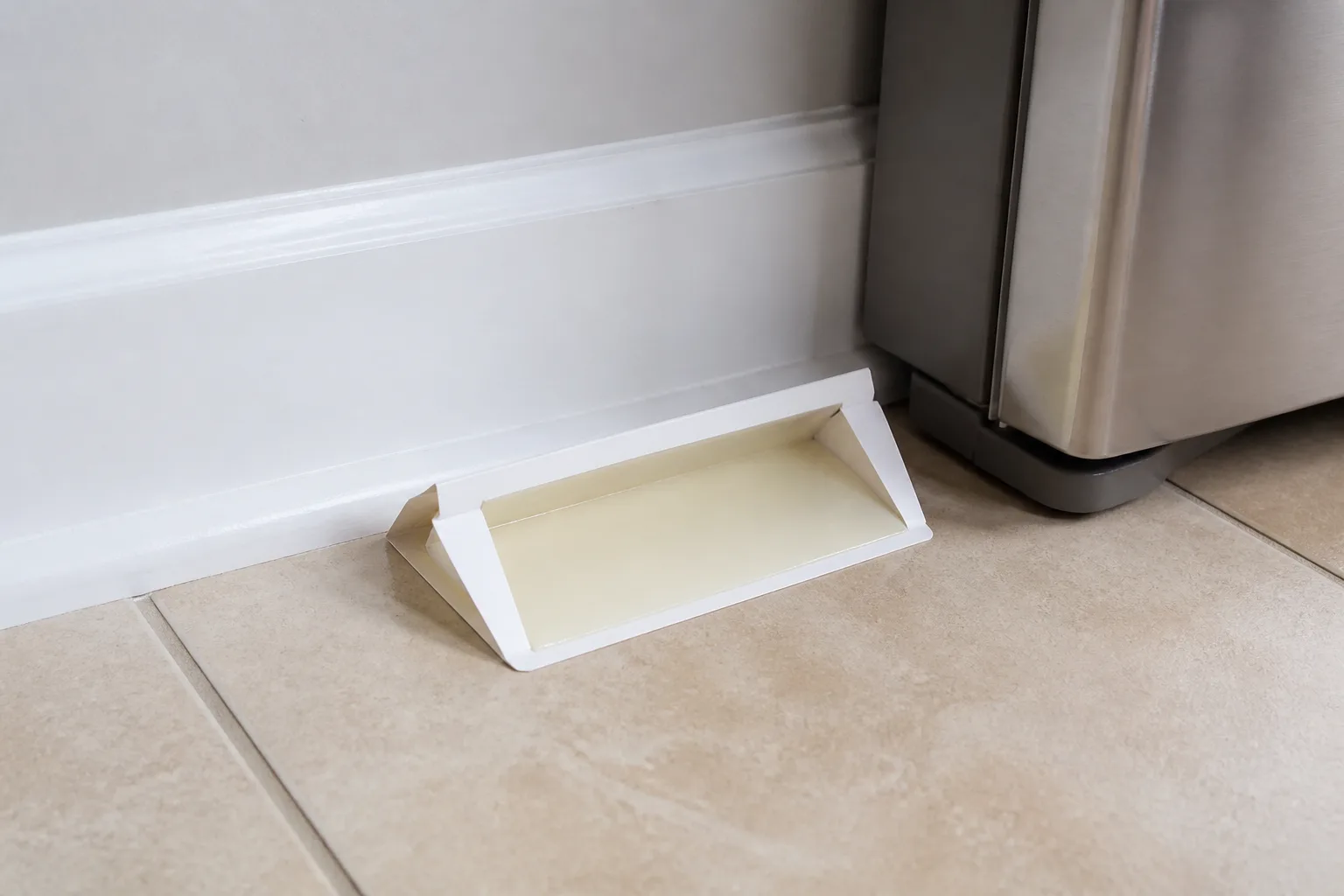
Use traps only where children and pets cannot reach or touch the adhesive. A trapped animal can remain alive for some time, which is why glue boards may not suit households seeking a humane approach. A jar or catch tool is better for an isolated visible spider; a carefully placed trap is more useful for learning whether there is repeated hidden activity in a closet, basement, or garage.
Write the placement date on the board and record the room, wall, and number or type of catches. A trap that catches several spiders at the same corner directs attention to a crack, storage pile, or route nearby. If traps stay empty but spiders keep appearing, consider whether they are falling from webs or arriving in boxes rather than traveling across the floor.
Skip unreliable or messy home remedies
Vinegar-water is not a dependable spider barrier, and spraying it directly on a spider is a killing method rather than a preventive one. A direct hit may injure or kill a small spider, but vinegar can also harm finishes, grout, stone, metals, or nearby plants. If the goal is simply to remove one spider, a jar or vacuum is more controlled and avoids wetting a wall or floor.
Salt water also does not keep spiders away. It leaves residue and may corrode metal or mark surfaces, while a spray bottle can send droplets onto outlets and belongings. Avoid mixing household cleaners or essential oils in a DIY “stronger” formula; incompatible ingredients can irritate lungs, damage materials, or create new hazards without providing dependable control.
Diatomaceous earth is often sold online as a natural powder, but “food grade” does not mean that the product has been evaluated for indoor pest control. Dust can irritate the nose and eyes when disturbed, and fine particles can be inhaled. The National Pesticide Information Center advises choosing a product labeled for pest control and following its directions; for ordinary household spiders, sealing, vacuuming, and monitoring are usually simpler than spreading dust around living spaces.
Follow a practical seven-day spider-prevention reset
You do not need to deep-clean the whole home in one afternoon. A week-long reset lets you remove the current webs, find the routes, and see whether the activity changes after a few targeted repairs. Keep a short note of where and when each spider appears; the pattern is more useful than repeatedly applying a scent everywhere.
- Day 1: Clear the visible evidence. Vacuum or sweep webs and egg sacs in the room where spiders have appeared, empty the vacuum outdoors, and remove loose clutter from nearby corners.
- Day 2: Check the opening nearest the sightings. Inspect the window screen, frame, sill, door sweep, and the gap where cables or pipes pass through the wall.
- Day 3: Reduce nearby prey. Close screens at night, move or dim an exterior light, and check for a source of gnats, flies, or other small insects.
- Day 4: Reorganize one quiet storage zone. Lift boxes off the floor, move them away from walls, seal them, and vacuum the newly exposed edges.
- Day 5: Inspect outdoors. Move firewood and debris away from the foundation, trim plant growth that touches the siding, and sweep webs from the entrance.
- Day 6: Monitor a suspected route. If activity is recurring, place a glue board only where children and pets cannot access it, or use a nonlethal observation method.
- Day 7: Review and repair. If all activity was in one room, finish that room’s entry-point fixes; if spiders appear in several rooms, inspect shared routes such as the garage, attic, basement, utility penetrations, and doors.
This sequence favors actions that keep working after the first cleanup. If a spider is only seen once, you may not need traps or scent at all. If the same room stays active, use the location record and trap catches to narrow the source rather than treating every baseboard.
Know when to call a professional or seek medical care
Ask a local pest professional for help when spiders or egg sacs are appearing in multiple rooms, activity continues after you repair obvious gaps and clean, or a nest is inside a wall void, attic, crawl space, or other area you cannot inspect safely. A professional can identify the species, determine whether the insects being caught are attracting spiders, and recommend targeted measures. Ask for an inspection and an explanation of the route or source before agreeing to broad indoor spraying.
Do not handle a spider you suspect may be a black widow or brown recluse, and do not reach into dark, undisturbed storage without gloves and a clear view. Species ranges vary by region, and color or size alone can be misleading; use a local Extension service, museum, or pest professional for identification. If a bite is followed by severe or spreading pain, muscle cramps, breathing difficulty, fever, or other concerning symptoms, contact a healthcare professional or poison control promptly instead of trying to diagnose it from a photo. UC IPM advises anyone bitten by a black widow to seek medical advice.
A fear response also matters. If spider sightings trigger panic or make a room unusable, a trusted person or professional can do the close-up cleanup while you focus on exclusion and storage changes. A practical plan should reduce encounters without requiring you to handle spiders yourself.
Conclusion
The most reliable natural spider control is a maintenance plan: remove webs and egg sacs, seal real gaps, keep screens and door sweeps fitted, reduce clutter and prey insects, and inspect the outdoor edge of the home. These actions address the places spiders live and the routes they travel; a repellent smell does not.
Peppermint and some other oils have produced avoidance in limited laboratory tests, but results are not universal household proof, and concentrated oils can create risks for pets and sensitive people. Use scent only if it suits your household and only as a secondary, small-scale trial. For one visible spider, remove or relocate it safely; for recurring activity or uncertain identification, get help locating the source.