How to Grow and Care for New York Ironweed Outdoors
Learn how to grow New York ironweed: choose a moist, sunny site, start seed, manage volunteers, prune for height, and leave winter stems for native bees.
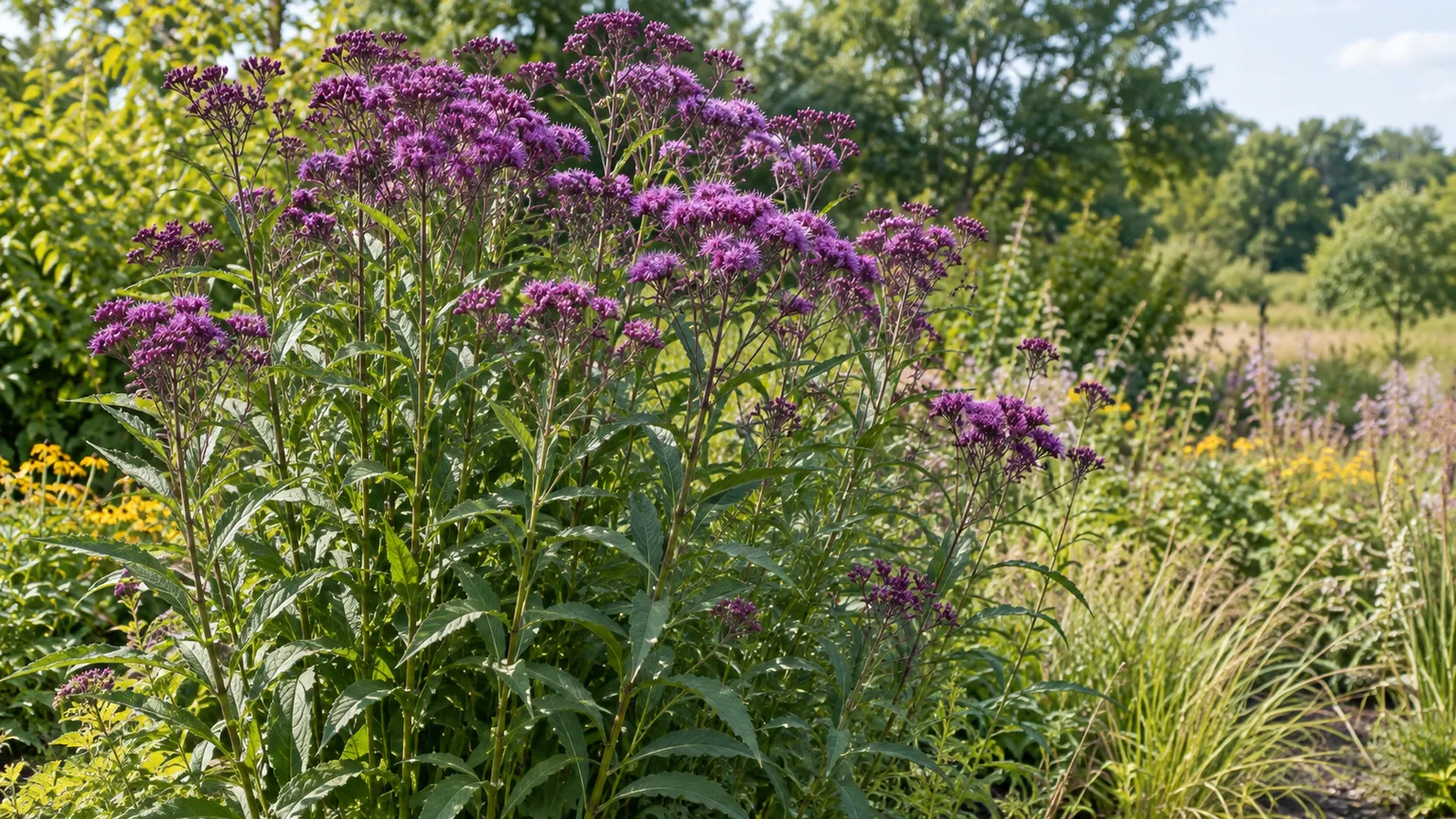
New York ironweed (Vernonia noveboracensis) is a tall, late-season native perennial for a sunny site that stays consistently moist. Give it enough room to reach its natural height and place it where its purple flower clusters can rise above shorter plants; the main care decisions are keeping young plants from drying out and deciding how much seed you want it to set.
It is not a small border accent or a dry-garden plant. A well-sited clump can become a dependable source of late-summer color and nectar, while its standing stems and seeds have value after flowering. Choose the right spot first, and the routine care is straightforward.
New York Ironweed at a Glance
| Feature | Typical range or preference |
|---|---|
| Botanical name | Vernonia noveboracensis |
| Plant type | Herbaceous perennial native to eastern North America |
| Mature height | Usually about 5–8 feet; shorter or taller forms occur |
| Width | About 3–4 feet for a mature clump |
| Light | Full sun for the most stems and flowers; tolerates partial shade |
| Soil | Average to rich loam or clay; moist to wet |
| Water | Keep evenly moist while establishing; water during extended dry spells |
| Bloom | Mid- to late summer into fall, with timing varying by region and source |
| Hardiness | Commonly listed for USDA zones 5–9 |
| Main maintenance choice | Control seedlings if you do not want it to naturalize; leave some stems standing over winter |
NC State Extension describes this plant at 5–8 feet tall, adapted to average moist or wet soil, and most floriferous in sun. Regional sources give somewhat different mature heights and bloom windows, so use the table as a planning range rather than a guarantee for every plant or garden. (NC State Extension; Mt. Cuba Center)
Is New York Ironweed Right for Your Garden?
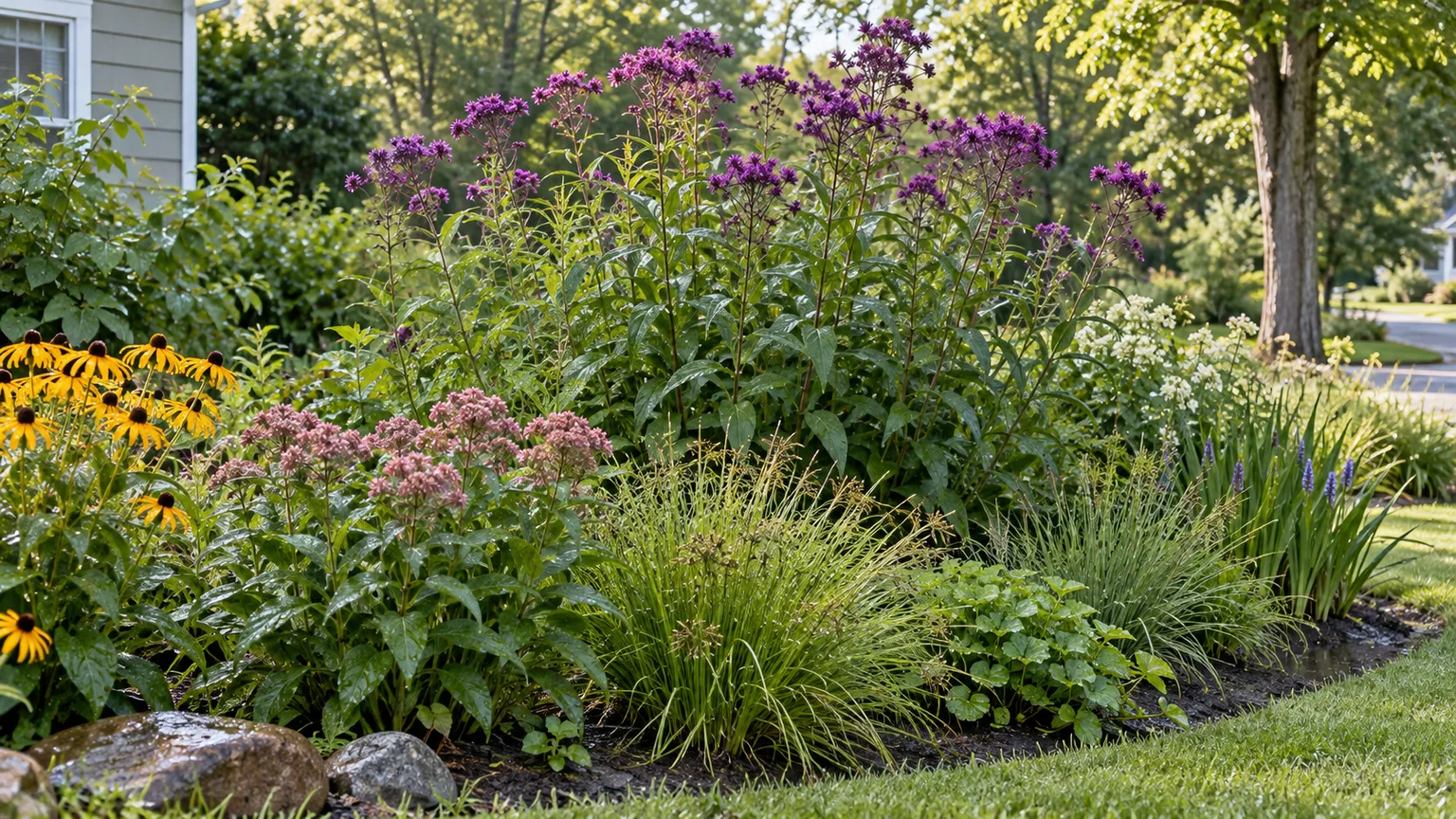
Choose New York ironweed for a sunny rain garden, swale, pond margin, wet meadow, or the back of a large perennial border. It is particularly useful where soil stays moist after rain or where other tall perennials struggle through summer dryness. In a conventional border, plan for a 3- to 4-foot-wide clump and put it behind lower flowers so its stems do not shade them.
The plant is a poor fit for a narrow foundation strip, a dry gravel bed, or a small container. It can survive less-than-ideal moisture or partial shade, but it may stay shorter and flower less heavily. If you want the ironweed look in a tighter space, compare compact Vernonia species or cultivars before buying rather than planting a full-size species and expecting frequent pruning to turn it into a dwarf.
Container growing is possible, but it is a compromise. A mature 5- to 8-foot plant needs a wide, heavy pot that will not tip, and a container dries faster than garden soil even when the plant is established. Use a moisture-retentive but free-draining potting mix, check it more often during summer, and protect the root ball in cold winters because it is more exposed to freezing than roots in the ground. If you cannot provide that space and winter shelter, grow ironweed in a bed instead.
“New York” refers to a species native across much of the eastern and southeastern United States, not to a plant that only grows in New York. Still, broad nativity is not the same as local provenance. If supporting local wildlife or restoring a natural area is the goal, ask a native-plant nursery for seed or stock sourced from your region. A named species can perform differently when the source population, soil, and climate change.
How to Identify New York Ironweed
Look for an upright, leafy perennial with stiff stems, long lance-shaped leaves, and loose terminal clusters made of many small, fluffy purple flowers. The flower heads are composed of disk florets rather than the showy ray petals of a daisy. The leaves are arranged alternately along the stem and often have fine teeth; NC State Extension notes that their undersides can be downy.
Species labels matter because “ironweed” is used for several Vernonia species with different sizes and habits. Check that the label says Vernonia noveboracensis if you want this particular plant, especially when buying seed. The names “ironweed” and “tall ironweed” are used inconsistently in nursery listings. Other species and cultivars in Vernonia can be shorter or have different habits, so a label that says only “ironweed” is not enough if height or moisture tolerance is important to your design.
Ironweed vs. Joe-Pye Weed
The two plants can share a moist site and bloom around the same part of the season, but leaf arrangement is a useful field clue. New York ironweed has alternate leaves, one at a time along the stem; coastal plain Joe-Pye weed (Eutrochium dubium) has leaves in whorls of three or four at a node. Joe-Pye weed also tends to carry larger, dome-shaped flower clusters, while ironweed’s clusters look flatter or more loosely branched. (NC State Extension: ironweed; NC State Extension: Joe-Pye weed)
Planting and Propagating New York Ironweed
Plant nursery stock in spring after the ground is workable or in early fall while there is time for roots to settle before the ground freezes. Space plants roughly 3–4 feet apart for separate clumps; allow more room if you want each to remain visually distinct. Set the crown at the same depth it grew in its pot, firm soil around the root ball, and water thoroughly after planting.
The first season is when a moisture-loving perennial is most vulnerable to drying. Check below the surface rather than watering on a fixed calendar: when the root ball and surrounding soil begin to dry, soak the root zone slowly. Once established, ironweed is more forgiving, but a long hot drought can crisp lower leaves and reduce its height or flower display.
Planting a Nursery-Grown Ironweed
A small start may look out of scale beside a mature plant, but it needs less recovery time than a large flowering perennial dug from a field. Water the pot before planting, loosen circling roots gently, and keep the young crown level with the soil surface. A light mulch layer can slow evaporation; keep mulch a few inches away from the crown so it does not stay soggy.
If you are buying several plants, check their botanical names and ask about source region. Mt. Cuba Center’s trial found meaningful differences among New York ironweed populations: its South Carolina collection was taller and more robust than several mid-Atlantic collections in that Delaware garden, while some trial entries had weaker floral displays or more disease. That is a result from one trial, not a universal ranking, but it is a good reason to match plant provenance to your climate and garden conditions. (Mt. Cuba Center)
Starting Ironweed from Seed
For the simplest route, sow fresh seed outdoors in late fall so winter weather provides its cold, moist period naturally. Scatter seed on a prepared patch, press it against the soil, and cover it only very lightly. Mark the spot before winter; tiny seedlings can be difficult to distinguish from weeds when they emerge in spring.
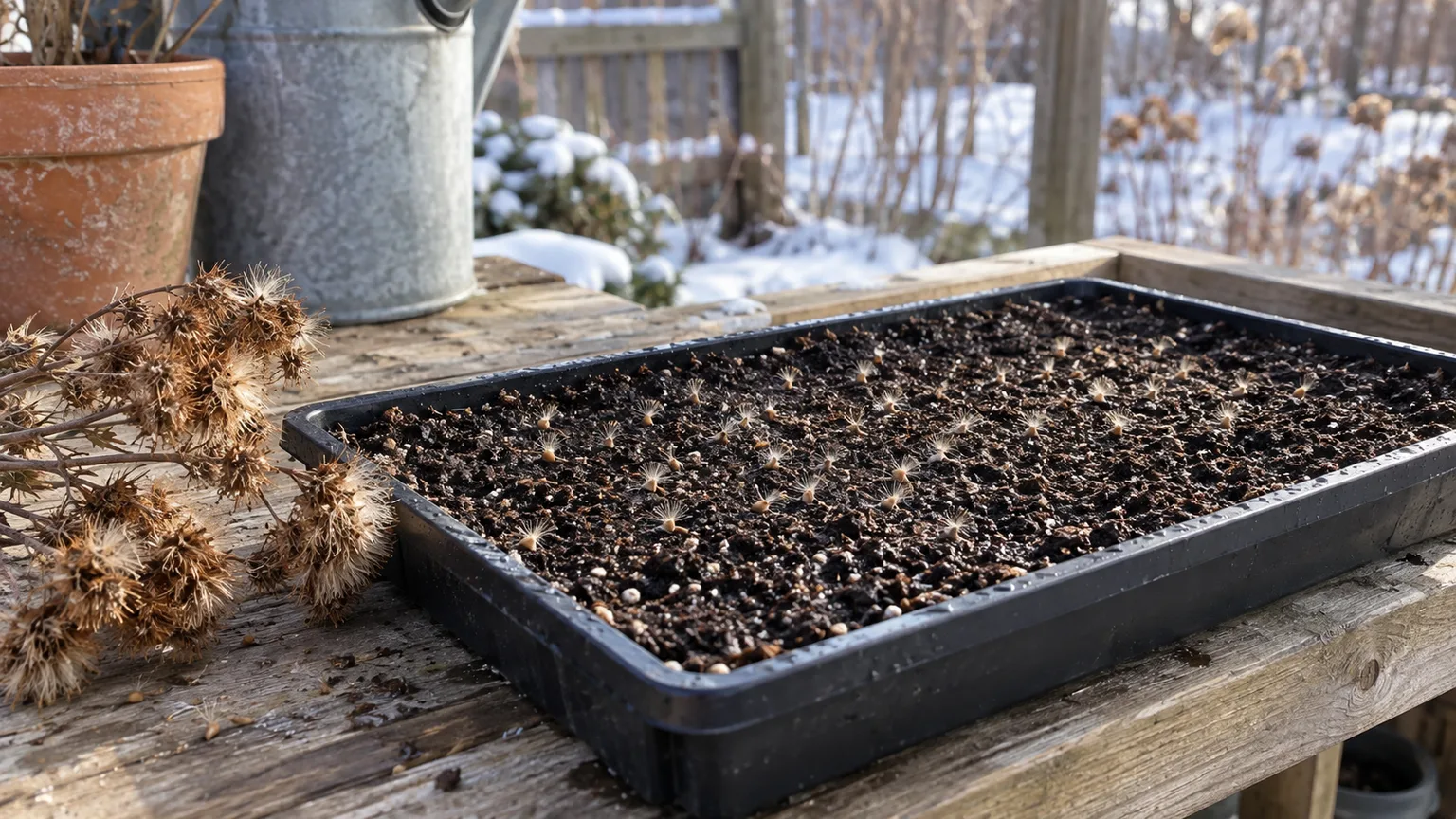
For a controlled spring sowing, GrowIt BuildIt recommends about 60 days of cold-moist stratification. Mix seed with barely damp medium in a closed container and refrigerate it, or sow it in moist seed-starting mix in a ventilated container and keep it cold for the same period. Ironweed seed may germinate better when it receives light, so press it onto the surface or barely cover it rather than burying it deeply. Keep the medium damp, not waterlogged, and move the tray to a bright, warm place after chilling. (GrowIt BuildIt)
Seedlings can be slow compared with purchased starts, and a first-year plant may put its energy into roots and foliage instead of flowers. GrowIt BuildIt reports that bloom is more typical in the second year. Pot up or transplant seedlings while they are small, before a long taproot develops, and water them carefully through their first summer.
Light, Soil, and Water
Full sun—about six or more hours of direct light—usually produces the strongest stems and most flowers. New York ironweed tolerates partial shade, but a plant receiving only a few hours of sun may grow shorter or carry fewer flower clusters. In a windy site, a little afternoon shelter can reduce stress, but do not trade away most of the day’s light if abundant bloom is your priority.
Moisture is the bigger site-selection issue. The species occurs in wet meadows and ditches and grows in average moist to wet soil; it also tolerates occasional flooding. Loam and clay are both workable, and the soil does not need to drain as quickly as it would for a drought-adapted perennial. The practical target for a home garden is a root zone that stays damp between rains, not a crown kept under permanent standing water.
The plant prefers rich, moist soil that is somewhat acidic, but do not add sulfur or other amendments based on a guess. A soil test is the useful way to decide whether pH needs attention. In sandy soil or a sunny exposed bed, use organic matter to improve water retention and plan to irrigate during dry stretches. In heavy clay, avoid unnecessary digging or adding a small pocket of potting mix; plant into the native soil and manage water by site choice.
Fertilizer and Mulch
Routine fertilizer is usually unnecessary. NC State Extension describes ironweed as low-maintenance, and GrowIt BuildIt notes that established plants need no supplemental fertilizer. If a clump is sparse, first check sunlight, moisture, and whether it is young; fertilizer will not fix shade, drought, or a poor species match.
A thin organic mulch can help keep the root zone from drying, particularly in sandy ground or during establishment. Avoid piling mulch against the stems, which can trap excess moisture around the crown. If the bed is genuinely depleted, use a soil test to choose a measured correction or add compost to improve soil structure; avoid high-nitrogen feeding that encourages leaf growth without addressing the cause of weak flowering.
Control Height and Seed Spread
New York ironweed is naturally tall, so decide where its mature stems belong before planting. In a mixed border, placing it at the back or on the north side keeps it from shading shorter plants. A meadow or rain garden can use a larger colony, while a formal bed may need fewer plants and a more deliberate seedhead cleanup.
Its spread is often misunderstood. GrowIt BuildIt describes New York ironweed as a clump-forming plant that does not spread by underground rhizomes; NC State marks it as a plant that naturalizes easily. In a garden, the distinction matters: you are usually managing seedlings from mature seed rather than chasing a network of running roots. In damp, open or disturbed ground, those seedlings can still produce a dense stand if left unchecked. (GrowIt BuildIt; NC State Extension)
Prune for a Shorter Plant
If a 6- to 8-foot plant would overwhelm the space, NC State Extension suggests pruning it back in spring to about 2 feet. This makes a shorter, more branched plant and can create flowers at different heights if you cut only some stems. The trade-off is a less towering natural form and potentially a later or less uniform display, so try the method on part of a clump first if bloom timing matters.
Do not routinely shear the whole plant in late summer if you want flowers that season; the developing stems carry the terminal clusters. If you need a compact plant every year, move the ironweed or choose a naturally shorter species or cultivar rather than repeatedly cutting it after buds form.
Prevent Unwanted Seedlings
Deadhead flower clusters once they fade and before seed is released if you want to limit volunteer plants. You do not need to remove every spent cluster in a wildlife planting: leave some to mature for birds, then pull seedlings you do not want when they are small and the soil is moist. A patch boundary, a mowed path, or a regularly weeded edge also makes seedlings easier to spot.
A very wet garden can encourage self-seeding and naturalization, but that does not mean the plant is automatically invasive in every setting. Decide whether you want a clump, a loose colony, or a meadow-scale drift, then control seed production to match that goal.
Divide an Established Clump
Division is useful when a mature clump has become crowded, has a weak or open center, or needs to be moved or multiplied. It is not necessary to divide on a fixed schedule if the plant is flowering well and occupying the space you planned for it. Gardenia lists division as one way to propagate the species, alongside seed and softwood cuttings.
Divide in early spring as new growth begins or in early fall while soil is still warm enough for roots to re-establish. Water the plant first if the soil is dry, then use a sharp spade to lift a section with several healthy shoots and roots attached. Replant divisions promptly at the same depth, water them in, and keep the soil evenly moist while they settle. Take only what you need; disturbing a large clump during hot or dry weather can set it back unnecessarily. (Gardenia)
Bloom Time and Wildlife Value
Flowering usually begins in midsummer and can continue into early fall, but the calendar shifts with latitude, weather, and the plant’s source. NC State gives a July-to-September bloom window. In Mt. Cuba Center’s trial, South Carolina material flowered later than several mid-Atlantic collections, illustrating why one date cannot predict every garden. Expect the plant to build its first substantial flower display after establishment; seed-grown plants commonly bloom in their second year rather than immediately.
Each branch carries a cluster of small purple disk flowers that draws bees, butterflies, and other pollinators when many spring flowers have finished. After bloom, the rusty seed heads feed birds. The remaining stems have another role: NC State Extension notes that native bees use hollow dead stems for nesting, so winter cleanup can support wildlife as well as preserve seed.
Common Problems and How to Read Them
Serious pest problems are not typical, but the plant’s performance is a good indicator of whether the site is working. The first questions are: How much direct sun does it receive? Is the soil dry at root depth? Is it a young plant or a mature clump? Those answers are more useful than adding fertilizer or cutting the plant back without a diagnosis.
A young plant with no flowers may simply need another season. A mature plant with few blooms is more likely to need more sun, steadier moisture, or renewed vigor after crowding. If the soil is wet and the plant is still weak, verify the label: a different Vernonia may have different dimensions or conditions.
Plants can develop rust or powdery mildew under some conditions. NC State reports no significant general pest or disease problems, while Mt. Cuba observed that some New York ironweed trial entries struggled with rust and powdery mildew in average garden conditions. If symptoms recur, improve air movement by spacing plants properly, avoid wetting foliage late in the day, and remove badly affected debris during spring cleanup. Do not treat a plant from a single leaf spot; confirm the diagnosis with a local extension service before using a pesticide.
Winter Care and Spring Cleanup
Leave at least some stems standing through winter. Seed heads provide food for birds, and hollow stems can shelter native stem-nesting bees. You can remove stalks that have collapsed across a path or look unsafe, but a bare, ground-level fall cut discards that habitat before winter is over.
In spring, cut dead stems to about 12–24 inches and leave them upright until they break down naturally, as NC State Extension recommends for nesting bees. If the cut stems are unsightly, move them to a quiet edge of the garden rather than shredding or composting every hollow section immediately. New shoots will grow from the crown; mark the clump if nearby plants emerge earlier and might hide it.
Companion Plants and Garden Placement
Use ironweed as the tall, late-season layer in a sunny, moisture-retentive planting. Joe-Pye weed and swamp milkweed provide earlier pink or mauve flowers, while bee balm, blue vervain, cardinal flower, and New England aster add contrasting color at lower or similar heights. Goldenrod and native grasses can extend the meadow effect and carry the planting into fall. Match companions to the same moisture level instead of choosing plants by color alone.
In a border, keep shorter flowers in front and leave a clear view of the upper stems. In a rain garden, use ironweed where the soil remains moist but is not continuously underwater; a drier rim can hold plants that prefer average moisture. Its narrow upright form can fit a tight back border more easily than a sprawling shrub, but its height still needs to be visible from the space where you enjoy the garden. (GrowIt BuildIt; Gardenia)
Conclusion
Grow New York ironweed in full sun, give it moist soil and several feet of room, and let its height become part of the garden’s structure. Water young plants through dry periods, sow seed shallowly after natural or artificial cold stratification, and use spring pruning only when you need a shorter display.
The long-term maintenance choice is how much it can seed itself. Deadhead for a tidy, contained clump or leave some flowers and winter stems for birds and stem-nesting bees, then remove unwanted seedlings in spring. With a site that fits its size and moisture needs, Vernonia noveboracensis is a durable source of late-season flowers rather than a plant that needs constant feeding or cutting back.