How to Grow and Care for October Glory Maple
Grow October Glory maple for reliable red fall color. Get practical planting, watering, pruning, soil, pest, disease, and placement advice.
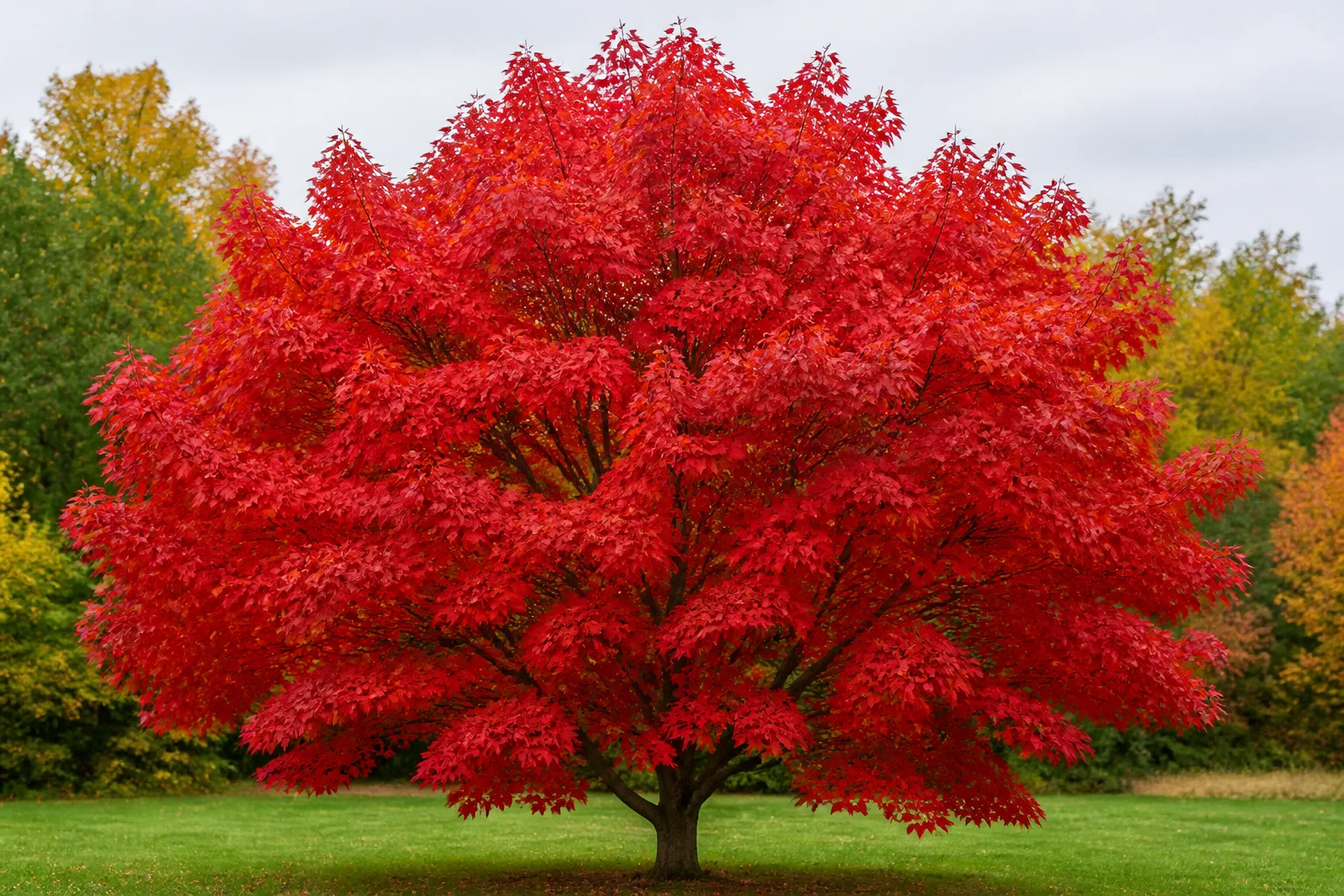
October Glory maple (Acer rubrum ‘October Glory’) earns its name with a late-season canopy that can turn orange-red to brilliant red after a long stretch of glossy green foliage. It is also a real shade tree, not a small ornamental that can be tucked into a narrow foundation bed. Give it room, steady moisture, and enough sun, and it can become a fast-growing focal point that looks good in spring, summer, and fall.
The most important care decision happens before planting: match the tree to the site. October Glory has a shallow, spreading root system, dislikes drought and deicing salt, and can outgrow a small yard even though the nursery tree looks modest. The care plan below focuses on those trade-offs first, then covers planting, watering, mulch, pruning, propagation, and problem diagnosis.
October Glory Maple at a Glance
| Feature | What to expect |
|---|---|
| Botanical name | Acer rubrum ‘October Glory’ |
| Plant type | Deciduous shade tree and red maple cultivar |
| Mature size | About 40–50 feet tall and 30–40 feet wide |
| Hardiness | Commonly listed for USDA Zones 4–9; local heat and site conditions still matter |
| Light | Full sun to partial shade; more sun usually improves fall color |
| Soil | Moist, well-drained, slightly acidic soil; adaptable but not happy in chronically dry or alkaline ground |
| Water | Medium to wet moisture; reliable irrigation is important while young and during drought |
| Foliage | Glossy dark green, three to five lobes, with orange-red to red fall color |
| Roots | Shallow and spreading, with the potential to lift nearby hardscape |
| Fruit | Red-tinged winged samaras can develop, even though the cultivar is female |
The Missouri Botanical Garden Plant Finder lists the cultivar at 40–50 feet tall, 30–40 feet wide, and hardy in Zones 4–9. A University of Florida IFAS EDIS profile also describes it as a fast-growing, 40–50-foot tree for moist sites, while practical horticulture references sometimes narrow the useful range to Zones 5–9. Treat the colder edge as site-dependent rather than a guarantee: a sheltered Zone 4 lawn is not the same as an exposed, windy, salt-laden roadside.
Is October Glory Maple the Right Tree for Your Yard?
Choose this maple when you want fast shade, a medium-to-large deciduous canopy, and dependable cultivar-colored fall foliage in a region where red maple can handle the climate. It is especially useful as a specimen in an open lawn, at the edge of a rain garden, or in a broad planting strip that does not receive winter salt.
Skip it when the only available spot is a narrow bed between pavement and a building. The root system is shallow and flattened, and the mature crown needs both overhead clearance and lateral space. The tree may tolerate urban conditions, but urban tolerance does not mean “plant it anywhere.” Missouri Botanical Garden specifically cautions that nearby sidewalks and driveways can be buckled by the roots.
October Glory is also a poor choice for a site that dries to dust every summer or receives regular road-salt spray. In the warm South, it can grow well with dependable irrigation and some protection from harsh afternoon exposure while young. Near the coast or a heavily salted road, choose a tree with a better salt record instead of trying to overcome a site mismatch with fertilizer or extra pruning.
Choose the Planting Site Before You Buy
Measure the future tree, not the container. A 6-foot nursery tree may eventually occupy a canopy 30–40 feet across, with roots extending well beyond the trunk. Leave enough space that mature branches will not scrape a roof, block a driveway sightline, crowd a utility line, or shade a garden that needs full sun.
Look up before you dig. Do not plant directly beneath overhead wires, and call your local utility-locating service before excavating. Also map buried water, sewer, septic, irrigation, and drainage lines. The goal is not to create an exact circle around the trunk; it is to avoid placing a fast-growing tree where future roots and branches will be forced into repeated conflict.
Give the tree a broad, weed-free root zone rather than a tiny mulch island in turf. Grass competes aggressively for water during establishment, and lawn equipment can wound the thin bark. A generous planting bed makes it easier to water deeply, keep mowers away, and observe the root flare as the trunk expands.
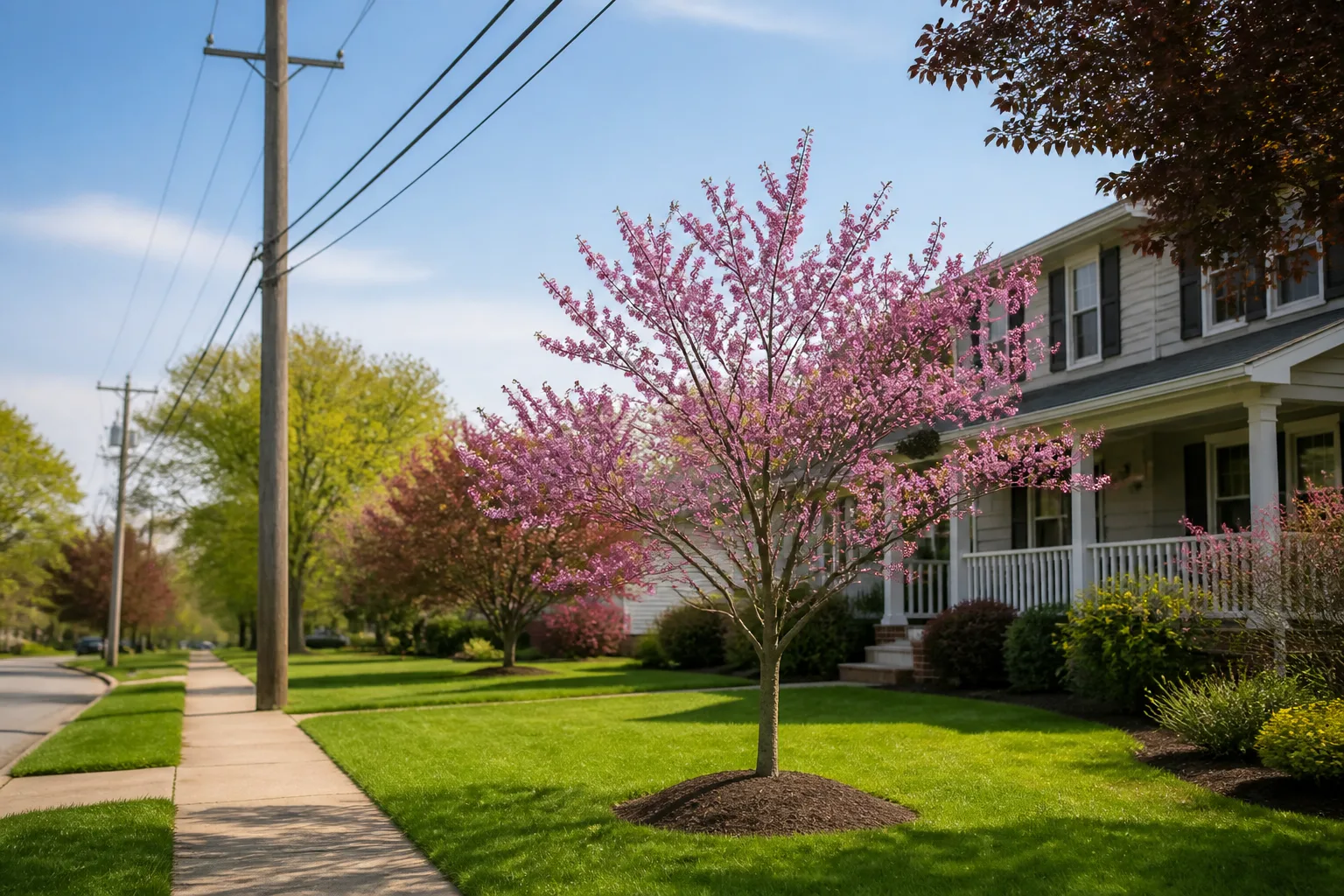
If you are choosing among several nursery trees, favor a straight trunk, a visible root flare, evenly spaced permanent branches, and one clear central leader unless the tag describes a different trained form. Avoid trees with circling roots, buried trunks, large wounds, included bark, or two competing stems emerging from the same point. A recent Horticulture profile of a red maple cultivar explains why a dominant leader and wider branch angles reduce structural problems; the same selection principle is useful even though Redpointe and October Glory are different cultivars.
Give October Glory Maple the Right Light for Fall Color
Aim for at least six hours of direct sun, especially from late spring through early fall. October Glory tolerates partial shade, but a tree grown under dense shade usually develops a less full canopy and less intense fall color than the same cultivar in an open, bright site.
There is an important southern-climate exception. In hot regions, morning sun with light afternoon shade can reduce heat and drought stress on a young tree. Once the root system is established, the tree may handle more exposure, but only if soil moisture stays consistent. Do not interpret “full sun gives the best color” as permission to plant a new tree in a reflected-heat pocket beside a west-facing wall.
Fall color is a seasonal result, not a fertilizer setting. Shorter days remove green chlorophyll, while weather influences the red pigments that become visible in the leaves. Better Homes & Gardens explains that sunny days, cool nights, and adequate soil moisture can influence red fall color. A hot autumn, summer drought, early frost, or serious root stress can shorten the display even when the tree is correctly labeled.
Prepare Moist, Slightly Acidic, Well-Drained Soil
October Glory prefers soil that stays evenly moist but is not permanently stagnant. It can tolerate wet conditions better than many landscape trees, which is why it is sometimes used near rain gardens, but roots still need oxygen. A low area that holds water for days after every storm is a drainage problem, not automatically a perfect maple site.
Slightly acidic soil is the safest default. Red maples can survive a range of soil textures, but alkaline soil can produce pale foliage and poor growth. Test before adding sulfur, lime, fertilizer, or large quantities of compost. A soil test tells you whether pH is actually the problem; guessing can create a second problem while failing to fix the first.
The tree can grow in clay or sand if you manage the limitations. Clay needs careful drainage and should not be turned into a small, amended bowl that holds water around the root ball. Sandy soil drains quickly and may require more frequent deep watering. In either case, use the native soil you removed to backfill unless a soil test or local extension recommendation gives you a specific amendment plan.
Check drainage before buying the tree. Dig a hole roughly a foot deep, fill it with water, let it drain, then fill it again and observe the site through a normal day of weather. If water remains pooled, move the tree to a better-drained location or redesign the bed rather than planting and hoping the roots adapt.
Plant October Glory Maple Step by Step
Plant during a cool, low-stress window: early spring after the soil can be worked or fall while the tree is dormant and the ground is not frozen. Avoid planting a container tree during a heat wave unless you can provide close monitoring and reliable irrigation. The best month varies by climate, but the best conditions are consistent: cool air, workable soil, and enough time for roots to settle before extreme heat or frozen ground.
- Water the root ball before planting. A dry container root ball can shed water along the sides of the hole instead of absorbing it. Let excess water drain so the soil is moist, not dripping.
- Dig wide, not deep. Make the hole about two to three times the width of the root ball and no deeper than the root ball’s actual height. A deep hole invites the tree to settle below grade.
- Find the root flare. The trunk should widen where the uppermost structural roots begin. Remove excess nursery soil if the flare is buried; do not plant the trunk like a fence post.
- Correct circling roots. If roots are tightly circling the container, loosen or cut only the problematic outer roots with a clean, sharp tool. Do not shred the entire root ball.
- Set the tree high enough. Place the root flare at or slightly above the finished soil line, allowing for a little settling. Rotate the best-looking side toward the main viewing angle before backfilling.
- Backfill with the excavated soil. Firm it gently in layers so there are no large air pockets, but do not stomp wet clay into a hard mass.
- Water slowly and thoroughly. Fill the planting basin once, let it soak in, then repeat. This settles soil around roots better than a quick sprinkle.
- Mulch broadly and thinly. Add a two- to three-inch layer of organic mulch over the root zone, leaving the trunk base uncovered.
- Stake only if needed. If wind or a loose root ball makes the tree unstable, use flexible ties temporarily. Remove them once the tree can stand on its own.
The Gardening Know How guide to transplanting red maple likewise emphasizes a hole wider than the root ball, thorough watering after the move, and withholding fertilizer while roots rebuild. Do not improve this process by adding fertilizer to the planting hole; newly disturbed roots need contact with moist soil, not a concentrated nutrient pocket.
Check the Root Flare Before Backfilling
This step deserves its own heading because a buried root flare can create years of trouble. The trunk should visibly widen at ground level. If it disappears straight into the soil like a telephone pole, scrape away enough loose soil to locate the first major roots before deciding on the final planting height.
After planting, inspect the base once or twice each season. Look for a root circling the trunk, a compressed or flattened trunk base, soil piled against bark, or mulch touching the trunk. University of Minnesota Extension’s maple diagnostic guide connects girdling roots with slow growth, poor color, premature fall leaf drop, scorch, and wilting. A questionable root collar is worth showing to an ISA-certified arborist before symptoms become severe.
Water for Establishment, Then Adjust to the Site
New October Glory maples need regular deep watering while roots move out of the nursery root ball. The top inch of soil is not a useful guide by itself. Check moisture several inches down within the root zone, then water slowly enough to wet the entire ball and surrounding soil without creating a pond that remains for days.
During warm, dry weather, inspect a new tree at least twice a week. A newly planted tree in ordinary soil may need one or two slow soakings each week, but that is only a starting point. Sandy soil, wind, reflected heat, and a small root ball shorten the interval; clay soil, rain, cool weather, and a broad mulch ring lengthen it. Rain counts. Do not add irrigation on a calendar if the soil is already moist below the surface.
Water at the soil surface, not over the leaves. A soaker hose or slow hose trickle around the root ball and into the surrounding planting area is more useful than a brief spray at the trunk. Keep the grass and weeds away from the root zone so the tree does not have to compete for every drop.
After the first growing season, taper by observing the tree rather than declaring it independent. October Glory is not a drought-proof maple. During prolonged dry weather, water before leaves wilt, curl, or develop crispy margins. The southern end of its range usually requires more attention, especially in sandy soil. A tree can survive a brief dry spell and still lose fine roots that make it less resilient the following summer.
Mulch Without Suffocating the Trunk
Spread two to three inches of wood chips, shredded bark, or another stable organic mulch over a wide ring. Keep the mulch several inches away from the trunk so bark stays dry and visible. The ideal profile looks like a flat doughnut, not a volcano.
Mulch slows evaporation, moderates soil temperature, reduces turf competition, and makes it less likely that a mower or string trimmer will hit thin maple bark. Refresh it when it decomposes, but do not keep adding layers without checking the root flare. A deep, wet mulch pile can hide a buried trunk and encourage rodent damage.
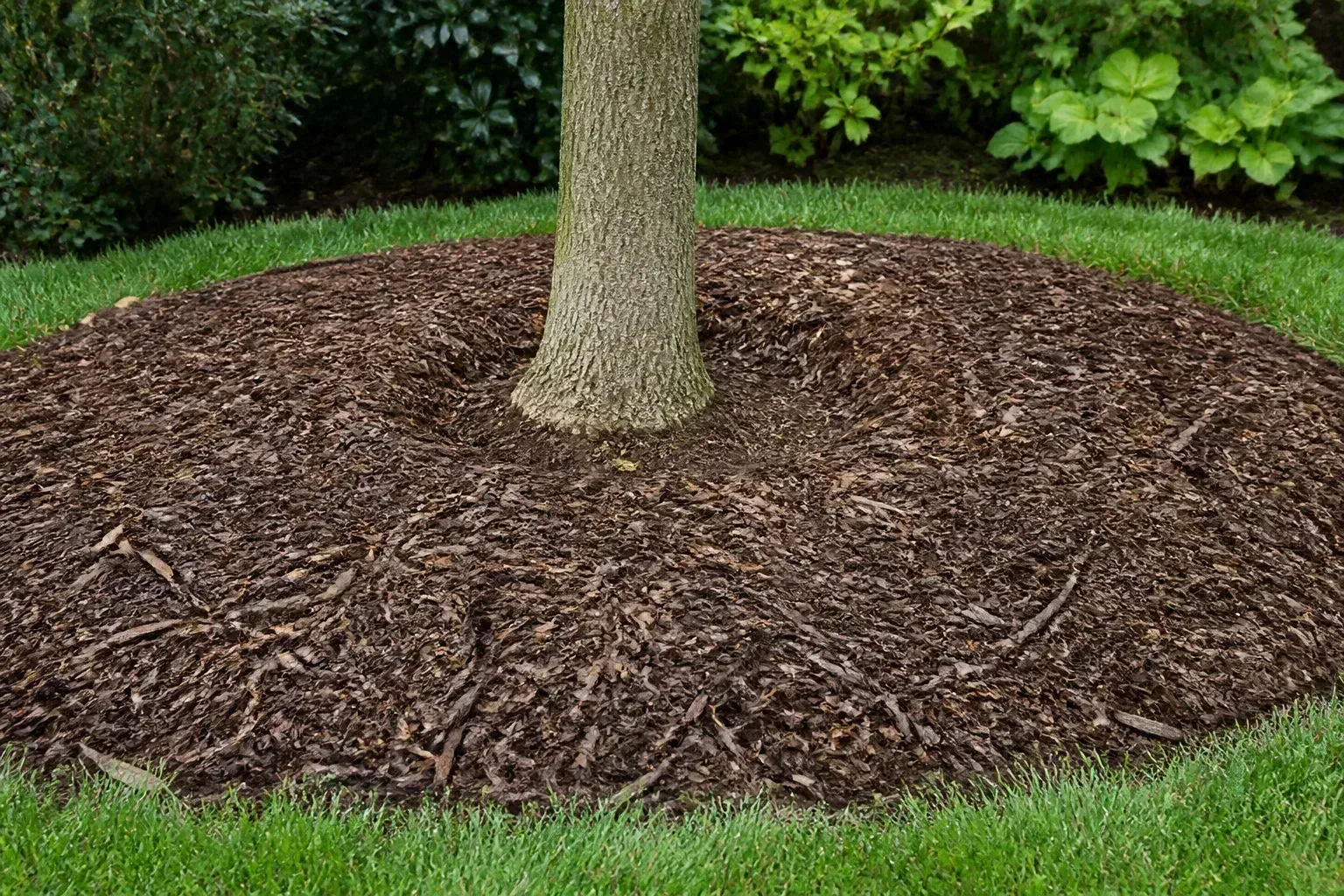
The mulch should cover the area where new roots are likely to grow, not just a small circle around the stem. As the tree enlarges, extend the ring toward the drip line. You do not need to remove every fallen leaf from the ring; a thin layer of leaf litter can return organic matter, but diseased foliage should be handled according to local disease guidance.
Fertilize Only When the Tree Shows a Need
Do not make annual fertilizer part of the default October Glory routine. A young tree is better served by sound planting, steady moisture, weed control, and root-zone protection. Extra nitrogen cannot correct deep planting, compacted soil, drought, salt injury, or a failing root system.
If an established tree loses vigor, first inspect the trunk base, moisture pattern, light, pH, and roots. Use a soil test before buying fertilizer. Pale leaves in alkaline soil may reflect iron availability or root stress rather than a simple nitrogen shortage. Adding sulfur or a high-nitrogen product without testing can push growth at the wrong time and create salt buildup.
When a test or local extension recommendation identifies a deficiency, follow the rate and timing on the soil-test report or fertilizer label. Avoid late-season feeding that encourages tender growth before winter. The red maple care guidance from Gardening Know How also treats routine annual fertilization as unnecessary and recommends tying feeding to actual need.
Prune for Structure, Not for Size Control
October Glory is not a shrub to be kept small with repeated heading cuts. Choose the right site, then let the tree develop a natural canopy. Pruning can remove defects and guide young structure, but it cannot permanently turn a 40-foot tree into a 12-foot tree.
For a young tree, remove dead, damaged, crossing, or badly placed branches while they are small. Favor branches with strong, wide attachments and preserve one sound central leader if the tree naturally has one. Avoid stripping the lower trunk too quickly; gradually raising the canopy is safer than removing many large limbs at once.
Make cuts just outside the branch collar, without leaving a long stub or cutting flush into the trunk. Never top the tree. Topping creates weakly attached shoots, large wounds, and a cycle of emergency regrowth that leaves the tree less stable.
Light corrective pruning can be planned for late summer or early fall when the tree is not in the most active spring sap-flow period. Dormant-season structural work may be appropriate in some regions, but avoid heavy pruning during drought, extreme heat, or just before a major weather event. The UF/IFAS cultivar profile specifically includes structural pruning among the management considerations; once branches are large or the tree is near wires, hire a qualified arborist rather than working from a ladder.
Winter and Summer Care by Climate
In colder zones, water thoroughly before the ground freezes if autumn has been dry, then maintain a two- to three-inch mulch ring through winter. Keep mulch away from the trunk, and use a loose trunk guard only when young bark is exposed to rodents, rabbits, or repeated mechanical damage. Do not wrap the trunk tightly in plastic or leave a protective guard on indefinitely.
Do not fertilize in late fall. The tree should be moving toward dormancy, not producing a flush of tender shoots. After heavy snow or ice, let branches shed naturally when possible; shaking or beating frozen limbs causes breakage.
In hot Zones 8–9, prioritize root-zone moisture and afternoon protection during establishment. Water deeply during dry periods, maintain mulch, and avoid reflected heat from pavement if the site has a better alternative. The tree may tolerate warm humidity, but “tolerates” is not the same as thriving in a dry, exposed parking-lot strip.
Salt is a separate limitation from cold. Deicing salt can injure roots and foliage even when winter temperatures are within the tree’s hardiness range. Avoid planting beside a road or driveway where salty meltwater flows into the root zone. If an existing tree is exposed, divert runoff where possible, flush soil with clean water during suitable thaw periods, and ask your local extension office for a site-specific response.
Propagation: Why Buying a Labeled Tree Is Smarter
If you want another October Glory, buy a healthy tree with the cultivar name attached. Seeds from a named cultivar do not reliably reproduce the parent’s fall color, size, or growth habit. Even when a seed germinates, you may get a red maple that is not October Glory.
Home cuttings are also not the simple, dependable project suggested by many generic plant-propagation recipes. A peer-reviewed study of October Glory propagation through embryonic callus describes low seed maturation, unstable traits in progeny, and limitations in small-scale cutting propagation before testing a controlled tissue-culture system. That is evidence that propagation is possible under specialized conditions, not a recipe for rooting a four-inch branch in a windowsill pot.
Nursery production may use specialized vegetative methods, and labels matter because different red maple cultivars behave differently. If a nursery cannot identify the tree beyond “red maple,” ask what cultivar it is, how it was propagated, and what mature size is expected in your region. For a homeowner, correct identification and good planting are a better investment than experimenting with cuttings that may never root or may produce a different tree.
Pests and Diseases: What to Watch
October Glory is not trouble-free, but most problems become easier to manage when the tree is correctly planted and not under chronic stress. Inspect leaves, twigs, and the trunk during routine watering rather than waiting for the whole canopy to decline.
The Missouri Botanical Garden lists aphids, leafhoppers, borers, scale, caterpillars, Verticillium wilt, cankers, fungal leaf spot, and root rots among problems that can affect this cultivar or red maples. That list is a reason to monitor, not a prediction that your tree will develop every issue.
Brown or Scorched Leaves
Brown margins and tips that appear after a hot, dry, windy stretch usually point first to water stress or leaf scorch. Check moisture several inches deep, inspect whether a hose or downspout is missing the root zone, and look for turf competition or a fresh grade change. Water deeply if the soil is dry, but do not keep adding water if the soil is already saturated.
Salt injury can resemble drought stress, especially along the side of the tree facing a road or treated driveway. If damage is one-sided and follows salt splash or meltwater, improve drainage and reduce salt exposure rather than applying fertilizer.
If brown leaves occur on only one or two branches, the pattern deserves more attention. Girdling roots, branch injury, cankers, and Verticillium wilt can all create localized decline. University of Minnesota Extension’s maple diagnostic guide describes Verticillium wilt as wilt and browning on random branches, sometimes with dark streaks in the sapwood. Do not peel bark or cut major limbs to self-diagnose; ask an arborist or extension diagnostician.
Leaf Spot, Tar Spot, or Early Leaf Drop
Small brown or black spots across many leaves, especially in a humid, dense canopy, may be fungal leaf spot or tar spot. These diseases often look dramatic while causing less long-term damage than a root or trunk problem. Improve air movement by maintaining space around the tree, water at the ground, and remove heavily diseased fallen leaves if local guidance recommends sanitation.
Early autumn color is not automatically a disease. Compare the whole tree with nearby red maples and check the root zone. If the canopy changes evenly after cool weather, the tree may simply be entering dormancy. If one section turns brown in midsummer, leaves drop suddenly, or the tree repeatedly colors early on the same side, investigate water, roots, salt, and branch damage before blaming a leaf spot.
Avoid spraying a broad-spectrum fungicide because a few leaves have spots. Treatment depends on the disease, timing, product label, and local regulations. A clear diagnosis is more useful than a stronger chemical.
Scale, Aphids, and Borers
Scale insects look like fixed brown or gray bumps on twigs or leaf undersides. Aphids may cluster on tender growth and leave sticky honeydew, while borers are more likely to be associated with weakened wood, holes, sawdust-like material, or dieback. Natural predators often suppress light infestations, so inspect before treating.
For a serious infestation, identify the pest and use only a product labeled for that tree, pest, site, and application timing. A generic neem-oil recipe is not a universal answer, especially on a large tree or when flowers and pollinators are present. If branches are dying or the trunk is involved, diagnosis comes before pesticide.
Common October Glory Maple Problems and Their First Fix
| What you notice | More useful first question | First move |
|---|---|---|
| Leaves are pale yellow and growth is weak | Is the soil alkaline, compacted, or constantly wet? | Get a soil test and inspect drainage and the root flare before fertilizing. |
| Brown leaf edges after a heat wave | Is the soil dry below the surface? | Deeply water the root zone if dry; extend mulch and reduce turf competition. |
| Fall color is dull or late | Is the tree shaded, drought-stressed, or experiencing warm fall weather? | Improve light and moisture over time; do not force color with fertilizer. |
| One side of the canopy declines | Is there salt exposure, a girdling root, trunk injury, or branch disease? | Trace the pattern to the trunk and root zone; get an arborist diagnosis if it persists. |
| Roots are lifting pavement | Was the tree planted too close to hardscape? | Do not cut major roots casually; consult an arborist and plan future placement carefully. |
| The bark is scraped near the lawn | Is a mower or string trimmer reaching the trunk? | Widen the mulch ring and use a guard where appropriate. |
| The tree has weak forks or rubbing branches | Are two stems competing or branches crossing? | Make small structural corrections while young; hire an arborist for large cuts. |
| A nursery tree has no cultivar label | Is it really October Glory? | Buy from a source that names the cultivar and expected mature size. |
The pattern matters more than any single symptom. A new tree that wilts on a hot afternoon but recovers by evening may be coping with heat; a tree that stays wilted overnight in moist soil may have root damage. A few spotted leaves are rarely as urgent as a trunk wound, a buried root flare, or a whole branch that dies without a weather explanation.
Conclusion
The reliable way to grow October Glory maple is to solve the site before you solve the fertilizer aisle. Give it room for a 40–50-foot canopy, full sun or bright partial shade, moist slightly acidic soil, and protection from deicing salt, turf competition, and mechanical damage.
Water consistently while the tree establishes, keep mulch off the trunk, prune only to build sound structure, and inspect the root flare every season. When leaves turn brown or fall color disappoints, start with moisture, light, soil, roots, and exposure before reaching for a spray. A correctly planted October Glory maple can provide fast shade and a memorable red autumn canopy for years, but its long-term success depends on respecting the tree it will become.