What Is a Variegated Plant? Types, Causes, and Care
Learn what makes a plant variegated, how stable, chimeral, reflective, and viral patterns differ, and how to manage light, reversion, and propagation.
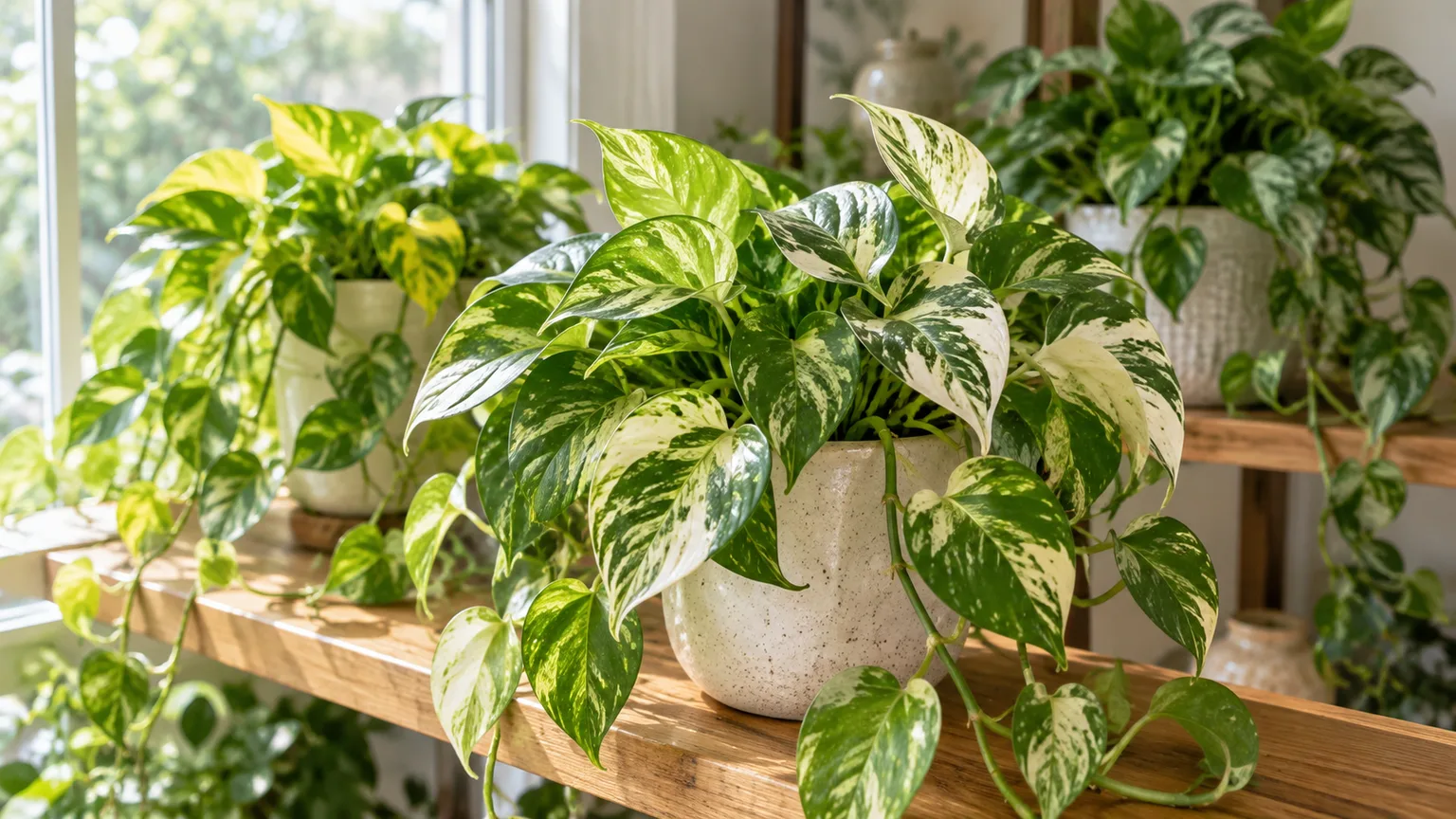
A variegated plant has leaves, stems, or other parts patterned with two or more colors. The cream patches on a pothos, pink sectors on a philodendron, and silver sheen on satin pothos all look “variegated,” but they do not necessarily form in the same way. That distinction matters: it changes what the pattern means, whether new growth is likely to repeat it, and what you should do if the colors change.
The short version is that variegation is a description of appearance, not a diagnosis or a single genetic process. Some patterns are built into a plant’s inherited traits, some come from a mix of cell types in one growing point, some reflect light through leaf structure, and some mottling can be caused by a virus. Once you know which broad pattern you are looking at, you can make a better call about light, pruning, and propagation.
What plant variegation means
Variegation is visible color variation within a plant or across its leaves. The pattern may appear as a margin, stripe, splash, speckle, vein, band, or a sharply divided sector. White, cream, yellow, pink, red, purple, pale green, and silver are common colors, but the appearance alone cannot tell you what is happening inside the leaf.
A plant sold as variegated may be a naturally patterned species, a named cultivar selected for foliage color, or a plant whose unusual pattern began as a mutation. The word also appears in botanical names and cultivar names, but it is not a guarantee of a particular cause. Two plants with cream markings may have very different cell biology and propagation behavior.
“Variegated” also does not mean “sick.” Most familiar ornamental patterns are normal traits, and a healthy plant can produce leaves with different amounts of color as it matures. However, a sudden irregular mosaic accompanied by distortion, dead spots, or declining growth deserves a closer look because viruses and other stressors can also alter leaf color.
How leaf color and chlorophyll fit into variegation
Chlorophyll is the green pigment plants use to capture light energy for photosynthesis. In many white or cream sectors, cells contain less chlorophyll or lack normally functioning chloroplasts, so those areas contribute less to the plant’s energy production than green tissue does. A completely white leaf may look dramatic, but it has little green tissue to support itself and often declines sooner than a leaf with a useful balance of green and pale areas.
Color is more complicated than “green equals healthy, white equals no chlorophyll.” Yellow sectors can result from reduced chlorophyll, while pink or red may involve pigments such as anthocyanins. Silver markings can be structural: tiny spaces within the leaf can reflect light and create a metallic look even though the plant is not simply missing green pigment there. In some varieties, patterns involve several processes at once.
A study of variegated English holly found substantially less chlorophyll in the yellow tissue than in its green tissue. That is a useful example of why pale zones can matter to growth, but it is one cultivar, not a rule for every variegated plant; leaf structure and pigment mechanisms vary among species. The open-access study in Plants examines those green and yellow sectors in detail.
The practical takeaway is modest: if a large share of a plant’s leaf area is pale, it may have less photosynthetic surface and grow more slowly than a comparable all-green plant. But you cannot diagnose a plant’s health or set its light by counting pale patches. Species, cultivar, age, root health, season, and the type of variegation all affect growth.
Four distinct ways variegation appears
Inherited or pattern-gene variegation is built into a species or cultivar’s normal pattern. Repeated, orderly marks such as stripes, dots, or mottled zones often remain recognizable on new leaves, though their intensity can still change with growth conditions. Calathea lancifolia, for example, has a repeating leaf pattern rather than random cream sectors that appear and vanish from one stem to another.
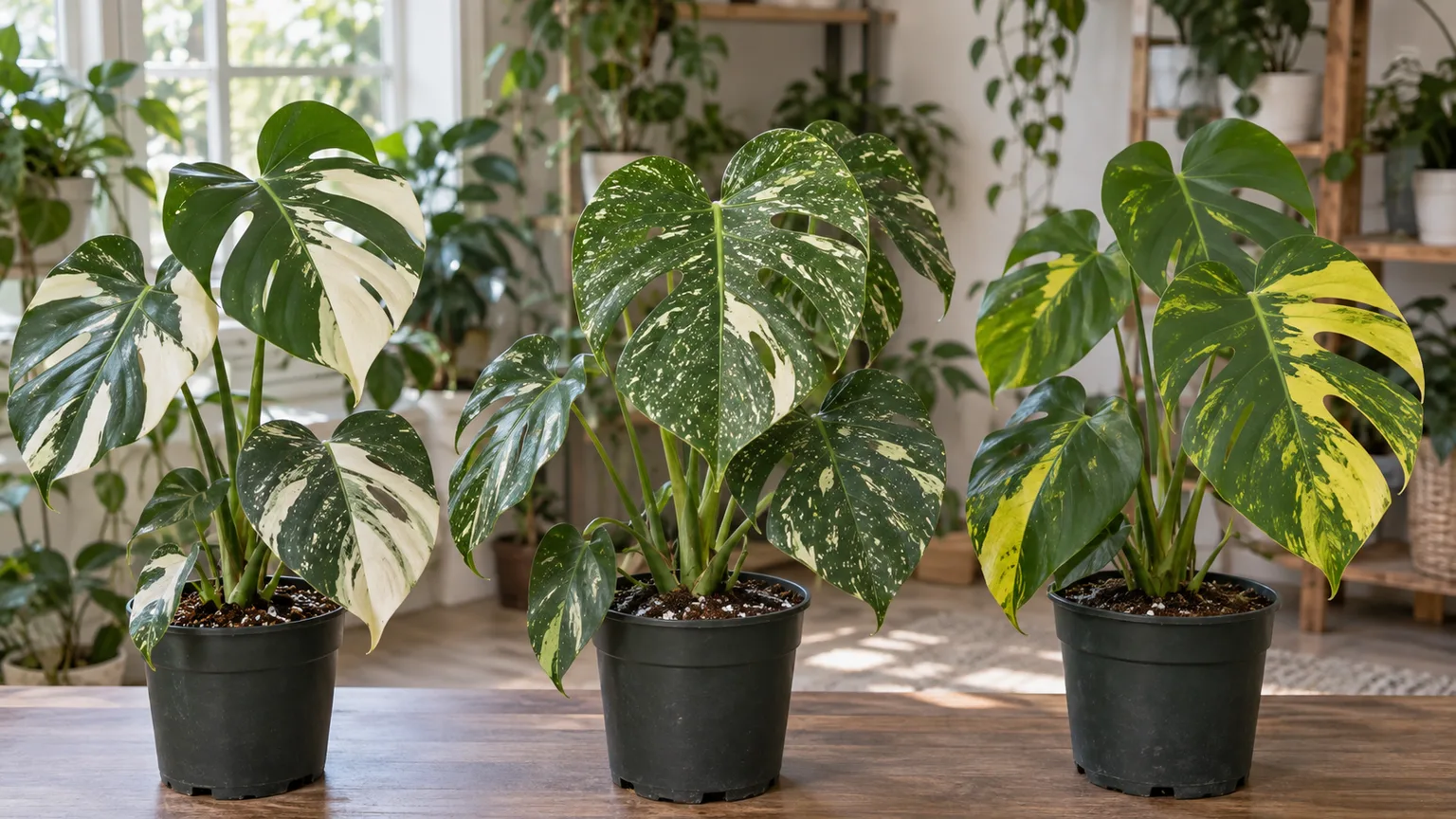
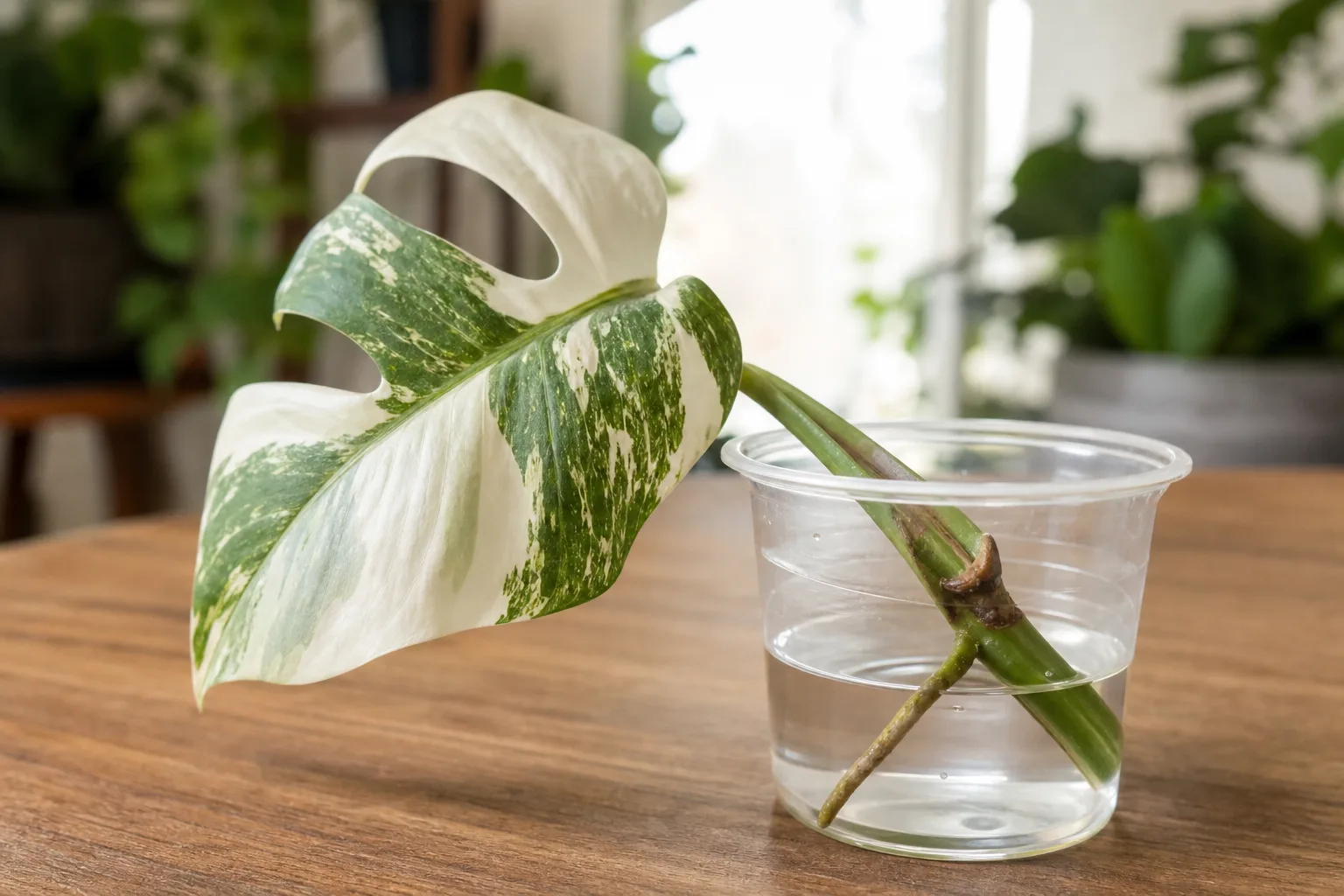
Chimeral variegation comes from more than one genetically distinct cell population growing together in the same plant. In an ornamental chimera, some cells make chlorophyll and others do not, so a leaf can show sharp cream and green blocks, narrow stripes, speckles, or half-moon sectors. Variegated Monstera and Pink Princess Philodendron are familiar examples. Because the growing point contains a mix of cell lineages, a shoot can sometimes produce mostly green, mostly pale, or mixed foliage.
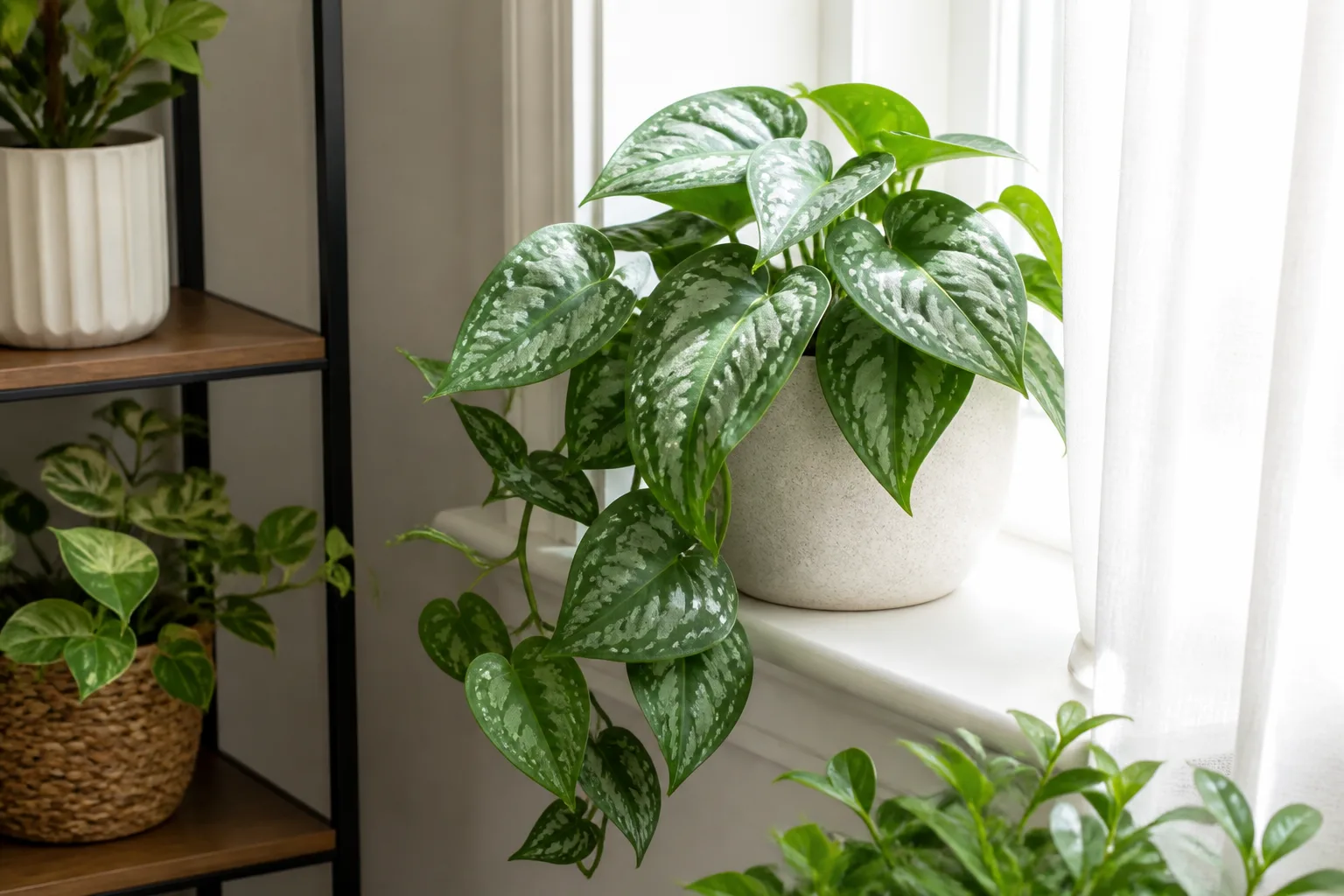
Reflective, or blister, variegation is caused by leaf structure rather than simply by a missing patch of pigment. Air spaces beneath the leaf surface scatter reflected light, creating silver spots or bands. Satin pothos (Scindapsus pictus) and watermelon peperomia are easy examples to recognize: their silvery areas look embedded in or shimmering across the leaf, not like a flat cream sector. The visual effect is real variegation in the broad horticultural sense, even though its cause differs from a white Monstera patch.
Virus-associated patterns are different from desirable cultivar markings because they can signal an infectious plant disease. A virus can cause mottling, mosaic patches, vein clearing, rings, distortion, or stunted growth. Some historic ornamental patterns are virus-associated, but that does not make unexplained symptoms safe to propagate or share. A plant with a recognized cultivar pattern is not automatically infected; the question is whether the pattern is consistent and expected for that plant or changing alongside other symptoms.
These four groups are useful for gardeners, not a complete scientific taxonomy. Research classifies leaf color variation in additional ways, including pigment differences, altered chloroplast development, air spaces, and surface structures. Labels also overlap: one plant can involve a genetic mutation and a chimeral growing point, while a virus can create color patterns that resemble a designed cultivar.
What “stable” and “unstable” variegation mean
A stable pattern is one that the plant’s biology or cultivar tends to reproduce predictably in new growth. That does not mean every leaf will match exactly. A patterned species can produce lighter or darker markings from leaf to leaf, and light, maturity, temperature, and other conditions can influence how strongly a trait shows.
An unstable chimeral pattern can shift because the growing point may not maintain the same balance of green and non-green cell lines. One stem may make mixed leaves, then send out a fully green shoot; another may produce leaves with more pale tissue. The plant has not necessarily changed its DNA everywhere, and moving it into stronger light cannot reliably rebuild the lost variegated cell layer.
“Stable” also should not be read as “guaranteed to pass through every kind of propagation.” A pattern written into a species’ inherited traits may be more likely to appear in seed-grown offspring than a chimeral pattern, but named cultivars are often maintained vegetatively to preserve their distinctive form. The Royal Horticultural Society explains that plant sports and chimeras can be associated with mutation and that some mutations revert while others persist. The Royal Horticultural Society’s guide to plant mutations is a useful reminder that permanence depends on the plant and the particular mutation.
A change in color does not automatically mean reversion. Reversion usually describes a shoot or branch returning to a form found in the plant’s parentage, such as an all-green stem on a cultivar normally sold with white or cream leaves. A pale leaf that later greens as it matures, a newly emerging leaf that looks lighter before hardening, and gradual fading under weak light are different observations. Track which stem produced the leaf and compare several rounds of new growth before making a pruning decision.
Tell a cultivar pattern from stress or a virus
A single photo rarely proves why a leaf changed. Before you label a pattern as reversion, virus, or “not enough light,” compare the plant with its own older growth, check whether several leaves are changing in the same way, and note when symptoms began. Look for secondary clues such as distorted new growth, brown dead tissue, pests, dry soil, sun exposure, or a recent move.
Compare the pattern, not just the color
Expected cultivar variegation often repeats a recognizable shape: a consistent border, stripe, speckled surface, or set of sector patterns that matches the plant’s label or reliable plant description. Chimeral plants can be less orderly, so repetition is not proof on its own; still, a familiar pattern on otherwise normal leaves is different from a new mosaic of light and dark green that appears alongside puckering or malformed leaves.
Stress can also create pale or brown patches. Strong direct sun may bleach or scorch exposed leaf areas; drought, root problems, cold damage, nutrient imbalance, and pest feeding can produce yellowing or patchiness. Stress patterns tend to track the affected conditions or tissue, while a genetic trait is often repeated through a particular cultivar or stem. Check the underside of leaves and the growing tip for pests before changing the plant’s care.
Watch new growth and the whole plant
Older leaves do not always tell you what the growing point is producing now. Follow the stem from its tip backward: are only the newest leaves changing, is one entire branch solid green, or is the pattern appearing as mottling across unrelated leaves? A single green shoot on an otherwise healthy variegated plant points more toward a reversion or a shift in a chimera than a whole-plant disease diagnosis.
Notice whether growth is also twisted, puckered, unusually narrow, spotted with dead tissue, or slower than usual. The Royal Horticultural Society’s plant-virus guidance lists mosaics, vein patterns, mottling, distortion, and stunting among possible symptoms, while also noting that symptoms vary by plant and virus. Those signs are clues, not a home test: environmental damage and pests can look similar, and only a suitable diagnostic service can confirm an infection.
If a virus is plausible, isolate before you prune
Move a suspicious plant away from nearby plants while you investigate. Avoid taking cuttings, sharing leaves, or using the same uncleaned pruners on other plants; wash your hands and clean tools after handling it. If the plant is valuable, symptoms are spreading, or it sits among a susceptible collection, contact a local cooperative extension or plant diagnostic clinic for an appropriate diagnosis before deciding whether to keep or discard it.
Viruses are not corrected by brighter light, fertilizer, or pruning off one mottled leaf. The RHS notes that there are no chemical controls for plant viruses and advises against propagating suspect plants. A virus may not kill its host, but an infected plant can still act as a source of infection for others. Until you know what you are seeing, containment is a safer first step than trying to preserve the pattern.
Variegated plants to know by pattern and setting
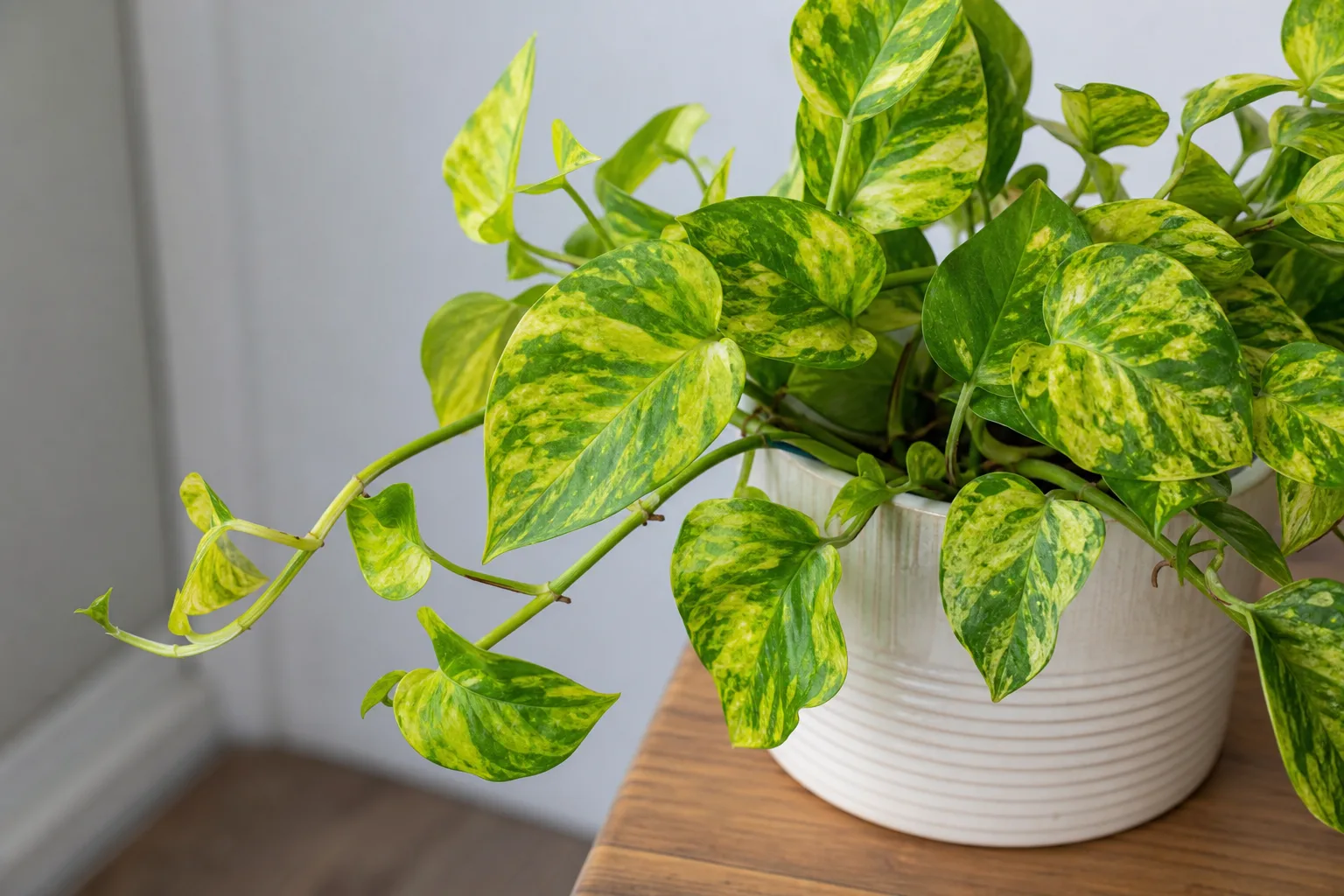
If you want a beginner-friendly variegated houseplant, start with a plant whose overall care matches your room and your habits, then consider the pattern. Pothos cultivars such as ‘Marble Queen’, ‘N’Joy’, ‘Pearls and Jade’, and ‘Manjula’ offer white or cream markings with different leaf shapes and growth habits. Their patterns are not identical, and a trailing pothos that fits a shelf is a very different purchase from a large, climbing Monstera.
For bold sector color, collectors often look at Monstera deliciosa ‘Albo’ or ‘Thai Constellation’ and Philodendron ‘Pink Princess’. The visual contrast is appealing, but a buyer should inspect the stem and growing point as well as the current leaves. A cutting with attractive leaves but a mostly green stem or no viable node may not produce the pattern or growth the buyer expects.
Ficus elastica cultivars such as ‘Ruby’ and ‘Tineke’ show broad bands of cream, pink, or pale green. ‘Domino’ peace lily has flecked foliage, while calatheas and related prayer plants offer repeating or painted-looking patterns. For silver rather than cream, Scindapsus pictus or watermelon peperomia illustrates reflective variegation. These names are examples, not guarantees of a specific pattern on every specimen.
Variegated foliage is not just an indoor-plant feature. Hosta, Brunnera, and variegated Jacob’s ladder can bring pale edges or patterned foliage to outdoor shade planting. Fine Gardening, for instance, lists variegated Jacob’s ladder for partial to full shade, which is a useful counterexample to treating “variegated” as a synonym for “sun-loving.” Fine Gardening’s profile of variegated Jacob’s ladder shows why the plant’s own cultural requirements matter more than a generic variegation rule.
Set the light without scorching pale sectors
Light affects how well a plant grows, but it does not make every plant produce more variegated tissue. When a pattern is genetic or chimeral, moving the plant into harsh sun will not create the missing cells. Better light can help a plant make enough energy from its green tissue, and some patterns may look more pronounced as new growth develops under suitable conditions, but the response depends on species and cultivar.
For tropical houseplants that are normally grown in bright, filtered light, a bright window softened by a sheer curtain is often a safer starting point than direct midday sun. A plant that has been in a dim corner should be moved gradually, not placed suddenly against hot glass or outdoors in full sun. Pale sectors can scorch sooner, while some outdoor variegated cultivars are selected for sun or shade according to species.
Watch both growth and damage. Long spaces between leaves, small new leaves, or a steadily greener shoot may suggest the plant is not getting conditions that support its normal growth, but they do not prove that low light caused a specific pattern to vanish. Bleached patches, dry brown edges on the window-facing side, or leaf temperature that feels unusually warm suggest too much intensity or heat. Change one location variable at a time and give new leaves time to develop before deciding whether the adjustment helped.
Do not use fertilizer or watering as a shortcut to restore color. Extra nutrients cannot turn a green plant into a variegated cultivar, and overfeeding can injure roots. Water when the plant’s own mix and species call for it; a variegated plant does not automatically need more water just because it has pale tissue.
Prune a green reversion carefully
Pruning can control a vigorous all-green shoot on a chimeral cultivar, but it cannot promise that the next bud will produce variegated leaves. Green shoots may have more photosynthetic tissue and grow faster than neighboring patterned stems, so leaving one can gradually change the plant’s appearance. Whether that matters is a preference: an all-green branch is not automatically harming the rest of the plant.
Find the shoot’s origin before cutting
Follow the green growth back to the point where it emerges from the patterned stem or crown. If it is a separate shoot, remove that shoot at its base with clean, sharp pruners, taking care not to nick the main stem. If the plant is a single vine producing several consecutive all-green leaves, trace back to a node associated with the last clearly variegated growth and prune only where a healthy bud or growing point remains.
Do not trim the pale half of an otherwise healthy leaf in an attempt to make the next leaf greener or more patterned. A leaf cannot be remapped by cutting away one color zone. Remove a dead or badly damaged leaf only when it is mostly spent or affects care, and do so at the leaf stalk rather than cutting across living tissue for cosmetic reasons.
When to leave green leaves alone
Green leaves are productive tissue, so removing every green leaf can reduce the plant’s energy supply. If only one leaf is fully green but the shoot still produces a mix of patterns, wait and observe. If growth is weak, roots are disturbed, or the plant has recently been moved or repotted, postpone discretionary pruning until it is growing steadily.
Pruning is unnecessary for a stable patterned species or for reflective silver foliage that looks less bright under a different angle of light. First confirm that the plant is truly producing a persistent green branch rather than showing a normal change in leaf maturity, seasonal color, or exposure. The goal is to manage a specific shoot, not to chase a perfect ratio of green to white on every leaf.
Propagate a variegated plant without false promises
The propagation method that works depends on how the plant carries its pattern. A seedling can show inherited species traits, but a seed from a named ornamental cultivar may not look like its parent. A division may carry a patterned growing point in a clumping plant, while a leaf cutting that roots successfully may still make an all-green plant if the relevant growing tissue was not included.
This is why “take a cutting from a variegated leaf” is incomplete advice. Roots can form from a piece of leaf or stem without that piece having the bud or cell arrangement needed to make a new shoot with the same pattern. Before cutting, identify the plant’s growth habit, the node or division point, and whether the pattern is stable or chimeral. A rooting hormone cannot fix a missing meristem or reconstruct a cell-layer pattern.
Match the propagation method to the plant
For a naturally patterned species or a stable cultivar, use the propagation method recommended for that plant: division, seed, or stem cuttings as appropriate. The expected pattern may be inherited or preserved on established offshoots, but seed-grown named cultivars can vary because sexual reproduction reshuffles traits. If keeping the exact cultivar appearance matters, a division or vegetative cutting from a correctly identified parent is usually a more predictable starting point.
For chimeral plants, the combination of cell types at the stem’s growing point matters. A leaf-only cutting is not a dependable way to recreate a chimera, and seeds generally do not reproduce the parent’s exact cell-layer arrangement. Horticulture references such as Pistils Nursery’s explanation of variegated houseplants and Gardening Know How’s guide to variegation describe why the kind of variegation changes the odds of keeping it.
Choose a stem cutting for a chimeral plant
A stem cutting needs at least one healthy node with a viable bud or growing point, not just a colorful leaf. Choose a section from a stem that is itself showing variegation near the node, if that is visible on the plant. The existing leaf can help you judge the parent stem, but the new shoot will be built from tissue at the node, so even a well-chosen cutting may produce a different balance of green and pale growth.
Use a clean tool, keep the cutting’s node in the rooting medium or water according to the species’ method, and wait for roots and active new growth before deciding whether the pattern carried over. Avoid taking material from a plant with unexplained mosaic marks, distorted leaves, or suspected virus symptoms. For a high-value cultivar, ask a reputable nursery how that particular variety is propagated; a general rule cannot replace cultivar-specific knowledge.
Conclusion
A variegated plant is simply a plant with contrasting color patterns, but the reasons for those patterns range from inherited pigmentation to mixed cell layers, reflective leaf structure, and viral symptoms. Knowing the difference helps you interpret what you see: a stable repeating pattern usually needs ordinary species-appropriate care, a chimeral green shoot may be a pruning decision, and new mottling with distortion deserves isolation and diagnosis.
Give the plant the light its species or cultivar needs rather than pushing it into harsh sun, and do not expect light or fertilizer to manufacture a pattern. Before pruning or propagating, follow the stem to its growing point and consider how that plant carries its variegation. The most reliable approach is to protect healthy growth, observe new leaves, and treat uncertainty as a reason to check carefully instead of cutting or changing several conditions at once.