How to Plant a Kitchen Herb Garden Indoors
Plant a kitchen herb garden that fits your light, space, and cooking habits, with practical advice on herbs, pots, soil, watering, and harvesting indoors.
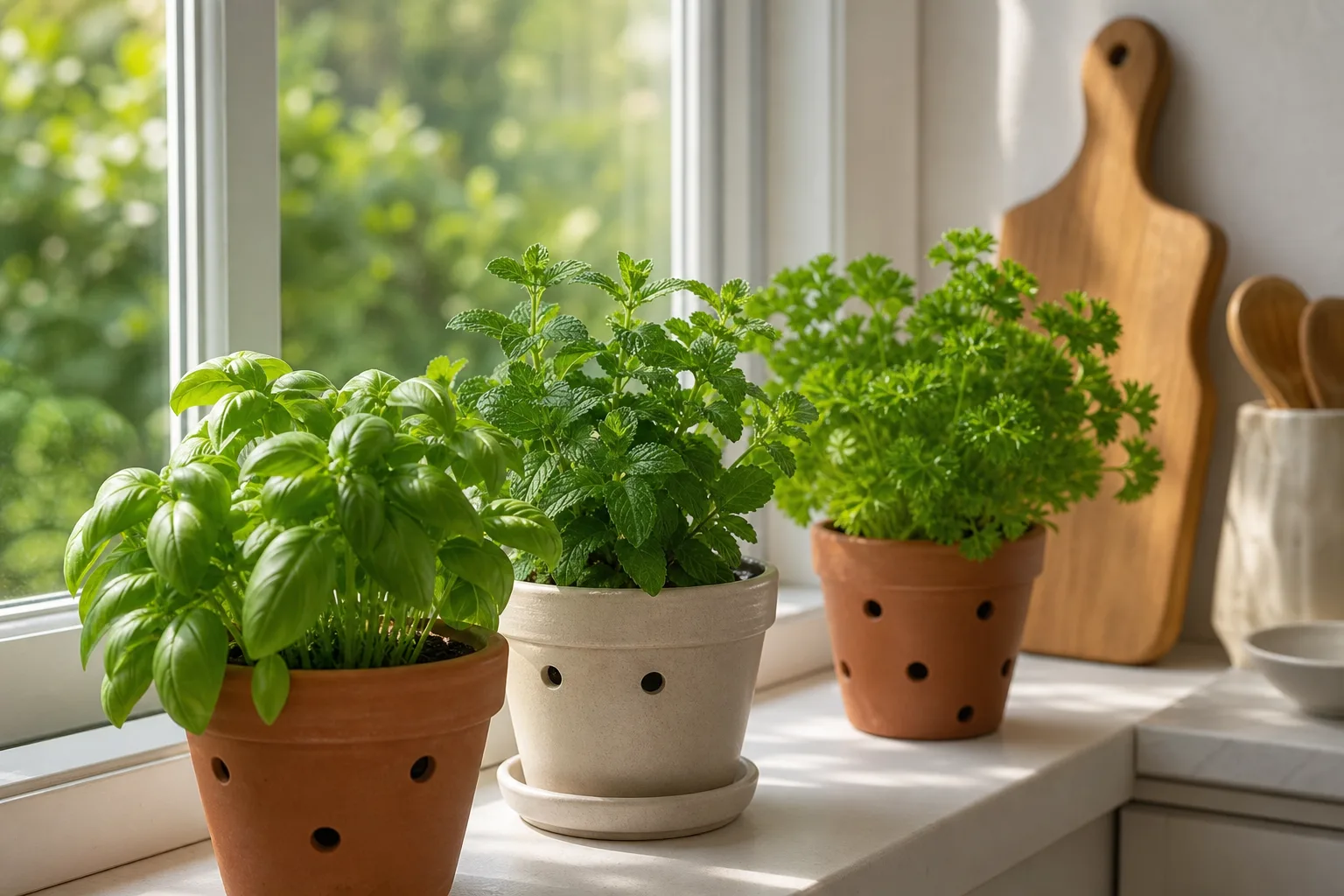
A useful kitchen herb garden starts with the window you have, not with a bundle of plants from the garden center. A sunny south or west window can support basil, thyme, and rosemary; a cooler or less-bright sill is a better fit for chives, parsley, and cilantro. If the kitchen is shaded most of the day, a small grow light may be the difference between usable leaves and long, weak stems.
Choose two or three herbs you already cook with, give each a pot that drains, and group plants with similar light and watering needs. That modest setup is easier to keep healthy than one crowded planter holding every herb you like. Indoor herbs also grow more slowly than outdoor plants, especially in winter, so plan for regular small harvests rather than a continuous supermarket-sized supply.
Read your kitchen before choosing herbs
Spend a day noticing where direct sunlight actually falls and for how long. A window’s compass direction is a helpful clue, but trees, neighboring buildings, overhangs, screens, and the season all change the light at leaf level. A south-facing window in summer can be bright and warm; the same sill in winter may be cold against the glass and receive a much shorter period of sun.
Look at the intended spot from the plant’s height, not from across the room. A kitchen can feel bright to you while its countertop receives little usable light, because human eyes adjust to indoor lighting far better than leaves do. If a plant there stretches toward the glass, spaces its leaves widely, or produces smaller new growth, the location is not supplying enough light for that herb.
Also check practical constraints. A narrow sill may not safely hold heavy ceramic pots, a radiator can dry or overheat foliage, and a sink splash zone may leave leaves wet without giving roots the air they need. Place plants where you can reach them to water and harvest, but where drainage water will not stain wood or sit inside a decorative cachepot.
Choose herbs that fit your light and appetite
The best indoor herb is the one that both tolerates your conditions and gets used in your cooking. Penn State Extension’s indoor-herb recommendations include basil, chives, and cilantro, while warning that herbs with large root systems are poor container candidates. The Chicago Botanic Garden’s windowsill guide also distinguishes herbs that can be grown from seed or divisions and points readers toward chives, parsley, basil, oregano, sage, and thyme. A recent Associated Press gardening guide makes the same useful distinction: some popular outdoor herbs need more root depth or stronger light than a small kitchen pot can offer, but that is a reason to match the plant to the setup rather than avoid herbs altogether.
Best bets for a bright kitchen
Basil is an excellent kitchen herb when it has strong light, warmth, and enough room to branch. A compact Genovese or Greek basil is easier to manage on a sill than a large, fast-growing plant. Pick the growing tips frequently once it is established; a basil that is never cut often becomes tall and flowers sooner, while a plant cut hard before it has built enough stems may stall.
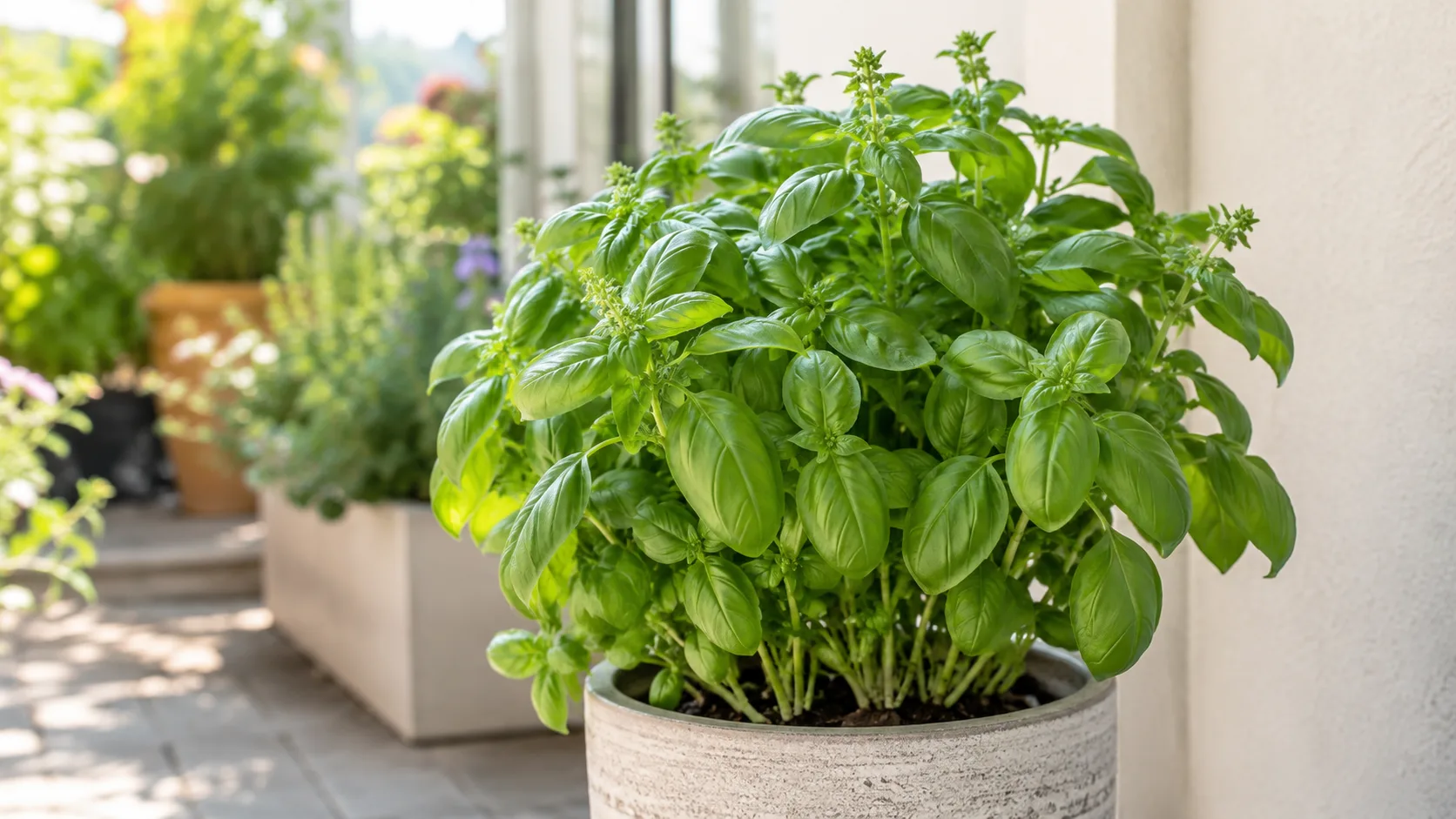
Rosemary, thyme, and oregano are useful if your window is genuinely bright and you can provide a fast-draining mix. These Mediterranean herbs prefer their potting mix to dry somewhat between waterings, so they are not ideal companions for moisture-loving basil or parsley. They grow slowly indoors and may remain smaller than garden specimens, but a few sprigs for cooking are realistic if light and drainage are good.
Better picks for filtered or part-day light
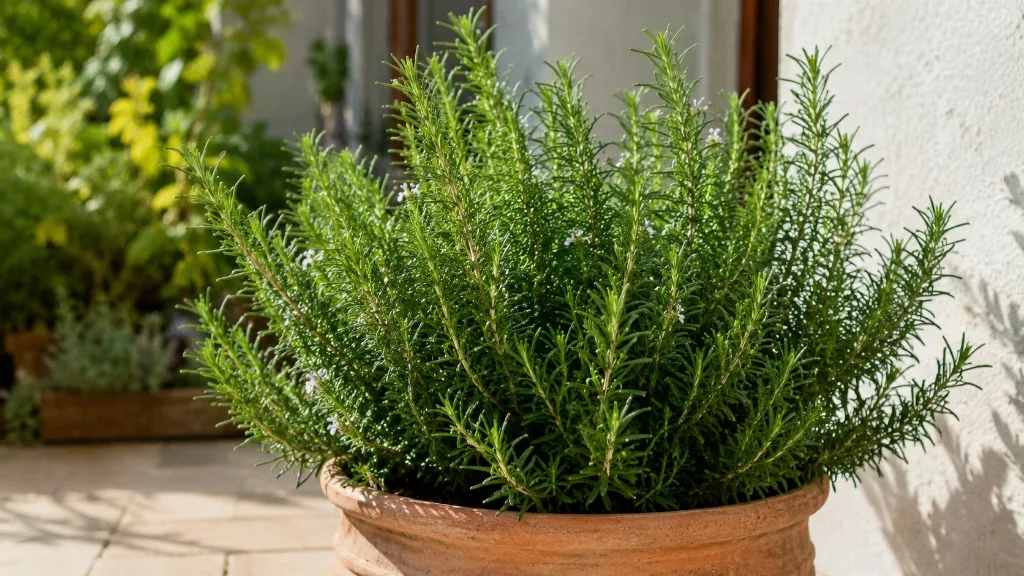
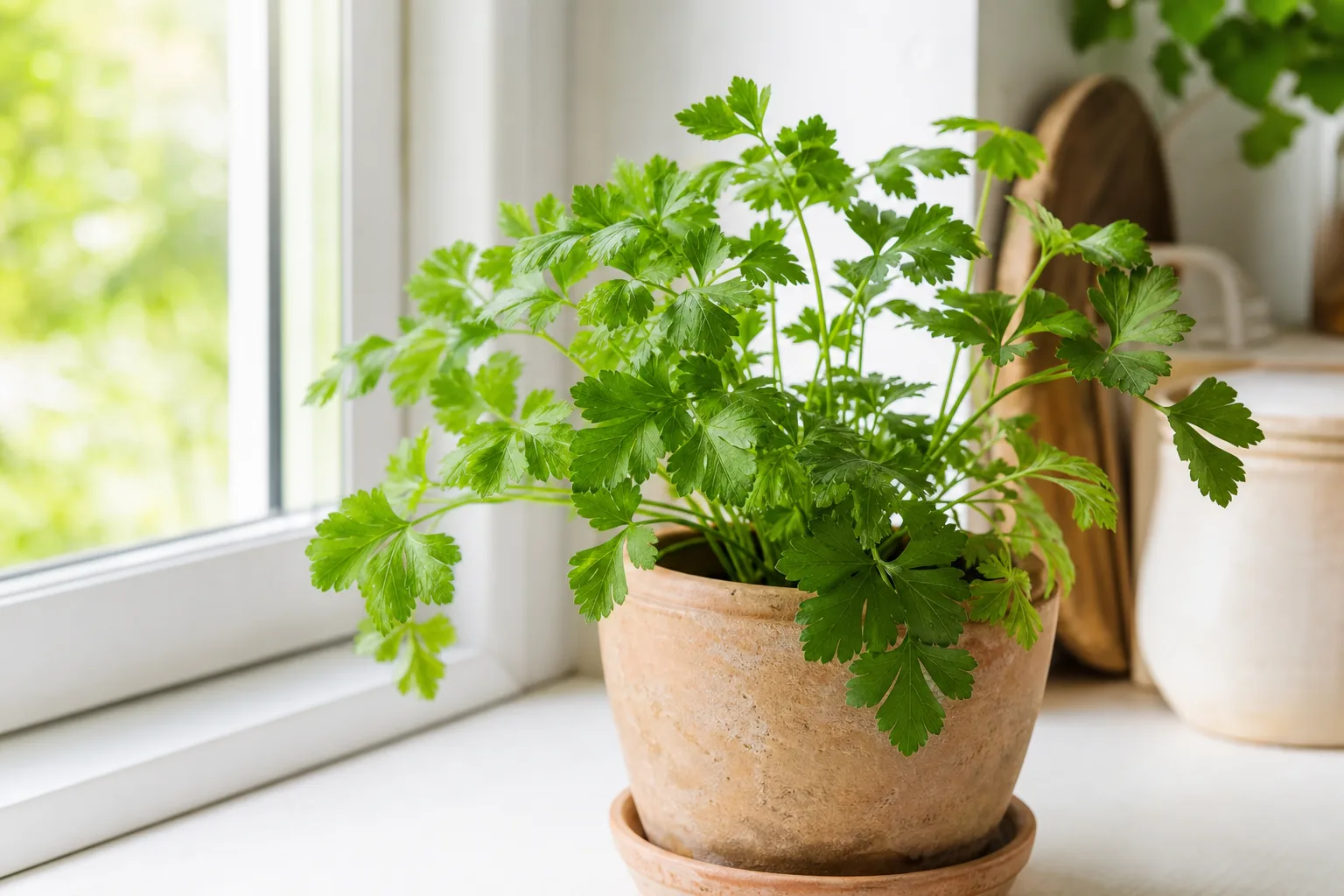
Chives and parsley are forgiving starter choices when a kitchen gets less direct sun. Chives send up fresh leaves after careful cutting and tolerate repeated harvests; parsley grows more slowly, but its leaves can be clipped from the outside of the plant while the center continues producing. Cilantro can also work in a bright but not scorching window, although it is a short-lived, cool-season herb that often bolts as days lengthen or temperatures rise.
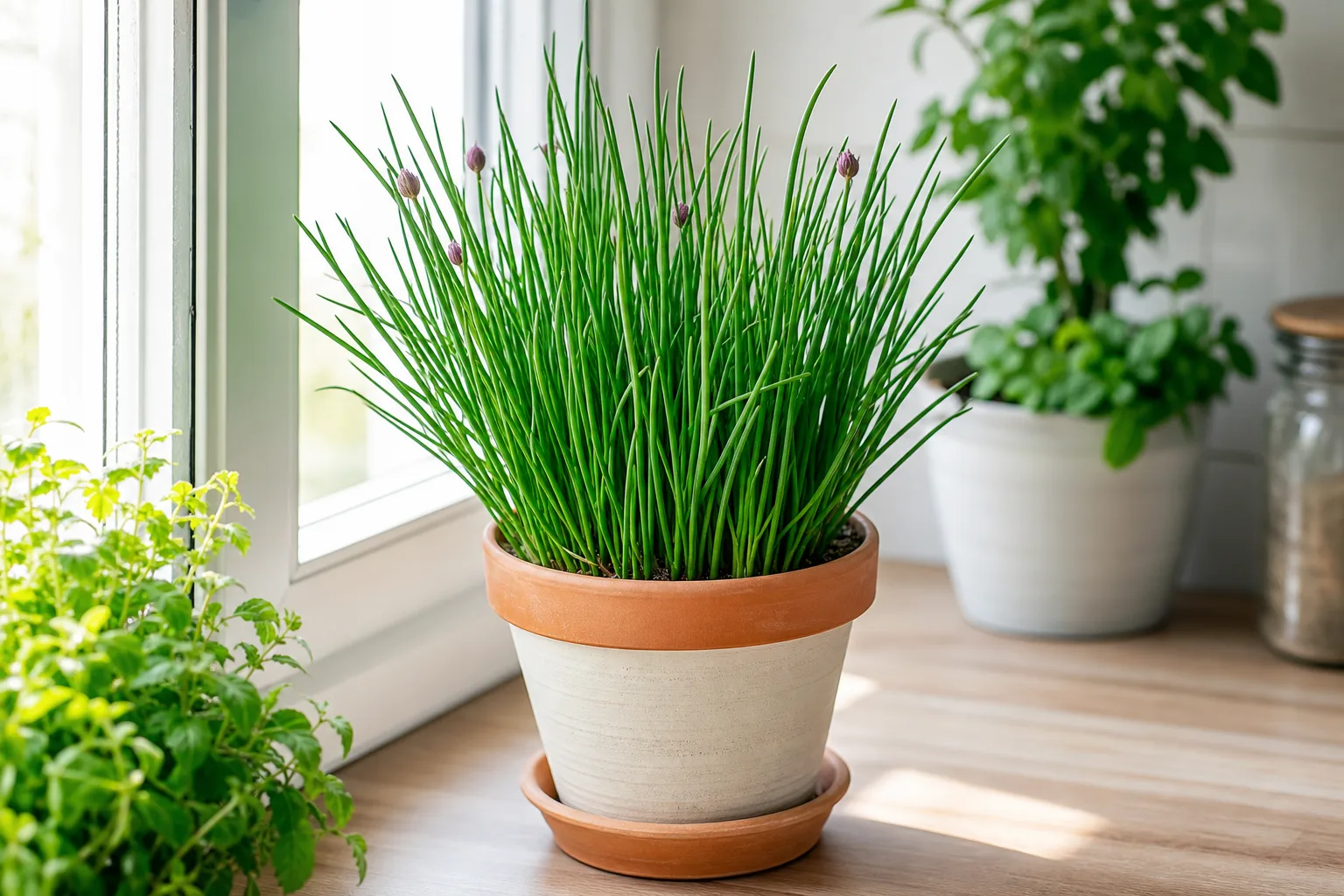
Mint grows readily in a pot and tolerates some shade, but its spreading roots make it a poor neighbor in a shared planter. Grow one mint plant in its own container and keep it where you can cut it often for tea, sauces, or salads. If you rarely use mint, one small plant can still become crowded; trim stems or divide the rootball rather than letting it fill every inch of its pot. A 2026 windowsill guide from Botanical Interests similarly stresses that light and growth habits change indoors, so choosing plants for the actual sill is more reliable than treating every culinary herb as interchangeable.
Give runners and thirsty plants their own pots
Herbs have different preferred moisture levels and growth habits. Basil and parsley generally use water more steadily than rosemary and thyme, whose roots are more vulnerable to staying wet. Mint and lemon balm spread through vigorous roots, while dill and fennel develop deeper root systems than a shallow windowsill box can comfortably provide. A separate pot lets you water each plant according to its needs and move it if the window proves too dim.
Start with seed, a nursery plant, or a grocery pot?
Seeds offer the widest variety and let you raise a young plant directly in the pot where it will grow. Basil, cilantro, parsley, and chives are reasonable seed-starting choices, but germination speed varies; parsley is notably slower than basil. Follow the packet depth, keep the seed mix evenly moist rather than saturated, and provide strong light as soon as seedlings emerge. A bright windowsill may still be too weak for compact seedlings, so move a grow light close enough to illuminate them evenly.
Nursery starts give you an immediate harvest and are convenient when you want just one or two mature plants. Inspect the undersides of leaves and the soil surface before bringing them home. After transplanting, water thoroughly and let excess drain; give the plant several days to settle before harvesting heavily.
Grocery-store herb pots are often packed with many seedlings in one small rootball. They can provide quick leaves, but the crowding that makes them look lush at the store also creates competition for light, water, and root space. If you want to keep one long-term, tease the rootball into a few smaller clumps and plant them separately, or use the foliage quickly and start a less crowded pot from seed. The Brooklyn Botanic Garden’s windowsill project recommends keeping a small shared container to just a few plants so they do not crowd each other.
Choose a container and mix that can breathe
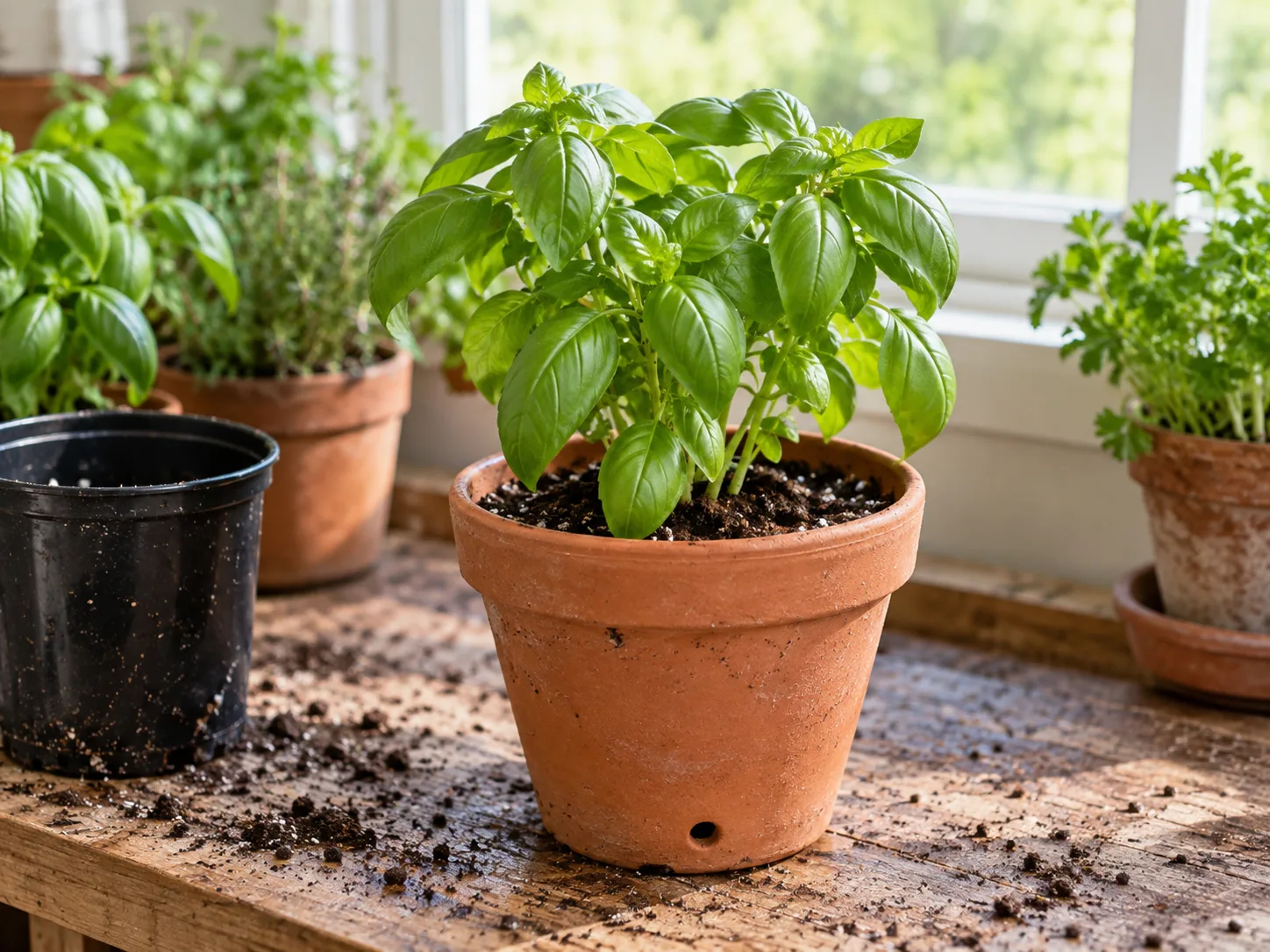
Every herb pot needs at least one drainage hole. A decorative pot without drainage can be used as an outer cachepot, but the herb should sit in a separate nursery pot that you remove for watering. After the water drains, empty the outer pot or saucer so the roots are not left in a pool.
Use a container large enough for the plant’s roots and stable enough not to tip. A pot about 6 to 8 inches wide is a reasonable starting size for one small herb, while parsley, mint, or a larger basil may need more room as they grow. The exact size depends on the cultivar and rootball; avoid putting a tiny transplant into an enormous container, where a large volume of mix can remain damp long after the roots have used the water.
Standard commercial potting mix is a good starting point because it is lighter and drains more freely than garden soil. Do not fill a kitchen pot with soil dug from the yard: it can compact in a container, drain poorly, and bring weed seeds or soil pests indoors. For rosemary, thyme, and oregano, improve drainage with a mix labeled for containers or blend in a modest amount of perlite. A layer of stones in the bottom does not replace a drainage hole or correct a dense mix.
Plant one herb or build a shared planter
Before planting, water a dry nursery rootball so it releases from its pot without tearing. Fill the new container with moistened potting mix, set the herb at the same depth it was growing before, and firm the mix gently around the roots. Leave a little space below the rim so water can soak in without washing soil over the edge.
Water slowly until the whole rootball is moist and water starts to exit the drainage hole. Let the pot finish draining before setting it back on the sill. If the plant is leggy or has been grown in a crowded sleeve, remove only damaged or flowering growth at first; a severe pruning plus a transplant plus a sudden change in light can stack too much stress at once.
A practical shared-pot recipe
A mixed planter can work when plants share enough needs and the container is not cramped. For a bright, warm window, try basil with chives, leaving a few inches between plants and giving the basil the roomier side of the pot. For a cooler window, parsley and chives make a more forgiving pair. Avoid putting mint in either combination, and do not combine rosemary and thyme with herbs that need consistently moist soil unless you can water the dry-loving herbs separately.
Treat a shared planter as one watering unit: the soil cannot stay dry on one side and evenly moist on another for long. If one plant repeatedly wilts while its neighbor remains wet, separate them. Individual pots may take slightly more space, but they turn confusing care into a simple check of each container.
Set the light and temperature
Put herbs in the brightest suitable window, usually a south or west exposure in the Northern Hemisphere, while protecting tender foliage from a freezing pane or a blast of hot air. East-facing windows can support chives, parsley, and mint more reliably than rosemary or thyme. A north-facing window often needs supplemental light for productive basil and other high-light herbs.
University extension recommendations commonly place indoor herbs in a sunny window or under supplemental lights for a long daily period. Illinois Extension notes that herbs typically need six to eight hours of bright light and that supplemental lights may need to run 12 to 16 hours because they are less intense than sunlight. LED fixtures vary, so use the manufacturer’s distance and timing instructions, and watch plant growth rather than copying an hours-long schedule blindly. Keep a grow light close enough to reach the foliage, but not so close that leaves heat or bleach.
Rotate windowsill pots every few days so one side does not lean toward the glass. Herbs generally do not need tropical-houseplant humidity tricks; normal household air is usually adequate when roots drain and foliage has some air movement. Avoid placing pots beside a heater, oven, or frequently opened cold window. Basil is especially sensitive to cold, so do not press it against winter glass.
Water after checking the root zone
Watering “when the soil is dry to the touch” is too vague for a mixed herb collection. Push a finger about an inch into the mix, check the pot’s weight, and learn how quickly each plant dries. A small terracotta pot in direct sun may need water much sooner than a larger plastic pot in a cool kitchen, even if both sit on the same sill.
When the upper layer has begun to dry and the pot feels lighter, water evenly until some runs from the drainage hole. Then empty the saucer. This wets the full root zone and helps carry out accumulated fertilizer salts, while the drainage period restores air around the roots. Do not leave the pot sitting in drainage water; roots need oxygen as well as moisture.
Basil and parsley prefer steadier moisture than rosemary, thyme, or oregano, but “steadier” does not mean permanently soggy. If a plant wilts while its soil is wet, adding more water can worsen the problem; check the roots and drainage first. If a small pot dries hard and pulls away from its sides, soak the rootball slowly and let it rehydrate, then resume checking more often.
Feed lightly and repot only when needed
Fresh potting mix may contain starter fertilizer, so check the bag before adding plant food. Once an herb is established and actively making new leaves, a diluted complete liquid fertilizer can replace nutrients that regular watering carries away. Penn State Extension suggests a low dose of water-soluble fertilizer about every two weeks for indoor herbs, while other horticulture guidance uses longer intervals; product strength, growing speed, and the potting mix all differ. Start conservatively, follow the product label, and do not feed during a winter slowdown just because the calendar says it is time.
Too much fertilizer can produce soft, fast growth and leave salts in a pot. If white crust forms on the mix or pot rim, pause feeding and water thoroughly so excess drains away. Yellow leaves alone do not prove that an herb needs nitrogen: low light, old leaves, waterlogged roots, and cramped pots can look similar. Fix the growing condition before increasing fertilizer.
Repot when roots circle densely, emerge from the drainage hole, or the plant dries unusually fast despite normal conditions. Move it into a pot only one size larger and refresh the mix. A plant that is healthy but simply slow in winter does not need a bigger pot or extra food; indoor growth naturally slows when day length and light intensity drop.
Harvest for continued branching
Harvest after a transplant has settled and the plant is making fresh growth. For basil, pinch or snip the stem just above a pair of leaves so the buds at that node can branch. Do not strip lower leaves until the plant has enough stems to keep making food. Chives can be snipped a few inches above the soil, leaving the base to regrow; parsley is best cut at the outside stalks rather than having its central new growth clipped.
For leafy herbs, frequent light harvests are usually more useful than one severe cut. Remove no more than about one-third of a healthy plant at a time, and let it rebuild before taking another large handful. Woody herbs such as rosemary and thyme should be clipped from soft green tips, not cut back into old bare stems that may not sprout again.
Flowering is not a disaster, but it changes the plant’s growth pattern. Basil may become less productive for leaves as it shifts toward flowers and seed; pinch flower buds if you want to prolong leafy growth. Cilantro is naturally short-lived and often bolts in heat, so sow another small pot every few weeks during its preferred cool season instead of expecting one plant to supply leaves indefinitely.
Diagnose weak growth before treating it
Indoor herbs usually decline for a small set of reasons: inadequate light, wet roots, crowding, temperature stress, or pests. Start by checking the newest growth, the soil, the drainage hole, and the window conditions. A single old yellow leaf near the base can be normal; widespread changes or repeated loss of leaves point to a growing condition that needs attention.
Long thin stems and small leaves
Leggy stems lean toward light and have long gaps between leaves. Move the plant closer to a brighter window or add a grow light; turning the pot alone only changes which side stretches. Pinch the longest stems after improving light so the plant can branch, but do not expect pruning to compensate for continued shade.
If growth is pale and thin even under a bright window, check whether curtains, trees, or winter daylight block direct sun. A lamp marketed as a decorative desk light may not provide enough intensity at leaf level. A timer creates a reliable schedule, while adjustable height lets the light stay near the growing tips as the plant gets taller.
Yellow leaves, gnats, or sudden wilt
Yellowing across lower leaves can follow overwatering, compacted mix, or roots sitting in water. Slide the rootball out gently: healthy roots should be firm, while brown, mushy roots and sour-smelling mix suggest decay. Trim clearly rotten roots with clean scissors, repot into fresh, airy mix, and adjust watering only after checking that the pot can drain.
Fungus gnats often show up where potting mix stays wet for long stretches. Let the surface dry between waterings and use a yellow sticky trap to monitor the adult flies; do not soak the pot just to drown them. Inspect new purchases for aphids, mites, or webbing before setting them beside established plants. Rinse edible foliage with clean water and avoid applying a pesticide to leaves you plan to harvest unless its label explicitly permits that use and provides the required preharvest instructions.
Keep the garden going through winter and summer
You can plant herbs indoors in any season, but sowing and growth rates respond to warmth and light. Spring and early summer are convenient for starting seeds because daylight is increasing. In winter, use a bright window or supplemental light and expect slower regrowth between harvests. Some herbs, especially basil and cilantro, are short-lived or temperature-sensitive; replacing a pot is normal and often easier than trying to preserve an exhausted plant.
When outdoor weather is warm, many potted herbs can move to a balcony or patio for stronger light and more airflow. Acclimate them gradually over a week: start in bright shade, add a little direct sun every few days, and monitor pots more frequently because outdoor wind and sun dry them faster. Before bringing plants back inside in fall, inspect both leaf surfaces and stems for insects, rinse or treat them as appropriate, and isolate them from houseplants while you watch for pests.
Conclusion
Pick herbs after you have assessed your window, then plant them in draining containers with enough room for their roots. Keep mint separate, group only plants with similar moisture needs, and use light and soil checks—not a fixed calendar—to guide care. With two or three well-matched pots, you can build a kitchen herb garden that earns its counter space through repeated, convenient harvests.



