How to Grow and Care for Flowering Almond
Plant flowering almond in sun and well-drained soil, water it through establishment, and prune after bloom. Get cultivar, disease, and safety guidance.
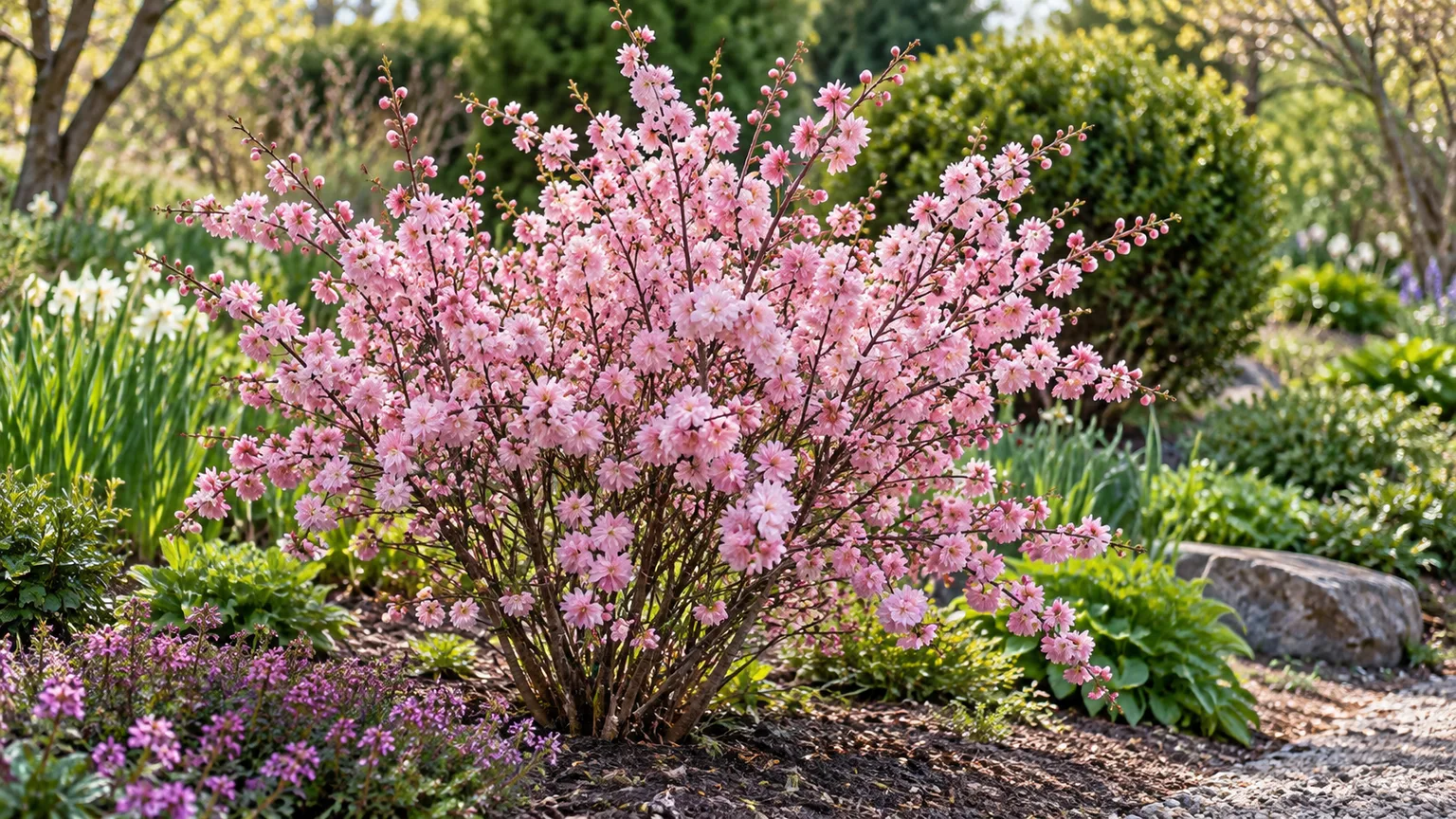
Flowering almond (Prunus glandulosa) is a small deciduous shrub grown for a dense flush of pink or white blossoms on bare twigs in early spring. Give it sun, soil that drains freely but does not dry out while roots establish, and a pruning right after bloom. The last step matters: flowers form on growth made after the previous bloom, so a winter haircut can remove the show you are waiting for.
One expectation is just as useful as any care instruction: this shrub is a seasonal performer. Its flowers can be spectacular for a short stretch, while the rest of the year brings ordinary green foliage and a somewhat open, sometimes suckering shape. Plant it where its spring display earns the space, and plan to keep its stems renewed rather than expecting a naturally formal, four-season hedge.
Confirm which flowering almond you have
Check the botanical name on the nursery label. This guide covers Prunus glandulosa, often sold as dwarf flowering almond: a rounded, multi-stem shrub that commonly reaches about 2.5 to 5 feet tall and 3 to 4 feet wide, depending on the source, cultivar, and growing conditions. Its flowers may be single or double and pink or white; the small leaves arrive around or after the early spring bloom. (University of Arkansas System Division of Agriculture) (University of Connecticut Plant Database)
“Flowering almond” is an ornamental name, not a promise of a nut crop. Double-flowered ‘Rosea Plena’ and ‘Alba Plena’ forms are usually nearly fruitless; single-flowered selections can set small, cherry-like drupes, but the species is grown for flowers, not edible almonds. If you want nuts for harvest, choose a plant sold specifically as a fruiting almond and confirm its pollination and climate requirements rather than relying on the common name. (University of Arkansas System Division of Agriculture)
Before buying, check the label for the cultivar and compare its mature size with the actual planting space. A shrub that fits a front border at four feet may look cramped beside a walkway if it suckers into the paving, and a plant sold under only a common name can leave you unsure which flower form or size to expect.
Plan for a short but striking bloom window
Depending on climate, flowering usually arrives in early to mid-spring, often before the leaves have opened. Arkansas Extension places bloom in late March or early April in its region, while University of Connecticut lists April; your local season, winter temperatures, and cultivar shift the date. Think in terms of “after the worst winter weather, before or as leaves appear,” not a fixed month copied from another climate. (University of Arkansas System Division of Agriculture) (University of Connecticut Plant Database)
That tight window informs placement. A single specimen near a path, patio, or frequently viewed window makes the flower show easy to enjoy; a small group can create a brighter early-season patch at the front of a larger shrub bed. After flowering, the plant’s visual impact drops. Pair it with shrubs or perennials that carry the border later, rather than asking flowering almond to anchor the whole garden year-round.
Choose a sunny site with reliable drainage
Start with the two conditions that most influence performance: light and drainage. Flowering almond grows in full sun to partial shade, but a site with roughly six hours of direct sun is the safer choice for a dense spring display and sturdier growth. It tolerates a range of ordinary garden soils, yet consistently wet ground can damage roots and invite decline. NC State Extension describes it as drought tolerant and suited to soils other than wet soil, while Purdue Arboretum calls well-drained soil very important. (NC State Extension) (Purdue Arboretum)
Do not decide that a site drains well just because its surface looks dry on planting day. Watch the area after a heavy rain: a patch that stays puddled or soupy long after nearby beds have drained is a poor fit. Avoid a low pocket beneath a downspout, an over-irrigated lawn edge, or a compacted strip beside paving. If the yard has heavy soil, choose a naturally higher part of the bed or build a broad, gently raised planting area rather than making a narrow pocket filled with a sharply different potting mix.
How much sun is enough?
Full sun is the bloom-first option; partial shade is a compromise for gardens with limited exposure. A plant that gets morning sun and afternoon shade may grow, but if it produces leaves and few flowers, measure the light before reaching for fertilizer. The issue is the amount and quality of direct sun over the day, not whether the shrub appears bright from a window.
Leave room for the mature spread and air to move through the branches. Illinois Extension lists a 3-to-4-foot width, and the shrub naturally has a multi-stem, sometimes shaggy habit. In a group, spacing plants around their mature width keeps them from becoming one congested mass; tighter spacing makes a quicker visual block but also makes pruning and inspection harder. (University of Illinois Extension)
Plant at the right depth and spacing
Plant during cool weather when the ground is workable—spring or early fall is usually easier on a new shrub than a hot, dry stretch. Dig a hole about two to three times as wide as the root ball but no deeper than its height. Loosen circling roots at the outside of a container-grown root ball, set the plant so the root flare sits at or just above the finished soil line, and backfill with the soil you removed. A deeply buried root flare stays too damp and can compromise establishment.
Water the root ball and surrounding soil thoroughly after planting, then spread a modest layer of mulch to slow moisture loss and reduce competition from weeds. Keep mulch several inches away from stems; a mulch cone packed against the crown traps moisture where the bark should stay exposed. MyGardenLife’s plant guide likewise emphasizes a wide planting area, root flare at soil level, a clear gap around the trunk, and close moisture checks during the first growing season. (MyGardenLife)
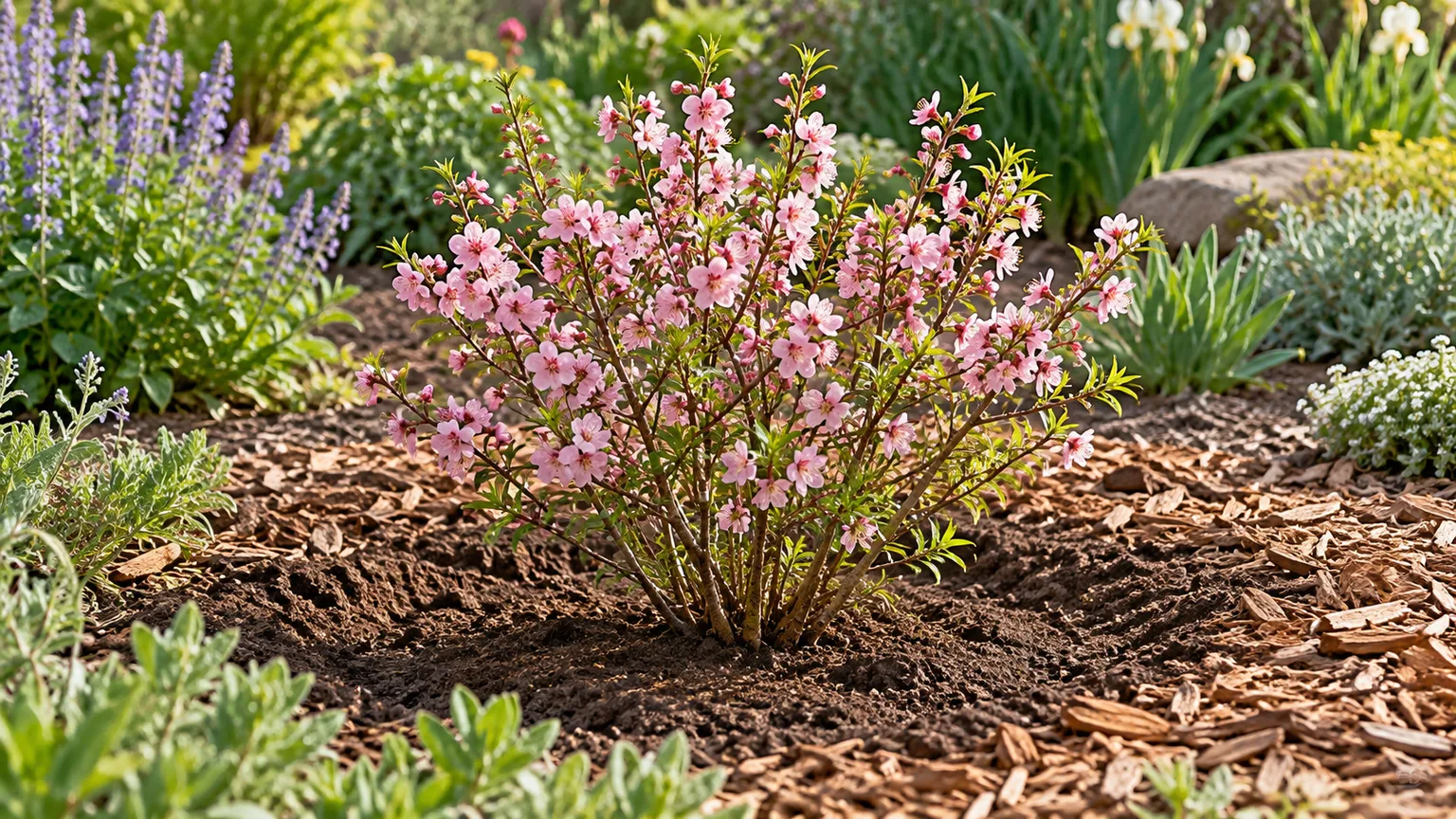
Do not enrich only the planting hole with a large dose of compost or fertilizer. A pocket of amended soil can hold water differently from the ground around it and discourage roots from moving outward. If the entire bed is depleted or compacted, improve the broader planting area before installing the shrub; otherwise, return the excavated soil and let roots adapt to the site they will occupy.
Water through establishment without keeping soil soggy
During the first growing season, water deeply enough to moisten the root ball and the soil just beyond it, then let the surface begin to dry before watering again. Arkansas Extension notes that flowering almond can be harder to establish than its reputation as a tough shrub suggests and recommends regular moisture during its first two years. A weekly check is a useful starting habit, not an automatic watering schedule: rain, heat, soil texture, and the size of the root ball all change how quickly it dries. (University of Arkansas System Division of Agriculture)
Probe the soil a few inches down near the root ball. If it feels dry at that depth, water slowly so the moisture reaches roots instead of running across the surface; if it still feels cool and damp, wait. Small daily splashes wet only the top layer, while frequent heavy watering in poorly drained soil deprives roots of air. A wide mulch ring helps even out the cycle, but it cannot fix a waterlogged site.
Once established, flowering almond can handle some dry weather better than a newly planted shrub. During a prolonged drought or summer heat wave, check the root zone and water when it is drying rather than assuming “drought tolerant” means “never water.” If leaves wilt in wet ground, do not add more water; first check drainage and root condition.
Feed only when the soil or plant gives you a reason
A healthy shrub in decent garden soil usually does not need a yearly dose of fertilizer to bloom. Arkansas Extension describes the plant as tolerant of ordinary soil, and the Royal Horticultural Society lists it across chalk, clay, loam, and sand when moisture remains appropriate. A thin surface dressing of finished compost can improve soil structure over time, but heavy feeding is not a substitute for sunlight, drainage, or correctly timed pruning. (University of Arkansas System Division of Agriculture) (Royal Horticultural Society)
If growth is weak or leaves are pale, inspect moisture, light, root health, and signs of insects before deciding that the shrub is hungry. Soil testing is more useful than guessing at a nutrient based on leaf color alone, since waterlogged roots and seasonal change can also alter foliage. Avoid phosphorus fertilizer unless a soil test or local guidance calls for it; it is not a general-purpose way to create more flowers.
Prune after flowering to protect next year’s buds
Prune soon after most flowers fade, while there is still a long growing season for the shrub to make replacement shoots. Flowering almond blooms on stems formed during the previous growing season, so late-summer, autumn, or winter pruning can remove the wood that would carry the next display. The RHS recommends cutting young shoots back to a few buds from older wood after flowering; Purdue Arboretum likewise recommends immediate post-bloom pruning for shape and flowering. (Royal Horticultural Society) (Purdue Arboretum)
First remove dead, broken, rubbing, or clearly diseased stems. Cut a dead stem back to sound wood or remove it at its point of origin; do not leave a long stub that cannot heal cleanly. Next, thin stems that cross through the center or crowd the outline. Use clean, sharp bypass pruners for small stems and loppers for thicker ones, placing cuts just beyond a healthy side shoot or at the base of the stem without cutting into the surrounding crown.
Renew the stems instead of shearing the top
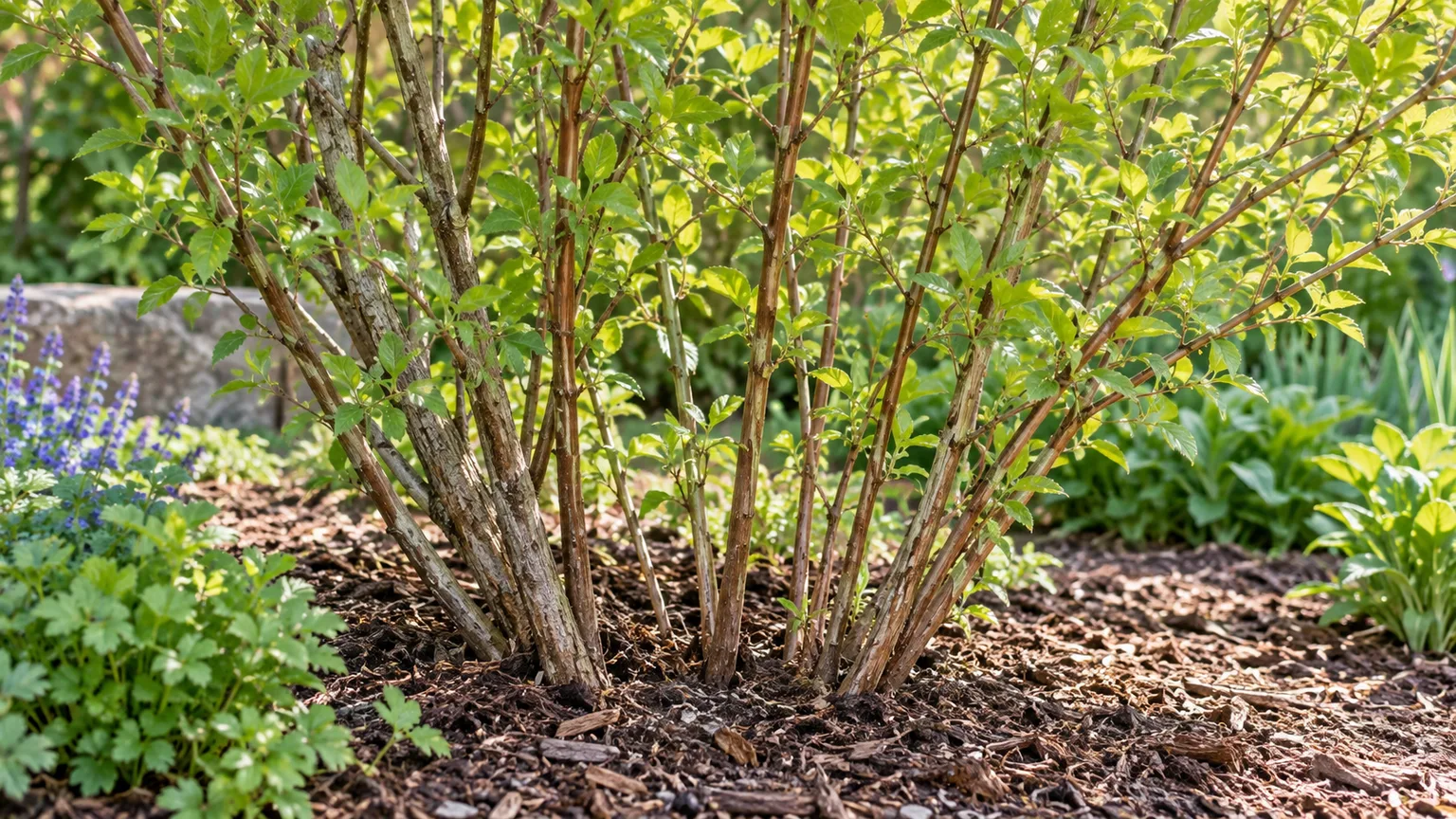
The best shape usually comes from selective renewal, not clipping every branch to the same height. On an established, overfull shrub, remove a few of the oldest or most awkward stems at ground level after bloom, keeping enough younger stems to retain the plant’s natural rounded form. Purdue Arboretum recommends regular post-flowering pruning and removal of root suckers to help prevent the shrub from becoming too open; the RHS’s “few buds from old wood” approach is useful when shortening young shoots rather than removing whole canes. (Purdue Arboretum) (Royal Horticultural Society)
A young plant may need little beyond deadwood removal and light shaping. If an older shrub has become sparse at the base and crowded at the tips, spread renovation over two or three post-bloom seasons, removing some of the oldest stems each year. A hard cutback can sometimes stimulate vigorous new growth, but it sacrifices the immediate display and may leave an unattractive stump-like plant for a while; reserve it for a shrub that truly needs renewal, not as the routine annual cut.
Remove suckers at their origin if you want one contained clump. If a loose naturalized group is the goal, keep selected suckers and thin them where they crowd neighboring plants or paths. This choice is easier to make while shoots are small than after they have filled the whole front edge of a bed.
Diagnose poor flowering before changing care
A shrub that makes healthy leaves but few flowers usually points to an environmental or timing issue before it points to fertilizer. Work through the likely causes in this order: too little direct sun; pruning after buds formed; late frost damage; a newly planted or stressed shrub; or a mislabeled plant or cultivar. If you pruned in fall, the shrub may simply need to replace lost flowering wood; return to post-bloom pruning rather than applying more food.
If only the exposed flower buds are brown after a cold snap, the wood may remain alive even though that season’s flowers are lost. Wait for leaves and shoots to develop before removing healthy-looking stems. If entire branches fail to leaf out, scratch a tiny patch of bark on a questionable stem: green tissue under the bark is alive, while dry brown tissue may indicate dieback. This is a clue, not a diagnosis; disease and root damage can look similar.
For a plant with good light and correct pruning but a weak bloom over several years, check the nursery label and ask a local extension office to identify the shrub from leaves and stems. Also consider age and condition: a plant settling in after transplanting or coping with chronic wet soil may put energy into roots and survival before it displays fully. Fix the limiting condition first, then judge its next spring response.
Watch for pests and diseases without spraying by default
Reports on pest pressure differ. Arkansas Extension describes no serious disease or insect problems in its plant database, while Illinois Extension flags borers and several diseases among problems seen on the species; the RHS lists aphids, caterpillars, leaf-mining moths, peach leaf curl, bacterial canker, silver leaf, blossom wilt, and honey fungus as possible issues. This is a useful reminder that local climate, site stress, and pest populations change the risk. A list of possible problems does not mean every shrub will develop them. (University of Arkansas System Division of Agriculture) (University of Illinois Extension) (Royal Horticultural Society)
Look for patterns rather than reacting to one damaged leaf. Chewed margins or clustered insects on tender tips may be caterpillars or aphids; a small population can often be monitored or removed without treating the entire shrub. Curled or blistered new leaves, sunken or discolored bark, dieback from branch tips, and one-sided wilting deserve closer attention, especially if symptoms progress from one season to the next. Root problems become more likely if the soil stays wet and several stems decline together.
Rake up badly diseased fallen foliage, water at the soil rather than over the canopy when practical, and keep the shrub open enough for air to move through it. Disinfect pruners between cuts when removing suspicious diseased wood, and avoid pruning in wet weather if canker is a concern. Do not apply a fungicide or insecticide merely because “Prunus can get diseases”; identify the likely problem first and follow local extension advice and the product label if treatment is warranted.
Choose a cultivar for color and flower form
The nursery trade most often offers ‘Rosea Plena’ (also called ‘Sinensis’ in some references), with double pink flowers. ‘Alba Plena’ has double white flowers and can be harder to find; ‘Alba’ and ‘Lawrence’ are listed as single-flowered forms. Names and synonyms vary among databases, so confirm the flower color and double or single form with the nursery rather than relying on one name alone. Double forms generally set little or no fruit, while single selections may produce small red drupes. (University of Connecticut Plant Database) (University of Arkansas System Division of Agriculture)
| Cultivar or form | Typical display | What to confirm |
|---|---|---|
| ‘Rosea Plena’ / ‘Sinensis’ | Double pink flowers | Most commonly sold; usually near-fruitless |
| ‘Alba Plena’ | Double white flowers | Availability varies; check mature size |
| ‘Alba’ | Single white flowers | May set small fruit |
| ‘Lawrence’ | Single pale pink or white flowers | Confirm the exact plant and flower color |
Hardiness ratings are not perfectly consistent across references. The University of Connecticut lists the species as hardy to Zone 4, while Illinois Extension gives Zones 5–9; this spread is a reason to check the named cultivar and local growing conditions, especially at the cold or hot edge of a listing. A sheltered sunny wall may improve flowering in a cool climate, but it does not make a marginal cultivar reliably hardy everywhere. (University of Connecticut Plant Database) (University of Illinois Extension)
Propagate from cuttings to keep a cultivar true
Stem cuttings are the practical route when you want a new plant that retains the parent’s flower form. The RHS lists semi-hardwood cuttings for ‘Alba Plena’; timing depends on when the current season’s shoots become firm enough to handle. Take several cuttings in late spring or summer, not just one, because rooting success varies with shoot maturity, moisture, and temperature. (Royal Horticultural Society)
Choose healthy, non-flowering shoot tips about 4 to 6 inches long. Remove the lower leaves, insert the bare base into a clean, free-draining propagation mix, and keep the medium evenly damp under bright indirect light. A clear cover can hold humidity, but vent it so condensation does not keep the leaves dripping wet. Rooting hormone is optional; if you use it, follow the product directions. Do not pull on the cutting every few days to test it—wait for fresh growth or a gentle increase in resistance, then pot it on once roots hold the mix together.
Let young cuttings grow in a protected pot before planting them into a border. In colder areas, keep the pot in a sheltered, unheated place over winter and plant after the next growing season begins. Seeds are less predictable for named cultivars and are unnecessary if your goal is to duplicate a specific double-flowered shrub.
Grow in a container only if you can protect the roots
A large container can solve a genuinely poor in-ground drainage situation, but it makes watering and winter protection more demanding. Choose a sturdy pot with a drainage hole and enough volume for a 3-to-5-foot shrub—roughly 15 to 20 gallons is a practical starting range, with larger pots easier to manage as the root ball expands. Use a free-draining outdoor potting mix rather than dense garden soil, and keep the crown at the same depth it had in the nursery pot.
Check container moisture more often than bed soil, especially in wind and summer heat. Water thoroughly until excess drains, then wait until the top layer starts to dry; do not leave the pot standing in a full saucer. A container also exposes roots to more winter temperature swings than the ground does, so use a locally hardy cultivar and move the pot to a sheltered, cold-protected location when severe freezes threaten. If you cannot provide sun, drainage, water checks, and winter space, plant it in the ground or choose a smaller shrub better suited to a pot.
Adjust care as the seasons change
In late winter, inspect the framework but hold off on routine pruning; damaged or clearly hazardous wood is the exception. When flowers fade in spring, do the planned thinning and remove unwanted suckers. During the first summer, check root-zone moisture regularly and keep weeds from competing with the new shrub. In later summers, water during extended dry spells but do not keep the soil continuously wet.
In autumn, clear fallen leaves if they were heavily affected by disease and add mulch only as a thin, even layer. Do not pile mulch against stems or prune merely to “tidy” the outline before winter. A late cut can remove future flower buds, and fertilizer applied after growth has slowed can encourage soft shoots at the wrong time. This simple sequence—inspect in winter, prune after bloom, water as needed through establishment, and clean up diseased debris—covers most of the shrub’s routine care.
Keep stems, leaves, and seeds away from pets and children
NC State Extension identifies low-severity poison characteristics in Prunus glandulosa and reports cyanogenic glycosides in its stems, leaves, and seeds, with the greatest concern when plant material wilts. Keep pruned material, fallen leaves, and any fruit away from children, dogs, cats, and grazing animals; do not use the shrub’s name as a reason to taste its fruit or seeds. (NC State Extension)
The source describes low severity, not zero risk, and an online plant profile cannot assess an individual exposure. If someone or an animal chews the plant, remove any remaining material from the mouth and contact a local poison center, veterinarian, or other appropriate professional for advice. Wear gloves for routine pruning if that makes cleanup easier, and dispose of cuttings where pets cannot reach them.
Conclusion
Flowering almond is easiest to grow when you accept what it does best: a dramatic early-spring bloom on a small, multi-stem shrub. Give it a sunny site with well-drained soil, keep the root ball moist while it establishes, and prune after the flowers fade so the next season’s flowering wood can grow.
If bloom is weak, check light and pruning timing before adding fertilizer; if the shrub declines, look at drainage and inspect symptoms before spraying. Choose the cultivar by its actual flower form and local hardiness, and remove suckers only if you want a contained clump. Those decisions turn a short-lived show into a repeatable one without asking this ornamental shrub to be something it is not.



