How to Grow and Care for Pineapple Lilies Outdoors
Pineapple lilies need summer moisture and a dry winter rest. Get planting depth, potting, bloom, propagation, and cold-climate advice for Eucomis.
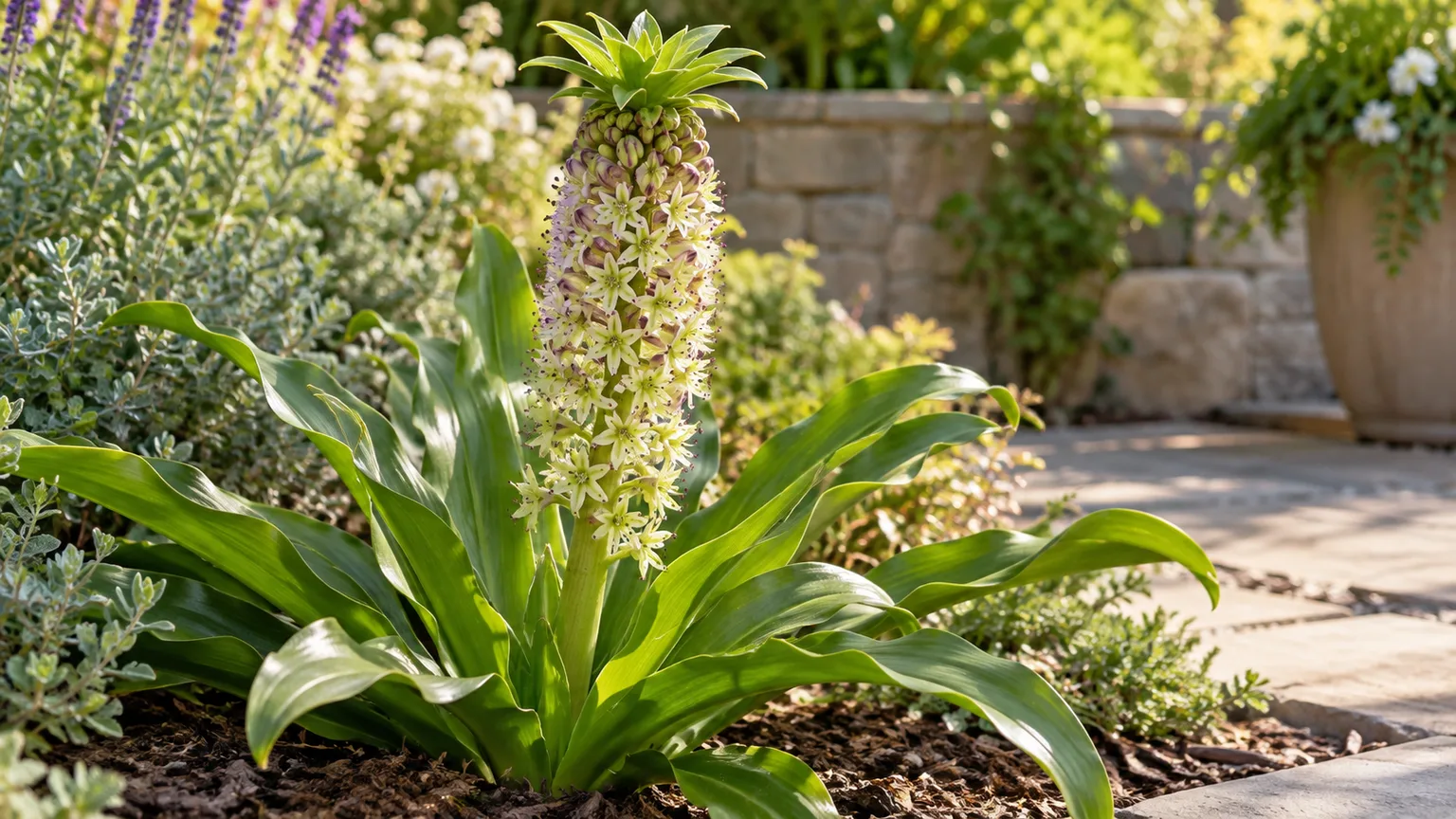
A pineapple lily earns its name from a dense, upright flower spike topped with a tuft of leafy bracts. The effect is tropical, but the plant is a seasonal bulb from southern Africa, not a pineapple and not a true lily. Its care becomes much easier when you treat the year as two different jobs: support steady growth while leaves and flowers are active, then keep the dormant bulb from sitting cold and wet.
For reliable flowers, plant Eucomis in a warm, sunny position with soil that drains freely but does not stay bone-dry in summer. The winter plan depends on your garden: a sheltered, well-drained bed may suit a hardy selection, while a pot you can move or a lifted bulb is safer where winters are cold, wet, or both.
What pineapple lilies are—and what “hardy” really means
Pineapple lily is the common name for plants in the genus Eucomis, a group of bulbous perennials in the asparagus family, Asparagaceae. Their native range is southern Africa. A plant typically sends up a low rosette of long, strap-shaped leaves, then a sturdy central stem carrying many small, star-like flowers beneath a crown of bracts. The individual florets open from the bottom of the spike upward, so the display develops gradually rather than appearing all at once.
The genus includes different species and cultivated selections, so size, flower color, bloom timing, and cold tolerance vary. Depending on the plant, foliage and flower stems may stay under a foot tall or rise much higher; the giant pineapple lilies need more room and may need shelter from wind. The North Carolina State Extension Plant Toolbox describes Eucomis as a South African bulb that can be grown in full sun or partial shade, with flowering generally stronger in full sun. The Missouri Botanical Garden’s profile of Eucomis comosa likewise emphasizes its sun, drainage, and container options.
The word hardy needs context here. Botanical garden and extension references commonly place many garden Eucomis in USDA Zones 7–10, while some selections may survive colder conditions with protection. That range is a starting point, not a promise that every bulb will overwinter in every Zone 7 garden. A damp clay bed, an exposed frost pocket, or a bulb planted shallowly can be more punishing than the same low temperature in a sheltered, sharply drained spot. If you are unsure, start in a movable pot for a season; it gives you a way to test how the plant performs before you commit it to a border.
Choose a Eucomis that fits your space and climate
When you buy bulbs or nursery plants, choose for mature size and winter practicality as well as flower color. A large, healthy bulb generally establishes a stronger rosette and has more stored energy than a small offset, but it still needs the right growing season to flower. Check the cultivar label for its expected height and hardiness, because the common name covers plants with different habits.
Eucomis comosa is a popular choice for an upright, showy flower spike and can be a large plant in a favorable site. ‘Sparkling Burgundy’ is grown for dark red-purple foliage as well as its flowers, so it adds color before the bloom spike appears. Eucomis bicolor has pale flowers with contrasting darker edges, while E. autumnalis is a different species with a more understated flower display. Giant selections such as E. pallidiflora can become too imposing for a small patio pot or narrow border. The RHS Eucomis growing guide lists several species and cultivars, and Gardens Illustrated’s cultivar profiles show how much plant height and foliage color can differ.
If winter is your biggest constraint, do not shop from a photograph alone. Favor a compact cultivar sold for containers, or grow a variety whose label gives a hardiness range appropriate to your garden. When the seller’s information is vague, use a pot you can bring under cover rather than assuming the common name implies dependable frost tolerance. Gardeners in reliably mild regions can use Eucomis in a sunny border; gardeners with heavy winter rain often get more control from a container even when their minimum winter temperature seems acceptable.
Give pineapple lilies enough sun and warmth
Choose the warmest sunny position you can provide. Six or more hours of direct light is a useful target for good flowering, especially in cooler summer climates. A south- or west-facing border, a sunny gravel garden, or a bright patio can work well if the plant is not crowded by taller neighbors. The Royal Horticultural Society’s cultivation notes warn that shade or being smothered by neighboring foliage can reduce flowering.
In a hot region with intense afternoon sun, a little late-day shade can protect leaves from scorch, particularly when a plant is newly established or its roots are confined to a small pot. That does not mean placing it in deep shade: the bulb still needs a bright growing season to make a strong rosette and flower. If leaves brown on the sun-facing side while the soil is dry and the rest of the plant looks healthy, give the plant afternoon protection and check moisture before increasing irrigation.
Eucomis is not a dependable indoor foliage plant. A sunny window may help a pot started early, but it usually cannot match the light, warmth, and seasonal outdoor conditions needed for a robust flower spike. Start bulbs in a sheltered bright space if you want to advance the season, then harden the growing plant off and move it outside after frost risk has passed.
Build drainage into the soil before planting
The soil should hold enough moisture to supply active roots in summer but let excess water drain away quickly. A fertile, open loam is a good starting point; compacted clay or a low spot where rain pools is risky, especially once the bulb becomes dormant. Both the Missouri Botanical Garden and RHS recommend well-drained soil, while the RHS also notes that dry, light soil can limit flowering. That combination matters: “free draining” does not mean leaving the plant thirsty all summer.
Before planting, test the location after rain. If puddles linger or the ground stays sticky and saturated, plant on a raised mound or in a raised bed, or choose a container instead. Adding a little grit to the bottom of a single planting hole does not fix a clay bed; water can still collect around the bulb. Improve the broader bed, raise the planting level, or bypass the problem soil rather than building a small gravel pocket.
For pots, use a stable container with unobstructed drainage holes and a loose mix that drains evenly. A peat-free multipurpose compost blended with horticultural grit or another coarse mineral amendment is a practical option. Do not use a saucer that keeps the base standing in water outdoors, and do not put a layer of gravel at the bottom as a substitute for a free-draining mix. Water must be able to leave the pot, not just move into a hidden reservoir beneath the roots.
When and how to plant pineapple lily bulbs
Plant dormant bulbs in spring once the ground has warmed and the danger of hard frost has passed. A warm start matters more than a date on the calendar: a bulb set into cold, wet soil may sit without growth and be vulnerable to rot. If spring is short where you live, pot the bulb indoors or in a frost-free greenhouse several weeks before outdoor planting, then move the actively growing plant outside when nights are reliably mild. Gardeners’ World recommends spring planting in pots and moving plants outdoors after frost risk has passed.
Plant the bulb with the root end down and the growing point up. Eucomis sources differ on exact depth because bulbs, climates, and planting situations differ: general garden guidance ranges from roughly 4 to 6 inches deep, while container advice is often shallower. Use the bulb supplier’s directions when available and do not bury a small bulb at the same depth as a large one. Good drainage and a warm spring planting are more important than treating one number as universal.
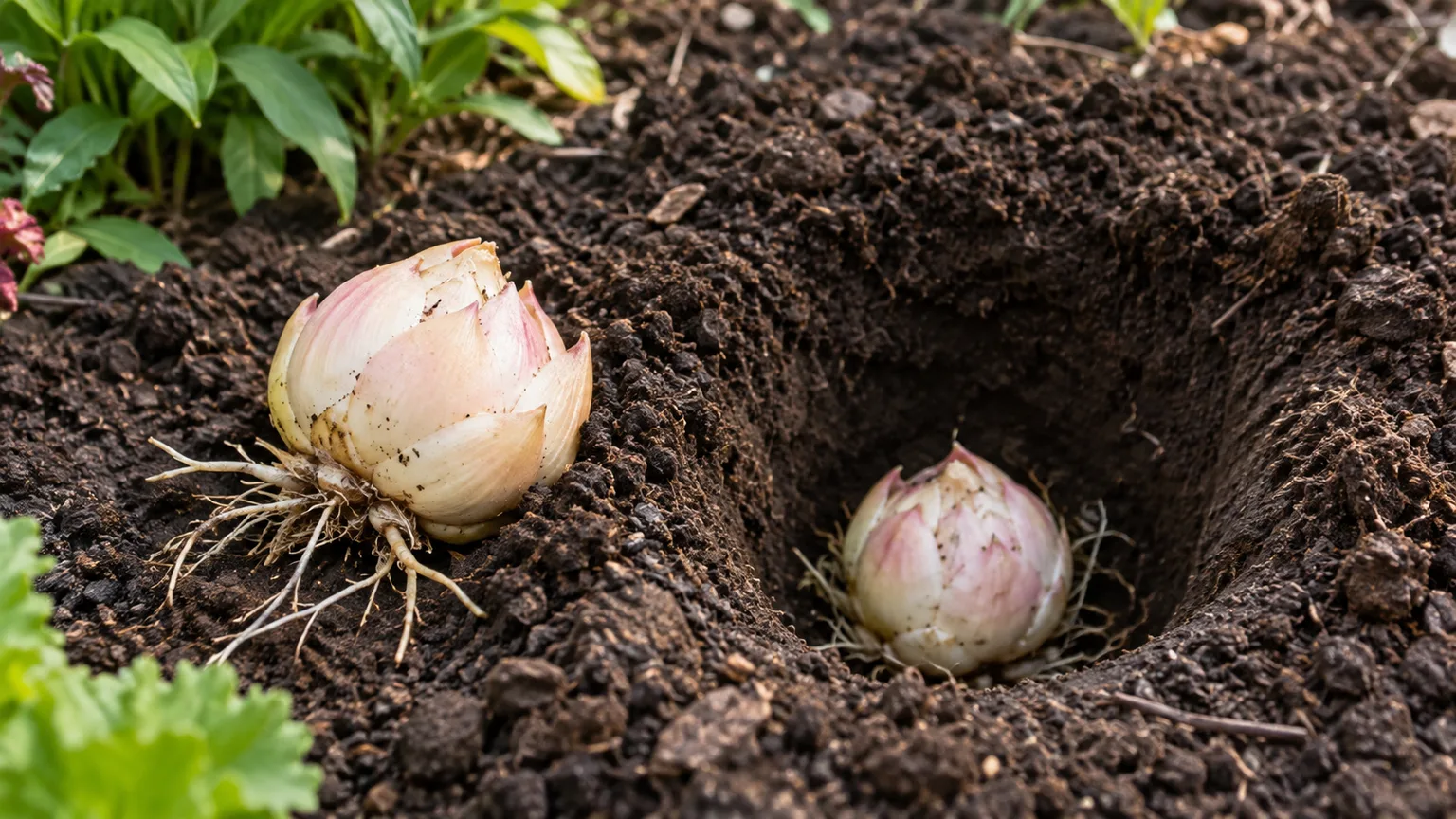
Planting in an outdoor bed
In a free-draining border, space bulbs far enough apart that mature leaves can spread without being crowded; around 6 to 10 inches is a useful starting range for many ordinary cultivars, with more room for large selections. Set each bulb in a hole deep enough to cover it by several inches, adjust for bulb size and local guidance, then backfill with loose soil. Water once to settle the soil, but do not keep a dormant bulb in a continuously saturated bed while waiting for shoots.
If the soil is heavy, plant into a raised, gritty section instead of trying to correct only the bottom of each hole. A warm wall or sheltered border can give borderline-hardy plants a better chance, though it does not remove the need to account for wet winter conditions. Mark the location so you do not accidentally dig into the dormant bulb later in the year.
Growing Eucomis in containers
Use a pot wide enough for the foliage and flower spike, with several drainage holes and a stable base. A 12-inch-wide container can hold a small group of bulbs for a fuller display, but one larger bulb can also anchor a pot on its own. Keep bulbs a few inches apart so leaves have room to develop, and set them at the depth recommended for that bulb or cultivar. The Longfield Gardens Eucomis guide suggests a group planting for a full container; the RHS advises leaving space between bulbs and using a loam-based compost with grit for drainage.
After planting, water enough to settle the mix and then wait for growth before increasing the amount. Set the pot where it receives strong light and warmth. A container warms and dries faster than a garden bed, which can help in a cool climate but also means you need to check it more often in hot, windy weather. The advantage is control: you can move the pot into shelter before prolonged winter rain or frost reaches the dormant bulb.
Water through active growth, then taper for dormancy
Watering needs change through the year. Before shoots appear, keep the mix only slightly moist rather than wet; once a rosette is growing, water when the upper layer begins to dry and then soak the root zone thoroughly. In hot weather or a small pot, that may mean checking often. In cool weather or a large bed, the soil may remain moist much longer, so use the soil itself—not a fixed weekly schedule—to decide.
During leaf and flower growth, prolonged drought can weaken the display, but constant saturation is also harmful. If water runs straight through a container, the mix may have dried and pulled away from the sides; soak it slowly until the root ball is rehydrated, then let it drain completely. If the bed stays wet after rain, improve the site or reduce supplemental watering instead of adding more grit only around the bulb.
As flowering ends and foliage begins to yellow naturally, reduce irrigation. Once leaves have died back and the bulb is dormant, keep it dry or nearly dry through winter. This is not a plant that needs routine winter watering in a cool, protected storage place. The BBC Gardeners’ World Magazine guide recommends summer water and dry winter conditions; that seasonal shift is more dependable than a single “water every X days” rule.
Feed lightly instead of pushing soft growth
Start with decent soil and a modest feeding plan. In a garden bed amended with mature compost, a light spring top-dressing may be enough. In a container, a balanced slow-release fertilizer at the label rate or a diluted liquid feed during active growth can support flowering, but choose one approach rather than piling one product on top of another. The RHS suggests regular liquid feeding for container-grown Eucomis, while Gardens Illustrated cautions that excessive water and feeding can push soft foliage at the expense of sturdier growth and flowering.
Avoid high-nitrogen feeding that encourages long, floppy leaves without addressing the real reason a plant is not blooming. If you applied a slow-release product in spring, do not add repeated liquid fertilizer automatically; follow the package instructions and consider how rich the mix already is. Stop feeding as growth winds down. Fertilizer cannot compensate for shade, a young bulb, or roots damaged by winter rot.
What to expect from foliage and flowers
A dormant bulb can be slow to wake, especially when spring remains cool. After leaves emerge, the plant forms a low rosette before sending up one or more sturdy spikes. The flower stem carries many small florets, and the topknot of bracts gives the spike its pineapple outline. Flowers may be greenish-white, cream, pink, purple, or edged with darker tones depending on species and cultivar.
Bloom time also shifts by climate and selection. Eucomis usually flowers in summer or late summer and may continue into early autumn; a cool spring can delay flowering, while a warm, long season may bring an earlier display. A single spike can remain attractive for several weeks, and the blooms open gradually from the bottom upward. Do not judge the entire plant by the first week that the top buds remain closed.
Some gardeners notice an unusual scent from the flowers. The description varies among sources and cultivars, so do not assume that a strong or unfamiliar smell means the plant is sick. The foliage is part of the display too: green-leaved selections make a strong architectural clump, while dark-leaved cultivars such as ‘Sparkling Burgundy’ can provide color well before the flower stalk appears.
After flowering, keep leaves until they finish
You can leave the flower head in place after the florets fade if you like the developing seed capsules and want to collect seed. If the stalk looks untidy, cut only the spent flower stem with clean pruners. Removing the flower does not mean the leaves are finished; keep the green foliage intact so it can continue supporting the bulb.
Wait until the leaves yellow and wither naturally before cutting them back. They are still supplying energy that helps the bulb restock itself for the next season. Cutting all the foliage as soon as the flowers fade can leave a healthy bulb with less stored energy and may reduce next year’s growth.
Keep watering while leaves remain actively green, adjusting for rain and temperature, then taper as yellowing begins. A plant that is naturally entering dormancy can look tired late in the season without needing rescue fertilizer or extra water. Clean up dead leaves when they come away easily, and use that point in the season to put your winter plan into action.
Why a pineapple lily may not bloom
If the plant makes leaves but no flower spike, begin with the most likely limits: light, bulb maturity, planting depth, and the previous winter. A young bulb or newly separated offset may need time to gain size before it flowers. The North Carolina State Extension overview notes that Eucomis spreads by offsets; small new bulbs are not guaranteed to bloom in their first season.
Next, check sunlight and planting depth. A plant growing in deep shade may make foliage but not build enough energy for flowers. A bulb buried unusually deep can take longer to emerge, while one exposed too close to the surface can suffer more from drying or temperature swings. Compare the spot with the plant’s actual sun exposure across the day and check the supplier’s planting directions before moving a healthy bulb.
Then consider the previous season. Did the leaves die back naturally, or were they cut off green after flowering? Was the plant watered in winter in a wet bed or container? A bulb that is soft or rotting is unlikely to bloom, while a firm dormant bulb may simply need a full warm growing season. Avoid trying to force a spike with repeated fertilizer; correct the growing conditions first, then give a young or recovering bulb time.
If the plant has never bloomed, make one change at a time where possible. Move a shaded container to a brighter site, correct a waterlogged mix, or protect the bulb through winter, then observe the next growth cycle. That helps distinguish a light problem from a winter loss or a plant that is simply still juvenile.
Diagnose yellow, drooping, or scorched leaves
Yellowing is not one diagnosis. If it begins evenly across the plant in late season after flowering, natural dormancy is likely. If leaves turn yellow while the plant is actively growing and the soil remains wet, suspect too much water or poor drainage. A soft, darkening base or a bulb that feels mushy after lifting points toward rot; stop watering, remove rotted material only if there is still firm tissue, and repot or replant in a cleaner, free-draining medium.
Drooping leaves can follow heat or drought, but check the soil before watering. If the root zone is dry and the foliage perks up after a thorough drink, underwatering was plausible. If the pot is saturated, adding more water can make the problem worse. Let excess water escape, empty any standing-water saucer, and move the pot out of intense rain while you reassess the mix.
Brown or bleached patches on the most exposed leaves can indicate sun scorch, particularly after moving a plant suddenly from shade to strong afternoon sun. Give it morning sun and some protection during the hottest hours, then acclimate it gradually if you want to move it to a brighter location. Dark burgundy foliage on a named cultivar is not automatically a symptom; use the cultivar label and compare old and new growth before treating color as a problem.
Propagate by offsets, seed, or leaf cuttings
Offsets are the easiest way to multiply a named plant. As the clump matures, small bulbs may form beside the original. Separate them when the plant is dormant or just before growth restarts, using a clean tool and taking care not to damage the main bulb. Replant offsets in free-draining mix at a suitable depth and keep them in a protected, bright place while they establish. Expect a smaller offset to need more than one growing season before it is large enough to flower.
Seed is possible if you leave a flower stalk to form capsules and collect mature seed. Sow fresh seed in a warm, bright place and keep the medium lightly moist, not saturated. Seedlings take longer to reach blooming size, and plants grown from a named cultivar may not resemble the parent exactly. Choose seed if you enjoy raising plants and are willing to wait; choose offsets when your goal is to keep a particular selection.
Leaf cuttings are an advanced option rather than the first method to try. The RHS recommends taking a healthy, mature leaf in early to midsummer, cutting it into sections while keeping track of which end grew toward the base, and setting the sections upright in moist, free-draining cutting compost. Warmth and steady but restrained moisture encourage bulblets to form; too much water can rot the pieces. Keep the young bulblets protected through their first winters and expect flowering to take time. The RHS propagation directions note that young plants may need several years to flower.
Choose a winter plan before the first cold spell
The dormant bulb needs protection from winter conditions that keep it cold and wet for long periods. Many Eucomis are listed for Zones 7–10, but cultivars differ and zone ratings do not account for drainage, shelter, or the amount of winter rain. The Missouri Botanical Garden describes hardy selections in Zones 7–10 and recommends lifting or container protection in colder climates. The RHS calls pineapple flowers borderline hardy in its climate and recommends winter protection. Treat those recommendations as evidence that local conditions matter, not as a contradiction to solve with a universal minimum temperature.
Decide early whether to leave, move, or lift the bulb. A well-drained border in a mild winter area may be suitable for in-ground protection. A patio pot is easier to move out of rain and frost. In colder or wetter locations, lifting a bed-grown bulb and storing it dry gives you the most control. Do not wait until the bulb has already sat in soggy soil through repeated freezes to decide.
Leave bulbs in the ground only where drainage and winter protection are reliable
If your selection is rated for your area and the planting site drains freely, you may be able to leave it in the ground. Let the foliage die back naturally, remove it once dry, and cover the site with a loose, dry mulch to buffer temperature swings. Keep the mulch from becoming a wet, compacted blanket; its purpose is to insulate the soil, not trap winter rain against the crown.
This approach works best in a sheltered border or raised bed rather than a shaded hollow or heavy clay patch. If winter rain regularly saturates the bed, mulching alone cannot fix the drainage problem. A pot you can move or lifting the bulb is the safer option. In a marginal garden, protect a small trial clump first and keep a backup bulb in a container until you know how that cultivar behaves.
Lift and store bulbs in colder or wetter gardens
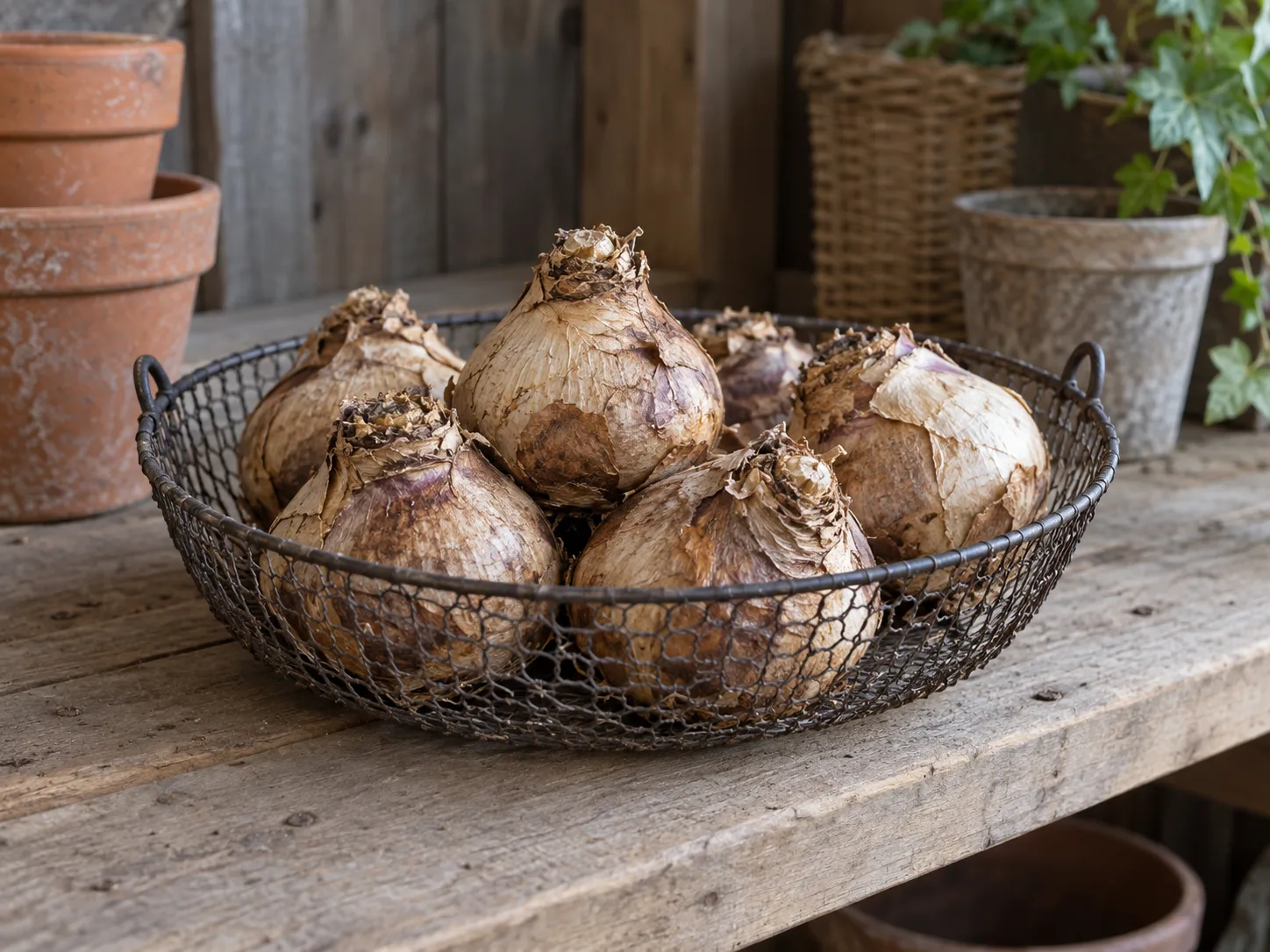
When the leaves have naturally yellowed and the plant is entering dormancy, lift the bulb carefully with a fork or hand tool. Leave the foliage attached while the bulb dries in a sheltered, airy place; once the leaves are dry and easy to remove, clean off loose soil and discard any bulb that is soft, badly damaged, or moldy. The Longfield Gardens Eucomis guide recommends allowing foliage to wither before removing it and storing dormant bulbs in a cool place.
Store firm bulbs in a cool, dark, dry, frost-free place with air around them. A ventilated crate or paper bag is preferable to sealing them in damp plastic. Check them periodically: remove any bulb that becomes soft or shows spreading mold, and make sure condensation is not forming where they are stored. Do not water a bare, dormant bulb during storage.
Potted plants can be easier to overwinter without disturbing the roots. Stop watering as leaves die back, move the container under cover before prolonged winter rain or freezing weather, and let the compost become dry. Keep the pot cool and frost-free, not in a heated living room. In spring, inspect the surface and drainage, refresh or replace compacted mix if needed, and resume watering as growth begins.
Manage pests and avoid preventable setbacks
Eucomis usually has few serious pest or disease problems, but young shoots can attract slugs and snails, and aphids may gather on tender growth or flower stems. Inspect the plant when shoots first emerge and after damp nights. Hand-pick slugs, protect a pot from climbing pests, and rinse a small aphid colony from the plant with water; repeat the check rather than reaching immediately for a pesticide. North Carolina State Extension lists slugs, snails, and aphids among pests to watch.
Most preventable failures come from the calendar and the site: planting too early into cold ground, choosing shade, keeping a dormant bulb wet, or cutting off green leaves too soon. Another common mistake is treating every tired leaf as a request for fertilizer or water. Look at the season, feel the soil, and inspect the bulb if the plant is collapsing; these checks tell you more than a generic care schedule.
Conclusion
Grow pineapple lilies in a sunny, warm spot with open soil, water them as they grow, and let the foliage finish its season before cutting it back. Then protect the dormant bulb from winter wet and frost: leave it in the ground only where the selection and drainage make that reasonable, or move a pot under cover or lift the bulb for dry storage.
The most useful routine is simple: plant after the soil warms, monitor moisture rather than following a fixed schedule, preserve green leaves after flowering, and plan the winter treatment before the first cold spell. With those steps, Eucomis has the conditions it needs to return with a stronger rosette and another distinctive summer flower spike.



