Plants to Cut Back Before Winter: What to Trim and Leave
Peonies, iris, hosta, and three more perennials usually need a fall cutback. Hellebores, lavender, and milkweed do not. See when and how low to cut.
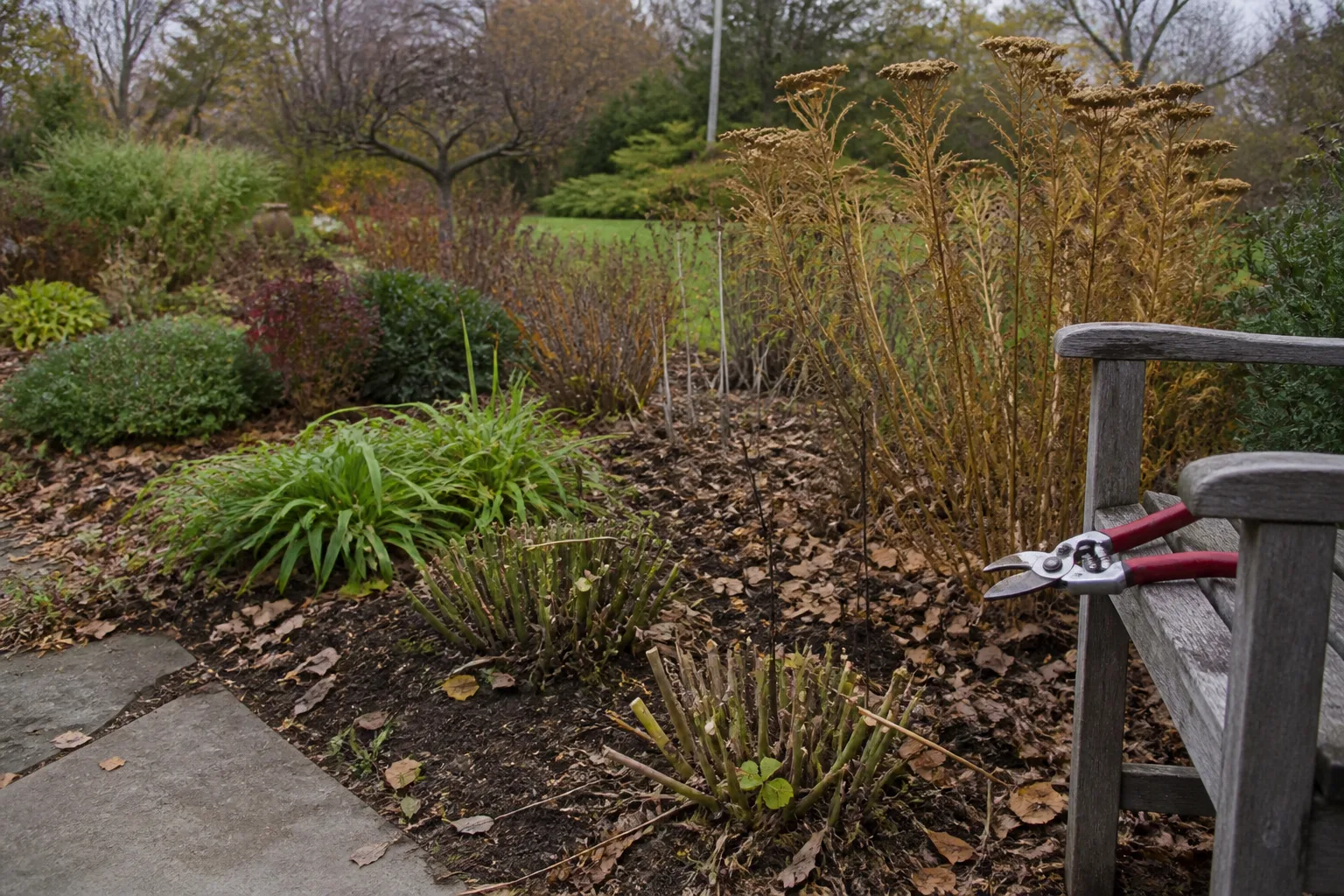
Fall garden cleanup pushes you toward two bad defaults: shear everything to the ground for a tidy bed, or leave the whole border standing because “wildlife needs it.” Neither works for the perennials in your actual beds. Peonies, iris, hostas, garden phlox, bee balm, and daylilies commonly need a fall cutback for disease control, pest management, or crown protection. Hellebores, lavender, and native milkweed are on a different schedule — cutting them now can cost you winter flowers, cold-hardy stems, or monarch habitat.
This page is a focused cut-or-leave guide for those nine plants. If you need a longer fall cleanup list, see our guide to perennials to cut back in fall. Here the goal is simpler: know which side of the line each of these popular plants falls on, how low to cut, and what to do with the debris.
The Short Answer: Cut for Disease and Decay, Not for a Bare Bed
Cut the six perennials on the trim list after a hard frost browns or wilts their top growth, unless disease forces an earlier removal. Trim to a short stub above the crown — usually 1 to 3 inches for peonies, hostas, phlox, and bee balm; a 4- to 6-inch fan for iris; about 1 inch for daylilies once leaves are fully brown. Bag and trash any foliage with powdery mildew, leaf spot, or botrytis. Do not compost it.
Leave hellebores, lavender, and milkweed alone for now. Hellebores are setting winter flowers under their leaves. Lavender needs only a light summer tidy at least six weeks before frost — hard fall pruning opens woody stems to cold and rot. Milkweed should stand until seed pods split and disperse, then remove dry stalks in late fall or early winter while roots stay in the ground.
Why “cut everything” and “cut nothing” both fail
A fully razed bed removes seedheads birds use, exposes crowns to freeze-thaw heaving in some climates, and strips semi-green plants that are still sending energy to roots. A completely untouched bed lets powdery mildew, iris borers, and slug eggs overwinter in collapsed foliage inches from next spring’s shoots. The useful middle path is selective: cut what is diseased, mushy, or pest-prone; leave what still has a job to do.
Gardening Know How frames fall cleanup the same way — remove problem plants promptly, but do not assume every perennial needs the same treatment. That distinction is what separates a healthier spring garden from a bed that looks clean in November and struggles by April.
Wait for the Right Frost Before You Reach for the Shears
Timing matters as much as the cut list. Perennials that still have green leaves are usually still photosynthesizing and pulling carbohydrates into roots and rhizomes. Cutting too early — especially on daylilies and hostas in mild climates — can weaken next year’s growth for a marginally tidier November bed.
The difference between a light frost and a hard freeze
A light frost may spot the edges of tender leaves while the plant stays partly green. A hard frost or killing freeze — often defined as roughly 28°F (-2°C) or below for several hours — shuts down most herbaceous top growth for the season. That is your green light for the six cutback plants, unless disease already forced your hand.
Exception: Remove infected peony, phlox, or bee balm foliage as soon as you see powdery mildew or blackened stems, even if some leaves are still green. Disease spores do not wait for frost. Wipe pruner blades with rubbing alcohol between plants so you are not spreading fungus row to row.
Six Perennials That Usually Earn a Fall Cutback
These six show up on nearly every fall cleanup list for good reason. Their spent foliage either carries disease, shelters pests, or collapses into a wet mat over the crown. None of them need a dramatic “rejuvenation prune” — just a sanitary low cut and a clean bed surface.
Peonies — remove mildew-prone foliage after frost
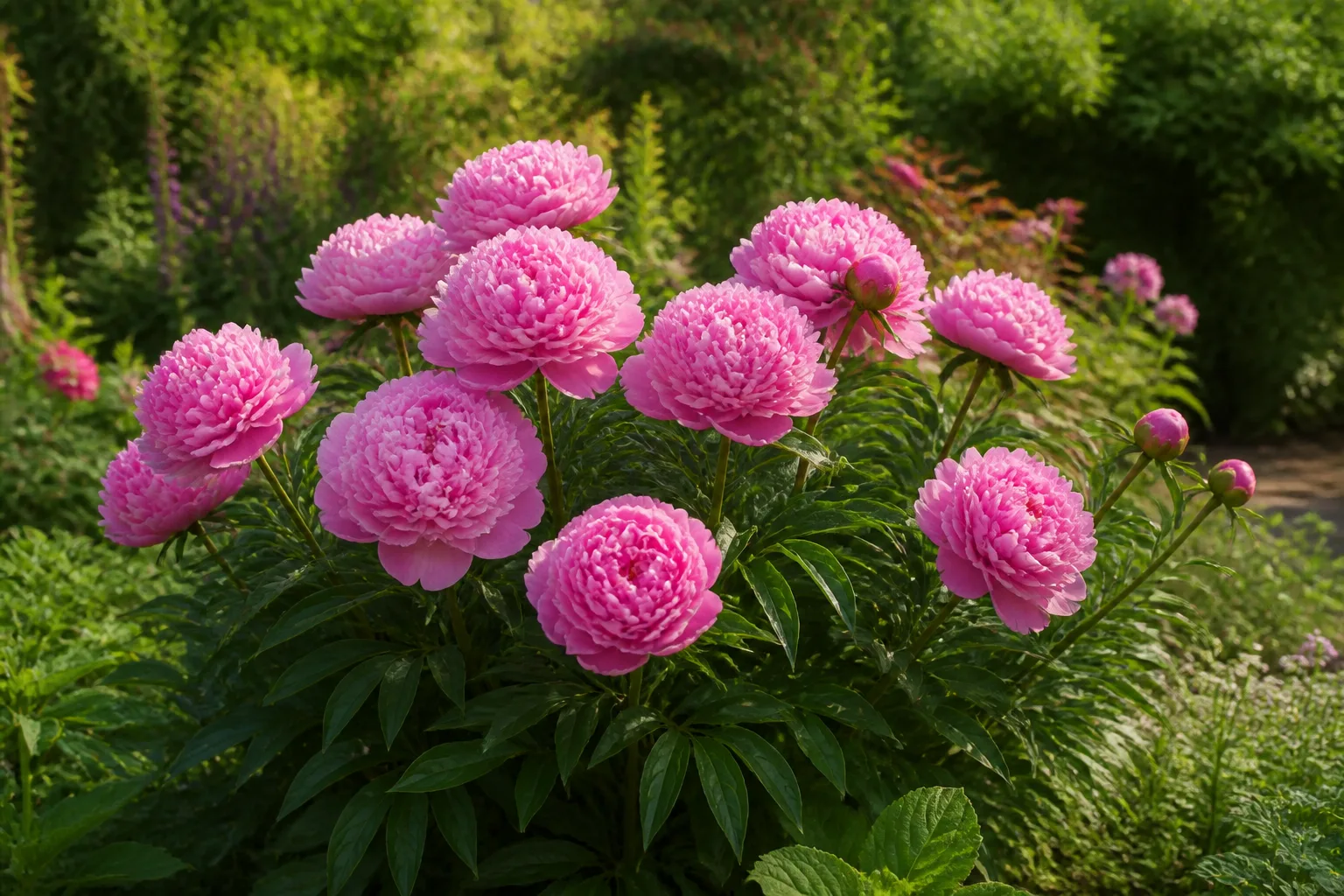
Peonies (Paeonia spp.) finish the season with large leaves that trap moisture and host botrytis blight, leaf spot, and powdery mildew when cool, damp weather arrives. Once foliage yellows, browns, or shows white mildew patches after frost, cut all stems to 2 to 3 inches above the crown.
Do not pull resistant stems — cut cleanly with bypass pruners. Remove every leaf and flower stalk from the bed. Peony eyes sit close to the soil surface; leaving a short stub marks the plant’s location without burying the crown under decaying foliage. If mildew was severe, a light mulch after the ground freezes can help, but diseased leaves belong in the trash, not the compost pile.
Bearded iris — trim fans to stop borers and leaf spot
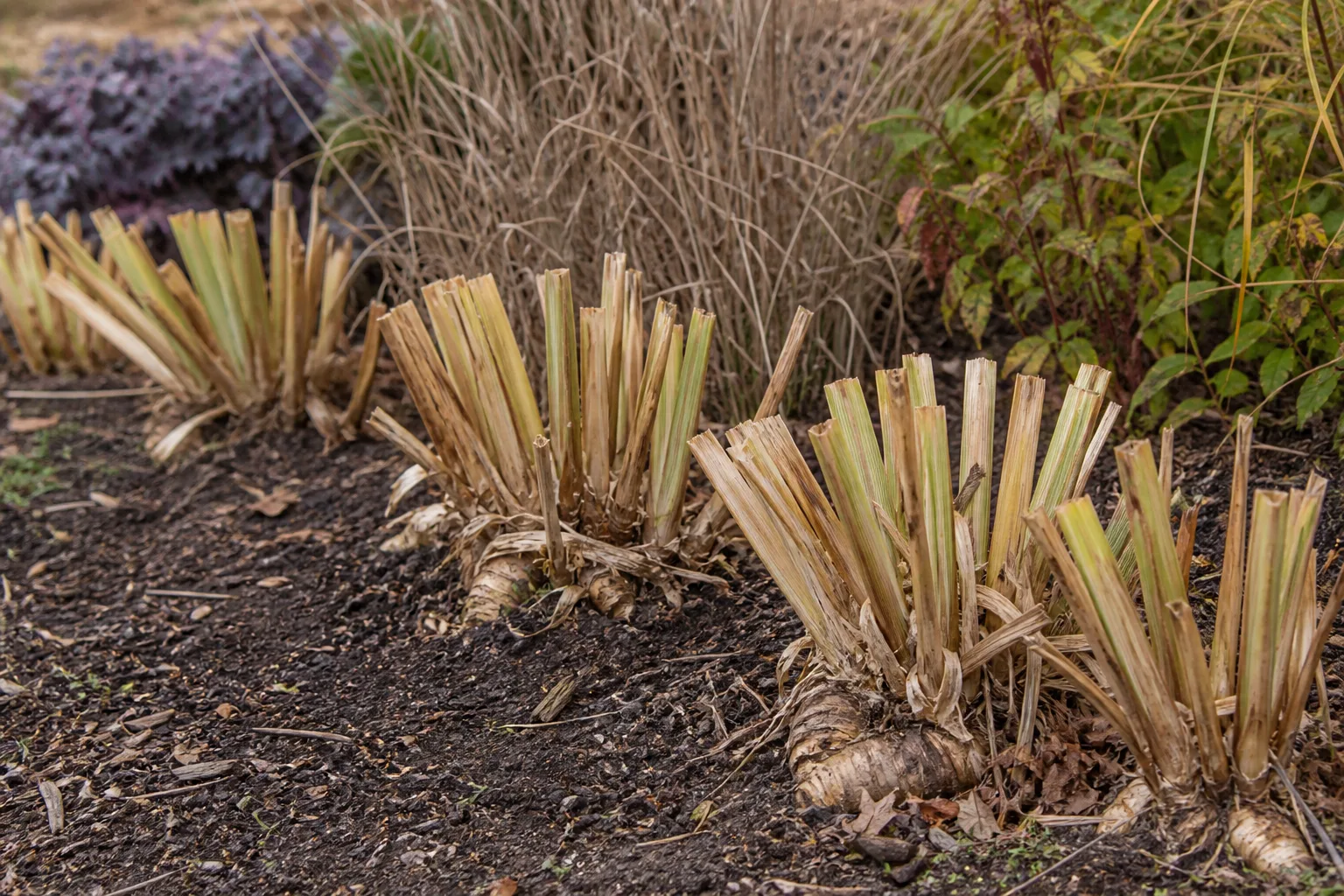
Bearded iris (Iris germanica) stores energy in exposed rhizomes until cold weather fully arrives. Wait for a hard frost, then trim leaves into a short fan 4 to 6 inches tall, tallest in the center and slightly shorter at the sides so water runs off instead of pooling on the rhizome.
Coastal Maine Botanical Gardens treats this fall trim as the most important step in iris borer management, because borers and fungal leaf-spot spores overwinter on old foliage. Discard trimmings rather than composting them. If rhizomes have lifted out of the soil during the season, settle them back so the top third of each rhizome stays visible — burying iris rhizomes deep is a common reason for weak bloom.
Hostas — cut slimy collapsed leaves before pests move in
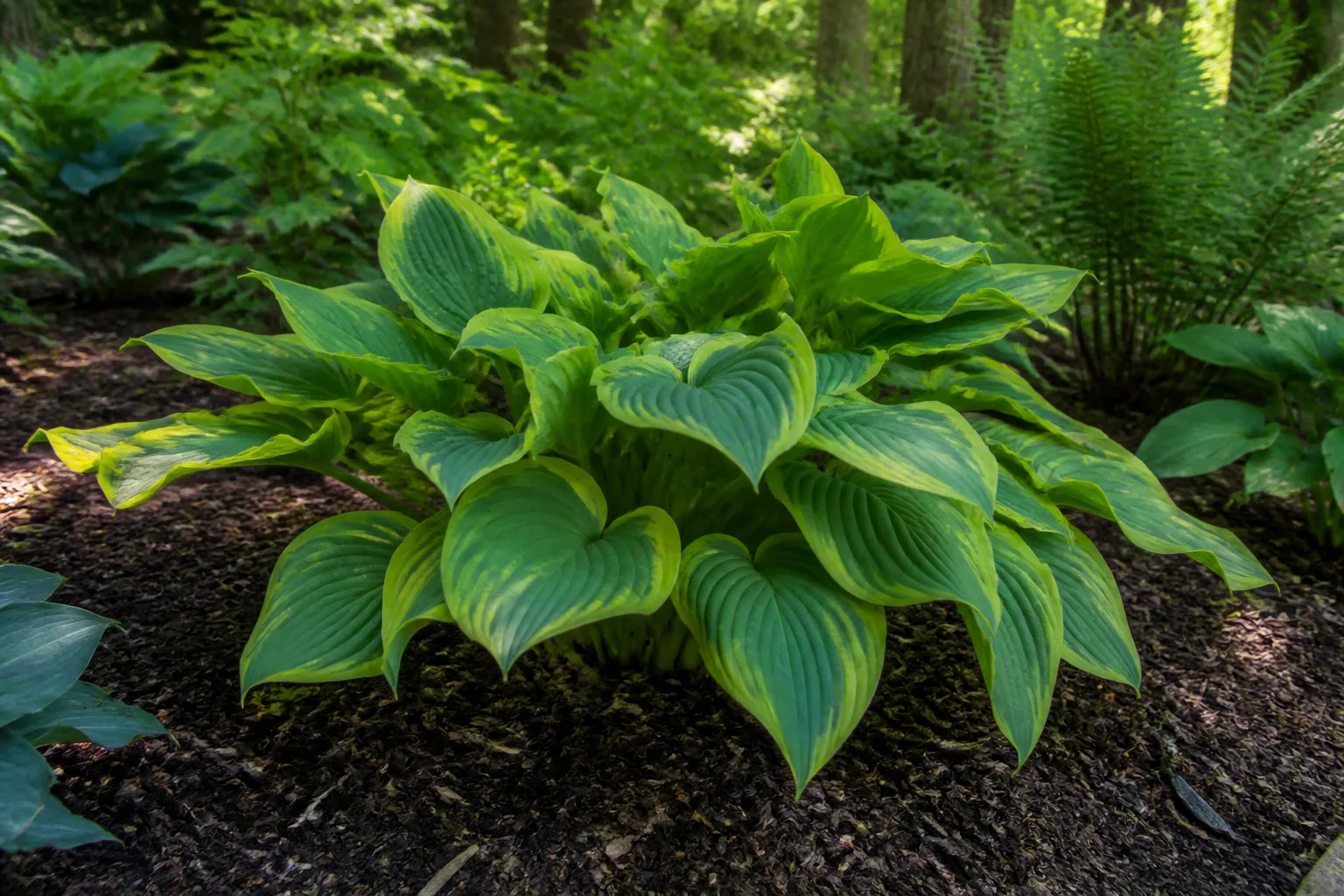
Hostas are cold-hardy, which tempts southern gardeners to let yellowing foliage stand for winter interest. That works only while leaves stay firm. After a hard freeze, hosta leaves often collapse into a slimy mat that shelters voles, snails, and slug eggs that hatch on new spring shoots.
Wait until frost wilts the foliage, then cut stems and leaves to 2 to 3 inches. Remove spent flower stalks at the base when you cut. In zones 8 and warmer, semi-evergreen hosta varieties may keep firm leaves well into winter — if foliage is still green and upright, delay cutting until it turns mushy or until your spring cleanup pass. The cut is about pest and decay control, not enforcing a bare crown in a mild climate.
Garden phlox — hard cut when powdery mildew appears
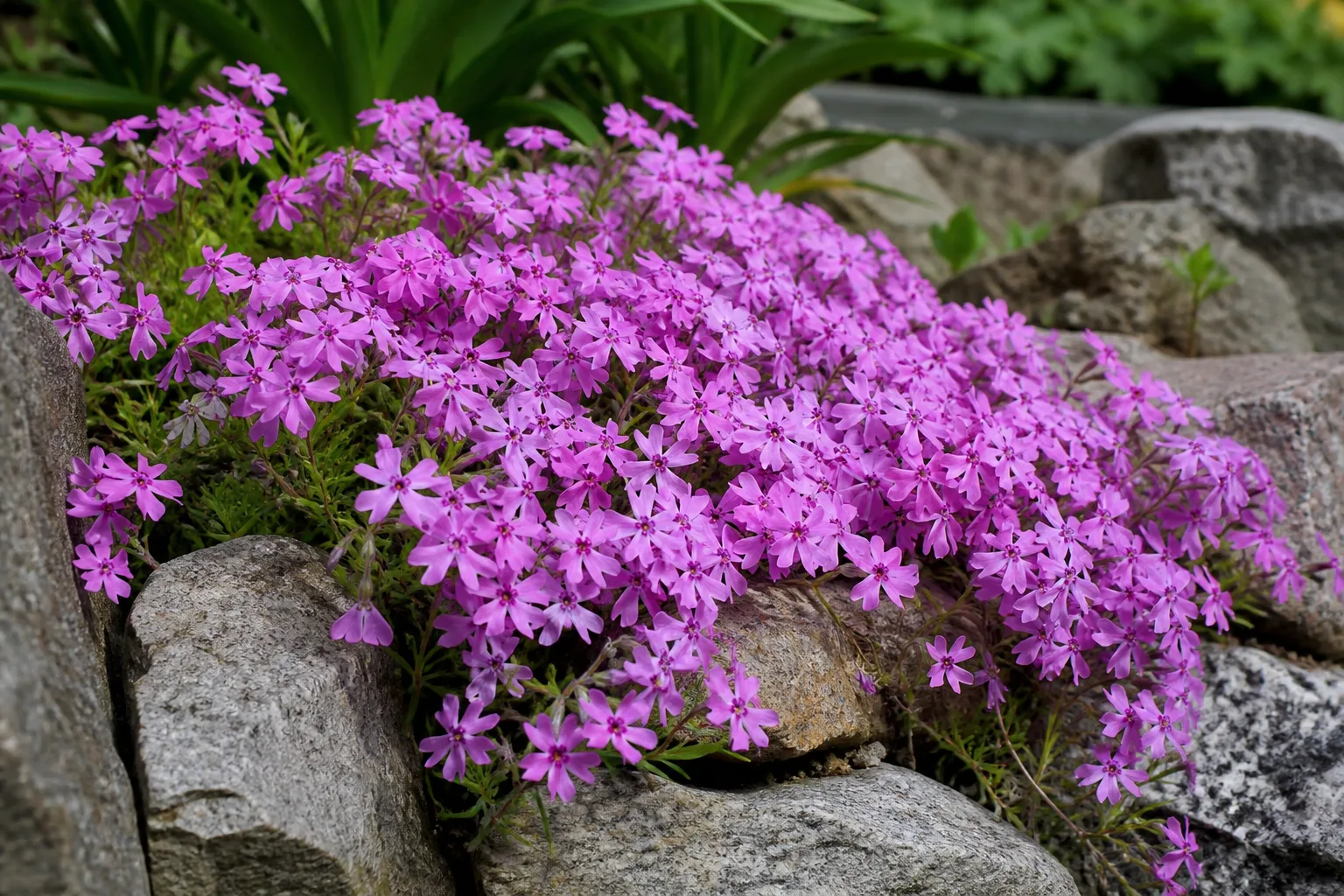
Tall garden phlox (Phlox paniculata) is a late-summer star that often ends the season coated in powdery mildew — a white, flour-like fungus on leaves and stems. Mildew spores overwinter on plant debris, which is why Iowa State University Extension recommends cutting infected plants down and removing foliage from the garden rather than composting it.
After frost blackens stems, cut phlox to 2 to 3 inches and clear all fallen leaves from around the clump. If your plants stayed disease-free and you like the winter silhouette, you may leave clean stems until late winter — but most mildew-prone cultivars benefit from a fall cut. Next spring, thin crowded stems early for better airflow before humidity returns.
Bee balm (Monarda) — cut diseased stems; optional tidy if clean
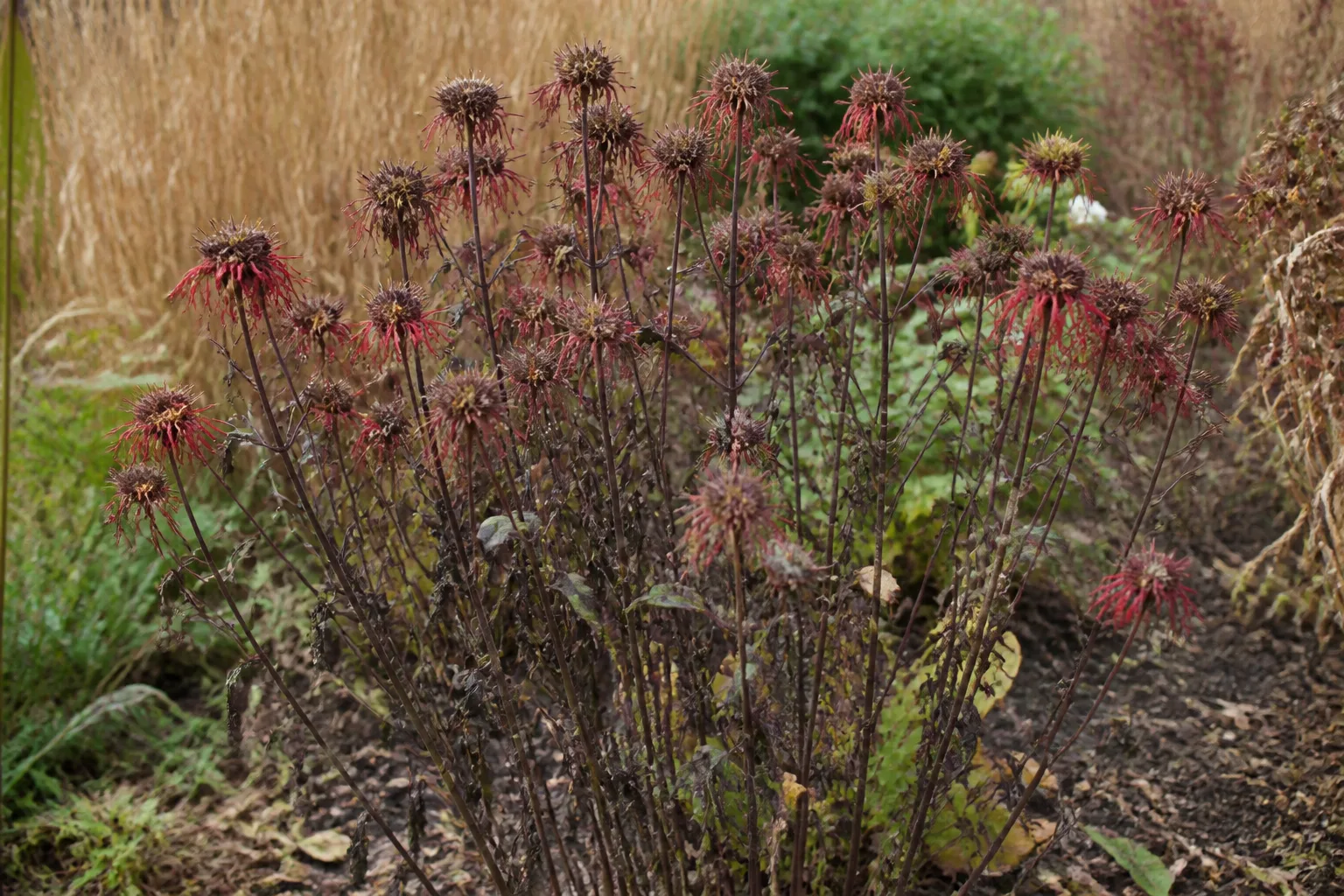
Bee balm (Monarda didyma) shares phlox’s mildew problem and also offers seedheads that finches and small birds will use if you leave them. The decision rule is simple: mildew means a hard cut to just above ground level after frost, with debris bagged. Clean, disease-free plants can stay standing for winter structure and bird food, then get cut in late winter before new shoots emerge.
If you cut for tidiness rather than disease, trim to about 1 to 2 inches and accept that you are trading bird habitat for a cleaner bed. Either way, avoid composting mildewed stems. Bee balm spreads aggressively by rhizomes in moist soil — fall cleanup is a good time to note where you will divide overcrowded clumps in spring.
Daylilies — trim brown foliage but keep green leaves standing
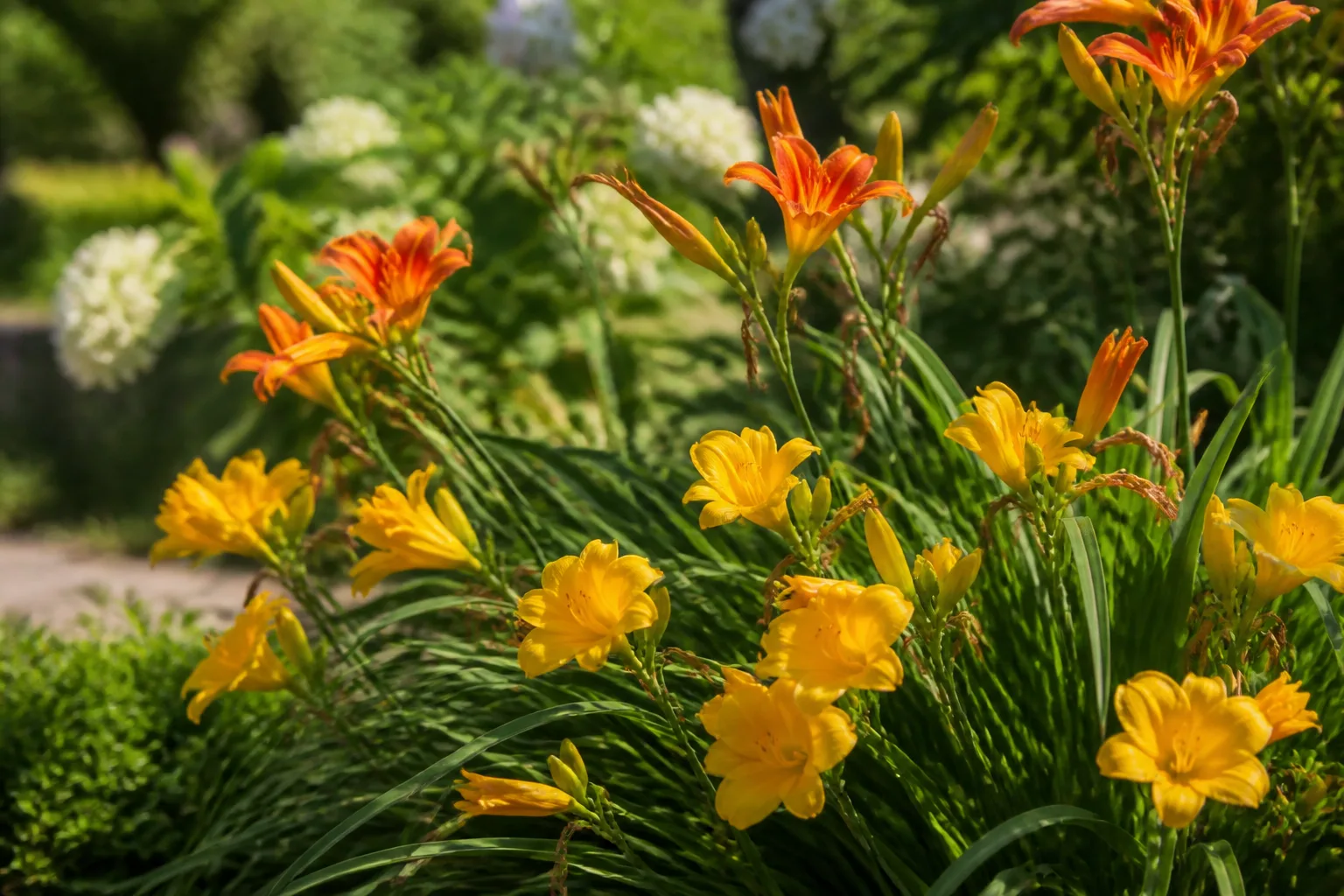
Daylilies (Hemerocallis spp.) store energy in fleshy roots well into fall. Brown, pulling leaves can be removed anytime — they often detach with a gentle tug once fully dead. Green leaves should stay until frost finishes them, because premature shearing can reduce vigor next season.
In cold climates, cut all browned foliage to about 1 inch after hard frost. In warmer zones where daylilies stay partly green into December, let the last green straps stand as long as they look healthy, then trim. Spent flower scapes can come out whenever bloom finishes; the pest issue is slugs, snails, and millipedes hiding in dead leaf litter at the crown, not the bare flower stalks themselves.
Three Perennials to Leave Alone Until Spring
These three are the most common “do not touch in fall” plants on this list. Cutting them now trades a short-term tidy look for lost flowers, cold damage, or missed seed for pollinators.
Hellebores — winter blooms need their foliage
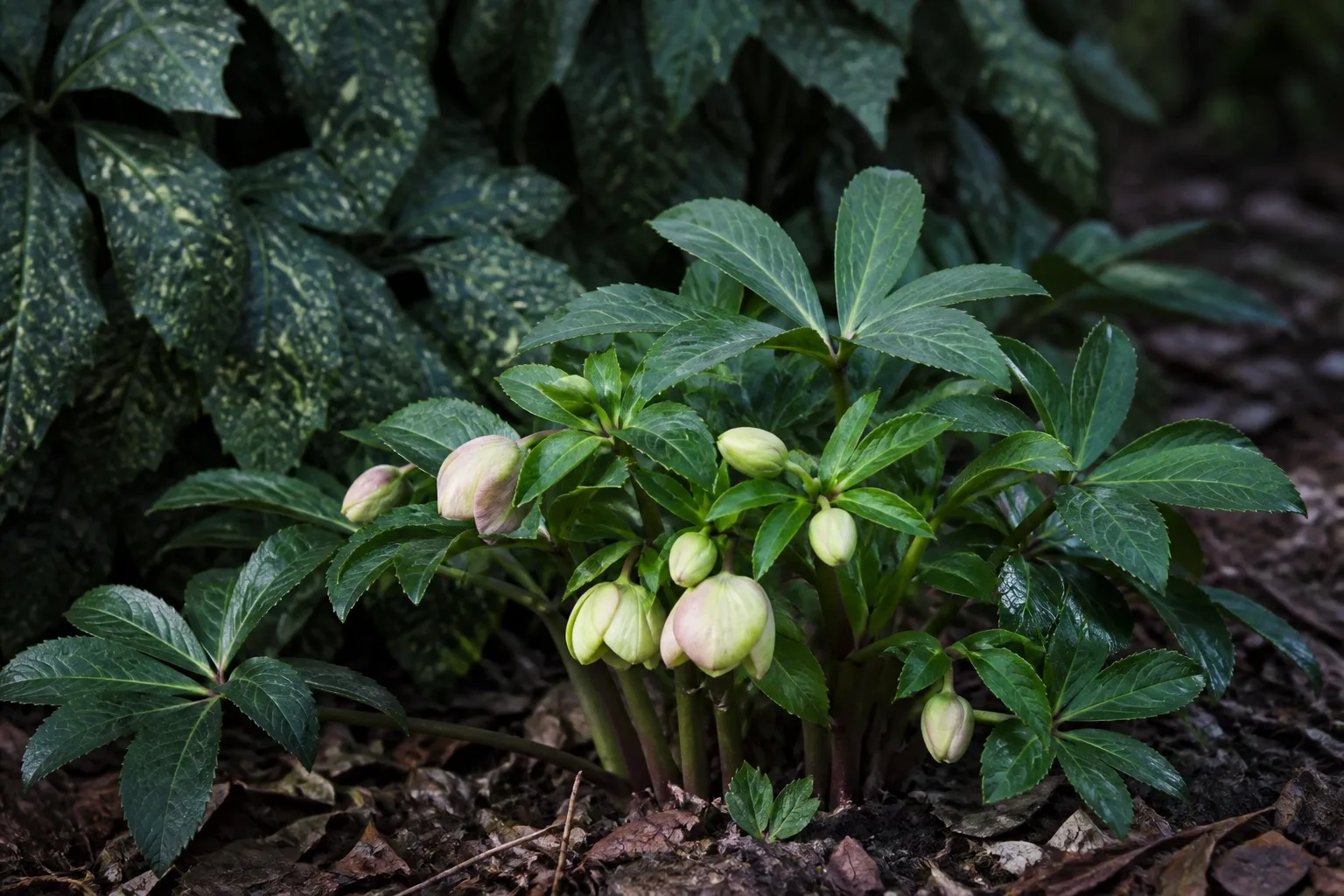
Hellebores (Helleborus spp.) — often called Lenten or Christmas roses — are winter- and early-spring bloomers. Flower buds form at the crown while last year’s leathery leaves still protect them from cold and mud splash. Cutting hellebores back in fall removes that insulation and can expose buds you will miss until February.
Wait until late winter or early spring, just before new flowers open, then remove only dead, spotted, or flattened old leaves at the base. Deadhead spent blooms during the season if you want to limit self-seeding, but do not shear the plant in fall. The RHS hellebore growing guide recommends this late-winter cleanup so emerging blossoms are visible and fungal debris is cleared before growth accelerates.
Lavender — fall hard pruning exposes woody stems to rot
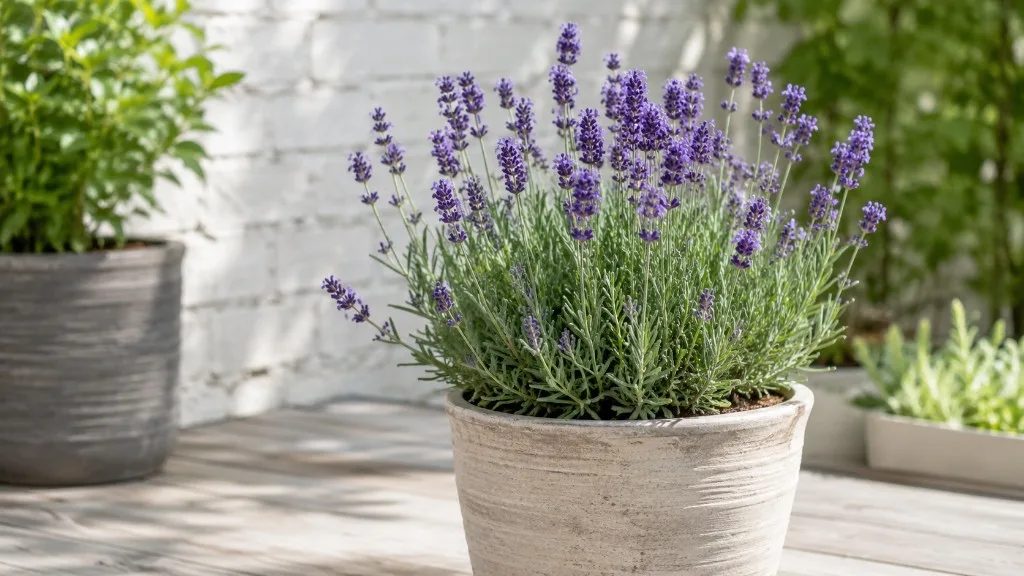
Lavender (Lavandula angustifolia and hybrids) is a woody subshrub, not a soft herbaceous perennial. It tolerates a light tidy after summer bloom — removing spent flower wands and leggy soft growth — but only if you finish at least six weeks before your average first hard frost. That window lets new growth harden off before cold arrives.
Do not hard-prune lavender in fall. Cutting into old, leafless wood before winter exposes bare stems to cold rain, snow melt, and root rot in heavy soil. NC State Extension notes that English lavender is hardy in many zones but still vulnerable when over-pruned going into wet winter weather. Save the real haircut for spring, when you can see green buds on living wood, and never remove more than one-third of the plant at once.
Native milkweed — let seeds disperse for monarchs first
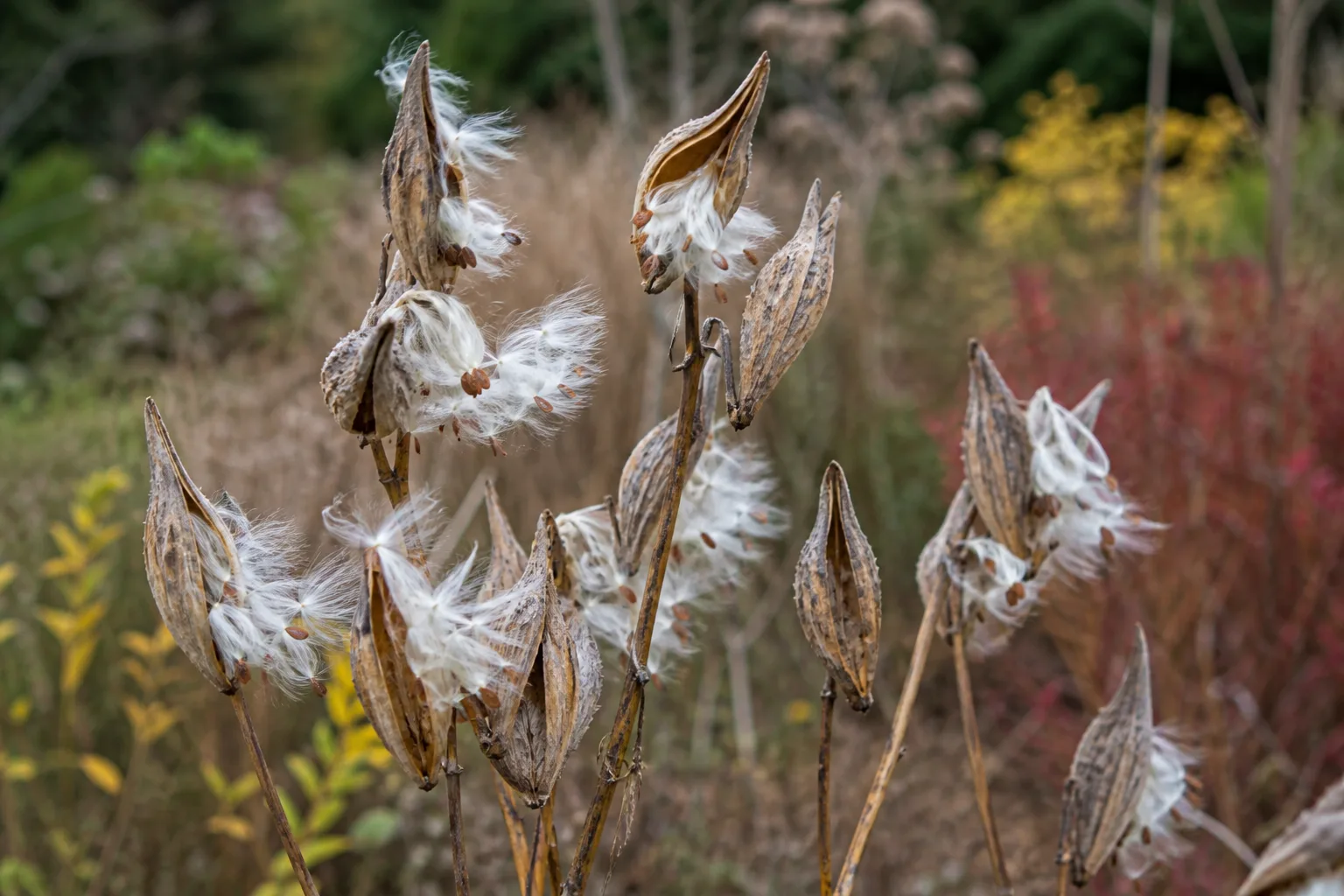
Common milkweed (Asclepias syriaca) and other native milkweeds are the sole host plants for monarch caterpillars. Gardeners increasingly leave them standing so pods can split, seeds can fly on silk parachutes, and stalks can die back naturally — usually in late fall or early winter.
Remove dry, hollow stems once seeds have dispersed and stems snap easily at the base. Roots remain perennial and regrow in spring. Monarch Watch encourages leaving milkweed in the landscape for both caterpillar food and natural reseeding. If you must tidy sooner, cut only after pods have opened or collect seeds deliberately for sowing rather than discarding unripe pods. Avoid composting thick milkweed stalks if latex sap causes your pile to stay wet and anaerobic.
Fall Cleanup Rules That Apply to Every Plant on This List
The nine plants above share a few non-negotiable habits that matter more than any single cut height.
How low to cut, what to bag, and when to sanitize tools
Cut height: Stay above the crown — never slice through the growing point at soil level on peonies, hostas, or phlox. Iris is the exception: rhizomes should remain partly exposed, with only leaf fans shortened. Disposal: Bag foliage with mildew, rust, botrytis, or iris borer damage. Healthy, pest-free trimmings from daylilies or clean bee balm can go in compost. Tool hygiene: Dip bypass pruners in rubbing alcohol or a 10% bleach solution between diseased plants. A contractor bag at your feet beats dragging infected leaves across the bed.
How warm zones and mild winters change the timing
In zones 8–10, hostas and daylilies may keep green foliage deep into winter — delay cutting until leaves turn mushy or until your spring cleanup. Lavender fall tidies should happen earlier in autumn, not on the eve of frost. Milkweed may not fully die back until January in mild climates; the signal is dry, brown stems, not the calendar. In zones 3–5, complete cutbacks before the ground freezes so you are not working frozen crowns, but still after hard frost has stopped active growth.
Conclusion
Fall perennial cleanup is a set of plant-specific decisions, not one pass with the hedge shears. Cut peonies, iris, hostas, garden phlox, bee balm, and daylilies after hard frost when foliage is spent, diseased, or pest-prone — and bag anything carrying mildew or botrytis. Leave hellebores, lavender, and milkweed until their winter or spring jobs are finished: blooms protected, woody stems unexposed, and monarch seeds dispersed.
Get the timing and disposal right on these nine, and you will head into winter with fewer spores in the soil, fewer slug eggs at the crowns, and a clearer plan for what still needs attention when growth returns. For the wider fall cut list beyond these nine, use our perennials to cut back in fall guide — but start here if these are the plants actually in your beds.



