30 Plants That Keep Bees and Wasps Away
Thirty scented herbs, flowers, and foliage plants that can reduce bee and wasp traffic near patios—plus where to plant them, which ones attract pollinators anyway, and pet-safe picks.
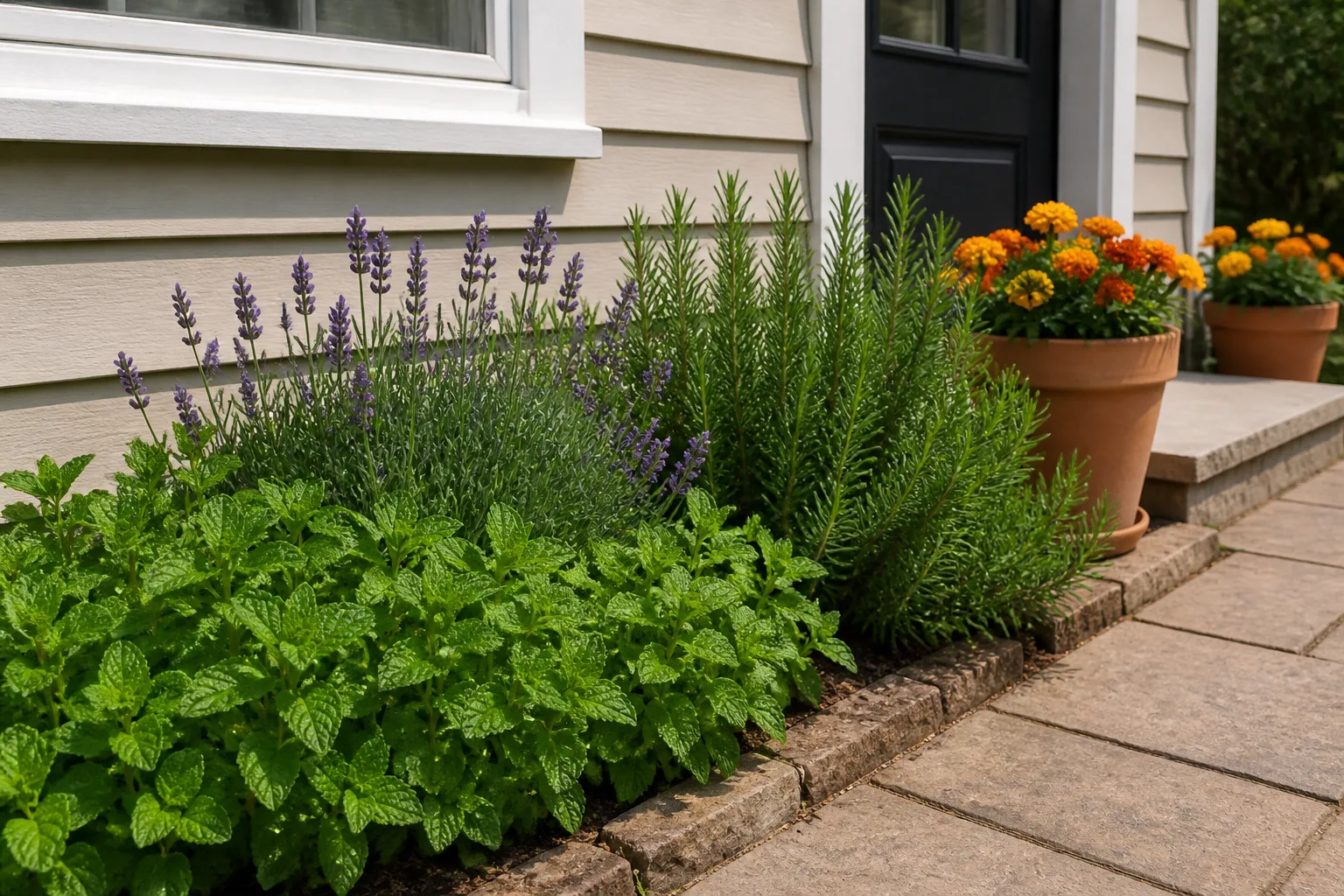
A wasp circling your iced tea changes the whole mood of patio season. Bee- and wasp-repellent plants can shrink that problem when you use them for what they actually do: add localized scent pressure, steer pollinators toward better food elsewhere, and fill seating zones with flowers that offer little reward to foragers. They do not build an invisible fence around your yard, and they will not evict an established nest in the eave.
This guide covers 30 plants worth knowing — grouped by how they work, rated honestly for bees vs. wasps, and tied to where to place them. You will also see which popular listicle picks contradict themselves (lavender and chives bloom; wintergreen is basically neutral) and what to add when scent alone is not cutting it, from sealed trash habits to decoy nests and professional nest removal.
How These Plants Work — and What They Cannot Do
Stinging insects find food and nest sites using smell, sight, and memory. Repellent plants exploit one or more of those channels. Understanding the mechanism keeps you from planting a lavender hedge against the back door and wondering why honeybees still visit every afternoon.
Strong scents that overwhelm insect smell
Wasps and bees both rely heavily on olfaction. Herbs in the mint, allium, and artemisia families release volatile oils — menthol, thujone, sulfur compounds — that can make a small area feel “wrong” to a scouting insect. Live foliage releases far lower concentrations than bottled essential oils, so bruised leaves and containers within a few feet of chairs matter more than a single distant border plant.
The Royal Horticultural Society notes that most wasps are beneficial predators that only turn defensive when disturbed (RHS). Repellent scent reduces casual visits; it does not replace removing meat scraps, soda spills, and open compost that pull yellowjackets in by late summer.
Red blooms, tubular flowers, and low-pollen shapes
Bees see color differently from humans. They detect ultraviolet, blue, and yellow strongly and are less attracted to pure red blooms that reflect little UV light. That is why red geraniums, cardinal flower, and some red rose cultivars show up on “bee-free” lists — not because the plants repel bees, but because they are harder to find.
Tubular or closed flowers (trumpet vine, some roses) add a second barrier: even interested insects struggle to reach nectar. Low-pollen doubles (many begonias and geraniums) simply offer a poor return on a foraging trip. Ferns and other non-flowering foliage avoid the problem entirely by producing no pollen.
None of this stops a hungry wasp from investigating your burger. Scent and flower choice manage incidental traffic; sanitation manages food-driven scavenging.
Where to Plant for Patios, Pools, and Doorways
Think in rings, not random beds. Ring 1 (0–6 feet from seating): potted mint, basil, thyme, marigolds, or lemongrass where you can bruise leaves before guests arrive. Ring 2 (6–20 feet): lavender, rosemary, and wormwood in borders — but accept that blooming lavender may still draw bees to the far side of the yard. Ring 3 (property edge): keep heavy pollinator magnets (clover lawn, fruit trees, large sunflower patches) away from doors if allergies are severe.
Match sun and drainage to the plant, not the fantasy layout. Mediterranean herbs need full sun and sharp drainage; mint tolerates part shade but wants moisture. For pools, prioritize contained pots on the coping or deck — mint runners in lawn edging become a maintenance headache and still will not stop wasps attracted to sugary drink spills.
Refresh scent by crushing a few leaves onto saucers or tossing spent herb trimmings into a fire-pit edge before evening cookouts. Reapply after rain; volatiles wash away quickly.
Basil, Mint Family, and Allium Herbs
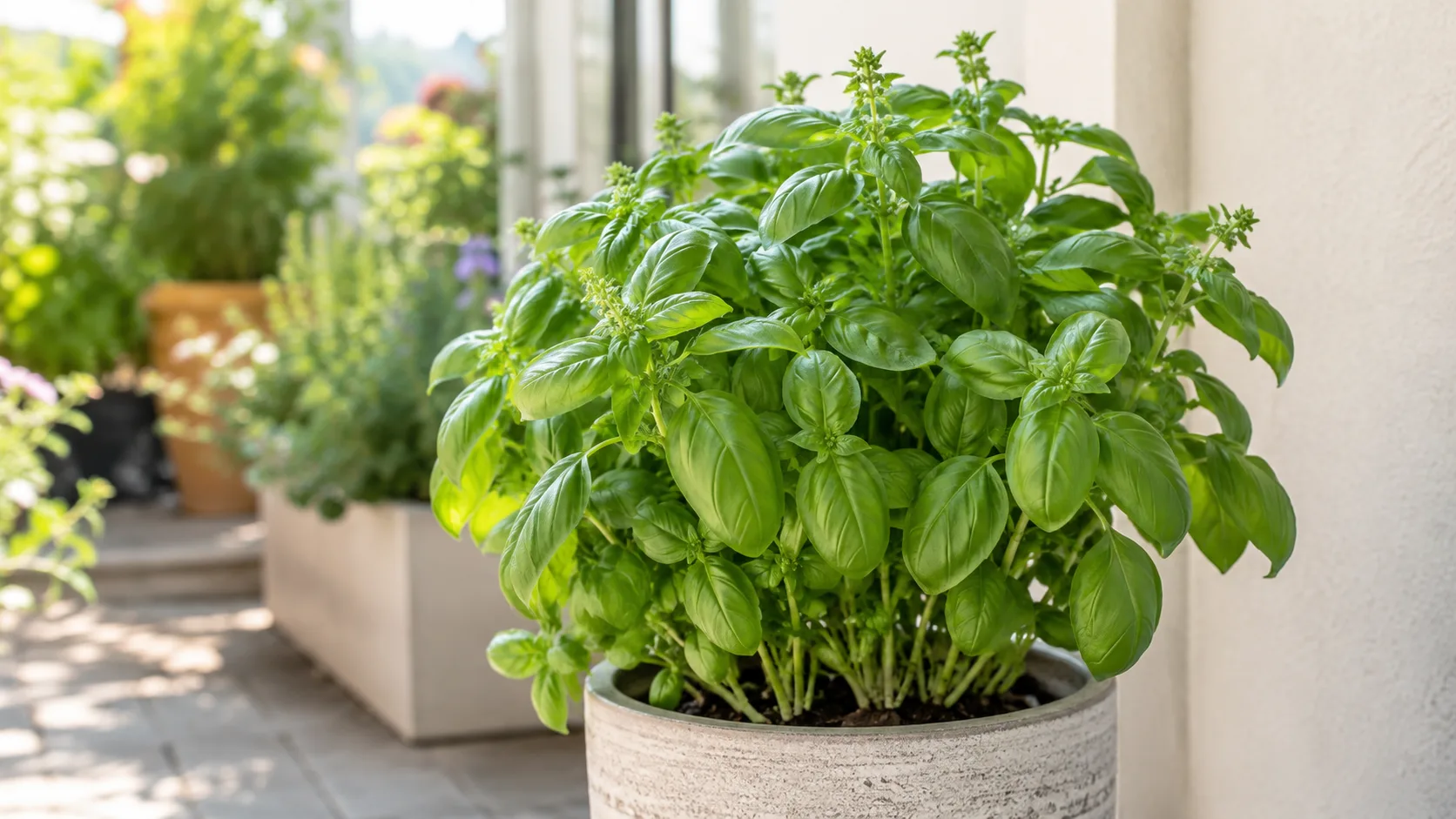
Basil (Ocimum basilicum) is the easiest win for a sunny patio pot. Its clove-like eugenol and other leaf volatiles irritate many flying insects at close range. Grow it in terra-cotta near the grill and pinch tips weekly for bushier, oil-rich growth. Basil is generally pet-safe in small nibbles but not a salad ingredient for dogs in quantity.
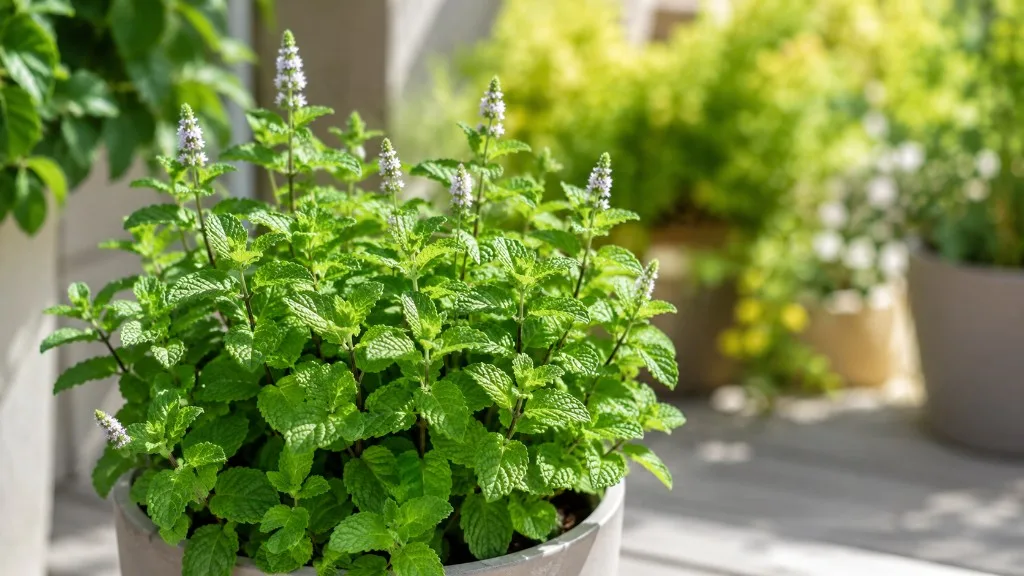
The mint family stacks several list entries: mint, peppermint, spearmint, and pennyroyal (Mentha spp.). All share menthol-family compounds wasps tend to avoid. Peppermint is the strongest scent; spearmint is milder but still useful in hanging baskets by doorways. Mint spreads aggressively — always use buried pots or root barriers so your repellent strip does not become a lawn invader.
Garlic, onion, and chives (Allium spp.) release sulfur volatiles from foliage and bulbs. Wasps and many soft-bodied pests dislike the smell. Chives and onion do produce nectar when flowering, so cut bloom stalks near seating if bee traffic is the concern. Interplant alliums in vegetable rows for dual pest pressure and kitchen harvest.
Pennyroyal, catnip, and chive bloom caveats
Pennyroyal (Mentha pulegium) is potent — and toxic if ingested. MedlinePlus documents serious liver injury from pennyroyal oil; garden plants should never be used as tea or pet collars (MedlinePlus). Use it only in fenced beds pets and toddlers cannot reach, or skip it for spearmint in pots.
Catnip (Nepeta cataria) repels several nuisance insects by scent but blooms attract pollinators each summer. Treat it like chives: great in a side yard, cut flowers if you need a bee-quiet zone during bloom.
Rosemary, Sage, Thyme, and Bay Laurel
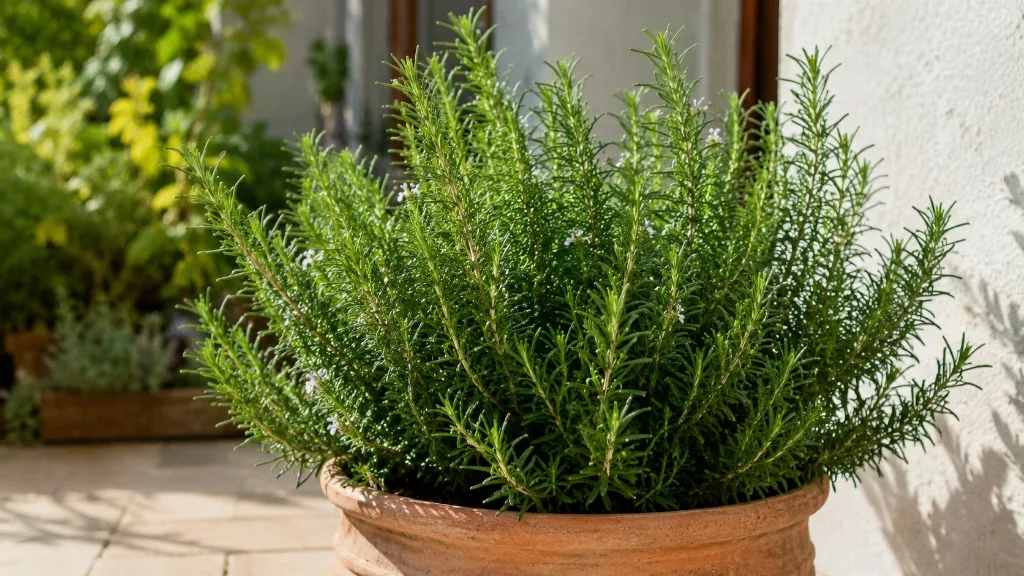
Rosemary (Salvia rosmarinus) delivers resinous, needle-leaf scent year-round in zones 5–9 (variety dependent). Wasps and yellowjackets commonly avoid the smell; bees may still visit when plants flower. Flank stairs and grill islands with upright rosemary in pots for a living screen you can also clip for cooking.
Sage (Salvia officinalis) and thyme (Thymus vulgaris) share sun-loving, drought-tolerant habits and camphor-thymol aromas. Low thyme mats work between pavers where ants and wasps scout along warm stone. Bay laurel (Laurus nobilis) adds a bitter, culinary leaf scent in partial shade — excellent in entry urns flanking front doors in mild climates (protect from hard frost).
Combine these four in one Mediterranean herb run along a patio edge for continuous scent and easy harvest. None replaces removing fallen fruit or meat wrappers; they reduce wandering scouts, not a nest overhead.
Marigolds, Geraniums, and Red-Flowered Blooms
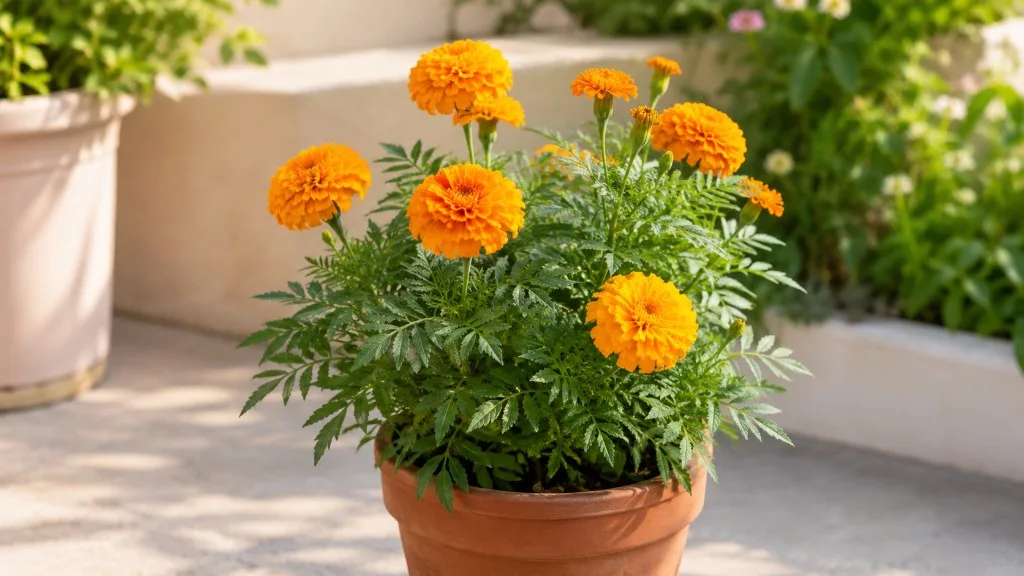
Marigolds (Tagetes spp.) release thiophenes and other compounds that many insects dislike — the same reason they appear in companion-planting guides. French and African types fit container edges and vegetable borders. They can still host beneficial insects; the goal is mild local deterrence, not a sterile garden.
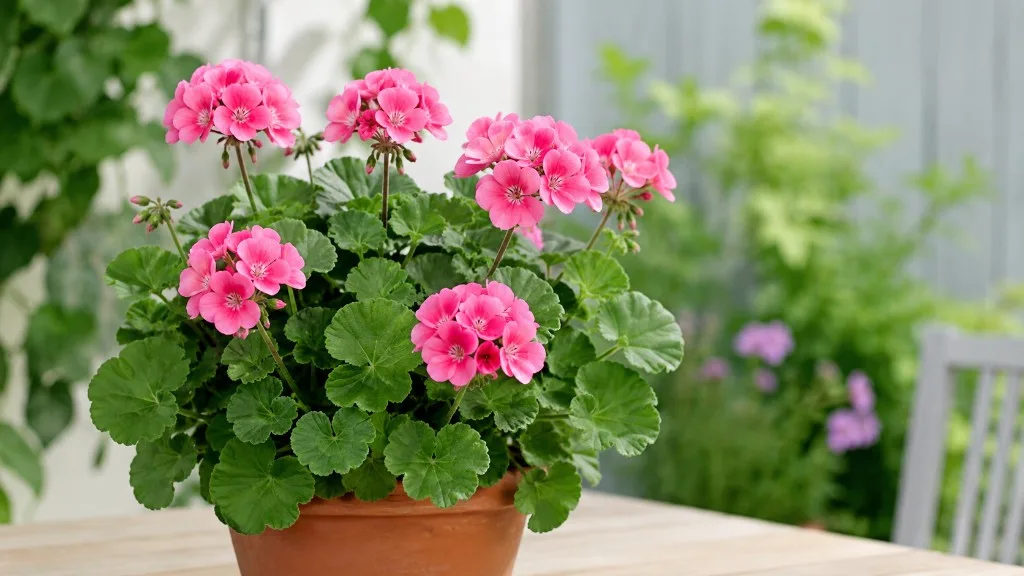
Geraniums (Pelargonium hybrids) carry low pollen in many cultivars, especially scented-leaf and red varieties. Bees struggle to see deep red blooms; wasps may still investigate sugary residue on human food nearby. Do not confuse these with hardy cranesbill geraniums (Geranium spp.) — different genus, different pollen loads.
Red lilies and red roses lean on the color-vision trick. Bees favor UV-visible landing patterns; saturated red petals without those cues get fewer visits. Many lily species are extremely toxic to cats (ASPCA lists multiple Lilium species); skip them if cats roam the patio. Choose double red roses with tight petals when pollen access is the main issue — open singles still feed bees.
Cardinal flower (Lobelia cardinalis) pairs red hue with tubular flowers hummingbirds love. Bees rarely bother it; wasps are indifferent unless other attractants are present. Site it in moist partial shade away from dining tables if hummingbird traffic is welcome but bee traffic is not.
Lemongrass, Citronella, Eucalyptus, and Wormwood
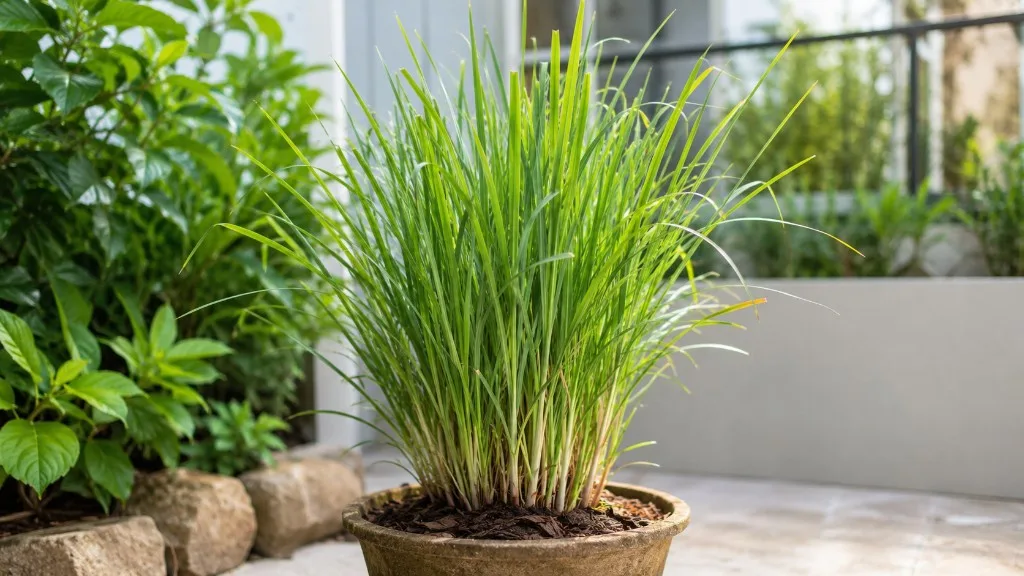
Lemongrass (Cymbopogon citratus) and true citronella grass (C. nardus) supply the citronellal familiar from mosquito-repellent lists. Wasps dislike the lemony volatiles; warmth and full sun maximize oil production. In zones below 9, grow them as annual patio pots brought indoors before frost.
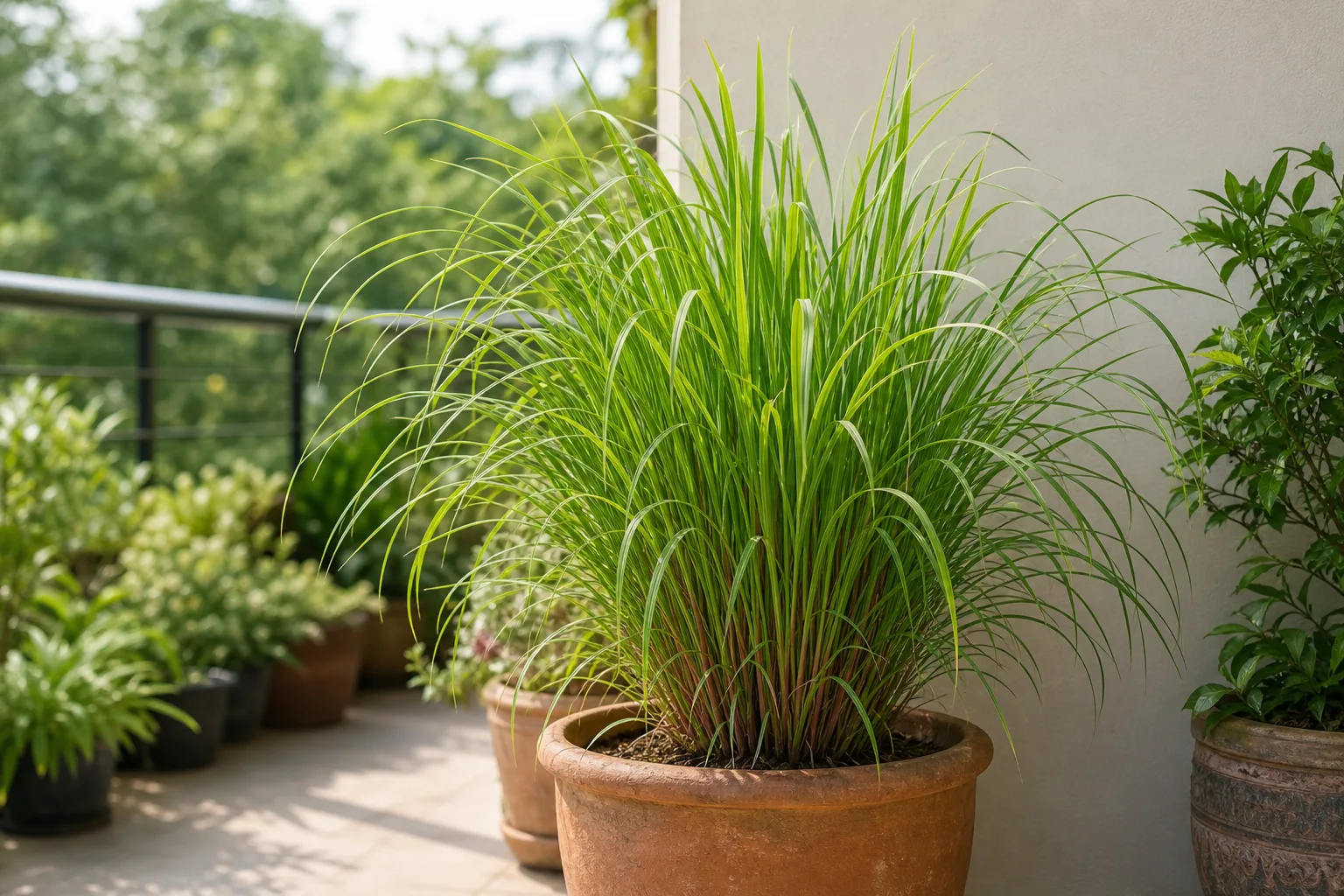
The potted “citronella plant” at garden centers is usually a scented geranium (Pelargonium), not citronella grass. It smells pleasant but delivers modest repellent value — fine as an accent, weak as your only barrier.
Eucalyptus foliage and oil deter several insects, including some wasps and ants. Trees grow fast in mild climates; ASPCA lists eucalyptus as toxic to dogs, cats, and horses (ASPCA). Use potted standards away from pet chew zones, or substitute cut branches refreshed weekly on railings.
Wormwood (Artemisia spp., including absinth wormwood) is one of the strongest acrid-scented perennials for wasp pressure. NC State rates the genus as high-severity poison for humans and pets, with thujones and terpenoids in aromatic leaves (NC State Extension). Place silver wormwood in pots near doors — not in pet runs — and wash hands after pruning.
Begonias, Ferns, Cardinal Flower, and Trumpet Vine
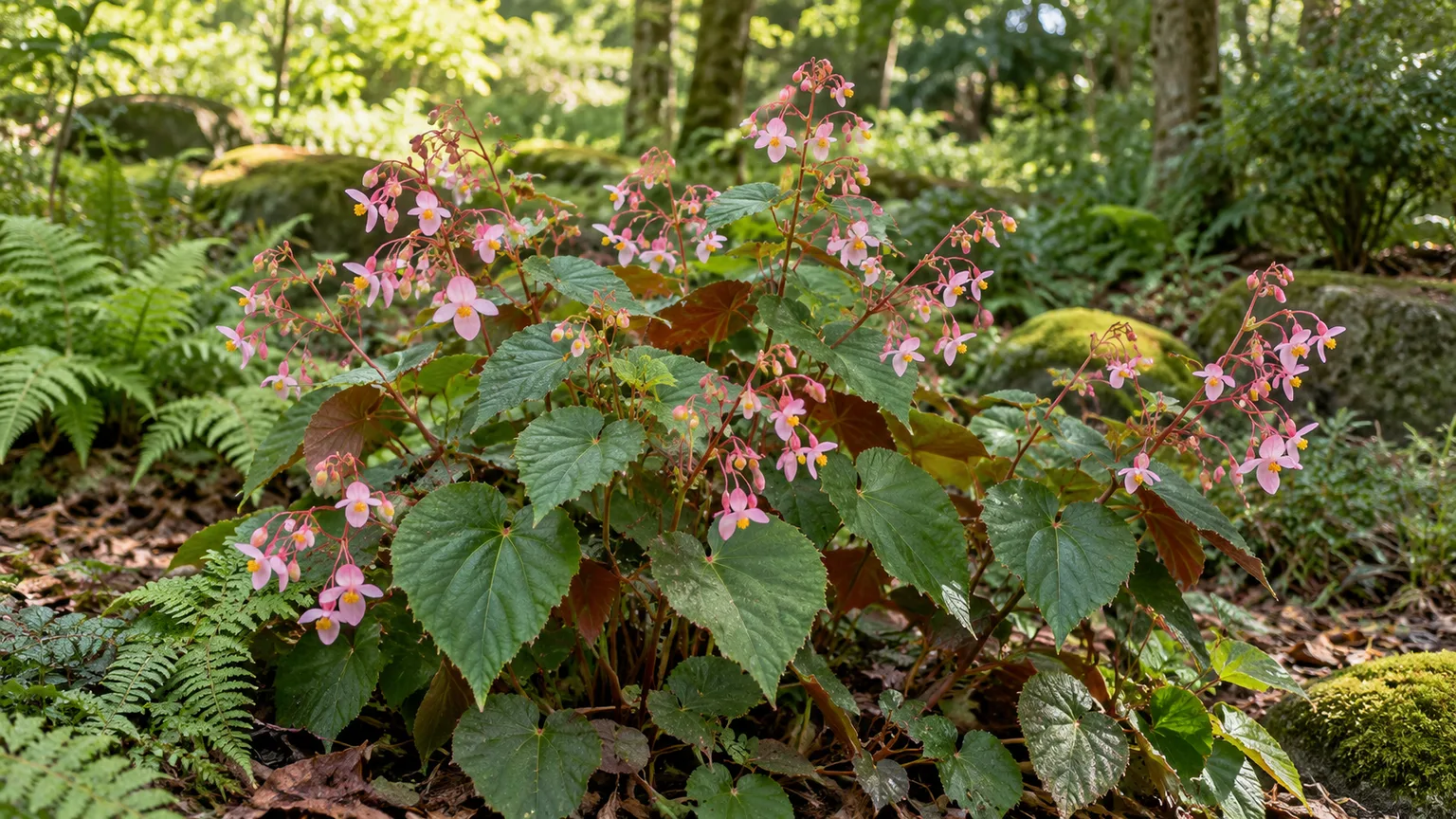
Begonias offer showy color with minimal pollen in many wax and tuberous types — useful under covered patios where bees would otherwise investigate bright annuals. They prefer bright indirect light and consistent moisture without waterlogging.
Ferns are the simplest non-flowering option: no pollen, no nectar, little reason for bees to linger. Use Boston or sword ferns in shaded porch containers to green up corners without turning them into pollinator buffets.
Trumpet vine (Campsis spp.) and trumpet flower displays use long tubular corollas bees struggle to enter. Hummingbirds are the intended audience. These vines are aggressive; contain them on trellises away from structures so they do not lift shingles or invade siding — a different kind of patio problem than stings.
Rue, Clove, and the Cucumber Peel Trick
Rue (Ruta graveolens) packs acrid oil in blue-green foliage that bees and wasps tend to bypass. Butterflies may still visit its small yellow flowers. NC State notes moderate to high toxicity to humans and pets via skin and ingestion (NC State Extension). Wear gloves when handling; skip rue if children or pets graze planting beds.
Clove trees (Syzygium aromaticum) are tropical slow growers in U.S. gardens — most readers will use dried cloves in sachets near doors rather than a backyard tree. Eugenol-rich clove scent appears in research blends that reduce vespid attraction to bait — the same chemistry behind natural wasp repellent sprays.
Cucumbers do not repel by growing alone; bitter peels on a plate or scattered near a picnic spot are the folk trick. Alkaloid compounds in skin may briefly discourage insects. Treat peels as a same-day picnic hack, not landscaping — they mold quickly and attract flies if left out.
Lavender and Wintergreen: Mixed or Overrated Repellents
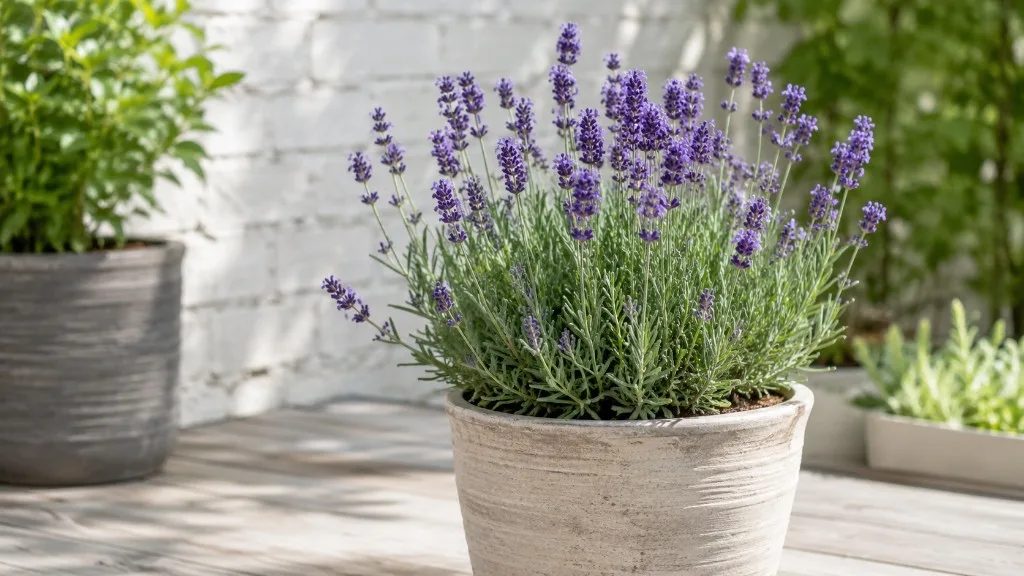
Lavender (Lavandula spp.) is the most argued plant on every repellent list. Blooming lavender attracts bees seeking nectar and pollen. The same linalool-rich scent can discourage wasps and mosquitoes in some studies, especially as dried bundles or oil near eaves. Plant lavender downwind and downhill from seating — beautiful, useful, but not bee-proof when in flower.
Wintergreen (Gaultheria procumbens) is often listed despite minimal bloom and neutral scent. It is a fine acid-soil groundcover for shade; do not expect measurable bee or wasp deterrence. Include it here only so you do not waste bed space hoping for magic.
Pet and Child Safety for Repellent Landscaping
Several strong repellents are also serious toxins:
- High concern: pennyroyal, rue, wormwood, eucalyptus, citronella grass (pets), many lilies (cats)
- Moderate concern: marigolds and geraniums (GI upset if eaten), clove oil concentrates
- Generally safer near pets: basil, thyme, rosemary, sage, begonias, ferns (still not pet food)
Check ASPCA toxic plant lists before planting at pet height. Essential oils are never pet-safe at full strength on fur or collars without veterinary guidance.
When Plants Are Not Enough
Plants manage ambient pressure; they do not remove active nests or food swarms. If workers stream from a hole in the lawn or a gray papery ball under the deck, shift to nest treatment at dusk or a professional — scent pots will not relocate a colony defending brood.
For late-summer yellowjacket scavenging, pair herbs with lidded trash, prompt grill cleanup, and traps placed at the property edge, not beside the table. Allergic household members should still carry prescribed epinephrine; landscaping is comfort, not medical protection.
Conclusion
The thirty plants in this guide work when you match mechanism to placement: mint and basil by the chairs, red geraniums and begonias where you want color without pollen, wormwood and eucalyptus as scented sentries — with toxicity eyes open. Bees and wasps are not identical targets; blooming herbs may still feed pollinators while helping with wasp wanderers.
Build a two-ring plan (pots at seating, borders farther out), bruise leaves before guests arrive, and keep pollinator-heavy crops away from doors. When stings persist despite good planting, the issue is usually food, water, or a nest — not the wrong marigold cultivar. Fix habitat first; let these plants finish the job of making your patio feel like yours again.