How to Grow and Care for Oxeye Daisy
Learn how to grow oxeye daisy in sun or containers, water it wisely, start seed, divide clumps, extend bloom, and prevent unwanted spread.
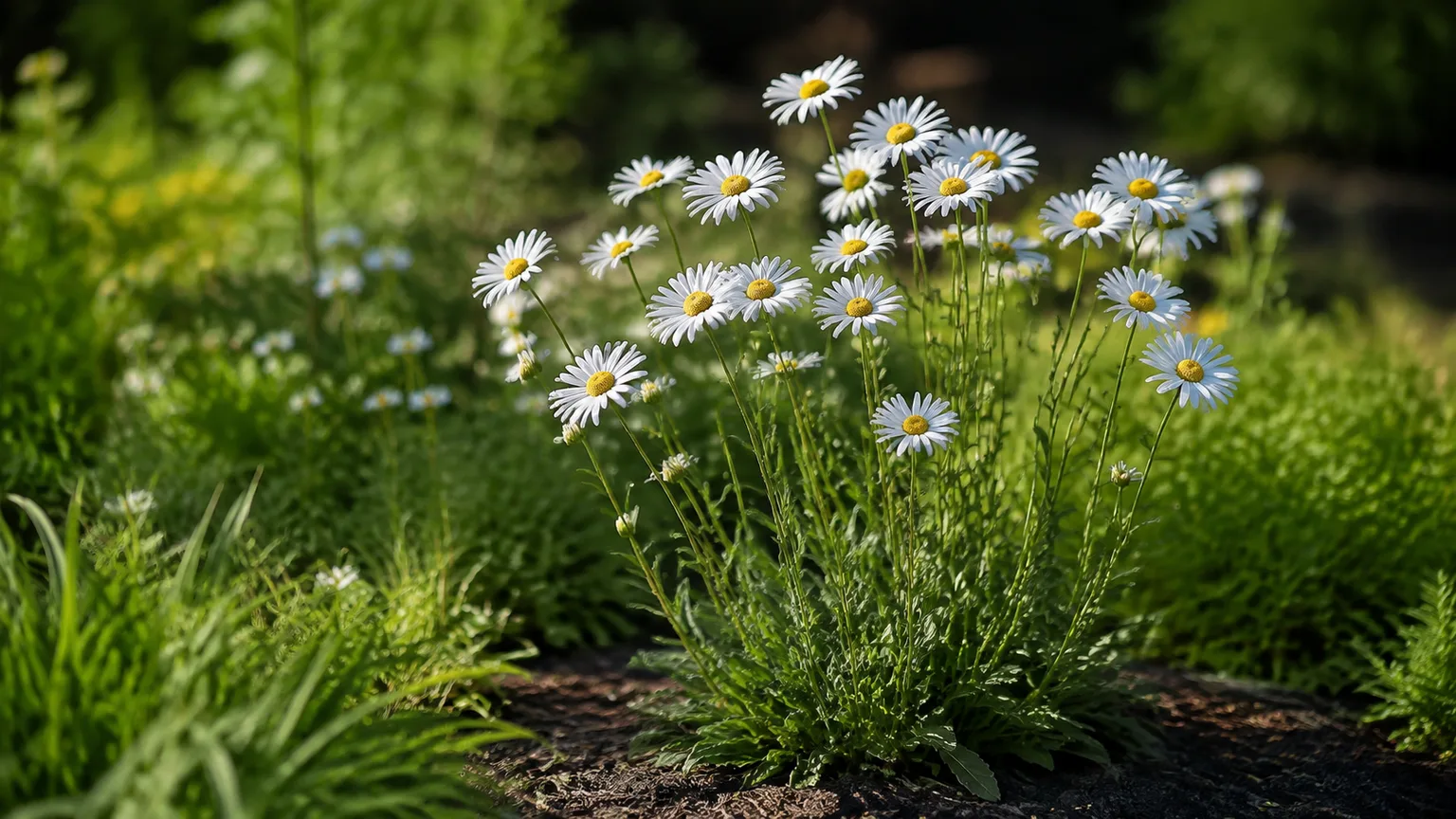
Oxeye daisy (Leucanthemum vulgare) is easy to grow for a reason: it is a hardy, adaptable perennial that can thrive in ordinary soil, tolerate dry spells once established, and flower with very little feeding. The same traits that make it charming in a controlled bed can make it a poor choice near open meadows, pasture, waterways, or natural areas. Before you plant, check your local invasive-plant list and decide whether you want a self-sowing wildflower or a contained container specimen.
If the site is appropriate, give oxeye daisy sun, drainage, and room for a spreading crown. Keep seedlings moist while they establish, then water only during prolonged drought. Deadhead before the centers dry and release seed, and divide crowded clumps when their middle becomes congested. That simple routine gives you the flowers without handing the plant the whole garden.
Decide Whether Oxeye Daisy Belongs in Your Garden
The first oxeye daisy question is not “How often should I water it?” It is “Is this species responsible to plant where I live?” Oxeye daisy is native to Europe and parts of temperate Asia and was introduced elsewhere, including North America. The Invasive Plant Atlas lists it as an invasive perennial and shows state-level listings, but it also cautions that its distribution map is incomplete. That means a missing dot on a map is not proof that the plant is harmless or unregulated.
Search your state, province, county, or land-management authority for Leucanthemum vulgare before buying seed or nursery plants. The Invasive Plant Atlas of the United States is a useful starting point for distribution and state listings, but its map is not complete. Skip the plant if it is listed as invasive or noxious where you garden, if your property borders a meadow or wetland, or if you cannot commit to removing flowers before seed ripens. A sunny patio container or a fully enclosed ornamental bed is a more defensible setting, but even a pot can release seed if faded heads are ignored.
There are good reasons people like it. The white flowers are useful in a cottage-style border, cutting garden, or carefully managed pollinator planting, and the plant handles lean, dry soil better than many ornamental perennials. If you want the look without the ecological risk, choose a locally appropriate native daisy or another native white-flowered perennial; NC State Extension’s plant profile itself points gardeners toward native alternatives.
Identify Oxeye Daisy Before You Plant
The common name “daisy” covers several unrelated or hybridized garden plants, so confirm the botanical name on the label. Oxeye daisy forms a basal clump of dark green, toothed, spoon-shaped leaves and sends up slender, often branching stems. Its white ray florets surround a flat yellow disk, and individual flower heads are usually about 1 to 3 inches across. NC State Extension describes plants about 1 to 3 feet tall and 1 to 2 feet wide, with one plant capable of producing numerous flowering stems.
Do not confuse it with Shasta daisy (Leucanthemum × superbum). Shasta daisies are garden hybrids that often have larger flowers, stronger clumps, and a more deliberate border habit. Oxeye daisy looks lighter and more meadow-like, with smaller flowers and a stronger tendency to travel by seed and rhizomes. For a broader visual comparison, see this guide to daisy types for gardens, but use the plant tag and local guidance for the final identification.
Choose the Right Site
Oxeye daisy tolerates more conditions than it prefers. Treat that distinction as your planting advantage: place it where it can flower well without being invited into a damp, shaded corner where weak stems and disease become more likely.
Sunlight, airflow, and stem support
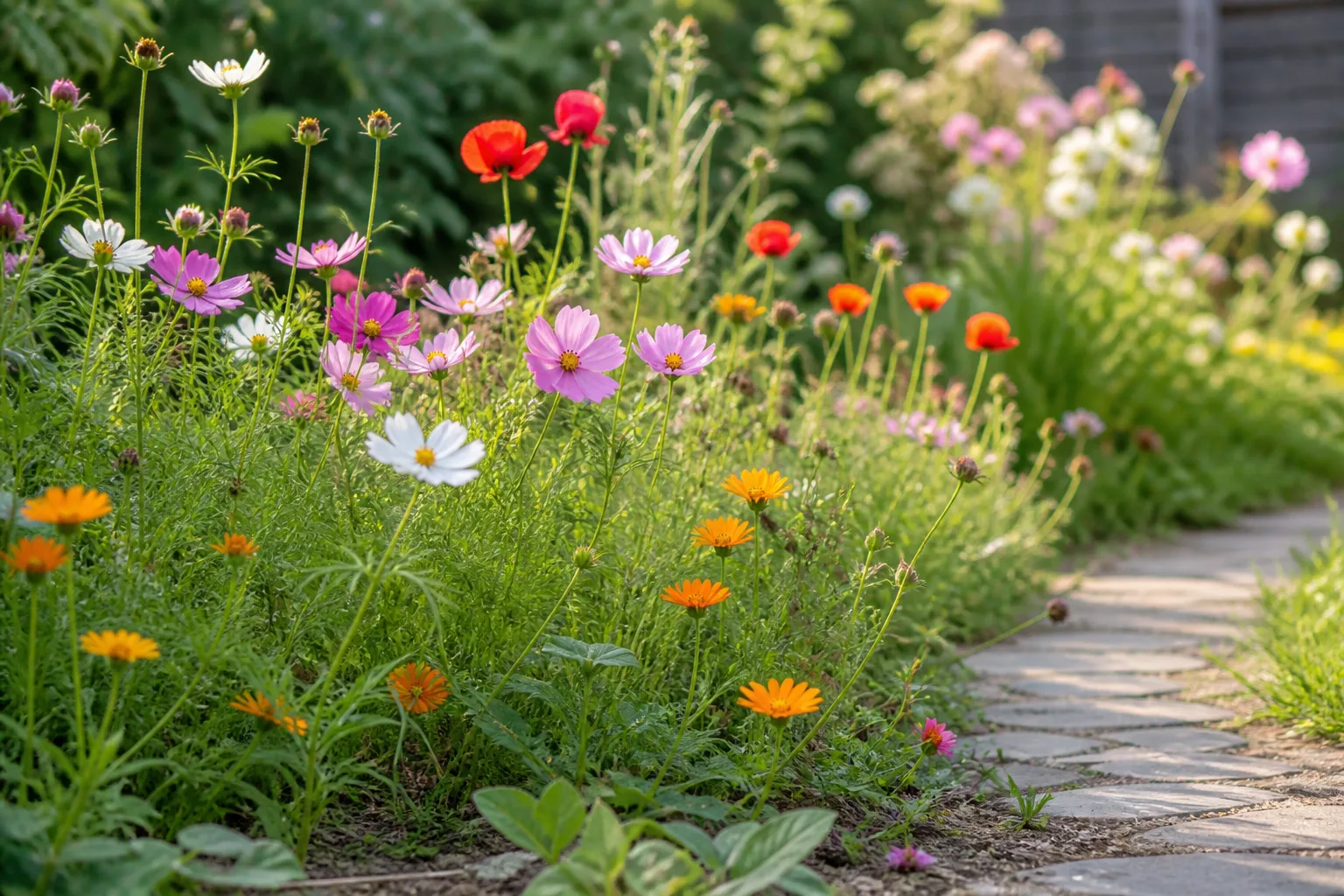
Aim for at least six hours of direct sunlight. Full sun produces the most flowers and keeps the stems shorter and sturdier. Light afternoon shade can be useful in a hot, humid climate, but deep shade is a poor compromise: the plant may survive while flowering sparsely and leaning toward the light. The RHS summarizes the trade-off well: Leucanthemum grows in full sun or light shade, but does not flower well in deep shade.
Give each plant space for air to move through the foliage. A windy, exposed site can also make the tall, thin stems flop, especially when the soil is fertile and growth is lush. If your garden catches strong wind, place the plant near a low hedge or sturdy neighboring perennial, or use a discreet ring support before stems lean. Avoid crowding it against a wall where reflected heat and trapped humidity create a harsher microclimate. The RHS plant guide likewise recommends full sun or partial shade and notes that the species dislikes permanently wet soil.
Soil and drainage are the real deal-breakers
Oxeye daisy is not fussy about texture. NC State Extension lists sandy, loamy, and clay soils, provided the soil drains well; the plant can handle medium-moist to dry conditions and a range from acidic to neutral soil. In practice, drainage matters more than chasing a particular pH number.
Test drainage before planting. Dig a hole about 12 inches deep, fill it with water, let it drain, then fill it again and observe how quickly the second fill disappears. If water still stands for hours, raise the bed, choose a different spot, or grow the plant in a container. Mixing a little compost into the whole bed can improve structure, but filling one small planting hole with rich material can create a bowl that holds water around the roots. Do not bury the crown, and do not use a saucer that keeps the pot standing in water.
Plant Nursery Starts Without Shock
Plant potted oxeye daisy in spring after the soil is workable, or in early fall while the ground is still warm and several weeks of root growth remain. Spring is the safer default in colder zones because it offers a longer establishment window before the first hard freeze. Fall planting can work in mild climates, but do not set a small plant into dry, frozen, or waterlogged ground.
Water the nursery pot first, then slide out the root ball and inspect it. If roots circle densely around the outside, tease a few loose with your fingers; if the mass is badly bound, make shallow vertical cuts rather than shredding the whole root ball. Dig a hole no deeper than the root ball and about twice as wide. Set the crown at the same level it occupied in the pot, backfill with the excavated soil, firm gently, and water slowly until the whole root zone is wet.
Space starts about 12 to 18 inches apart for a connected display, or farther apart if you want to slow the visual density and make inspection easier. Mulch lightly to moderate evaporation, keeping mulch away from the crown. During the first several weeks, check soil moisture by touch instead of relying on a fixed calendar; new roots need consistency, but saturated soil is not “extra care.”
Start Oxeye Daisy From Seed
Seed is inexpensive and effective, but it also makes the plant’s spread problem easier to underestimate. Buy seed only if the species is permitted in your area and you have a plan for every seedling you do not want. Seed-grown plants may not flower in the first season, and their eventual height and timing can vary more than a named nursery cultivar.
Direct-sow timing and depth
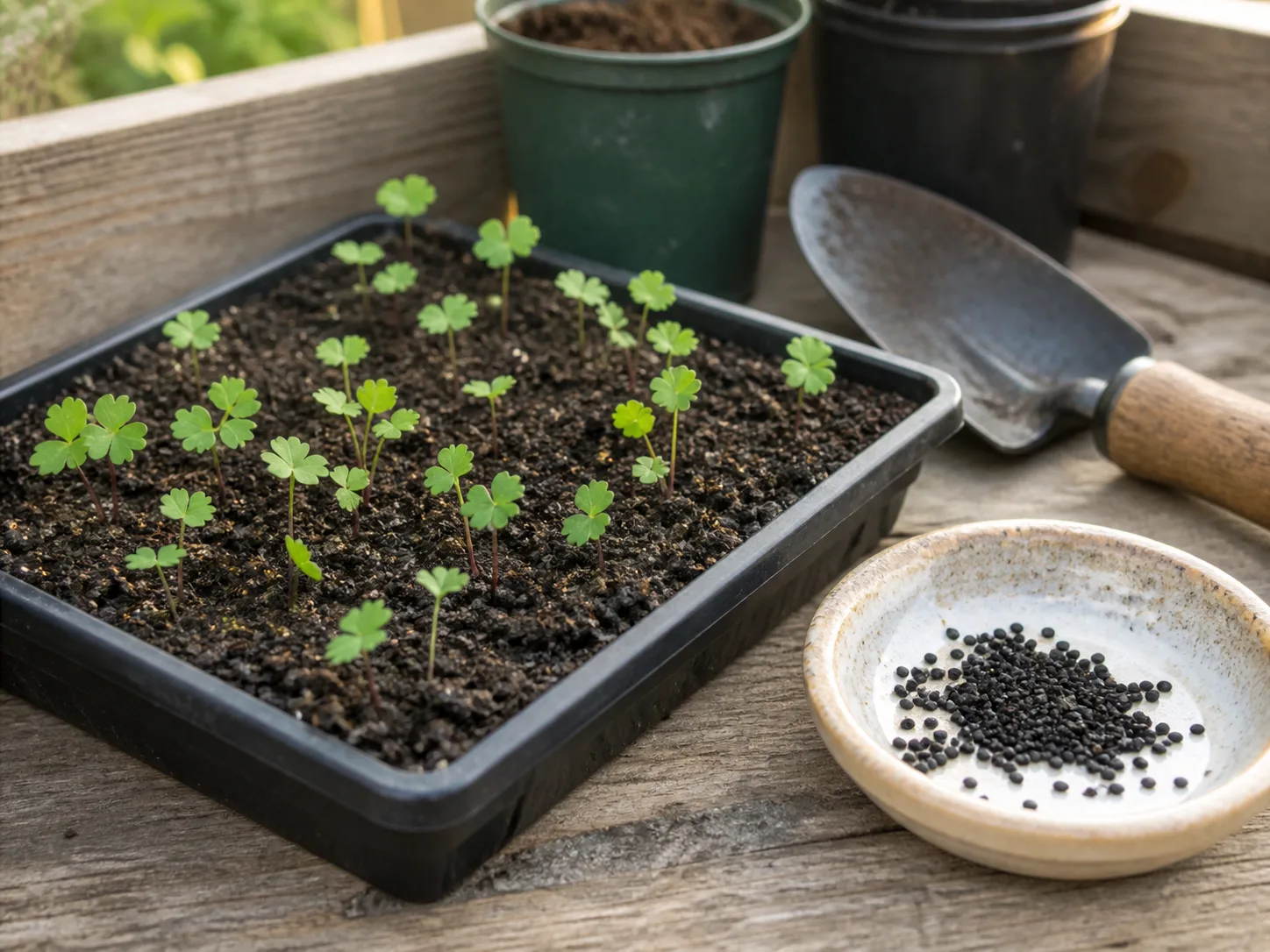
Direct sow in spring once severe frost has passed and the seedbed is workable. In climates with mild winters, fall sowing can also work, allowing natural moisture and cool temperatures to do part of the job. Prepare a weed-free patch, scatter seed thinly, and press it into the soil or cover it with only a very fine dusting. Oxeye daisy seed needs good soil contact and light; burying it deeply is a common reason for poor emergence. Epic Gardening’s practical growing guide also recommends shallow sowing and roughly 12 inches of room for each young plant.
Keep the top layer evenly moist during germination. A gentle mist or fine rose on a watering can prevents the seed from washing into a pile. Once seedlings have several true leaves, thin them so the strongest plants have room to branch and so air can reach the crown. Pull thinnings before they establish, and do not toss flowering-sized unwanted plants onto a compost heap where seed can mature.
If you collect seed from your own plants, wait until the petals have fallen and the central disk has dried and turned brown. Harvest on a dry day, remove chaff, and store the seed in a labeled paper envelope in a cool, dry place. Before saving seed, ask whether you are preserving a permitted garden plant or multiplying a plant that your local authority wants controlled. When in doubt, do not save it.
Water Young Plants, Then Step Back
Water new transplants and seedlings deeply enough to moisten the root zone, then let the surface begin to dry before watering again. A useful starting target for young plants is about 1 to 2 inches of water per week from rain and irrigation, adjusted for heat, wind, soil, and container size. The goal is not a permanently wet surface; it is a root system that can move downward.
Once established, oxeye daisy is drought-tolerant and usually needs supplemental water only during a prolonged dry period or while flowering in severe heat. Water at the soil line in the morning when possible, especially if foliage is dense. If leaves wilt in wet soil, suspect poor drainage or root damage instead of automatically adding more water.
Containers are the exception. A pot has less soil, more exposed surface area, and warmer sides than an in-ground bed, so it dries faster. Check the mix with a finger or moisture meter and water thoroughly when the upper layer has dried, allowing excess to drain completely. Do not water a little every day if the lower mix remains saturated.
Fertilize Only When the Soil Gives You a Reason
In ordinary garden soil, skip routine fertilizer. Oxeye daisy is adapted to lean conditions, and pushing it with nitrogen can produce floppy foliage, more competition, and a less manageable plant. If growth is genuinely weak, first check light, drainage, root crowding, and watering; those causes are more useful to correct than guessing with feed.
A soil test is the right reason to amend. If a container plant has been in the same mix for a long time and the label recommends feeding, use a light, balanced fertilizer during active growth rather than repeated high-nitrogen applications. Keep fertilizer off dry roots and follow the product label. More nutrients do not solve deep shade, a waterlogged crown, or a plant that is simply in the wrong place.
Deadhead for Flowers and Containment
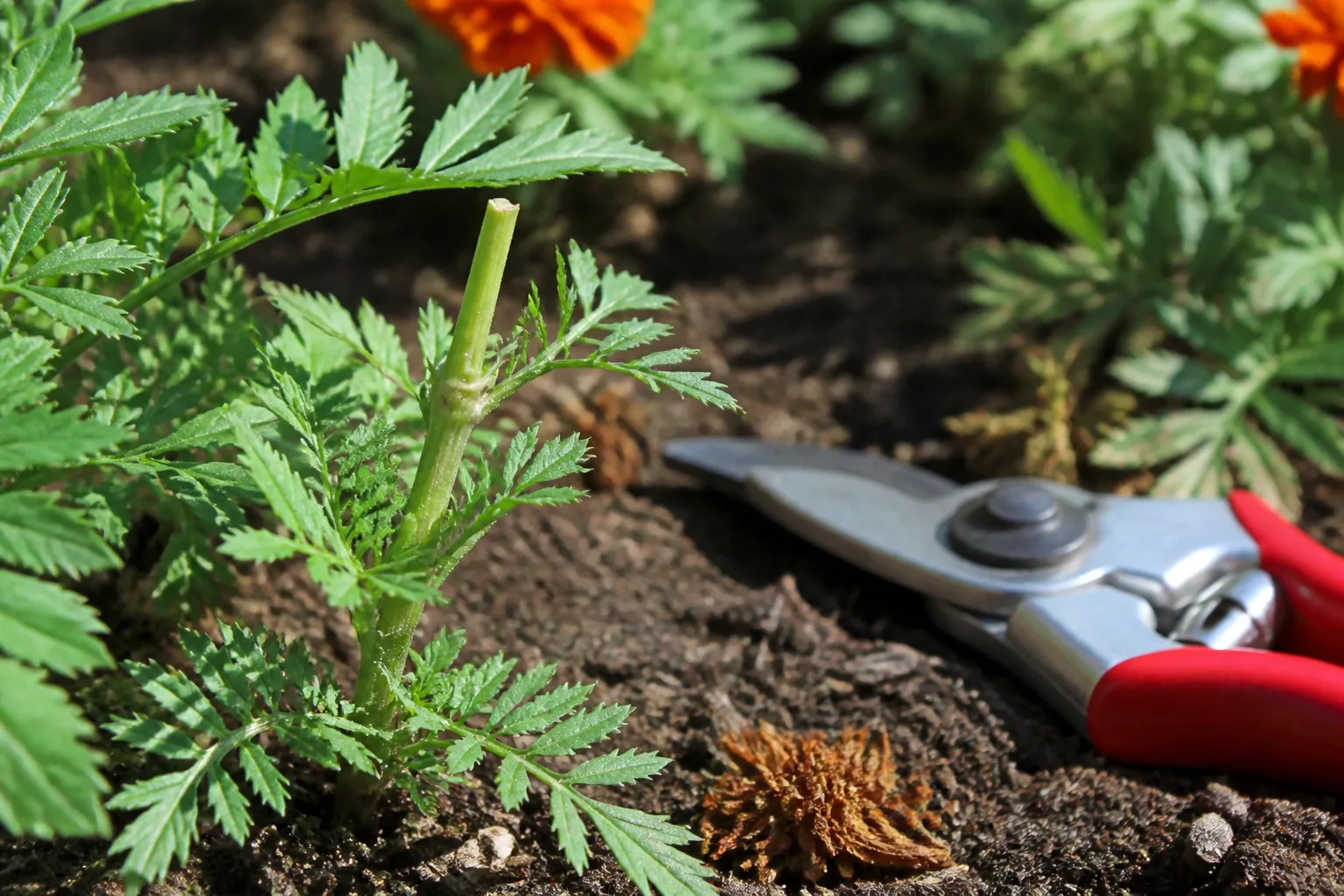
Deadheading does two jobs here: it can extend the flowering display, and it prevents a large number of new seedlings. Remove a faded flower head before the disk turns fully brown and dry. Follow the stem down to a strong leaf junction or the base of the flowering stalk and cut cleanly with sanitized pruners. Collect the removed heads in a bag rather than dropping them beside the plant.
If you want to support self-sowing in a permitted, contained area, leave a small number of heads and remove the rest. That is a deliberate trade-off, not a failure of maintenance. Leaving every head gives you the most naturalized look but also the greatest cleanup burden next season. For cut flowers, harvest stems when the outer rays are open and the yellow centers are still fresh; strip foliage that would sit below the waterline and change vase water regularly.
When the main flush ends, cut back tired flowering stems, but do not scalp healthy basal foliage just to make the bed look bare. The leaves help the crown store energy. If the plant is spreading beyond its allotted space, control the seed first; cutting foliage alone will not stop rhizomes or seedlings. For general seasonal ideas, compare the timing guidance in this perennial flower care guide, but do not assume every perennial has the same pruning window.
Divide Crowded Clumps
Divide oxeye daisy when the clump becomes congested, the center dies out, or flowering weakens despite adequate sun and drainage. Spring, just as new growth begins, is the easiest timing in colder regions. Early fall can also work where the soil remains workable, but avoid dividing right before a hard freeze or during a heat wave.
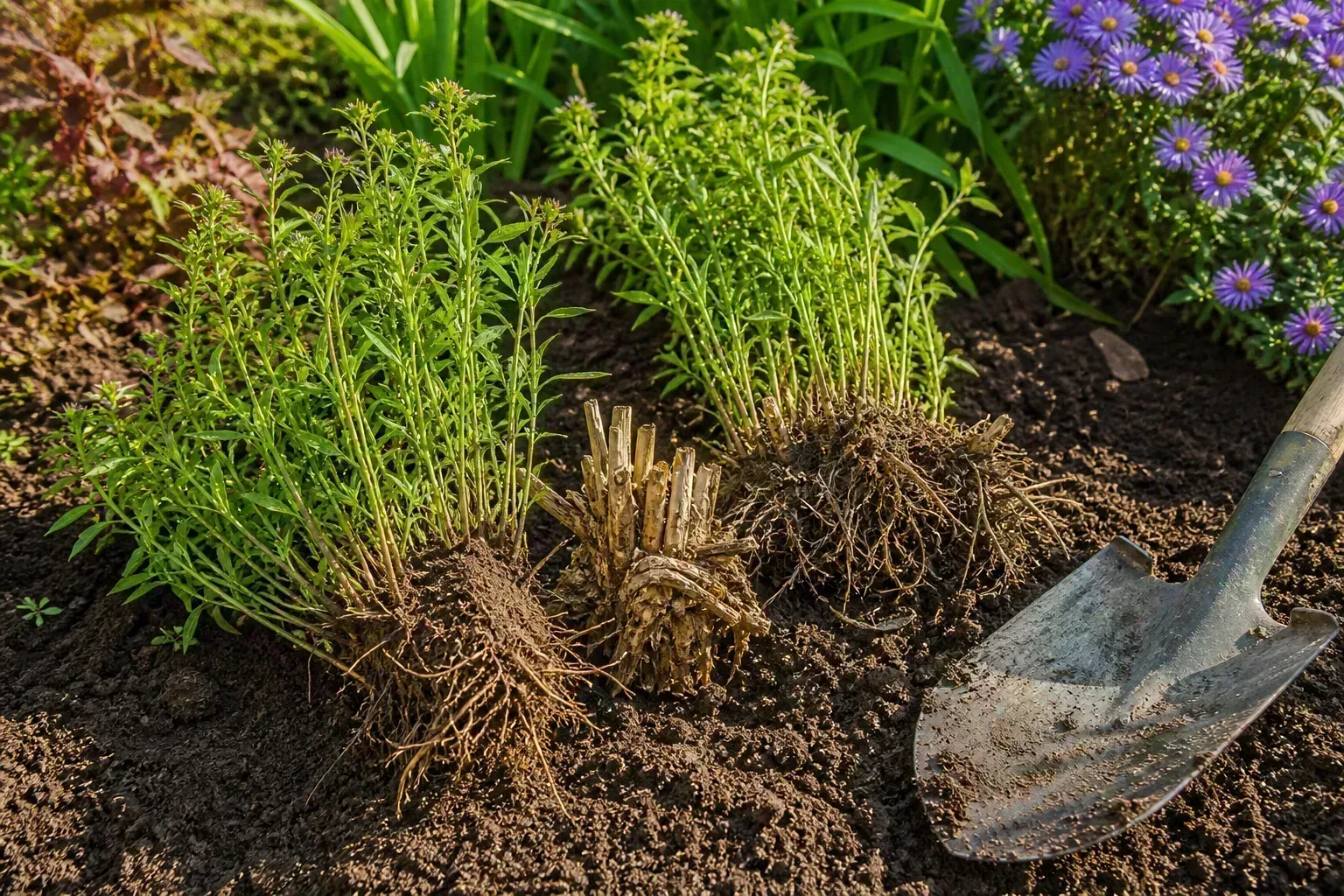
Water the clump the day before, then dig a wide circle around it and lift as much of the root mass as practical. Shake away enough soil to see the rhizomes and crown. Separate vigorous sections by hand or with a clean sharp knife, making sure each division has roots and several shoots. Replant at the original depth, space divisions for mature width, and water them consistently while new roots re-establish.
Division helps with vigor, but it is not population control if every piece is replanted. Each surviving division is another plant, and small rhizome fragments left in the bed can regrow. If your goal is reduction, keep only the amount you can monitor and dispose of unwanted material in sealed yard-waste bags according to local rules.
Grow Oxeye Daisy in Containers
A container is often the most practical way to enjoy oxeye daisy where it is permitted but too vigorous for an open bed. Choose a heavy pot with several large drainage holes; top-heavy flowering stems can tip a lightweight container. Use a quality, free-draining potting mix rather than dense garden soil, and leave enough space at the top to water without washing soil over the rim.
Place the pot where it receives full sun and good air movement. Check moisture more often than you would in the ground, especially on a sunny patio, and empty any outer cachepot after watering. Expect to water more frequently during bloom because the plant is carrying more foliage and flowers at the same time.
Container growing reduces rhizome travel but does not make the plant maintenance-free. Deadhead before seed forms, remove volunteer seedlings from cracks and nearby beds, and repot when roots fill the container. A pot also exposes roots to winter cold, so in a colder zone move it to a sheltered location, group it with other pots, or sink the pot into the ground or insulating mulch where drainage remains safe. Do not bring it into a warm indoor room expecting it to behave like a houseplant; it is an outdoor perennial that needs seasonal cues.
Keep Oxeye Daisy From Escaping
Oxeye daisy spreads in two ways: by seed and by underground rhizomes. That means a single tactic is incomplete. Deadheading addresses seed, while digging and monitoring address the crown and roots. The Invasive Plant Atlas notes that a flower head can produce up to 200 small, flat seeds, which helps explain why a patch can appear to expand suddenly after a breezy summer.
Stop seeds before they travel
Make seed prevention part of the bloom routine rather than a late-season rescue. Walk the planting every few days during peak flowering, especially after wind or rain, and remove heads as their yellow centers lose their fresh look. Mow or hand-pull volunteer seedlings while they are small, before they flower. Keep a narrow buffer of bare, inspectable ground around a contained planting so new rosettes are visible.
Do not assume a decorative wildflower mix is safe because the packet says “pollinator.” Verify every species and check local restrictions. A native alternative that supports the same pollinators without the same spread risk is usually the better long-term bargain.
Remove unwanted plants and rhizomes
For a small patch, loosen the soil after rain and pull or dig the entire crown. Follow the shallow rhizomes outward and sift through the soil for pieces. If plants are flowering, bag the tops before digging so you do not distribute mature seed while working. Revisit the area every few weeks through the growing season; new plants may emerge from overlooked roots or an existing seedbank.
Mulch can reduce new germination in an ornamental bed, but it will not erase established rhizomes. In a lawn edge, repeated mowing before flowering can suppress seed production, yet it may not remove the underground crown. For a large infestation, pasture, roadside, wetland edge, or regulated property, use local extension or land-management guidance. Herbicide choices and legal use vary by site and label, and a garden article should not invent a rate for a situation it cannot inspect.
Troubleshoot Pests, Disease, and Flopping
Oxeye daisy is generally tough, but “low maintenance” does not mean immune. NC State Extension lists aphids, mites, and leaf miners as occasional pests, with leaf spots, stem rots, and verticillium wilt among possible diseases. Start with the pattern rather than spraying on sight.
Small clusters of insects on new growth often justify a strong water spray and a repeat inspection before anything stronger. Fine stippling, webbing, or bronzed leaves suggests mites and dry stress; improve plant vigor and confirm the pest before choosing a treatment. Tunnels or winding trails inside leaves point toward leaf miners, whose damage is often cosmetic on an otherwise vigorous plant.
Spots that spread during wet weather are more likely to need better airflow and dry foliage than more fertilizer. Remove badly affected leaves, water at the base, sanitize pruners between plants, and avoid crowding. A plant that wilts while the soil stays wet is a drainage warning. Verticillium wilt is a more serious diagnosis and is not something to fix by repeated feeding; remove affected plants and seek local diagnostic advice before replanting a susceptible species in the same spot.
Flopping usually has a site or growth explanation: insufficient sun, rich nitrogen-fed growth, strong wind, or overcrowding. Stake discreetly if the plant is already leaning, but improve the cause for next season. If stems are long and sparse, move the next division to brighter light rather than trying to make shade-grown growth stand up.
Prepare Oxeye Daisy for Winter
In-ground oxeye daisy generally needs no elaborate winter protection in its commonly grown range of USDA zones 3 through 8. Let healthy basal foliage remain until it naturally declines, then remove dead material and any diseased leaves. A thin layer of mulch can protect the crown where winters are severe, but keep it loose and away from the stem base so moisture does not collect there.
Container plants are less insulated than plants in the ground. Protect the root ball from repeated freeze-thaw cycles by moving the pot to a sheltered outdoor spot, burying it to the rim, or surrounding it with insulating mulch. Keep the mix slightly moist but never waterlogged, and make sure drainage holes stay open. In spring, remove winter-damaged stems, check for a congested crown, and decide whether to divide before the new flowering stems elongate.
Conclusion
Oxeye daisy is a straightforward perennial when the site is sunny, the soil drains, and the gardener accepts responsibility for its spread. Check local invasive-plant rules before planting, choose a contained location if it is allowed, and establish it with steady moisture rather than constant watering. After that, the high-value tasks are simple: skip unnecessary fertilizer, deadhead before seed, divide only when useful, and inspect the surrounding ground for volunteers.
If you cannot monitor seed heads, remove rhizomes, or keep the plant away from sensitive habitat, choose a native daisy instead. The best oxeye daisy care plan is not the one that produces the biggest patch; it is the one that gives you flowers without creating a management problem for the rest of your garden.