8 Plants You Should Never Cut Back in Fall
Learn which 8 plants to leave standing in fall, why they protect birds and next year’s blooms, and when disease, pests, or safety justify a cut.
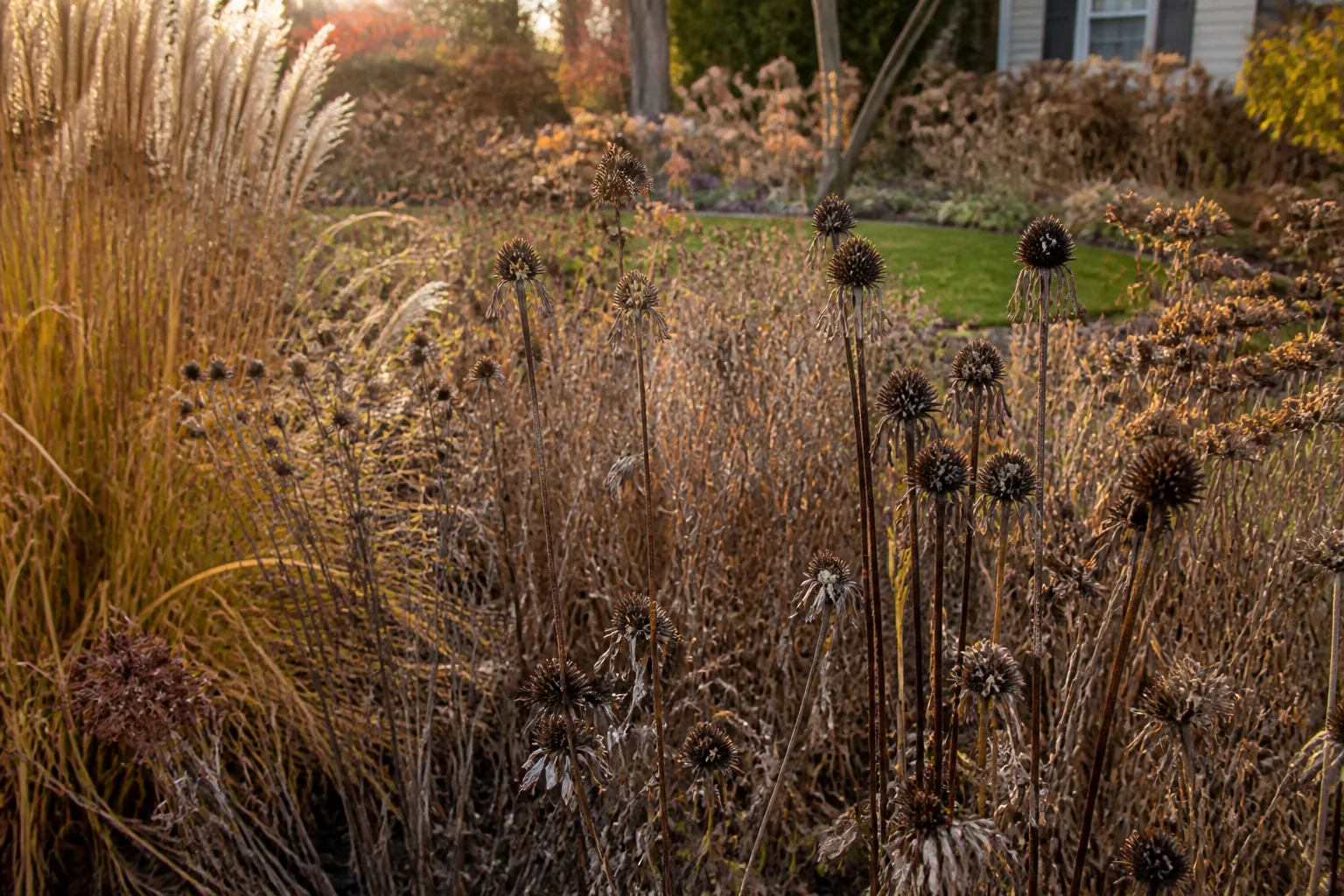
Fall cleanup is not a race to expose bare soil. For many perennials, the brown stems, seedheads, and dry leaves you are tempted to remove are still doing useful work: feeding birds, sheltering insects, catching snow, protecting a crown from temperature swings, or holding next year’s flower buds above the cut line. The best default is to leave healthy standing growth until late winter or spring unless there is a clear reason to remove it sooner.
The word never needs a small but important correction. No plant is exempt from removing dead, broken, diseased, or dangerous material. “Never cut back” means do not give the plant a routine hard cut in fall simply because the foliage looks tired. The eight plants below are safer when you identify the plant, understand where it flowers, and decide what job its winter growth is still performing.
“Never” is a default, not a law
The phrase “cut back” can describe several very different actions. Deadheading removes spent flowers, usually to tidy a plant or prevent seed spread. Selective pruning removes one broken, crossing, or hazardous stem. A full fall cutback removes most or all of the season’s top growth. Those jobs have different consequences, so do not treat a dead flower, a diseased leaf, and a healthy winter stem as the same thing.
University of Vermont Extension’s fall perennial checklist frames fall perennial care as a matter of conditions rather than a universal calendar rule. Its guidance weighs snow cover, winter display, bird food, rodents, disease, and the gardener’s available time; it also notes that leaving a few inches of stem can help hold snow when a cut is necessary. That is a more useful starting point than “always tidy” or “never touch anything.”
Pruning, deadheading, and sanitation are different jobs
Ask what you are trying to accomplish before picking up shears. If a seedhead is feeding finches, leave it. If a flower is spreading seed into a path, remove just the flowerhead. If a stem has powdery mildew or another confirmed disease, remove the affected material and keep it out of home compost. If a branch is rubbing against a window or blocking a walkway, make a targeted cut rather than shaving the whole plant.
This distinction also prevents a common hydrangea mistake. Removing a dead flower from a shrub is not the same as cutting back the stems that carry next year’s buds. With woody plants, the correct cut depends on whether the plant flowers on old wood, new wood, or a combination. With herbaceous perennials, the choice is more often about habitat, disease, and crown protection.
Run the five-question fall test
Before you clear a bed, run this quick test on each plant:
- Is the growth healthy? If it has a spreading disease, heavy pest load, or slimy collapse at the crown, removal may be the healthier choice.
- Does it carry food or shelter? Seedheads, hollow stems, and dense clumps can serve birds and overwintering insects.
- Does it protect next year’s display? Old-wood shrubs and evergreen fronds are not interchangeable with dead annual foliage.
- Could it create a real problem? Consider fire exposure, a blocked path, a wet crown, aggressive self-seeding, or rodents using a dense clump as shelter.
- Will spring access be easy? If the growth will make it impossible to see emerging shoots or work around the crown, plan a late-winter or early-spring cut instead of an impulsive fall cut.
The result is usually one of three decisions: leave it standing, remove only the problem material, or cut the whole top after a specific cue such as a hard frost or the appearance of new spring shoots. University of New Hampshire Extension’s fall perennial guidance also emphasizes that standing perennial material can have winter value for wildlife, while a practical garden may still require selective cleanup where disease or access is the deciding factor.
When weather and wildlife say wait
In a low-snow garden, standing stems can add structure and catch what snow does arrive. In a windy, wet climate, the same stems may bend over and hold moisture against a crown. In a dry region, a large mass of dead grass beside a structure may be a fire concern. Your microclimate matters more than a generic month on the calendar.
Wait until the plant has finished its useful season, not merely until the first cool evening. A light frost may brown leaves while roots are still receiving and storing resources. Several hard frosts, a sustained freeze, or the plant’s normal spring-emergence cue is often a better signal than an arbitrary date. If you leave growth for birds, delay cleanup until the seed has been used or until late winter, then check for new shoots before cutting.
Eight plants to leave standing or avoid hard-cutting
These are not eight plants that can never be touched. They are eight familiar garden subjects for which a routine fall cut often removes something valuable or sacrifices the next season’s performance. Read the exception under each one before deciding.
1. Black-eyed Susans and other Rudbeckias
Black-eyed Susans (Rudbeckia spp.) are excellent examples of a plant whose faded appearance is part of its winter function. Their dark seedheads persist on stiff stems and can provide food for seed-eating birds after the petals are gone. The stalks also give a late-season bed vertical rhythm when many neighboring plants have collapsed.
Leave healthy stems and seedheads through winter if you want bird food or controlled self-sowing. Cut them in late winter or early spring before fresh growth becomes dense, and remove the old material from around the crown so new shoots have room. If you do not want seedlings, snip off only the mature seedheads once they have finished feeding wildlife; that preserves much of the stem structure without scattering seed everywhere.
Do not leave a plant standing just because it is on this list if it is clearly diseased. Brown is normal; spreading leaf spots, fuzzy growth, repeated rot, or a foul, collapsing crown are reasons to remove affected debris. Bag or dispose of suspect material according to local yard-waste guidance rather than mixing it into a home compost pile that may not heat evenly.
2. Sunflowers
Sunflowers are a group, not one pruning rule. Annual sunflowers (Helianthus annuus) finish their life cycle after seed production, but their heads can remain valuable to birds. Perennial sunflowers return from crowns and can also carry seedheads and stiff stems into winter. A “clean” cut immediately after flowering trades away that late-season food and the architectural effect of the stalks.
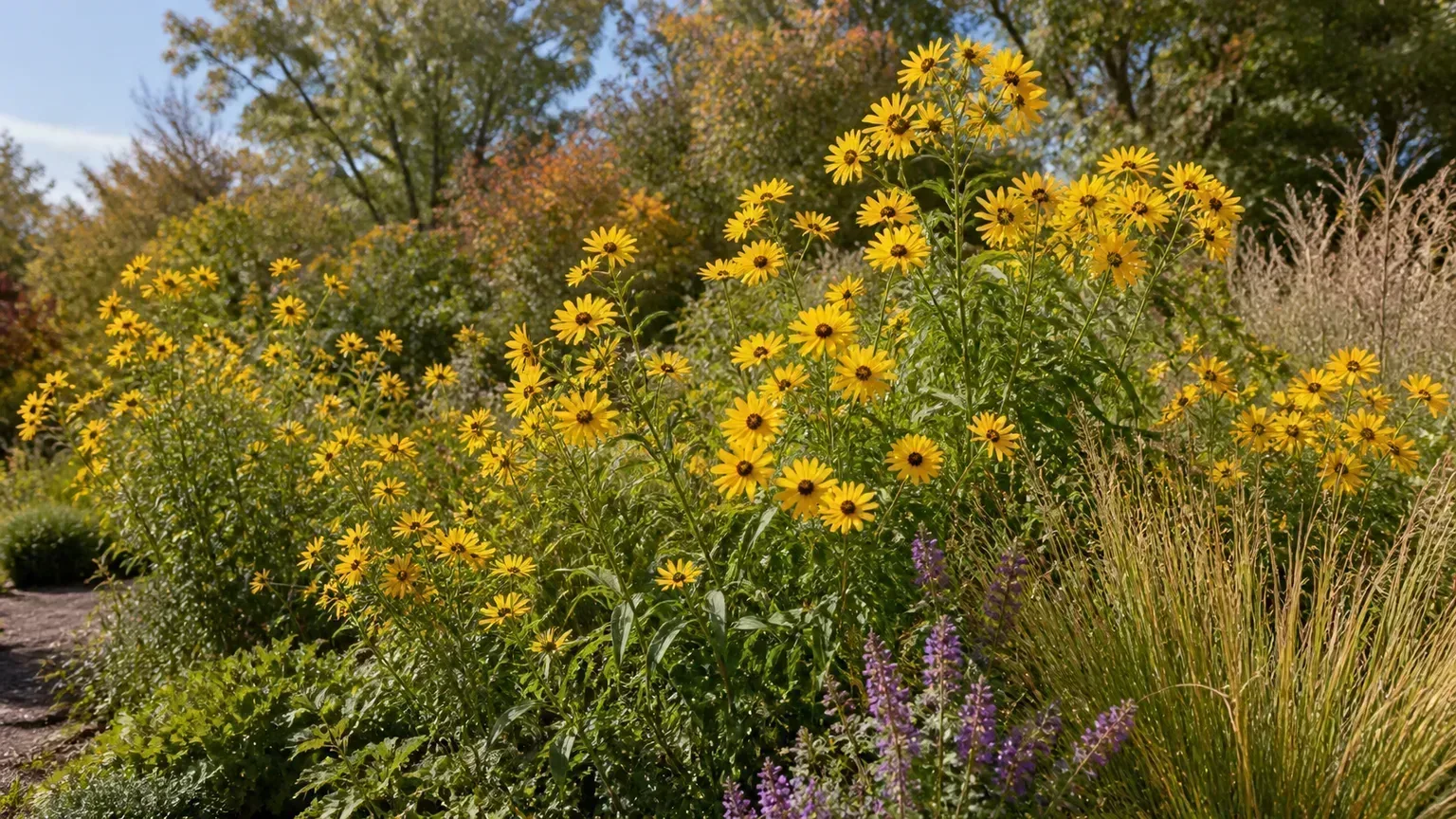
Leave seedheads while birds are using them, then cut the stalks near the base when they are empty, unstable, or in the way. If an annual sunflower is growing where you do not want volunteers, remove the head before seeds scatter, but wait until the seeds are mature enough to harvest or feed. If you are saving seed, protect the head from squirrels and damp weather rather than pruning the plant prematurely.
Perennial sunflower stems can become top-heavy and fall across smaller plants. Tie or selectively remove a failing stem if it is smothering a crown, but do not assume every leaning stem requires a complete cutback. A short section left above the crown can make the plant easier to find in spring, especially where new growth emerges late.
3. Ornamental grasses
Most ornamental grasses are at their best after the growing season, when plumes, straw-colored leaves, frost, and snow reveal the shape of the clump. Many provide cover or seed for wildlife, and their stems can insulate the base during freeze-thaw weather. Better Homes & Gardens’ ornamental-grass overview also notes that grass choices vary in invasiveness by region, so the responsible decision starts with the specific species rather than the label “ornamental grass.”
Leave healthy warm-season grasses and many cool-season clumps standing until late winter or early spring. Cut them down before new shoots push through, wearing gloves because dry blades can be sharp. A hand tie around the clump before winter can keep leaves from blowing into paths and makes spring cutting faster.
There are legitimate exceptions. Cut a grass earlier if its dry foliage is next to a building or other fire-prone feature, if it repeatedly collapses into a wet crown, or if local guidance identifies it as invasive and seed spread is a concern. Dense grass can also create rodent habitat. In those cases, remove seedheads first, then cut and dispose of the material responsibly; do not make a blanket early cut across every grass in the bed.
4. Christmas ferns
Christmas fern (Polystichum acrostichoides) is an evergreen fern in much of its range. Its fronds can remain green through winter, which is why it should not be treated like a deciduous perennial that turns brown and disappears. A fall haircut removes the foliage that gives a shade garden its winter texture and may expose the crown to weather without any real benefit.
Leave healthy fronds in place. In late winter or early spring, remove only fronds that are fully brown, broken, or flattened, taking care not to pull at the crown. If new fiddleheads are already emerging, work around them rather than raking aggressively through the clump. A thin layer of leaf litter can be useful in a woodland-style bed, but keep heavy, wet mats from smothering the crown.
Avoid using color alone as a diagnosis. An old frond may look tired while the plant is perfectly healthy, and some winter browning can reflect exposure rather than a need for a full cut. Look at the crown and new growth before deciding that an evergreen fern needs “renewal.”
5. Other ferns
“Ferns” covers two different winter behaviors. Evergreen types such as Christmas fern retain fronds and generally need only selective spring cleanup. Deciduous types, including many lady ferns and ostrich ferns, naturally lose their fronds after frost. Those brown fronds can still shelter the crown and contribute texture, so leaving them until spring is often the least disruptive choice.
Do not cut every fern at the first sign of brown. Wait until the fronds are thoroughly collapsed, then decide whether the bed benefits from leaving them for winter or whether wet debris is likely to mat over new growth. Where spring access is tight, you can remove the old fronds just before new croziers emerge. The timing cue is visible new growth, not a fixed date.
If a fern has a disease problem, remove only the material that shows symptoms and clean tools before moving to another clump. Do not pile wet, diseased fronds against healthy crowns. In a woodland planting, a little natural litter is usually part of the ecosystem; a thick, airless mat is a maintenance problem.
6. Oakleaf hydrangeas
Oakleaf hydrangea (Hydrangea quercifolia) is the plant on this list most likely to punish an enthusiastic fall haircut with fewer flowers next summer. It flowers on old wood, meaning the stems formed before the current season carry the buds for the next display. Gardening Know How’s hydrangea guidance distinguishes oakleaf and mophead types from smooth and panicle hydrangeas, which often flower on new wood and can tolerate a different pruning window.
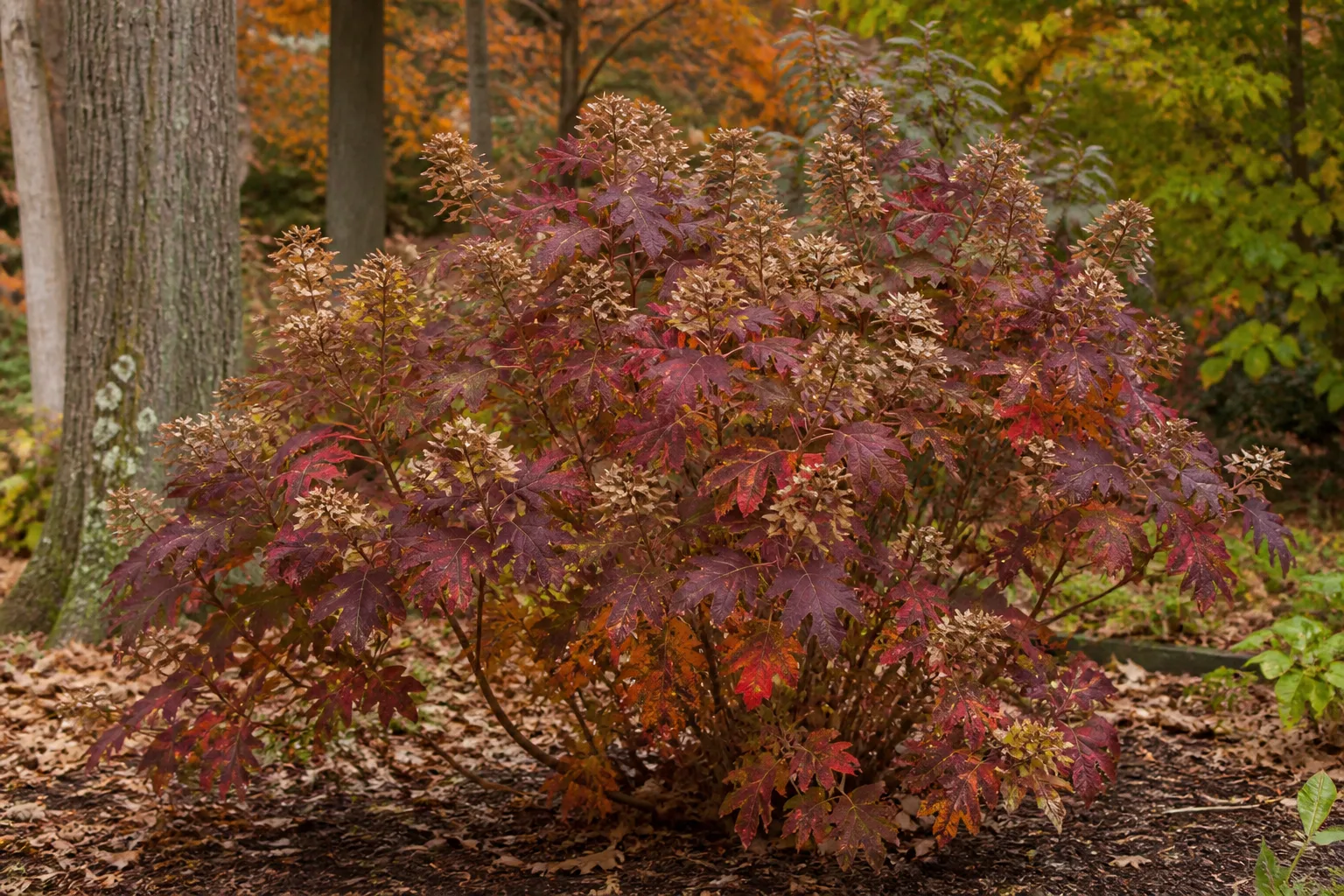
Leave the flower clusters and healthy stems through fall and winter if you like their dried texture. If the shrub needs shaping, prune soon after it flowers, not as a routine autumn cleanup. Remove dead or broken branches whenever necessary, cutting back to healthy wood, but avoid shortening the living framework just to make the shrub look smaller before winter.
The same caution applies to many bigleaf and mountain hydrangeas, but do not use one hydrangea rule for all hydrangeas. A panicle hydrangea is a different pruning case, and a reblooming cultivar may have different instructions. Check the plant tag or cultivar identity before making structural cuts. Hardiness also matters: a shrub can be alive in spring but lose old flower buds to winter cold, so protecting it is not the same as pruning it.
7. Hardy garden mums
Garden chrysanthemums are often sold in full bloom precisely when fall cleanup begins, which makes them easy to misread. A hardy mum planted early enough may establish a crown and return; a late-season florist mum in a small pot may be better treated as a seasonal display. Cutting a healthy garden mum to the ground in October is not always fatal, but it removes stems that can help catch mulch and makes a late-planted crown harder to locate.
Leave the top growth through winter if the plant is newly planted, if you want the stems to catch light mulch, or if winter wet is not a problem. After a hard frost has finished the foliage, you can cut the plant back to roughly 6–8 inches if the stems are diseased, lying across a path, or making the bed unmanageable. Leaving a short framework is more forgiving than scalping the crown.
In a wet winter climate, air circulation and crown drainage may matter more than winter appearance. Do not bury the plant under a thick, wet mulch blanket, and do not assume every plant sold as a “garden mum” has the same cold tolerance. The label, planting date, and local winter conditions determine whether overwintering is realistic.
8. Hardy geraniums or cranesbills
Hardy geraniums (Geranium spp.), commonly called cranesbills, are not the same as the tender annual “geraniums” (Pelargonium spp.) sold for summer containers. Many cranesbills form a low mound and can be left to soften a border through winter. Their foliage may collapse after frost, but that does not automatically mean the crown needs a fall shave.
Leave healthy hardy geranium foliage until late winter or early spring, especially where the plant is in a cold or exposed site. Remove mushy leaves around the crown if winter wet is causing rot, and cut back stems that have fallen onto a walkway. If a cultivar reliably produces a fresh basal rosette after flowering, a light tidy can be reasonable, but a full cut is rarely urgent.
Treat tender pelargoniums as a separate overwintering project. They may need to be lifted or moved indoors before frost, with pruning, inspection, and reduced watering as part of that process. Calling both plants “geraniums” hides the decision that matters most: whether the plant is a hardy garden perennial or a frost-tender container plant.
What to do instead of cutting everything
Leaving plants standing does not mean abandoning the garden. Remove litter from paths and lawn, pull out annual weeds before they seed, and inspect crowns without disturbing them. Mark late-emerging plants with a weatherproof label or map so you do not mistake a dormant perennial for an empty spot and dig into it in spring.
If wildlife is part of your goal, leave a mix of seedheads and stems rather than every piece of dead material. A bed with black-eyed Susan, sunflower, grass, and fern structure can look intentional when the edges are clean and the plants are grouped. Keep a clear strip beside doors, vents, fences, and paths, and move highly flammable dry material away from structures.
Use the fall to sharpen and clean tools, repair stakes, and plan the spring cutback. When you must remove diseased tissue, work from the healthiest plants to the most questionable, disinfecting blades between plants. The named pruning practitioner Stacy Ling likewise emphasizes sharp, clean tools for making cleaner cuts and reducing the chance of carrying problems from one shrub to another; this is a practical hygiene step, not a reason to prune more than necessary.
When cutting in fall is the safer choice
The “leave it” rule loses to plant health and safety. Cut back when foliage is visibly diseased and likely to spread problems, when a pest overwinters in the debris and the plant-specific guidance supports removal, or when collapsed growth keeps a crown wet. Do not compost material you suspect is carrying a persistent disease unless your composting system reliably reaches the needed temperatures and local guidance says it is appropriate.
Cut when stems create a fire hazard near a home, when seed spread would move an invasive plant into natural areas, or when the growth blocks a route used by people or equipment. In a rodent-heavy garden, a dense grass clump or thick mulch can become shelter. That does not mean eliminating every habitat feature; it means placing wildlife-friendly growth where it does not undermine the plant, the building, or the gardener’s ability to inspect the bed.
When you do cut, avoid a scalped finish. Use sharp shears for soft stems, loppers for thicker woody stems, and gloves for grasses. Leave a short stub above the crown when the plant benefits from snow capture or is difficult to identify in spring. Gather loose debris from the crown, but do not scrape or dig into dormant buds.
Spring cleanup sequence
Spring is usually the safest season to finish the work you postponed. Start by waiting for a mild, dry day when the ground is firm enough that you will not compact wet soil. Look closely for new shoots at the crown before cutting; late-emerging plants such as some ferns and hardy perennials can appear lifeless long after early bulbs have started.
Work in this order:
- Remove fallen material from paths and crowns without breaking emerging shoots.
- Cut standing stems just before new growth makes the base crowded, leaving a small buffer if you cannot see the crown clearly.
- Separate healthy dry material for compost from suspect or diseased material for appropriate disposal.
- Clean tools before moving to another bed, especially after cutting a plant with leaf spots, mildew, or rot.
- Add only the mulch the site needs, keeping it away from crowns and stems and avoiding a thick wet layer that traps moisture.
This sequence turns “leave it until spring” into a real maintenance plan. You get the winter benefits without letting old material become a permanent mat, and you can time each cut to the plant’s emergence instead of guessing from the weather in October.
Conclusion
The eight plants in this guide are best understood as fall cutback exceptions, not untouchable objects. Leave black-eyed Susans and sunflowers when seedheads are feeding birds, keep most ornamental grasses for winter structure, protect evergreen and deciduous ferns from unnecessary haircuts, preserve oakleaf hydrangea’s old wood, and give hardy mums and cranesbills a reason-based cleanup rather than an automatic one.
Then make the exception when the evidence is clear: disease, pest carryover, fire exposure, invasive seed spread, wet crowns, rodents, or blocked access. Identify the plant, decide what its standing growth is doing, and remove only what needs removing. A garden that is not perfectly bare in November is not neglected; often, it is better prepared for birds, weather, and the first new shoots of spring.



