Pruning vs Trimming: When and How to Cut Plants
Learn the real difference between pruning and trimming, when to cut, where to make each cut, and how to avoid damaging shrubs, trees, and houseplants.
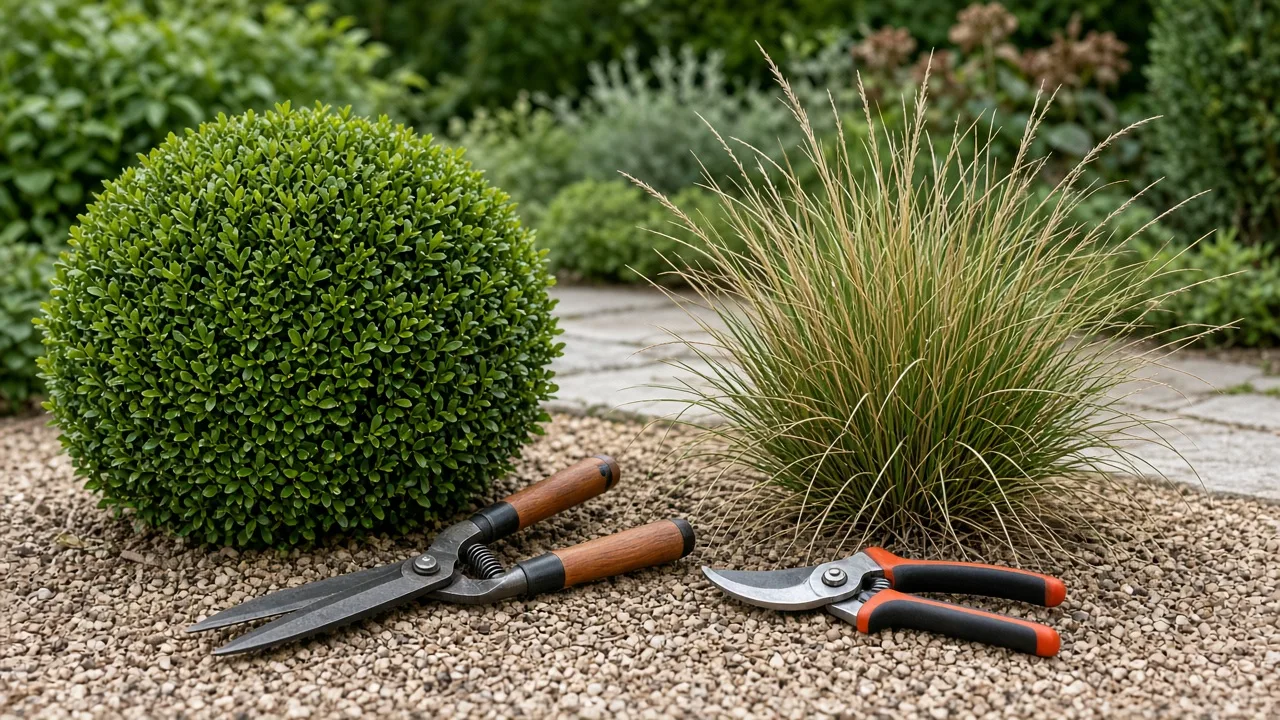
The practical difference between pruning and trimming is the job you want the cut to do. Pruning removes plant parts to improve health, structure, flowering, fruiting, or safety. Trimming is usually a small maintenance cut: removing a dead leaf, shortening a stray shoot, or tidying a plant without changing its basic framework.
The words overlap in everyday gardening. A gardener may say they are “trimming” a hedge while making dozens of heading cuts, or “pruning” a houseplant while removing one yellow leaf. That vocabulary matters less than the decision underneath it: Are you correcting a problem in the plant, or making a minor cosmetic adjustment?
The short answer: purpose matters more than the word
Use light trimming when the plant is healthy and you are removing a small amount of soft growth, spent flowers, or an isolated damaged leaf. Use pruning when you need to remove a diseased branch, correct crossing growth, open a congested canopy, restore a neglected shrub, control a structural defect, or remove material that could injure people or property.
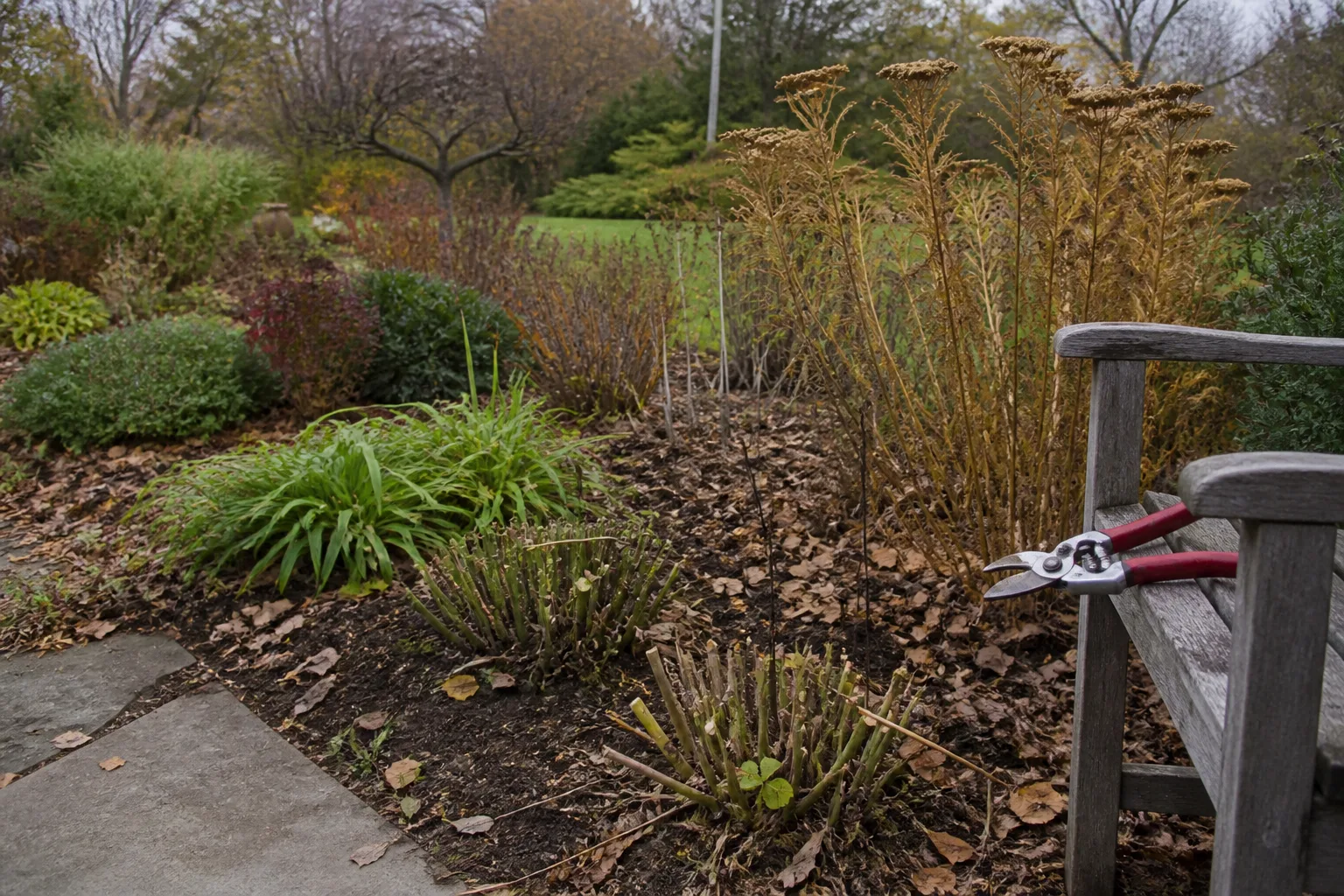
This is a more useful distinction than “trimming means little and pruning means a lot.” A single large dead limb is a pruning job even if it is the only cut you make. Conversely, a hedge may receive many small cuts that are still routine trimming. The plant’s species, age, season, and response to cuts determine the risk.
Ask three questions. First, what exactly am I removing? Dead, diseased, rubbing, weak, or dangerous growth deserves attention before appearance. Second, what will remain after the cut? If the answer is a bare stub, a one-sided plant, or a shrub with no leaf-bearing branches, stop and reconsider. Third, what does this plant do next? A spring-flowering shrub may already be carrying next year’s flower buds, while a houseplant in winter may be growing too slowly to replace lost foliage.
If you cannot identify the plant or see where healthy growth will resume, restrict yourself to clearly dead material and research the species before making a larger cut. “It will grow back” is not a universal safety net; some conifers do not reliably regenerate from old, leafless wood, and heavily cut plants can be stressed by heat, drought, or root damage.
What pruning does that trimming does not
Pruning is a form of plant management. It can remove a source of disease, redistribute light through a canopy, preserve a tree’s natural structure, or direct a vine toward a trellis. It can also be necessary after storm damage, when a broken limb is a hazard regardless of the calendar.
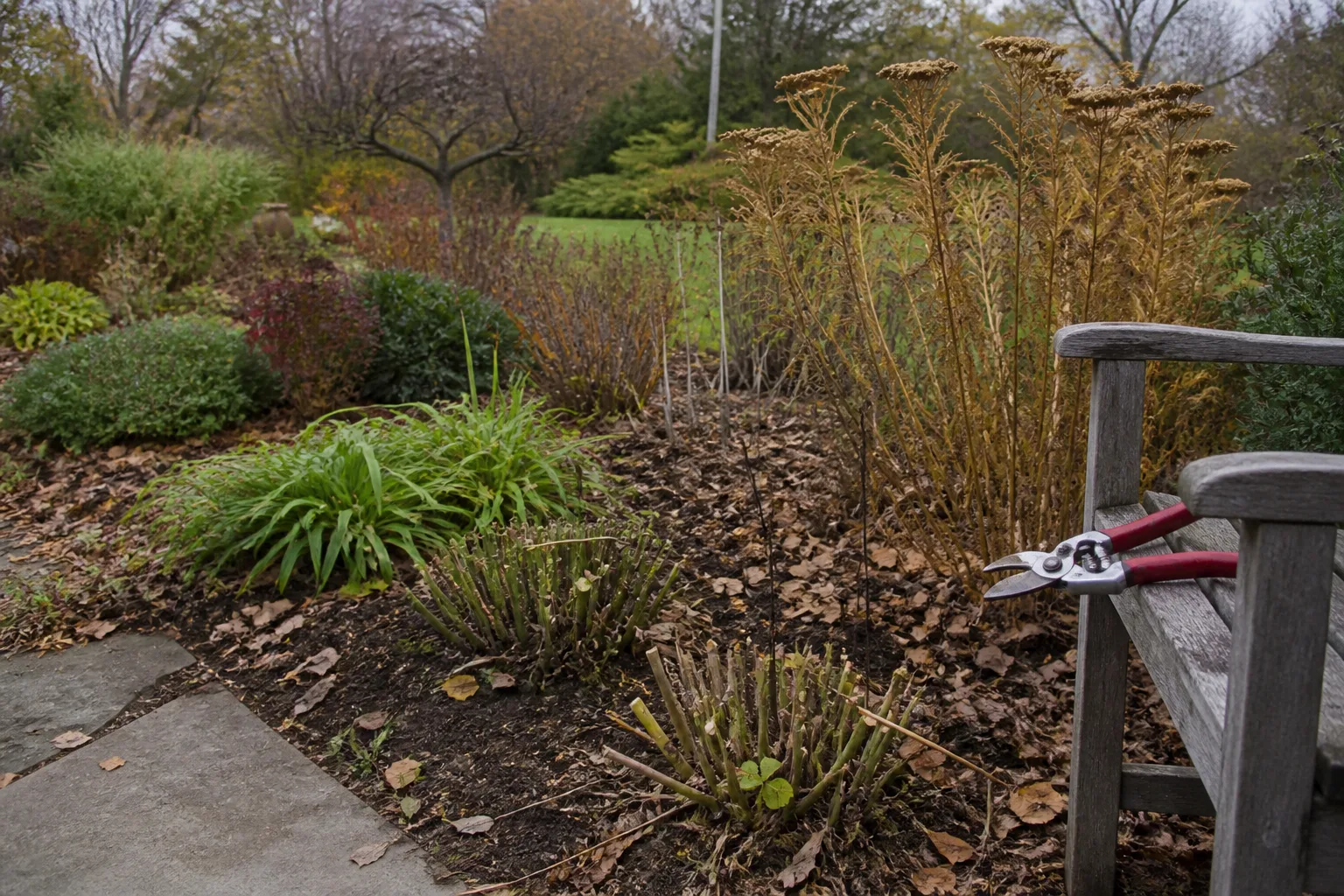
Pruning is not automatically beneficial because it is more extensive. A cut creates a wound and removes leaves or stored buds that the plant uses for energy. Good pruning has a specific reason and a stopping point. If you cannot explain why a branch must go, leave it until you have a clearer plan.
The most defensible reasons to prune are:
- Remove dead, diseased, broken, or badly damaged tissue.
- Remove branches that cross, rub, or grow into a target such as a roof or walkway.
- Preserve a strong framework in young trees and shrubs.
- Improve light and airflow when congestion is contributing to disease or weak growth.
- Encourage flowering or fruiting when the plant’s natural bud-bearing wood is understood.
- Rejuvenate a plant gradually when older stems have become unproductive.
When a plant needs pruning
Start with health and safety, not shape. A cracked branch over a path, a limb split by wind, or tissue showing active disease should be assessed promptly. For large trees, overhead work, or branches near wires, hire a qualified arborist; pruning from a ladder with a chainsaw is not a reasonable household shortcut.
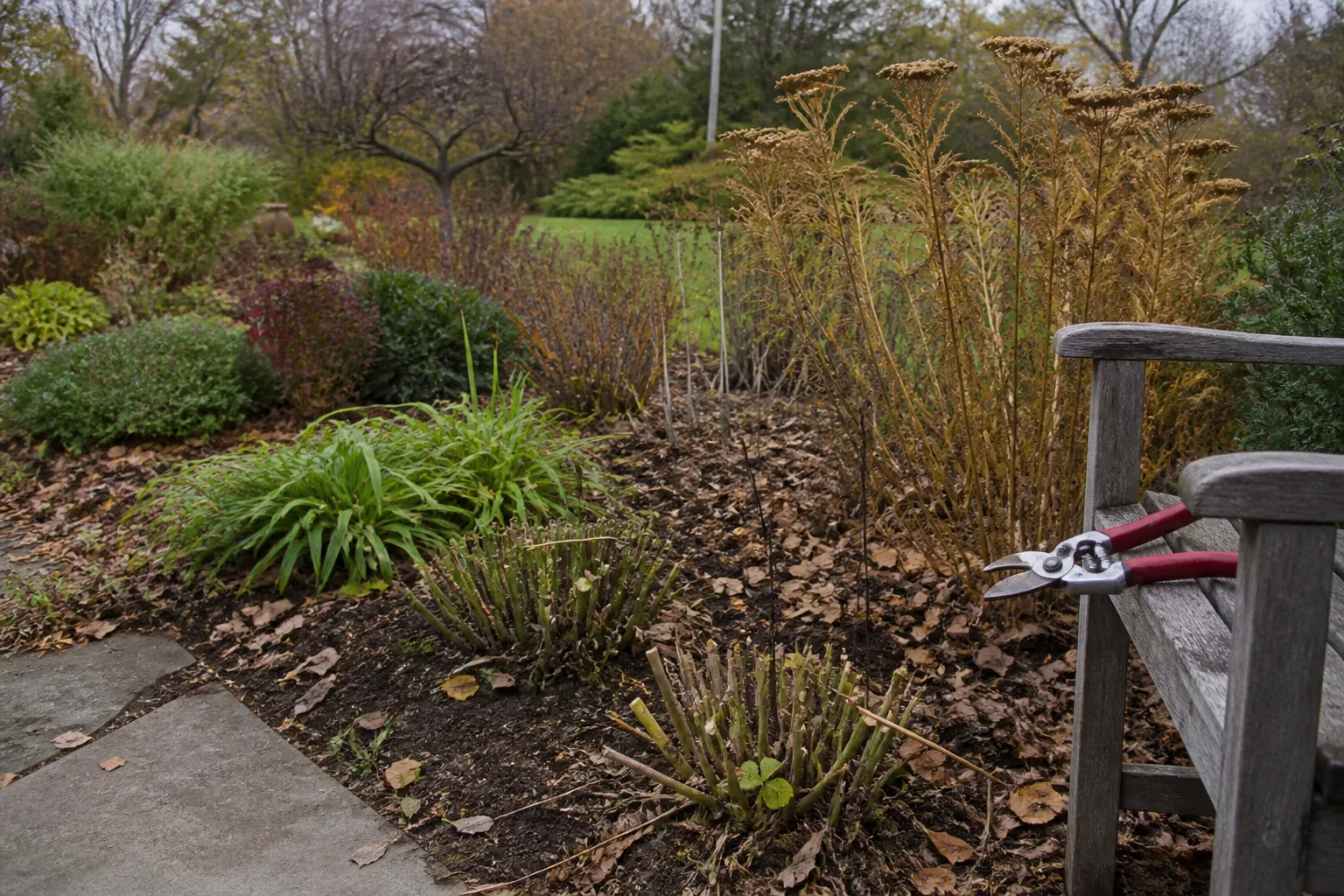
For structure, look for the branch relationships rather than the outline alone. Remove one of two branches that rub, retain branches with strong attachment angles, and preserve a visible central leader when the species is naturally trained that way. A crowded interior does not always need “more air”; indiscriminate thinning can expose bark to sun and leave the plant with fewer leaves to power recovery.
For flowers and fruit, timing is a biological question. Plants that flower on old wood often set buds during the previous growing season, so a winter cut may remove the spring display. Plants that flower on new wood generally tolerate dormant-season pruning better, but the exact window still depends on climate, frost, and the species. Fruit trees add another layer: cuts affect light, renewal wood, vigor, and future crop load.
When light trimming is enough
Trim when the adjustment is small and the plant’s structure is already sound. Examples include cutting a brown leaf tip for appearance, removing a spent flower, shortening a vine that has reached a curtain, or pinching a soft shoot just above a leaf node to encourage branching.
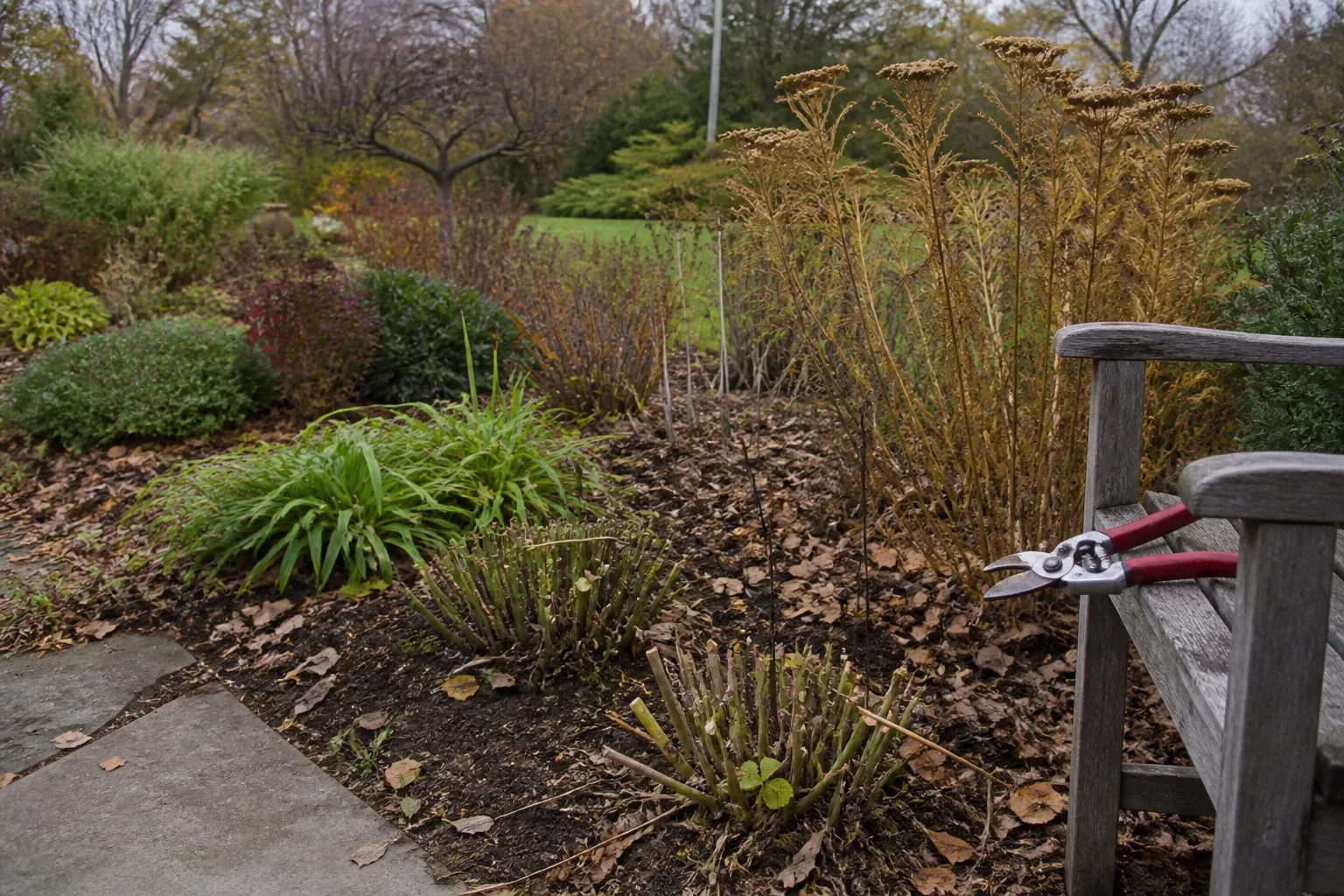
Trimming is often best done as an observation habit rather than a calendar event. Walk past the plant, identify the one or two shoots that genuinely need attention, and make clean cuts. Do not turn routine tidying into a full reshaping session simply because the tools are already in your hand.
For hedges and formal topiary, repeated trimming can maintain a designed surface, but it does not fix a poor framework. If the hedge is wider at the top than the base, the upper growth can shade the lower section and create a thin, woody interior. Correcting that may require staged pruning and better light, not simply shearing the outside more often.
Choose the cut before choosing the tool
The cut determines how the plant responds. Tools only make the cut possible.
Thinning cuts
A thinning cut removes a shoot or branch back to its point of origin or to a suitably placed lateral branch. It preserves the natural direction of growth and usually creates less dense regrowth. Use it to remove a crossing branch, a weak interior shoot, or one of several competing leaders.
Heading cuts
A heading cut shortens a stem back to a bud or side branch. New growth often emerges near the cut, so heading is useful for pinching, controlled branching, and some hedge maintenance. It can also create a tuft of vigorous shoots if used repeatedly on woody branches, which is why topping and indiscriminate shearing often produce weak, crowded regrowth rather than a smaller, healthier plant.
On a young soft stem, heading just above an outward-facing node can help keep the next shoot from growing into the center. On a woody branch, choose a lateral branch large enough to assume the role; cutting to a tiny twig can leave a weak endpoint. Avoid leaving long stubs, because stubs die back and make wound closure less efficient.
Where to cut a branch or stem
For a branch, locate the branch collar, the slightly swollen area where the branch joins its parent stem. Make the cut just outside the collar, preserving it. Do not cut flush against the trunk, and do not leave a long stub. The collar contains protective tissues that help the plant compartmentalize the wound. The University of Minnesota Extension pruning guide uses the same target: preserve the branch collar rather than cutting into the trunk.
For a small stem, cut just above a healthy node or bud. Keep the cut close enough that little dead tissue remains, but do not damage the bud. An angled cut is not a cure-all; the priority is a sharp, clean cut in the correct location.
Large or heavy branches may need a three-cut method to prevent bark tearing: an undercut, a top cut farther out to remove the weight, and a final cut just outside the branch collar. This technique is for people who understand the tool and branch weight involved. If the branch is high, heavy, or near infrastructure, professional help is safer.
Timing by plant type
There is no universal “best pruning month.” Use the following as a starting framework, then check the plant’s species guidance.
- Spring-flowering woody plants: often prune soon after flowering, before they spend the season developing next year’s buds. The RHS guide to pruning shrubs explains this old-wood/new-wood distinction with useful plant examples.
- Summer- or fall-flowering woody plants: many are pruned in late winter or early spring because they flower on new growth.
- Evergreen shrubs: light cleanup is often flexible, but hard cuts should be timed to avoid weather extremes and should respect whether the plant can regrow from old wood.
- Deciduous trees: structural work is commonly planned during dormancy, though dead or hazardous branches should not wait for a perfect season.
- Houseplants: major shaping is safest when light and growth are increasing; remove dead foliage whenever it appears.
- Herbs and annuals: harvest or pinch actively growing stems, leaving enough foliage for continued photosynthesis.
- Fruit trees and vines: follow crop-specific guidance because pruning changes both vigor and the fruiting wood you retain.
Weather can override the general calendar. Avoid making major cuts immediately before a hard freeze, during severe heat or drought, or when wet conditions make disease spread and tool handling more difficult. A small removal of clearly dead tissue is a different risk from a full reduction of live canopy.
Houseplants, herbs, and soft-stemmed plants
Houseplants usually need selective pruning, not a dramatic haircut. Remove fully yellow or brown leaves at their base, cut damaged stems back to healthy tissue, and shorten leggy growth just above a node. If a plant is leggy because it receives too little light, pruning alone will produce another leggy plant; move it to a brighter, appropriate location first or at the same time.
Do not remove every imperfect leaf. A leaf with a brown edge may still be producing energy, and cutting it in half can leave an unattractive wound without solving the cause. Correct watering, light, pests, or root problems before taking healthy foliage as “maintenance.”
For herbs, harvest the growing tips regularly but leave several leaf sets below the cut. Soft-stemmed plants can branch quickly, yet a severe harvest during heat, transplant shock, or flowering can slow recovery. If you are taking cuttings to propagate, select vigorous, disease-free material and keep the parent plant balanced rather than stripping one side.
Flowering shrubs and the buds you can accidentally remove
The safest question for a flowering shrub is not “Can I prune it now?” but “Where are the flowers being formed?” Forsythia, lilac, azalea, and many other spring bloomers commonly flower on older wood. Cutting them in winter may give you a tidy shrub with few flowers. Many summer bloomers form flowers on current-season shoots and are more forgiving of late-winter pruning.
When you do not know the shrub, wait until it flowers and mark the stems that bloom. After flowering, remove a portion of the oldest stems at the base, shorten only what is necessary, and observe the new growth. This gradual approach is safer than cutting the whole plant to a uniform height. It also reveals whether the plant is naturally arching, cane-forming, or meant to remain compact.
Deadheading is a narrow form of trimming: remove spent flowers to improve appearance or, in some plants, redirect energy from seed production. It is not the same as rejuvenation pruning. Do not use deadheading as a reason to remove healthy stems that carry unopened buds.
Trees, conifers, vines, and fruiting plants
Trees need a structural plan. Remove competing, crossing, dead, and poorly attached branches in priority order, and retain the tree’s natural shape. “Topping” a tree by cutting major limbs back to stubs is not a reliable size-control method; it triggers vigorous, poorly attached shoots and can create a repeating cycle of corrective work.
Conifers require extra caution because many do not push new shoots from old, bare wood. Trim only where green growth remains unless reliable species-specific guidance says otherwise. A green hedge can tolerate shearing within its leafy surface; a brown interior may not refill.
Vines vary dramatically. Some flower on old canes, some on new shoots, and some produce fruit on short spurs. Tie and thin before shortening everything. For fruiting plants, preserve the productive structures identified for that crop and avoid guessing from general shrub advice.
A safe pruning sequence
Begin by inspecting the whole plant from several angles. Decide what success looks like, identify the few highest-priority cuts, and set a stopping point before you begin.
- Confirm the species and its flowering or fruiting habit.
- Remove dead, broken, diseased, or hazardous material first.
- Remove crossing or rubbing growth with thinning cuts.
- Step back and reassess the shape and remaining leaf area.
- Make only the heading cuts needed for branching or controlled size.
- Collect diseased debris and disinfect tools before moving to another plant.
Make cuts from a stable stance with the blade oriented so the cut is controlled. Wear eye protection when cutting woody branches, gloves when sap may irritate skin, and keep children and pets away from falling material. Never use a tool above your comfortable control level.
Tools and sanitation
Bypass hand pruners suit small live stems. Loppers provide leverage for larger branches, and a pruning saw is safer than forcing a pruner beyond its capacity. Hedge shears are designed for many small, similar cuts, not for removing a thick branch. A dull or dirty tool crushes tissue and increases the effort needed to make a clean cut.
Brush soil and plant debris off tools, then disinfect blades between plants when disease is suspected or confirmed. Rubbing alcohol is commonly used for quick sanitation, but the product must remain wet on the blade long enough to work; follow its label. Household bleach solutions can corrode tools and require careful handling and fresh preparation, so they are not automatically the best everyday choice.
Sanitation reduces mechanical spread; it does not make a diseased plant safe to keep. Remove infected material, avoid composting it unless your composting system reliably reaches appropriate temperatures, and improve the underlying conditions that favor disease. Clemson Extension’s tool-cleaning guidance is a useful practical reference for choosing and applying disinfectants. Clean tools again at the end of the session, dry them, and oil the pivot according to the tool maker’s instructions.
How much plant material can you remove?
The familiar “one-third rule” is a caution, not permission to remove one-third from every plant. A vigorous, established shrub in the right season may tolerate substantial renovation, while a drought-stressed houseplant, newly transplanted tree, or slow-growing conifer may not. Removing live canopy also removes the plant’s energy-making capacity.
For an unfamiliar plant, start with the smallest cut that solves the immediate problem and wait for a response. If a neglected shrub truly needs rejuvenation, spread the work over more than one season unless trusted species guidance supports a single renovation cut. Never combine a major root disturbance, severe drought, and heavy canopy removal if you can avoid it.
Mistakes that set plants back
Topping to control height creates stubs and dense regrowth rather than a stable smaller tree. Shearing every shrub into a ball removes natural structure and can shade the interior. Cutting on a schedule without checking buds sacrifices flowers. Making flush cuts removes the branch collar. Leaving stubs creates dead ends. Using hedge shears on a single large branch crushes tissue and may split the branch.
Other common mistakes are less visible. Gardeners often disinfect tools only after seeing a problem, prune a stressed plant because it looks untidy, or remove a yellowing leaf without checking whether overwatering, pests, or low light is continuing. A cut is an intervention, not a diagnosis.
What to do after a major cut
After pruning, keep care steady. Water according to the plant’s normal needs rather than soaking it “to help it recover,” and do not automatically fertilize heavily. New shoots need light and stable moisture, but soft regrowth is vulnerable to heat, drought, and pests.
Watch the cut surfaces and new growth for dieback. If a branch continues to brown beyond the cut, recut into living tissue only when you can clearly locate the boundary, then disinfect the tool. Remove fallen diseased leaves from the growing area. A plant that was reduced too severely may need time, shade from extreme afternoon sun, and patience rather than another round of corrective cuts.
When to call a professional
Call an arborist for large trees, branches near power lines, storm-damaged limbs, climbing, chainsaw work, or any cut whose failure could injure someone or damage property. Ask a local extension service or qualified horticulturist for species-specific timing when the plant is valuable, rare, very old, or flowering performance matters.
Professional advice is also worthwhile when symptoms are unclear. A dead branch, fungal canker, borer damage, root decline, and drought dieback can look similar from a distance but require different responses. Cutting first may remove evidence or spread the problem. For a second practical perspective on timing and staged renovation, Fine Gardening’s pruning overview is helpful, but species-specific extension advice should take priority.
Conclusion: make the smallest cut that solves the problem
Trimming is light, routine adjustment; pruning is purposeful plant management. The boundary is not the number of cuts but the reason, the amount of living tissue involved, and the plant’s ability to recover.
Before cutting, identify the plant, decide what you are trying to change, check the flowering or fruiting habit, choose a thinning or heading cut, and preserve the branch collar or healthy node. Remove hazards and diseased tissue first, sanitize tools, and stop before the plant loses more canopy than the situation requires. The best cut is usually the smallest one that solves the actual problem.