How to Grow and Care for Rambutan Plant Like a Pro
Learn how to grow rambutan from seed or a grafted tree, with practical advice on climate, soil, watering, feeding, pollination, pruning, and harvest.
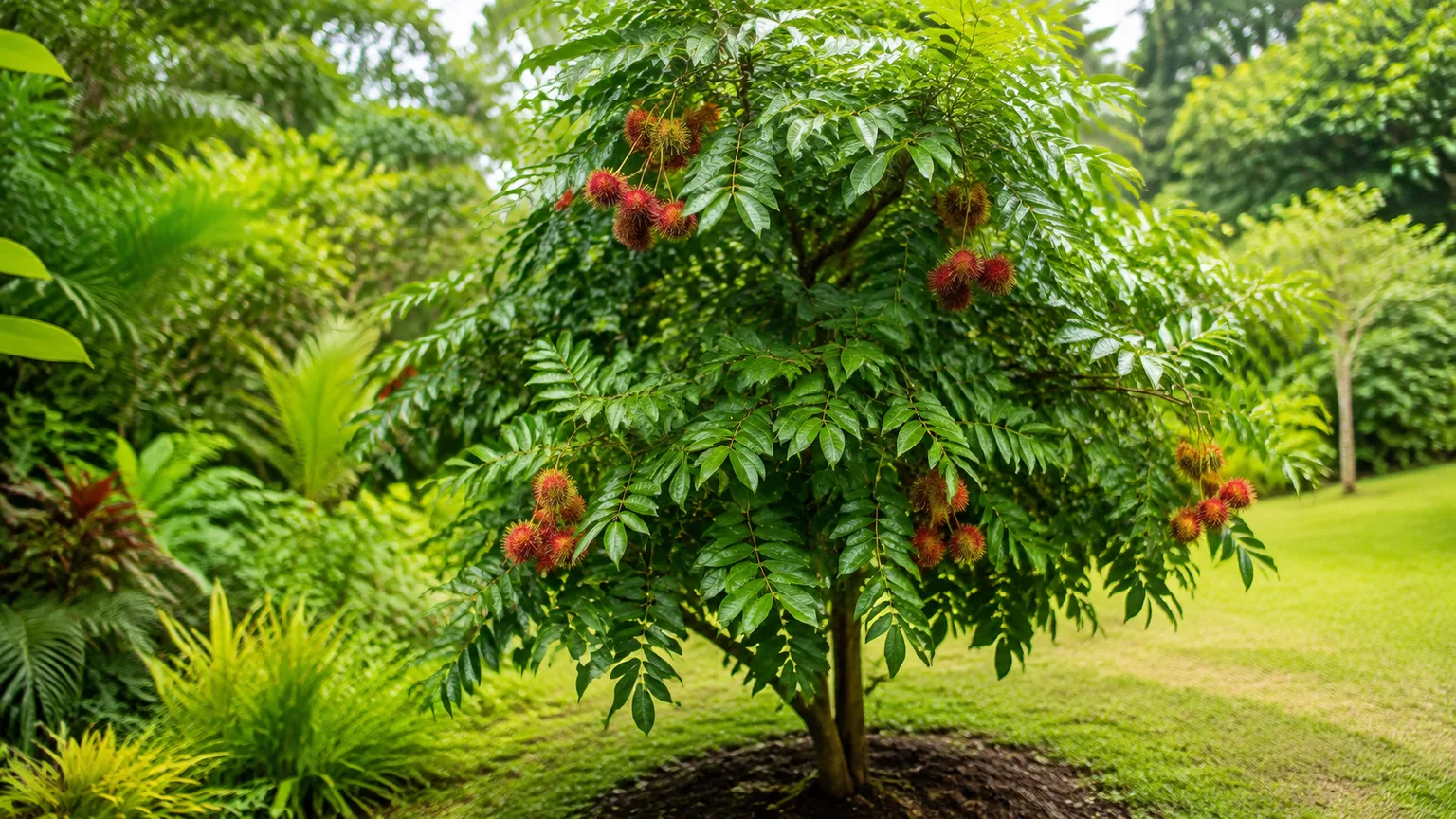
Rambutan (Nephelium lappaceum) is a tropical fruit tree with glossy foliage and red, yellow, or orange fruit covered in soft, flexible spines. Its name comes from rambut, the Malay word for “hair,” and the species is part of the Sapindaceae family alongside lychee and longan. Kew lists it as a wet-tropical tree native from southern China through Malesia, which explains the central rule of rambutan care: warmth, moisture, and drainage have to work together. Kew Plants of the World Online
Rambutan is not a forgiving patio tree for a cold or dry climate. In a suitable tropical garden it can become a productive evergreen, while in a cool home it is more realistic as a carefully managed greenhouse or container specimen. Use the climate test below before buying a plant; it can save years of trying to make a heat-loving tree fruit where it cannot.
| Care factor | Practical target | What to watch |
|---|---|---|
| Light | Full sun, with gradual acclimation | Scorch after moving a shade-grown tree suddenly |
| Temperature | Warm days and nights; protect below 50°F (10°C) | Leaf drop and damaged new growth after cold |
| Humidity | Consistently humid air, especially for young plants | Dry wind, heated rooms, and rapid moisture swings |
| Soil | Rich, slightly acidic, fast-draining soil | A wet root ball that stays heavy for days |
| Water | Even moisture, never stagnant water | Wilting and leaf drop from drought or root stress |
| Fruit timeline | Often several years; grafted trees usually beat seedlings | Flowering, pollination, and cultivar all matter |
Is Rambutan a Practical Tree for Your Climate?
Start with your lowest nighttime temperature, not your warmest summer afternoon. Rambutan performs best in a warm, humid, nearly frost-free environment; practical horticulture references commonly place outdoor growing in USDA zone 10 or warmer, with ideal temperatures roughly in the 70–86°F range. Even in a warm zone, a sudden cold snap, drying wind, or long rainless period can set a tree back.
If your winter nights regularly fall below 50°F, plant rambutan in a movable container or a heated greenhouse rather than in open ground. A container does not magically turn it into an easy houseplant: you still need strong light, high humidity, a large root volume, and a way to move it without chilling the foliage. In a dry, heated room, a seedling may survive for a while but usually grows slowly and is unlikely to flower well.
Use a simple decision rule. Grow outdoors in the ground only if warmth is dependable, the soil drains freely, and there is room for a large canopy. Use a greenhouse if warmth is possible but winter cold or low humidity is not. Grow it as an experiment in a pot if you can provide light and accept that a healthy ornamental tree may never produce a meaningful crop. Both Epic Gardening’s rambutan guide and Gardening Know How’s growing notes emphasize that this is a true tropical rather than a forgiving temperate fruit tree.
Choose the Right Rambutan Plant or Seed
The best choice depends on whether your goal is a beautiful tropical tree or predictable fruit. A seedling is inexpensive and satisfying to raise, but its eventual vigor, flowering behavior, and fruit quality are not guaranteed to match the fruit that supplied the seed. A grafted or budded tree is the better purchase when fruit is the priority because it preserves a selected cultivar and can enter production earlier.
| Starting material | Strength | Trade-off |
|---|---|---|
| Fresh seed | Easy to obtain from ripe fruit; useful for learning | Must be planted quickly and may produce variable fruit or a male tree |
| Nursery seedling | Already established and easier than germinating seed | Still juvenile and genetically unpredictable |
| Grafted or budded tree | Earlier, more predictable fruit and known cultivar traits | Costs more and needs careful transplanting |
| Air-layered branch | Clones a desirable parent and can fruit sooner than a seedling | Requires a healthy mother tree and patience while roots form |
Buy from a nursery that can name the cultivar and propagation method. Ask whether the tree is grafted, whether the rootstock is compatible, and whether the seller knows the flowering type. Avoid a tall, root-bound plant with a circling root mass; a smaller tree with healthy new growth often establishes faster than an oversized one that has spent too long in a tight pot.
Understand Rambutan’s Growth and Fruit Biology
Rambutan is evergreen, but “evergreen” does not mean it can ignore cold or drought. It may shed leaves after stress, then produce a flush when conditions improve. A mature tree can be large in the ground, so pruning for harvest access is not a cosmetic afterthought; it is part of making the tree practical and safe to manage.
Flowering and fruiting are also less automatic than a care label suggests. Rambutan trees may be male, female, or hermaphroditic, and flowers are visited by insects. Some cultivars can set fruit alone, while others need compatible pollen from another tree. The International Society for Horticultural Science reports that rambutan fruit quality varies with environment and management, a useful reminder that fruit size, flavor, and yield are not determined by genetics alone. ISHS research on rambutan culture and fruit quality
Start Rambutan From Fresh Seed
Freshness is the first germination variable. Do not save a rambutan seed in a dry envelope for months and expect the result of a fresh seed. Remove the flesh gently, rinse away every sticky residue, and sow as soon as possible—ideally within days. Seeds that have dried out, fermented, or been nicked while the fruit was removed are poor candidates.
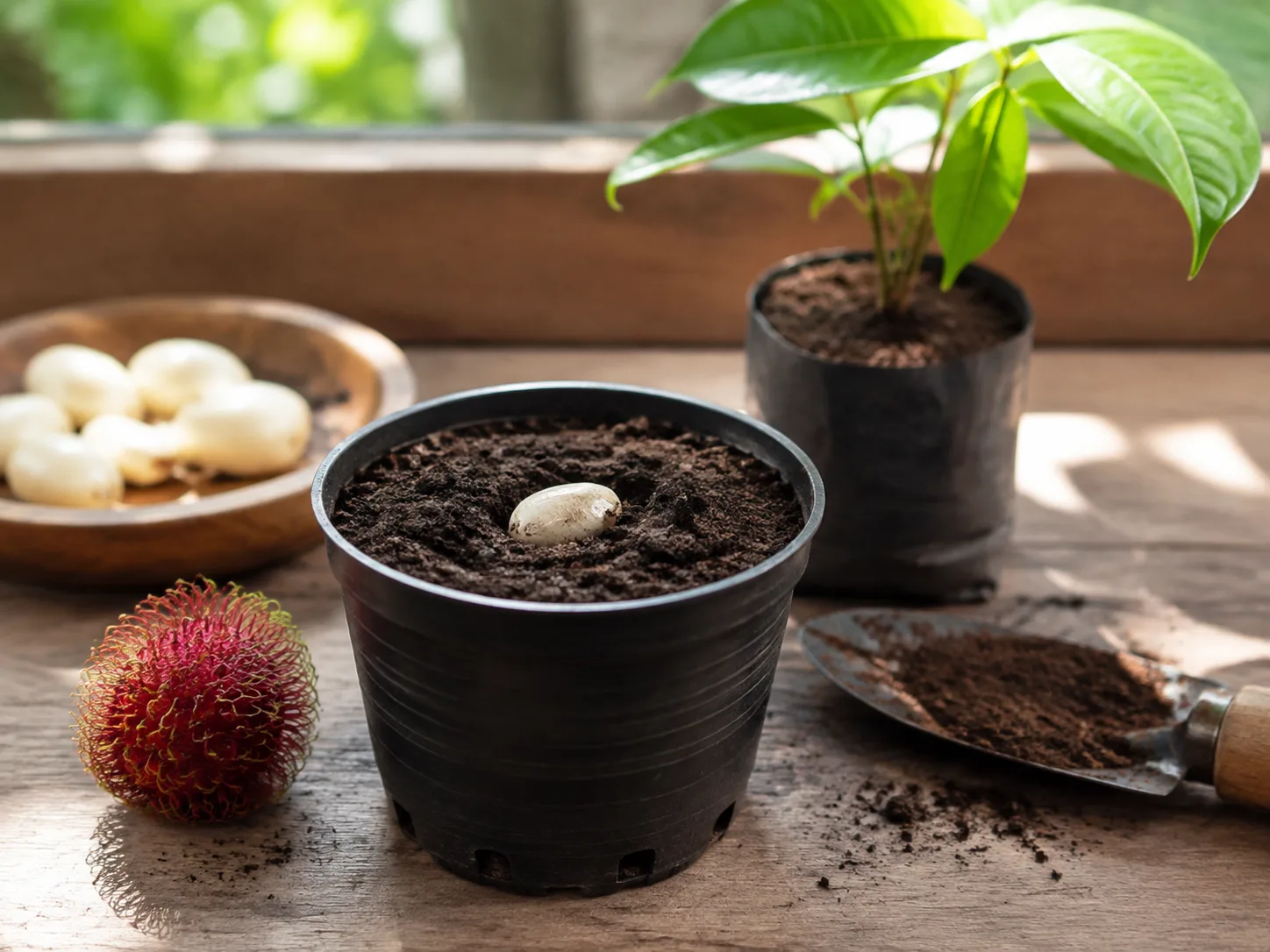
Use this sequence:
- Select a fully ripe, undamaged fruit and remove the flesh without cutting into the seed.
- Rinse the seed thoroughly so fruit residue does not encourage mold.
- Soak it in room-temperature water for several hours or overnight; discard seeds that are badly split or soft.
- Fill a small pot with a loose, moisture-retentive mix that drains through the holes immediately. A fine-textured seed mix amended with perlite or coarse material is safer than heavy garden soil.
- Set the seed on its flatter side or point it according to the shape of the seed, then cover it with about an inch of mix.
- Water once to settle the medium, then keep it evenly moist rather than saturated.
- Supply bottom heat if the room is cool and place the pot in bright light. Expect germination in roughly 10–21 days when seed freshness and warmth are on your side.
Do not put a newly sprouted seedling into harsh outdoor sun. The first leaves are tender and the stem has little reserve. Move it outdoors for short periods in bright shade, increasing exposure over a week or two. For general seed-starting setup and hardening-off logic, see our guide to starting seeds indoors.
Choose a Site and Soil That Drain Deeply
In the ground, choose the warmest practical part of the garden with shelter from strong, drying wind. Full sun supports dense growth and fruiting, but an exposed site that receives hot wind all day can lose water faster than young roots replace it. A wall or hedge can reduce wind without casting heavy shade; leave enough room that the mature canopy will not be trapped against a structure.
Rambutan prefers rich, well-drained soil that is slightly acidic, commonly around pH 5.5–6.5. Test before adding lime, sulfur, or large amounts of fertilizer. If the soil is compacted clay, fix the drainage problem across the planting area or choose a raised mound; simply filling a narrow hole with fluffy soil can create a bowl that collects water around the roots.
Work organic matter through the broader root zone, but do not bury the trunk or create a fertilizer pocket under the root ball. The goal is a soil profile that holds moisture while allowing air to return after irrigation. If water remains in the planting hole after a few hours, delay planting and correct drainage first.
Plant Rambutan in the Ground or a Container
Plant outdoors after the soil has warmed and nights are reliably mild. Dig a hole at least twice as wide as the root ball and no deeper than the root ball’s existing height. Set the tree so the top of the root ball is level with—or slightly above—the surrounding soil, then backfill with the native soil you removed. A tree planted too deeply can decline even when the top growth looks fine.
Water slowly to settle air pockets, then cover the root zone with a few inches of wood chips or another coarse organic mulch. Keep the mulch several inches away from the trunk so the bark stays dry and visible. Give a young tree a temporary stake only when wind or a loose root ball makes it rock; remove the support once roots hold the tree so the trunk can strengthen naturally.
For a container, choose a pot with generous drainage holes and enough weight to resist tipping. Begin with a container only modestly larger than the root ball, then move up as roots fill the mix. A huge pot holds wet soil around a small root system and makes it harder to judge when to water. Use a quality potting mix amended for air space; garden soil compacts in containers.
Container rambutan needs more frequent monitoring because hot sun can dry the root ball quickly while cool weather slows evaporation. Lift the pot when it is freshly watered and again as it dries so you learn its weight signal. Repot when roots circle heavily, water runs down the inside without wetting the mix, or the tree repeatedly wilts despite a sound schedule.
Give Rambutan Enough Light, Heat, and Humidity
Aim for six to eight hours of direct sun outdoors once the tree is acclimated. A greenhouse tree may need shade cloth during the hottest part of the day if glass temperatures spike, but do not solve heat by placing it in deep shade. Weak light produces stretched growth and makes flowering less likely.
Acclimate any indoor-grown tree in stages. Start with bright shade, add gentle morning sun, and increase exposure over 7–14 days while watching new leaves. Bleached patches and crisp tan areas after a move indicate light shock; damaged tissue will not recover, so stabilize the plant and wait for healthy new growth rather than watering more.
Warm air alone is not enough. Rambutan prefers humid conditions, yet still needs airflow around leaves so foliage dries and fungal problems do not gain an advantage. In a greenhouse, use ventilation and a small circulating fan rather than sealing the space into a stagnant fog. In a home, a humidifier can help, but it cannot compensate for cold roots, weak light, or a pot sitting in runoff.
Water for Steady Growth Without Root Rot
Water the root zone thoroughly, then let excess drain away. The interval depends on pot size, sun, wind, soil texture, and season, so a fixed “twice a week” rule is less useful than a repeatable check. Push a finger into the upper few inches of a container, feel deeper soil when possible, and compare pot weight. In the ground, inspect moisture several inches below the mulch rather than judging from a damp surface.
Young trees need the most consistency. During establishment, water deeply enough to moisten the developing root zone, then check before watering again. A short daily splash wets the surface but can leave deeper roots dry; constant shallow wetness also encourages weak surface rooting. Drip irrigation or a slow hose soak is easier to control than a fast spray across the trunk and leaves.
During flowering and fruit development, avoid dramatic swings from drought to flood. Rambutan can tolerate a brief dry period better than a permanently waterlogged root zone, but drought during active growth can trigger leaf drop and reduce fruit quality. Mulch moderates evaporation, while a drainage channel or raised mound protects roots where heavy rain is common.
Some growers use a controlled dry period to encourage flowering, but this is an advanced tactic for a mature, healthy tree in a warm climate—not a rescue for a stressed seedling. Never withhold water from a young plant, a container that is drying rapidly, or a tree already dropping leaves. If you are unsure about moisture technique, our indoor plant watering guide explains the same root-air principle used in containers.
Fertilize by Growth Stage, Not Guesswork
Rambutan is a hungry fruit tree, but heavy feeding does not mean pouring concentrated fertilizer around the trunk. Start with a soil test and follow the label of a complete fruit-tree fertilizer. Split applications across the active growing season so nutrients are available without a damaging salt spike.
Young trees need enough nitrogen to build leaves and branches, balanced with phosphorus, potassium, and micronutrients. Once a tree is approaching flowering, avoid pushing soft, leafy growth with excessive nitrogen. A mature fruiting tree may benefit from a fertilizer program that shifts emphasis through the season, but exact rates depend on soil, rainfall, tree size, and product formulation.
Apply granular fertilizer in a broad ring beneath the canopy or near the active root zone, never against the trunk. Water it in, and pause feeding during cold, dark weather when roots are not actively taking up nutrients. In a container, use a diluted complete fertilizer more cautiously than you would in open ground and flush the mix periodically if a white crust builds on the surface.
Yellow leaves are not proof of hunger. Waterlogged roots, cold stress, high soil pH, and damaged roots can all limit nutrient uptake. Diagnose moisture, root health, light, and temperature before increasing the dose.
Prune for a Manageable, Productive Canopy
Prune with a purpose: remove dead or diseased wood, improve access to fruit, keep branches from crossing, and limit height in a greenhouse or small yard. Rambutan does not need constant shaping just because it is a tree. Removing too much healthy canopy can reduce the leaf area that powers the next crop.
Make clean cuts just outside the branch collar and disinfect tools between questionable cuts. Remove one problem at a time rather than stripping a stressed tree. After harvest is often a useful window for light structural work, but check the tree’s flowering cycle; a cut that seems harmless on the calendar can remove the next season’s fruiting wood in a tropical climate.
Keep the central trunk and a few well-spaced scaffold branches when training a young tree. In a container, shorten the tallest shoots gradually and root-prune only when you understand the recovery cost. If a branch is overhead, heavy, near a power line, or unsafe to reach, hire a qualified arborist. Our garden-tool cleaning guide covers the sanitation step.
Solve Pollination and Fruit-Set Problems
A tree can be green, vigorous, and still fail to produce fruit. First identify whether it flowered. No flowers points toward insufficient maturity, low light, cold stress, excessive nitrogen, or an unsuitable seasonal rhythm. Flowers with no fruit may indicate a pollination mismatch, poor insect activity, rain during bloom, or a cultivar that needs compatible pollen.
If fruit matters, ask the nursery about flowering type before planting. A self-compatible or hermaphroditic cultivar simplifies a home planting, while a dioecious selection may require a male and female tree nearby. Insect-friendly planting and avoiding broad-spectrum sprays during bloom can support natural pollination, but adding a second tree is not a guarantee if the climate cannot support flowering.
Seedlings are especially uncertain because you may not know their sex or eventual fruit quality until they mature. Grafted trees reduce that uncertainty but do not remove the need for heat, moisture, light, and pollinators. Expect several years rather than a quick harvest: seed-grown trees often take around four to six years or longer, while grafted or budded trees may fruit in roughly two to three years under favorable conditions.
Harvest and Store Rambutan at Peak Quality
Rambutan does not improve dramatically after picking, so harvest color matters. Depending on cultivar, the skin turns red, orange, or yellow as the fruit matures, and the spines may lose their fresh green tone. Taste-test a fruit from the cluster when the color is nearly complete; color alone is less reliable across cultivars than a combination of color, firmness, and sweetness.
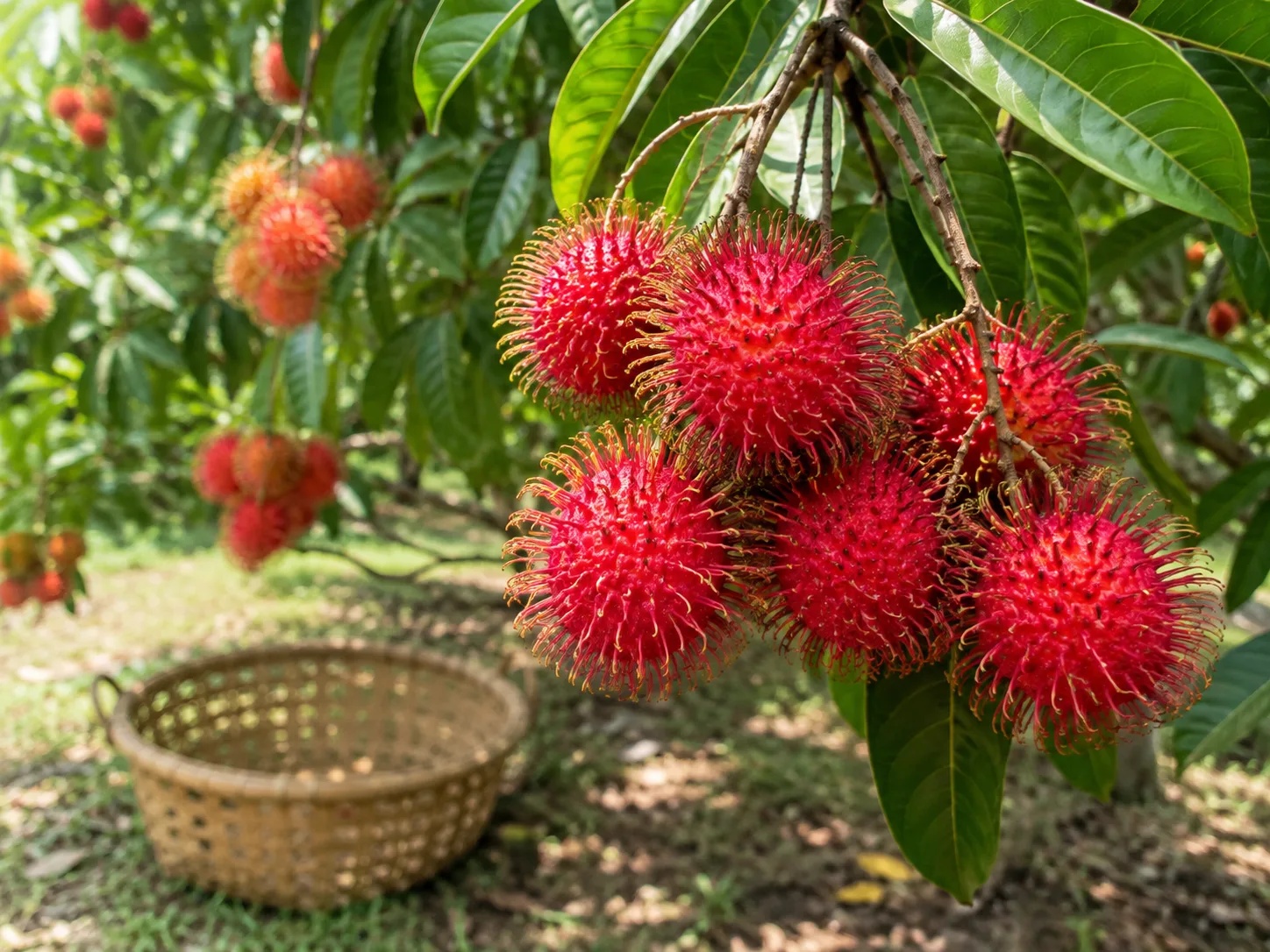
Use clean shears or a fruit-picking tool to cut the fruit cluster with a short section of stem attached. Do not yank individual fruits from high branches or climb an unstable ladder. A tree may ripen unevenly, so inspect it several times each week during the harvest window and pick ripe clusters promptly before birds, bats, insects, or decay reach them.
Keep the skin on until you are ready to eat the fruit. Fresh rambutan loses quality quickly in hot, dry air; refrigerating intact fruit in a breathable container can extend its useful life, while freezing peeled flesh changes the texture but preserves it for later cooking. Discard fruit with leaking juice, mold, fermentation odor, or extensive internal browning.
Eat the white aril and discard the peel and seed. Do not treat a rambutan seed as a casual snack: seeds may contain compounds that make them unsafe raw, and cooking does not turn uncertain home processing into a guaranteed food-safe practice. Keep harvested fruit away from small children and pets when the seed is loose because it is a choking hazard.
Propagate a Good Tree by Air Layering
Air layering is useful when you already own a rambutan with desirable fruit and want a clone without waiting for seed genetics. Choose a healthy, pencil-thick branch with active growth. Avoid a branch carrying a heavy crop, a diseased branch, or a tender shoot that will dry before roots form.
Make a clean ring cut through the bark without gouging deeply into the wood, then remove the bark section. Wrap the exposed area in damp—but not dripping—sphagnum moss, cover it with clear plastic, and shield it from harsh sun with foil or an opaque wrap. Secure the ends so the moss stays evenly moist, then check periodically for roots and mold.
When a substantial root ball is visible through the moss, cut below it with sterilized pruners. Pot the new plant in a small, draining container, water it thoroughly, and keep it in bright shade with high humidity while it transitions. Do not place a freshly separated air layer into full sun or fertilize heavily; it has roots, but it has not yet rebuilt a stable root-to-shoot balance.
Manage Pests and Diseases Safely
Inspect leaf undersides, tender shoots, flowers, and developing fruit every week. Rambutan can attract sap-sucking insects such as aphids, scale, and mealybugs, along with leaf-feeding insects and fruit flies. Birds and bats may damage ripe fruit even when the tree itself is healthy.
Start with identification and low-risk measures. Prune badly infested tips, wash accessible pests from foliage, remove fallen fruit, improve airflow, and use physical fruit bags or bird protection where appropriate. If you use insecticidal soap, horticultural oil, neem, or another product, read the label for the crop, dilution, weather limits, pollinator precautions, and harvest interval. Never assume that “natural” means harmless to beneficial insects or safe on every leaf.
Powdery mildew, anthracnose, stem cankers, and root problems are more likely when airflow is poor, foliage stays wet, or roots remain saturated. Prune out infected tissue into healthy wood, sterilize tools, remove diseased debris, and correct the environment before reaching for a fungicide. If the trunk is girdled, the root system is foul and mushy, or a canker is advancing into the main structure, get local diagnostic help rather than repeatedly spraying an unknown problem.
Troubleshoot Leaf Drop and Weak Growth
Leaf drop is a symptom, not a diagnosis. Check the order of events: Was the plant moved? Did the temperature fall? Was the pot dry or waterlogged? Did feeding increase? Did new pests appear? That sequence usually tells you more than the leaf color alone.
Sudden leaf drop after cold or moving indoors usually points to temperature or light shock. Stabilize the plant above its safe minimum, keep the root ball slightly moist, and do not compensate with fertilizer. Leaf drop with wet, sour-smelling soil points toward root stress; stop watering, inspect the roots, and repot only if drainage or rot is clearly involved. Crisp leaves with a light pot suggest drought, while soft leaves in a heavy pot suggest excess water or root damage.
Slow growth can be caused by insufficient light, cool roots, a cramped container, poor drainage, or lack of nutrients. Correct one variable at a time and watch the next flush of growth. Old damaged leaves will not turn perfect again; success means the new leaves emerge healthy and the plant stops repeating the symptom.
If a tree never flowers, count back from its age and propagation method before changing fertilizer. A seedling in a marginal climate may simply be juvenile or too stressed to enter a reproductive cycle. If it flowers but drops every fruit, examine pollination, rain, insect activity, water swings, and the cultivar’s compatibility before pruning harder.
Overwinter a Container Rambutan
Move a container rambutan before cold nights arrive, not after the first cold injury. A practical trigger is when nighttime temperatures begin approaching 60°F, because the transition itself is easier while the plant is still actively growing. Over two weeks, shift it from full sun toward bright shade so the indoor light change is less abrupt.
Before bringing it inside, inspect leaf axils and the soil surface for pests, remove dead leaves, and rinse the foliage if needed. Let excess water drain completely so the plant does not enter the house with a saturated root ball. Place it in the brightest warm location available, away from cold glass, heating vents, and doors that open to winter air.
Indoor winter care is a compromise. Growth may slow, humidity may fall, and the tree may shed some leaves even when you are doing everything reasonably well. Reduce fertilizer while light and growth are low, but do not allow the medium to become dust-dry. A grow light, humidifier, and fan can create a better microclimate, though none replaces the intensity and day length of tropical sun.
In spring, reverse the acclimation process. Do not take a soft, pale indoor tree from a dim room straight into midday sun. Harden it outdoors gradually, and wait for warm nights before leaving it outside permanently.
Conclusion: Match Rambutan to Its Climate
Growing rambutan well starts with an honest climate decision. If you can provide tropical warmth, high humidity, full light, rich but sharply draining soil, and consistent root moisture, a grafted tree gives you the best chance of a manageable harvest. If winters are cold or air is dry, a container or greenhouse can keep the experiment alive, but fruiting is a higher bar than survival.
Choose fresh seed only when you enjoy the uncertainty and long timeline. Choose a named grafted tree when fruit quality, earlier production, and known flowering behavior matter. Then protect the basics—warm roots, even moisture, airflow, pollination, and restrained pruning—and let the tree’s next flush of healthy growth tell you whether the routine is working.