Rodent-Resistant Bulbs to Plant in November
Snowdrops, alliums, and crown imperial repel mice and voles better than tulips. Plant these 7 bulbs in November with depth, zone, and cage tips.
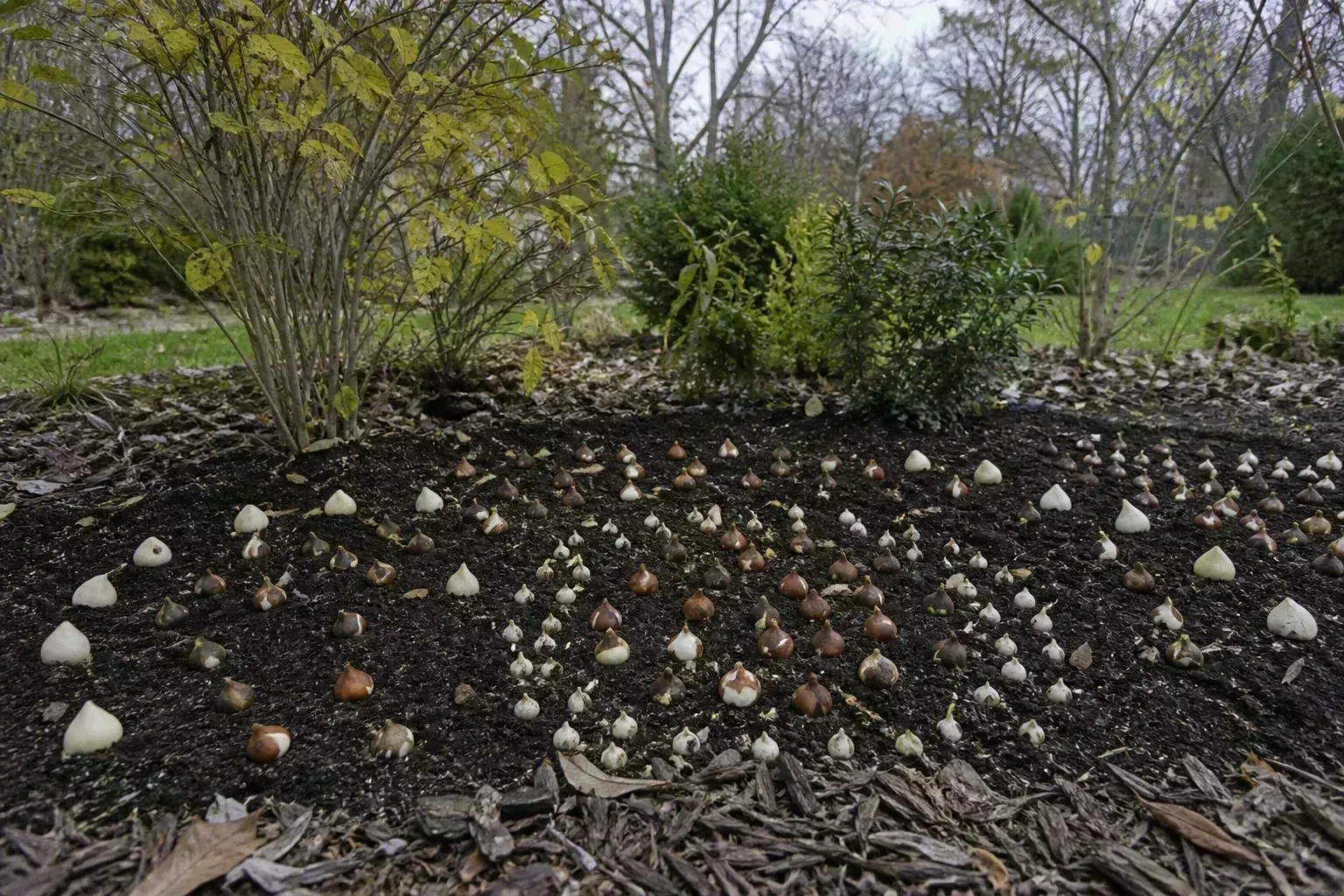
You bought firm tulip bulbs in September. By December the holes are empty and the bagged leftovers smell like a pet store. The fix is not one magic bulb list. Rodent-resistant species reduce losses, November timing gets roots in before freeze, and physical barriers still matter when squirrels are desperate or voles are tunneling under your mulch.
These seven bulbs — crown imperial, flowering onion, snowdrops, grape hyacinth, Siberian squill, glory of the snow, and winter aconite — sit on the short list wildlife usually skips. They are not bulletproof. They are the foundation of a spring bed that survives hungry mice, voles, chipmunks, and often deer and rabbits on the foliage side.
Why rodents raid your fall bulb planting
Bulbs are concentrated food packets. A tulip or crocus corm stores starch and sugars underground exactly where voles and mice live. Squirrels and chipmunks do not burrow as deeply; they dig from above and run with the prize. Deer and rabbits usually wait until green shoots appear, then shear off buds overnight.
The damage pattern tells you who ate lunch.
Diggers above ground vs burrowers below
Bulbs dug out and scattered point to squirrels, chipmunks, skunks, raccoons, or rabbits investigating loose soil. You may see paw prints, shallow holes, or chewed papery tunics on the surface. Bulbs planted but never emerging often mean voles, mice, or gophers ate them from below. Moles get blamed because their tunnels intersect planting beds, but moles eat insects and worms — other rodents use mole runs as highways (American Meadows).
Foliage and buds vanish in spring implicate deer and rabbits. Deer leave ragged tears on leaves; rabbits cut stems at a clean angle with sharp incisors. Groundhogs do both below and above ground and leave unmistakable soil mounds.
Match the culprit before you replant the same vulnerable mix.
What makes a bulb “rodent-resistant” — and what that does not promise
“Rodent-resistant” means lower appetite, not zero risk. When food is scarce — late winter, drought years, heavy snow cover — animals sample plants they normally ignore (RHS). Resistance also varies by garden: a bulb ignored in one neighborhood becomes a favorite next door if feeders, compost piles, or thick mulch offer cover.
Three mechanisms show up repeatedly in bulbs rodents skip.
Bitter alkaloids and scent barriers
Bitter compounds — especially lycorine in the daffodil family (Amaryllidaceae) — make snowdrops, grape hyacinth, and related small bulbs taste awful (American Meadows). That is why daffodils rarely disappear even though they are not on this list: they share the chemistry. Sulfur-rich onion odor from alliums repels many mammals on smell alone. Skunky or fox-like bulb scent from crown imperial is strong enough that Dutch growers historically tucked it among tulips as a living repellent (American Meadows).
Tulips and crocus sit at the opposite end — sweet, starchy, and routinely devoured. Hyacinths are somewhat resistant; rodents often leave them unless pressure is high.
Pet note: lycorine makes many Amaryllidaceae bulbs toxic to dogs and cats (ASPCA daffodil listing). Wear gloves when handling large quantities of snowdrop or grape hyacinth bulbs if pets dig in planting areas.
November planting window: soil temperature and frost math
November is the sweet spot in many cold climates because soil has cooled but is not frozen solid. Penn State Extension recommends planting spring bulbs six to eight weeks before the ground freezes so roots establish before winter. RHS bulb planting guidance often schedules tulips in November while earlier species go in September–October — November still works for the seven bulbs here if soil cooperates.
Decision rule before you dig: probe soil at planting depth (often six inches for larger bulbs). If it still feels warm and nights are mild, hold vulnerable tulips and plant the resistant small bulbs first — they are less likely to rot in borderline warmth. Ideal rooting happens when soil is cool but not frozen, typically below about 60°F at depth in many extension guides. Frozen ground is the hard stop; bulbs sitting in warm wet soil rot instead of rooting.
In USDA zones 3–7, November planting of snowdrops, squill, glory of the snow, and winter aconite is routine. Crown imperial and large alliums need deeper holes — plan extra time before first hard freeze. Zones 8–9 may plant later; zones 2 can plant Siberian squill as late as workable soil allows because it tolerates extreme cold.
General depth rule from Penn State Extension: three to four times the bulb’s height, pointed end up, basal plate down, in well-drained soil. Heavy clay: plant slightly shallower and improve drainage with compost — wet soil kills more bulbs than rodents do.
Crown Imperial (Fritillaria imperialis)
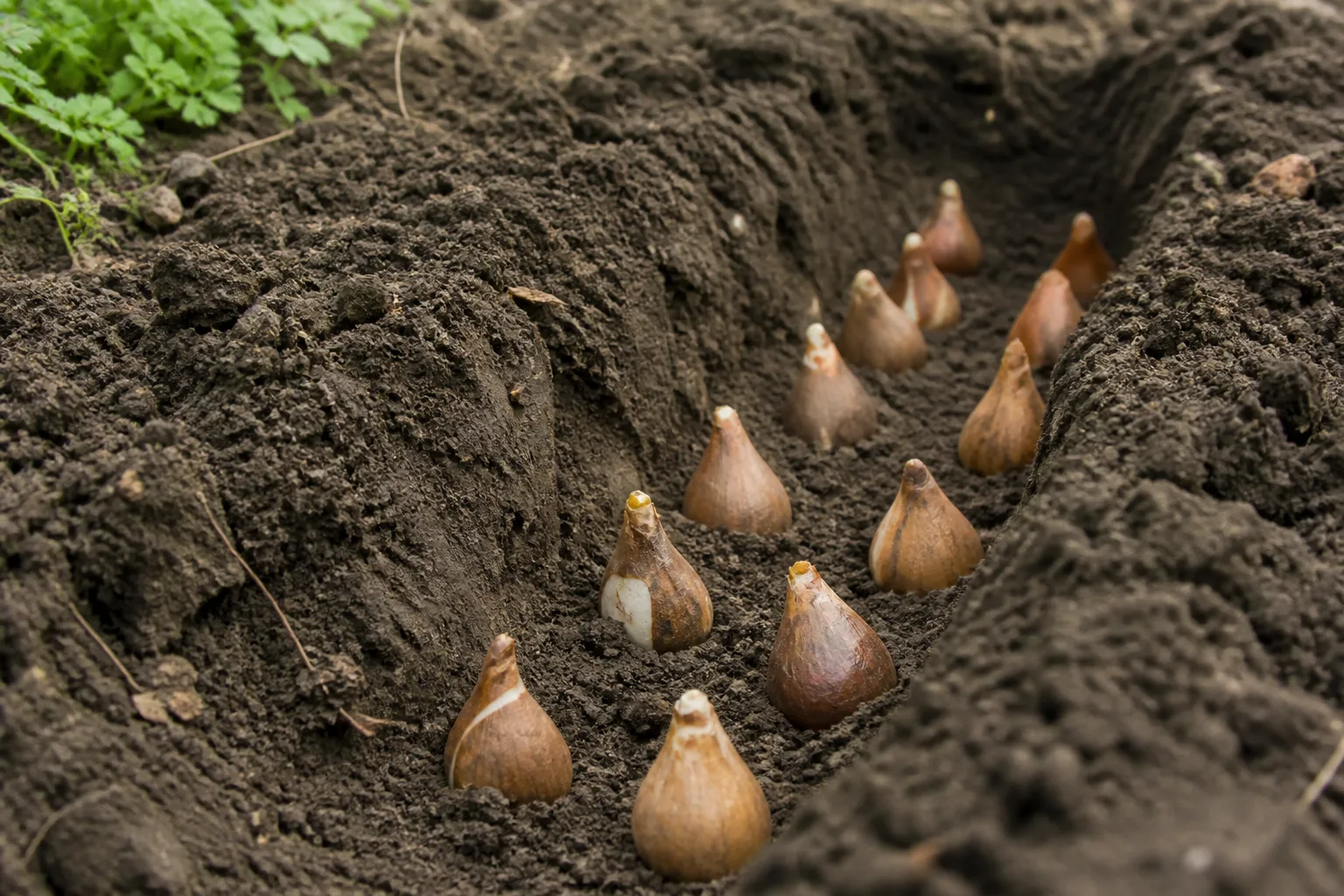
Crown imperial is the drama queen of the rodent-resistant list. Stems reach two to three feet, topped with a ring of bell-shaped orange, red, or yellow flowers beneath a tuft of leaves that looks like a crown. Bloom time is mid-spring, after snowdrops and winter aconite but before many tulips finish.
The bulbs smell sharply unpleasant when handled — skunky or fox-like — and that odor is the repellent story. Gardeners and bulb growers report fewer squirrel and deer issues near plantings (American Meadows). Mole repelling is anecdotal; do not expect moles to vacate the property, but voles may avoid the immediate pocket.
Planting: set large bulbs 8 inches deep, slightly on their side so the hollow crown does not collect water and rot. Space 10–12 inches apart — they are wide plants. Zones 5–9, full sun to part shade, rich medium-moisture soil. Plant in November in cold zones if soil is cool; earlier is fine where fall is mild.
Trade-off: the scent is real indoors if you store bulbs in the house. Plant quickly and wash hands. Foliage can look rough after bloom; let it yellow naturally to feed the bulb.
Flowering Onion (Allium)
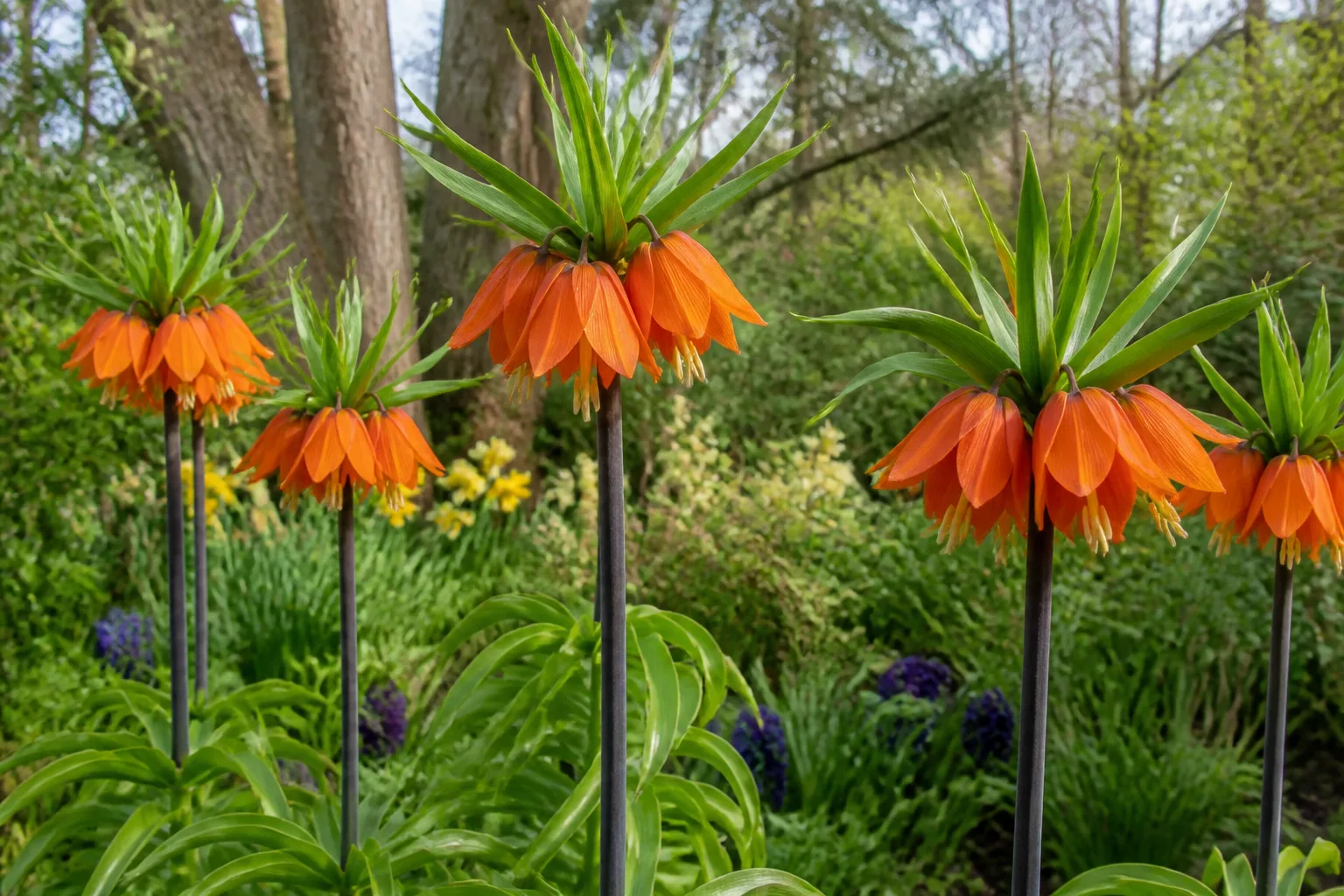
If crown imperial is skunk perfume, alliums are the onion basket. The genus spans golf-ball purple heads on three-foot stems down to low drumstick types. Bloom runs late spring into mid-summer, extending the bulb season after early squill and snowdrops fade.
Rodents and deer usually avoid alliums because of sulfur compounds shared with culinary onions. They are among the most reliable “plant and stop worrying” bulbs for mixed wildlife pressure.
Planting: depth depends on bulb size — small species 3–4 inches, large globemaster types 6–8 inches. Full sun, well-drained soil (dry to medium moisture). Zones 3–9 for most garden alliums. November works for hardy types; they root in cool soil and tolerate late planting better than tulips.
Design tip: interplant alliums among tulips in the same bed. Squirrels digging for tulips may abort when they hit an onion-scented neighbor. Leave allium foliage until it dies back — it feeds the bulb and marks the spot so you do not slice bulbs while summer planting.
Popular types: Allium schubertii (firework sparkler heads), A. giganteum (tall purple globes), A. moly (golden clusters for front edges).
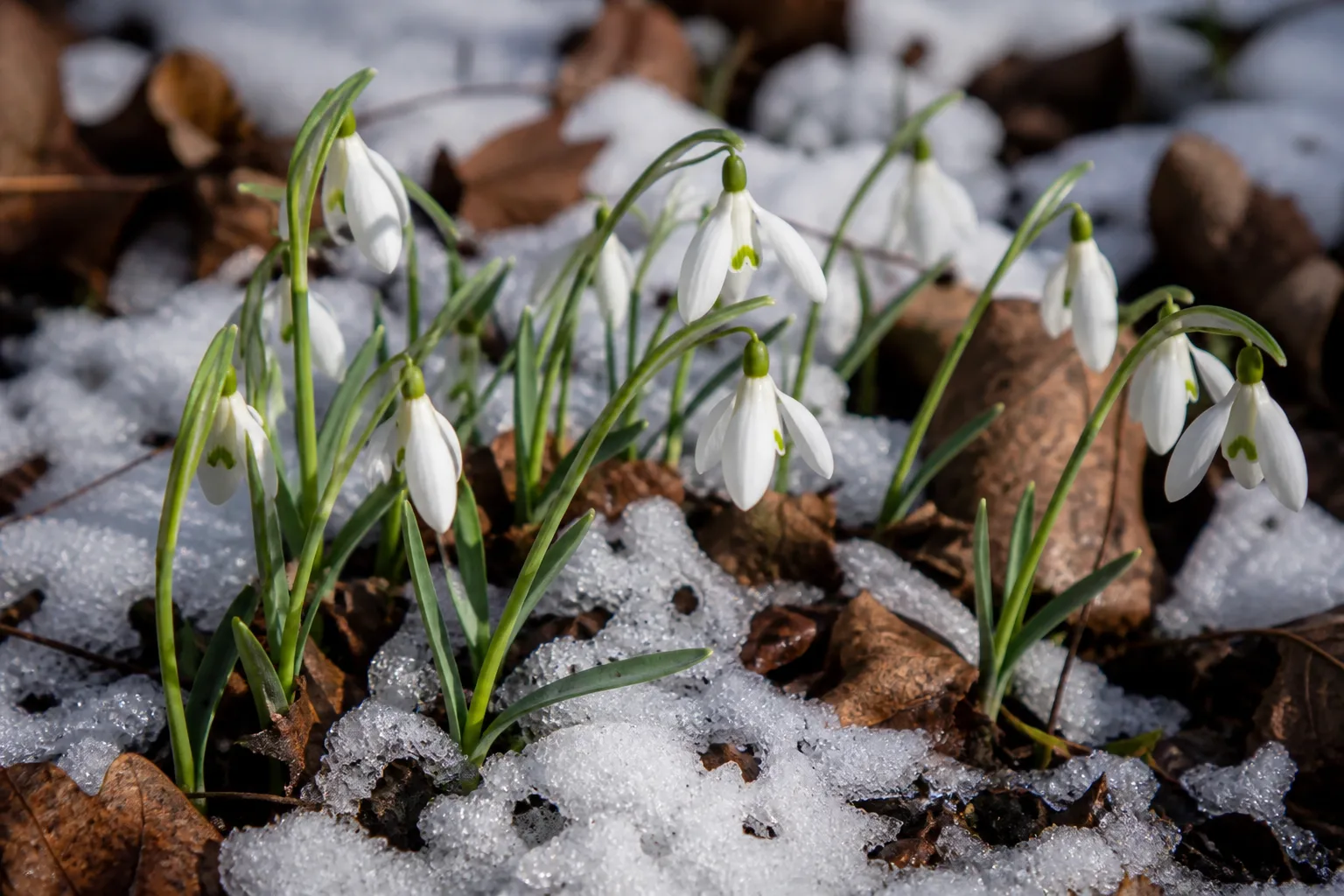
Snowdrops (Galanthus nivalis)
Snowdrops are the earliest honest spring flower in many yards — often blooming while snow still covers the lawn. Plants stand 4–10 inches tall with nodding white bells. Unopened flowers really do look like drops of milk on the stem.
They contain lycorine and are consistently left alone by rodents (American Meadows). Deer and rabbits rarely browse them. They naturalize into colonies when soil drains well and summer shade is not too brutal.
Planting: 3 inches deep, 3 inches apart for a quick carpet, or scatter for slower natural spread. Zones 3–9, sun to part shade — they appreciate deciduous shade from trees that leaf out later. November planting is standard in zones 4–7.
Pair with winter aconite for yellow-and-white contrast at the thaw line. Do not confuse with summer snowflake (Leucojum) — also rodent-resistant and later blooming, with taller stems and green-tipped white bells.
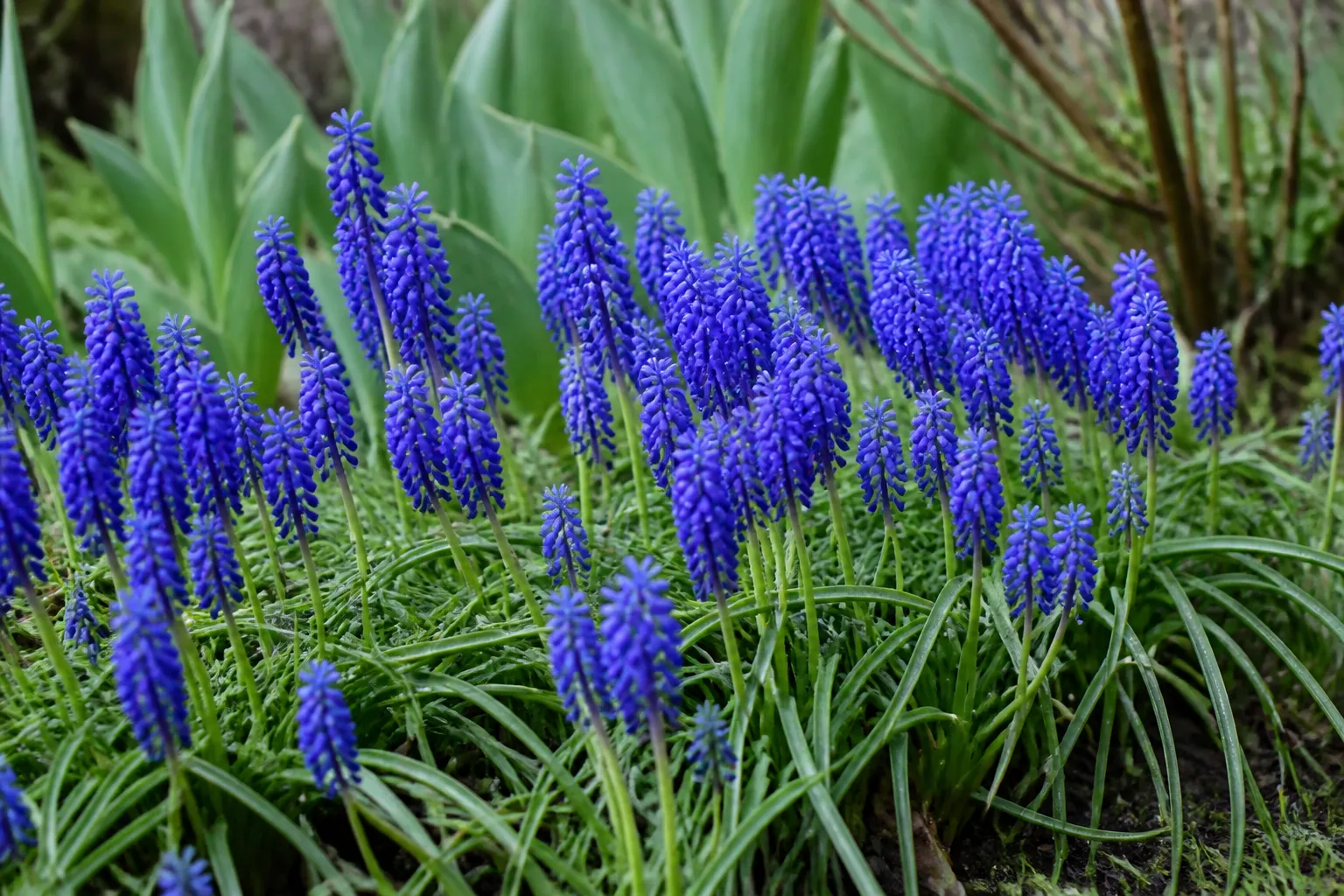
Grape Hyacinth (Muscari armeniacum)
Grape hyacinth sends up 6–9 inch spikes of tight blue beads in mid-spring. Grass-like leaves follow and can look messy by early summer; once foliage yellows, shear it off — the bulb is dormant underground.
Muscari shares the bitter Amaryllidaceae chemistry and ranks among bulbs rodents avoid (American Meadows). Cultivar ‘Blue Magic’ is noted for stronger aroma than plain species types. Colors run blue, white, pink, and yellow in specialty selections; blue remains the classic carpet effect.
Planting: 4–6 inches deep, group dozens for impact — single bulbs disappear visually. Zones 4–8, sun to part shade, medium moisture well-drained soil. Excellent under deciduous shrubs and along paths where voles might otherwise tunnel.
Caution: muscari spreads by seed and bulb offsets. Site it where a blue drift is welcome, not in a formal border that demands tight control.
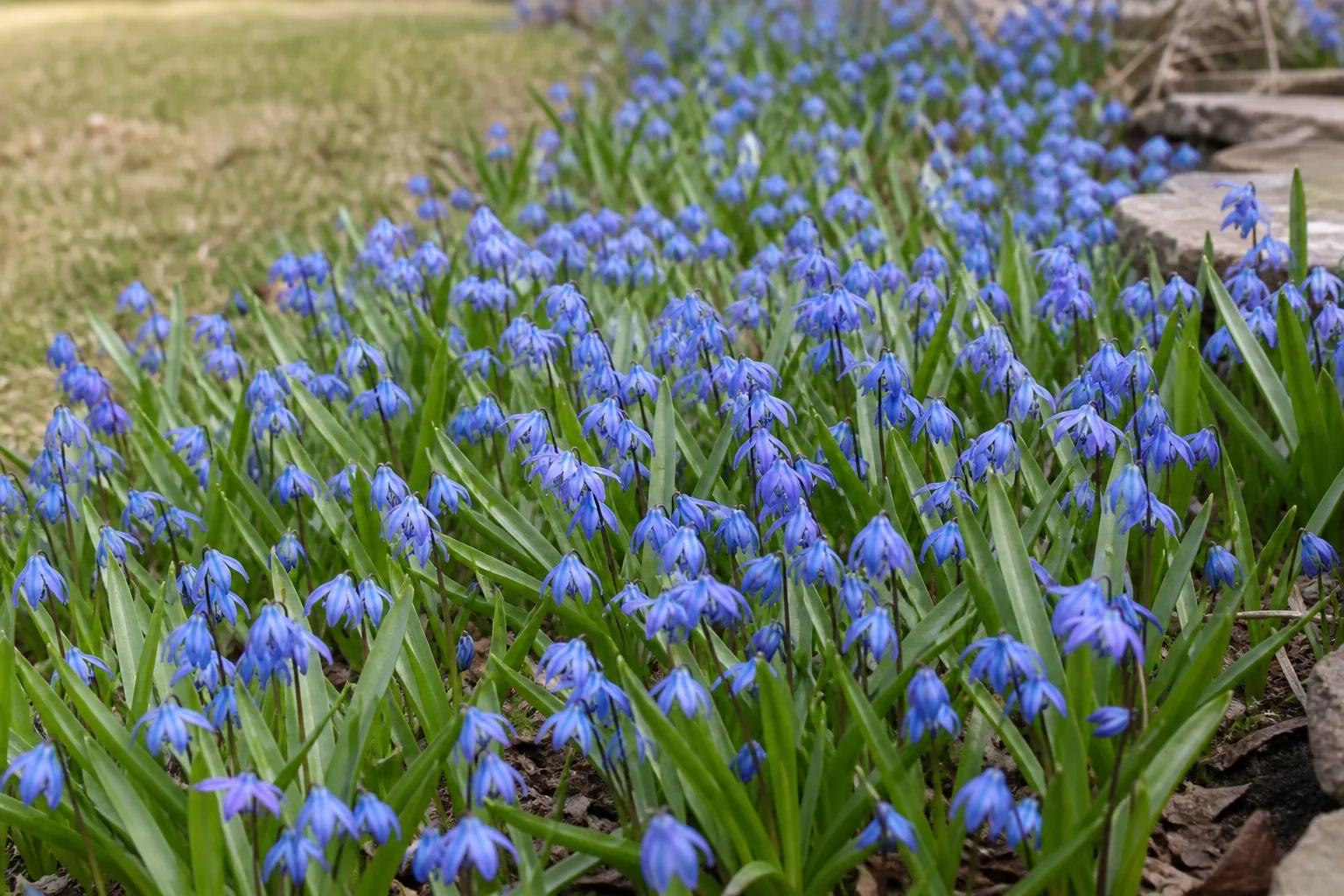
Siberian Squill (Scilla siberica)
Siberian squill is the cold-hardy blue carpet — reliable into Zone 2 where other bulbs fear January. 6–9 inches tall, nodding blue bells, early to mid-spring bloom depending on latitude.
Scilla siberica is bitter enough that rodents seldom eat it and it naturalizes aggressively in favorable sites — woodland edges, lawn margins, under trees (American Meadows). It is not deer-proof in famine years but fares better than tulips.
Planting: 4 inches deep, plant in groups of 20+ for a pool of blue. Zones 2–8, sun to part shade, medium moisture. November is fine; earlier planting in September also works where soil is already cool.
Look-alike: glory of the snow (below) shares size and blue color but different flower shape — plant both for sequence rather than choosing only one.
Glory of the Snow (Chionodoxa)
Glory of the snow blooms early spring at 3–6 inches, with star-shaped flowers in blue, pink, or white — often blue petals with white centers. It is closely related to squill and equally willing to naturalize in rock gardens, woodland strips, and lawn edges.
Rodents ignore it for the same chemical and size reasons as scilla. The whole plant vanishes by late spring — leaves and flowers gone, bulb dormant — which makes it ideal under perennials that fill in later.
Planting: 3–4 inches deep, 3 inches apart in drifts. Zones 3–8, sun to part shade, medium moisture well-drained soil. November planting matches other small early bulbs.
Design: combine with snowdrops (white) and winter aconite (yellow) at the front of a bed; place crown imperial and alliums toward the back where height and later bloom won’t be hidden.
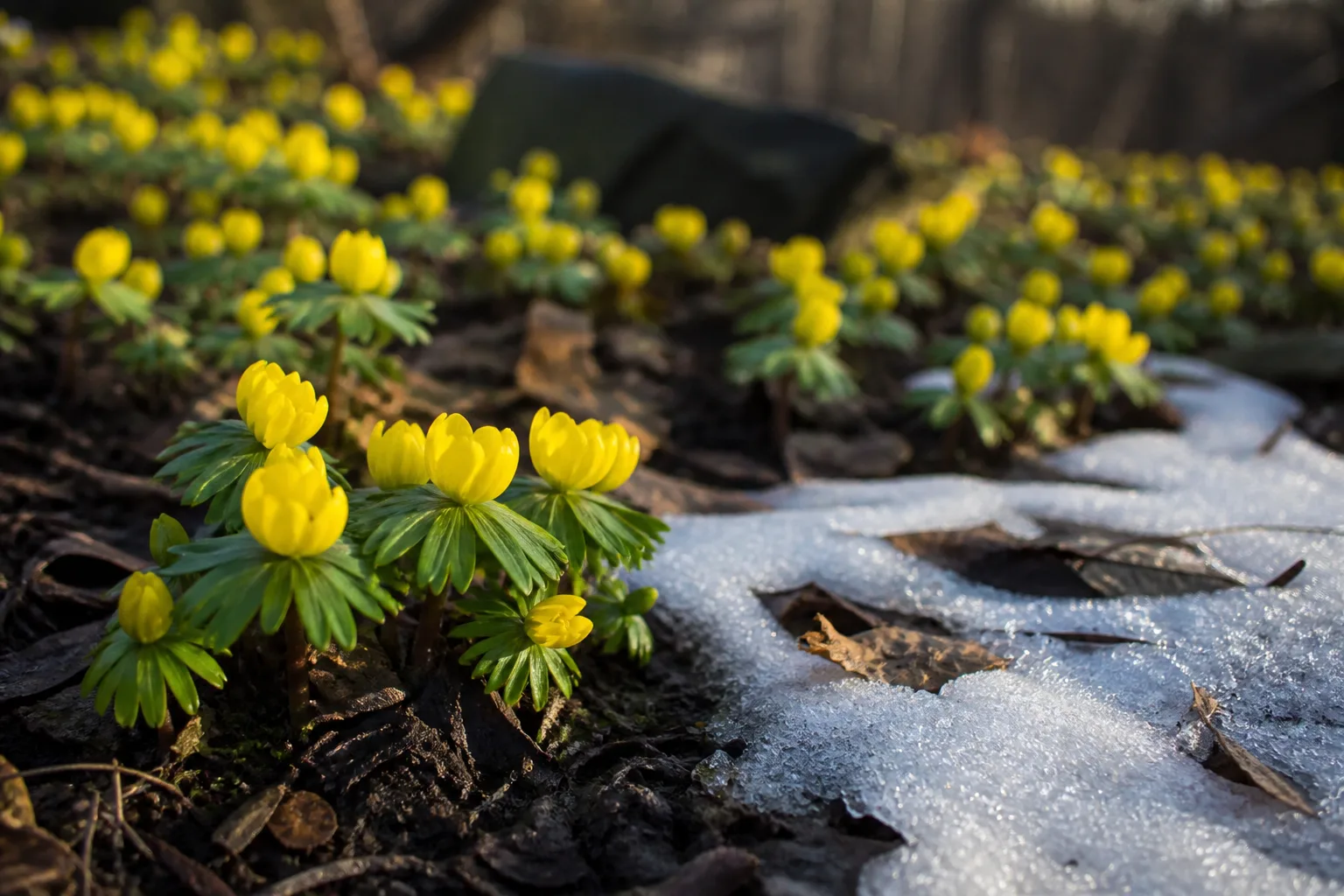
Winter Aconite (Eranthis hyemalis)
Winter aconite is the impatient gardener’s bulb — butter-yellow cups on 3–6 inch plants, often blooming in late winter before crocus. It is less common in commerce than snowdrops, which makes it a conversation piece.
Eranthis is bitter and early; rodents rarely target it (Gardenia plant profile context on Eranthis hyemalis). It naturalizes slowly into patches when soil is fertile and moisture steady through spring.
Planting: soak dry tubers a few hours if they arrived shriveled. Plant 2–3 inches deep, 3 inches apart, in fertile medium-moisture soil. Zones 3–7 — struggles in hot dry summers without shade and moisture. November works in cold zones; do not delay so long that soil freezes before roots start.
Pair with snowdrops at the lawn edge where salt and foot traffic are minimal. Like all early bulbs, avoid planting where snowplows deposit salty piles.
Layering resistant bulbs with the ones rodents love
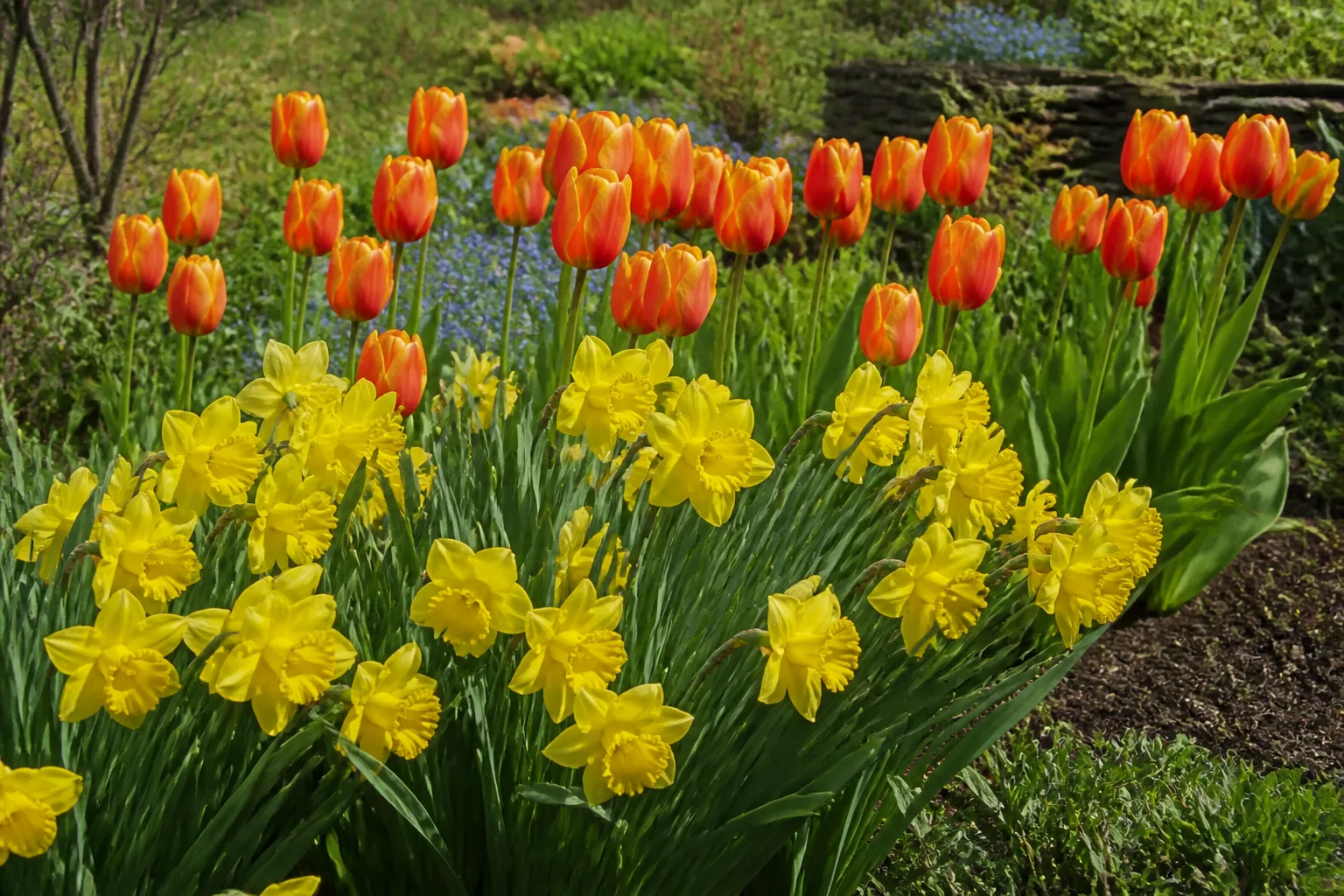
You do not have to choose between tulips and a wildlife war. Layer in the same hole — resistant bulbs deeper, vulnerable bulbs shallower — or ring tulips with daffodils, snowdrops, and muscari so diggers encounter repellent chemistry first (American Meadows).
Sample November plan for a 3×6-foot bed:
- Back row: crown imperial and tall alliums at 8 inches, spaced wide.
- Mid layer: grape hyacinth and squill at 4–5 inches in groups of 15.
- Front edge: snowdrops and winter aconite at 3 inches, dense.
- Optional tulip pockets: only in hardware cloth cages or within 12 inches of the front door where human traffic scares squirrels.
Tulips near high-traffic paths and in containers suffer less than tulips in open back beds (American Meadows). Window boxes still need screening until soil freezes — squirrels climb.
Hardware cloth cages, gravel, and delayed mulch
Species selection is half the battle. The other half is not advertising dinner.
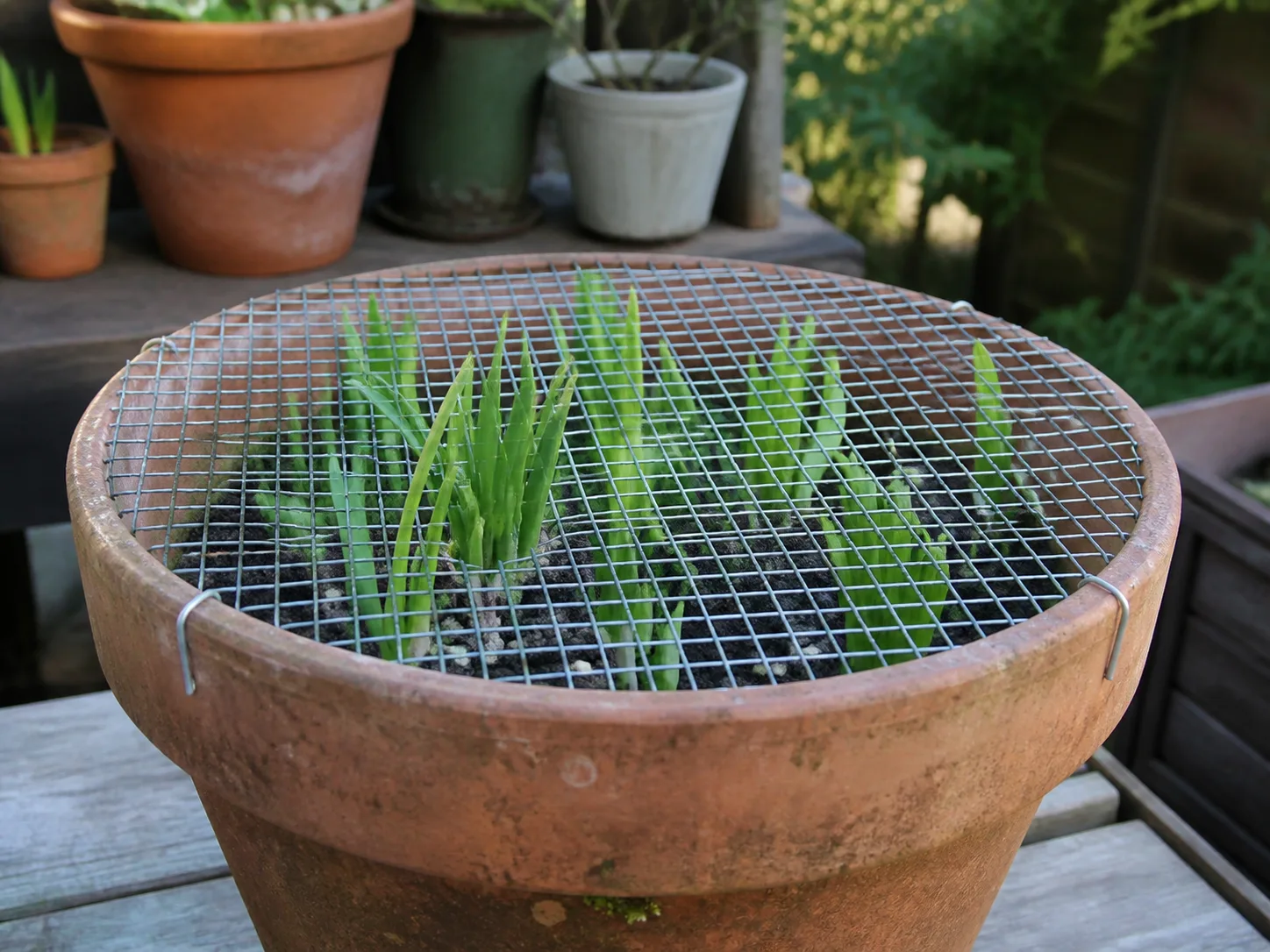
Hardware cloth cages — ½-inch mesh — stop both diggers and burrowers when bulbs are enclosed on all sides (American Meadows). Dig the planting hole one inch deeper than bulb depth. Line the bottom with mesh, add an inch of soil, set bulbs, backfill, wrap mesh up the sides, and cover the top with mesh before mulch. Keep bulbs off the wire — a half-inch gap prevents gnawing through openings.
Gravel in the planting hole — coarse crushed rock below and around bulbs — hurts paws and discourages tunneling while improving drainage (American Meadows).
Clean planting debris — papery tunics and damaged bulbs release scent that advertises food. Discard soft bulbs; they rot and attract pests.
Gravel barriers and when to mulch
Delay mulch until mid to late November in vole-prone yards so mice do not nest in fluffy mulch atop your fresh plantings (American Meadows). A thin leaf mulch after soil cools is fine; deep fluffy bark before freeze is a vole hotel.
Screens over beds until ground freezes stop squirrel digging from above; remove before spring emergence. Row covers work for containers on patios.
Combine tactics — resistant bulbs + cages for tulips + delayed mulch — rather than betting on one repellent spray. Commercial repellents reduce damage but rarely eliminate it when animals are hungry (American Meadows).
When “resistant” bulbs still get eaten
Resistance fails in predictable situations. Extreme hunger after long winters pushes deer into plants they normally skip (RHS). New plantings attract curious nibbling — protect with netting until established (RHS). Wet rot kills bulbs underground; you blame rodents for empty holes when the bulb dissolved — check for mush when digging.
Vole population booms in mild winters with thick mulch can overwhelm chemistry. Squirrel caches — they dig up and rebury bulbs without eating — still ruin your spacing. Crown imperial may be ignored underground but skunk odor can be unpleasant if bulbs were stored indoors too long.
If resistant bulbs fail repeatedly, shift diagnosis: soil drainage test (dig a hole, fill with water — if it stands hours, fix drainage before replanting), vole tunnel survey, and fence or cage escalation for the bed edge nearest woods and compost piles.
Conclusion
November is when cool soil finally lets roots grow without cooking the bulb — and when you still have weeks before freeze in most cold-climate yards. Plant crown imperial, alliums, snowdrops, grape hyacinth, Siberian squill, glory of the snow, and winter aconite as your low-loss core. They repel through bitterness, onion sulfur, and skunky scent more reliably than tulips ever will.
Match species to your wildlife problem: burrowers need cages and delayed mulch; diggers need mesh and gravel; deer need height and fence backup on vulnerable companions. Layer resistant bulbs around the tulips you cannot live without. Resistance is a gradient, not a guarantee — but a bed built on these seven loses far less than a tulip-only planting, and it blooms in sequence from late winter yellow through summer allium globes without you rebuying the same bag every fall.