Gomphrena Care Guide: Sun, Water, and Globe Amaranth
Gomphrena globosa
Grow globe amaranth in full sun and free-draining soil. Learn when to water, how to start Gomphrena from seed, and how to keep its papery blooms for dried arrangements.
How to Grow and Care for Gomphrena
Start with wateringThe most common care mistake for GomphrenaWatering guide →Gomphrena care essentials
Light
Full sun for compact growth and abundant flowers
Water
Keep young plants evenly moist while they establish, then let the surface soil begin to dry between waterings. Established globe amaranth tolerates short dry spells and heat, but water during a prolonged drought or when container soil dries quickly. Use a freely draining mix and do not leave the roots in saturated soil.
Soil
Plant in average to moderately fertile soil that drains freely. Globe amaranth tolerates several soil textures, including sand, loam, and clay, but it does not benefit from sitting in waterlogged ground. For containers, use a well-draining potting mix.
Humidity
Temperature
Fertilizer
About Gomphrena
Gomphrena is native to Tropical Americas; NC State describes the species as native to Central and South America, typically reaches Usually 0.5–2 ft tall and 0.5–1 ft wide; taller cultivars and hybrids vary indoors, with moderate growth. Gomphrena has a upright, bushy warm season annual; may persist as a short lived perennial in frost free climates growth habit and part of the Amaranthaceae family. It is also known as Globe amaranth, Common globe amaranth, Globe flower, and Bachelor's button (globe amaranth).
| Detail | Information |
|---|---|
| Also known as | Globe amaranth, Common globe amaranth, Globe flower, Bachelor's button (globe amaranth) |
| Native region | Tropical Americas; NC State describes the species as native to Central and South America |
| Mature size | Usually 0.5–2 ft tall and 0.5–1 ft wide; taller cultivars and hybrids vary |
| Growth rate | Moderate |
| Growth habit | Upright, Bushy Warm Season Annual; May Persist As A Short Lived Perennial In Frost Free Climates |
| Scientific name | Gomphrena globosa |
| Family | Amaranthaceae |
How to care for Gomphrena?
How much light does Gomphrena need?
Full sun for compact growth and abundant flowers. Light afternoon shade. direct sun
- Full sun for compact growth and abundant flowers - Full sun for compact growth and abundant flowers.
- Light afternoon shade - Light afternoon shade.
- direct sun - direct sun.
When should you water Gomphrena?
Keep young plants evenly moist while they establish, then let the surface soil begin to dry between waterings. Established globe amaranth tolerates short dry spells and heat, but water during a prolonged drought or when container soil dries quickly. Use a freely draining mix and do not leave the roots in saturated soil.
- Feel the top inch of soil. If it is dry - Keep young plants evenly moist while they establish, then let the surface soil begin to dry between waterings.
- water the root zone thoroughly and allow excess water to drain. If it is still damp - Use a freely draining mix and do not leave the roots in saturated soil.
- wait and check again rather than adding a small daily splash - Established globe amaranth tolerates short dry spells and heat, but water during a prolonged drought or when container soil dries quickly.
- Drain excess water - Keep young plants evenly moist while they establish, then let the surface soil begin to dry between waterings.
What soil works best for Gomphrena?
Plant in average to moderately fertile soil that drains freely. Globe amaranth tolerates several soil textures, including sand, loam, and clay, but it does not benefit from sitting in waterlogged ground. For containers, use a well-draining potting mix.
- For containers - For containers, use a well-draining potting mix.
- start with a general-purpose potting mix and add perlite if it holds water too long - Globe amaranth tolerates several soil textures, including sand, loam, and clay, but it does not benefit from sitting in waterlogged ground.
- Choose a pot with open drainage holes and empty standing water from the saucer. - Globe amaranth tolerates several soil textures, including sand, loam, and clay, but it does not benefit from sitting in waterlogged ground.
Grower notes for Gomphrena
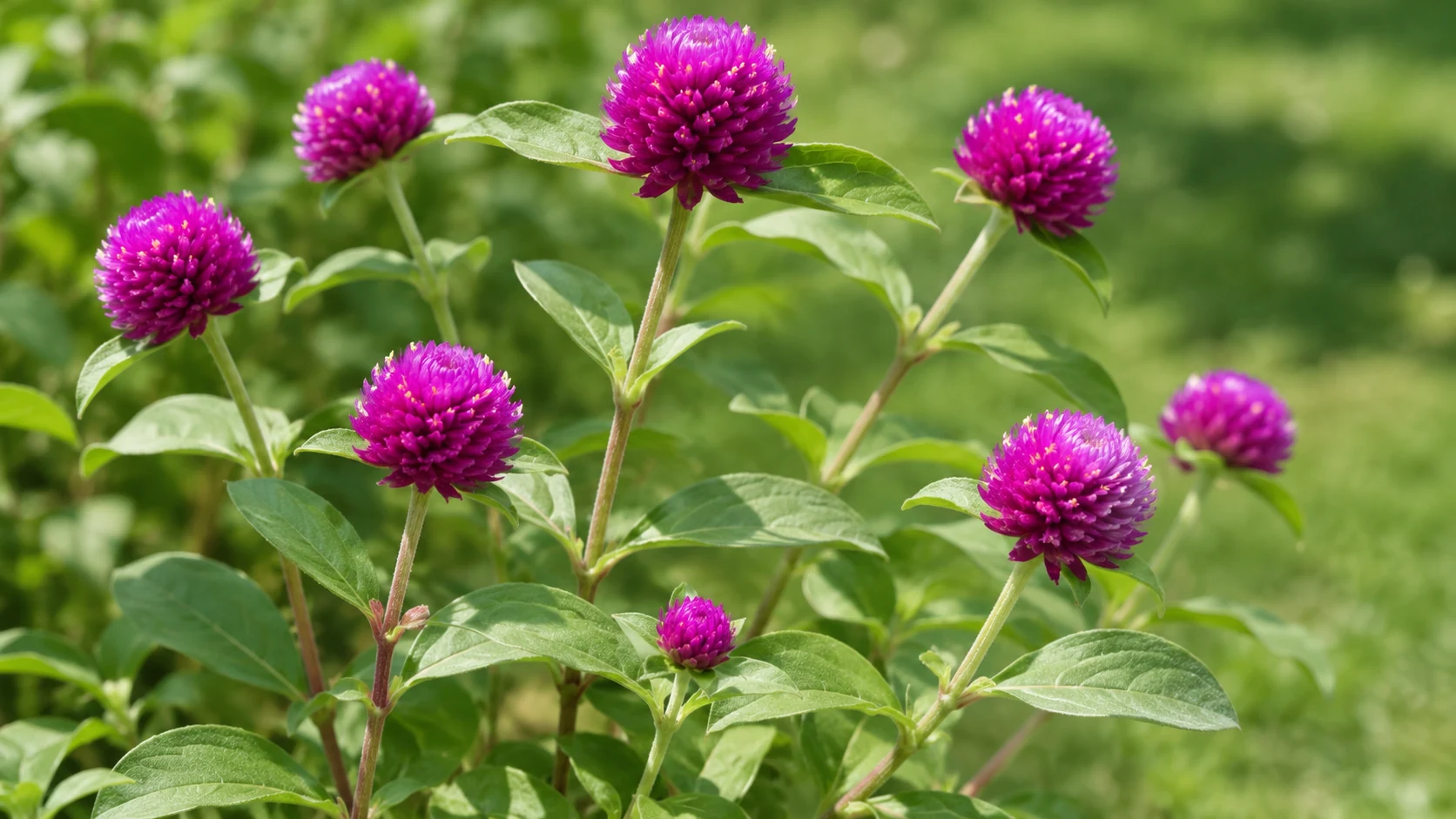
The colorful heads are mostly papery bracts
The small true flowers are tucked among showy, globe-shaped bracts. These papery heads keep their color well, which is why Gomphrena works in both fresh bouquets and dried arrangements. The plant blooms through the warm season and can continue until frost where summers are long.
Give it sun and warmth
Full sun supports a sturdier plant and a better flower display. Globe amaranth is a warm-weather grower, so do not rush seedlings into cold soil or set tender transplants outside before frost danger has passed. A little afternoon shade is reasonable in very hot conditions, but deep shade usually means fewer flowers.
Let the soil drain between drinks
Sources differ slightly on preferred moisture: NC State describes moist, well-drained soil and drought tolerance, while UF/IFAS recommends moderately dry soil and warns against overwatering. A practical middle ground is to establish plants with regular moisture, then let the surface dry between waterings and protect roots from standing water.
Allow room for cultivar differences
Common Gomphrena globosa often reaches about 1–2 feet, but compact series may stay under a foot. Some taller selections sold as Gomphrena, including Gomphrena haageana types and hybrids, can grow taller or sprawl more. Check the seed or plant label before choosing spacing, staking, or a container.
Sow generously if starting from seed
Globe amaranth is easy to grow from seed, although germination can be uneven. Wisconsin Horticulture recommends soaking seed overnight and starting it indoors 6–8 weeks before the last frost; direct sowing is also possible after soil has warmed. Thin seedlings to the spacing recommended for the selected cultivar.
Harvest for fresh or dried arrangements
Pinch young plants if you want branching, then cut stems as the heads color up. For dried flowers, harvest before the heads become over-mature, strip the lower leaves, and hang small bunches upside down in a dark, dry, well-ventilated place. Regular cutting can also encourage more stems.
Is Gomphrena safe for pets?
The sources checked did not provide a species-specific pet toxicity or safety classification for Gomphrena globosa. ASPCA notes that its plant list is not all-inclusive, so the absence of this plant is not proof of safety. Keep it out of reach of chewing pets and contact a veterinarian or animal poison control service if ingestion occurs.
Do not infer a pet-safety classification for Gomphrena globosa from another amaranth or a similar common name. The ASPCA plant list reviewed here does not include Gomphrena and is explicitly not all-inclusive. Its absence does not establish that the plant is toxic or non-toxic; keep pets from chewing it until an exact-species source is available.
Watering Gomphrena
For Gomphrena, feel the top inch of soil. If it is dry, water the root zone thoroughly and allow excess water to drain. If it is still damp, wait and check again rather than adding a small daily splash. and water check the soil instead of following a fixed calendar. Newly planted seedlings and pots in hot weather need closer checks; established plants in a garden bed can usually go longer between thorough waterings. Adjust after rain and during cool weather. Water regularly during germination and establishment. After roots are set, reduce supplemental watering in mild weather and increase checks during hot, dry periods. Globe amaranth is heat- and drought-tolerant once established, but prolonged dry soil can still slow growth.
| Detail | Information |
|---|---|
| How often | Check the soil instead of following a fixed calendar. Newly planted seedlings and pots in hot weather need closer checks; established plants in a garden bed can usually go longer between thorough waterings. Adjust after rain and during cool weather. |
| How to check | Feel the top inch of soil. If it is dry, water the root zone thoroughly and allow excess water to drain. If it is still damp, wait and check again rather than adding a small daily splash. |
| Seasonal changes | Water regularly during germination and establishment. After roots are set, reduce supplemental watering in mild weather and increase checks during hot, dry periods. Globe amaranth is heat- and drought-tolerant once established, but prolonged dry soil can still slow growth. |
Signs of overwatering
- Soil remains wet long after watering or rain.
- Leaves yellow or the plant wilts while the root zone is still saturated.
- Stems or roots soften in a poorly drained container or bed.
Signs of underwatering
- The soil is dry well below the surface and leaves stay limp.
- Growth and flower production slow during a long hot, dry spell.
Soil & potting for Gomphrena
Use a mix of For containers, start with a general-purpose potting mix and add perlite if it holds water too long., Choose a pot with open drainage holes and empty standing water from the saucer. for Gomphrena. Good drainage; the plant tolerates occasional dry soil better than prolonged saturation. Target soil pH around Tolerates a range of soil reactions; no precise pH adjustment is needed for ordinary garden growing. Repot globe amaranth is usually grown as a seasonal annual, so it does not need routine repotting. Move a seedling to a larger container only when roots have filled its starter pot, or plant it into the garden after frost danger has passed., ideally in start seeds indoors about 6–8 weeks before the last expected frost, then transplant after the weather and soil have warmed and frost danger has passed.
| Detail | Information |
|---|---|
| Recommended mix | For containers, start with a general-purpose potting mix and add perlite if it holds water too long., Choose a pot with open drainage holes and empty standing water from the saucer. |
| Drainage | Good drainage; the plant tolerates occasional dry soil better than prolonged saturation |
| Soil pH | Tolerates a range of soil reactions; no precise pH adjustment is needed for ordinary garden growing |
| Repotting frequency | Globe amaranth is usually grown as a seasonal annual, so it does not need routine repotting. Move a seedling to a larger container only when roots have filled its starter pot, or plant it into the garden after frost danger has passed. |
| Best season to repot | Start seeds indoors about 6–8 weeks before the last expected frost, then transplant after the weather and soil have warmed and frost danger has passed. |
Signs it needs repotting
- Roots fill the starter pot and the mix dries unusually fast.
- A young plant is ready to move outdoors after hardening off and after the last frost.