Sago Palm Leaves Turning Yellow? 4 Causes and How to Fix Them
Compare four common causes of yellow sago palm leaves, from manganese deficiency to cold shock, and correct the problem without guessing or overfertilizing.
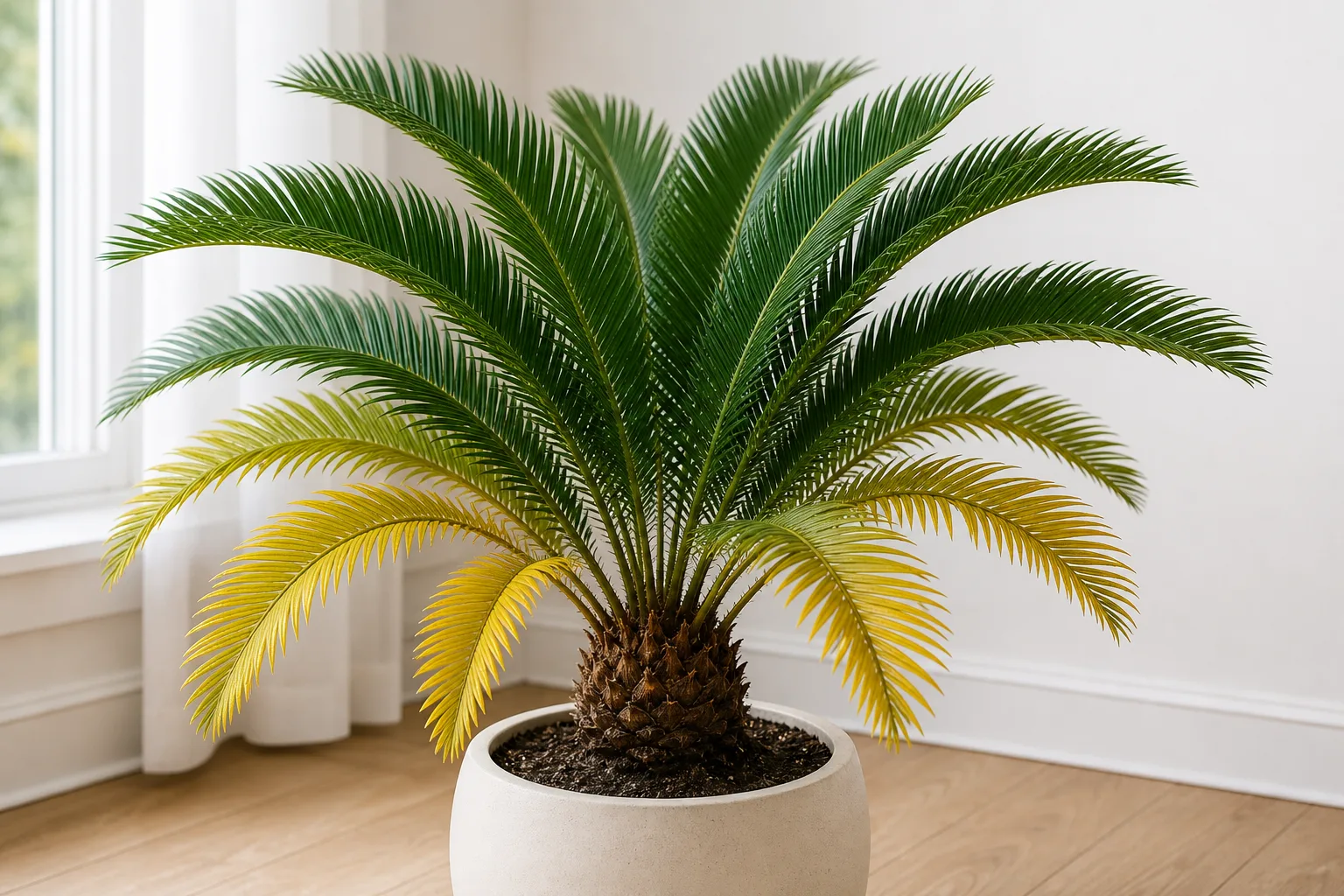
Yellow sago fronds do not all mean the same thing. A few old leaves at the bottom of the crown can be part of normal growth, while distorted new leaves, soggy soil, or a sudden change in sun or temperature can point to a problem worth correcting. Before you add fertilizer or water, check which fronds are changing, how the soil feels, and what has changed in the plant’s environment.
Sago palms (Cycas revoluta) are cycads, not true palms. They are slow-growing and can take time to show the results of a care change, so the goal is to protect the crown and roots and improve the next flush—not to force a damaged leaf to turn green again. Extension references list several causes of yellowing, and no single color or pattern is enough to diagnose all of them. NC State’s Plant Toolbox notes that sago palms need well-drained soil, are sensitive to overwatering and harsh sun, and can develop root rot or scale problems (NC State Extension).
First check which fronds are yellow
Look at the plant from the side and identify the location of the yellowing. Are the oldest, lowest fronds changing while the center remains firm and green? Or are newly emerging fronds at the crown yellow, small, twisted, or streaked? This single check often narrows the possibilities faster than a calendar-based watering rule.
| Pattern | What it may suggest | What to check next |
|---|---|---|
| One or two lowest fronds yellow gradually | Normal aging is possible | Are all upper and new fronds healthy? |
| New crown leaves emerge yellow, frizzled, or distorted | Manganese deficiency or root-related uptake problem | Soil test, soil pH, drainage, and root health |
| Several fronds yellow while mix stays wet | Overwatering or poor drainage | Drainage holes, standing water, soil moisture, soft tissue |
| Frond surfaces yellow or brown after a move outdoors | Sun scorch or abrupt exposure change | Which side faces the strongest sun? |
| Upper foliage yellows or browns after a cold night | Cold injury | Recent low temperature, frost, or cold draft |
| Yellow spots plus white bumps underneath leaflets | Scale insects may be present | Inspect leaflet undersides and the crown closely |
Yellowing that spreads quickly, affects the crown, or appears with a soft trunk base, sour-smelling soil, or heavy pest coating deserves closer attention. If a single older frond changes slowly and the rest of the plant is healthy, wait and observe before intervening. Gardeners Know How likewise distinguishes yellow lower fronds from nutrient-related patterns, but a leaf pattern is still a clue—not a substitute for checking soil and roots (Gardening Know How).
A quick triage before you change care
Write down the last few weeks of care: watering dates, rainfall for an outdoor plant, fertilizer, repotting, moving between indoors and outdoors, and any cold snap. Note whether the sago sits in a cachepot, saucer, heavy clay soil, or a low outdoor spot. Check the underside of several fronds for pests. Photograph the whole crown and a close-up of the affected leaflet before pruning or spraying; those records help you compare changes and explain the problem to an extension educator.
For a container, lift the nursery pot from its decorative cover and make sure water can drain freely. Feel the potting mix a couple of inches below the surface rather than watering because a certain number of days passed. For an in-ground sago, check the surrounding soil where roots grow, not just dry mulch at the surface. A dry-looking top layer can sit over saturated clay, and a wet surface can dry faster than the deeper root zone in bright, hot weather.
Avoid doing several things at once. If you fertilize, repot, move into full sun, and change watering on the same day, you will not know which factor helped or caused more stress. Start with the most obvious mismatch, make one measured change, and judge the plant by new growth rather than expecting older fronds to recover. If a nutrient problem is possible, get a soil test before adding a concentrated mineral product.
Cause 1: Manganese deficiency and frizzle top
Manganese deficiency is one of the most important causes to consider when the newest sago fronds are yellow, weak, undersized, streaked, or distorted. The emerging leaves may look frizzled rather than opening into the plant’s usual stiff, green leaflets; severe cases can damage much of the crown. This condition is commonly called frizzle top. The University of Georgia Extension describes manganese deficiency as a frequent and sometimes severe sago problem, noting that high soil pH, poor drainage, root rot, and too much or too little water can all interfere with manganese availability or uptake (UGA Extension).
The important detail is that the cause may be more complicated than “not enough fertilizer.” Soil can contain manganese that roots cannot use well when pH is too alkaline, and damaged or oxygen-starved roots may not take up nutrients normally. A deficiency pattern in new leaves can therefore be a clue to check the root zone and soil pH, not a reason to pour in a quick feed. If the sago is in a pot, look for compacted, waterlogged mix and blocked drainage. If it is in the ground, ask a local Cooperative Extension office which soil test covers pH and micronutrients.
If a test and local recommendation confirm a deficiency, use a product that supplies manganese and follow its label for the plant and growing situation. Do not invent a dose from an online schedule: product concentration, plant size, soil, and application method vary. Correct any drainage or root problem at the same time, or the sago may continue to struggle even when the nutrient is present. Already yellow or distorted fronds typically stay damaged; improvement is judged by later growth, which may not appear quickly because cycads grow slowly.
Tell manganese apart from magnesium
Manganese and magnesium are different elements. Manganese deficiency commonly affects new growth and may twist or distort it; magnesium deficiency more often creates a yellow banding pattern on older fronds while parts of the leaflet remain green. Potassium deficiency can also affect older leaves. These patterns overlap, and one damaged frond can be difficult to read, so use them to decide what to test rather than which supplement to buy.
Epsom salt is magnesium sulfate, not manganese sulfate. Adding it to a sago with suspected frizzle top will not correct a manganese shortage. It can also add an unnecessary nutrient when the real issue is pH, root rot, or water stress. Gardening Know How discusses the different older-frond nutrient patterns, while Epic Gardening also advises distinguishing manganese sulfate from magnesium sulfate and correcting soil conditions rather than treating yellow leaves as proof of a single deficiency (Gardening Know How; Epic Gardening).
Cause 2: Overwatering and poor drainage
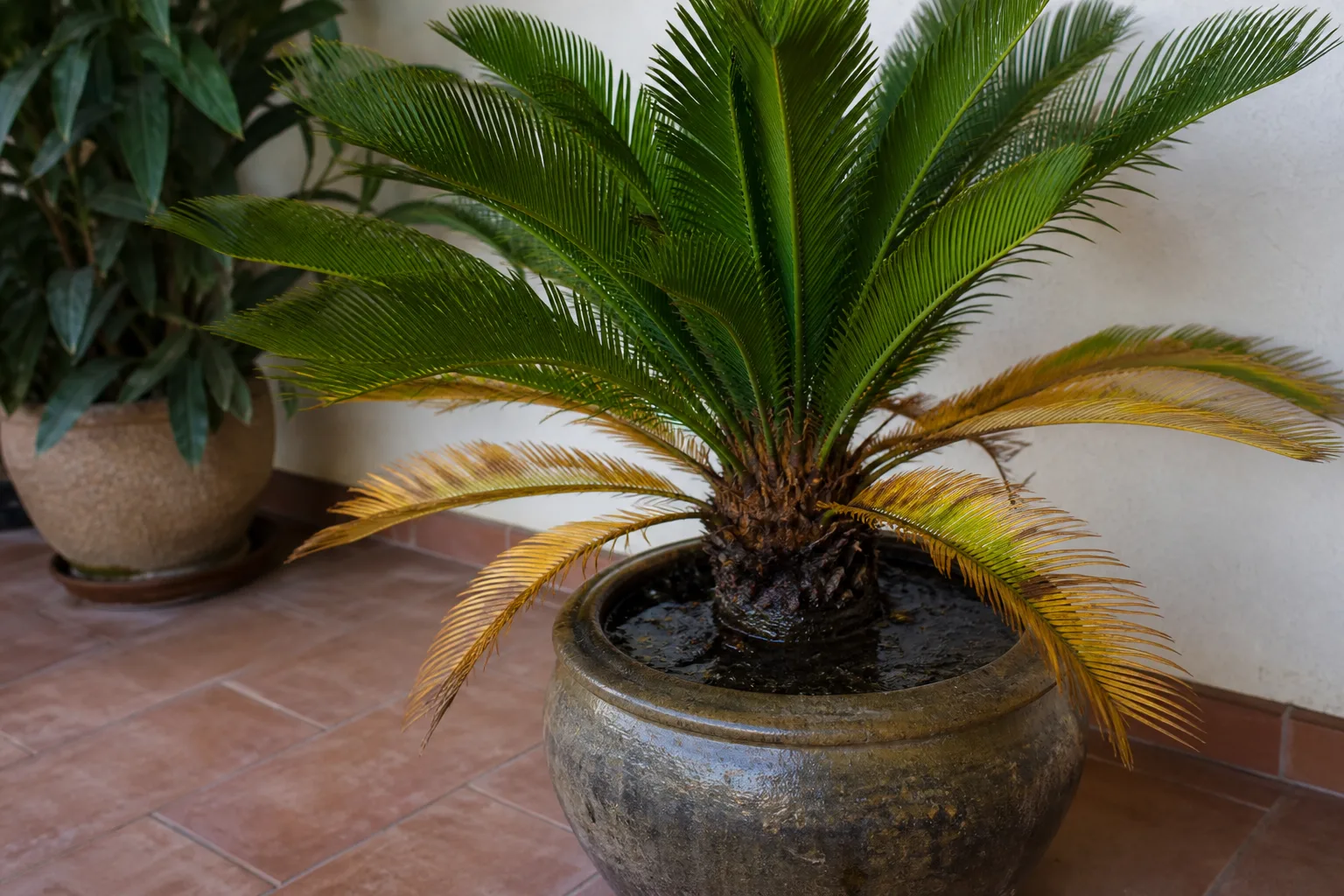
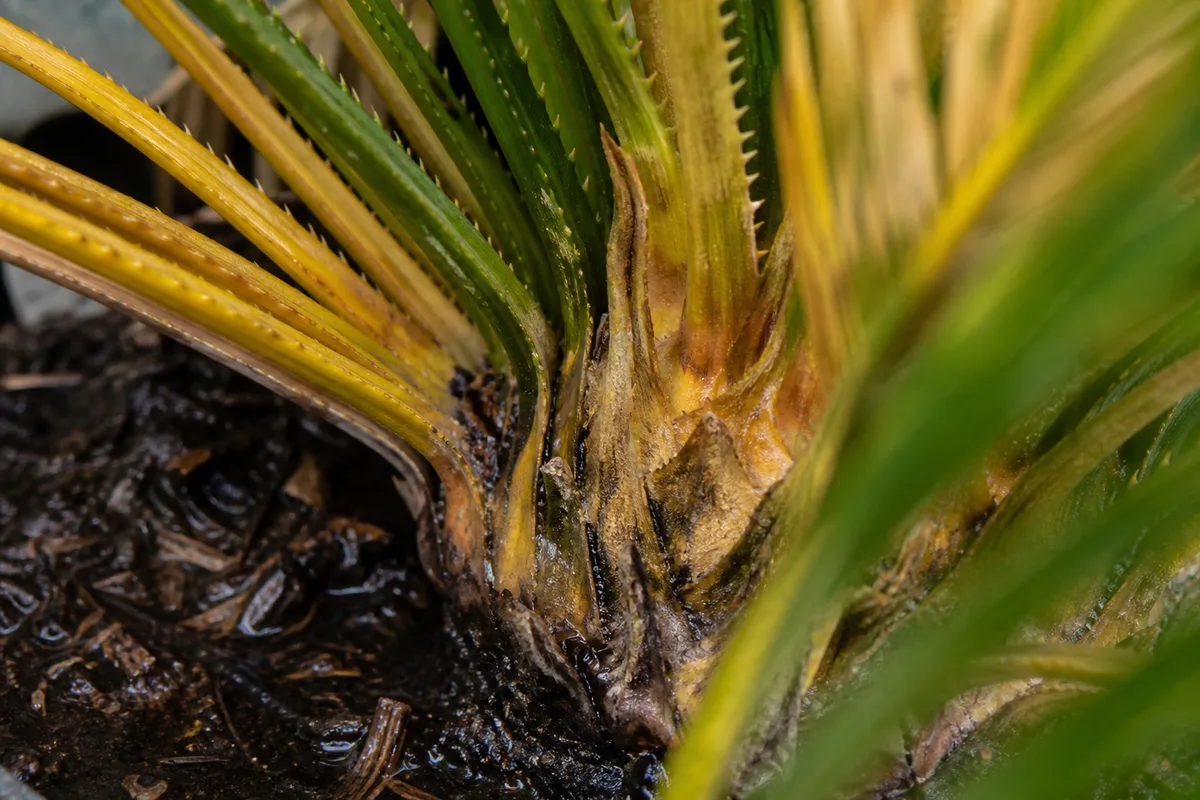
Sago palms can yellow when roots stay wet too long. In saturated soil, roots have less oxygen and can lose the ability to take up water and nutrients; root rot may follow. Look for several clues together: mix that remains wet for a long time, water trapped in an outer pot or saucer, yellowing or wilting despite wet soil, a sour smell, or soft and dark tissue near the base. These are warning signs, not a home diagnosis of a specific pathogen.
Check the soil and roots before repotting
First, stop watering on autopilot. Empty standing water and check whether the pot has open drainage holes. Let the mix dry to an appropriate level before watering again; do not leave the plant bone-dry for weeks as a correction for one wet spell. Sago palms are drought-tolerant once established, but a container plant still needs water when its root zone is dry. The right interval changes with pot size, mix, temperature, light, season, and whether the plant is indoors or outside. UF/IFAS and NC State both emphasize drainage and caution against persistent wet soil for Cycas revoluta (UF/IFAS Extension; NC State Extension).
Do not pull a healthy-looking sago out of the ground just because one frond is yellow. If a container plant remains wet, smells sour, or continues to wilt while the soil is damp, inspect the root ball carefully. Healthy roots are generally firm; mushy, dark roots suggest damage. Remove only clearly dead material with clean tools, and repot into a pot with drainage and a coarse, well-draining medium suited to cycads or palms. For severe decline, consult a local nursery professional or extension office before applying a fungicide. A fertilizer or fungicide cannot repair drainage by itself.
If the plant is in the ground, correct standing water or a chronic low spot if possible, but avoid piling soil against the trunk or adding random amendments around established roots. Clay soil, construction compaction, buried irrigation leaks, and heavy rain can all keep a planting site wet. If the roots are damaged, reduce further stress and wait for healthy growth rather than repeatedly digging up the plant.
Cause 3: Too much direct sun
Sago palms grow in a range of light outdoors, but leaves can scorch when exposure becomes too intense or changes too abruptly. Yellowing or tan patches on the sun-facing side, crispy leaflet edges, or a sudden pale flush after moving a plant from a bright room into direct afternoon sun point toward light stress. The same plant may tolerate stronger light after gradual acclimation, especially outdoors, so “too much sun” depends on climate, season, and whether the leaves were previously shaded.
NC State recommends bright filtered light for indoor plants and notes that harsh sun can damage foliage; UF/IFAS describes sago palms as adaptable to full sun or partial shade outdoors (NC State Extension; UF/IFAS Extension). Those recommendations can both be true: a sago established in an outdoor landscape is not the same as a houseplant suddenly placed in midsummer sun. A west-facing window or unshaded patio can also heat the crown and pot much more than a bright north or east exposure.
Move a scorched container gradually into bright shade or filtered light. If you want it to spend summer outside, give it a sheltered transition before increasing sun exposure over days to weeks. For an established outdoor plant, consider afternoon shade or nearby reflected heat if only one side is burning. Do not keep moving a stressed sago from window to window every few days; stabilize the setting and monitor new leaves.
Cause 4: Temperature shock or cold injury
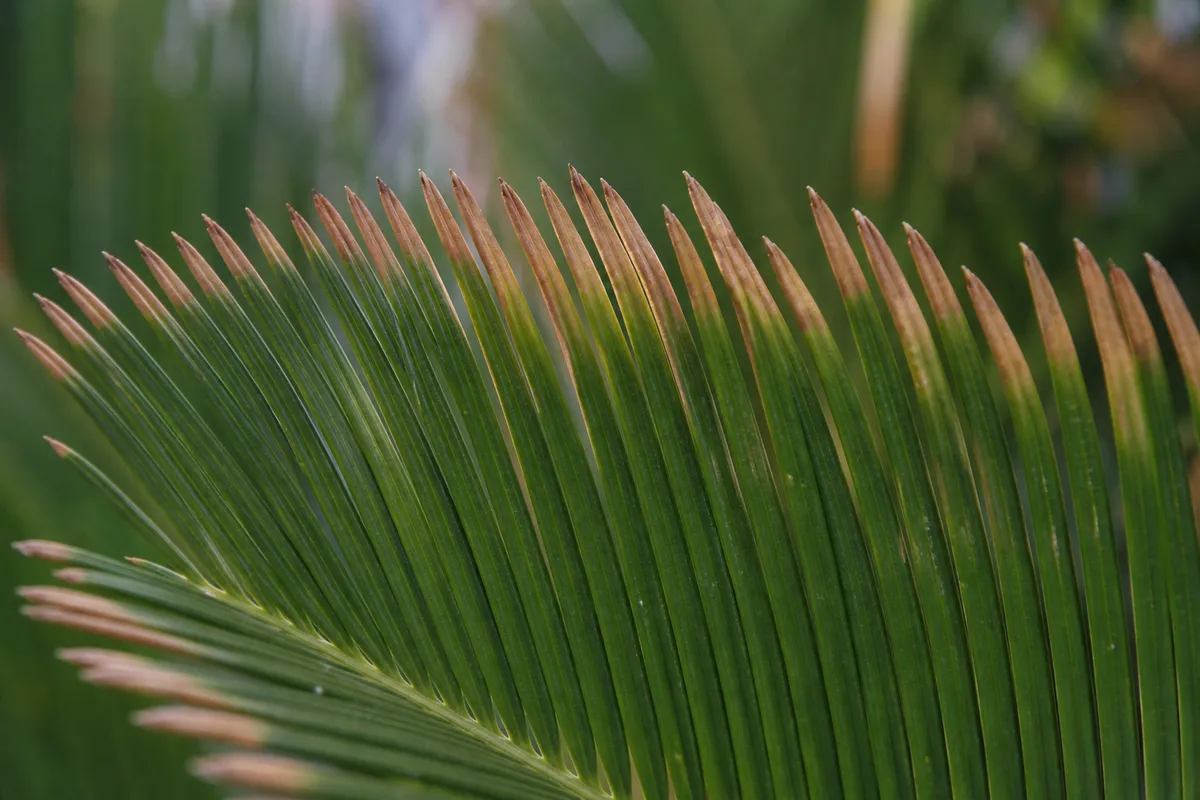
A sudden chill can turn sago fronds yellow or brown, especially after an outdoor plant is moved inside, a cold front hits a landscape plant, or an indoor plant sits beside a drafty door or air-conditioning vent. Cold injury often follows the timing and exposure: upper leaves may be damaged after frost, or the side nearest a cold window may fade first. UGA Extension notes that frost-damaged fronds often have broad, evenly browned areas and that injured leaves should not be removed while further frost is still possible (UGA Extension).
Move a container away from cold drafts and keep it in a steady, bright location. For outdoor cycads, protect the crown ahead of a forecast cold snap using a breathable frost cover appropriate to your local guidance; remove it once temperatures recover. Hardiness varies with plant condition, exposure, duration, and local climate, so don’t treat a single minimum temperature as a guarantee that foliage will be uninjured. NC State notes that frost can damage foliage and that sago palms are not suited to prolonged severe cold (NC State Extension).
After a freeze, wait until the danger of additional frost has passed before cutting off damaged leaves. Even browned outer fronds can shield the crown and lower growth from further cold. A sago may take a long time to replace lost foliage; watch the crown for firm new growth, and seek local advice if the center becomes soft or decay spreads.
When yellowing has another cause
The four causes above are useful starting points, but not every yellow sago frond is explained by manganese, water, sun, or temperature. Consider the pattern, time of year, and whether there is physical evidence of another issue before treating.
Normal aging of lower fronds
A sago palm does not keep every frond forever. As it grows, the oldest leaves at the outside or bottom of the crown gradually yellow and eventually brown. If only one or two lower fronds change while the crown and newest leaves remain green and firm, normal aging is more likely than a nutrient deficiency. Epic Gardening notes that cycads may produce new growth in distinct flushes and that older yellow leaves do not turn green again; leave them while they still have green tissue (Epic Gardening).
Do not cut partially green fronds just to make the plant look tidy. They are still photosynthesizing and may be moving resources back into the plant. If many fronds yellow at once, the changes move up the crown, or new growth appears distorted, check water and roots, light, temperature, pests, and soil instead of labeling it “normal aging.”
Scale and other root or nutrient problems
Look under leaflets and around the crown for small, hard white or tan bumps, cottony clusters, or a widespread white crust. Cycad aulacaspis scale can cause yellow blotches and progressively dry fronds; mealybugs and spider mites can also stress cycads. UGA Extension identifies cycad scale as a major sago pest and says infestations often begin on leaflet undersides. The UF/IFAS Featured Creatures profile describes the scale’s white armored appearance and damage to cycad foliage (UGA Extension; UF/IFAS Extension).
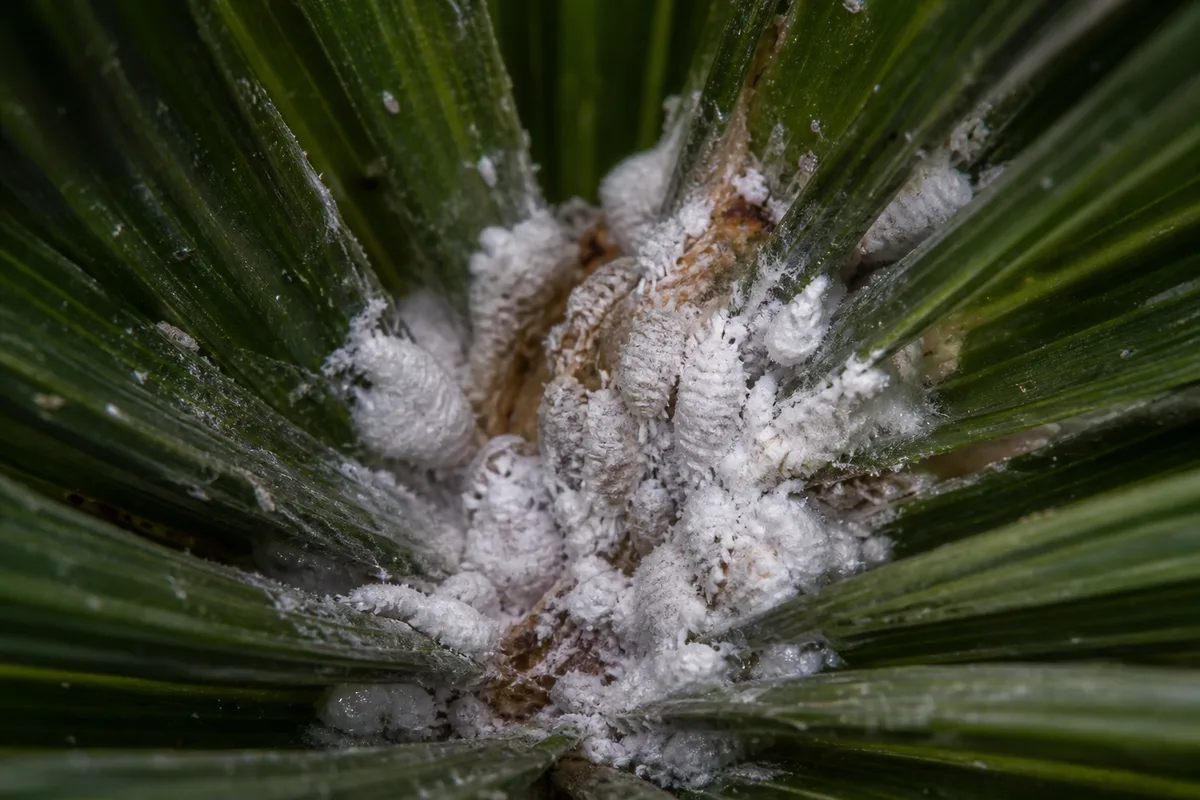
A scale coating can resemble dust, and dead scales may remain attached after treatment, so avoid repeated pesticide applications based only on white flecks. Isolate a potted plant from other susceptible plants while you inspect it, then ask your county extension office about identification and locally appropriate management. Any pesticide must be labeled for the specific plant and pest and used exactly as directed. If you see black sooty growth or sticky residue, inspect for sap-feeding insects; the residue alone does not identify which pest is present.
Other deficiencies can also discolor older fronds, and root rot can mimic nutrient trouble because compromised roots cannot take up nutrients normally. A soil test or diagnostic review is safer than adding iron, magnesium, potassium, or manganese by trial and error. Gardeners’ Path describes scale, root rot, and yellowing as distinct but sometimes overlapping sago problems; use those visible clues alongside the extension-based checks above rather than assuming every yellow frond has one cause (Gardeners’ Path).
Fix yellow leaves in a safe order
Use this sequence to avoid treating the wrong problem:
- Separate normal old-frond aging from new-growth trouble. Record whether leaves are yellowing from the bottom or emerging pale and distorted from the crown.
- Check moisture and drainage. Feel below the surface, empty standing water, and confirm that container drainage holes are open.
- Review recent exposure changes. Note direct afternoon sun, a move outdoors, a cold draft, or a freeze within the last few weeks.
- Inspect for pests. Turn over several leaflets and look around the crown for hard scales, cottony insects, fine webbing, or sticky residue.
- Test before feeding. Use a soil test and local extension guidance before applying manganese or another nutrient. Epsom salts are not a manganese treatment.
- Make one correction and monitor the next growth. Keep photos and dates so you can tell whether the problem is stabilizing.
The order matters because fixing drainage can resolve a root-uptake problem that looked like nutrient deficiency, while adding fertilizer to waterlogged soil may add stress. Do not prune healthy green fronds or apply a pesticide until you have identified a likely cause. If the plant is severely deteriorating, ask for help before a broad intervention.
Prevent yellowing with steady care
Use a pot with drainage holes and a growing medium that drains freely, whether the plant lives indoors or outside. Choose a container only modestly larger than the root ball; oversized pots can stay wet longer than the roots can use the moisture. For in-ground plants, select a site without persistent standing water. Sago palms are slow-growing and drought-tolerant once established, but that does not mean a container should be left dry through active growth. Water deeply when the root zone has dried appropriately, then let excess water drain away. Adjust for season and site rather than following a universal weekly schedule (NC State Extension; UF/IFAS Extension).
Give indoor plants bright filtered light and acclimate them gradually to stronger outdoor sun. Keep them away from blasts of air from heating or cooling equipment and from cold windows in winter. When moving a potted sago outside for warm weather, wait until temperatures are suitable for your region and transition it in a sheltered spot. If it will return indoors in fall, inspect the undersides of fronds for pests before bringing it in.
Fertilize lightly and according to a palm or cycad product label and local guidance, especially if a soil test shows a need. Do not use high-nitrogen lawn fertilizer, repeated Epsom salt soaks, or unmeasured manganese “just in case.” UF/IFAS and NC State list the sago palm as a cycad and recommend well-drained soil; UGA Extension highlights pH and drainage as part of diagnosing a manganese problem. Those conditions are more helpful to assess than guessing from a yellow color alone.
Keep mulch away from direct contact with the trunk, and remove only fully dead or hazardous fronds with clean, sharp tools. Handle the plant carefully: stiff leaflet tips can puncture or scratch skin, so wear gloves when pruning or moving it. If an outdoor sago is near a walkway or play area, consider whether its sharp leaves and toxic seeds make that placement appropriate.
Pruning, recovery, and realistic timelines
Yellow tissue does not usually regain its original color after nutrient or environmental damage. Correcting the cause protects the remaining leaves and gives future growth a better chance, but a mature sago may not produce another flush right away. Avoid promising a fast turnaround or repeatedly fertilizing because there is no visible change after a week. Record the date of the correction, monitor the center for new growth, and reassess when the plant’s next normal growth cycle begins.
When a frond is fully brown and dry, remove it close to the trunk without cutting into the crown. If leaves are partly green, keep them unless they are broken or create a safety hazard. After cold injury, wait until frost danger passes; after pest damage, first make sure the infestation is controlled; after suspected root rot, confirm the plant is stable before pruning extensively. Use gloves and keep children and pets away from debris.
Protect pets and children around sago palms
Sago palms contain toxins and should not be treated as pet-safe houseplants. The ASPCA lists sago palm as toxic to dogs, cats, and horses and identifies cycasin among its toxic principles; UF/IFAS and UGA Extension also warn about ingestion risks, with seeds especially dangerous (ASPCA Animal Poison Control; UF/IFAS Extension; UGA Extension). Keep the plant, fallen seeds, pups, and trimmings away from pets and small children. If an animal may have chewed any part of a sago, contact a veterinarian or animal poison-control service immediately; do not wait for symptoms.
When to ask an expert
Call your local Cooperative Extension office, a certified arborist for a landscape specimen, or a reputable plant clinic if the crown is soft, several new fronds emerge malformed, root symptoms are severe, or scale has spread across the plant. Ask which samples or photos they need before digging, cutting, or applying a product. A simple soil test may help distinguish a nutrient issue from poor pH or drainage, but a lab or local diagnostician can interpret results in the context of your soil and climate.
Seek veterinary help immediately after possible ingestion. Yellowing itself is not a reason to panic, but suspected sago ingestion is a separate safety issue that warrants a prompt professional response. The ASPCA directs pet owners to contact its poison-control service or a local veterinarian when ingestion is suspected.
Conclusion
Start with the location and age of the yellow fronds, then check drainage, light, recent cold, and pests. Manganese deficiency is a key possibility when new growth is distorted, but a soil test and root check keep you from applying the wrong supplement. Correct one cause at a time, leave partly green fronds in place, and judge recovery by new growth. Keep sago palms and their seeds away from pets and children because ingestion can be dangerous.