Should You Plant Bulbs in Spring or Fall? Timing Guide
Should you plant bulbs in spring or fall? Match planting time to bloom season, soil, frost, bulb type, climate, containers, and late-season fixes.
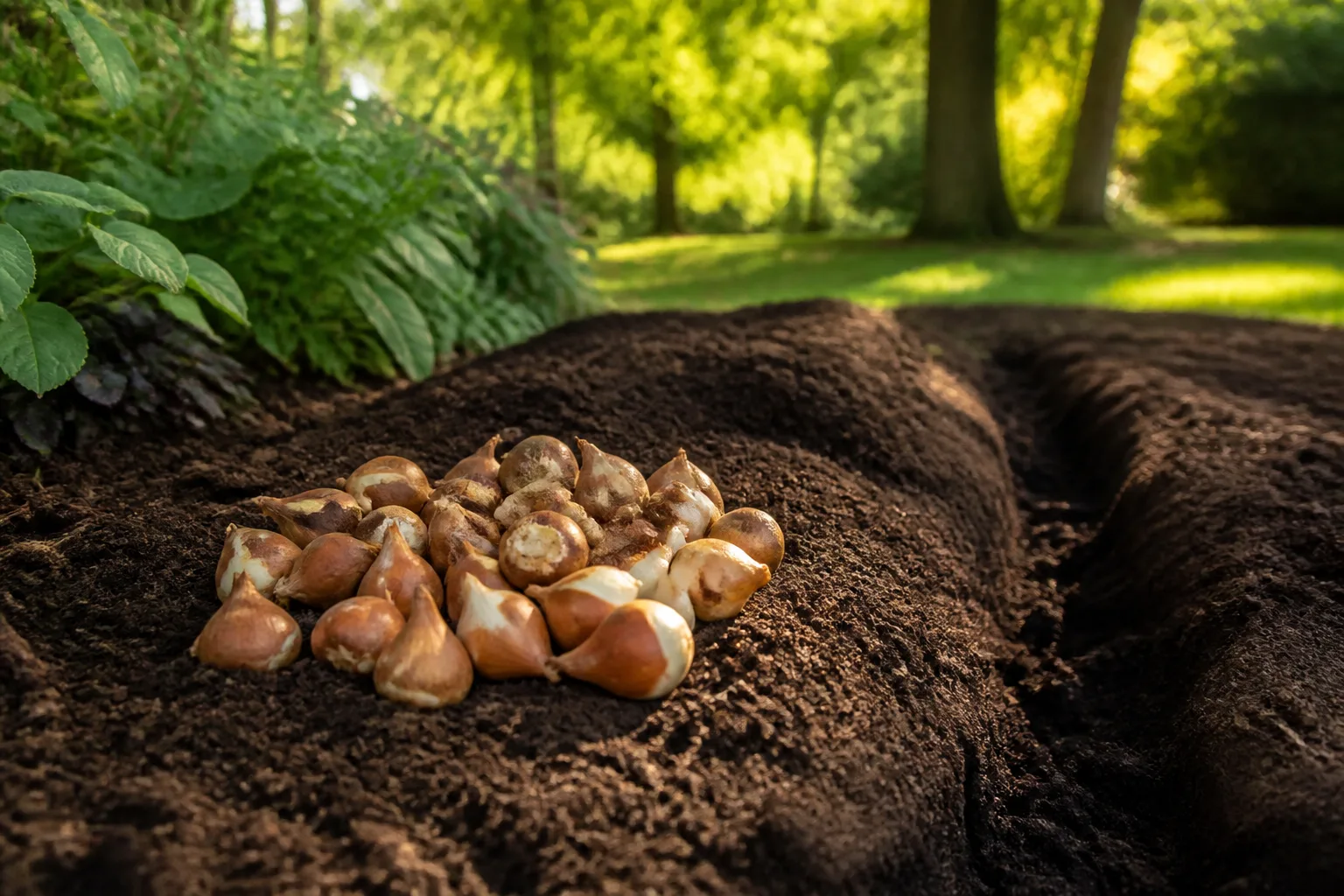
Plant bulbs according to when they need to grow and flower, not according to the season you happen to be standing in. In most four-season gardens, tulips, daffodils, crocuses, hyacinths, alliums, and snowdrops go into the ground in fall for spring flowers. Dahlias, cannas, gladiolus, begonias, and many other tender summer bloomers usually go in spring, after cold soil and frost are no longer a serious threat.
That rule is simple, but it is not the whole answer. A mild coastal garden, a wet clay bed, a warm foundation border, and a pot on an exposed balcony can all need different timing. Use the bulb’s type and bloom season as your starting point, then check soil condition, drainage, frost, and the instructions for the specific cultivar.
The short answer: plant for the season you want
If you want flowers in late winter or spring, plan to plant hardy spring-flowering bulbs in fall. They use the cool months to make roots, pass through dormancy, and prepare for their natural growth cycle. If you want flowers in summer or early autumn, plant tender bulbs, corms, or tubers in spring once the soil is warming and the danger of a killing frost has passed.
The Royal Horticultural Society summarizes the pattern well: spring-flowering and hardy summer-flowering bulbs are generally planted in autumn, while tender summer-flowering bulbs are planted in early spring. The Penn State Extension guide to planting bulbs likewise separates spring bloomers planted before the first frost from summer bulbs planted after the last frost and lifted for winter where they are not hardy.
There is one terminology trap. Garden centers may call tulips and daffodils “spring bulbs” because they flower in spring, or “fall bulbs” because that is when you plant them. Both labels can describe the same package. Read the planting directions and flowering season rather than trusting the marketing shorthand.
Why some bulbs want a cool season
“Bulb” is everyday language for several different underground storage organs. A true bulb, such as a tulip or daffodil, has fleshy storage scales; a crocus is a corm; a dahlia is a tuberous root; and a canna grows from a rhizome. All store energy, but they do not share identical temperature requirements or planting depths. The RHS guide to growing bulbs explains this broader plant anatomy and why the label “bulb” can hide important differences.
Fall planting gives hardy spring bulbs time to root while the soil is cool but still workable. Their leaves and flowers do not need to appear immediately. In fact, an autumn-planted bulb is doing valuable work underground before winter: roots anchor it, absorb moisture when available, and help it begin spring growth from a stable base.
Cold exposure is related, but it is not a universal number you can apply to every outdoor bulb. For indoor forcing, UW–Madison Extension’s guidance lists roughly 15 to 17 weeks of cold for many tulips, daffodils, crocuses, and grape hyacinths, and 12 to 15 weeks for hyacinths. Those figures describe controlled forcing, not a promise that every garden bulb needs exactly that many weeks in the ground. Cultivar, climate, and whether the plant is naturally hardy all matter.
Use this three-question timing test
Before you dig, answer these questions in order.
- When is the plant supposed to bloom? Spring flowers usually point to fall planting; summer flowers usually point to spring planting. If the package says “tender,” “lift in fall,” or “plant after frost,” treat it as a spring job.
- Can the bulb safely tolerate the conditions that follow planting? Hardy bulbs can sit outside through winter in suitable climates. Tender dahlias, cannas, gladiolus, and begonias may be damaged by freezing soil or prolonged cold and wetness.
- Is the bed ready? The soil should be workable and drain excess water. A calendar date cannot rescue a planting hole that turns into a puddle after every rain.
Your answer is plant now when the plant’s season, temperature, and soil all agree. It is wait and store briefly when the bulb is sound but the ground is still too warm for a fall-planted spring bulb. It is change the plan when the ground is frozen or persistently waterlogged: use a container in a protected spot, improve the site for next season, or buy a healthy potted plant when you need flowers immediately.
Fall planting: the spring-blooming group
Fall is the main planting season for hardy bulbs that flower from late winter through spring. In a typical temperate garden, the goal is to plant after summer heat has left the soil but while you still have enough time for roots to establish before the ground freezes solid.
The RHS planting guide gives a useful seasonal pattern: many daffodils, crocuses, and hyacinths are planted in early autumn, tulips later in autumn, and hardy summer-flowering bulbs such as lilies and alliums in autumn as well. Your local planting window may shift by several weeks, so use the package directions and the behavior of your own soil as the final authority.
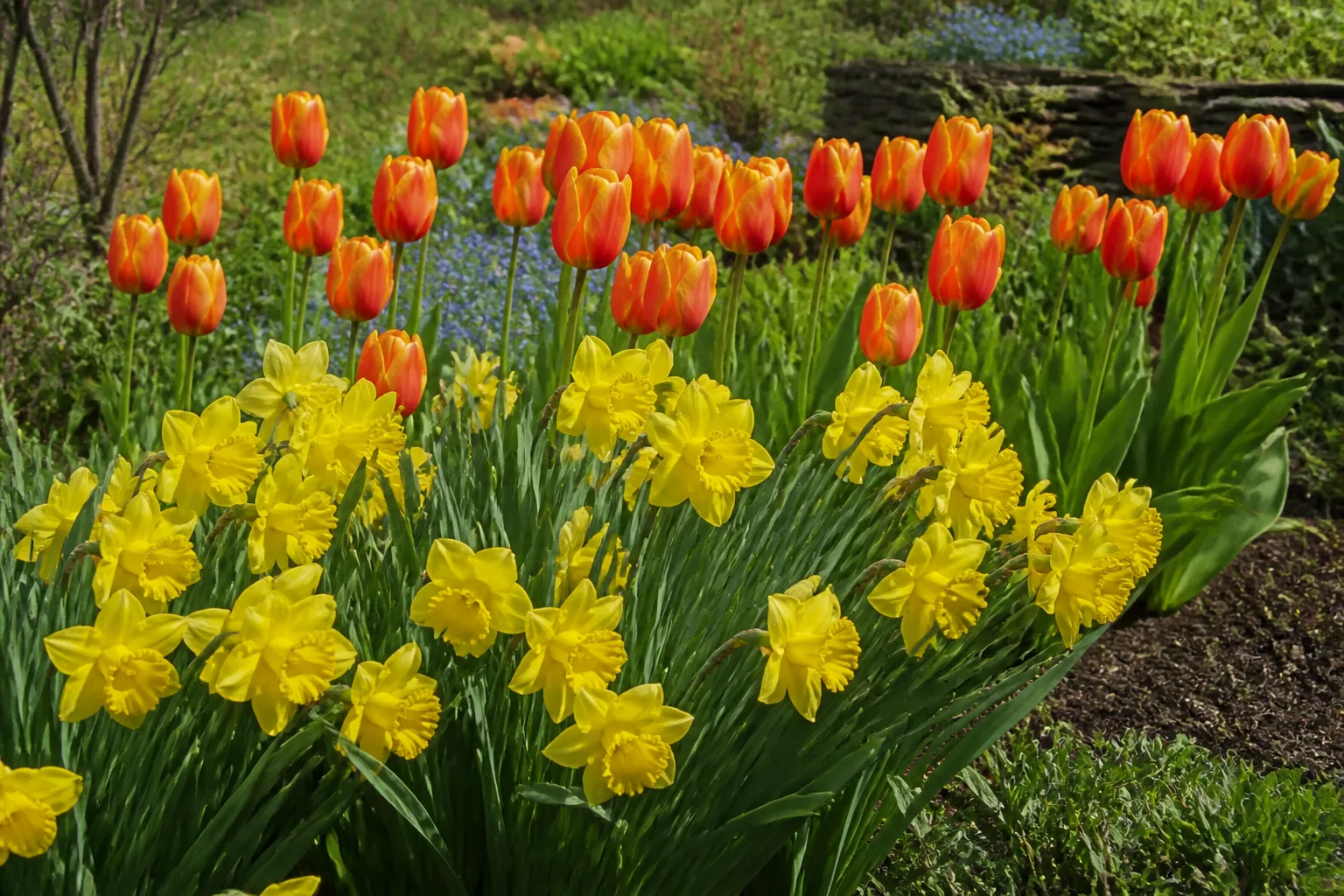
Fall-planted bulbs reward the earlier work with a layered spring display.
Best bulbs for fall planting
These are reliable starting points for a fall bulb plan:
- Daffodils: dependable spring bloomers that often return for years when drainage and sunlight are good.
- Tulips: excellent for bold color and containers; species and some perennial types are more reliable repeaters than many large show hybrids.
- Crocuses: small, early flowers for the front of a border, lawn, rock garden, or pot.
- Snowdrops: very early bloomers that favor moisture-retentive but well-drained soil and often appreciate partial shade.
- Hyacinths and grape hyacinths: fragrant or richly colored spring flowers that suit beds and containers.
- Alliums: tall ornamental onions that bridge spring into early summer and are generally hardy in appropriate climates.
- Bulb irises: compact flowers that can brighten a late-winter or early-spring bed.
Think in bloom sequence rather than one date. A drift of crocuses followed by daffodils, then tulips and alliums, gives a bed a longer season than a single variety planted everywhere. The BBC Gardeners’ World guide to spring bulbs also notes that many spring bulbs can naturalize in lawns or under deciduous trees, where early-season sunlight reaches the ground before the canopy fills in.
When fall becomes too early or too late
Planting too early is mainly a problem when the soil is still hot, the site is wet, or the bulb begins growing actively before winter. Do not rush a firm bag of tulips into a warm, soggy bed just because the calendar says September. A cool stretch and a well-drained planting site are more meaningful than a universal date.
Planting late is usually less dramatic than gardeners fear. If the soil is workable and the bulbs are firm, plant them as soon as you can. A late planting may produce shorter stems, a later display, or foliage without flowers in its first year, but leaving sound bulbs for months in a warm or damp storage spot can be worse.
Regional advice illustrates why dates are only examples. The Missouri Botanical Garden’s October checklist recommends planting daffodils and other spring bulbs by mid-to-late October and says tulips can be planted until the ground freezes. That is useful guidance for its St. Louis context, not a rule that overrides conditions in your garden.
Spring planting: summer and fall bloomers
Spring is usually the correct time for tender plants that flower in summer or early fall. Wait until the soil is warming, the bed is not saturated, and the risk of a hard frost has passed—or follow the cultivar’s local instructions if it is commonly started under cover.
Best bulbs and bulb-like plants for spring
- Dahlias: tuberous roots that want warm soil; start them indoors in a short season or plant outside once conditions are suitable.
- Gladiolus: corms that provide vertical color and can be planted in succession for a longer display.
- Cannas: rhizomes for a tropical effect, with large leaves and flowers; they need warmth and consistent moisture while growing.
- Begonias: tubers that are especially useful in containers and window boxes; they should not be treated like hardy daffodil bulbs.
- Calla lilies: rhizomes or tuberous structures that perform best when the soil is warm and drainage is dependable.
- Lilies and some summer-flowering bulbs: often planted in spring, although the hardiness of the type determines whether they can remain outside year-round.
- Ranunculus and anemones: the tricky middle ground; in mild climates they may be planted in fall, while colder or wetter regions often start them in spring or under protection.
Penn State Extension describes the broad division clearly: summer bulbs are set out in late spring after the last frost in its regional example, then dug and stored over winter where they are not winter-hardy. The practical translation is to learn whether the plant is a hardy perennial in your location or a tender storage organ that needs an annual lift.
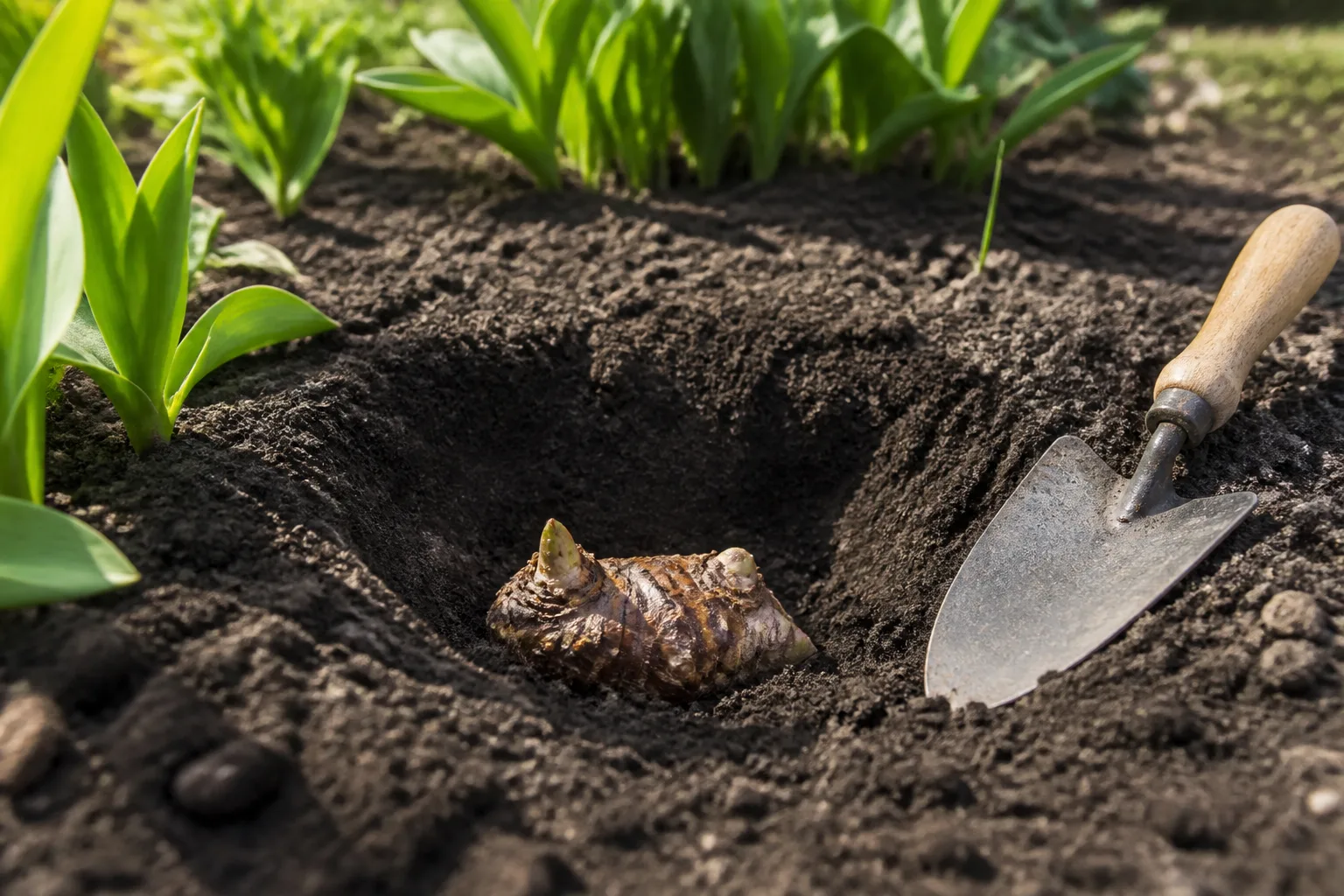
Tender rhizomes such as cannas belong in a warm-soil, spring-planting plan in climates with freezing winters.
What not to put in the ground too soon
The most common spring mistake is confusing “spring is here” with “the soil is ready.” Air temperatures can feel pleasant while the planting hole remains cold, saturated, and slow to drain. A dormant dahlia tuber or canna rhizome in that environment may sit without growing while rot gains the advantage.
Do not use a light frost warning as permission to plant every tender bulb. A dormant hardy tulip can tolerate conditions that would injure a newly planted dahlia. When in doubt, pot the tender material in a free-draining mix, keep it in a bright, frost-free place, and transplant after it has active growth and the outdoor bed is ready.
A climate-aware planting calendar
Use this as a framework, not a rigid schedule:
| Garden condition | Hardy spring bloomers | Tender summer bloomers |
|---|---|---|
| Cold winter, short autumn | Plant as soon as soil is cool and workable; do not wait for a perfect weekend. | Start under cover if needed, then plant after the local frost risk has passed and soil warms. |
| Moderate four-season climate | Early fall through late fall, adjusted by bulb type and ground-freeze timing. | Mid- to late spring, once cold soil and frost are no longer the main risk. |
| Mild winter | Use local advice and cultivar instructions; some bulbs may need pre-chilling or a lower-chill selection. | Spring can begin earlier, but avoid planting into winter-wet ground. |
| Hot summer or warm microclimate | Delay fall planting until the bed cools; foundation heat can keep soil warmer than the surrounding garden. | Protect new growth from sudden cold and provide water as growth accelerates. |
| Balcony or exposed container | Plant hardy bulbs in fall, but protect pots from repeated freeze-thaw cycles. | Plant tender bulbs in spring; move or cover containers when cold snaps threaten. |
Hardiness zone is helpful shorthand, but it cannot account for a south-facing wall, a raised bed, a frost pocket, or heavy clay. Track when your soil becomes workable in spring and when it stops feeling warm in fall. That local record will improve your timing more than copying a date from a different region.
Buy and store dormant bulbs without losing them
Choose bulbs that feel firm and substantial for their type. Avoid soft spots, mold, deep cuts, missing outer skin, or a strong sour smell. Bigger is not automatically better for every species, but a shriveled or damaged bulb has less stored energy and more opportunities for rot.
Buy close enough to planting time that storage is brief. If you need to hold fall bulbs for a few weeks, keep them in a cool, dry, well-ventilated place in a paper or mesh bag—not a sealed plastic bag. Garden Therapy’s practical buying guidance makes the same point and also recommends shopping early when you want unusual varieties, because selection narrows before the planting window closes.
For indoor forcing, storage rules become even more specific. UW–Madison Extension advises protecting chilling bulbs from light and keeping them away from ripening fruit, especially apples, because ethylene can interfere with flower development. That refrigerator detail belongs to forcing, not ordinary outdoor storage, but it is a useful reason not to treat a produce drawer as a universal bulb refrigerator.
Label every bag with the plant name, color, planting location, and purchase date. A mystery bulb is much harder to place correctly when it is time to divide, lift, or replace it.
How to plant bulbs in the ground
Start with the site, not the bulb. Choose a location with the light the plant needs during its active season and soil that drains excess water. Many spring bulbs enjoy sun or partial shade, and a deciduous tree can be a good partner because the bed is bright before the tree leafs out. Penn State Extension emphasizes that good drainage is crucial for root development and bulb-rot prevention.
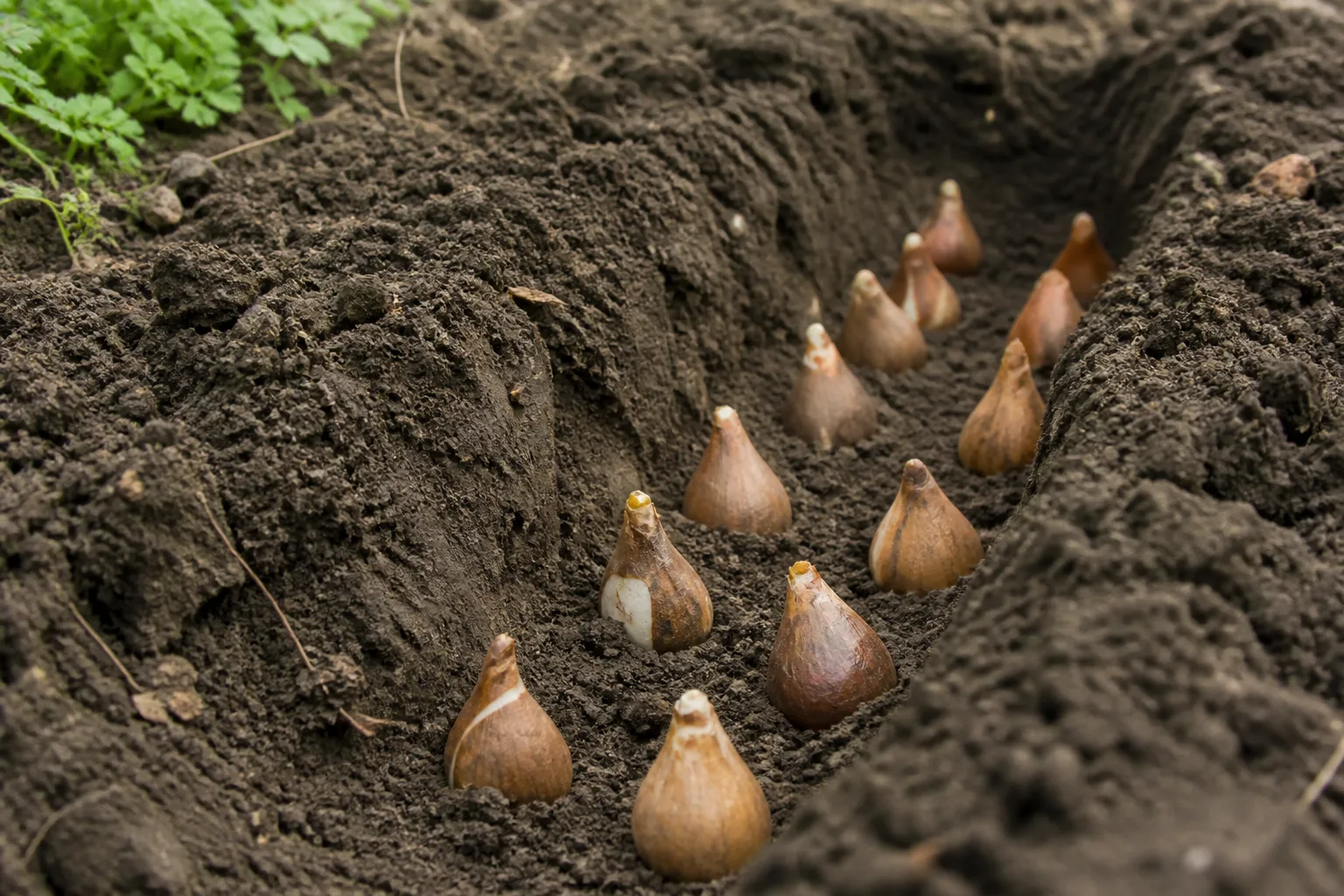
Planting depth is measured from the soil surface to the bulb’s base, not from the tip to the top of the hole.
Use this sequence:
- Clear weeds and loosen the bed without turning it into fine, compacted mud.
- Improve heavy or rapidly draining soil with finished organic matter as needed; do not create a rich pocket that holds water around the bulb.
- Dig to the package’s recommended depth and width.
- Set true bulbs and corms with the pointed shoot or nose upward and the root plate downward. If orientation is unclear, sideways is generally safer than upside down.
- Backfill with the same loose soil and firm it gently. Do not stomp hard over a shallow planting.
- Water once if the soil is dry. If fall soil is already moist, additional watering may not be needed immediately.
- Add a modest mulch layer after planting if it helps moderate temperature swings, suppress weeds, or protect an exposed bed. Keep mulch from forming a wet, airless blanket.
Plant in groups or drifts rather than scattering single bulbs evenly through a large bed. Put tall alliums, lilies, or gladiolus toward the rear and shorter crocuses or bulb irises near the front. Pair spring bulbs with perennials whose emerging leaves can hide fading bulb foliage later; Missouri Botanical Garden specifically notes daylilies, ferns, hostas, and ground covers as useful companions.
How to plant bulbs in containers
Containers solve several problems: they let you control drainage, move tender plants, create a display on a patio, and layer different spring bulbs in a small footprint. They also introduce a risk—the soil in a pot freezes faster than the ground, so a hardy bulb in an exposed container may need more protection than the same bulb in a border.
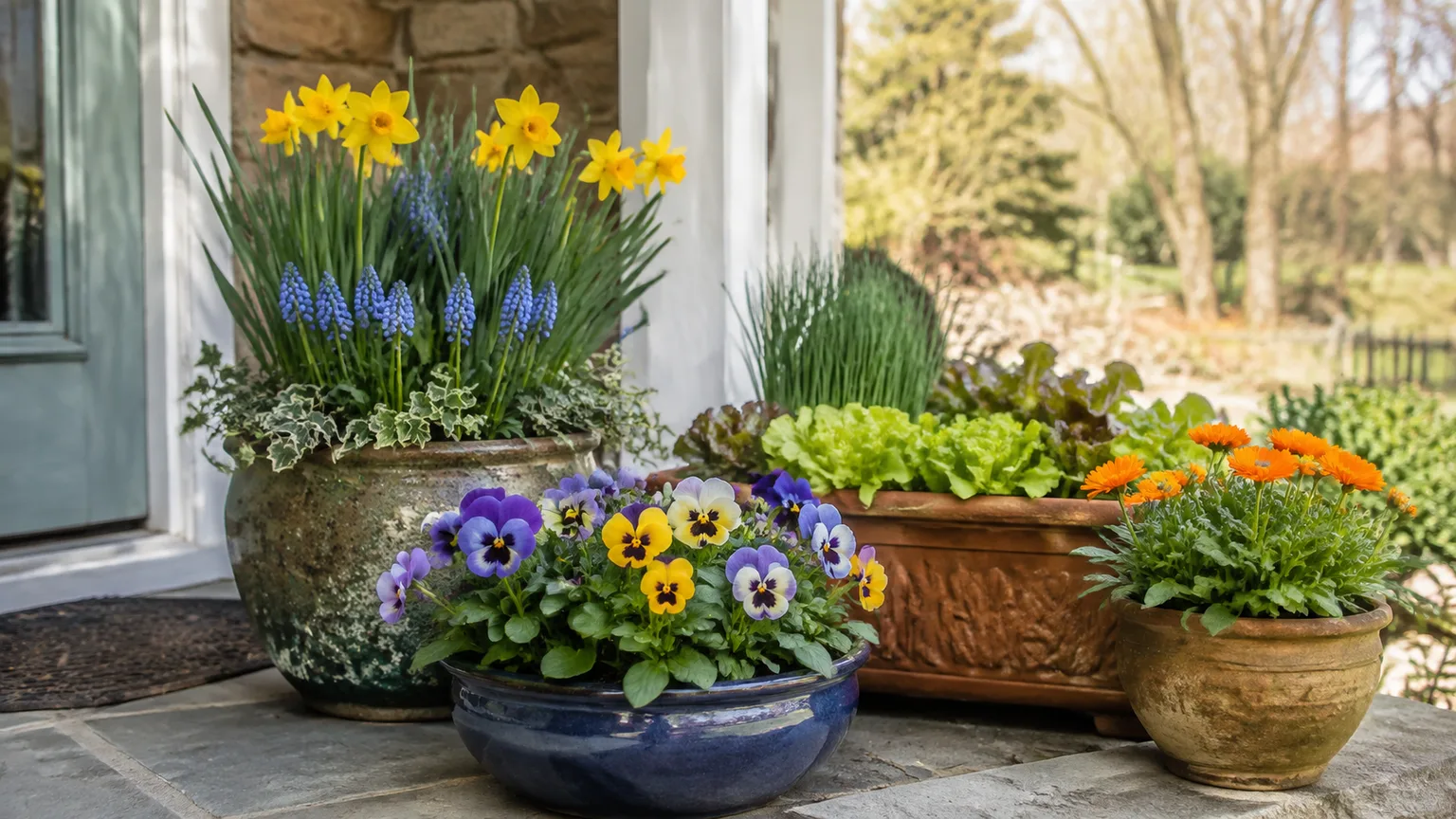
Containers make it easier to stage a layered display and move it into shelter when winter becomes severe.
Use a container with drainage holes and enough depth for the recommended planting depth. For a layered spring display, the RHS pot guide recommends a large pot—about 30 centimeters or 12 inches wide and deep—with a free-draining compost. A single shallow layer can use a smaller pot if the bulb’s depth and root space still fit.
Fill the bottom with mix, place the largest or latest bulbs deepest, cover them, and add the next layer above. Keep bulbs close for a fuller display, but not pressed against one another or the pot wall. Finish with enough mix to cover the upper layer at the correct depth, then water so the whole root zone is evenly moist and excess drains freely.
Set fall-planted pots outdoors where they receive the conditions the bulbs need, but protect them from extreme freeze-thaw cycles and rodents. A wire cover can prevent squirrels from excavating the pot; remove it when shoots begin to emerge. Once growth starts, check moisture more often because containers dry faster than beds.
Choose depth, spacing, and orientation
The most useful general rule is to plant many true bulbs and corms at about two to three times their own height, measured from the bulb’s base to the soil surface. The BBC Gardeners’ World planting-depth guide lists the rule alongside species exceptions, including deeper tulips and daffodils, shallower dahlias, and near-surface cannas.
Treat that rule as a starting point, not permission to ignore the label. Soil type, container culture, bulb size, and cultivar all change the recommendation. In heavy clay, a slightly shallower planting with better drainage may outperform a textbook depth that traps the bulb in a cold, wet pocket. In a pot, bulbs can be packed closer and sometimes planted less deeply for one season, but long-term performance may suffer.
Spacing should serve both plant health and the display. Crowding can look excellent in a one-season container, while bulbs intended to naturalize need room to multiply. If you are unsure, use the package spacing, then group the bulbs in a drift rather than shrinking every individual gap.
Water, mulch, and feeding after planting
The right watering pattern is “settle the planting, then monitor,” not “water on a calendar.” Fall-planted bulbs in moist outdoor soil may need no extra water after planting, while spring-planted bulbs in dry ground should be watered in. After that, check the soil and weather. Waterlogged soil removes air from the root zone; bone-dry soil prevents root establishment.
Mulch is useful when it moderates temperature, reduces erosion, and suppresses weeds, but thick wet mulch can keep the bed colder and soggier than intended. Keep it loose and avoid burying emerging shoots. In exposed containers, move the pot to shelter rather than assuming a layer of mulch will prevent every freeze injury.
Fertilizer is not a substitute for timing or drainage. Do not press granular fertilizer, bone meal, or fresh manure directly against a bulb. If a soil test shows a deficiency, amend the wider bed according to the test and the product label. For established perennial bulbs, feeding after flowering or during active growth may make sense in a specific system; a newly planted bulb still needs the basics first: sound planting material, correct depth, oxygen, moisture, and the right season.
What to do after flowers fade
The flower is the visible finish line, but the bulb’s recovery happens afterward. Remove spent flowers if you want to prevent seed production and redirect energy toward the storage organ. Then leave the green foliage in place until it yellows and pulls away easily.
Do not braid, tie, or cut healthy leaves just because they look untidy. The leaves are manufacturing and storing energy for next year’s growth. You can hide them by planting bulbs among later-emerging perennials, using a loose companion planting, or choosing a less prominent container location after the display finishes.
Hardy spring bulbs can often remain in the ground year-round. Divide or lift them when they are crowded, flowering poorly, or spreading beyond the design. Tender dahlias, cannas, and gladiolus may need to be lifted after frost kills the foliage, cleaned, dried under cover, and stored in a cool, frost-free place before the next spring planting window.
If you missed your planting window
First, inspect the bulbs. If they are firm and the ground is still workable, plant them now. Late planting is usually a better gamble than extended storage in a warm garage, especially for spring bulbs that are already losing moisture.
If the ground is frozen, waterlogged, or covered by an established bed you cannot dig without damage, use a container if the bulb can tolerate the remaining season. Otherwise, store the bulbs briefly in a cool, dry, ventilated place and understand that quality declines with time. Do not seal them in plastic or leave them beside ripening fruit.
A spring-planted tulip or daffodil may grow leaves without producing a normal flower because it missed part of its root-building and winter cycle. That is not proof the bulb is dead. Let the foliage grow, keep the plant watered during active growth, and allow it to die back naturally; the better display may come the following season. If you need flowers this spring, buy a healthy potted, already-growing plant rather than expecting a dormant bulb to compress an entire season into a few weeks.
Common failure modes and fixes
The bulb rots before it sprouts. The usual suspects are poor drainage, a soft bulb at purchase, overwatering, or a tender bulb planted into cold wet soil. Move future plantings to a raised or better-drained site, discard compromised bulbs, and water only when the root zone needs it.
Leaves appear but no flowers do. Possible causes include late planting, insufficient cold for a spring bulb, planting too shallowly, weak or undersized planting stock, too little light during active growth, or foliage removed too early the previous year. Correct the part you can control and give the bulb a full recovery season.
The shoots emerge too early in fall. A warm spell can trigger growth, especially in a warm microclimate. Keep the bed evenly but not excessively moist, avoid adding more heat with dark plastic, and let the shoots face the weather. A brief cool-season emergence does not automatically mean the bulb is lost; severe cold after substantial growth is the greater concern.
Squirrels dig up the bed. Cover new plantings with secured chicken wire or hardware cloth until the soil settles and shoots emerge. The barrier is often more reliable than a scented amendment, which can attract animals rather than discourage them.
A pot freezes while the garden bed does not. Container soil has less thermal mass. Move the pot against a sheltered wall, cluster it with other pots, or protect it during severe cold while preserving drainage. Do not bring hardy bulbs into a warm living room for the winter; warmth can break dormancy at the wrong time.
The foliage looks messy after bloom. That is a design problem, not a reason to cut leaves early. Use companion plants, weave bulbs through a border, or shift a container out of the main sightline until the foliage finishes its job.
Conclusion: match the bulb to its season
The spring-versus-fall decision becomes much easier when you stop treating “bulbs” as one crop. Fall is usually for hardy bulbs that will flower in late winter or spring; spring is usually for tender bulbs, corms, and rhizomes that will flower in summer or early fall. From there, let the plant label, soil, drainage, frost pattern, and local climate refine the date.
Plant sound material at the right depth, keep the root zone from staying soggy, protect exposed containers, and leave foliage until it naturally fades. If your timing is imperfect, plant healthy bulbs as soon as conditions allow and accept a possible first-year delay. A thoughtful planting window beats a perfect calendar date, and a well-matched bulb can reward that judgment for many seasons.



