How to Grow and Care for Shrimp Plants Like a Pro
Learn how to grow and care for shrimp plants with practical light, watering, soil, pruning, propagation, bloom, pest, and winter guidance.
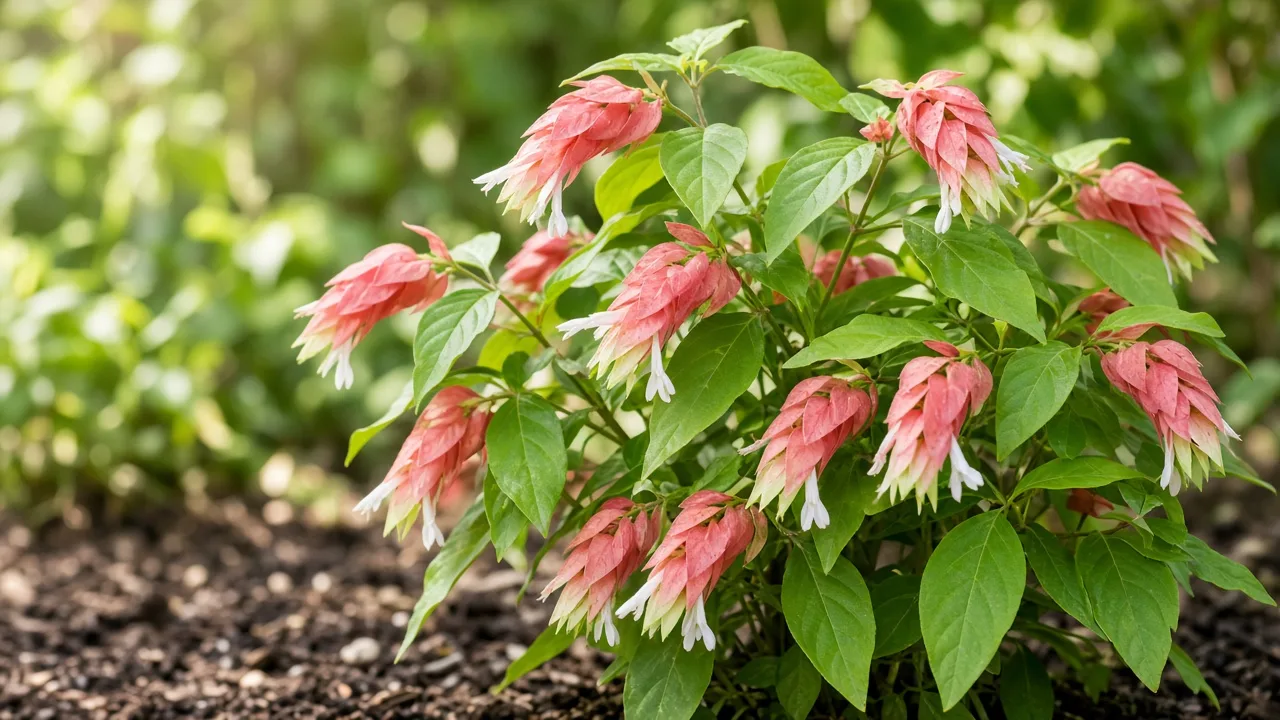
Shrimp plant (Justicia brandegeana) is one of those shrubs that looks fancier than it behaves. The arching spikes of pink, red, bronze, or yellow bracts really do resemble cooked shrimp, and the tiny white tubular flowers tucked inside draw hummingbirds and butterflies. Native to Mexico and naturalized in parts of Florida, this evergreen Acanthaceae shrub is a warm-climate favorite that also makes a long-blooming houseplant when frost is a concern.
The useful mental model is not “tropical plant equals constant soaking.” It is warmth plus oxygen at the roots plus enough light to keep bracts saturated in color. Get those three aligned and shrimp plants bloom for months with modest effort. Miss one and you get leggy stems, washed-out bracts, or a plant that survives winter but never puts on a show.
Shrimp Plant at a Glance
Shrimp plant is a lax evergreen shrub typically reaching 3 to 4 feet tall and wide in garden conditions, though compact cultivars stay closer to 2 feet and plants in ideal tropical heat can push taller. The Royal Horticultural Society describes it as a bushy shrub to about 1 meter with ovate leaves and arching spikes of overlapping pink bracts enclosing small white tubular flowers borne over a long period. Older references may list the species as Beloperone guttata or Justicia guttata; Justicia brandegeana is the accepted name today.
What you are admiring on a shrimp plant is mostly bracts, not petals. The actual flowers are short-lived, white, and often spotted with maroon inside the throat. The bracts persist for weeks and create the shrimp-like display. That distinction matters for pruning and bloom troubleshooting: removing spent bract spikes encourages fresh color, while chasing individual tiny flowers is unnecessary.
Shrimp plants are reliably hardy in USDA zones 9 through 11, where frost is rare or brief. The University of North Florida Botanical Garden notes the species stays evergreen into the mid-20s Fahrenheit in northeast Florida, though prolonged cold will damage top growth. In cooler zones, treat shrimp plant as a container or houseplant you protect from freezing weather.
Is a Shrimp Plant Right for Your Garden or Home?
Choose shrimp plant when you want continuous warm-season color in a partially shaded bed, a hummingbird-friendly border, or a bright indoor room. It is not a formal hedge plant: stems are naturally soft and sprawling, and the shrub spreads modestly by suckering in favorable climates. If you need a rigid outline, you will be pruning regularly or choosing a compact cultivar.
Shrimp plant also fits gardeners who like propagation projects. Softwood cuttings root reliably in spring and summer, and mature clumps divide easily. That makes it a generous pass-along plant once you learn the basic rhythm.
In-Ground vs Container Culture
In-ground planting works best in zones 9–11 on well-drained soil with morning sun and shelter from harsh afternoon rays. Space plants 3 to 4 feet apart so air can move through the arching stems. In zone 8, some gardeners report dieback to the ground after hard freezes with resprouting in spring, but that is microclimate-dependent and not something to count on in colder pockets.
Container culture is the smarter default when frost is normal, when your soil stays heavy and wet, or when you want to move the plant between a patio and a bright indoor room. A 12- to 14-inch pot supports a mature specimen for several seasons before division or repotting. Container plants dry faster than in-ground ones, which actually helps you avoid the root rot that heavy soil invites.
Choose a Site With Morning Sun and Afternoon Protection
The best outdoor site is bright but not baking: east-facing beds, lightly dappled shade under high tree canopies, or a north-facing wall that catches morning light. Shrimp plants tolerate full sun in cool coastal climates, but in hot inland gardens intense afternoon sun bleaches bracts from deep red to pale bronze and can scorch leaf edges.
Indoors, place shrimp plant near an east or south window with bright indirect light. A sheer curtain on a south exposure prevents midday leaf burn while still delivering enough photons for bloom. If the plant leans toward the glass or produces long gaps between leaves, it needs more light, not more fertilizer.
Light for Bract Color Without Bleaching
Aim for at least four to six hours of direct or very bright filtered sun daily for the strongest bract color. Partial shade keeps hues richer than all-day exposure in hot climates, which matches both RHS guidance and field observations from warm-region botanical collections. Watch the bracts, not the calendar: if new spikes emerge greenish or washed out while stems stay short and stiff, light is probably adequate and another factor is limiting color.
Sudden moves matter. A shrimp plant acclimated to a shaded nursery bench will scorch if you place it in west-facing afternoon sun without a week of gradual exposure. Shift outdoor containers by 30 to 60 minutes of extra sun per day until they tolerate the target site.
Build Soil That Stays Moist but Never Soggy
Shrimp plants want fertile, loamy, well-drained soil with a slightly acid to neutral pH around 6.0 to 7.0. The Florida Plant Atlas classifies the species as a shrub in the Acanthaceae family native to Mexico and naturalized in Florida, where it grows in varied soils once drainage is adequate. Heavy clay or constantly saturated beds are the fastest route to root rot.
For containers, use a high-quality peat- or coir-based mix amended with 25 to 40 percent perlite for porosity. Avoid garden soil in pots; it compacts and suffocates roots. Work 1 to 2 inches of compost into planting beds each spring to maintain organic matter without creating a water-holding blanket over the root zone.
If your native soil drains slowly, plant on a slight mound or in a raised bed. A shrimp plant sitting in a saucer of water will look fine for two weeks and fail quietly over the next month.
Water by Root-Zone Signals, Not a Calendar
During active growth from spring through fall, keep the root zone evenly moist. Outdoors, water when the top inch of soil feels dry to your knuckle, then soak until water moves through the drainage holes on a container. In-ground plants in mulched beds may need less frequent attention, but do not let them wilt repeatedly; drought stress reduces bract production even though established plants tolerate brief dry spells.
The University of North Florida Botanical Garden lists shrimp plant as drought tolerant once established, which is true for survival but not for display. A thirsty shrimp plant drops leaves and pauses blooming long before it dies. If you want shrimp-shaped spikes all season, treat “drought tolerant” as emergency tolerance, not a care goal.
In winter, whether the plant stays outdoors in zone 10 or moves indoors in zone 7, reduce watering frequency while keeping the root ball from going bone dry. Cooler temperatures and shorter days slow transpiration. A pot that needed water every three days in August may need it every seven to ten days in January.
Temperature, Humidity, and Frost Protection
Shrimp plants are true tropical shrubs. They grow best with daytime temperatures between 65 and 85°F and suffer when nights stay below about 50°F for extended periods. Frost kills soft stem tissue quickly; even light freezes can blacken leaves and bracts.
Outdoors in marginal zones, cover plants with frost cloth when a brief dip below 32°F is forecast, but do not treat fabric as a long-term substitute for moving containers inside. Indoors, normal room temperatures work well. If your winter air is dry, group shrimp plant with other humidity-loving houseplants, run a humidifier nearby, or place the pot on a pebble tray where the pot base sits above the waterline.
Feed for Continuous Bloom, Not Just Leaf Growth
Feed shrimp plants during active growth with a balanced liquid fertilizer diluted to half label strength every two to four weeks. Harvest to Table’s Justicia guidance recommends a balanced feed on that interval for container and garden specimens alike. Organic options such as compost tea or diluted fish emulsion work if you prefer slow-release nutrition.
If your plant is leafy but bract-poor, examine light and pruning before reaching for bloom booster. When light is adequate and the plant is not rootbound, a phosphorus-forward fertilizer for one or two applications can nudge flowering. Avoid heavy nitrogen late in the season; it encourages soft leggy growth that cold snaps damage easily.
Stop feeding or cut frequency by half when growth slows in late fall. Resume when new shoots appear in spring.
Shrimp Plant Varieties Worth Knowing
Most nursery shrimp plants are the standard red-bracted form of Justicia brandegeana, with overlapping pink to bronze bracts and white flowers. ‘Yellow Queen’ is a popular cultivar with buttery yellow bracts; the RHS lists it separately as a distinct selection within the species.
Variegated shrimp plant (J. brandegeana ‘Variegata’) adds cream or yellow leaf margins that brighten shaded beds, though variegated leaves often need protection from hot afternoon sun to avoid scorch. Compact forms stay near 2 feet and suit mixed containers where the standard species would overpower neighbors.
Do not confuse shrimp plant with golden shrimp plant (Pachystachys lutea), which belongs to a different genus but shares the bract-driven common name. Both are tropical and hummingbird friendly, but Pachystachys tends toward taller yellow spikes and slightly different water preferences.
Planting and Spacing in Beds or Pots
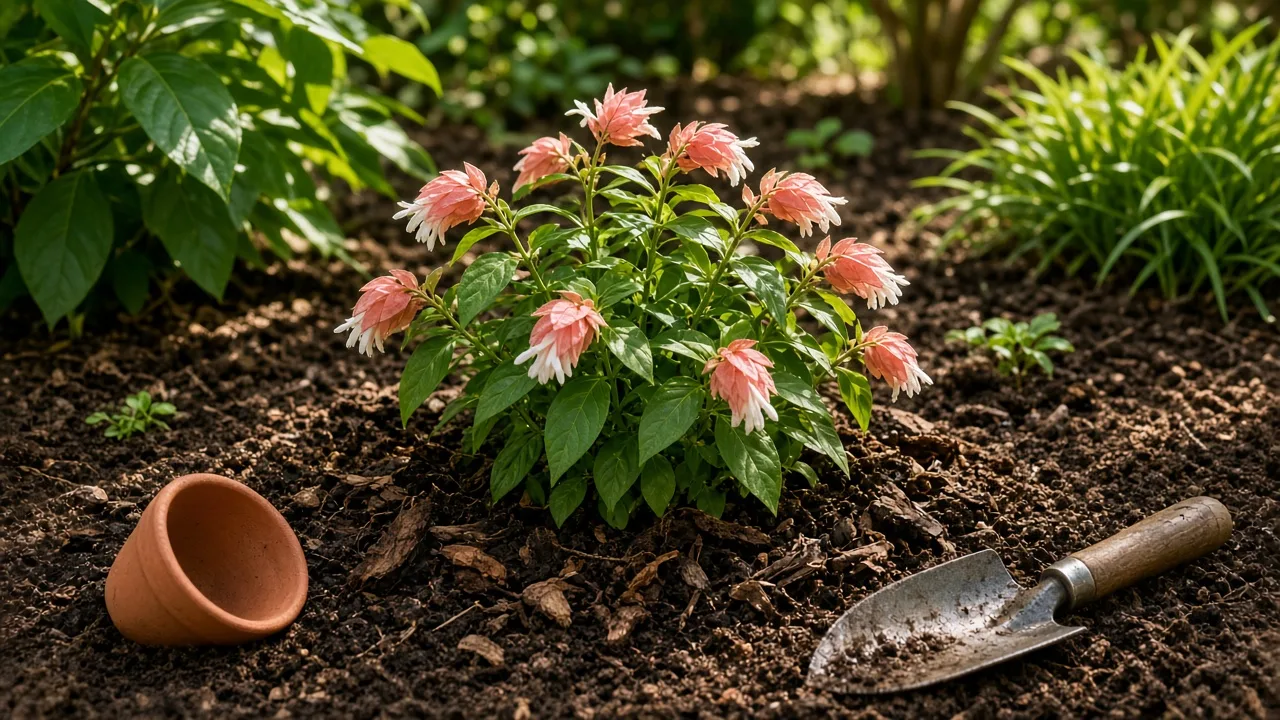
Plant shrimp plants in early spring after the last frost in your area, or any time in frost-free climates when you can keep the root ball moist during establishment. Dig a hole the depth of the root mass and twice as wide, loosening the sides so fine roots can penetrate native soil. Set the plant at the same depth it grew in the nursery pot; burying the crown invites stem rot.
Space in-ground specimens 3 to 4 feet apart to accommodate arching stems and allow airflow. For containers, choose a pot 2 inches wider than the root ball with drainage holes and never a sealed decorative outer pot without an inner nursery liner.
Water thoroughly at planting and apply 2 inches of mulch around in-ground plants, keeping mulch off the crown. Newly planted shrimp plants may drop a few lower leaves while roots establish; hold off on heavy fertilizer until you see fresh top growth.
Prune for Compact Shape and More Blooms
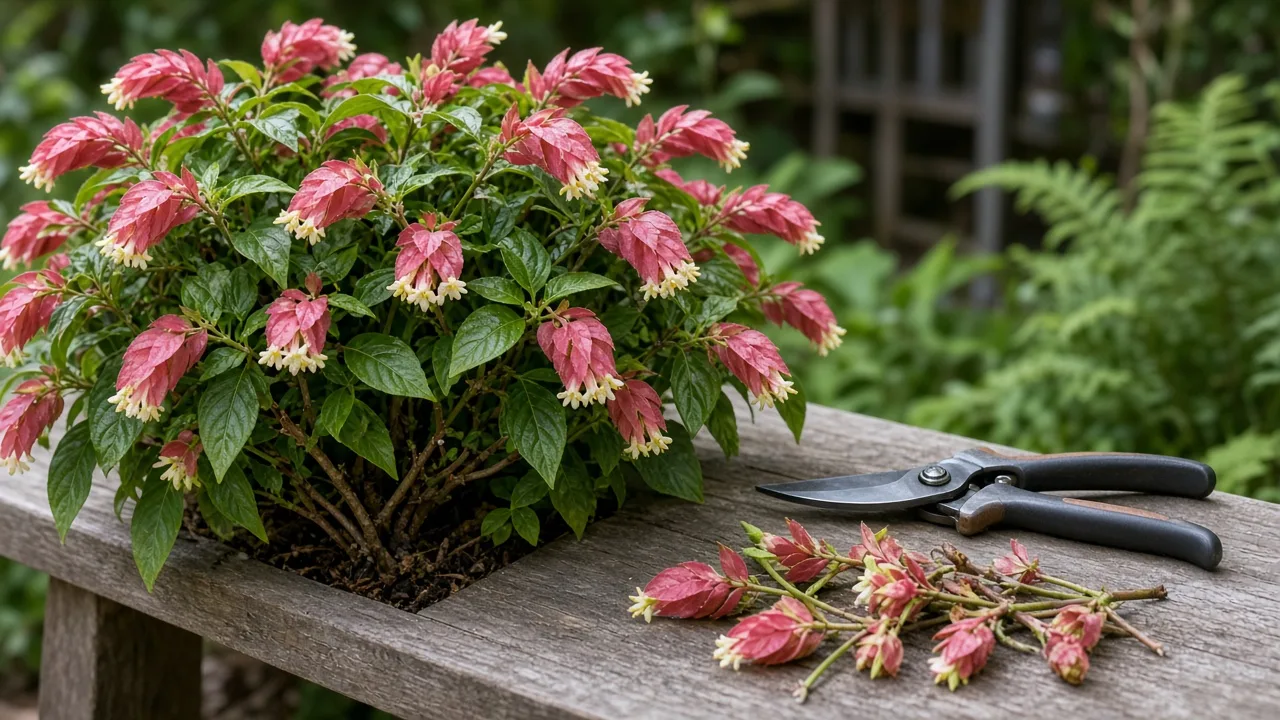
Shrimp plants respond well to pruning, and timing matters. Perform major shaping in late winter or early spring before the main flush of growth, removing dead wood, thinning crowded interior stems, and cutting leggy branches back by up to one-third. The RHS places Justicia in pruning group 9 for evergreen shrubs that flower on previous or current season wood; light, regular grooming beats one harsh hack.
During the growing season, pinch soft tips every few weeks if you want a denser silhouette. Snip spent bract spikes back to the next healthy leaf node to encourage fresh color. You do not need to deadhead individual tiny flowers.
If a shrimp plant becomes woody and bloom-poor despite good light, start fresh from cuttings rather than fighting an old framework. The RHS notes these shrubs are often best replaced when they become leggy, which matches what many warm-climate growers observe after four or five years without renewal.
Propagation: Cuttings, Division, and Seed
Stem cuttings are the most reliable propagation method for home gardeners. Division works well for mature in-ground clumps or rootbound containers in spring. Seed is possible but slower and less predictable for preserving cultivar traits such as ‘Yellow Queen’ or variegated foliage.
Division is straightforward: lift the plant on a cool morning after a deep watering, split the root ball with a sharp spade or knife so each section has roots and shoots attached, and replant immediately at the same depth. Keep divisions shaded and moist for two weeks while they settle.
Softwood Cuttings Step by Step
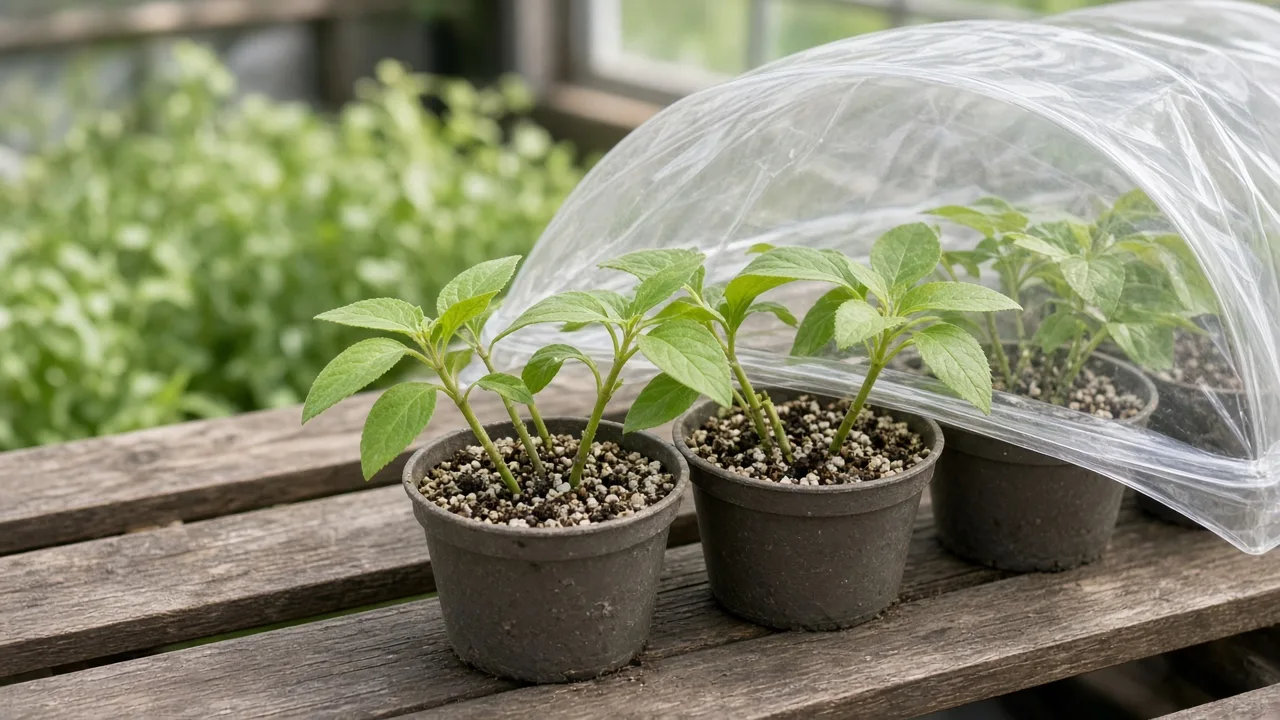
Take 4- to 6-inch cuttings from healthy non-flowering shoots in late spring or early summer. Cut just below a leaf node with clean shears, remove the lower leaves, and leave two or three pairs at the top. Dip the cut end in rooting hormone if you have it; it is helpful but not mandatory on this willing rooter.
Insert cuttings into a 50:50 mix of perlite and peat or coir, water lightly, and cover with a clear plastic bag supported so it does not touch leaves. Place the container in bright indirect light at 70 to 75°F. Vent the bag daily to prevent mold and keep the medium moist but not saturated.
Roots typically form in six to eight weeks. Tug gently on a cutting; resistance means it is ready for transplant into individual pots. Harden off rooted cuttings outdoors gradually before planting in the garden.
Overwinter Shrimp Plants Before the First Frost
In zones 9 and warmer, shrimp plants often stay outdoors year-round with minimal protection beyond mulching the root zone during an unusual cold snap. In zones 7 and 8, move container plants to a bright indoor room before the first frost, or dig small in-ground specimens and pot them temporarily if you want to keep a favorite clone.
Choose a spot with bright indirect light and temperatures above 55°F. Reduce watering and stop fertilizing until spring growth resumes. Expect some leaf drop after the move; avoid compensating with extra water on a cooling root zone.
If you must leave an in-ground plant in a marginal zone, bank mulch around the base and accept that top growth may die back while roots resprout. That gamble is reasonable in protected coastal zone 8b pockets and risky inland.
Troubleshooting Common Shrimp Plant Problems
Most shrimp plant problems trace back to light, water, or temperature, not mysterious disease. Use the table below as a first-response guide before reaching for sprays or repotting.
| What you see | Likely cause | First fix |
|---|---|---|
| Pale or greenish bracts | Too much hot sun or too little light | Move to morning sun with afternoon shade, or increase brightness indoors |
| Yellow lower leaves on wet soil | Overwatering or poor drainage | Check drainage holes, let top inch dry, remove saucer water |
| Drooping stems on dry soil | Underwatering | Water deeply; adjust schedule to top-inch-dry rule |
| Long bare stems, few bracts | Insufficient light or no pinching | Increase light; prune and pinch tips in spring |
| Black or brown leaf spots | Fungal leaf spot from wet foliage | Remove affected leaves; improve airflow; avoid overhead watering |
| Sudden leaf drop after moving indoors | Low humidity or cold draft | Raise humidity; keep away from heating vents |
If yellow leaves persist after you correct drainage and light, a single half-strength balanced feeding may help. Repeated yellowing on an old, rootbound plant often means repotting or division, not more fertilizer.
Pests and Diseases to Watch For
Shrimp plants are generally sturdy outdoors but can host spider mites and whiteflies indoors or in dry greenhouses. Mites cause stippled, bronzed leaves and fine webbing on undersides; whiteflies rise in clouds when you brush stems and leave sticky honeydew behind. The RHS notes both pests as possible on glasshouse-grown Justicia.
For mild infestations, rinse foliage with lukewarm water weekly and improve airflow. Persistent whiteflies respond to yellow sticky traps and insecticidal soap or horticultural oil applied to leaf undersides according to label directions. UC IPM guidance on whiteflies emphasizes removing heavily infested leaves and avoiding broad-spectrum sprays that harm beneficial insects outdoors.
Leaf spot fungi appear as brown or black spots on leaves kept wet overnight. Prune affected foliage, water at the soil line, and space plants so leaves dry quickly. Root rot from soggy soil is harder to reverse; trim rotted roots, repot into fresh mix, and reduce watering frequency.
Inspect new purchases before introducing them to a collection. One infested nursery shrimp plant can spread whiteflies through an entire winter windowsill lineup.
Conclusion
Shrimp plant rewards a simple contract: morning-bright light, moist but airy soil, regular tip pinching, and frost protection where cold is real. Treat the colorful bracts as the main event, propagate from cuttings when you want more plants, and replace or hard-renew leggy specimens instead of tolerating a sparse framework. In the right climate or container, Justicia brandegeana delivers months of shrimp-shaped spikes that hummingbirds notice and neighbors ask about — without the fuss of a true finicky tropical.



