Best Tall Container Plants for Fuller, Lusher Patios
Compare 20 large container plants by sun, zone, pot size, and design role so you can pick a tall thriller that anchors your patio without tipping over.
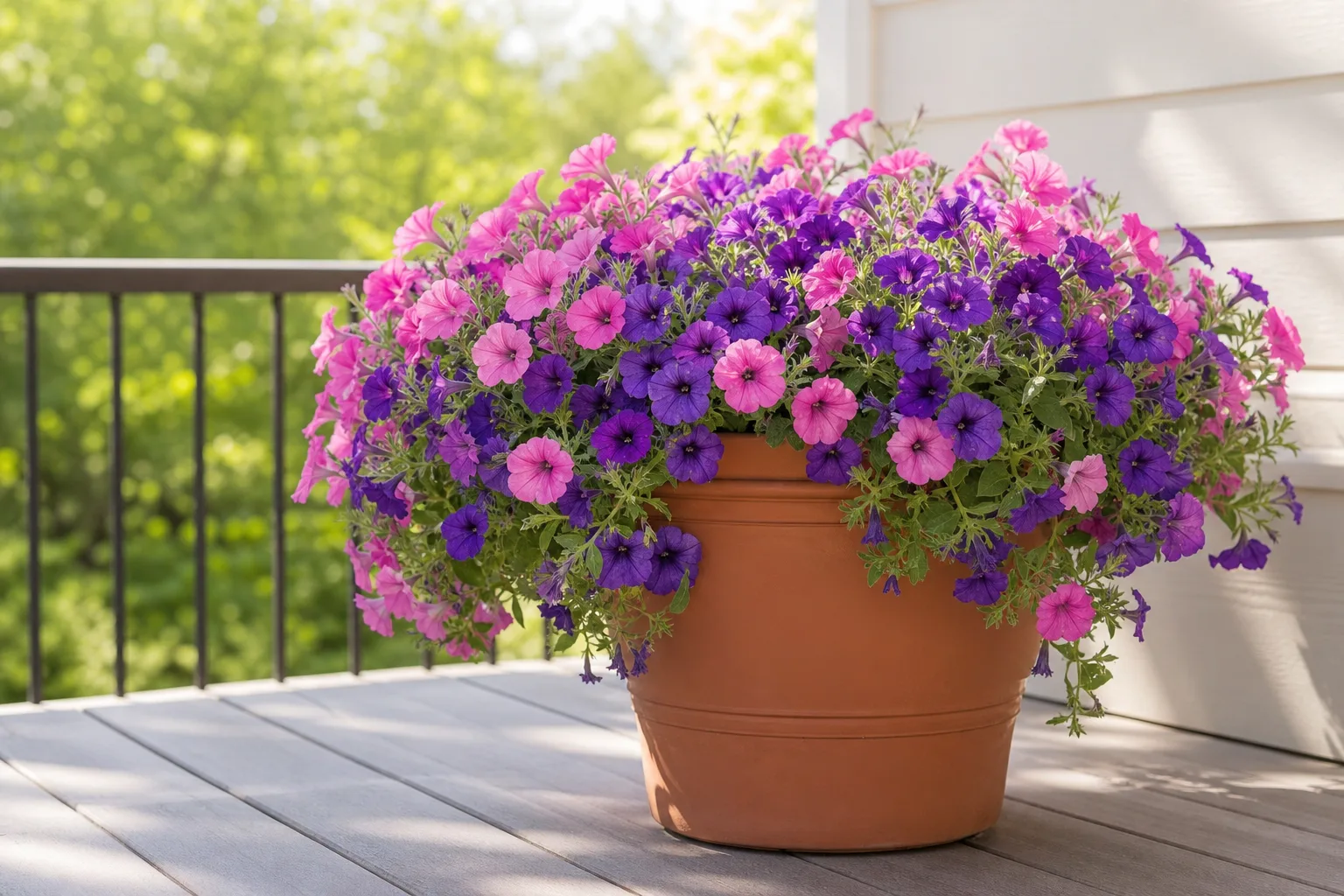
A flat row of midsize pots reads like afterthoughts. One tall container plant at the right scale—on a porch step, beside a bench, or flanking a doorway—gives the eye a vertical anchor and makes everything around it look intentional. The mistake most gardeners make is buying the tallest plant at the nursery and hoping the pot catches up. Start with the container’s volume, your light, and whether the thriller must survive winter in place or move indoors.
This guide covers 20 large container plants that earn the center of a mixed pot or stand alone as a statement planter. You will also get pot-size rules, wind-stability tips, and pairing logic so the thriller works with fillers and spillers instead of overpowering them.
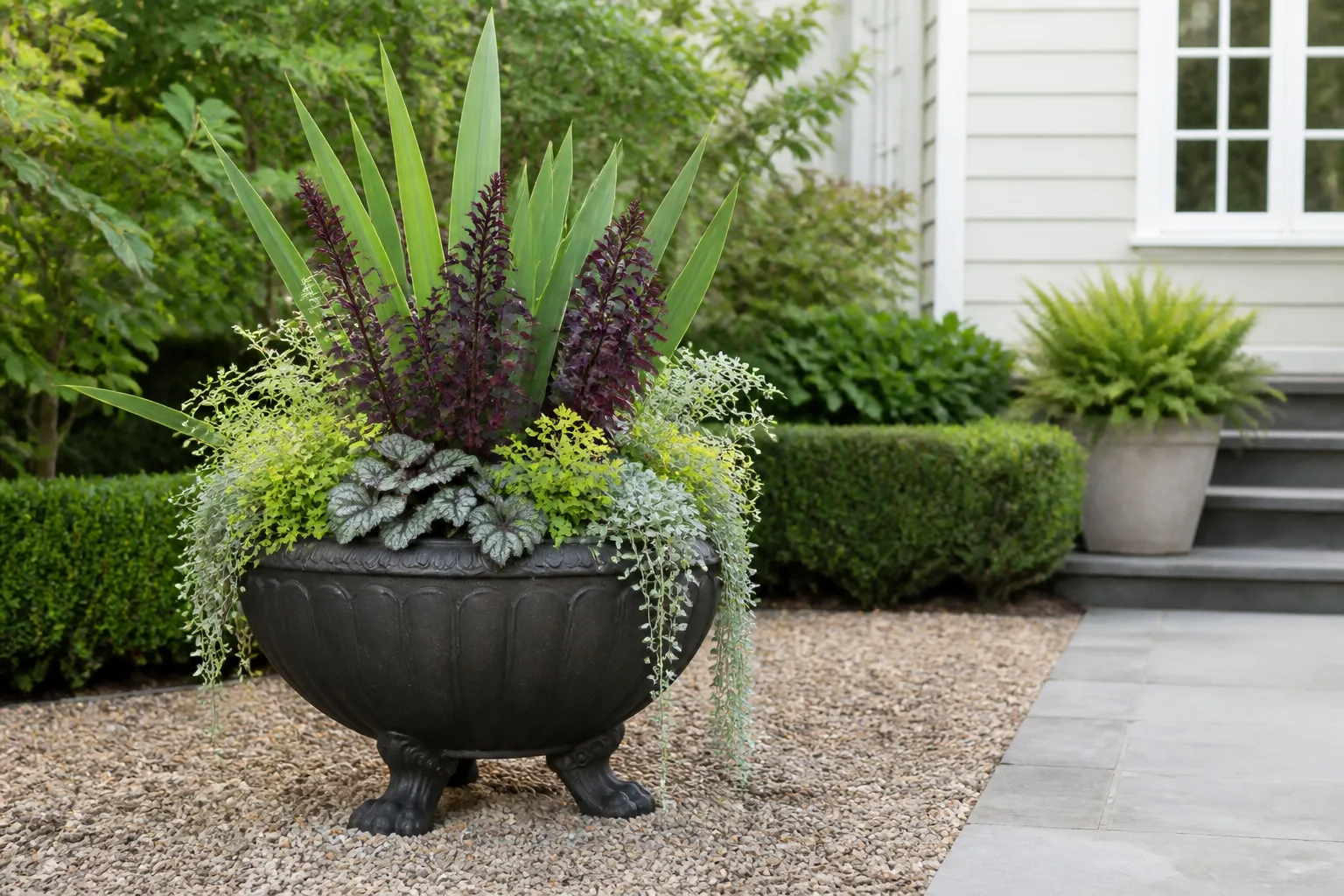
Why a Tall Thriller Changes the Whole Pot
In container design, the thriller is the vertical focal point—the plant that draws attention upward and gives the arrangement a backbone. Fillers bulk out the middle; spillers soften the rim and trail downward (Proven Winners container design guidance). A well-chosen tall thriller does three jobs at once: it adds height without needing a trellis as the main feature, creates privacy or screening at eye level, and makes a small patio feel layered rather than one-dimensional.
Height only works when proportion matches the pot. A 5-foot grass in a 10-inch nursery pot looks top-heavy and dries out twice a day. A dwarf evergreen in a 24-inch planter, by contrast, can anchor an entry for years. The plants below are grouped by how they perform in containers, not by how large they grow in open ground.
Choose the Right Container Before the Plant
The RHS notes that large containers create more striking displays and are often easier to maintain because they hold more moisture and root room (RHS growing plants in containers). That does not mean bigger is always better—it means undersizing is the fastest way to fail with a tall thriller.
Pot Size, Weight, and Wind Stability
As a starting rule, the pot’s top diameter should be roughly one-third to one-half the mature height of the thriller you want at season’s end. A 4- to 6-foot grass or canna wants a 16- to 20-inch pot minimum; a small evergreen tree wants 18 to 24 inches or larger if it will stay potted for multiple years. Place the empty pot on a plant caddy before you fill it—once loaded with mix, a large ceramic or concrete planter is not moving without wheels.
Wind is the silent killer of tall container gardens. A narrow plastic pot with a full-grown bougainvillea or feather reed grass will sail off a balcony in the first storm. Choose a heavy, stable container (thick ceramic, concrete, or a plastic pot weighted inside) and group pots together when possible; the RHS recommends grouping partly because it buffers temperature extremes and gives pots mutual support. Set tall arrangements out of the main wind tunnel—corners, walls, and railings all help.
Drainage and Soil Volume for Large Roots
Every container needs drainage holes in the base. No exceptions for boxwood, fuchsia, or agave (RHS container basics). Skip the myth about a layer of rocks improving drainage; what matters is holes, a quality potting mix (not garden soil), and not letting the pot sit in a full saucer for hours.
For very deep pots, you can lighten the lower third with clean, inverted plastic pots or nursery trays to save mix—but keep the root zone fully filled where the plant actually grows. Iowa State Extension warns that mixed containers fail when plants with different water needs share one pot; match your thriller’s moisture preference to its fillers (Iowa State container watering).
Match Height to Light and Hardiness
Before scanning the plant list, filter by direct sun hours at the pot’s location—not the label at the store. Full sun means six or more hours of direct light; part shade is morning sun or bright indirect light; full shade is no direct sun. Then check USDA hardiness: a plant hardy in your zone can stay outdoors year-round in a large insulated pot; a tender tropical becomes an annual or a houseplant guest unless you overwinter it.
Annual thrillers—amaranth, canna, elephant ear in cool zones—let you redesign every year. Woody thrillers—boxwood, arborvitae, sweet bay—reward patience with structure across seasons. Decide which camp you are in before buying.
Sun-Loving Structural and Flowering Thrillers
These plants want bright sites and handle heat better than shade lovers. In mixed pots, pair them with sun-loving fillers like lantana or verbena and spillers from our spiller plants for containers guide.
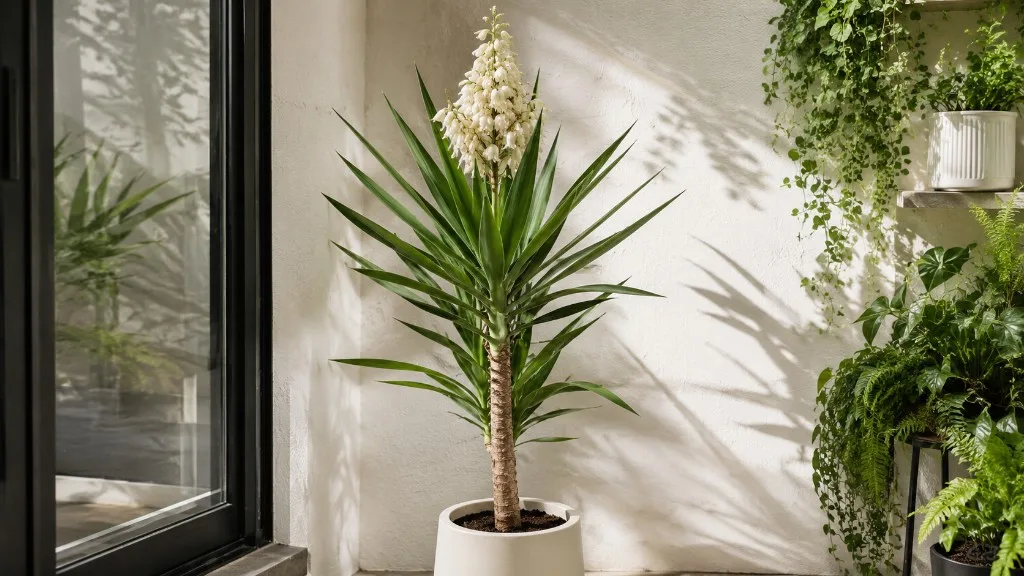
Agave and yucca are the drought-tolerant backbone for hot, sunny patios. Agaves need gritty, fast-draining mix—think cactus blend in an unglazed clay pot—and minimal winter moisture in rainy climates. Hardy yucca cultivars such as Adam’s needle (Yucca filamentosa) survive into zone 5 and bring spiky architectural form at 2 to 4 feet in a container. They rarely bloom in pots; that is normal. Treat agave as a permanent thriller only in zones where it is hardy; elsewhere grow it as a summer focal point and keep it dry indoors through winter.
Canna lily (Canna × generalis) delivers tropical leaves and repeated summer flowers when the pot stays evenly moist. NC State Extension describes cannas as preferring full sun, rich soil, and consistent moisture—plan daily watering checks in July (NC State canna profile). In zones 8–11 they can overwinter outdoors; in colder regions dig rhizomes or move the whole pot to a cool, bright frost-free space.
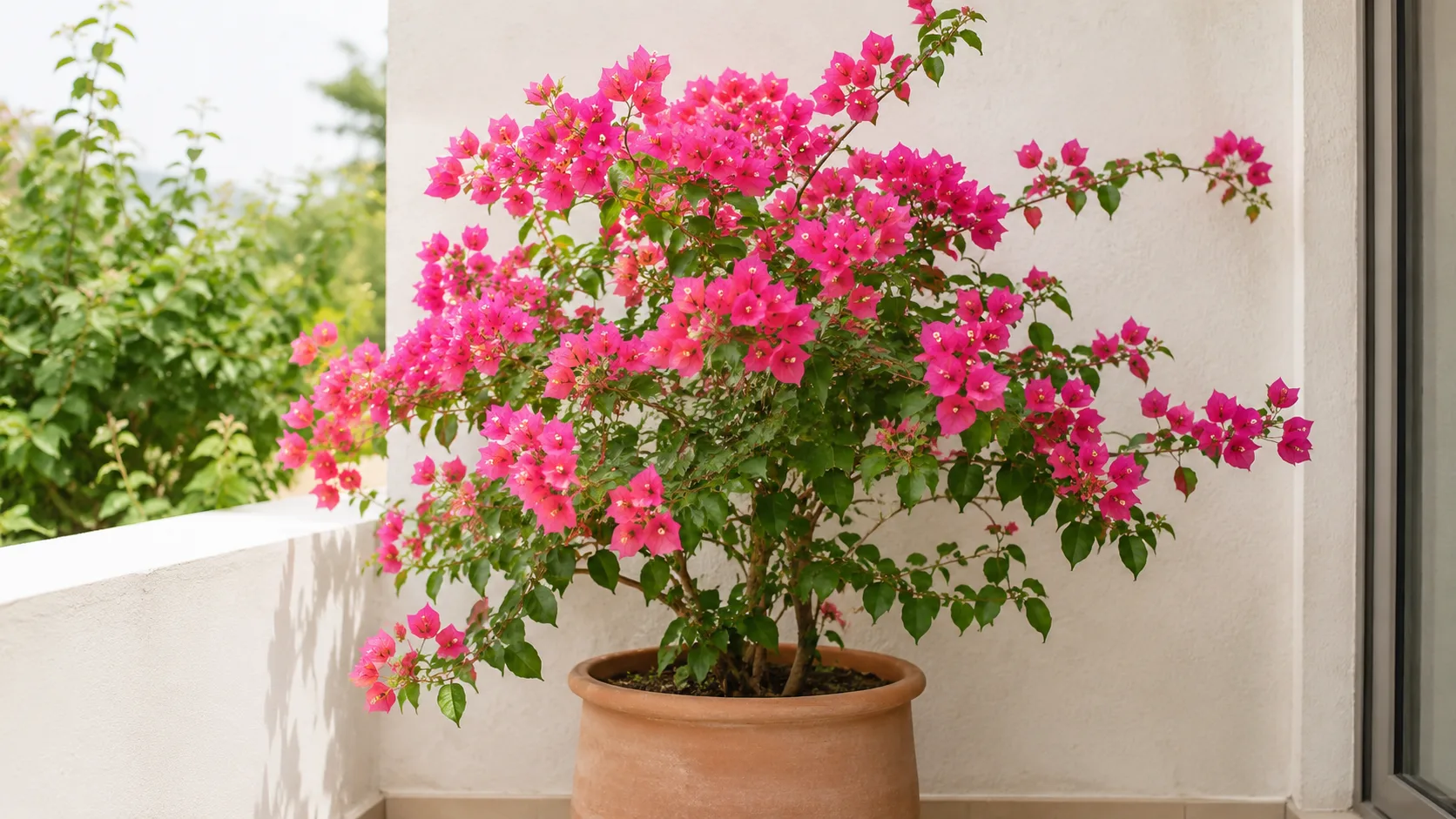
Bougainvillea is a vigorous vine, not a naturally upright shrub, so give it a sturdy obelisk or trellis inside the pot if you want height. It blooms best with tight roots and excellent drainage; avoid oversized pots that stay cold and wet in spring. Hardy only in zones 9–11; elsewhere treat it as a summer annual or patio houseplant.
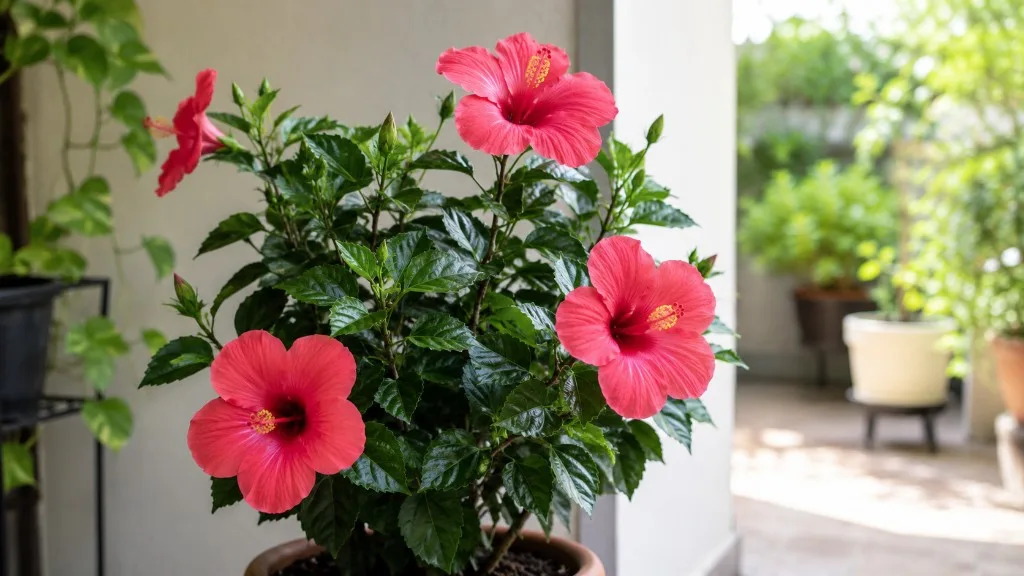
Hibiscus splits into two container strategies. Tropical Chinese hibiscus (Hibiscus rosa-sinensis) wants warm nights and becomes a large, flowering shrub in a 14- to 18-inch pot. Hardy rose of Sharon (Hibiscus syriacus) can live for years in a large planter in zones 5–9 and be trained to a single trunk for tree form. Use a wide, stable pot rather than an extra-deep one so energy goes to top growth, not endless root searching.
Princess flower (Tibouchina urvilleana) adds glossy leaves and rich purple blooms on a sunny patio in zones 9–11. Shelter it from strong wind, keep the mix acidic and well drained, and move it indoors before frost. In a 16-inch pot it can reach 6 feet with steady feeding through summer.
Evergreen Anchors for Year-Round Structure
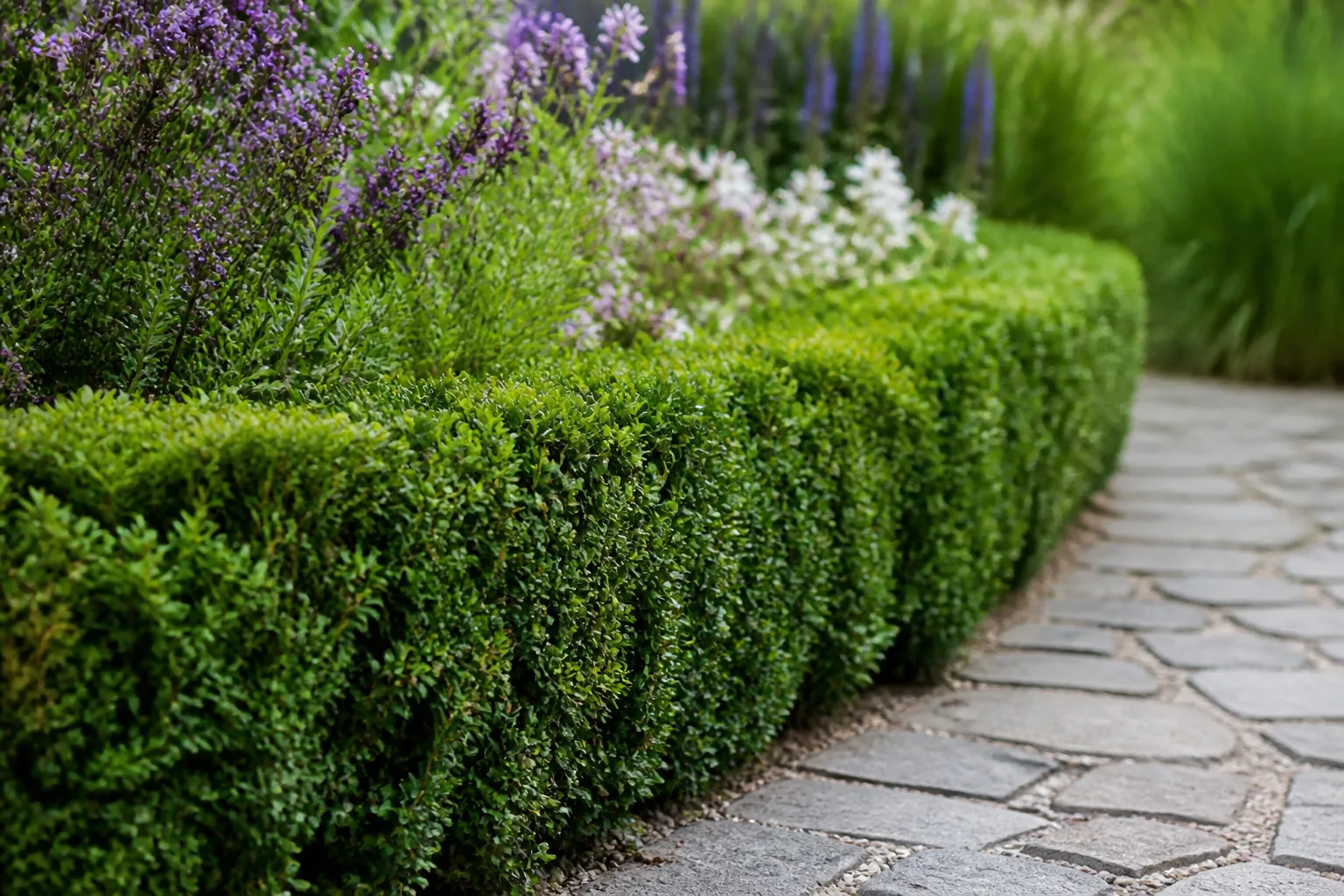
When you want the pot to look designed in January—not just July—evergreen thrillers earn their soil.
Emerald Green arborvitae (Thuja occidentalis ‘Smaragd’) grows in a narrow pyramidal habit that suits entry flanking and privacy without a wide footprint. In zones 2–7 it can remain in a large container for many years if watered through dry winters and repotted or root-pruned every three to five years. Choose a pot at least 18 inches wide for a young tree; upgrade as the root ball expands.
Boxwood (Buxus sempervirens) is the classic formal thriller—natural mound or clipped topiary. It tolerates part shade and afternoon protection in hot climates. Root rot is the main enemy, so drainage holes and a mix that does not stay soggy matter more than daily watering. A 15-inch pot supports a 2- to 3-foot specimen you can shape over seasons.
Dwarf Alberta spruce (Picea glauca ‘Conica’) brings conical symmetry to winter displays. “Dwarf” means slow-growing, not small forever—it can eventually pass 10 feet in open ground but takes decades in a pot. Keep soil evenly moist without waterlogging; dry winter wind on a balcony desiccates needles quickly. Wear gloves; the needles are sharp.
Ornamental Grasses as Vertical Thrillers
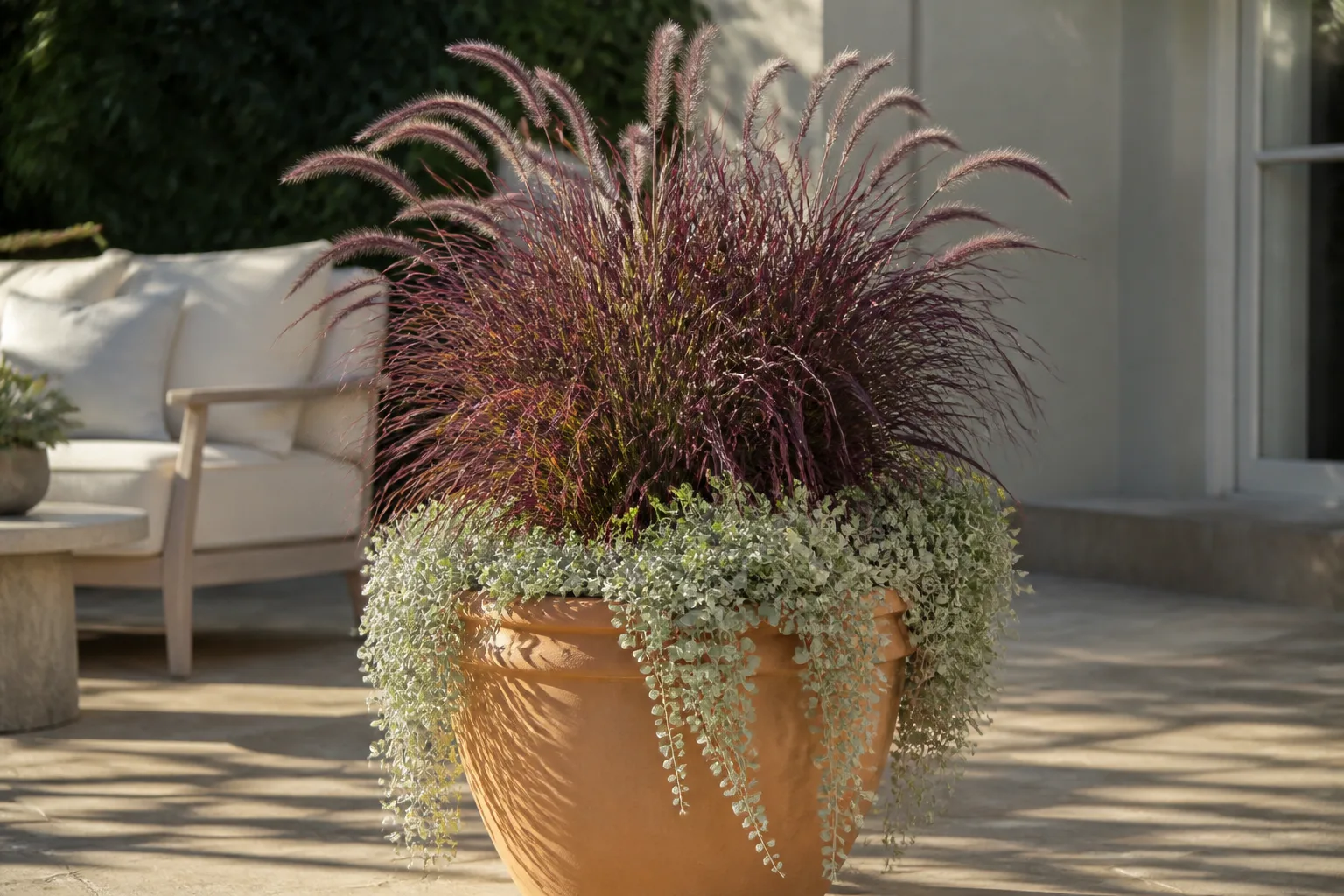
Grasses add movement and sound—qualities no flowering shrub copies. Give each grass its own large pot or a dominant share of a mixed container; vigorous roots will crowd neighbors.
Big bluestem (Andropogon gerardii) reaches 4 to 6 feet with blue-green summer foliage turning copper in fall. It wants full sun and lean soil; too much fertilizer or shade causes flopping. Native-grass enthusiasts use it as a single-specimen thriller in a 18- to 24-inch pot on a sunny deck.
Feather reed grass (Calamagrostis × acutiflora) stays upright after bloom—unlike many grasses that collapse—making it ideal for the center of a pot. Cultivars like ‘Karl Foerster’ hit 3 to 5 feet and tolerate damp mix better than prairie grasses. Full sun and medium moisture suit it; it is hardy in zones 5–9.
Purple fountain grass (Pennisetum setaceum ‘Rubrum’) is the showiest warm-season grass, with burgundy leaves and fuzzy plumes. Treat it as an annual in zones below 9, or overwinter the pot in a cool bright room with sparing water. It needs full sun and regular water in summer; the plumes catch the eye from across a patio.
Shade and Cool-Site Large Container Plants
Hot afternoon sun burns shade lovers. These thrillers suit north-facing walls, covered porches, and courtyards with bright indirect light.
Fuchsia blooms all season without deadheading if the site stays cool and moist. Choose an upright fuchsia cultivar—‘Beacon’, ‘Cardinal Farges’, or similar—for thriller height rather than a trailing basket type. Fast-draining mix and never letting the pot bake in afternoon sun prevent root rot. Hardy in zones 8–10; elsewhere enjoy as a shade annual.
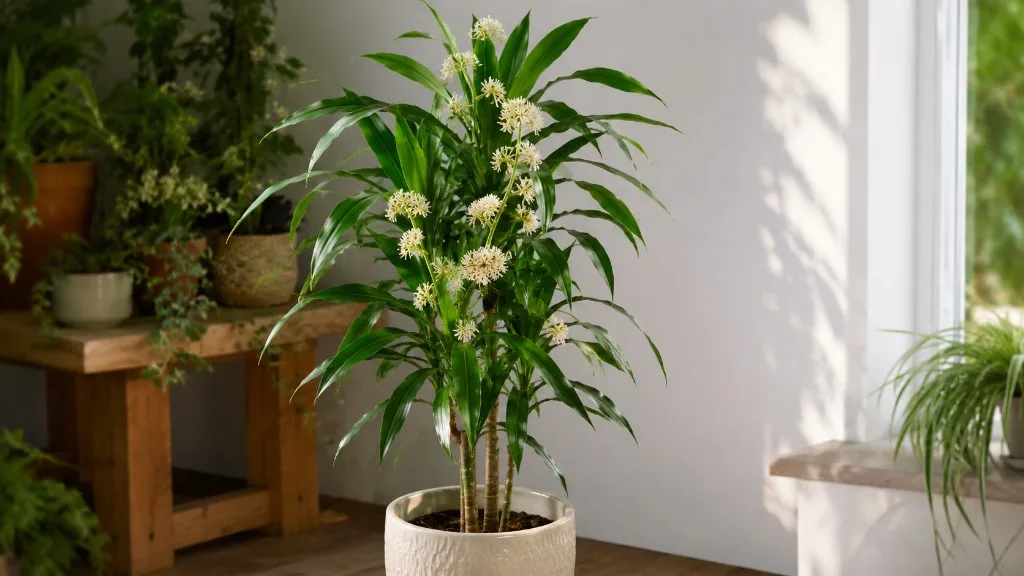
Dracaena brings 6- to 10-foot strap-leaf verticality to shaded or part-shade patios in warm zones. Many gardeners already know dracaenas as houseplants; outdoors they want protection from frost and scorch. A heavy pot and bright filtered light keep stems sturdy. In zones below 10, plan to move the container indoors when nights drop below 50°F.
Bold Foliage Plants for Tropical Drama
When flowers are secondary to leaf architecture, these plants turn a container into a sculpture.
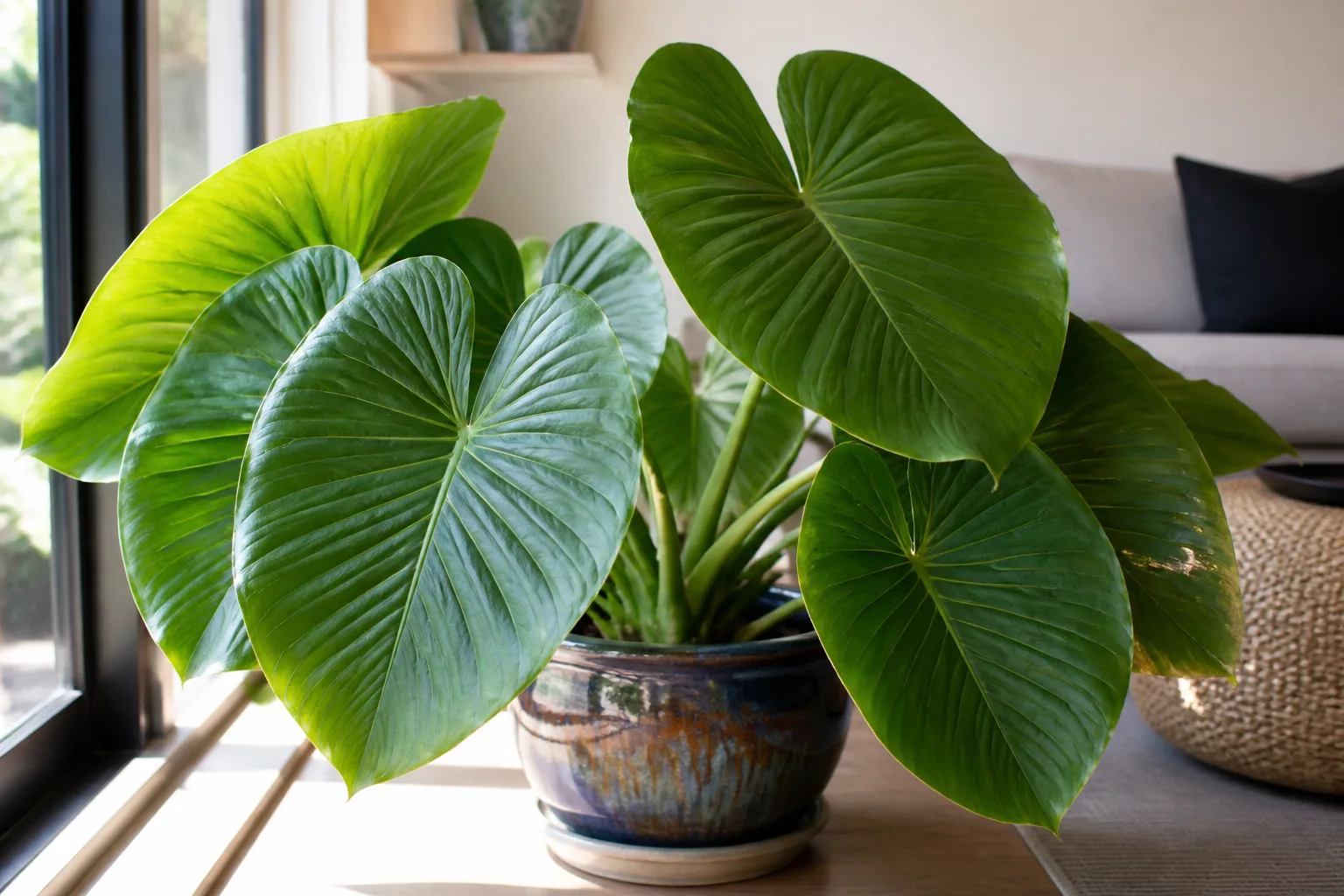
Elephant ear (Colocasia esculenta) produces massive arrow-shaped leaves on 3- to 6-foot stems. NC State notes it prefers rich, moist soil and can grow in sun or part shade with adequate water (NC State colocasia profile). In most zones it is an annual bulb; dig corms before frost or overwinter dry in peat. A 16-inch pot and a drip tray you refill often beats a once-a-week splash.
New Zealand flax (Phormium tenax) adds sword-like leaves in green, bronze, or striped cultivars to 4 feet in a container. Use a rich organic potting mix and steady moisture. Frost tender below zone 9—bring pots to a sunny indoor spot before hard freeze.
Mountain cabbage tree (Cordyline indivisa) looks like a compact palm and makes an intriguing cool-climate conservatory plant. It wants part shade, fertile mix, and winter warmth; treat it as a tender thriller unless you are in zone 9 or warmer.
Dual-Purpose Tall Containers
Some tall thrillers earn their square footage twice.
Sweet bay (Laurus nobilis) supplies glossy evergreen leaves you can harvest for cooking. It grows slowly in a pot, tolerates pruning, and trains beautifully to a standard or topiary. Use a heavy, wide pot—top-heavy standards tip easily. Hardy in zones 8–10; elsewhere overwinter in a cool bright room and water sparingly.
Amaranth—especially love-lies-bleeding (Amaranthus caudatus) or Joseph’s coat (A. tricolor)—adds 2 to 4 feet of drama in one season. Start seed indoors or buy transplants; they want full sun to part shade and consistent moisture with good drainage. As annuals they are perfect for experimenting: swap colors yearly without committing bed space.
Bamboo in Containers: Beauty With Caution
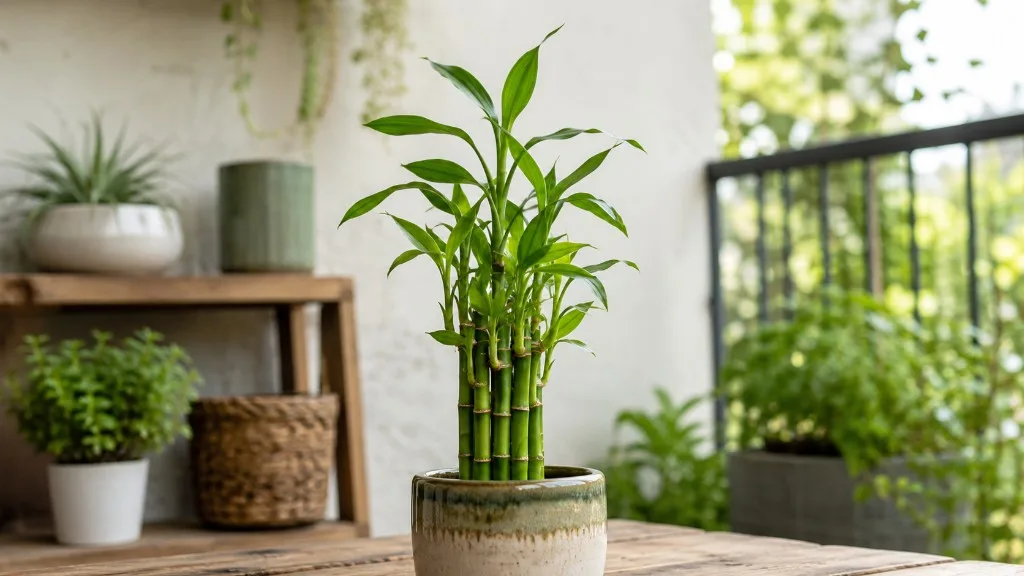
Bamboo in a pot is the conversation piece running bamboo becomes in a yard—but only if you choose clumping species or restrained runners and still plan on repotting or root pruning every two to three years. A 20- to 24-inch pot can support 8 to 12 feet of culms with adequate water and feeding; soggy mix stunts growth and rots rhizomes. Never set a bamboo pot directly on soil where runners can escape through drainage holes; use pavers or pot feet. In cold zones, insulate the pot or move it to a protected wall for winter.
Pair Fillers and Spillers With Your Thriller
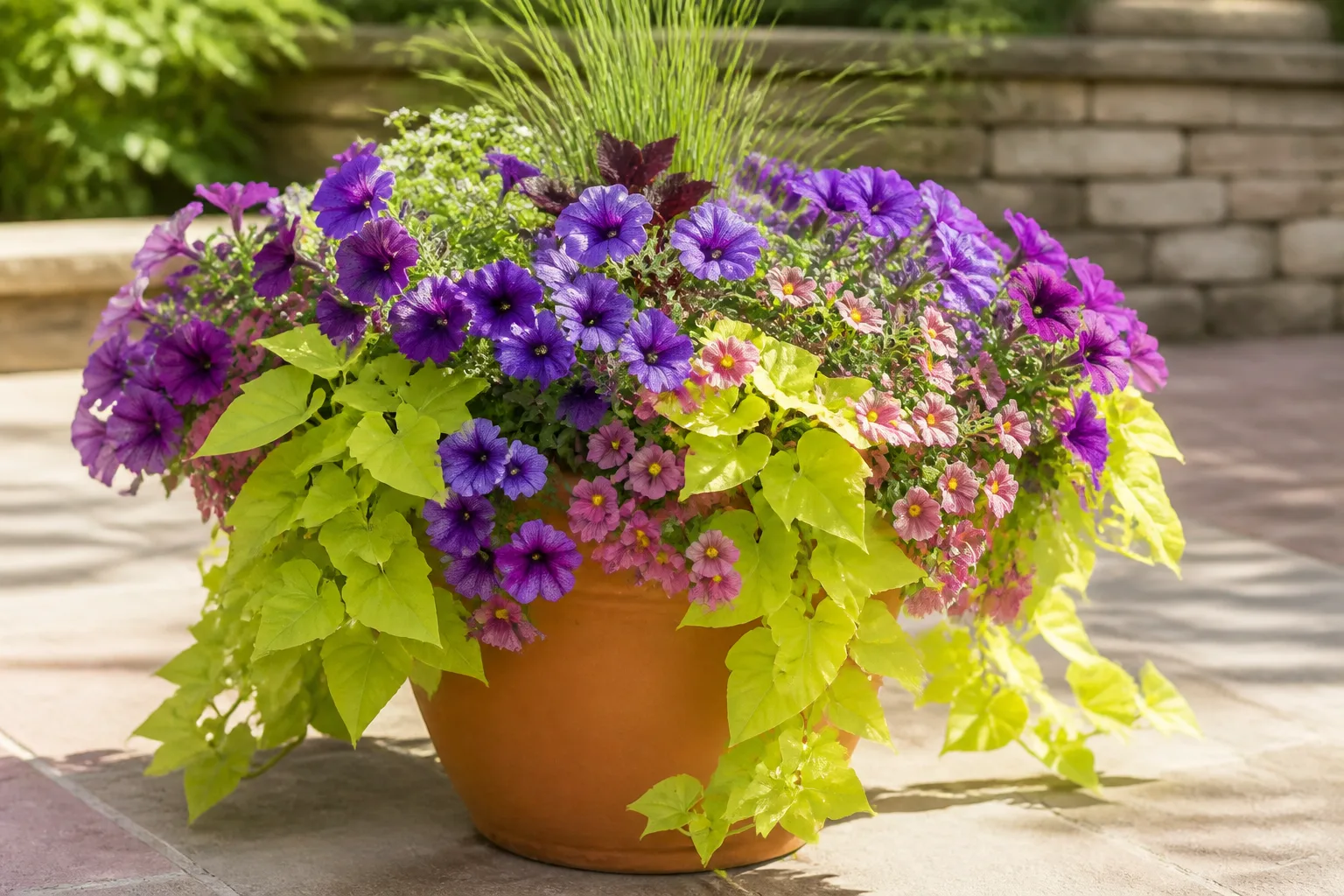
A thriller alone can look like a lonely stick; the magic is in the trio. After placing the tall plant slightly off center or at the rear of a viewed-from-one-side pot, add one to three fillers at mid-height—coleus, geranium, or ornamental pepper for sun; impatiens or begonia for shade. Finish with one to two spillers at the rim: calibrachoa, sweet potato vine, or trailing lobelia for sun; bacopa or fuchsia trailers for cool shade.
Keep water and light needs aligned. A moisture-loving canna paired with dry-loving sedum will always disappoint one partner. Nature Hills’ container-design guidance emphasizes building arrangements around a coherent color story and matching vigor so one plant does not swallow the rest (Nature Hills container design). Leave two inches of headspace below the rim for watering without overflow.
Winter Moves and Long-Term Container Care
Perennial thrillers in pots experience more cold stress than in-ground plants because roots are exposed on all sides. Insulate with bubble wrap or burlap in borderline zones, group pots against a south wall, and water during dry thaws. Tender plants—canna, elephant ear, bougainvillea, dracaena, princess flower—need indoor or garage storage before frost.
Repot or refresh the top third of mix every two to three years for woody plants. Root-prune lightly when upgrading pot size. Feed actively growing summer containers every two to three weeks with a balanced liquid fertilizer; skip heavy feeding on agave, yucca, and dormant winter evergreens.
Conclusion
The best large container plant is the one that fits your pot volume, light, and winter plan—not the tallest tag at the garden center. Use agave, yucca, cannas, and grasses for sunny drama; boxwood, arborvitae, and dwarf spruce for year-round structure; fuchsia and dracaena for cool shade; elephant ear, flax, and cordyline for foliage impact; sweet bay and amaranth when you want utility or easy annual change; and bamboo only with the right species and a repotting calendar. Anchor the pot against wind, match companions to the thriller’s water needs, and your patio gains the height and intention that flat arrangements never reach.



