7 Signs You Need a New Lawn Mower This Spring
Not sure whether to repair or replace your lawn mower? Use seven practical signs, a repair-versus-replace test, and type-specific buying advice before spring mowing.
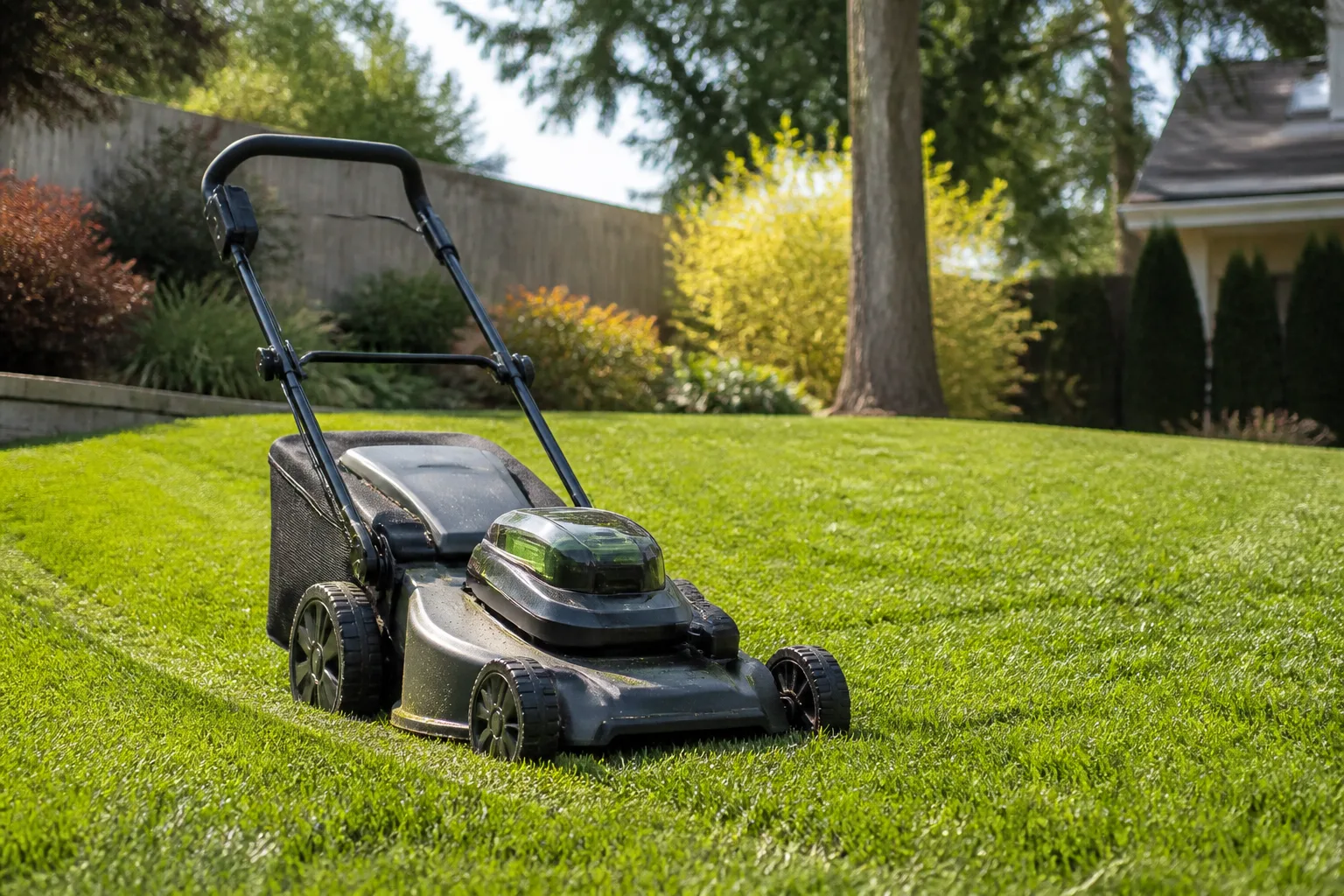
Quick answer: repair the problem or replace the machine?
The clearest signs you need a new lawn mower are not simply a hard start or a rusty handle. Replacement becomes reasonable when the machine is unsafe, a major system is failing, repairs keep repeating, or the mower no longer matches the yard you actually have. A worn blade, dirty air filter, flat tire, stale fuel, or loose cable is usually a repair; a cracked deck, failing transmission, badly corroded mounting point, or repair estimate that approaches a comparable replacement is a different decision.
Before shopping, give the mower one calm inspection. Photograph the model and serial plate, note the symptoms, check whether replacement parts are still sold, and compare the likely repair total with a new mower that has the same cutting width and capability. That prevents a common spring mistake: replacing a machine because of one inexpensive maintenance item, or throwing good money at a mower whose safe working life is already over.
Keep hands and tools away from the deck until the mower is disabled exactly as the manual directs. The Consumer Product Safety Commission’s walk-behind mower guidance is a useful safety reference, but the model manual still controls the shutdown, battery-removal, spark-plug, and service procedure for your machine.
1. Age is multiplying ordinary wear
Calendar age is a warning flag, not a verdict. A lightly used mower that was stored dry, serviced on schedule, and kept free of deck damage can be a better machine than a younger mower that spent every season cutting wet, overgrown grass. Hours, storage, mowing conditions, and the availability of parts tell you more than the year printed on the receipt.
Age matters when several small issues arrive together. If the mower needs a belt, cable, blade, battery, tires, and carburetor service in the same season, each repair may be individually reasonable while the combined downtime and cost point toward replacement. A machine that has become a rotating project is no longer saving money simply because no single repair is dramatic.
Check the model number before you decide. If the manufacturer still lists manuals, blades, belts, filters, batteries, and safety components, an older mower may deserve a service. If essential parts are discontinued or only available from uncertain sellers, support risk is part of the replacement calculation even if the engine still runs.
2. Rust has become a structural problem
Surface rust on a fastener or an unpainted patch is ugly but not automatically fatal. Structural rust is different: it thins or perforates the mower deck, weakens the handle mount, spreads around wheel brackets, compromises the battery compartment, or leaves bolts and guards unable to hold their designed position. Those failures can change how the blade, wheels, or safety controls behave.
Inspect the underside and the points that carry force, not only the visible top. Remove packed grass only after the mower is disabled according to the owner’s manual; then look for holes, soft metal, flaking seams, distorted mounting points, and cracks that continue beyond the original rust spot. A cosmetic repaint cannot restore lost steel, and a patch may not be a safe repair near a spinning blade or a heavily loaded wheel bracket.
Rust also tells you something about storage and future reliability. If water has reached bearings, cable ends, electrical connectors, or the battery contacts, the visible corrosion may be the smallest part of the problem. Replace the mower when the deck or control structure is no longer trustworthy, especially if vibration, flex, or a loose safety bar accompanies the corrosion.
3. Your mowing conditions are harder than the machine can handle
A mower can be in good condition and still be the wrong machine for the work. Repeatedly cutting wet turf, tall neglected grass, rocky ground, steep slopes, or areas littered with sticks and hidden edging increases impact, clogging, heat, and traction demands. A small push mower used as an overgrown-field machine will wear faster than the same model used on a flat lawn cut on schedule.
Look for patterns rather than blaming the mower for every bad cut. Does it bog down only when grass is tall? Does it lose traction on one slope? Does the deck clog only when the lawn is wet? If a clean deck, sharp blade, correct height, and dry conditions solve the problem, you may need a better mowing routine rather than a new machine. University guidance on mowing emphasizes keeping equipment sharp and adjusted and avoiding practices that put unnecessary stress on turf; the same habits reduce strain on the mower (Penn State Extension lawn-management guidance).
Replacement makes more sense when the hard conditions are normal for your property. A self-propelled mower may reduce fatigue on a moderate slope, a larger battery system may provide more reserve for dense spring growth, and a riding mower may be the honest answer when walking time is the main problem. No mower makes an unsafe slope or wet surface safe, so change the timing and route as well as the equipment.
4. A major component is failing
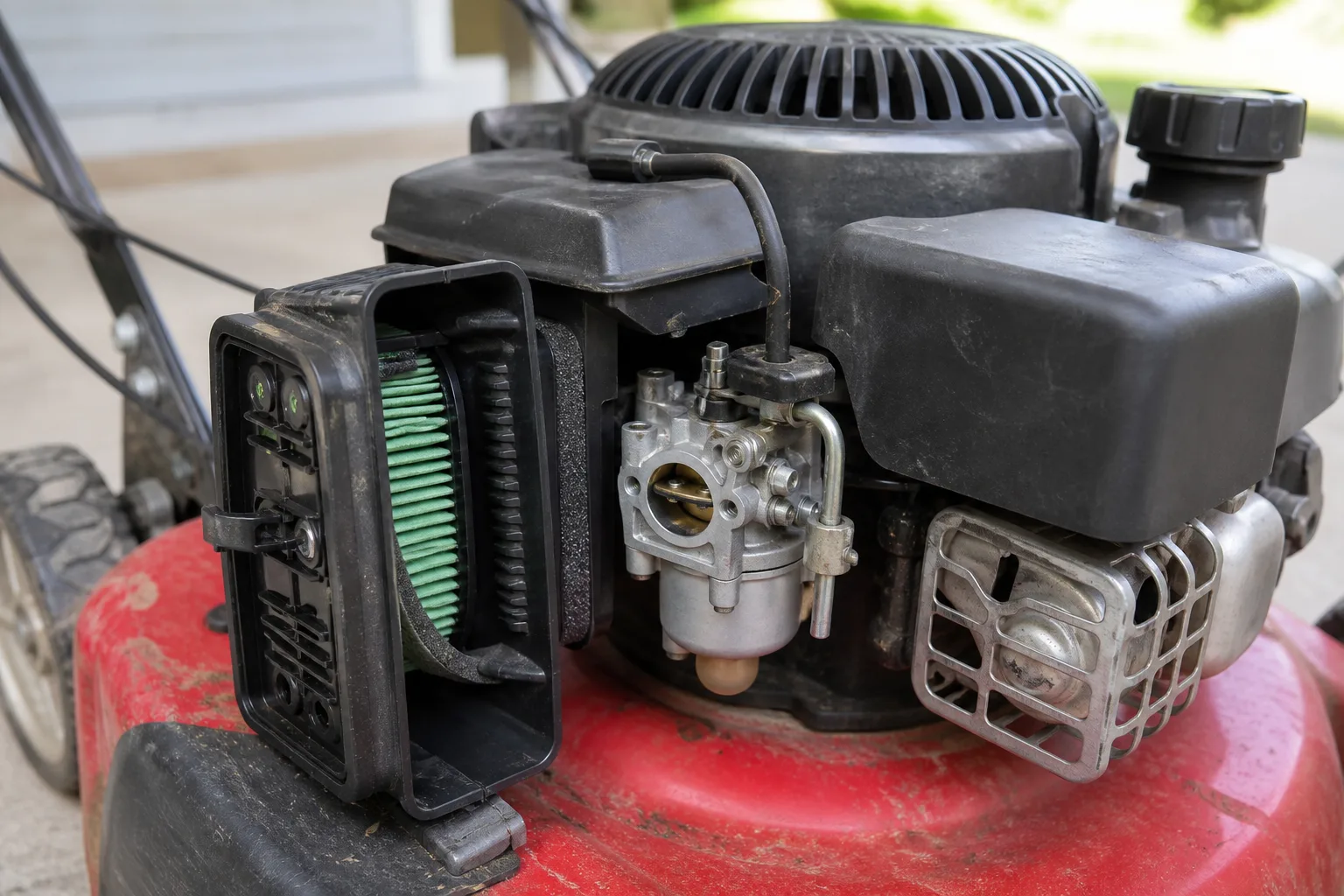
Major component failure is the most direct replacement signal, but the phrase needs definition. An air filter, spark plug, blade, tire, belt, or pull cord is a service item. An engine with low compression, a riding mower transmission that slips, a deck with a compromised spindle mount, or a battery system that cannot hold a useful charge may cost enough in parts and labor to make a new mower the more dependable choice.
Ask what the failed component does to the rest of the machine. A worn blade can be replaced without changing the mower. A failing spindle can damage the deck, create vibration, and make continued mowing unsafe. A battery pack may be a sensible purchase if the mower is otherwise sound and the pack remains available, but a battery that is discontinued, unusually expensive, or paired with a tired drive system changes the math.
Do not diagnose an engine from one symptom. A gas mower that starts and then dies may have stale fuel, a blocked air filter, a carburetor restriction, a safety-switch problem, or a deck load; a battery mower that stops may have an overheated pack, blocked deck, safety interlock, or a failing battery. Troubleshoot the inexpensive, documented causes first, and use the owner’s manual or a qualified small-engine shop for faults you cannot safely isolate. The project’s guide to a mower that starts and then dies covers that sequence in more detail.
5. Repairs have become a recurring bill
One repair does not make a mower a bad investment. The important question is whether the repair restores a dependable machine or only postpones the next failure. Add the part, labor, pickup or delivery, diagnostic charge, and the value of the time you will lose if the mower is down during the fastest spring growth.
Use the mower’s maintenance schedule as evidence before you call it worn out. Practical checks such as the air filter, blade, oil, fuel, cables, and deck cleanout are also summarized by Gardening Know How’s lawn mower maintenance guidance; a missed service item can look like a failing machine.
Use a simple comparison: repair cost plus likely near-term maintenance versus the delivered cost of a comparable replacement. “Comparable” means the same kind of job—deck width, propulsion, power source, battery and charger, terrain ability, bagging needs, and service access—not the cheapest mower on a store shelf. A lower-priced replacement that cannot finish your route is not a fair benchmark.
The repair threshold is lower when the old mower is unsafe, unsupported, or unreliable at the exact moment you need it. It is higher when the mower is a premium model with a sound deck, accessible parts, and one isolated failure. Avoid the sunk-cost trap in both directions: money already spent does not justify another repair, but the possibility of future repairs does not erase the value of a machine that is otherwise solid.
Cheap fixes that can reset a mower
Before you shop, check the issues that commonly imitate end-of-life failure:
- Replace a clogged air filter or fouled spark plug using the model’s specification.
- Drain stale fuel safely rather than repeatedly topping it off.
- Clean packed grass from the deck after disabling the mower and following the manual’s tilt or service instructions.
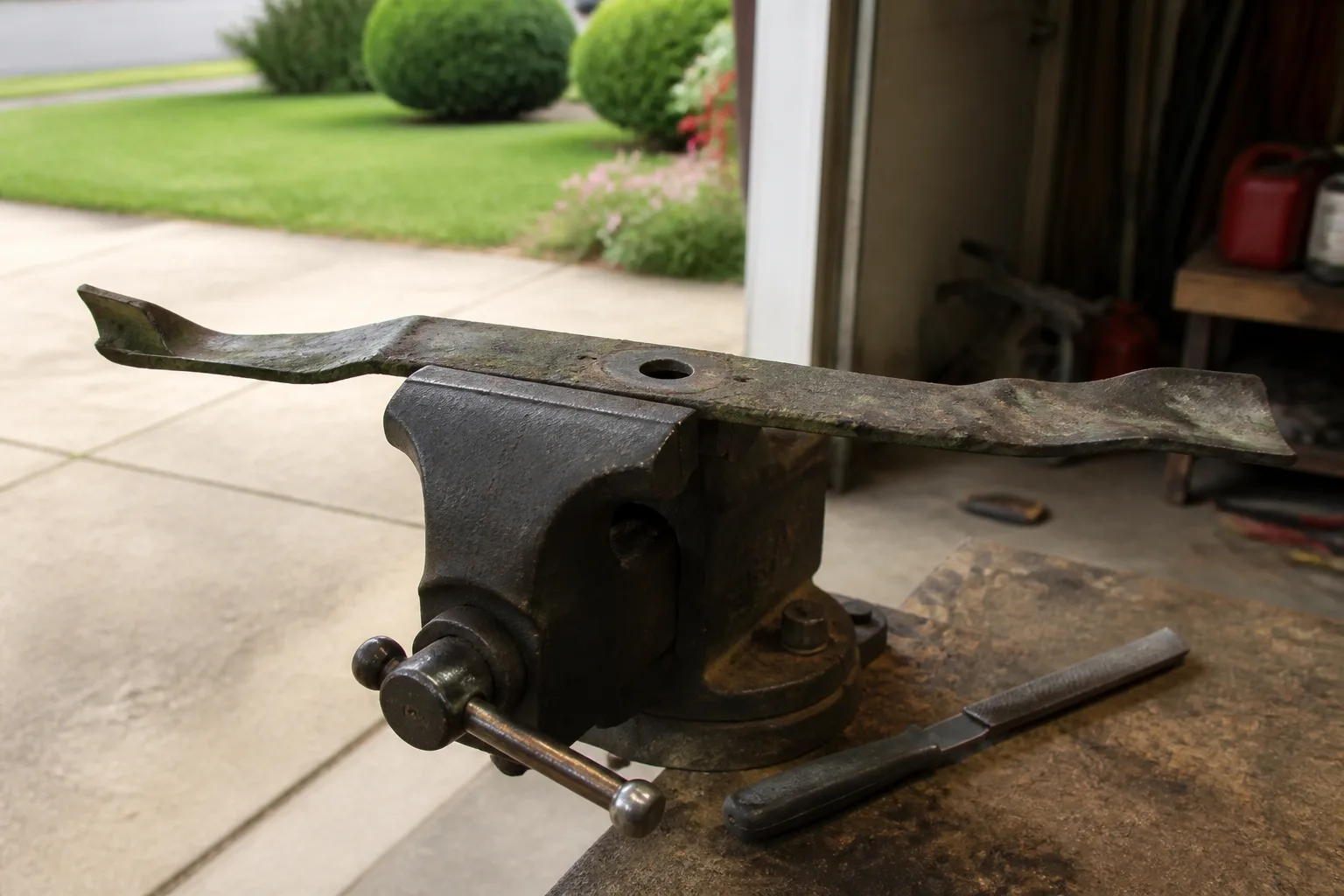
- Sharpen and balance a sound blade; replace it if it is bent, cracked, deeply gouged, or too thin.
- Inspect the bail cable, safety switch, wheel hardware, belt, and drive cable for obvious damage.
- Clean battery contacts, confirm the charger works, and check the battery warranty before buying a complete mower.
A clean-up is not a substitute for a structural inspection. If the mower still vibrates, stalls under normal load, loses drive, or exposes a safety-control problem after the simple service, stop escalating the parts list and get a repair estimate or replacement comparison.
6. The power source no longer fits your routine
Power source is a legitimate reason to replace a working mower, particularly when spring is a natural reset point. If you are tired of fuel storage and seasonal starting issues, a battery mower may remove friction. If charging time, battery cost, or long sessions are the problem, a gas mower may still fit better. If local rules, an HOA, or your own noise constraints make the old power source impractical, the mower can be functionally obsolete even while it cuts.
Battery replacement deserves its own calculation. A fresh battery can be the sensible repair when the deck, motor, drive, controls, and charger are healthy and the battery platform has a future. Replacement is more attractive when the pack is near the cost of a complete kit, the mower’s runtime has been poor even with a healthy pack, or the machine is also showing deck, wheel, or drive wear.
Corded electric and reel mowers can still be excellent for a small, flat, frequently maintained lawn. They are poor choices when the cord route is complicated, the grass regularly gets tall, or the property is uneven. Choose the power source around your actual mowing window, storage, route, and maintenance tolerance—not around a general claim that one technology is always better.
Whichever mower you choose, do not use extra power to compensate for mowing too much grass at once. University of Minnesota Extension’s mowing guidance recommends removing no more than one-third of the leaf height in a cut; raising the deck or mowing more often can protect the lawn and reduce the load on the replacement mower.
7. Warranty, parts, or service support are disappearing
Warranty expiration alone is not a reason to discard a dependable mower. It matters when the warranty is ending at the same time as a suspected battery, motor, transmission, controller, or deck problem, or when the manufacturer’s service network is difficult to reach. Check what the warranty actually covers: batteries, wear parts, labor, commercial use, and damage from improper storage are often treated differently.
Parts support is just as important as the warranty. Search the model number for the blade, belt, battery, charger, safety switch, control cable, and deck hardware before buying a repair. If the only available parts are unverified, back-ordered, or priced like a complete replacement, reliability has become part of the ownership cost.
This sign is especially strong for battery mowers tied to a discontinued platform and for riding mowers whose transmission or electronic controls require brand-specific diagnosis. A supported older mower can be worth maintaining; an unsupported mower that fails at the beginning of the season can turn every repair into a guessing exercise.
What is worth repairing before you replace the mower?
Repair first when the problem is isolated, the mower is structurally sound, parts are available, and the machine still fits your property. A new blade, plug, filter, belt, tire, cable, or battery can restore years of useful service when the deck, motor, drive, and safety controls are healthy.
Replace when you find a cracked or perforated deck, loose blade or spindle mounting, badly bent blade shaft, failing transmission, repeated engine failure after proper service, severe corrosion at load-bearing points, or several expensive systems failing together. A repair shop can tell you whether a component is serviceable, but it cannot make a compromised guard or deck safe by optimism.
For blade decisions, use the same logic as the rest of the mower: sharpen a straight, crack-free blade with normal edge wear; replace one that is bent, cracked, deeply damaged, or too thin to retain a safe profile. The guide to when to replace lawn mower blades explains why a blade problem does not automatically mean the mower is finished.
Choose the replacement by your lawn, not your old mower
Start with the route. Measure the narrowest gate, note slopes and soft areas, estimate how long a normal cut takes, and decide whether you usually mow on schedule or rescue an overgrown lawn. Then choose a deck size and drive system that can finish that job without making storage, charging, or maintenance harder.
Gas, battery, corded electric, or reel
Gas remains useful for long sessions, dense growth, and owners who value quick refueling and sustained output. It brings fuel handling, oil, filters, noise, exhaust, and seasonal storage decisions, so it is a poor fit if the reason you are replacing the mower is that small-engine maintenance has become the thing you avoid.
Battery models start easily, reduce routine engine service, and are often pleasant around a home. Compare the included battery size, expected runtime under thick grass, charge time, replacement-pack price, and whether the platform is already useful for your other tools. Battery performance is a system decision, not a voltage number printed on the box.
Corded electric makes sense for a compact lawn with a simple outlet-to-yard route. Reel mowers are quiet and mechanically simple when the turf is short, level, and cut frequently; they are not a rescue tool for tall grass, rough ground, or neglected spring growth.
Push, self-propelled, or riding
Choose a push mower when the lawn is relatively flat, the operator can comfortably walk the full route, and low weight and lower cost matter. Choose self-propelled when slopes, distance, or fatigue make pushing the machine the limiting factor, but remember that drive components add weight, cost, and another system to maintain.
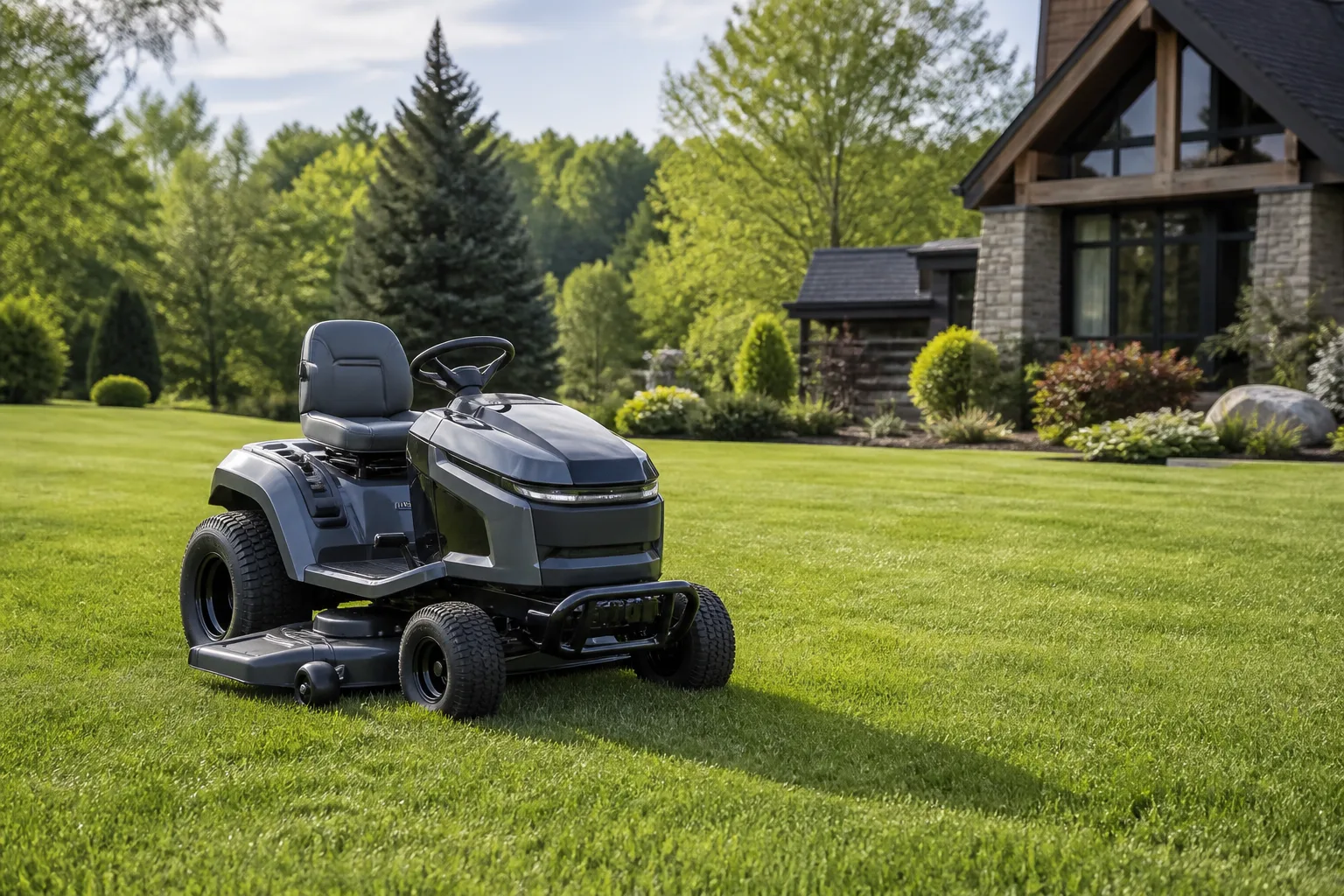
A riding or zero-turn mower is justified by time, acreage, and open route—not by the fact that the old walk-behind is frustrating. It needs storage, safe operating space, maintenance access, and a property layout that allows the larger deck to work. If the yard has narrow gates, many beds, disconnected sections, or steep obstacles, a riding mower can create a new problem instead of solving the old one.
Spring buying checklist: measure the job before the machine
Take this short list to the store or product page:
- Route: narrowest gate, corners, beds, trees, and disconnected lawn areas.
- Terrain: slope, ruts, soft ground, roots, rocks, and the places where traction matters.
- Grass: species and density, typical cutting height, wet conditions, and how often you miss a cut.
- Deck: width that fits the route, height adjustment, bagging, mulching, and discharge options.
- Power: fuel storage, battery platform, charger location, cord reach, or reel-mower limitations.
- Operator: push force, self-propelled speed control, handle height, lifting, and storage weight.
- Support: warranty terms, local repair access, replacement blades, belts, batteries, and chargers.
- Safety: guards, interlocks, stable controls, and an owner’s manual you can actually follow.
If two machines look equally capable, choose the one with the simpler support story and the easier storage routine. The mower you can clean, charge or fuel correctly, and service on time will usually outperform a more powerful machine that lives uncovered at the back of the shed.
Retire the old mower safely
Do not leave an unwanted gas mower full of fuel beside a heater, toss a lithium-ion battery into household trash, or put a sharp loose blade in a recycling bin. Drain and store fuel only as the owner’s manual and local waste program direct, and take gasoline, oil, and damaged batteries to the appropriate household hazardous-waste or retailer collection route.
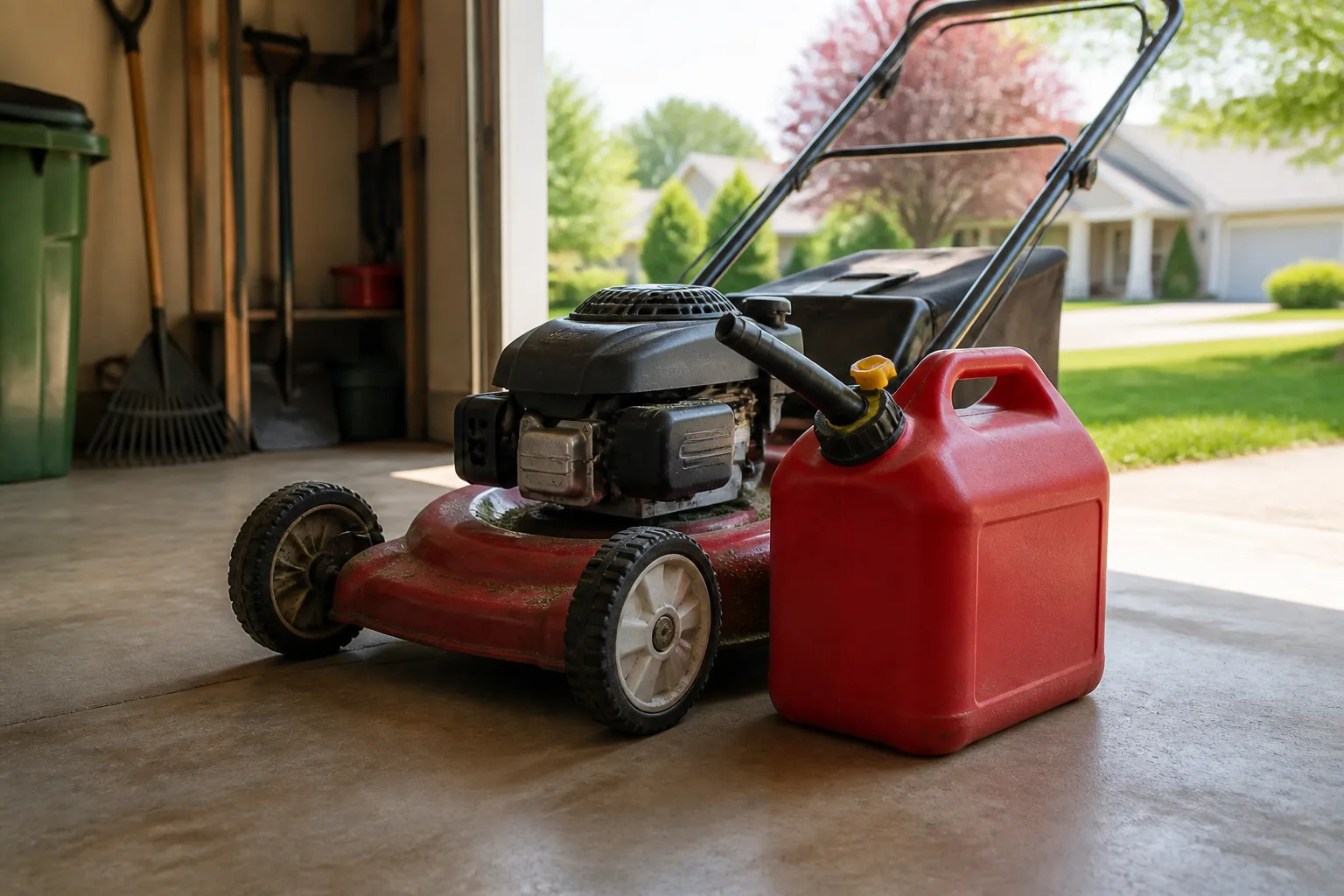
Before handing the mower off, remove the battery if it has one, disconnect or secure the spark plug lead on a gas model, and tell the next owner or recycler about known damage. A usable mower may be worth donating after a truthful condition check; a mower with a compromised deck, exposed wiring, or unsafe blade mount should be treated as equipment for proper recycling or disposal, not as a casual giveaway.
Conclusion
The decision to replace a lawn mower is strongest when several signals point in the same direction: structural rust, a major component failure, recurring repair bills, disappearing parts support, or a power source that no longer fits your life. Age and one bad start are clues, not automatic verdicts.
Give the mower a safe inspection, repair the inexpensive and documented faults, and compare any larger estimate with a genuinely comparable replacement. When you do buy, match the new machine to the route, grass, terrain, storage, and maintenance routine you can sustain; that is what makes spring mowing easier long after the first fresh cut.