Do April Showers Really Bring May Flowers? What Rain Does to Your Garden
April showers can help gardens, but saturated soil creates risks. Learn when to let rain work and when to improve drainage, airflow, and timing.

April rain can be one of the best things that happens to a spring garden—and one of the quickest ways to expose a drainage problem. The old saying is directionally right: steady rain moistens the root zone, wakes dormant growth, and can help seeds establish. But May flowers do not come from rainfall alone. They come from the combination of water, warming temperatures, adequate light, oxygen around roots, fertile soil, and a plant that is ready to bloom.
The useful question is not whether rain is good or bad. It is whether your garden can accept the rain, hold enough of it for roots, and release the excess before the soil loses air. Here is how to read what spring showers are doing and what to change after a storm.
The Short Answer: Rain Helps, but It Is Not the Whole Recipe
Rain supplies water that plants use for photosynthesis, nutrient transport, cell expansion, and cooling. It also saves you from watering when the root zone is already full. Natural rainfall may contain small amounts of dissolved nitrogen compounds, but it is not a dependable replacement for soil testing, compost, or a properly timed fertilizer application. The USDA Natural Resources Conservation Service explains how soil pores hold both air and water and why that balance matters.
Flowering is controlled by more than moisture. Day length, temperature, winter chilling, plant age, genetics, sunlight, pruning, and pollination all matter. A rainy April cannot make a frost-sensitive annual bloom before the weather allows it, and it cannot rescue a plant whose roots are sitting in airless clay.
What Spring Rain Adds to a Garden
Water, dissolved nutrients, and a softer root zone
Rain infiltrates soil and replenishes moisture around roots. That matters most in spring, when new roots and shoots are expanding quickly. A well-structured soil has pore spaces that hold both water and air. After moderate rain, roots can draw water while oxygen remains available in the larger pores.
Rain can also wash a small amount of atmospheric nitrogen into the soil. That contribution is real, but it is easily overstated. Plants get most of their nitrogen from the soil system, where organic matter and microbial activity release nutrients over time. If foliage is pale or growth is weak, diagnose light, roots, pH, and fertility instead of assuming another storm will fix it.
Rain is especially helpful when it arrives slowly enough to soak in. Gentle precipitation reduces the need for irrigation and can wet the soil more evenly than a quick hose blast. It is less helpful when the same volume arrives so fast that it runs off a slope, splashes soil onto leaves, or carries away fine particles.
Why Too Much Rain Becomes a Problem
Saturated soil deprives roots of oxygen
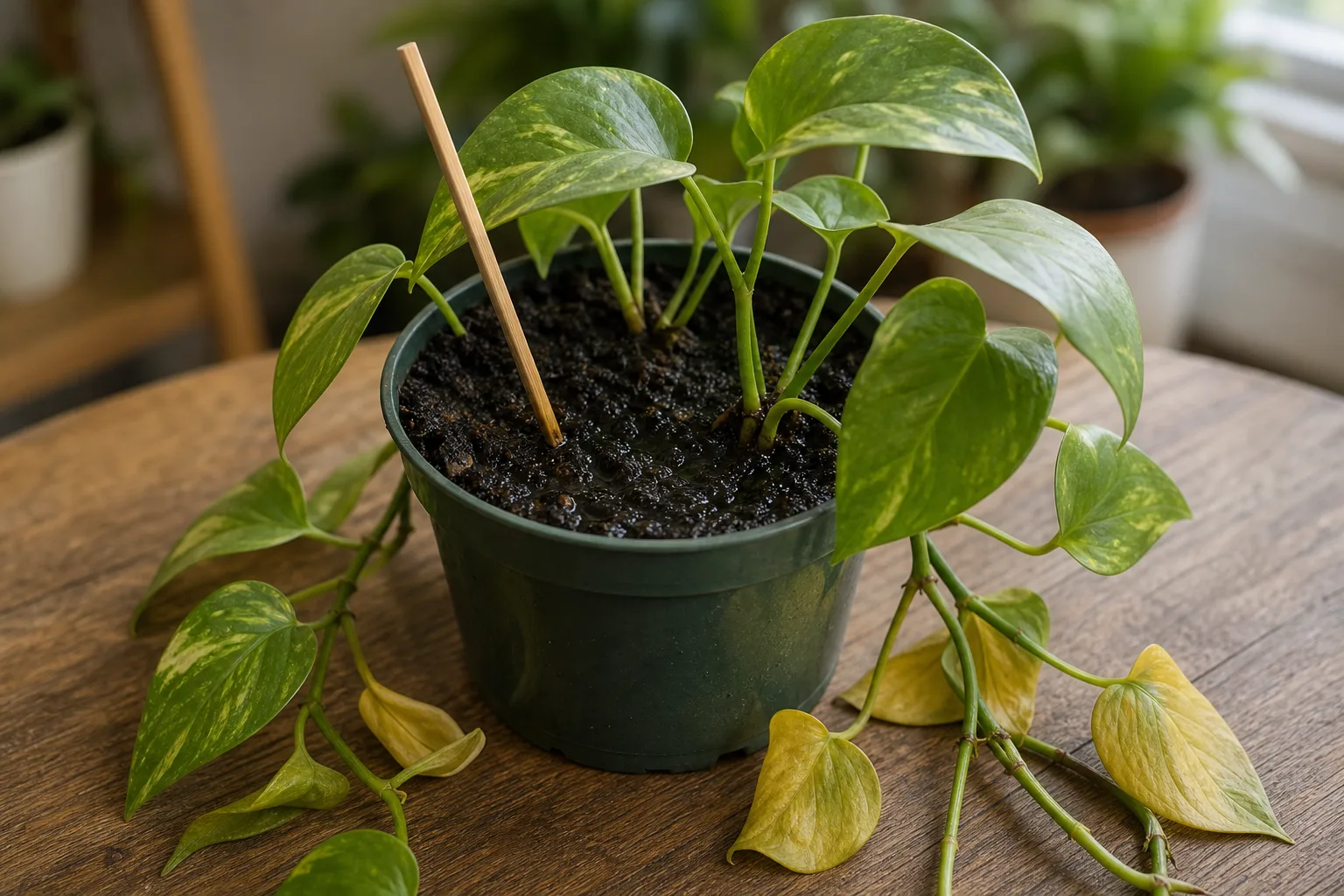
Water itself is not the enemy. The problem is water replacing the air in soil pores for too long. Roots need oxygen for respiration, and prolonged saturation slows root function. Sensitive plants may develop soft roots, yellowing leaves, wilting despite wet soil, or a sour-smelling root zone.
This is why “the plant is drooping, so it must need water” can be a costly mistake after a storm. Feel the soil several inches down and inspect the drainage hole or low point before watering again. A wet root ball cannot be corrected by adding more water.
Runoff, erosion, and compaction
Heavy rain can move mulch, expose roots, carve channels, and deposit silt in low areas. Bare soil is especially vulnerable. Walking through a saturated bed makes the damage worse by squeezing out pore space; the surface may look tidy while the root zone becomes dense and slow to drain.
Use paths or boards to keep feet out of wet beds. If a channel forms, redirect the flow first. Do not simply add more soil on top of an exposed crown or bury a woody plant’s trunk flare. Repair erosion after the soil is workable and the source of the runoff is understood.
How to Tell Whether Your Soil Is Too Wet
Look at the soil, not only the sky. A few practical checks are more useful than a calendar rule:
- Standing-water check: If puddles remain for a day or more in a place that should drain, investigate grade and soil structure.
- Squeeze test: Take soil from the root depth. If it forms a shiny, sticky ball that will not crumble with gentle pressure, wait before digging or planting.
- Trowel check: Push a trowel into the bed. Resistance, smearing, or a compacted sidewall suggests the soil is too wet to work.
- Root-zone check: A surface that looks dry can conceal saturated soil below mulch. Check the depth where the plant’s roots actually are.
Some wetland and rain-garden plants tolerate saturation; many vegetables, bulbs, Mediterranean herbs, and drought-adapted perennials do not. Judge moisture against the plant and the site rather than using one universal number of hours.
Rain and Plant Disease: What Actually Raises Risk
Rain does not create every disease, but long periods of leaf wetness and poor airflow make infection easier for many fungal and bacterial pathogens. Splashing water can move contaminated soil onto lower leaves. Dense planting, shade, cool nights, and overcrowded foliage extend the time leaves stay wet. Cornell University’s plant disease resources likewise emphasize moisture management, sanitation, and airflow as parts of integrated disease prevention.
The best response is prevention, not a reflexive spray. Space plants according to their mature size, remove badly diseased tissue with clean tools, water at the soil when irrigation is needed, and improve morning light and airflow. Avoid handling wet foliage when possible because contact can spread some pathogens.
Do not diagnose every spot as a fungus. Nutrient problems, insects, wind damage, herbicide drift, and cold injury can look similar. If symptoms continue, photograph the whole plant and the leaf detail, note recent weather, and use a local extension diagnostic service.
What to Do During a Heavy Spring Storm
Before the storm, move vulnerable containers under cover while keeping them in bright light. Secure tall seedlings, empty saucers that could stay full, and confirm that downspouts are not dumping water directly onto a bed or foundation.
During a storm, resist the urge to rake, cultivate, or walk across saturated soil. If water is flowing toward a valuable bed, use a temporary diversion such as a shallow, stable channel lined with mulch or a board. Do not build a dam against a plant crown or foundation.
For intense rain, protection should slow impact rather than seal the garden. A breathable cover supported above young plants can reduce leaf tearing and soil splash. Remove it when the storm passes so heat and humidity do not build underneath.
What to Check the Morning After Rain
Walk the garden once the surface is safe to inspect. Look for blocked drainage holes, buried crowns, exposed roots, shifted mulch, lodged stems, and seedlings pinned to the soil. Gently stand up flexible stems and replace displaced mulch after the bed begins to drain.
Do not fertilize immediately just because the rain was heavy. Nutrients applied to saturated soil may run off before roots can use them. Wait until the bed is draining, follow a soil-test recommendation, and keep fertilizer away from stems and leaves.
If a container is waterlogged, let it drain fully. Confirm that the hole is open and the pot is not sitting in a saucer of stormwater. A plant that stays wet for days may need a root inspection, but repotting a dripping root ball is usually messy and stressful; first correct the drainage problem and let excess water escape.
Should You Water After a Rainy Day?
Usually, no—not automatically. Check moisture below the surface and consider how much rain actually reached the root zone. A dense canopy, roof overhang, plastic cover, or container wall can leave soil dry even when the surrounding ground is wet.
Water when the plant and root zone need it, not because your normal schedule says it is watering day. Apply water slowly at the soil line and stop when the root zone is evenly moist. For containers, lift the pot when practical; weight is often a better signal than a damp-looking surface.
A rain gauge is useful because “it rained” covers everything from a brief sprinkle to several inches. Compare rainfall with your soil’s drainage and the plant’s needs rather than treating a single threshold as universal.
When It Is Safe to Plant or Cultivate
Wait until soil is moist but workable. If a trowel smears the sides of the hole or your shoes leave deep impressions, postpone planting. Working wet soil can create lasting compaction that restricts roots long after the surface dries.
When the bed passes the squeeze test, loosen only the planting area and avoid pulverizing it. Set plants at the same depth they were growing, keep crowns and graft unions above the soil line, and water only if the root ball is dry relative to the surrounding bed.
For seeds, a rain can improve contact with soil but can also wash small seeds into clumps or expose them. Check the seed row after the storm and gently cover exposed seed with the recommended depth of fine soil or compost.
Protecting Seedlings and Newly Planted Crops
Young plants have shallow roots and little stem strength, so heavy rain affects them differently from established shrubs. Check that stems are not buried, roots are not exposed, and the soil has not crusted over. A thin layer of clean, fine mulch can reduce splash once the surface is no longer saturated.
Use row cover or a simple supported rain shield when a severe storm is forecast, but leave room for airflow. Do not press plastic against foliage. Afterward, remove damaged leaves only when needed and let healthy foliage dry in light and moving air.
Helping Containers and Raised Beds Handle Spring Rain
Raised beds drain faster only when the surrounding site and bed mix allow drainage. A raised box sitting on compacted clay can still hold water. Make sure the bed is not lined with an impermeable layer, and do not fill it with a fine, dense material that collapses into a sealed mass.
Containers need open drainage holes and a potting mix suited to the plant. Elevate pots slightly so holes are not blocked by a flat patio surface. Grouping containers can reduce wind stress, but leave enough space for air to move between leaves.
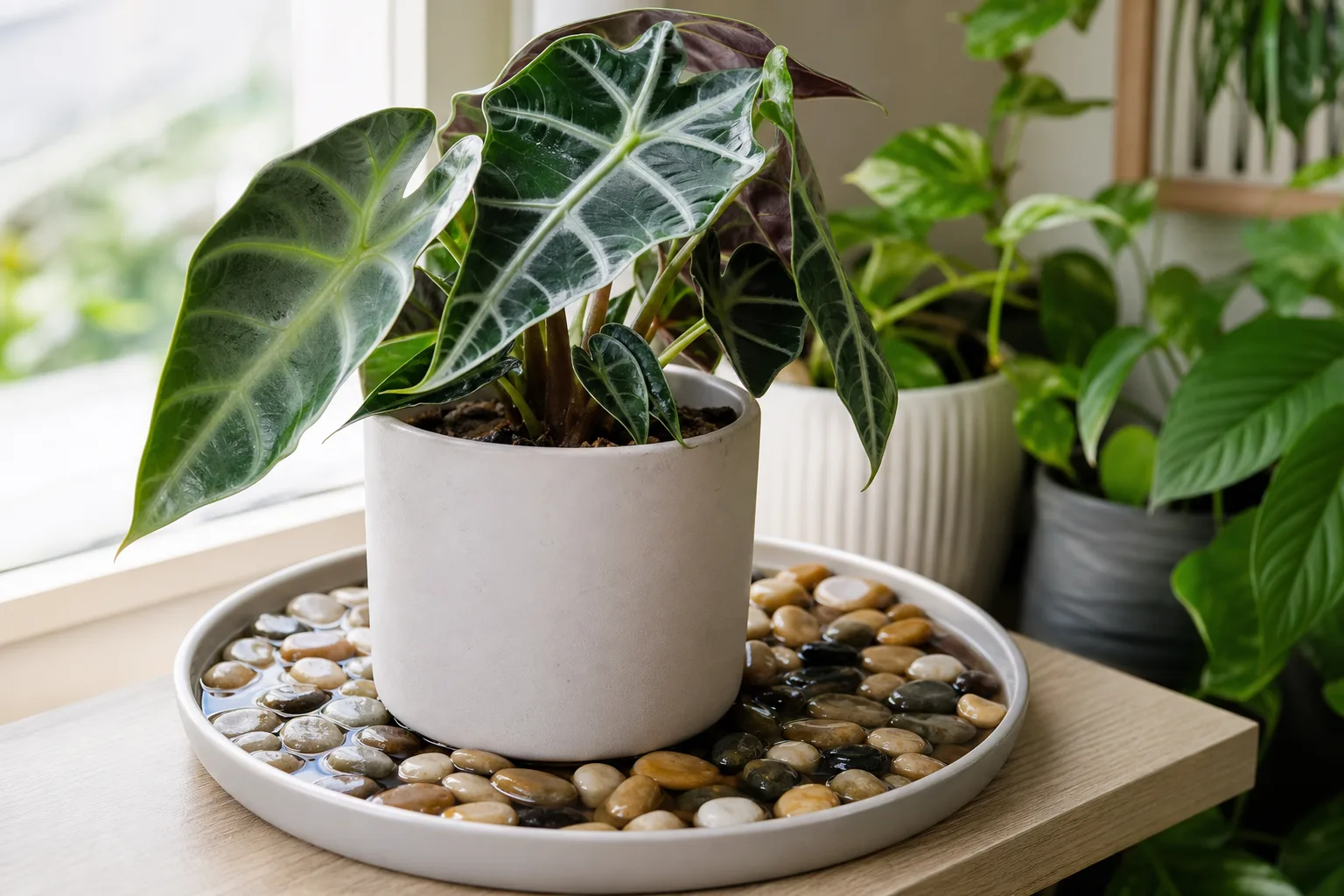
After rain, empty saucers, remove debris from drainage holes, and tip out water trapped in decorative cachepots. These small tasks prevent a single storm from becoming a week of saturated roots.
Simple Long-Term Fixes for a Wet Garden
Start with the cause. Observe where water enters, where it travels, and where it stops. A downspout extension, swale, contouring, or a planted rain garden may solve more than repeatedly amending one puddle.
Add organic matter gradually and according to the soil and crop. Compost can improve aggregation in many garden soils, but it is not a magic drainage material and should not be piled against stems. Avoid routinely adding sand to clay; the wrong ratio can create a dense, concrete-like mix. Oregon State University Extension’s soil-improvement guidance is a useful reference for building structure without treating amendments as a quick fix.
Choose plants suited to the site’s moisture and improve the bed’s structure over time with roots, compost, and minimal traffic. If the same area floods, move sensitive plants rather than forcing them to tolerate a site that does not match their needs.
How to Use Mulch Without Trapping Excess Moisture
Mulch reduces splash, moderates temperature, and slows evaporation. It does not make a poorly drained bed drain. Keep mulch a few inches away from stems, crowns, and trunks, and pull it back temporarily if a wet spring has left the soil saturated around a vulnerable plant.
Use a moderate layer and inspect beneath it. If the surface stays cold, sour, and wet while the surrounding bed drains, the mulch may be too deep or too fine. Restore a thinner layer after the soil has regained structure.
A Rain-Ready Spring Garden Routine
Once a week, check the rain gauge, walk low spots, and inspect containers. Before a forecast storm, clear downspouts and stabilize seedlings. The day after, check drainage and roots before watering, fertilizing, or cultivating.
Keep a short site note: date, rainfall, puddle duration, plant symptoms, and what you changed. That record turns a vague feeling that “this corner is always wet” into a design decision. You may discover that the fix is a downspout diversion, a wider path, a different plant, or a new raised bed—not more watering. For practical rain-management design, University of Minnesota Extension’s rain-garden guidance and RHS advice on improving soil and drainage provide useful context.
Conclusion: Let Rain Help Without Letting It Run the Garden
April showers can set the stage for May flowers by replenishing moisture, supporting new growth, and reducing irrigation demand. They work best when soil has enough structure to hold water and enough air space to release it. The gardener’s job is to notice when that balance shifts.
After ordinary rain, let the garden use the water. After heavy rain, check drainage, protect soil structure, improve airflow, and delay any task that requires walking or digging in saturated ground. With those few decisions, spring rain becomes a resource you manage—not a mystery you blame for every bloom or blemish.