5 Signs Your Plant Collection Is Too Big
Learn the five signs your houseplant collection has become unmanageable, plus a humane plan to triage, quarantine, rehome, and reset your care routine.
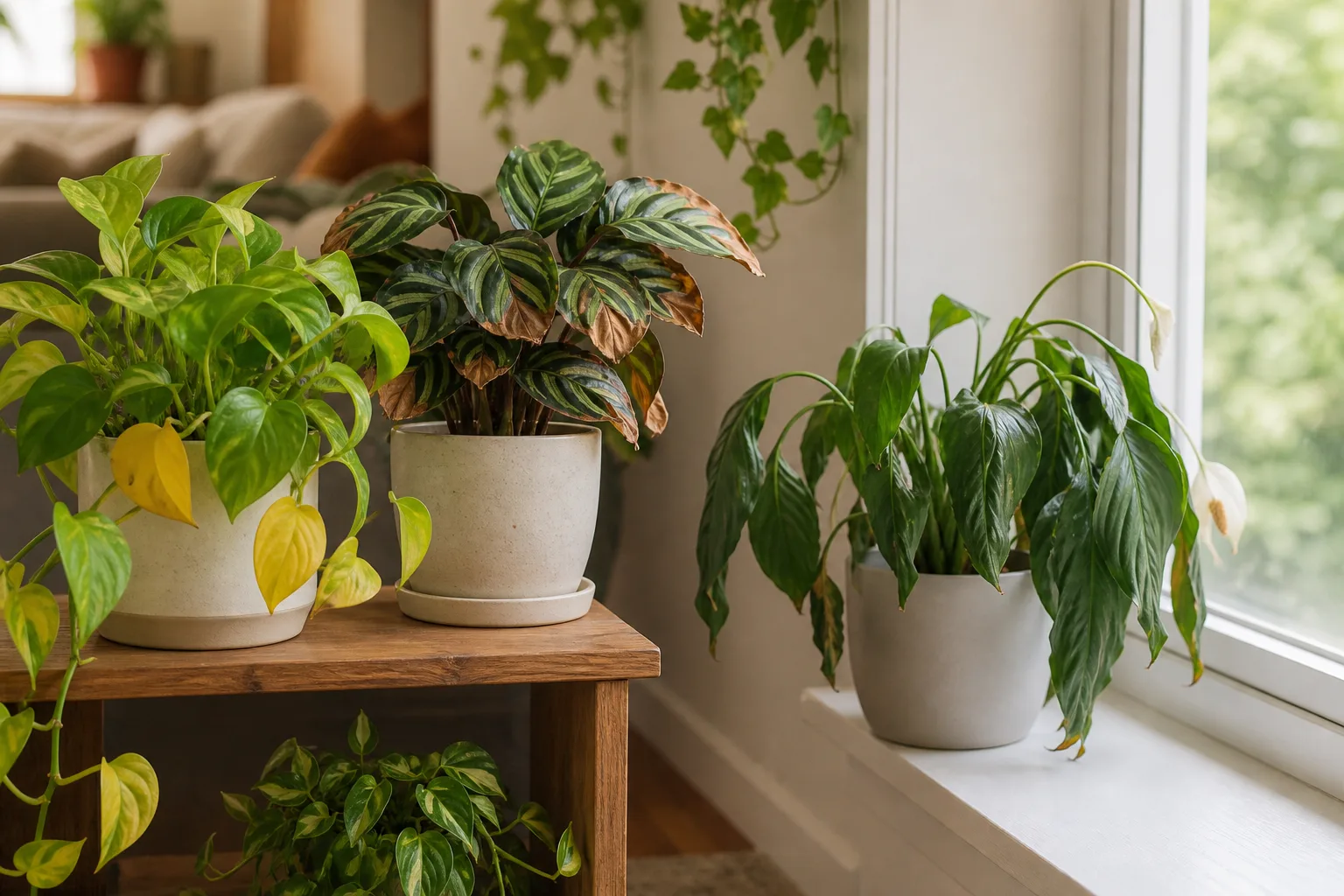
There is no universal number of houseplants that counts as “too many.” One person can manage a greenhouse-like room with a watering system; another can be overwhelmed by six pots during a busy month. The useful limit is the point at which your available time, light, space, water access, money, or attention can no longer support consistent care.
That makes this a capacity question, not a guilt question. A collection is too large when plants repeatedly suffer, pests move unchecked, rooms become unsafe or unusable, or caring for the plants stops feeling rewarding. These five signs help you spot the pattern early. They also give you a way to reduce the collection without throwing healthy plants away or passing a pest problem to somebody else.
The real limit is your care capacity, not a plant count
Count the jobs, not just the pots. A small plant may need frequent moisture checks; a large one may need space, support, pruning, and a heavy pot that is difficult to move. Ten plants on one bright windowsill may be easier than ten plants scattered across three floors.
Your practical capacity is the overlap of five budgets:
- Time: watering, inspecting, pruning, repotting, cleaning leaves, and treating pests.
- Light: suitable windows, grow lights, outlet space, and enough distance from heat or cold glass.
- Water access: a route to a sink or drain without carrying dripping pots through the home.
- Physical space: stable shelves, clear walkways, airflow, and room to isolate newcomers.
- Attention: the willingness to notice changes before a minor problem becomes a collection-wide problem.
If one budget is already exhausted, buying another plant does not solve the shortfall. It adds maintenance debt.
Sign 1: Plants are declining because care is being missed
The clearest sign is a pattern of preventable decline. Several plants are wilting between waterings, sitting in water for days, dropping leaves, developing crispy edges, or outgrowing their containers because you cannot reach them in time. A single sick plant may simply need a diagnosis. Many plants failing in different ways at once often point to a care system that has become too large or too complicated.
Start by checking the root zone rather than watering every unhappy pot. A dry surface does not prove the whole root ball is dry, and a drooping plant can also be suffering from saturated roots. Check moisture at the depth where most roots are active, feel the pot’s weight, and inspect drainage. University of Minnesota Extension’s indoor-plant guidance emphasizes matching watering to the plant and growing conditions rather than following a fixed calendar.
Separate a care-system failure from a single plant problem
Make a quick table with each plant’s location, last thorough watering, light, visible symptoms, and next action. If the same failure appears across plants in different rooms, look at your routine first. If only one plant is failing while its neighbors are stable, diagnose that plant before using the collection as the explanation.
Do not rescue every plant at once. Put the most recoverable plants first: those with firm stems, viable growing points, and a clear cause such as missed watering or a blocked drain hole. A plant with widespread rot, a collapsing crown, or a persistent pest that you have no time to manage may be a poor use of limited recovery time.
Sign 2: Every usable surface and suitable light spot is occupied
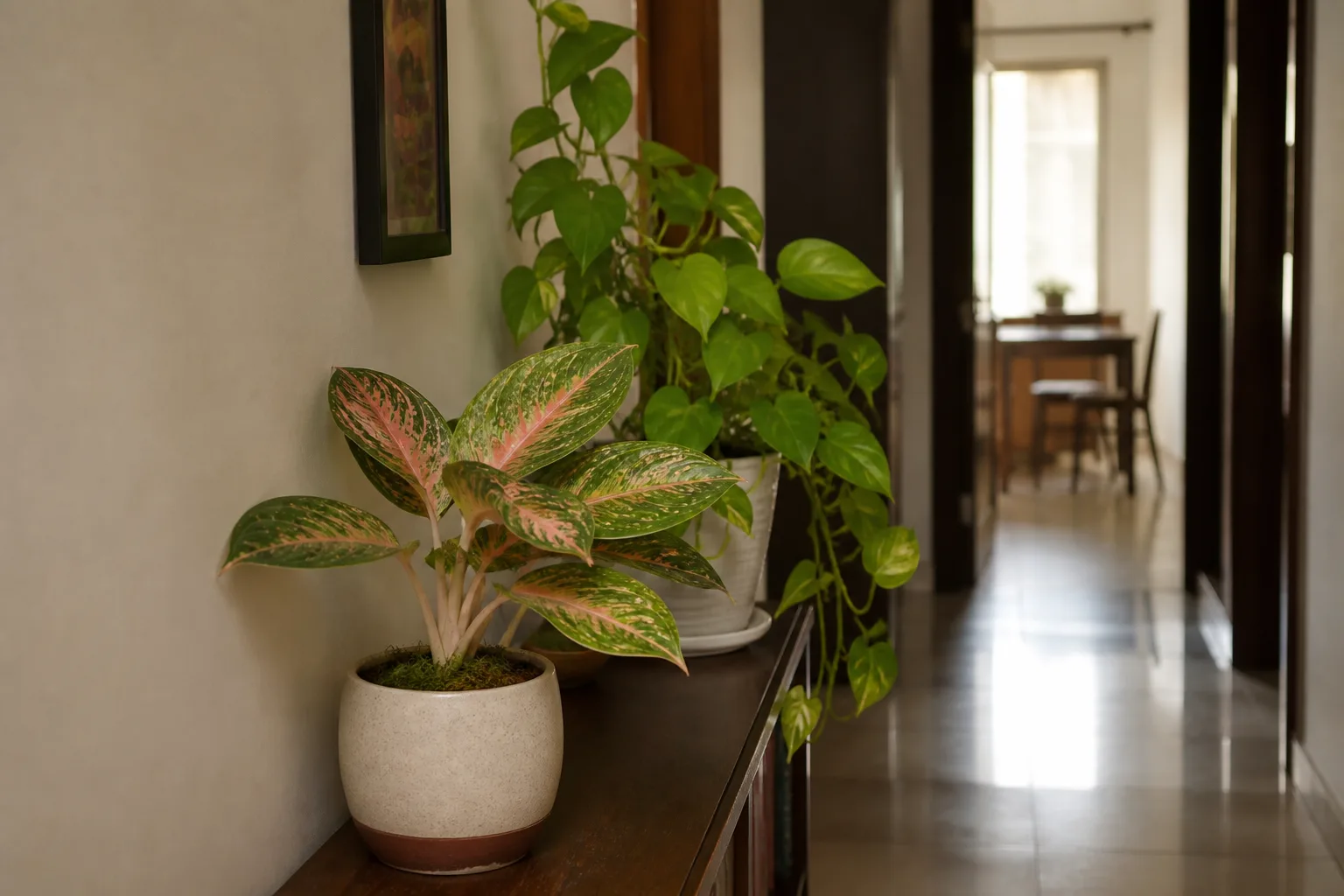
Running out of room is not just a decorating problem. Plants placed too far from a window may stretch and weaken. Pots packed tightly together stay wet longer, have less airflow, and are harder to inspect. Plants on narrow shelves can block vents, doors, work surfaces, or emergency access. Hanging plants add load and drip risk; large containers add weight that a shelf or balcony may not be designed to carry.
The warning sign is not “there are plants on a shelf.” It is that you are inventing unsuitable locations to avoid admitting the collection has exceeded the home’s conditions. A plant does not become low-light tolerant because the only remaining space is a dark hallway.
Measure the spaces you actually have. Mark the brightest zones, the safe floor areas, the places where watering can happen without damaging furniture, and the one area available for quarantine. If every suitable zone is full, your next plant requires removing or rehoming another one.
Sign 3: Pests keep moving through the collection
An infestation does not prove you have too many plants. Pests can arrive on one new plant, through an open window, or from outdoor plants. But a large, tightly packed collection makes detection and containment harder. Leaves touch, pots are moved together, and the owner may not have enough time to inspect the undersides of leaves or isolate a suspect plant.
University of Maryland Extension and UC Integrated Pest Management both frame indoor pest control around inspection, cultural controls, isolation, and repeated monitoring. That is more useful than reaching for a spray the moment you see one insect. The right response depends on the pest, plant, label directions, household safety, and how much follow-up you can realistically provide.
Quarantine is a system, not a corner
When a plant arrives or shows pests, move it away from the collection immediately. Use a separate room if possible, inspect leaf joints, stems, pot rims, and soil surface, and label the date and suspected problem. Sticky cards can help monitor flying adults such as fungus gnats, but they do not replace inspecting the plant.
Keep checking during treatment. A plant is not “clear” merely because you saw fewer insects once; eggs, protected adults, and newly emerged stages can outlast one treatment. Follow the product label if a pesticide is used, keep it away from children and pets as directed, and never mix home remedies or increase a concentration because the collection feels urgent.
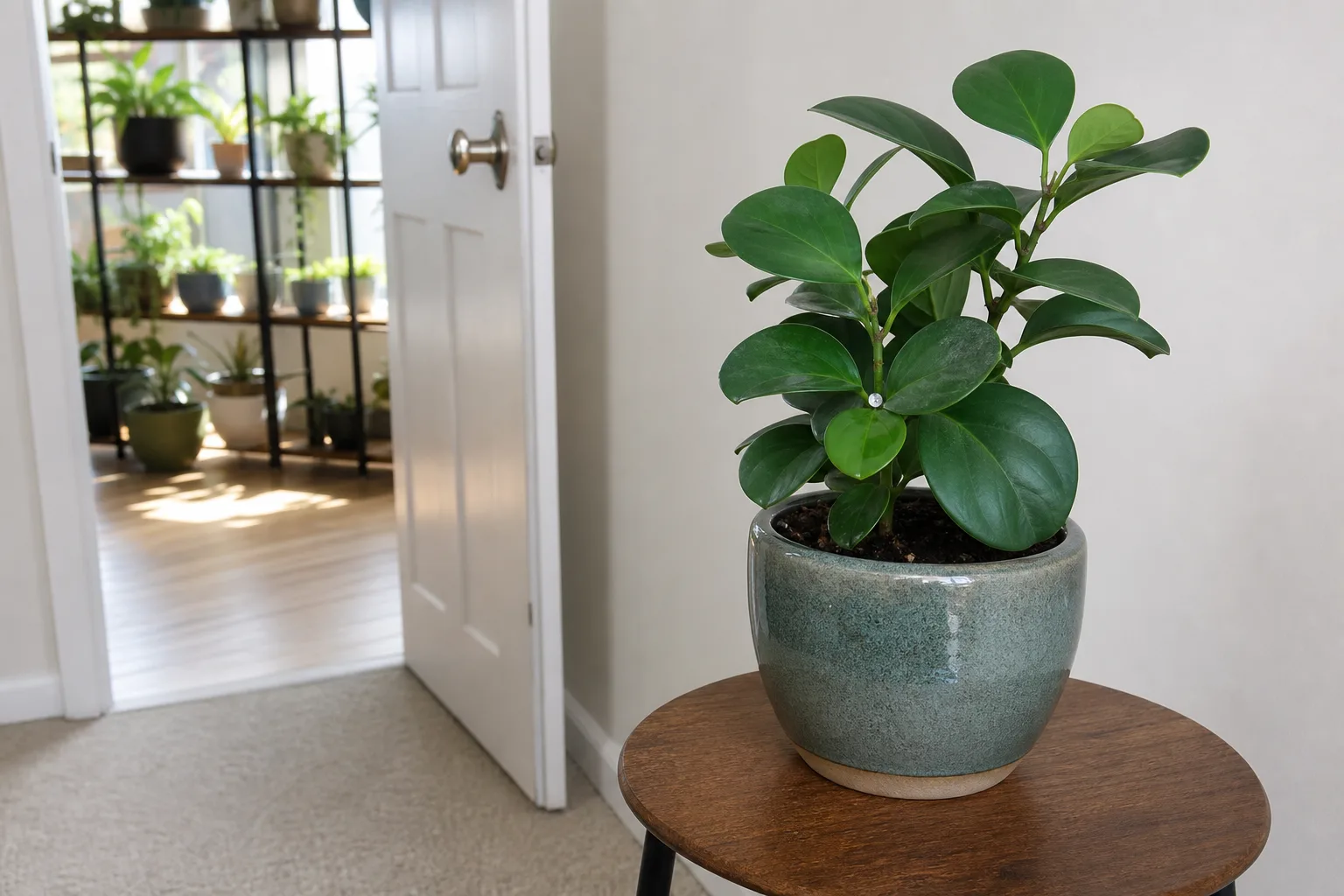
If you cannot provide an isolation space or repeat inspections, that is a capacity warning. Rehome only healthy, inspected plants. Do not give away a plant with active thrips, mealybugs, scale, mites, or an unexplained disease without telling the recipient; in many cases, responsible disposal is kinder than exporting the problem.
Sign 4: Plant care feels like a recurring chore
Enjoyment is not a requirement for every care task, but dread is useful information. If watering, pruning, repotting, and pest checks have become a weekly backlog, the collection is asking for more than you want to give. A familiar pattern is a long list of pots and cuttings, with repotting postponed until a plant is visibly suffering. The better response is not to shame the delay; it is to reduce the queue.
Calculate your maintenance debt
For one week, record the jobs you postpone. Include small tasks such as emptying saucers, turning plants, removing dead leaves, checking for pests, and cleaning a grow-light shelf. Then mark whether each delay affects plant health, household safety, or only appearance.
Prioritize health and safety first. A full saucer, blocked drain, unstable shelf, or pest-infested plant outranks cosmetic pruning. Next, keep plants that are both healthy and genuinely rewarding. A plant that requires constant intervention but gives you no pleasure is a strong rehoming candidate, even if it is technically salvageable.
Do not let propagation become a hidden second collection. Rooted cuttings count as plants once they need their own light, water, and pot. Keep a fixed number of propagation spaces and a deadline for deciding their destination. “I will deal with it later” is how maintenance debt becomes a wall of small pots.
Sign 5: Your collection is running your home and your identity
People may joke that you are “the plant person,” but the real sign is more private: you avoid inviting people over, cannot use a desk or dining table normally, worry about a pot falling, or feel that every plant represents a past purchase you must justify. A hobby should fit into your life. It should not require you to arrange your life around preventing plants from becoming unhappy.
This sign can also show up as compulsive acquisition. You buy a plant because it is rare, discounted, or newly available, even though you have not solved the light or pest problem affecting the plants already at home. Pause before buying and ask three questions: Where will it live today? What care task will it add? Which existing plant will lose attention if the new one needs quarantine or treatment?
Pet and child safety belongs in this assessment. Check a reliable toxicity reference such as ASPCA Animal Poison Control for plants in a household with animals, and place or remove plants based on actual access rather than trusting a high shelf that a curious pet can reach. “Non-toxic” also does not mean edible or harmless in unlimited quantities.
Before you give up, run a seven-day plant audit
An audit prevents a dramatic purge based on one bad weekend. For seven days, observe and record rather than buying, repotting, or propagating.
- Map the collection. Give every pot a name or simple label and note its location.
- Mark the care route. Note which plants are easy to reach and which require moving furniture or carrying water.
- Inspect health. Look at leaves, stems, soil, pot rims, and drainage holes. Photograph symptoms.
- Record effort. Time watering, pest checks, pruning, and cleanup instead of guessing.
- Identify repeats. Group plants that need the same light and moisture; note duplicates you do not particularly value.
- Check safety. Look for unstable shelves, trip hazards, dripping pots, blocked windows, and pet access.
- Set a pause list. Do not add plants until every plant has a next action and every pest concern has an owner.
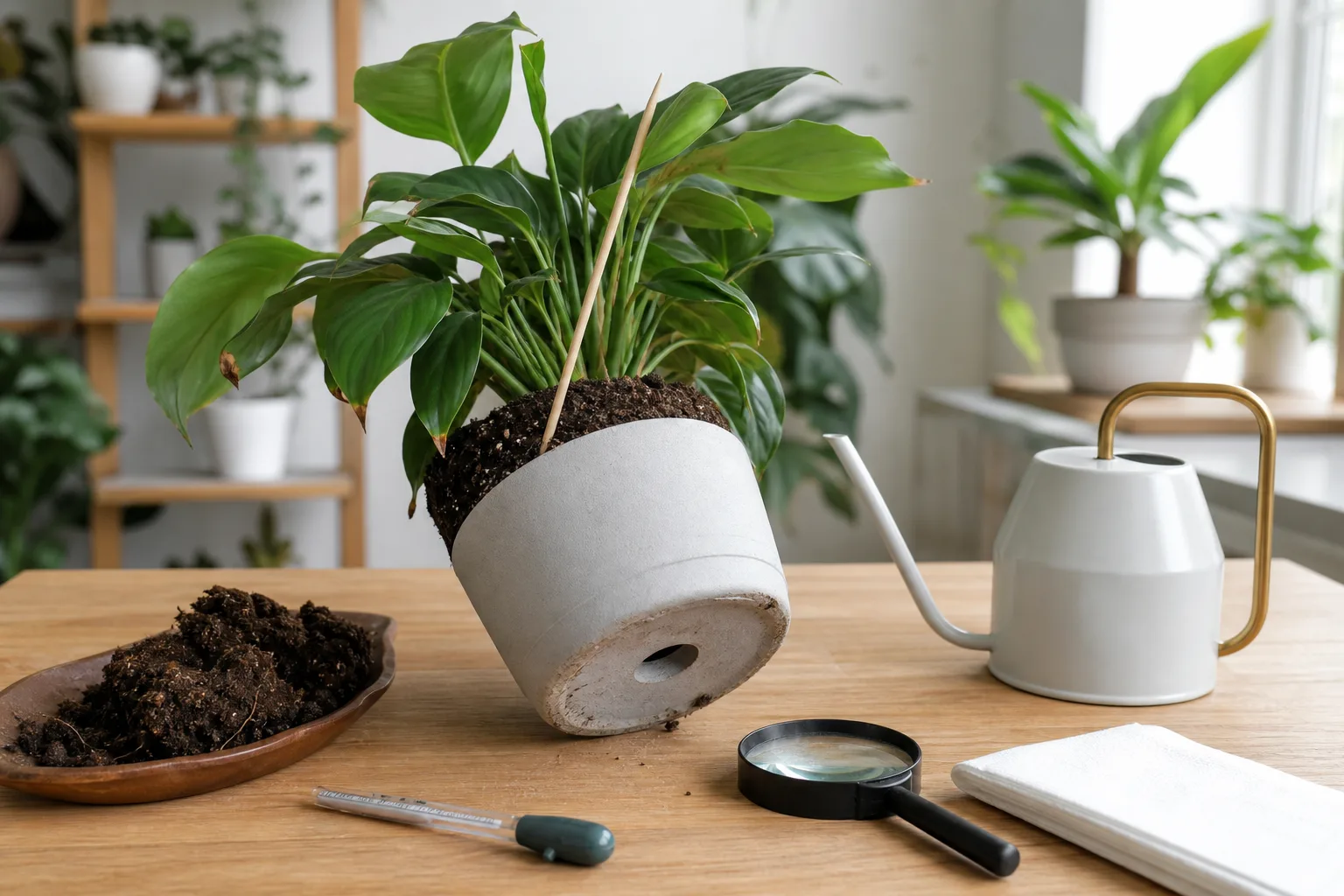
The audit often reveals that the collection is not simply too large; it is badly distributed. Moving thirsty plants closer to water or grouping plants by light may solve part of the burden. If the total work still exceeds your available time, downsizing is the honest solution.
Use a keep, pause, rehome, or discard decision rule
Assign each plant to one of four categories. Keep healthy plants that fit your space and that you would choose again. Pause plants that may recover but need a defined treatment or observation period. Rehome healthy plants that are valuable but no longer fit your conditions or interests. Discard plants that are dead, unsafe, severely diseased, or carrying pests you cannot responsibly contain.
For a difficult decision, score each plant from zero to two for health, fit, enjoyment, and effort. A high-effort plant can stay if it brings unusual value, but a low-health, low-enjoyment plant that threatens the rest of the collection should not consume unlimited time. Sentimental plants can receive a separate rule: keep a cutting or photograph, or ask a trusted person to grow it, rather than retaining every declining specimen indefinitely.
How to downsize without spreading pests or disease
Work from healthy plants to questionable ones. Wash your hands between groups, clean tools after cutting suspect tissue, and do not place a removed plant beside the collection “temporarily.” Bag diseased or heavily infested material before carrying it through the home. Do not compost diseased material in a casual home pile; home compost may not reach the conditions needed to destroy every pathogen or pest stage.
If a plant is only root-bound, underwatered, or cosmetically untidy, it may be a good rehoming plant. If it has active pests, a soft crown, unexplained collapse, or a disease that could follow the recipient’s collection, do not pass it on as a favor. RHS houseplant pest guidance stresses observation and appropriate cultural care; no downsizing plan should turn an avoidable problem into somebody else’s infestation.
How to rehome healthy plants responsibly
Give recipients enough information to succeed: plant name if known, light exposure, watering pattern, pot size, recent pest history, and any toxicity concern. Share a rooted cutting only if it is visibly healthy and separated with clean tools. Use local plant groups, community gardens, friends, neighbors, or a nursery that accepts donations, depending on local rules.
Avoid leaving plants anonymously outside in extreme heat or cold. A plant that looks fine indoors can be shocked by a sudden move into direct sun or wind. Tell the recipient to acclimate it gradually and inspect it separately from their collection. If a plant is valuable but fragile, an experienced grower is a better match than the first person who says yes.
Set a collection ceiling that will hold
Choose a limit based on your audit, not on an aspirational version of yourself. It might be a number of pots, a number of shelves, one watering route, or a maximum of two hours of weekly care. Leave a buffer for seasonal growth, travel, illness, repotting, and new arrivals. If every minute is already allocated, the ceiling is too high.
Use a one-in, one-out rule only if it is specific enough to work. “I will give away something eventually” is not a rule. “A new plant enters only after it has a measured light location, a quarantine space, and a named plant leaving the collection” is enforceable. Add a monthly no-buy period and keep a wish list; delaying a purchase is easier than defending an impulsive one.
Conclusion: a smaller collection can be a healthier collection
You have too many plants when the collection repeatedly exceeds your ability to give safe, timely, appropriate care—not when a number on a shelf looks impressive. Missed care, unsuitable placement, recurring pests, constant chore pressure, and a home organized around plants are five honest signals.
Start with a seven-day audit. Keep the plants that fit your conditions and bring real value, give recoverable healthy plants a responsible new home, and do not pass active pests or disease to someone else. A smaller collection is not a failure of commitment. It is often the change that lets the plants you truly want become healthier, easier to observe, and enjoyable again.