How to Grow and Care for Red Currant Bushes
Learn how to grow red currants with practical advice on site, soil, watering, pruning, pests, frost, containers, and harvesting.
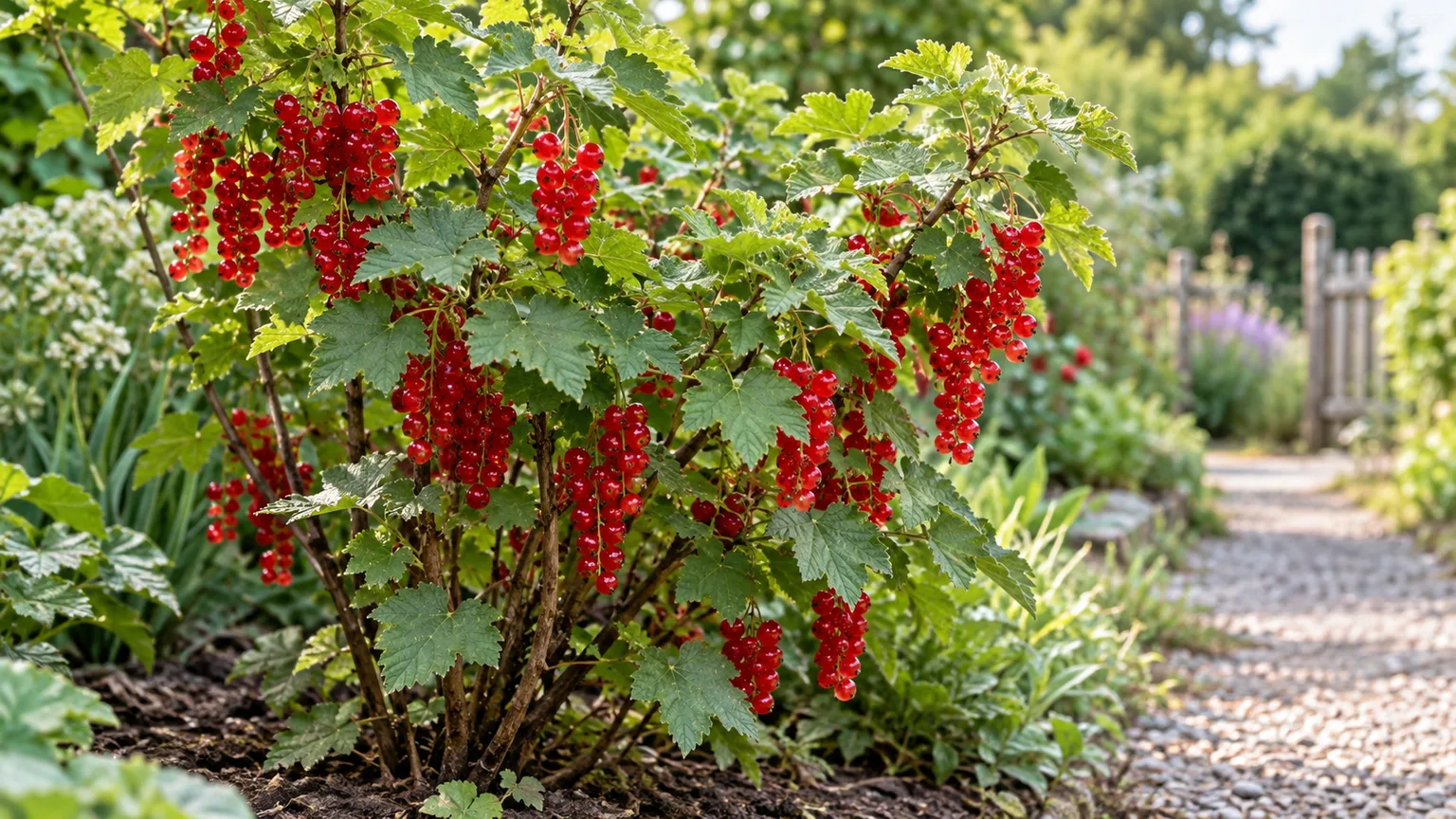
Red currants (Ribes rubrum) are compact, cold-hardy fruit shrubs with translucent berries carried in dangling clusters. They are tart when freshly picked, excellent in jelly, sauces, desserts, and drinks, and ornamental enough to earn a place near a path or mixed border. A healthy bush is also less demanding than many tree fruits: one plant can set a crop, it rarely needs elaborate support, and its size is manageable in a small garden.
The detail that determines success is easy to miss: red currants fruit mainly on two- and three-year-old wood. The plant is not improved by treating it like a hedge and cutting everything back every spring. Give it cool root conditions, reliable moisture, an open framework of different-aged canes, and enough light for fruit to color, and it can crop for many years.
Red currant basics: fruiting habit, size, and climate
Red currant bushes generally mature into rounded shrubs about 3 to 5 feet tall and roughly as wide, though cultivar, pruning, soil, and climate change the final shape. Their leaves emerge in spring, followed by modest greenish flowers. The flowers are self-fertile, so a single bush can produce fruit, although nearby flowering shrubs and active pollinators may improve the number of berries that set.
They prefer cool to moderate summers and are usually happiest in climates equivalent to USDA Zones 3 through 7. Winter cold is rarely the main problem. The vulnerable moment is spring: flowers can open early, and a late freeze can blacken blossoms or newly set fruit. In hot regions, afternoon shade and dependable root moisture matter more than squeezing the plant into all-day sun.
Is a red currant the right fruit for your garden?
Choose red currants if you can provide soil that stays evenly moist without remaining saturated, a site with good air movement, and at least half a day of useful sun. They are a better fit for a cool side garden than for a heat-reflecting wall, dry gravel bed, or exposed rooftop that bakes all afternoon.
Their flavor is naturally sharp. That is a feature for cooks who want acidity, color, and pectin-rich fruit, but it may disappoint anyone expecting the sweetness of a fully ripe strawberry. The clusters also ripen over a short window, so plan to harvest, preserve, or freeze them promptly. Wildlife notices the berries too; a net or timely picking may be necessary.
Choose a cultivar for your site
Look for a locally adapted plant with a clear disease-resistance profile and a harvest season that suits your spring weather. ‘Rovada’ is valued for long clusters and heavy crops but can need attention to cane health. ‘Red Lake’ is widely grown for flavorful fruit, while ‘Jonkheer van Tets’ is early and productive but may be exposed to late frost because it blooms early. ‘Stanza’ is useful where a more compact habit and later crop are helpful. White currant selections such as ‘White Grape’ are closely related and often milder, but they still need the same cool, moist root zone.
Do not select only by berry size. In a warm or humid garden, mildew resistance and a naturally open habit can matter more than a few extra grams per cluster. Ask the nursery when the cultivar flowers, which diseases are common locally, and whether the plant is certified and correctly labeled.
Check local Ribes restrictions before buying
Some jurisdictions restrict or regulate currants and gooseberries because certain Ribes species can participate in the life cycle of white pine blister rust, a disease affecting white pines. Rules vary by location and can change, and not every Ribes cultivar has the same susceptibility. Check your state, province, or local agricultural authority before ordering a plant; a nursery shipping across a border is not proof that planting is legal where you live.
Pick the planting site
The best site balances light with heat management. In a cool climate, give the bush full sun or at least six hours of direct light. In a hot-summer climate, morning sun with light afternoon shade can protect leaves and berries from scorch while still supplying enough energy for flowering and fruit color. Avoid a sealed corner between walls where humid air sits after irrigation.
Leave roughly 3 to 5 feet between bushes, adjusting for the cultivar’s mature width and your pruning style. Wider spacing pays off if summers are humid because leaves dry faster and you can inspect the center of the plant. If planting rows, leave enough room to walk and harvest without brushing wet foliage through neighboring plants.
Soil, drainage, and pH
Red currants like moisture-retentive loam enriched with organic matter, with a mildly acidic to near-neutral pH commonly around 6.2 to 6.5. The phrase “moist soil” does not mean a permanently wet hole. Their shallow roots need air as well as water, and a low spot that stays saturated can produce yellow leaves, weak growth, and root decline.
Before planting, loosen a broad area rather than digging a narrow deep pocket. Mix in finished compost where the soil is poor, but do not fill the hole with rich, isolated material that encourages roots to circle in a perfect pocket. If drainage is slow, plant on a gentle mound or raised bed instead of trying to solve a wet site with extra watering schedules.
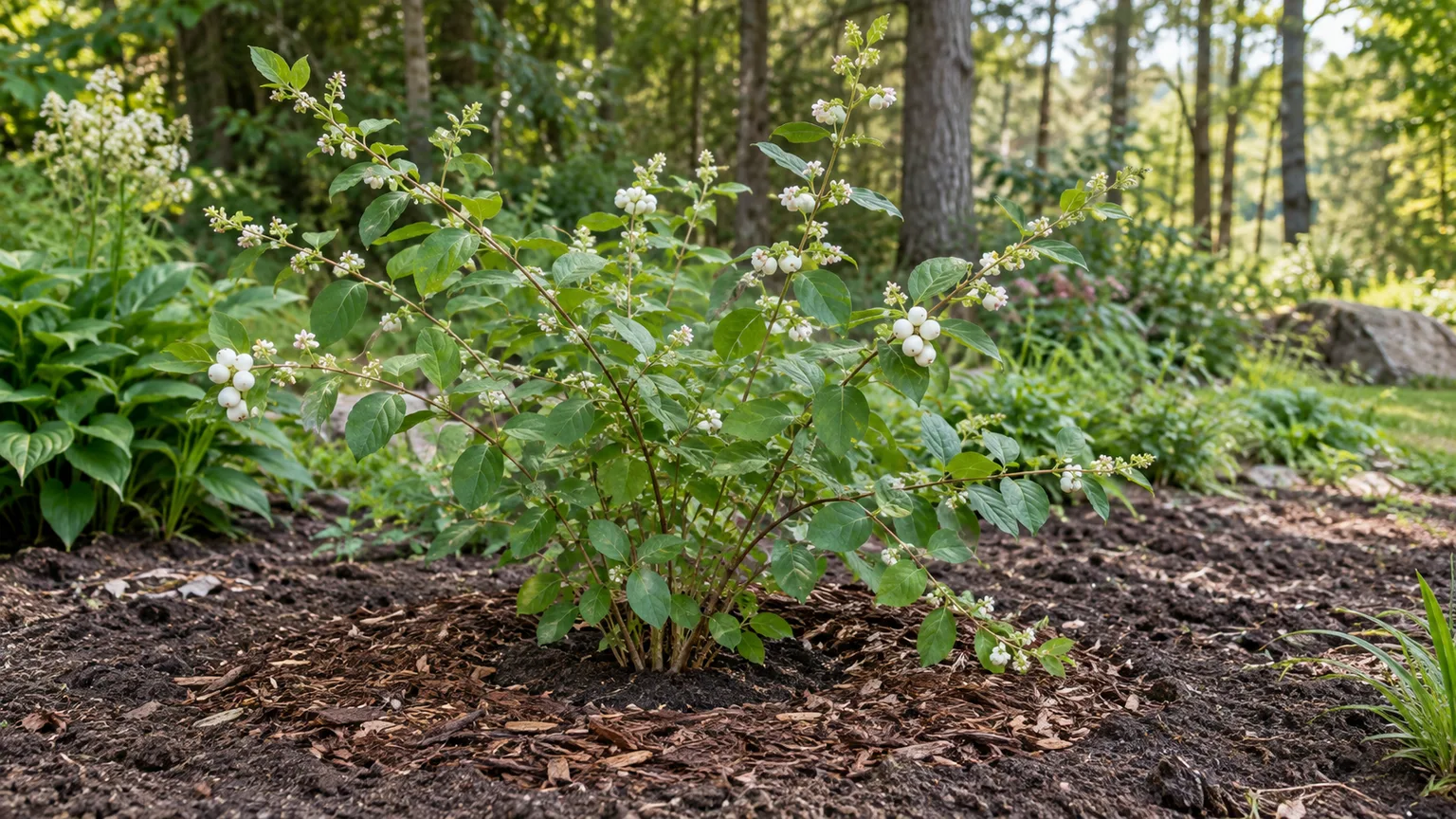
Plant bare-root or container-grown bushes
Plant bare-root stock in early spring while dormant, before leaves expand, or in autumn where the ground remains workable and the plant has time to root before severe cold. Container-grown plants are more flexible, but avoid planting into heat-stressed soil or during a long dry spell unless you can irrigate consistently.
Dig a hole wider than the root spread and set the bush so the root flare is at soil level or, for a potted plant, only slightly deeper than it stood in its container. Firm the soil gently, water slowly to settle air pockets, and apply a 2- to 3-inch mulch layer. Keep mulch away from the canes themselves; a wet collar invites decay and hides new shoots that you may later want to keep.
If the plant arrives with long bare-root canes, do not let the roots dry while you prepare the site. Soak them only according to the nursery’s directions, spread them naturally, and water immediately after planting. A newly planted bush needs establishment care, not a heavy dose of fertilizer.
Water and mulch through establishment
For the first growing season, aim for steady moisture in the root zone rather than frequent shallow splashes. A useful starting point is about 1 to 2 inches of water per week from rain and irrigation, adjusted for soil, temperature, wind, and container size. Check the soil several inches down: sandy soil may need more frequent watering, while clay may need longer intervals and better drainage.
Drip irrigation or a slow hose at the soil surface keeps leaves drier than overhead watering. Mulch moderates root temperature, reduces evaporation, and limits competition from weeds. Because currant roots are shallow, pull weeds by hand or slice them at the surface rather than digging aggressively through the root zone.
After harvest, a healthy established bush usually needs less routine irrigation unless drought continues. Do not let that seasonal reduction become a sudden dry-down during flower set or berry enlargement; uneven moisture can reduce the crop and stress the plant.
Feed without forcing weak, leafy growth
Feed according to a soil test and the plant’s performance, not a calendar promise that every currant is a heavy feeder. In early spring, a moderate layer of compost or a balanced fruit-shrub fertilizer can support growth. Excess nitrogen produces lush, soft shoots that are more difficult to keep open and may be more vulnerable to disease, while too little nutrition shows as weak annual cane growth and small leaves.
Keep granular fertilizer away from the crown and water it in. If the bush is growing vigorously, flowering well, and making sturdy new canes, more fertilizer is unlikely to improve the harvest. Pot-grown plants lose nutrients faster and may need a controlled, label-rate feeding during active growth, but never compensate for a root problem with extra fertilizer.
Prune by cane age, not by guesswork
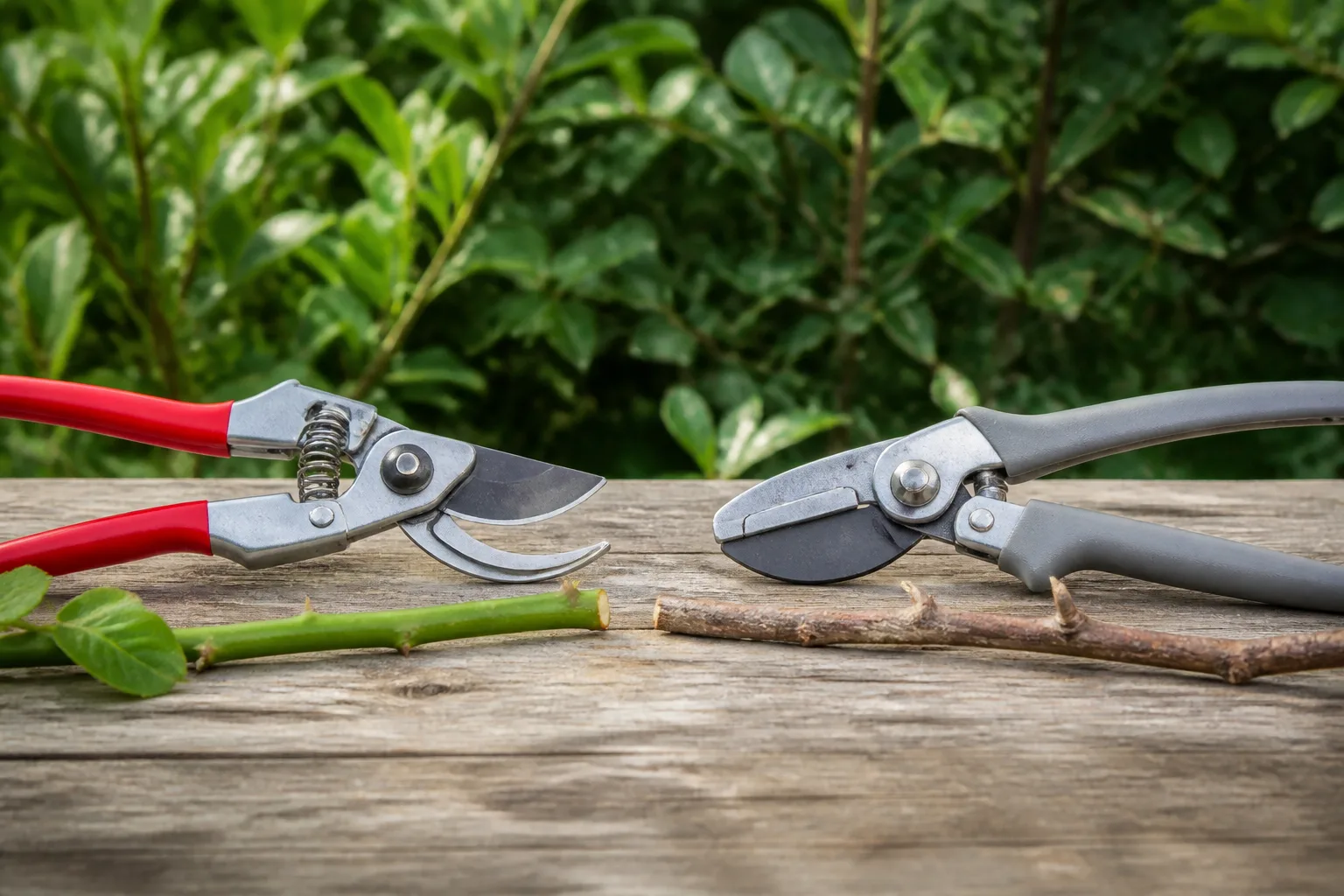
Pruning is the central care skill for red currants. The target is a continuously renewed framework with several strong canes of different ages. Keep the youngest healthy shoots for future fruiting, retain productive two- and three-year-old wood, and remove the oldest, declining canes at the base after they stop contributing.
Prune during dormancy, before spring growth begins. Start by removing broken, diseased, crossing, or ground-hugging wood. Then identify the darkest, oldest canes and remove a few of the least productive ones at soil level. Avoid leaving short stubs that can die back and clutter the crown.
On a young bush, the first winter is usually about selecting a manageable group of vigorous canes rather than forcing a perfect mature structure. In the second and third winters, keep a mix of ages and thin excess shoots. A mature plant often performs well with about eight to twelve main canes, depending on vigor and spacing. If the center is crowded, favor an open vase-like arrangement that lets light and air reach the fruiting spurs.
Do not cut every cane to the ground each year. That removes the wood carrying the next crop. Conversely, do not keep every new sucker simply because it is vigorous; too many stems create shade, humidity, and small inaccessible clusters.
Grow red currants in containers
A red currant can grow in a pot if the container is broad and stable, has generous drainage holes, and holds enough mix to buffer rapid drying. A container around 12 to 18 inches wide and deep is a reasonable starting point for a young plant, but a larger mature bush may need a heavier tub. Use a moisture-retentive but airy potting mix; ordinary garden soil can compact and drain poorly in a container.
Place the pot where it receives bright morning light and protection from reflected afternoon heat. Containers warm and dry faster than beds, so check moisture more often and never rely on a fixed weekly schedule. Raise the pot slightly so drainage holes remain open, and do not leave it standing in a saucer of water.
Repot or refresh the mix after several years, ideally after harvest or during dormancy. If the root ball is tightly circling, move up only one container size or trim and refresh roots conservatively. Keep the top growth and root volume in balance: a severe top prune immediately after major root disturbance can delay recovery.
Protect flowers and fruit from weather and wildlife
Late frost is the main weather risk. If a freeze is forecast while the bush is in flower, cover it with a breathable floating row cover before temperatures drop, supporting the fabric so it does not crush blossoms. Remove the cover when the day warms and pollinators need access. A cover is most useful for a small bush and a short frost event; it cannot make an exposed hot site suitable for currants.
Bird netting is more reliable than trying to scare wildlife away after the berries color. Install it over a frame so birds cannot reach through the mesh and so the net does not snag new shoots. Keep the ground under the bush clean of fallen fruit, which can attract pests and make harvest sorting harder.
Diagnose common pests and diseases
Powdery mildew appears as a pale, dusty coating, often when warm humid air meets dense growth. Improve spacing, thin crowded canes during dormancy, water at the base, and choose a resistant cultivar where possible. Do not wait until the center is a wall of leaves; airflow is a design decision made at planting and pruning time.
Aphids may curl young leaves or leave sticky honeydew. Begin with a strong water spray on tender growth and protect beneficial insects. Leaf spots and premature defoliation call for sanitation, drier foliage, and removal of badly affected material rather than repeated indiscriminate spraying. Cane blight is more serious: cut affected canes back to healthy wood with sanitized tools, discard infected debris, and address crowding or wet conditions.
If the whole plant is pale and stunted, check drainage and root health before adding fertilizer. If leaves scorch on the sunny side while the soil is dry, heat and water stress are more likely than a nutrient deficiency. If the bush flowers but sets little fruit, frost, poor pollinator activity, cultivar timing, or excessive shade may be involved; self-fertile does not mean immune to every pollination problem.
Harvest, clean, and store the clusters
Red currants are ready when the berries have developed their characteristic color and taste full rather than hard and green. Leaving them a little longer can improve sweetness, but overripe clusters become vulnerable to birds, splitting, and soft rot. Pick in cool weather when possible.
Cut or snip the whole truss instead of pulling individual berries. The skins are delicate, and the cluster stem gives you a clean handle. Sort out damaged fruit, then wash only what you plan to use soon. Dry the berries gently and refrigerate them in a breathable container; for longer storage, freeze clean, dry clusters on a tray before transferring them to a sealed bag.
For cooking, a fork can help strip berries from the truss after the cluster is picked. This is quicker and less messy than trying to pinch every berry off the shrub. Harvesting also becomes a useful inspection pass: remove mummified fruit and look for canes that failed to leaf out so they can be marked for dormant pruning.
Propagate from cuttings or layering
Healthy red currants are commonly propagated from hardwood cuttings or by simple layering. In late winter, take a pencil-thick section of the previous season’s growth with several buds, keeping track of which end was the base. Insert much of the cutting into a clean, well-drained rooting medium with one or two buds above the surface, keep it evenly moist, and protect it from drying winds.
Layering is slower but forgiving. Bend a flexible low cane to the ground, lightly wound or pin a portion against the soil, and cover that section while leaving the tip exposed. Once roots form, separate the new plant from the parent and transplant it during a cool, low-stress period. Start with disease-free parent wood; propagation copies the parent’s problems as well as its good traits.
Seasonal care checklist
In late winter, prune for renewal, remove diseased wood, refresh mulch, and check buds for frost risk. In spring, keep moisture steady, watch for aphids and mildew, and cover flowers during a late freeze when practical. During fruit development, water deeply as needed, keep weeds down, and install bird protection before the berries color. After harvest, clean fallen fruit, reduce irrigation only if the plant and weather allow it, and note which canes were weak or unproductive for the next dormant pruning session.
If you are growing in a hot climate, prioritize morning sun, cool mulch, and a site with afternoon protection. If you are growing in a cold climate, prioritize frost awareness at bloom and a cultivar suited to your local season. In both cases, the same rule holds: healthy currants come from matching the plant’s cool, evenly moist root preference to the site, then renewing the shrub gradually instead of forcing it into a hedge shape.
Conclusion
Red currant care is straightforward once you work with the shrub’s architecture. Plant it in moisture-retentive, well-drained soil with useful sun and airflow; water consistently while it establishes; feed moderately; and prune by cane age so productive two- and three-year wood remains. Choose a cultivar for your climate, check local Ribes rules, protect spring flowers from late frost, and harvest the full clusters as soon as the berries reach good color and flavor. Those few decisions do more for a dependable crop than constant fertilizing or aggressive cutting.