Stake or Cage Cucumbers? Choose by Vine Type
Should you stake or cage cucumbers? Learn how vining and bush types differ, which support fits your space, and how to train vines without breakage.
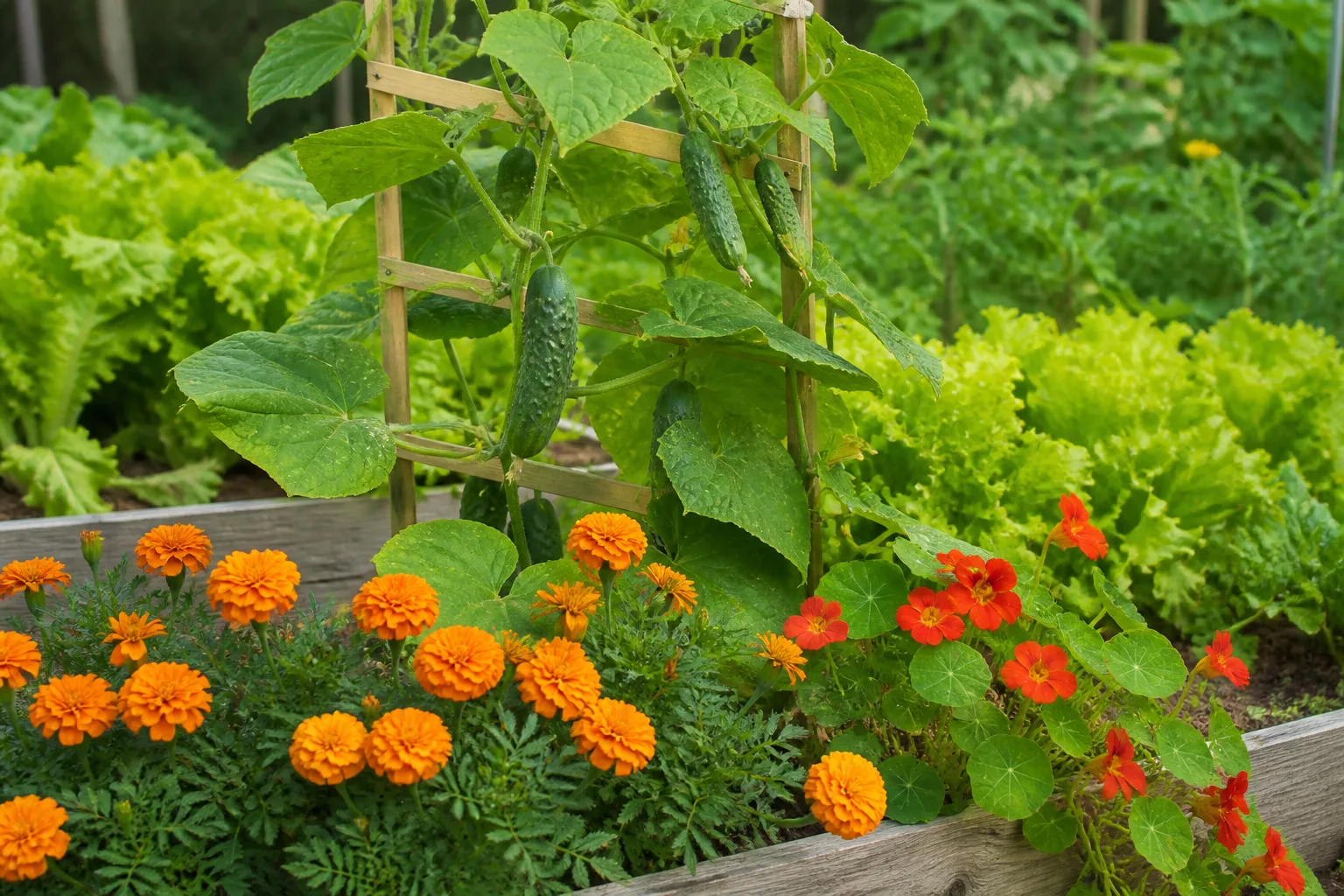
The right answer to “should I stake or cage my cucumbers?” starts with the growth habit on the seed packet, not with the support sitting in your shed. A vining cucumber needs a tall, sturdy surface it can climb; a bush cucumber can usually fruit without a trellis and may only need a cage to keep its compact stems and fruit contained.
Support is a management choice, not a requirement for every cucumber plant to produce. The University of Minnesota Extension notes that cucumbers can grow without support because their fruit does not simply slip from the vine, while Oregon State University Extension lists vertical growing as a practical small-space option and bush varieties as a compact alternative. In other words, choose a support when it solves a real problem—space, harvest visibility, soil contact, or stability—not because every cucumber must be trained upward.
The short answer: read the seed packet
Look for vining, bush, compact, or container on the variety description. Many familiar slicing and pickling cucumbers are vigorous vines, but names alone are unreliable; a variety marketed for patios may still have trailing stems, and a compact plant may spread farther than its label suggests in rich soil.
If the packet says vining, install a trellis, panel, tall cage, or stake-and-string system before planting. If it says bush, you can let the plant trail over the edge of a raised bed or container, or add a low, wide cage when you want to keep leaves and fruit off the path. When the label is unclear, plan for the larger support: a sturdy structure can accommodate a smaller plant, while a short stake cannot rescue a vigorous vine halfway through summer.
Vining cucumbers: give them a vertical frame
Vining cucumbers send out long stems and tendrils that wrap around a structure. Many reach roughly 4 to 6 feet, and some cultivars run longer, so the useful support is a framework, not merely one narrow stick. Savvy Gardening describes bush types as commonly reaching 2 to 3 feet and vining types as 4 to 6 feet or longer, a helpful planning range rather than a promise for every cultivar.
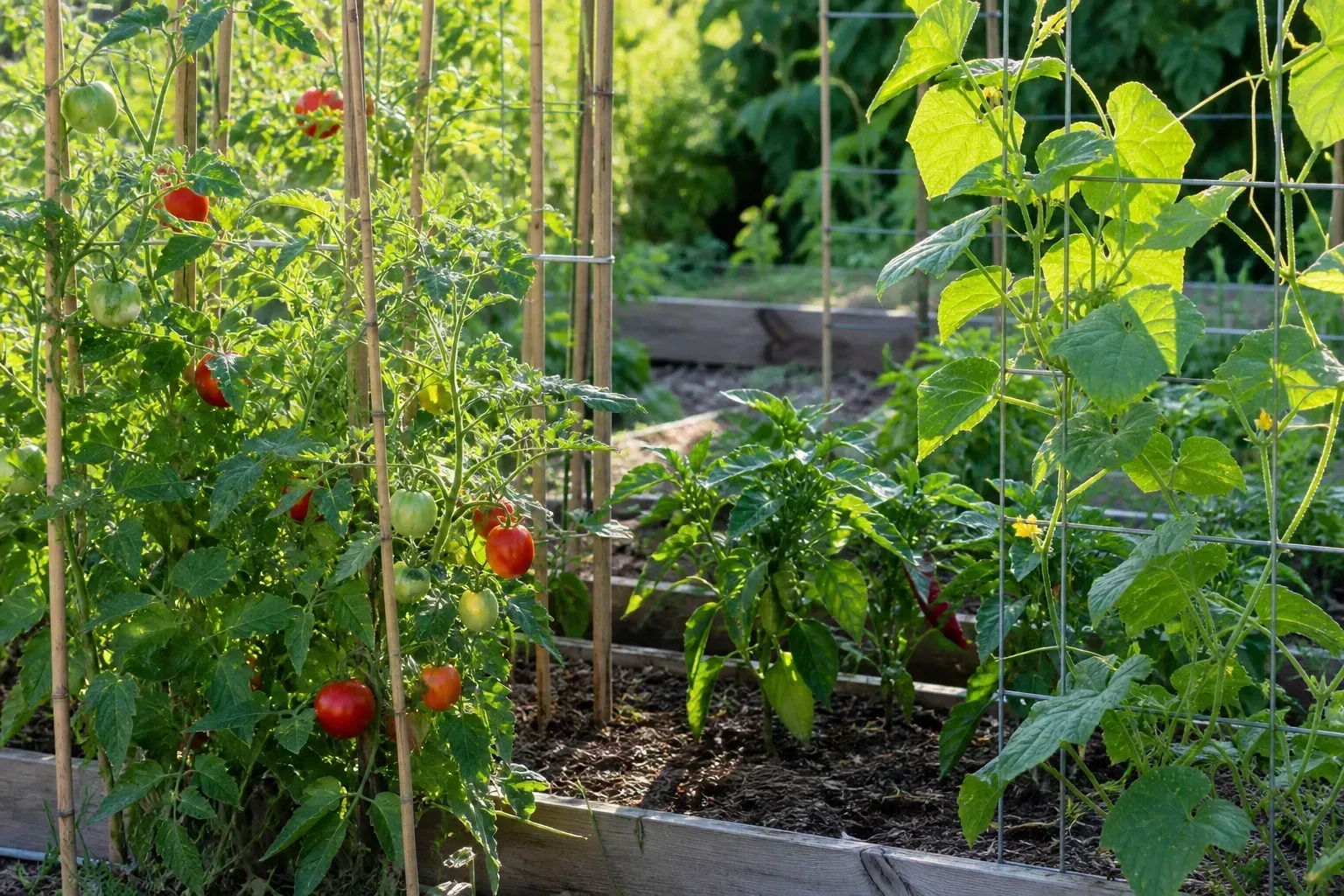
A panel trellis, A-frame, arch, cattle panel, or well-anchored tomato-style cage can all work. A single stake can work only when it is part of a system—such as a stake with several horizontal strings—or when the vine is unusually compact. A lone stake beside a vigorous plant gives the tendrils too few places to grab and often leaves the upper vine leaning, dangling, or pulling the stake over.
Bush cucumbers: contain a compact plant
Bush cucumbers form a shorter plant with a central crown and several stems that radiate outward. They are often the better choice for containers and tight beds because they use less horizontal and vertical space, but “bush” does not mean “tiny.” Give the plant enough room for leaves to dry after rain and for you to reach the fruit.
A cage is optional for a bush cucumber, but it can be useful. The structure acts more like a corral than a ladder: it keeps stems from spreading into a walkway, lifts fruit off wet soil, and makes a small plant easier to inspect. Use a broad, stable cage rather than forcing every stem into a narrow cylinder. If the plant remains compact and the bed is clean and dry, letting it spill over the edge may be simpler than adding hardware.
Stake vs. cage vs. trellis: what each support does
The words are often used interchangeably, but the structures behave differently once a cucumber is full of leaves and fruit.
| Support | Best fit | Main advantage | Main limitation |
|---|---|---|---|
| Single stake | Compact or lightly trailing plant | Fast and inexpensive | Too little surface for a vigorous vine |
| Stake and string | One or a few vining plants | Flexible, low-cost, easy to repair | Needs regular tying and solid end posts |
| Panel or A-frame trellis | Vining cucumbers and small-space beds | Lots of climbing surface and good visibility | Needs firm anchoring and storage space |
| Tall wire cage | Bush types or contained vines | Supports growth from several sides | Flimsy or short cages tip and crowd fruit |
The best structure is the lightest one that remains stable under the mature plant. Do not choose by the empty frame’s appearance. Imagine the support covered in wet leaves after a storm, with the fruit hanging from the far side; if it would bend or lift then, it is undersized now.
When a single stake is enough
A stake is reasonable for a bush cucumber that only needs a little lift, a dwarf variety in a pot, or a vining plant trained up a narrow string system. Use a stake that can be driven deeply enough to resist rocking, and add more attachment points as the plant grows. The stake should support the vine without squeezing the main stem against rough wood or metal.
For a vining cucumber, turn the stake into a trellis by running twine horizontally or diagonally from it to a second post. Tendrils need repeated contact. A support that gives the vine a grab point every several inches is more forgiving than a pole that leaves the plant searching for the next hold.
When a cage or A-frame is better
Choose a cage when you want support around a bush plant or when several stems need to be held without tying each one. Choose an A-frame when you want two climbing faces, a stable footprint, and a little growing space beneath the sloped sides. The shape also lets fruit hang away from the soil and remain visible from both sides.
For vigorous vines, a purpose-built cucumber cage or a heavy-duty tomato cage can work, but test the wire before planting. The top should be tall enough for the variety, the legs should sink securely, and the frame should not flex when you push it. Gardenary recommends supports about 5 to 6 feet tall and warns against common failures such as short structures, weak anchoring, and overcrowding.
There is also a workload difference. A cage lets a plant find its own route, which is convenient when you cannot visit the garden every day, but leaves can fill the interior and hide fruit. A flat panel exposes more of the vine for scouting and harvest, while an A-frame gives you two faces without requiring a long row. If you are deciding between two structures that are both strong enough, choose the one that makes the next job—watering, checking leaves, or picking—easier for you.
Why support works beyond saving space
Vertical growing does not transform a struggling plant into a productive one. It does, however, change the conditions around the foliage and fruit, and those changes can make routine care easier and reduce avoidable losses.
Airflow, drying, and disease pressure
A sprawling cucumber can build a dense mat where leaves overlap, water lingers, and the underside of the canopy is hard to inspect. A trellis opens the plant into a more visible plane. Leaves may dry faster after rain, and you can direct irrigation toward the soil instead of repeatedly wetting the foliage.
That can reduce the conditions that favor some foliar diseases, but it is not disease-proofing. Weather, humidity, cultivar resistance, irrigation, insects, and nearby infected plants still matter. The University of Maryland Extension describes checking and retraining trellised cucumber vines several times a week in a productive system that eventually faced leaf diseases and cucumber beetles; vertical support helped management, but it did not stop every problem.
Keep enough space between plants for air to move through the leaves. In a humid climate or a bed with a history of mildew, use about 12 inches along the base as a conservative starting point unless the variety’s packet gives a different recommendation. Tighter spacing can work in some systems, but it removes the margin that makes a trellis useful in the first place.
Cleaner fruit and easier harvesting
Fruit that hangs clear of damp soil is less likely to be scraped, hidden, or misshapen by contact with the ground. This is especially helpful for long, slender varieties that curl around obstacles. It also turns harvesting from a search through a leaf pile into a quick inspection of the stems and undersides of the support.
Harvest visibility matters because a cucumber left too long becomes oversized and can make the plant feel finished sooner than you want. Check a productive trellis every day or two during peak growth. Lift leaves gently, look behind the panel, and inspect fruit at the base as well as the top; a cucumber can hide on either side of a cage.
Choose support for your garden situation
The same cucumber variety can need a different structure in a raised bed, pot, or exposed backyard. Start with the plant’s eventual size, then account for the structure’s footprint, the gardener’s reach, and the weather.
Raised beds, small plots, and containers
In a raised bed, attach a panel to the outside of the frame or place a trellis along the north side so it is less likely to shade shorter crops. A flat panel is efficient in a narrow bed; an A-frame or arch provides more climbing surface and can let you plant on both sides. Leave a service gap if you need to reach the rear of the bed for watering or harvest.
In a container, the support and pot behave as one top-heavy unit. A tall trellis fixed only in loose potting mix may tilt when the vine catches wind. Use a pot with enough weight and width for the plant, secure the support to the container or a nearby structure, and do not crowd multiple vigorous vines into a small root zone merely because the trellis is tall.
If you are short on floor space, a compact bush variety in a container may be easier than forcing a full vining variety onto a small cage. If you want the yield and long harvest window of a vining cultivar, give it a real vertical surface instead of relying on the pot rim to contain it.
Wind and heavy vines change the equation
Wind is the hidden test of a cucumber support. A cage that stands empty can become a sail once leaves fill it. A flat panel can twist if its posts are shallow, and a string trellis can pull its end stakes inward as the vine gets heavy.
Anchor before the plant needs help. Sink posts deeply enough for the soil and structure you have, brace the ends, and check the frame after the first windy day. If your garden is exposed, favor a wider footprint or a low-angle A-frame over a tall, narrow tower. Strong attachment is part of plant care: a falling trellis can break stems, disturb roots, and pull fruit into the soil.
Install support before planting
Set up the stake, cage, or trellis before sowing seeds or transplanting seedlings. Early installation keeps you from pushing a post through an established root zone and gives young tendrils a clear path. Savvy Gardening specifically recommends installing a trellis before planting so gardeners are not working around a tangle later.
Place the structure where the plant will receive the sun the variety needs and where you can reach both the stem and the fruit. A support hidden against a wall may be sturdy, but it can make scouting and harvesting awkward. If the structure is taller than the gardener can comfortably reach, plan to train the top growth sideways rather than building a harvest problem into the bed.
Build a 5- to 6-foot panel or A-frame
A panel trellis can be made from a sturdy wire panel, livestock panel, wooden lattice, or garden netting stretched between posts. Aim for about 5 to 6 feet above the soil for most home-grown cucumbers, while checking the variety description for especially vigorous plants. Real Simple’s gardening coverage and Gardenary both use this range as a practical target.
For an A-frame, secure the two panels at the top and stake the feet so they cannot spread. For a flat panel, brace the ends and add a center support if the row is long. The structure should not wobble when you push it before the plants are added.
Mesh size deserves attention. Choose openings large enough that you can reach through to harvest and that developing fruit will not become wedged as it swells. Savvy Gardening cautions that narrow openings in netting or chicken wire can trap fruit; checking the vines frequently is easier when the mesh is open and the fruit is visible.
Make a low-cost stake-and-string system
A stake-and-string trellis is the most useful version of “just use a stake.” Drive two sturdy wooden or metal posts at the ends of the row, leaving roughly 5 to 6 feet above the soil. Gardenary’s practical system sets the posts at least 12 inches into the ground and runs horizontal twine up the row every 8 to 10 inches.
You can make the grid with horizontal strings alone, or add a few vertical strands for extra grab points. Use strong, weather-resistant twine; string that stretches or snaps under a wet canopy can drop a mature plant unexpectedly. Maryland Extension describes a similar setup using vertical strings and tomato clips, with retraining several times a week while the vines were young.
Plant at the base of the structure, leaving about 12 inches between plants as a reliable default. Gardeners using a particularly open, well-ventilated system may work within a 6- to 12-inch range, but closer spacing is not automatically better. If leaves form a solid wall, you have given up the airflow benefit you built the trellis to provide.
Train and maintain the vine
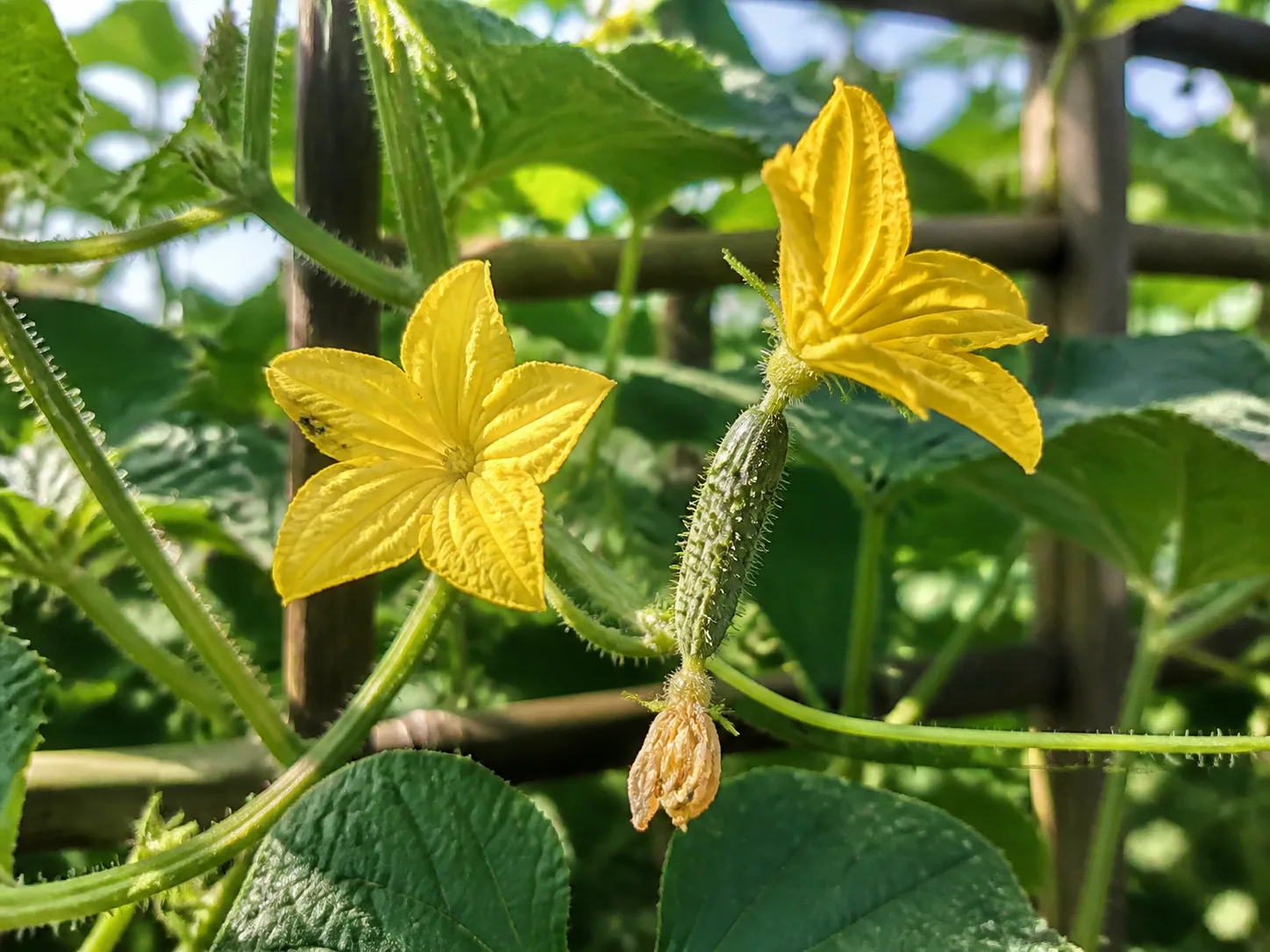
The goal is to show the vine where to go, not to bend it into a rigid shape. Cucumber tendrils are excellent climbers once they have something within reach, but a young leader can pass a support and hang in midair. Check the plant at least weekly while it is establishing and more often during a fast growth flush.
Use light guidance, not force
When the vine is a few inches long, place the first tendrils against the lowest part of the panel, string, or cage. If the stem needs help, use a soft tie or a broad clip loosely around the support and the stem. Tie near a node—the point where a leaf joins the stem—and leave slack so the growing stem is not girdled.
Do not pull a mature vine sharply away from the ground or unwind every tendril from a support. If it has already wrapped tightly, guide the newest growth and leave the older section in place. A few gentle corrections are safer than one dramatic untangling session. Once the tendrils are grabbing consistently, remove unnecessary ties or loosen them as the stem thickens.
Keep fruit from sitting in a tight mesh opening. Turn or redirect the vine while the cucumber is small, and inspect both faces of a panel. Never yank a trapped fruit through wire; cut the fruit free if needed, then correct the opening or training path before the next one enlarges.
Troubleshoot a falling, tangled, or overgrown vine
If the cage is tipping, act before the plant is fully loaded. Push or reset the legs deeper if that will not damage roots, add short stakes or ties to a fixed bed frame, and remove only damaged or clearly broken growth. Do not try to carry a vine-heavy cage by the top; support the structure and stems together while you stabilize it.
If the vine is already sprawling, do not grab the main stem and pull it vertical. Separate only the newest flexible growth, guide it to the nearest support, and let older sections remain where they are. Add a second panel or a horizontal string if the original structure cannot reach the plant without a sharp bend.
If the vine reaches the top, do not automatically cut it back. If the support is stable, guide the leader along the top or let it spill over in a direction that keeps fruit accessible. Pruning may be appropriate for a damaged or dangerously crowded plant, but reducing the plant simply because it reached a planned 5- to 6-foot height can remove productive leaf area.
If the leaves still show disease, remember that a trellis improves access and may improve drying; it cannot override a humid weather pattern or a susceptible variety. Water at the soil line, remove badly damaged material with clean tools, keep plants from crowding, and identify the disease before choosing any treatment. If support did not fix the problem, look next at moisture, spacing, cultivar resistance, insects, and the local growing conditions.
If the plant has flowers but few cucumbers, support is probably not the first thing to change. Check whether the variety needs pollination, whether bees can reach the flowers, whether heat or drought is stressing the plant, and whether small fruits are aborting for another reason. A better trellis makes those observations easier, but it cannot replace the crop’s light, water, fertility, and pollination requirements.
Conclusion
For most vining cucumbers, choose a real vertical support: a 5- to 6-foot panel, A-frame, arch, sturdy cage, or stake-and-string system. For bush cucumbers, a cage is optional and mainly helps corral stems, keep fruit cleaner, and fit the plant into a small space.
Install the support before planting, anchor it for wind and mature weight, keep mesh openings generous, and guide young tendrils with loose ties rather than forcing old vines. The support that works best is not the fanciest one; it is the structure that matches the variety and remains stable, reachable, and breathable through the whole harvest.