Sweet Pea Flowers: Planting and Care Guide
Grow fragrant sweet pea flowers from seed with climate-aware timing, reliable support, container tips, bloom-boosting care, and practical troubleshooting.
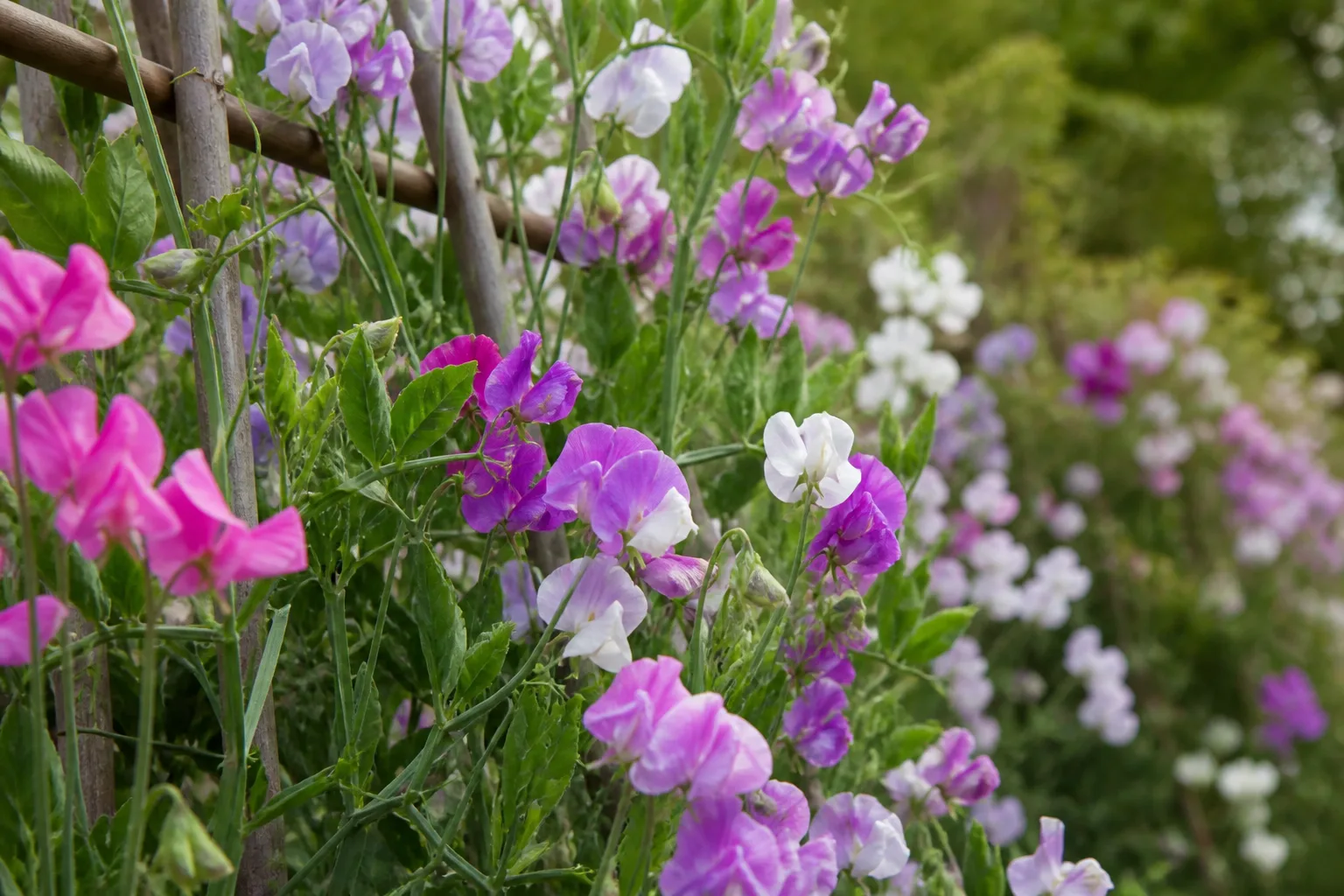
Sweet peas are cool-season climbers grown for two things few annuals deliver together: frilled, intensely colored flowers and real fragrance. The familiar garden sweet pea is Lathyrus odoratus, an annual vine from the Mediterranean that uses tendrils to climb. Give it cool growing weather, a well-drained root zone, and something to climb before the tendrils reach for it, and you can harvest armfuls of flowers rather than a few decorative blooms.
The timing matters more than a rigid calendar. A spring-sown vine can look healthy yet fade quickly if summer heat arrives before it has finished flowering. In a mild-winter climate, an autumn sowing may give an earlier, longer display; in a cold or wet region, starting plants under cover can protect germination and young roots. This guide connects the basic care rules to the decisions that actually change the result.
Sweet peas at a glance
Annual sweet pea is a flowering legume, not an edible garden pea. The vines commonly reach about 6 to 8 feet, although compact cultivars can form a short mound suitable for a window box or container. Their paired leaflets end in tendrils, and those tendrils grip netting, strings, twiggy sticks, or a trellis as the plant rises. NC State Extension describes the plant as a cool-weather annual with winged stems, fragrant flowers, and a climbing height that can reach 8 feet.
Flowers may be white, pink, salmon, red, lavender, blue, or bicolored, and the form ranges from lightly waved to very ruffled. Fragrance is not automatic: many heirloom and “old-fashioned” types are strongly scented, while some modern selections emphasize color, flower size, or stem length instead. Read the seed packet for fragrance and habit, not just the color photograph.
Do not eat the seeds or pods. Annual sweet pea seeds are poisonous to humans, and common names can create confusion with perennial peas and edible peas. The safest garden habit is to label the packet, keep seeds away from children and pets, and treat every seed and pod as ornamental rather than food. RHS identifies the pods and seeds as not edible, while NC State Extension lists the plant’s seeds as poisonous to humans.
Choose a variety for scent, stems, and space
Start with the job you want the plant to do. If your priority is a vase, look for a tall, strongly fragrant cultivar with long stems; if you want a balcony accent, choose a dwarf or container type and provide a shorter support. If the flowers will be viewed close to a path or seating area, scent may matter more than the largest petals.
Spencer types are known for large, waved flowers and are often selected for cutting, but modern breeding means the label still deserves a close read. Heirloom forms such as ‘Cupani’s Original’ are valued for fragrance and deep, two-tone color. Compact series such as ‘Bijou’ are easier to manage in containers but may not give the long stems a cutting garden needs. Cultivar names and availability vary by country, so use the traits—scent, height, heat tolerance, and stem length—as your shopping checklist.
If your summer becomes hot early, choose the earliest practical sowing window and consider cultivars described as heat-tolerant. No variety turns sweet peas into a hot-weather annual; heat-tolerant means it may hold on a little longer, not that it will bloom through a prolonged spell of high temperatures.
Find a cool, bright site and prepare the soil
Choose the brightest spot that does not become a heat trap. Sweet peas perform best in full sun, generally six or more hours of direct light, but afternoon shade can preserve the season in a hot climate. A west-facing wall that reflects heat onto a shallow bed may give more light than the plant can use comfortably. Morning sun with open air around the vines is often a better compromise where summers are severe.
The soil should be fertile, moisture-retentive, and free draining. Work well-rotted compost or other mature organic matter into the bed before sowing, then let the surface settle. The goal is not a fluffy, permanently wet mix; it is a root zone that holds enough water to avoid daily stress while allowing excess water to leave after rain. A raised or gently mounded bed can help when native soil stays saturated.
Sweet peas tolerate a range of soil textures when drainage is good. They are often described as preferring neutral to slightly alkaline conditions, but do not spread lime by guesswork. If a soil test shows strongly acidic soil, follow the test recommendation and local extension guidance; pH correction is gradual, and excess lime can create a different nutrient imbalance. A useful soil preparation step is to add compost several weeks before planting, then check that the bed is workable rather than muddy.
Time sowing around your climate
Think of sweet peas as a race against heat, not a plant that must wait for warm weather. Seeds and acclimated young plants tolerate cool conditions, while sustained heat shortens the flowering window. Plant early enough to build a strong root system, but not so early that seedlings become soft, tall, and difficult to protect.
Match the sowing window to your season
In regions with cold winters, sow directly outdoors in late winter or early spring as soon as the soil can be worked, or start seeds in deep containers several weeks before the expected last frost. Young plants can handle light frost once hardened off, but frozen, waterlogged ground is a poor place for seed. If spring warms quickly, an indoor start can give the vine valuable weeks without forcing you to plant into cold mud.
In mild-winter regions, autumn sowing under cover can produce sturdy plants ready for the cool part of winter and spring. Fine Gardening’s Southern growers describe starting seed in December or January for earlier spring flowers, while protecting plants during unusually cold nights.[4] That is a regional technique, not a universal date: count backward from the first period when your nights are cool and your soil can be kept evenly moist.
Direct sowing is simplest when the soil is workable and slugs, mice, and heavy rain are manageable. Pot-starting is more controlled and often more reliable, but it adds transplanting and hardening-off steps. If your last frost arrives late but hot weather follows soon after, the extra control may be worth it; if your soil is ideal and spring is mild, direct sowing avoids root disturbance.
Start sweet peas from seed
Sweet pea seeds have a firm coat, and germination can be uneven if that coat stays dry. Sow fresh, firm seed about 1 inch deep, keep it evenly moist, and give it a cool-to-mild environment. Seeds commonly emerge in roughly 7 to 14 days under favorable conditions, but cold soil, old seed, and inconsistent moisture can extend that window.
Prepare a hard-coated seed only when needed
Do not automatically soak every packet overnight. A swollen seed that sits in water or cold compost can rot, and some seeds germinate perfectly without preparation. First try a normal sowing in moist seed compost; if a small test batch remains hard and dormant while the medium is right, pre-moisten the seed coat before sowing.
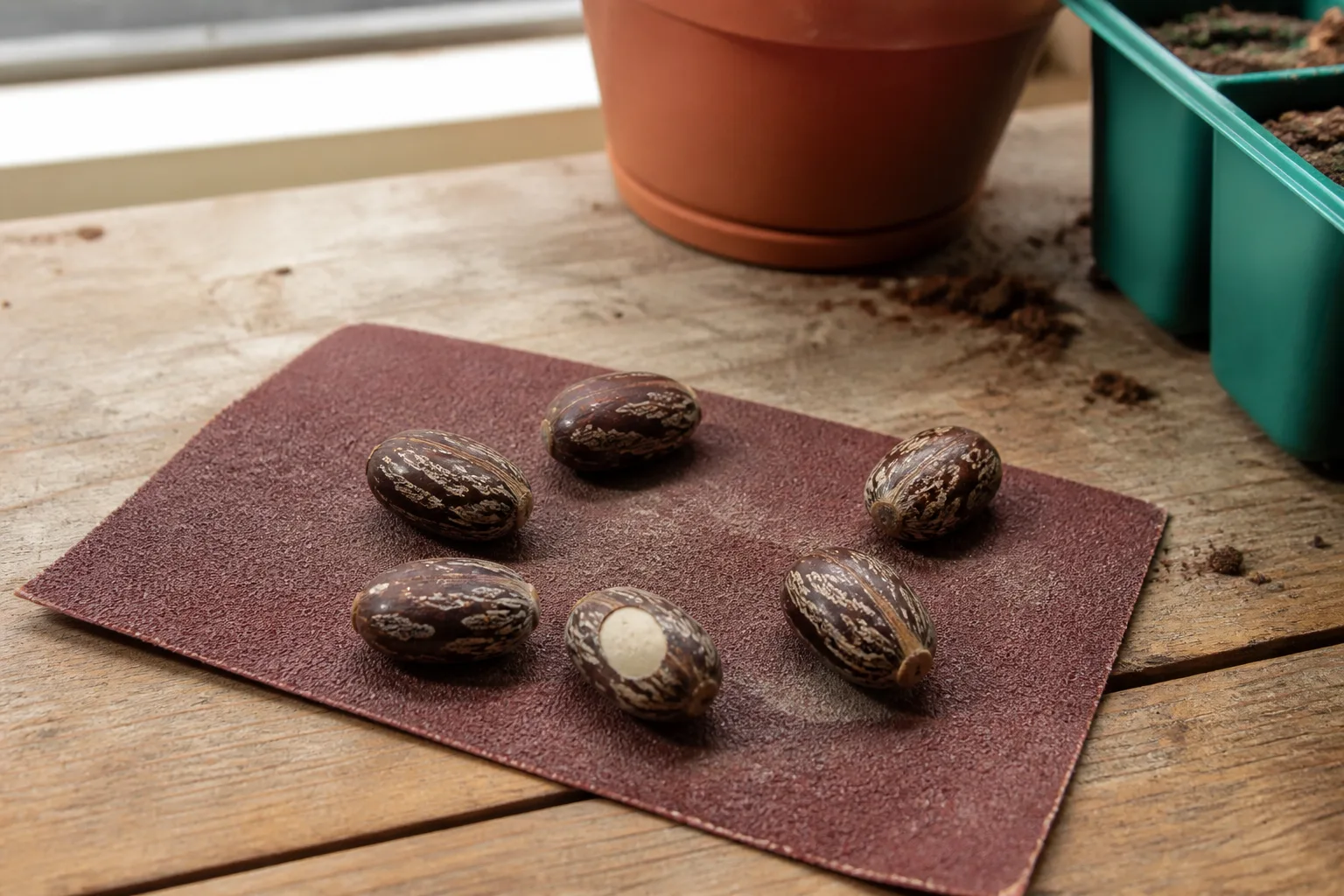
The gentlest method is to place seeds on moist tissue in a covered container and sow them as soon as they swell. You can also soak them briefly in room-temperature water, provided you sow immediately afterward. For especially stubborn seed, lightly nick or file the coat on the side opposite the small “eye,” taking care not to cut into the embryo. RHS recommends moist tissue and warns that prolonged soaking can encourage rot.
Choose direct sowing or deep containers
For direct sowing, place the support first, then make a shallow drill or individual holes about 1 inch deep. Sow several seeds near each support position, water the soil thoroughly, and thin only after you can see which seedlings are strong. Leave roughly 8 to 12 inches between final plants, depending on cultivar size and the support’s width. Crowding may look full at first, but it restricts airflow and makes watering and pest inspection harder later.
For indoor sowing, use tall root trainers, deep cells, or individual pots rather than a shallow seed tray. Sweet peas establish a substantial root system quickly, and teasing apart a dense mat of roots can set the plants back. Sow one seed per deep cell, or several in a larger pot only if you plan to separate them while small. Keep the compost damp but not saturated, and move seedlings into bright, cool conditions as soon as they emerge so they do not become stretched and weak.
When seedlings have two or three pairs of leaves, pinch out the growing tip if you want a bushier plant with several flowering stems. The cut or pinched tip is not a failure; it changes the plant’s branching pattern. Autumn-sown plants may branch naturally, so inspect the growth rather than pinching on autopilot.
Transplant carefully and install support early
Harden off indoor-raised seedlings over about 10 to 14 days. Start with a few hours outdoors in a sheltered position, extend the time gradually, and bring them in if a hard freeze, drying wind, or sudden heat is forecast. Water the pots before planting so the root ball holds together, then lift seedlings by the pot or leaves—not by pulling the stem.
Plant at the same depth the seedling was growing, water deeply, and mulch the soil surface with a modest layer of organic matter. Keep the mulch away from the stem so it does not stay wet at the crown. Set plants close to their final support; the vine can begin climbing immediately instead of sprawling across the soil.
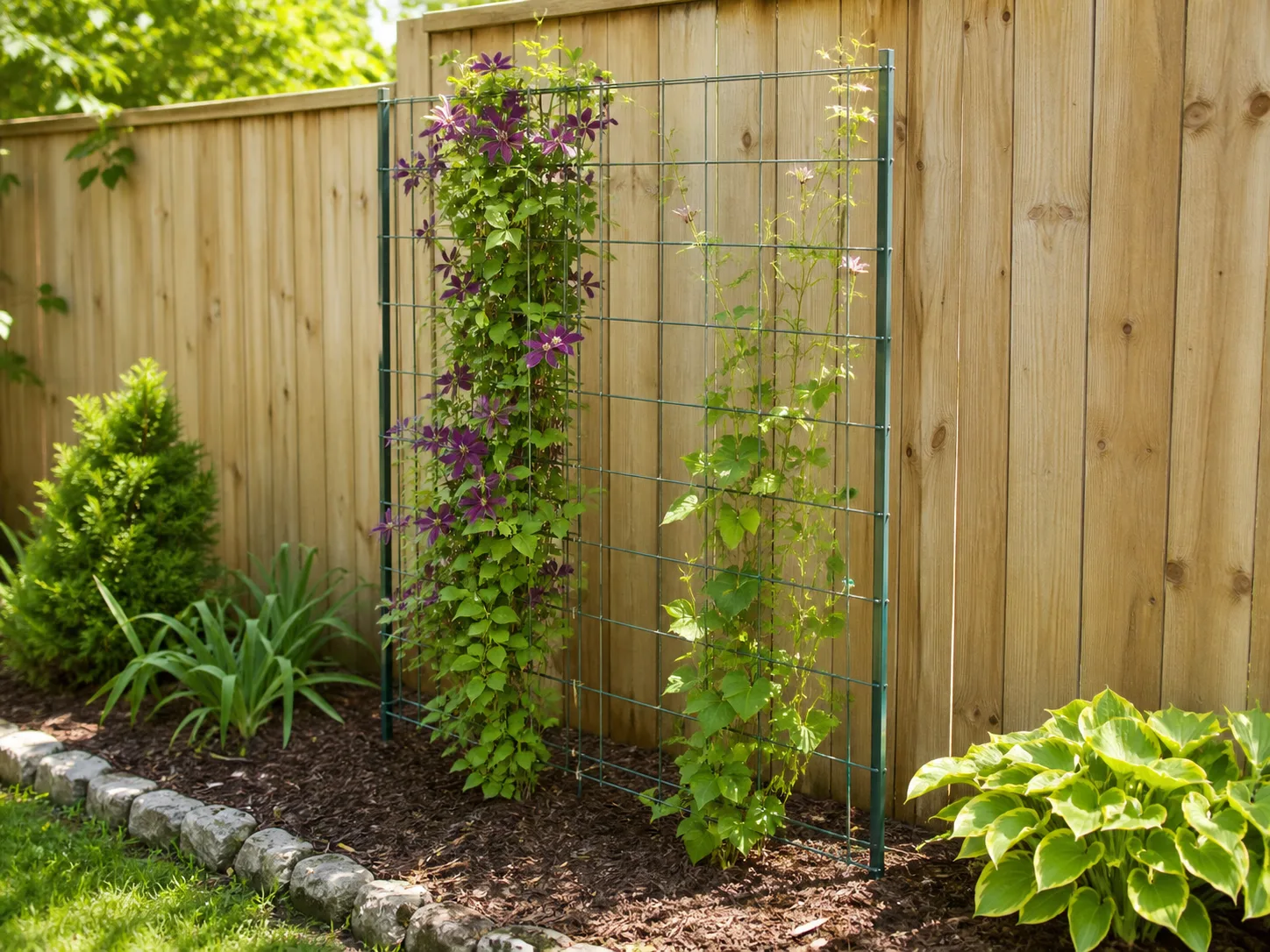
Use netting, a trellis, a wigwam of bamboo canes, or a grid of strong string with openings the tendrils can reach. A six-foot vine needs a support that will not sag under wet foliage or topple in wind. Check the plant every few days while it is extending, guide loose shoots toward the mesh, and tie only when necessary. Tendrils do the gripping, but they cannot rescue a support placed too far away or with openings too large for the young stems.
For exhibition-sized flowers, gardeners sometimes grow sweet peas as cordons: one selected stem is tied to a cane while tendrils and side shoots are removed. That method trades quantity for larger, longer-stemmed blooms and requires frequent attention. For a normal garden display, let several stems develop and focus on a stable support and regular picking.
Water and feed for steady flowering
Water when the root zone begins to dry, not according to a fixed weekly number. In the ground, check below the surface every few days during dry weather; in containers, check daily during hot or windy spells. Apply water slowly enough to wet the full depth of the roots, then allow excess to drain. A quick splash that wets only the top inch encourages shallow roots and will not protect buds during heat.
Mulch helps reduce evaporation and keeps the root temperature steadier, but it does not correct poor drainage. If leaves wilt in the afternoon while the soil is wet, do not respond by adding more water; inspect roots, drainage, and reflected heat. If the soil is dry several inches down and the plant recovers after a thorough soak, the more likely problem is drought stress.
Sweet peas do not need a high-nitrogen feeding program. As legumes, they can contribute to their own nitrogen supply through root associations, and excess nitrogen can produce a lot of foliage with disappointing flowers. Start with compost-rich soil; for plants in containers or very lean beds, use a balanced or flowering fertilizer according to the label once growth is established. A potassium-forward liquid feed can support flowering, especially in containers, but more fertilizer cannot compensate for shade, heat, dry roots, or a vine already setting seed. RHS advises regular feeding for container plants and following the product directions.
Pinch, pick, and deadhead for more stems
There are three separate actions here. Pinching happens on young plants and creates branching. Picking removes mature flowers for a vase and keeps the plant in a flower-production cycle. Deadheading removes faded flowers before they develop mature pods. Confusing these jobs can lead to the wrong cut at the wrong stage.
Begin picking as soon as the lower flowers on a stem are open and the upper buds show color. Cut in the cool part of the day, take a long stem back to a leaf joint, and place it in water promptly. Remove lower foliage that would sit below the waterline. The more consistently you harvest, the less opportunity the plant has to turn its energy toward seed production.
Remove faded flowers and developing pods every few days during the main display. Annual sweet peas can slow dramatically once they begin making seed, which is why a plant that looked floriferous one week may suddenly seem finished. RHS specifically emphasizes frequent picking or deadheading for annual sweet peas. Leave selected pods only when your end-of-season goal is seed saving.
For vase life, use a clean container and fresh water, keep the bouquet out of direct sun and hot drafts, and recut stems if they become limp. Sweet peas are delicate cut flowers, so a cooler room and frequent water changes usually do more than adding a strong homemade solution. Our guide to different ways to keep cut flowers fresh can help you build the after-harvest routine around the specific vase and water conditions.
Grow sweet peas in containers
Containers work best with dwarf or medium-height cultivars, but tall types can succeed if the pot is heavy and the support is secure. Choose a deep container with drainage holes and enough width for the number of plants on the packet. A shallow decorative pot dries too fast and leaves roots with little room to buffer a missed watering.
Use a quality potting mix amended with mature compost, set the support in place before the vines fill the pot, and keep the container where it receives strong light without baking against masonry. Pots warm and dry faster than beds, so inspect moisture more often and water thoroughly until it drains from the bottom. Empty any outer cachepot or saucer that holds standing water.
Container sweet peas are especially sensitive to the cycle of “bone dry, then flooded.” If the mix repeatedly pulls away from the pot edge or leaves wilt at midday, move the container away from reflected heat, add a thin mulch layer, and establish a consistent root-zone check. If the compost stays wet for days, improve drainage rather than increasing the watering interval.
Solve heat stress and flower loss
When sweet peas stop flowering, check the weather and the seed pods before buying fertilizer. Sustained temperatures in the upper 70s °F and above can shorten the season, especially when nights remain warm. A plant may recover some flowering after a hot spell if the roots stayed healthy, but no pruning trick can restore a cool season that has ended.
Other common causes are too little direct light, dry soil, crowded foliage, and high-nitrogen feeding. A simple order of operations works well: check soil moisture below the surface; look for pods; assess how many hours of usable light the plant receives; then inspect the newest growth for pests. Correct the first clear stress instead of changing water, fertilizer, light, and pruning all at once.
Diagnose yellow leaves, mildew, and pests
Yellowing that begins on older leaves can follow normal aging, drought recovery, root damage, or an overly wet root zone. Feel the soil and inspect drainage before assuming a nutrient deficiency. If it is wet and the plant is declining, pause irrigation, improve drainage, and check for soft or darkened roots; if it is dry, water deeply and watch new growth rather than trying to reverse already damaged leaves.
Powdery mildew appears as a pale gray-white coating, often when foliage is crowded, air is still, or the plant has swung between drought and heavy watering. Improve spacing and airflow, water at the soil line, and avoid keeping leaves wet overnight. RHS lists powdery mildew, aphids, slugs, snails, Fusarium wilt, and sweet pea viruses among possible problems, while noting that many issues are manageable with good growing conditions. Remove badly affected material and identify the problem before applying any fungicide; always follow the product label and local rules.
Aphids cluster on soft shoot tips and flower stems. Start by knocking small colonies off with a firm stream of water and checking the plant again in a few days. Slugs and snails are most damaging while seedlings are small, so clear hiding places, water early rather than late, and protect young plants with a method appropriate to your garden and local label guidance. Avoid spraying an open flower display indiscriminately: protect pollinators, follow the label, and use the least disruptive response that solves the actual problem.
Save seed and close the season
If you want seed for next year, stop picking a few healthy flowers late in the season and let their pods swell on the vine. Wait until pods are dry and papery, then collect them on a dry day and finish drying indoors before storing. Label the cultivar and year; seed saved from hybrids may not produce plants identical to the parent, and cross-pollination can change flower color or form.
If your priority is the longest display, remove pods and accept that the annual plant will eventually decline in heat. Once flowering has finished or the vine is clearly collapsing, pull the annual sweet pea and compost healthy material. Do not confuse this with perennial sweet pea, which is a different Lathyrus species and has a different return pattern. Rotate the planting spot when practical, especially where soil disease or repeated weak growth has been a problem, and clean away diseased debris rather than returning it to a questionable compost pile.
For next year, note three dates: sowing, first flowers, and the first week of serious heat. That small record is more useful than copying a generic month. If the display was short, sow earlier or choose a faster cultivar; if seedlings were leggy, provide cooler, brighter conditions; if flowers were scarce but foliage lush, reduce nitrogen and increase light before adding anything else.
Conclusion
Successful sweet pea care is a sequence: start with a cool season, prepare a deep but well-drained root zone, sow or transplant without rough root disturbance, and put the support in place before the tendrils search for one. Keep water consistent, feed modestly, pinch young plants when branching is useful, and pick flowers before pods take over.
The best planting date is the one that gives Lathyrus odoratus time to flower before your climate turns hot. Match the cultivar to your space, watch the weather rather than the calendar, and let a few pods mature only if you deliberately want seed. With those choices aligned, a small packet can become a fragrant cutting patch, a balcony screen, or the most memorable cool-season vine in the garden.