5 Best Gardening Tips for a Better Harvest
The best gardening tips start with timing: plant tomatoes by soil and night temperatures, then use smart support, mulch, watering, natives, and pest timing.
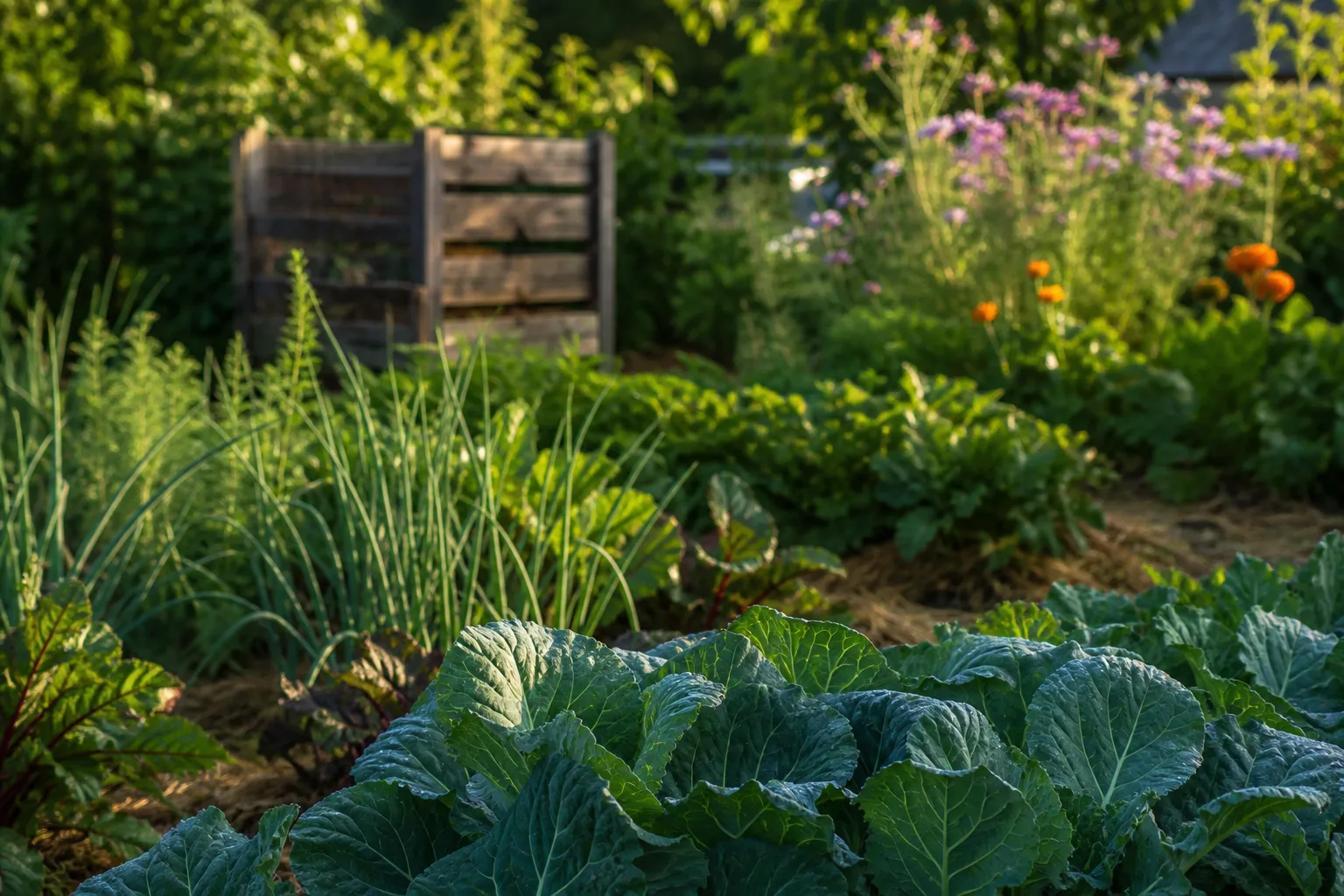
The best gardening tip I know is simple: plant when the plant and the soil are ready, not when the calendar tells you to. A holiday can be a useful reminder, but it cannot know your elevation, last frost, soil temperature, cold-air pockets, or whether the next week will bring a heat wave.
That lesson is especially clear with tomatoes, but it scales to almost every garden decision. A strong garden is less about memorizing isolated tricks and more about getting five things in the right order: timing, structure, moisture, site fit, and observation. Use the rules below as a framework, then adjust them to your local weather and the crop in front of you.
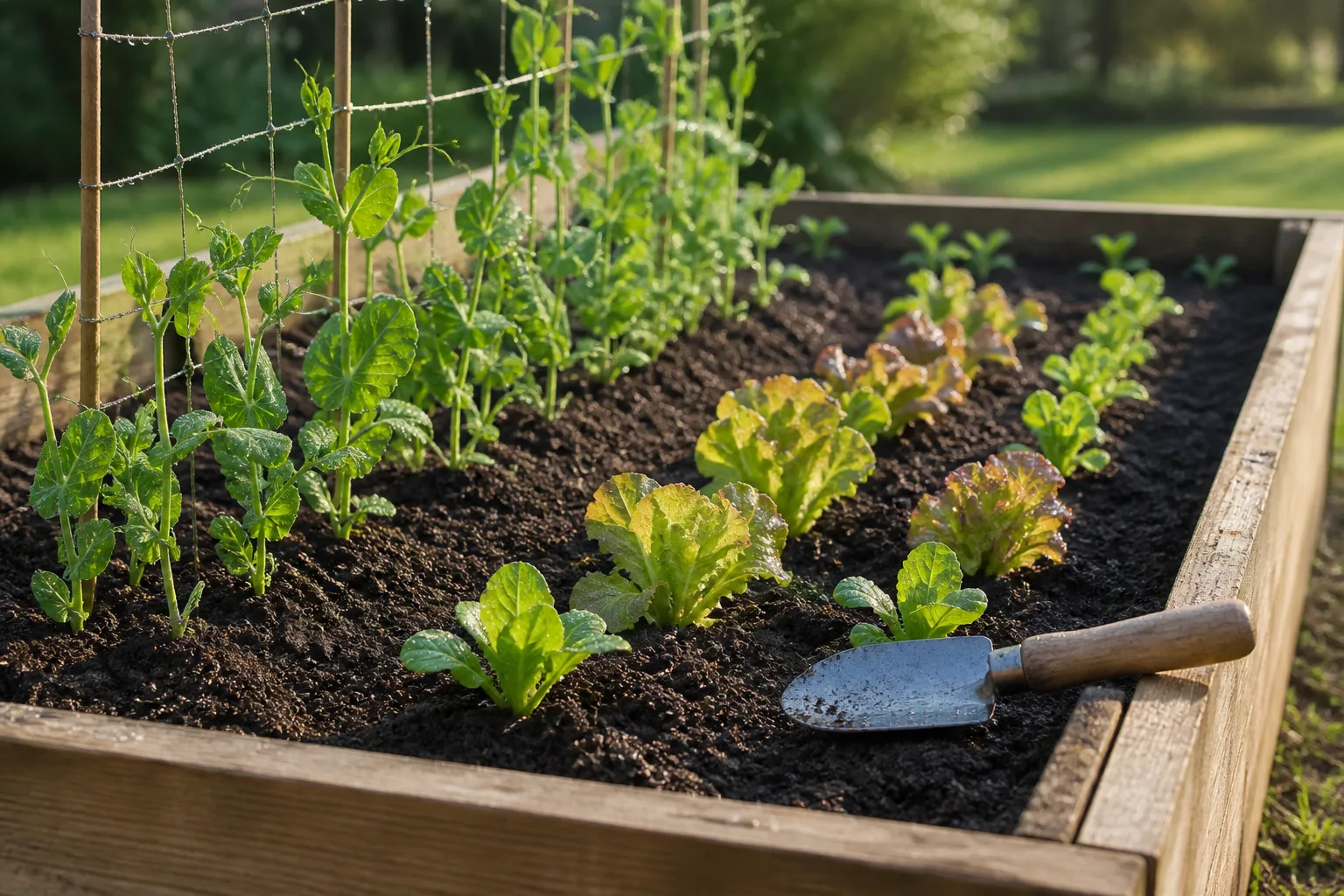
Check the conditions before you plant tomatoes
Tomatoes are warm-season plants. They may survive a cool night, but survival is a low bar; a plant that spends its first weeks stalled by cold will not behave like one that starts growing immediately in warm soil. The Royal Horticultural Society recommends planting young tomatoes when temperatures are reliably above 60°F (16°C), in a warm, sunny, sheltered position, and after hardening them off (RHS).
Soil temperature and overnight lows matter more than a holiday
Use three checks before moving a tomato outdoors: the frost risk has passed for your location, the soil is warming rather than cold and saturated, and nighttime temperatures are no longer repeatedly dipping into the low 50s. Ohio State University Extension’s BYGL guidance gives warm-season crops such as tomatoes a practical soil-temperature range of about 55–60°F for planting transplants (Ohio State University Extension). Treat that as a benchmark, not a magic switch.
If your garden is in a cold pocket, beside a stone wall, or at a higher elevation, wait longer than a neighbor in a sunny, sheltered yard. Raised beds and dark containers may warm faster than heavy ground soil, while wet clay can remain cold even after a warm afternoon. A cheap soil thermometer checked in the morning gives you better information than copying a date from another gardener’s region.
The same rule works in reverse. If a late cold snap is coming, delay planting even if the forecasted last frost date has passed. Tomatoes do not gain much from being planted a week early if they then sit under row cover, stop growing, or suffer chilling damage. A healthy plant held in a pot is usually easier to protect than a stressed plant in the ground.
Harden off plants and use a warm holding pattern
Nursery plants and indoor seedlings need a transition. For about a week, place them outdoors in a sheltered spot for a few hours, gradually increasing exposure to sun and wind. Bring them back in if a cold night or severe weather is forecast. Hardening off is not busywork; it reduces the shock of moving leaves and stems from protected conditions into ultraviolet light, wind, and wider temperature swings.
If the soil is not ready, keep the plants growing in bright light and a container that drains freely. Water when the mix is beginning to dry rather than keeping it constantly wet, and do not push lush growth with heavy fertilizer while you wait. On warm days, a small cold frame or portable greenhouse can buy time, but it must be opened for ventilation and closed before the temperature drops.
Give tomatoes a support plan on planting day
Support is not an afterthought. Put the stake, cage, trellis, or other structure in place when you plant so you do not later drive it through an expanding root system or try to lift a collapsed vine without breaking stems. Support keeps fruit and foliage off the soil, makes harvesting easier, and improves air movement through a crowded plant.
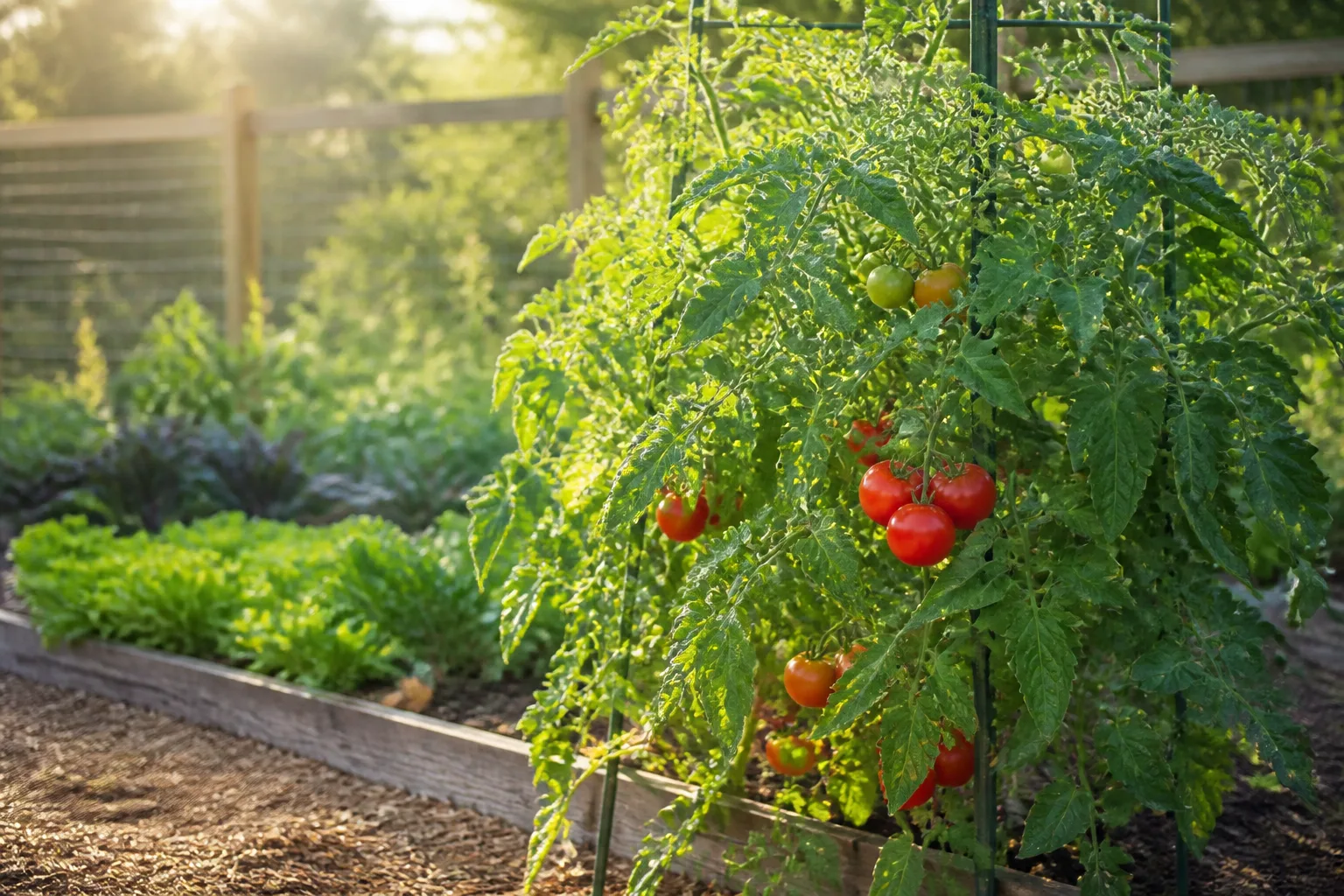
Match the support to determinate or indeterminate growth
Tomato labels often use two terms that change the whole care plan:
| Type | Growth habit | Practical support and pruning plan |
|---|---|---|
| Determinate | Compact plant that sets much of its crop in a shorter flush | Use a sturdy cage or short stake; remove only problem growth or low suckers if needed, because aggressive pruning can remove future fruit. |
| Indeterminate | Vining plant that keeps growing and flowering until cold weather | Use a tall, anchored cage, stake, or trellis; tie regularly and choose a deliberate number of stems. |
The RHS describes indeterminate or cordon tomatoes as vigorous plants that need tall support and regular tying, while bush or determinate tomatoes stay more compact and need less maintenance (RHS tomato guide). That distinction is more useful than a blanket instruction to prune every tomato plant.
Prune for space and airflow, not out of habit
A sucker is a side shoot that grows where a leaf meets the main stem. Removing some suckers can keep an indeterminate plant within its support and open a dense interior, but it is not a universal command to remove every side shoot. Joe Gardener’s tomato-care checklist emphasizes that sucker removal is primarily growth management, with a trade-off: fewer stems can mean a tidier plant and better airflow, while more stems can mean more foliage and fruiting potential but a larger, harder-to-manage vine (Joe Gardener).
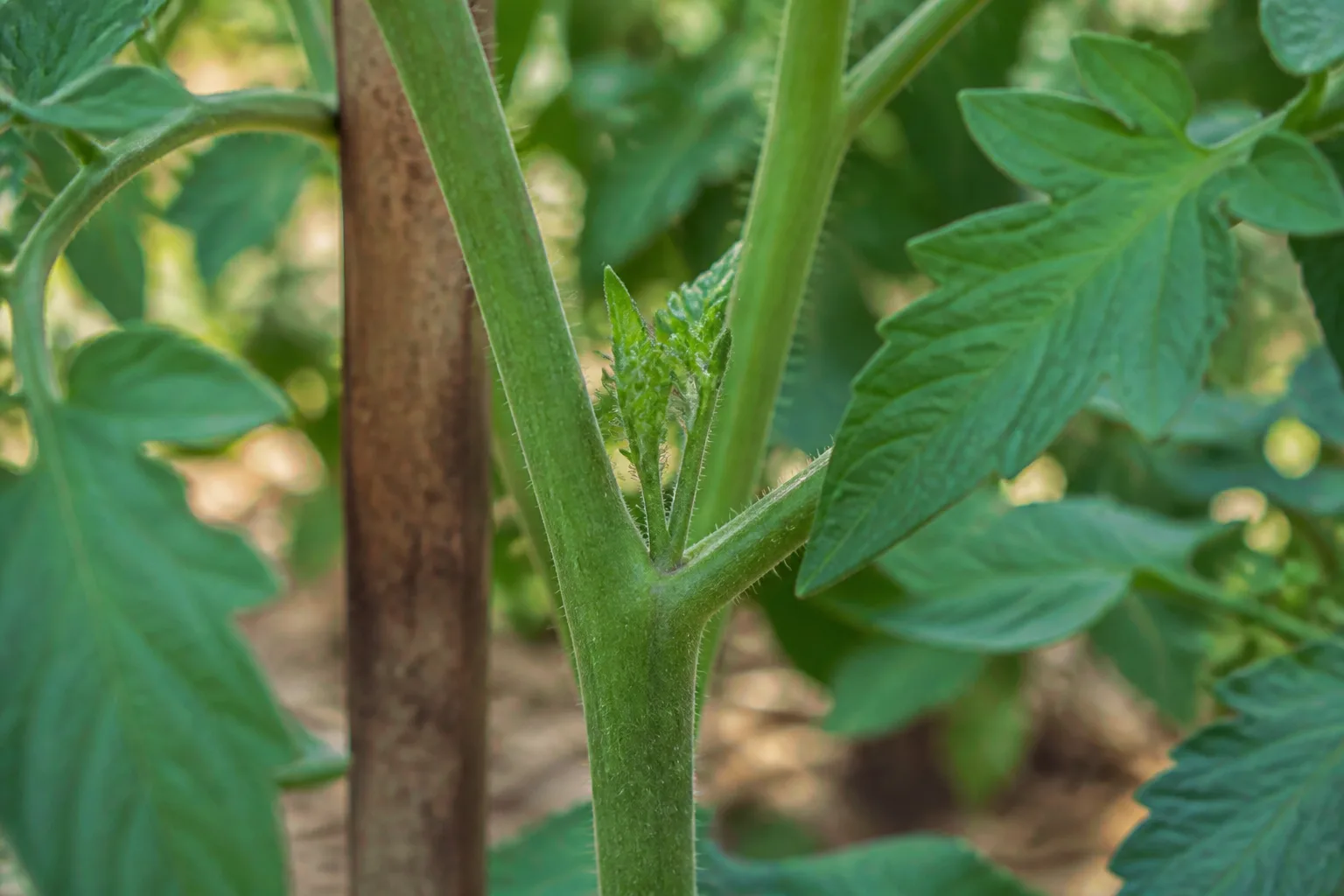
For an indeterminate tomato, choose the number of main stems your support and space can actually handle. If the plant is staked in a narrow bed, keeping one to three strong stems may be sensible. If it is growing in a roomy, sturdy cage, you can leave more. Remove small unwanted suckers with clean fingers when they are easy to snap, and avoid stripping large amounts of foliage during hot weather, when exposed fruit can sunscald.
Determinate plants deserve restraint. They have a shorter, more programmed fruiting period, so cutting growth above the first flower cluster can reduce the harvest you were trying to protect. Fine Gardening makes the same useful distinction: determinate tomatoes generally need little pruning, while pruning and support decisions for indeterminate plants are about structure, light, airflow, and season length (Fine Gardening).
Tie stems loosely. A figure-eight tie gives the stem room to expand and reduces rubbing against the support. Recheck the plant every few days during its fastest growth; a tie that was loose last week can become a damaging girdle surprisingly quickly.
Mulch the root zone without smothering it
Mulch is one of the few garden practices that helps several problems at once. A suitable layer reduces evaporation, softens the impact of heavy rain, suppresses many weed seedlings, and helps keep soil from splashing onto lower leaves. USDA Farmers.gov lists organic mulch as one way to keep soil covered, while its soil-health guidance also connects soil cover, water infiltration, reduced erosion, and nutrient cycling (Farmers.gov).
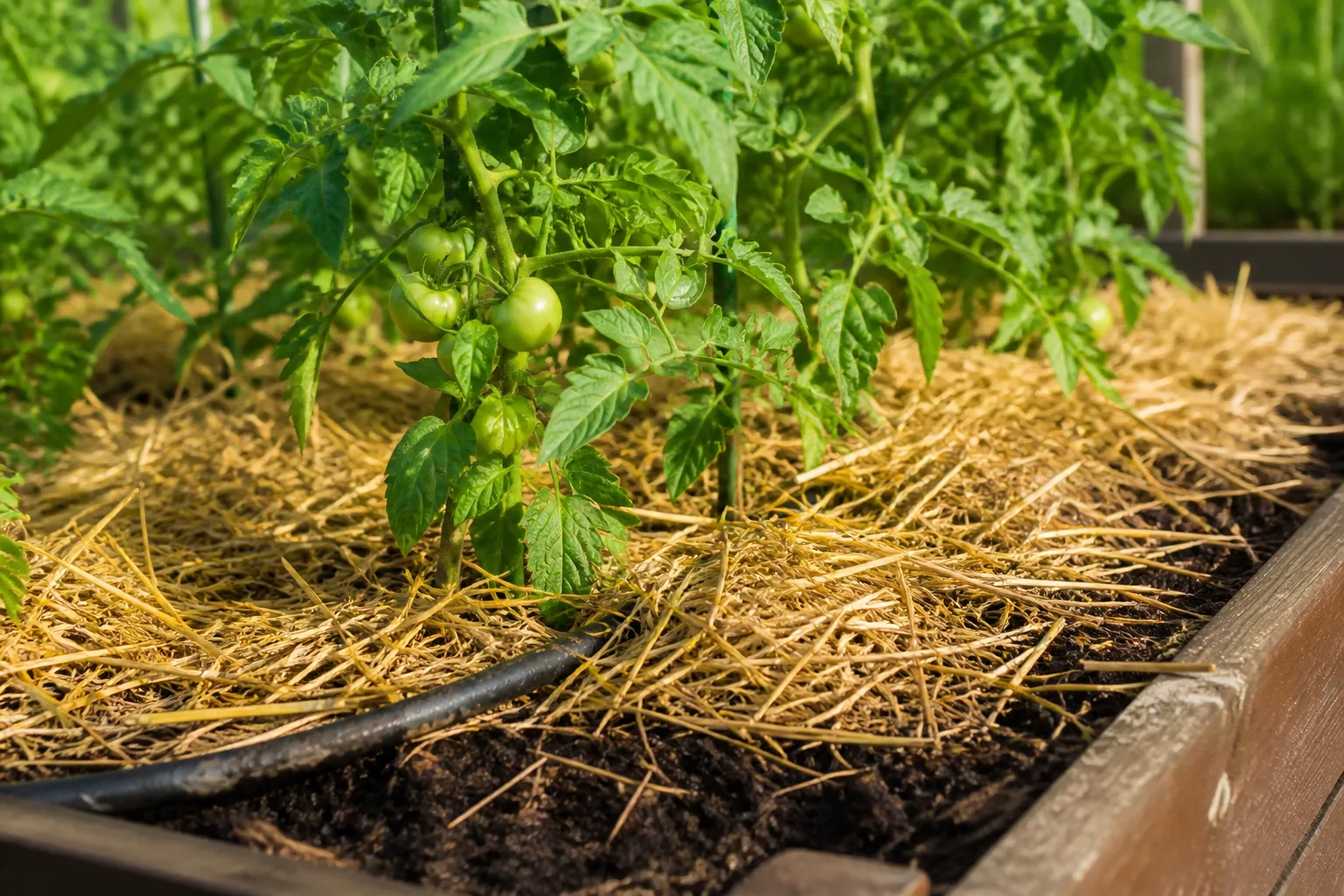
Apply mulch after the soil has warmed and after you have cleared existing weeds. For a vegetable bed, use a material that will not mat into a waterproof crust, such as clean straw, shredded leaves, or a thin layer of finished compost. Around tomatoes and established perennials, arborist chips or bark can work well when kept on the surface. BBC Gardeners’ World Magazine also recommends mulch around tomatoes to conserve water, but the right depth depends on the material and the site (BBC Gardeners’ World Magazine).
Keep mulch a few inches away from tomato stems and perennial crowns. A damp collar pressed against a stem can invite decay, hide pests, and make it difficult to see whether the plant is settling too deeply. Do not mix fresh wood chips into the vegetable-bed soil: surface chips can be useful, but incorporated woody material can temporarily compete for nitrogen as it decomposes. If a chip layer settles, top it up rather than piling it against stems.
Mulch is not a weed eraser. It does little for established perennial weeds that already have deep roots, and seeds can germinate in the mulch itself. Pull or hoe existing weeds first, keep the layer consistent, and spend a few minutes removing new seedlings before they flower.
Water new plants while roots establish
New plants need a different watering approach from established plants. Their root balls are small, so the surrounding soil may be damp while the original root mass is drying—or the surface may look dry while the deeper soil is still wet. The answer is not automatically “water every day forever.” It is check the root zone, water thoroughly when it needs it, and shorten the interval during heat, wind, or unusual dryness.
Read the soil, rainfall, and weather instead of using a fixed schedule
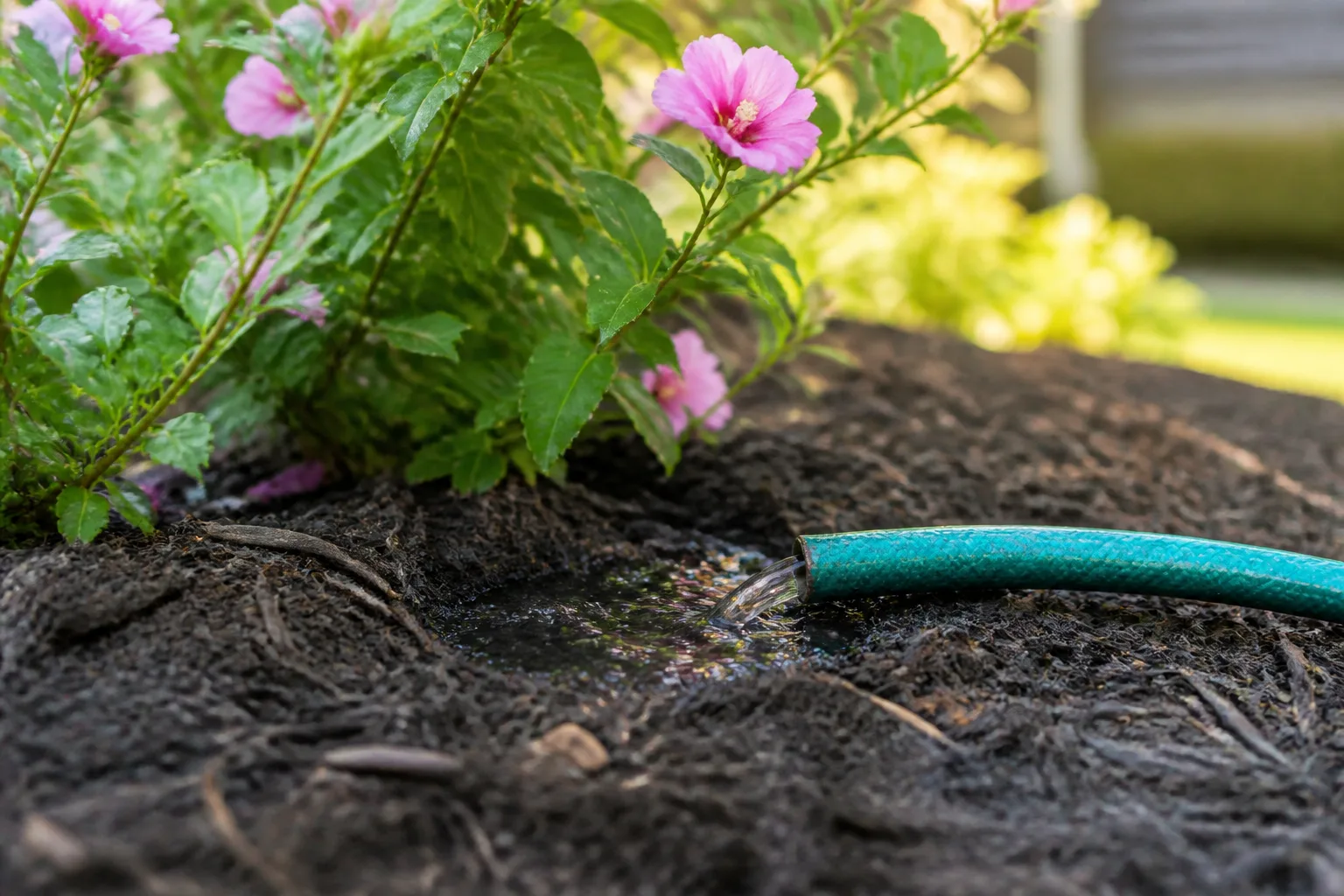
Immediately after planting, water slowly enough to settle soil around the roots. During the first week, inspect the plant and soil daily; water again when the root zone begins to dry, especially if the plant is small, the weather is hot, or the planting hole sits in sandy soil. In cool, cloudy, or rainy weather, the next watering may be later. Watering a wet root ball on a rigid schedule can be just as harmful as letting a new plant wilt.
Push a finger or a simple moisture meter into the soil near, but not directly against, the root ball. If the soil is dry several inches down and the plant is losing firmness, water the soil at the base until the entire root zone is moist. If water runs off hard ground, pause, let it soak in, and apply more rather than creating a puddle that flows away.
BBC Gardeners’ World Magazine advises watering at the base rather than over the foliage and watering thoroughly rather than giving frequent sips (BBC Gardeners’ World watering guidance). That is a useful model for new perennials and annuals too. Deep, targeted water encourages the root ball to connect with surrounding soil; light sprinkles wet the surface and evaporate quickly.
After the first week, extend the interval gradually as roots move outward. A newly planted shrub, a shallow-rooted annual, and a tomato in a small container will not have the same schedule. Mulch can slow drying, while wind-facing beds and unmulched pots can dry much faster. Track the soil and plant response for a week, then adjust rather than following a number copied from a different climate.
Choose native plants by site, not by label alone
“Native” is useful information, but it is not a guarantee that a plant will thrive in every corner of your yard. A plant native to your region may still fail in compacted clay, deep shade, a hot reflected-sun strip, or a wet spot where it cannot drain. The best choice matches the plant’s natural conditions to the conditions you actually have.
University of Maryland Extension’s pollinator-garden guidance recommends planting native species when possible because they are adapted to the environment where they naturally occur (University of Maryland Extension). That adaptation can make establishment and long-term care more predictable, but it does not eliminate the need for watering new plants or choosing the right site.
Before buying, note the bed’s light for a full day, how quickly water drains after rain, the mature width, and whether deer or rabbits browse there. Then look for a locally appropriate species—not just a plant with the word “native” on a generic tag. Regional native-plant societies, extension plant databases, and local nurseries can help you identify plants that support pollinators and wildlife without becoming too large or aggressive for your space.
Also ask what “low maintenance” means. A native perennial may need regular watering during its first season, occasional division later, or a cutback that keeps winter stems tidy. Its long-term value is not that it requires zero care; it is that the plant, once established in a suitable site, is more likely to work with local conditions than a poorly matched ornamental.
Use planting time as a pest-management tool
Gardeners often treat pests as an emergency that starts after damage appears. Timing can prevent some of that pressure. A pest may be abundant during the vulnerable stage of one crop but less active when a cool-season crop is planted later, or a crop may grow quickly enough in a different window to outpace minor damage.
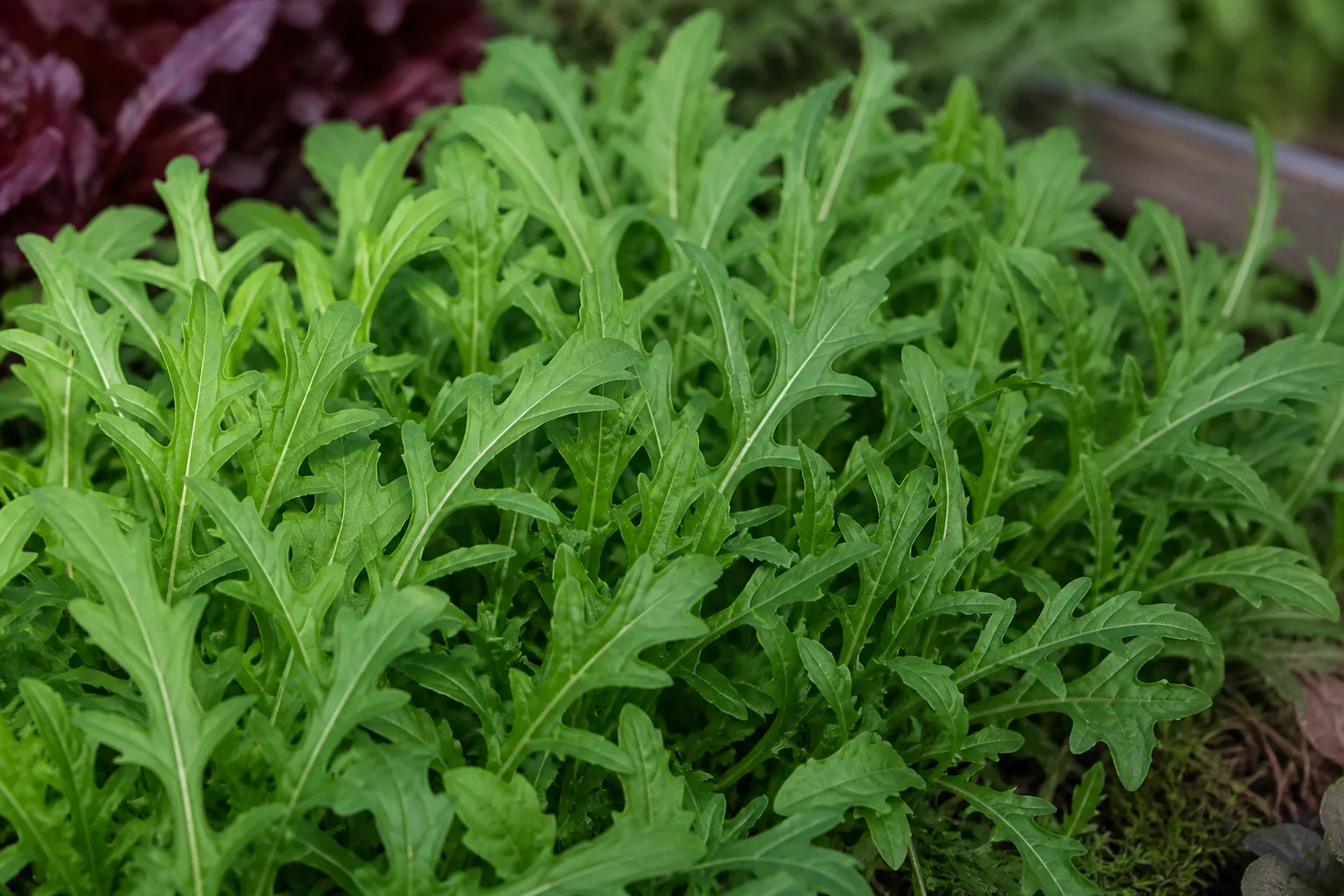
Fall arugula shows how timing can change pest pressure
GrowVeg describes a practical example with arugula: spring seedlings can be peppered by flea beetles, while fall arugula grows with much less flea-beetle activity as the weather cools and days shorten (GrowVeg). That does not mean every fall crop will be pest-free or that flea beetles disappear everywhere on the same date. It shows how a planting window can change the balance between crop growth and pest pressure.
Use the idea as an experiment. If spring arugula repeatedly becomes inedible, try a fall sowing, protect young plants with a row cover, and keep the bed free of weeds that can shelter pests. If a fruit crop ripens during peak pest flight every year, compare an earlier or later variety next season. Record what you planted, when damage appeared, and how the weather behaved; one season’s observation is a clue, not a universal rule.
Timing is only one tool. Inspect plants, identify the pest before treating, protect beneficial insects, and use physical barriers when they fit. A few holes in older leaves may not justify spraying, while damage to seedlings, flowers, or the edible portion may call for faster action. The goal is not a spotless garden; it is a healthy crop with damage kept below the point where it changes your harvest.
Build a five-minute weekly garden inspection
Good gardeners do not prevent every problem. They notice problems while the response is still small. Once a week, walk the garden slowly enough to look at the newest growth, the undersides of leaves, soil moisture, support ties, and the base of each plant.
Start with the weather and the soil. Ask whether the last week was hotter, windier, or wetter than usual, then compare that with the root zone. Next, look for wilting, chewed holes, stippling, sticky residue, leaf spots, broken stems, and weeds touching desirable plants. Check that mulch has not buried a crown or slipped against a stem.
For tomatoes, look at the support before the plant becomes top-heavy. Add a tie, remove one or two clearly unwanted suckers, or prune a damaged leaf while the task is small. Do not perform a dramatic haircut just because the plant looks vigorous; first decide whether the problem is crowding, disease, support failure, or simply normal growth.
Write down the first date you see a pest or symptom. That record becomes more useful each year because it turns vague frustration into a local pattern: “flea beetles arrive when the spring greens are small,” or “this bed stays wet for three days after rain.” Those observations are often more valuable than a generic care calendar.
Use a simple seasonal checklist
In early spring, test the soil before setting out warm-season crops, prepare supports, and decide which plants need hardening off. Clear perennial weeds before spreading mulch, and check that irrigation or a hose can reach new plantings without wetting the foliage.
As the garden begins active growth, mulch once the soil is warm, inspect new plants frequently, and tie indeterminate tomatoes before stems sprawl. Choose a pruning plan that matches the variety and the amount of room available. Keep watering responsive to rainfall and weather rather than increasing fertilizer every time growth looks slow.
In summer, watch for the combination of heat, wind, and fruit load. Check containers more often than in-ground beds, keep supports anchored, and water at the base. If a plant is crowded, thin selectively; if leaves are diseased, identify the pattern before removing large amounts of healthy foliage.
In late summer and fall, note which pests are fading and which crops benefit from cooler weather. Sow a second round of greens when your regional timing supports it, clean up diseased material rather than composting it casually, and save notes about varieties that handled your site well. The next season’s best tip will come from the record you make this season.
Avoid the ways good gardening advice backfires
“Plant after the last frost” becomes “plant on the last frost date.” The first is a safety boundary; the second ignores soil temperature and the week ahead. Wait for warm-season conditions, especially for tomatoes, peppers, and eggplants.
“Water new plants every day” becomes soggy soil. Daily inspection is helpful; daily irrigation is conditional. Feel the soil and account for rain, shade, wind, mulch, container size, and drainage.
“Mulch heavily” becomes mulch against stems. Keep the root zone covered but leave a visible gap around crowns and stems. Surface chips and straw are not an invitation to bury fresh woody material in the planting bed.
“Prune tomatoes” becomes remove every sucker. Identify the tomato type, decide how many stems your support can hold, and preserve enough foliage to protect fruit from sun and keep the plant photosynthesizing.
“Plant natives” becomes buy any plant labeled native. Check the species, local range, mature size, moisture needs, and behavior in your particular site. A locally adapted plant in the wrong spot is still the wrong plant.
“Control pests” becomes spray at the first hole. Identify the pest, check how much damage the crop can tolerate, and try timing, row cover, hand removal, sanitation, or other targeted steps before reaching for a broad treatment.
Conclusion
The best gardening tip is not a date, product, or secret fertilizer. It is to pay attention to conditions and make the next decision from what you observe. Plant tomatoes when soil and nights are warm, support them before they sprawl, mulch the surface without burying stems or fresh chips, water new plants according to the root zone, choose natives that fit the site, and use seasonal timing to avoid predictable pest pressure.
Those habits turn gardening from a string of emergencies into a series of small, informed adjustments. You will still lose a plant, meet a new pest, or misread a forecast—but you will catch more problems early and learn exactly what works in your own garden.



