Arugula Care Guide: Grow Rocket from Seed to Harvest
Eruca vesicaria subsp. sativa
Arugula is a fast-growing cool-season annual. Give it sun or light shade, fertile soil that stays evenly moist, and sow small batches every few weeks for a longer harvest.
Arugula Care Guide: Grow Rocket from Seed to Harvest
Start with wateringThe most common care mistake for ArugulaArugula watering guide →Arugula care essentials
Light
Full sun in cool weather; light shade helps prolong the crop in warm weather
Water
Keep the soil evenly moist, watering during dry spells; container-grown rocket needs more frequent checks in warm weather.
Soil
Fertile, moisture-retentive soil that still drains freely; improve light, fast-draining ground with compost.
Humidity
Temperature
Fertilizer
About Arugula
Arugula is native to Mediterranean region, typically reaches About 50–100 cm tall when flowering; leafy rosettes are harvested much earlier indoors, with fast; first leaves can be harvested in about a month growth. Arugula has a rosette growth habit and part of the Brassicaceae family. It is also known as rocket, garden rocket, salad rocket, edible rocket, roquette, rucola, and jamba.
| Detail | Information |
|---|---|
| Also known as | rocket, garden rocket, salad rocket, edible rocket, roquette, rucola, jamba |
| Native region | Mediterranean region |
| Mature size | About 50–100 cm tall when flowering; leafy rosettes are harvested much earlier |
| Growth rate | Fast; first leaves can be harvested in about a month |
| Growth habit | Rosette |
| Scientific name | Eruca vesicaria subsp. sativa |
| Family | Brassicaceae |
Arugula Care Guide: Grow Rocket from Seed to Harvest
Arugula is a quick salad crop, but its short growing cycle makes timing matter more than elaborate care. Give salad rocket a cool growing window, fertile soil that holds moisture without staying soggy, and regular picking. In a warm climate, a cooler season and some afternoon shade usually matter more than adding fertilizer or trying to keep a summer crop alive after it starts flowering. The Arugula plant hub has the crop profile and a concise care summary if you need to check the plant’s identity before choosing a growing spot.
What arugula is and how it grows
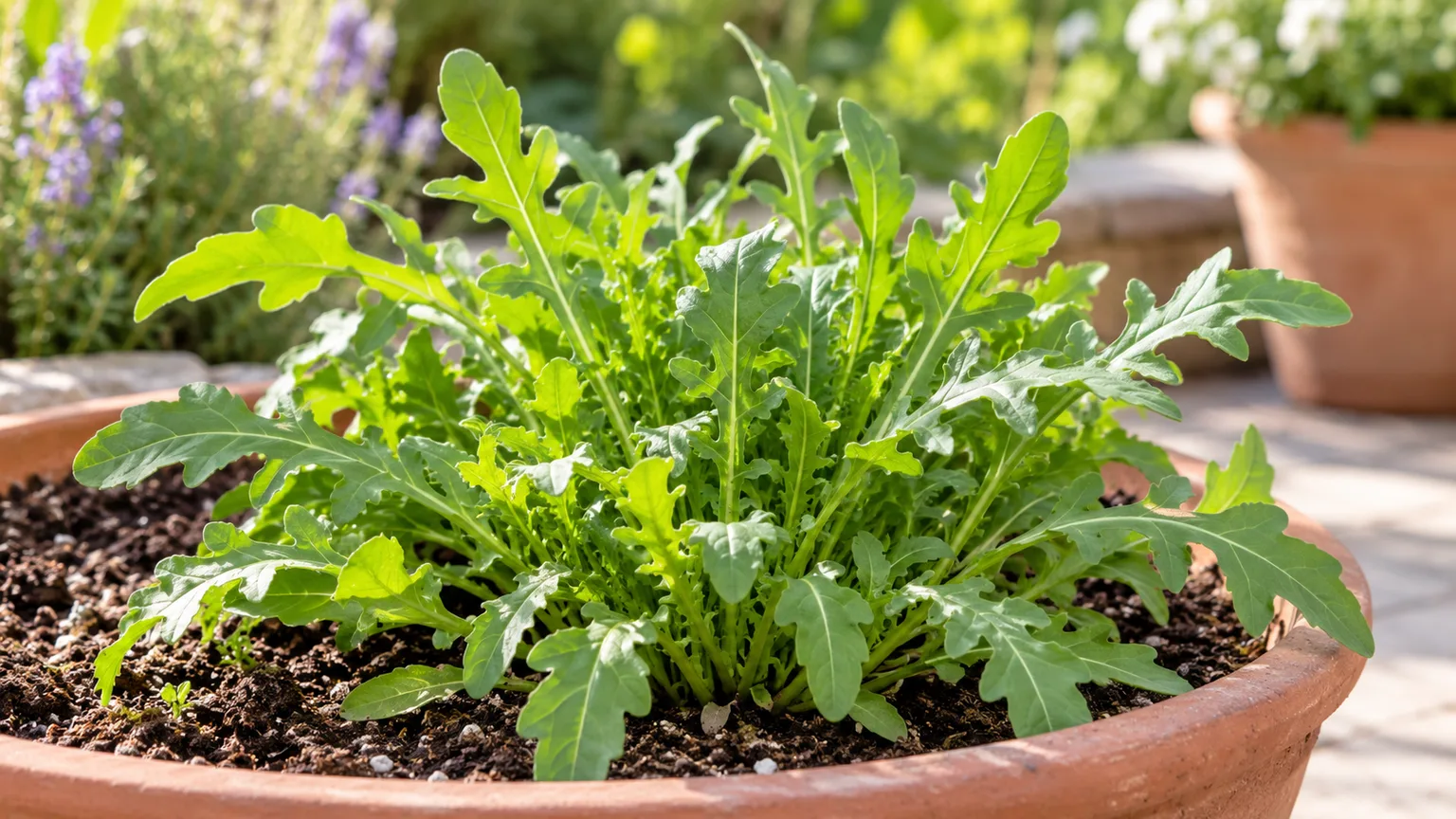
The plant grown as salad arugula or garden rocket is Eruca vesicaria subsp. sativa, an edible annual in the mustard family, Brassicaceae. It forms a low rosette of leaves first; if conditions turn hot, dry, or long-day, it sends up a flower stalk and shifts from producing tender leaves toward flowering and seed. The RHS profile describes it as fast-growing and mainly cultivated for leaves, with flowering plants able to reach a much taller size than the compact rosette harvested for salads (RHS plant profile).
This distinction matters when choosing a pot or bed: you are growing a short-lived leafy crop, not a permanent indoor foliage plant. In a favorable cool spell, first leaves can be ready in about a month, although weather, variety, and harvest size affect the timing (RHS growing guide). Treat the first sowing as a trial for your location; the date on a seed packet cannot account for the heat on your balcony or the length of your local cool season.
Salad rocket vs wild rocket
Seed packets and produce labels sometimes use “rocket” broadly. Salad or garden rocket is the annual Eruca described here. Wild rocket is usually Diplotaxis tenuifolia, a different, perennial plant with narrower, more divided leaves, a stronger flavor, and a longer cropping life. The RHS describes the types separately and notes that salad rocket flowers readily in warm weather (RHS growing guide).
Check the botanical name when buying seeds if you want a fast baby-leaf crop. Advice for perennial wild rocket can give the wrong expectation for salad rocket: one sowing of Eruca is not likely to provide leaves for years. The difference also explains why one gardener’s “rocket” may be more heat-tolerant or persistent than another’s.
Choose the season before the site
Arugula is a cool-season leafy crop. It grows best when temperatures are mild; heat and long days speed flowering, and dry soil adds stress. That means the practical growing calendar depends on climate. In much of India and other warm regions, use the locally coolest mild season as your main crop window rather than copying spring and fall dates from North American or British guides. In places with mild winters, a sheltered winter or early-season crop may work; in places with severe monsoon heat or hot nights, wait for a reliably cooler spell.
If you are unsure, sow a small tray or section of a pot first and observe it for two to three weeks. Healthy seedlings should establish leaves without daily wilting. If the crop races upward and forms a central stem before you have harvested much, the window is too warm or the plants are stressed. Restarting with a fresh small sowing is often more useful than trying to reverse a crop that has already bolted.
Use this as a practical cue, not a calendar: a shaded, breezy spot can help, but it cannot make sustained hot weather behave like a cool season.
Light and placement
Give arugula full sun during mild weather. In a hot season, choose morning sun with afternoon shade or a bright position protected from the hottest direct exposure. Extension sources list full sun as suitable and note that light shade can slow bolting during hot weather (University of Delaware Extension guide). The goal is enough light for compact leaf growth without letting a container overheat and dry out by midafternoon.
On a balcony, move the pot away from a west-facing wall or hot paving if leaves wilt repeatedly at the same time each day. Shade cloth can help where no naturally cooler position exists, but first try changing the sowing time and pot location. Indoor growing is possible beside a bright window, though a dim room may produce weak, stretched seedlings; arugula is a food crop that needs usable light, not simply a room that looks bright to people.
Watering for steady leaf growth
Keep the root zone evenly moist while seedlings establish and during leaf production. Arugula has a relatively shallow rooting habit, so the upper layer of a small pot can dry quickly in warm or windy weather (Gardeners’ Path growing guide). Check the soil with a finger rather than watering to a fixed calendar: water when the surface begins to dry, then let excess drain.
Aim water at the soil where practical, especially in crowded plantings, and use a container with drainage holes. Constantly saturated compost is not the same as even moisture; it can leave roots short of air and encourage disease. Conversely, letting a shallow pot dry hard between waterings can make leaves harsh and hasten flowering. If a plant wilts only in afternoon heat but perks up later, assess heat and pot temperature as well as soil moisture before increasing water blindly.
Soil and container setup
Choose fertile soil that drains freely but does not dry at once. In a garden bed, loosen the surface and mix in mature compost if the soil is light or sandy. In a pot, use fresh multipurpose container compost and a container with open drainage. Avoid compacted garden soil in a small pot; it can settle into a dense mass that is difficult to keep evenly moist.
A wide container is useful because arugula is usually sown as a small patch and harvested leaf by leaf. The RHS recommends a container at least 30 cm (about 12 inches) wide; its larger soil volume dries more slowly than a tiny pot and gives space for repeated sowings (RHS container advice). If balcony space is limited, use a trough or several shallow sowings rather than crowding all the seed into one narrow pot. Keep enough space between mature plants for airflow and easy picking.
Growing arugula from seed
Direct sowing is simple and avoids holding seedlings in small cells until roots dry out. Moisten the bed or container first, scatter seed thinly or place it in shallow rows, cover lightly, and keep the surface from drying until seedlings emerge. Cornell recommends sowing about ¼ inch deep, starting seed about an inch apart in rows, then thinning plants to roughly 6 inches as they grow (Cornell sowing guidance). You can use thinnings as baby leaves if they are clean and undamaged.
For a steady supply, sow a small amount every two or three weeks while weather stays mild rather than planting a large bed once. This staggered approach is especially useful in warm climates: each batch is a fresh chance to catch a cooler spell, and the later sowings replace plants that flower or become too strong in flavor.
Harvest to Table gives a similar interval for succession sowing; treat the timing as a useful starting rhythm and stop sowing when the weather at your site consistently drives seedlings into stress (Harvest to Table growing guide).
Feeding without overdoing it
Prepare fertile soil before sowing rather than applying a strong feed to every seedling. If the bed has been amended with compost and plants are growing steadily, extra fertilizer may not be needed for a short leaf crop. Pale, slow growth can reflect shade, overcrowding, dry soil, or exhausted potting mix as well as low fertility; inspect those conditions before feeding. More fertilizer will not correct a hot growing site or inconsistent moisture.
When and how to harvest
You can begin taking outer leaves once plants have several usable leaves, often around four to six weeks after sowing in favorable conditions. The RHS says rocket can be ready in as little as a month, while extension sources describe harvest in a similar several-week range; these are estimates, not a deadline. Pick young leaves for a milder, more tender flavor. Older leaves are often stronger and more peppery (Wisconsin Extension harvest notes).
Use clean scissors or pinch leaves above the growing point, leaving the center intact if you want the plant to produce more. Alternatively, cut a dense patch once and allow regrowth, but the next harvest depends on weather and the plant’s stage. Harvest regularly and sow replacements before the original patch is spent. If you are growing in a hot place, pick in the cooler part of the day and bring leaves inside promptly; heat and drought can make the flavor sharper.
Bolting, flowering, and seed saving
Bolting means the plant has started a flower stalk. The leaves may become more pungent, and the plant’s main energy is moving into flowers and seeds. Hot weather, long days, crowded plants, and dry soil can all shorten the leafy stage. Light shade and consistent moisture can delay the transition, but pinching a flower stalk is only a temporary measure and will not make an overheated crop young again (NC State Extension plant profile).
If you want leaves, harvest what remains and start another batch when conditions improve. If you want seeds, leave a healthy plant to flower and let its seed pods mature; be prepared for seedlings to appear nearby. Do not let a few bolting plants crowd out new seedlings if the goal is a continuous salad harvest.
Common problems and first checks
Small holes in young leaves can indicate flea beetle feeding; Wisconsin Extension describes this shot-hole damage and physical covers for arugula (Wisconsin Extension arugula guide). Check plants early in the day and inspect the undersides of leaves. Fine mesh or a row cover can protect a new sowing, but make sure the crop is not already sheltering pests beneath it. If you see widespread collapse rather than small holes, check drainage, heat exposure, and watering before treating the problem as an insect issue. The Arugula problems hub is the place to check for plant-specific troubleshooting; the plant problem diagnosis tool can help organize observations when the cause is unclear.
If leaves wilt in sun but recover later, assess the pot’s heat and moisture. If they remain limp in the morning, inspect the root zone and drainage. Yellowing or weak growth across the whole planting may reflect old plants approaching flowering, excessive crowding, or a crop window that is too hot. For a general symptom reference, browse the plant symptoms hub, then return to the Arugula problems hub for crop-specific next steps.
Pet-safety limits
Arugula is grown as a human food crop, but the pet-safety sources reviewed here do not establish a species-specific classification for cats or dogs. The ASPCA explains that its plant list is not exhaustive and that eating plant material can upset pets, so absence from a list should not be treated as proof that a plant is safe. Keep pets from grazing in a planter and contact a veterinarian if a pet eats a substantial amount or seems unwell; this guide does not make a toxicity diagnosis (ASPCA plant-list limits).
Mistakes that shorten the harvest
The most common mistake is treating arugula as a long-lived plant. It is an annual, and a single sowing will eventually flower even with good care. The practical fix is succession sowing, not trying to keep one aging plant productive indefinitely.
Another mistake is choosing a hot spot because it receives the most sun. Full sun is useful during cool weather, but a small pot beside a heat-reflecting wall can become too hot and dry. In warm weather, protect the crop from afternoon heat and check soil more often. Finally, avoid sowing too densely and then forgetting to thin: crowded plants compete for moisture and are harder to harvest cleanly.
When to use this page vs other Arugula guides
Use this overview to choose a season, set up a bed or container, and understand the crop’s short life cycle. If you are trying to solve one narrow issue, start with the relevant section here: light placement for repeated heat wilt, soil and drainage for persistently wet pots, or sowing and harvest for plants that flower before producing enough leaves. The Arugula plant hub provides the overall crop summary, while the Arugula problems hub is the diagnostic starting point for visible damage or stalled growth.
Related Arugula guides
The Arugula plant hub gives the crop profile, while the Arugula problems hub is for symptom troubleshooting. Use the problem diagnosis tool when symptoms overlap or several causes seem possible. This overview keeps light, watering, soil, fertilizer, and sowing decisions together so you can check how one growing condition affects the others.
Conclusion
Arugula succeeds when you grow it as a cool-season leaf crop: sow during a mild window, give it sun when temperatures are gentle and light shade when heat builds, and keep its soil evenly moist without leaving roots waterlogged. Start with a modest sowing, thin seedlings, harvest leaves while they are young, and sow another batch before the first one starts flowering.
For growers in India and similar climates, let local temperatures and the feel of the growing site guide timing rather than copying a fixed month from another region. A cool, bright balcony or garden bed, a wider container that holds moisture, and small repeated sowings usually produce more useful leaves than a large one-time planting.
How to care for Arugula?
How much light does Arugula need?
Full sun in cool weather; light shade helps prolong the crop in warm weather. partial shade
- Full sun in cool weather - Full sun in cool weather; light shade helps prolong the crop in warm weather.
- light shade helps prolong the crop in warm weather - Full sun in cool weather; light shade helps prolong the crop in warm weather.
- partial shade - partial shade.
When should you water Arugula?
Keep the soil evenly moist, watering during dry spells; container-grown rocket needs more frequent checks in warm weather.
- Check the soil around the shallow roots - Keep the soil evenly moist, watering during dry spells; container-grown rocket needs more frequent checks in warm weather.
- aim for evenly moist soil without leaving containers waterlogged - Keep the soil evenly moist, watering during dry spells; container-grown rocket needs more frequent checks in warm weather.
- Drain excess water - Keep the soil evenly moist, watering during dry spells; container-grown rocket needs more frequent checks in warm weather.
What soil works best for Arugula?
Fertile, moisture-retentive soil that still drains freely; improve light, fast-draining ground with compost.
- Peat-free multipurpose container compost for pots - Fertile, moisture-retentive soil that still drains freely; improve light, fast-draining ground with compost.
- In beds, mix compost into light soil to help it retain moisture - Fertile, moisture-retentive soil that still drains freely; improve light, fast-draining ground with compost.
Grower notes for Arugula
Keep it in its cool-season window
Salad rocket is the annual garden rocket, not the perennial wild rocket sold under the same broad common name. Sow in spring or late summer for a longer leaf harvest; in warm spells, move pots or choose a lightly shaded position because heat brings flowering and ends the most productive leaf phase.
Sow small batches for a steady supply
The RHS recommends sowing salad rocket every few weeks because each sowing is short-lived. It grows readily from seed in a bed, trough, or container, and letting a few plants flower can provide self-sown seedlings for a later crop.
Keep the root zone evenly moist
Rocket grows best when the soil stays moist. Water during dry spells, and check containers more often in warm weather because compost dries faster. A moisture-retentive but free-draining bed helps leaves keep growing without leaving roots in standing water.
Pick leaves while they are young
Regular picking of young leaves encourages more growth and gives a milder, more tender harvest. The RHS notes that salad rocket may be ready in about a month; older leaves and plants that have flowered tend to taste stronger.
Use a wide, shallow container
Rocket is compact and suits patios and balconies. For container growing, the RHS recommends a pot at least 30 cm (12 in) wide; sow into the container where it will grow, and water regularly during warm weather.
Protect seedlings and allow airflow
Young plants can be damaged by slugs, snails, and flea beetles. Check seedlings often, use physical protection where needed, and avoid crowding mature plants so foliage can dry and air can move through the crop.
Is arugula safe for pets?
Arugula's pet safety was not confirmed in species-specific sources. The ASPCA says its plant list is not exhaustive and that eating any plant material may upset cats' or dogs' stomachs, so keep pets from grazing and contact a veterinarian if they eat a large amount or show symptoms.
The ASPCA list page reviewed does not establish a species-specific arugula classification. The list is not all-inclusive, so absence from the page is not proof of safety; ASPCA also notes that any plant material may cause gastrointestinal upset in cats and dogs.
Watering Arugula
For Arugula, check the soil around the shallow roots; aim for evenly moist soil without leaving containers waterlogged. and water check regularly and water when the soil begins to dry; water more often in warm weather and containers rather than following a fixed calendar. Hot weather and dry soil shorten the leaf harvest by encouraging premature flowering. Give summer crops light shade and keep moisture consistent.
| Detail | Information |
|---|---|
| How often | Check regularly and water when the soil begins to dry; water more often in warm weather and containers rather than following a fixed calendar. |
| How to check | Check the soil around the shallow roots; aim for evenly moist soil without leaving containers waterlogged. |
| Seasonal changes | Hot weather and dry soil shorten the leaf harvest by encouraging premature flowering. Give summer crops light shade and keep moisture consistent. |
Soil & potting for Arugula
Use a mix of Peat-free multipurpose container compost for pots, In beds, mix compost into light soil to help it retain moisture for Arugula. Keep the root zone moist but not waterlogged. In pots, use a free-draining multipurpose compost. Target soil pH around Adaptable to acidic, neutral, or alkaline soil; Harvest to Table recommends pH 6.0–7.0. Repot not normally repotted; salad rocket is an annual crop best resown as plants finish., ideally in not applicable; sow during the local cool season and use the final container where practical.
| Detail | Information |
|---|---|
| Recommended mix | Peat-free multipurpose container compost for pots, In beds, mix compost into light soil to help it retain moisture |
| Drainage | Keep the root zone moist but not waterlogged. In pots, use a free-draining multipurpose compost. |
| Soil pH | Adaptable to acidic, neutral, or alkaline soil; Harvest to Table recommends pH 6.0–7.0. |
| Repotting frequency | Not normally repotted; salad rocket is an annual crop best resown as plants finish. |
| Best season to repot | Not applicable; sow during the local cool season and use the final container where practical. |