15 Companion Plants for Arugula: Practical Pairings for a Healthier Garden
Grow arugula beside 15 useful companions, including spinach, lettuce, herbs, alliums, and carrots—with timing, layout, spacing, and cautions.
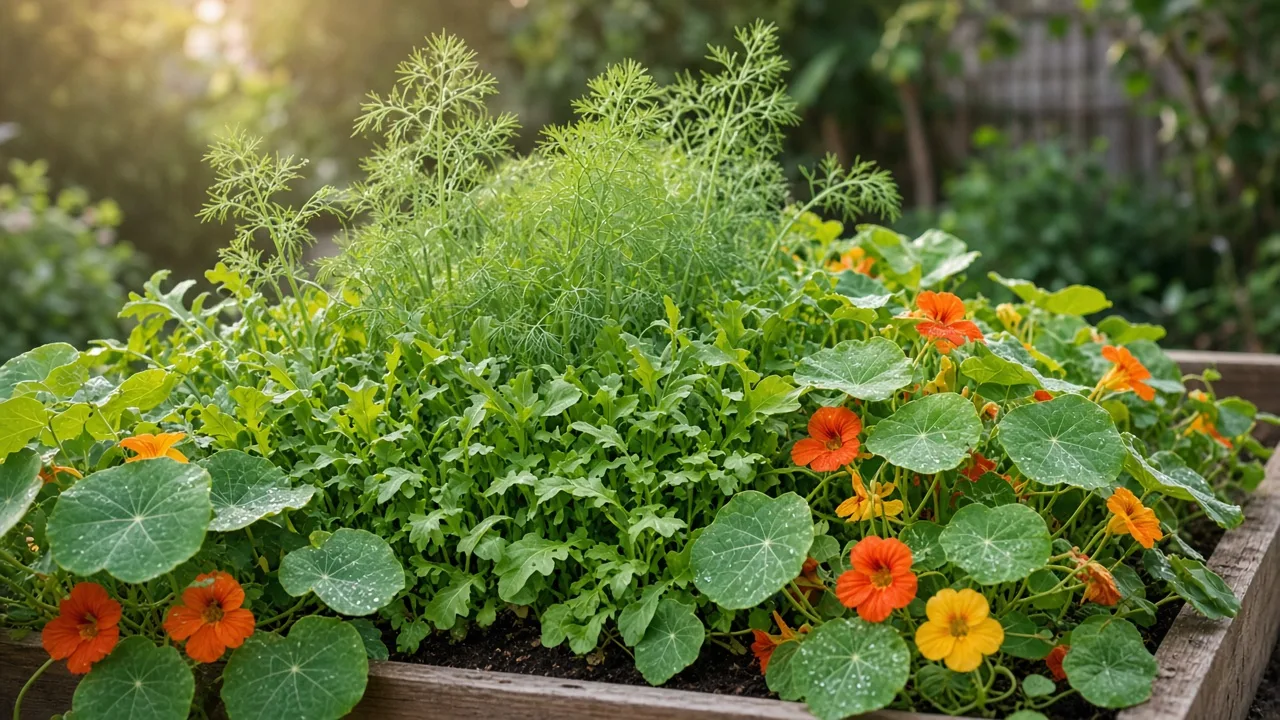
Arugula is quick, compact, and happiest before summer heat settles in. That makes it unusually good for mixed beds: you can harvest it while slower crops are still establishing, then replace it with a later sowing when the first patch begins to flower. The best arugula companion plants are the ones that share that cool-season window, use a different layer of soil, or perform a clear job without stealing light.
Arugula fills a bed quickly, so the most useful companions are plants that share its season or leave room for repeated sowings.
The list below includes all 15 plants commonly recommended for arugula, but it does not treat every pairing as a guaranteed pest shield. Use it as a decision guide: choose two or three plants that fit your bed, climate, and immediate problem instead of planting everything at once.
What arugula needs from a companion
Arugula, also called rocket or roquette, is a cool-season leafy crop in the mustard family. It grows in sun or light shade, prefers fertile soil that holds some moisture without staying waterlogged, and can be ready for young-leaf harvest in about a month. The Royal Horticultural Society notes that salad rocket is short-lived and flowers readily in hot weather, while regular small sowings keep the harvest going (RHS rocket-growing guidance).
That culture narrows the field. A good neighbor should not demand bone-dry soil, cast dense shade over a low rosette, or occupy the same small root zone at the exact moment arugula is trying to bulk up. It should also be easy to remove or harvest when the arugula reaches the end of its cool-weather run. A practical list from Epic Gardening reaches a similar conclusion by grouping root crops, salad greens, and herbs according to season and garden function rather than treating every pairing as interchangeable.
Think in four practical jobs:
- Share the season: spinach, lettuce, and chard can be watered and harvested on the same schedule.
- Use another layer: carrots and other root crops make use of space below shallow leafy roots.
- Support a living pest-management system: flowering dill, cilantro, parsley, oregano, thyme, and borage can provide nectar or habitat for beneficial insects.
- Buy time: a trellised or taller plant can provide light afternoon shade, but only if it is placed where it does not block the morning sun.
What companion planting can—and cannot—do
Companion planting is most useful when it combines diversity, timing, and good horticulture. A mixed bed can make a target crop less visually obvious, interrupt an insect’s movement, provide flowers for predator insects, or let you harvest two crops from the same footprint. The RHS describes these as potential benefits rather than guarantees; results vary with the crop, pest, weather, and layout (RHS companion-planting overview).
Herbs are not usually a force field. Penn State Extension explains that aromatic herbs can mask the volatile cues pests use to find a crop, interfere with egg-laying, or attract insects that prey on aphids and caterpillars. That is different from claiming that a basil, dill, or mint plant will repel every flea beetle from every arugula leaf (Penn State Extension on herbs as plant partners).
Companions also cannot fix the fundamentals. Crowded arugula still bolts, wet foliage can still encourage disease, slugs can still chew seedlings, and flea beetles can still leave pinholes in leaves. Keep row cover, crop rotation, morning watering, airflow, and regular scouting in the plan.
The 15 best companion plants at a glance
| Companion | Main reason to use it | Best placement or timing | Main caution |
|---|---|---|---|
| Spinach | Same cool season and harvest rhythm | Alternate short rows | Both crops need airflow and slug checks |
| Lettuce | Similar moisture and shallow canopy | Beside or between arugula rows | Do not pack both crops too tightly |
| Swiss chard | Longer-lasting leafy crop for shoulder seasons | Bed edge or a wider corner | Mature leaves can shade baby arugula |
| Carrots | Deep root with a low leafy top | Same bed, offset from arugula | Loose soil and careful thinning matter |
| Garlic | Fall-to-spring timing and an aromatic border | Bed edge or between rows | It is not a guaranteed flea-beetle repellent |
| Chives | Compact allium and pollinator-friendly flowers | Row ends or border | Divide clumps before they crowd greens |
| Onions | Cool-season root crop with upright leaves | Border or narrow row | Bulb swelling needs space and sun |
| Parsley | Long-season herb and beneficial-insect habitat | Corner or pot near bed | It becomes wider and taller than seedlings suggest |
| Dill | Flowers support aphid predators | Row end, replanted in small batches | Let it flower, but remove seedlings that shade arugula |
| Cilantro | Cool-season herb that can bloom for beneficials | Spring or fall edge | It bolts quickly in heat |
| Borage | Blue flowers and broad leaves for habitat and light shade | Outside corner or edge | It sprawls and self-sows |
| Mint | Strong scent and flowers, if contained | Pot beside the bed | Never let rhizomes run through open soil |
| Basil | Warm-season herb for later beds and beneficial flowers | Near, not over, spring arugula | It needs warmer soil and more sun |
| Thyme | Low aromatic border that tolerates drier soil | Dry edge or separate pot | Its water needs differ from arugula |
| Oregano | Aromatic perennial and flowering insect habitat | Permanent edge or pot | It spreads and can crowd a small bed |
Cool-season leafy partners: spinach, lettuce, and Swiss chard
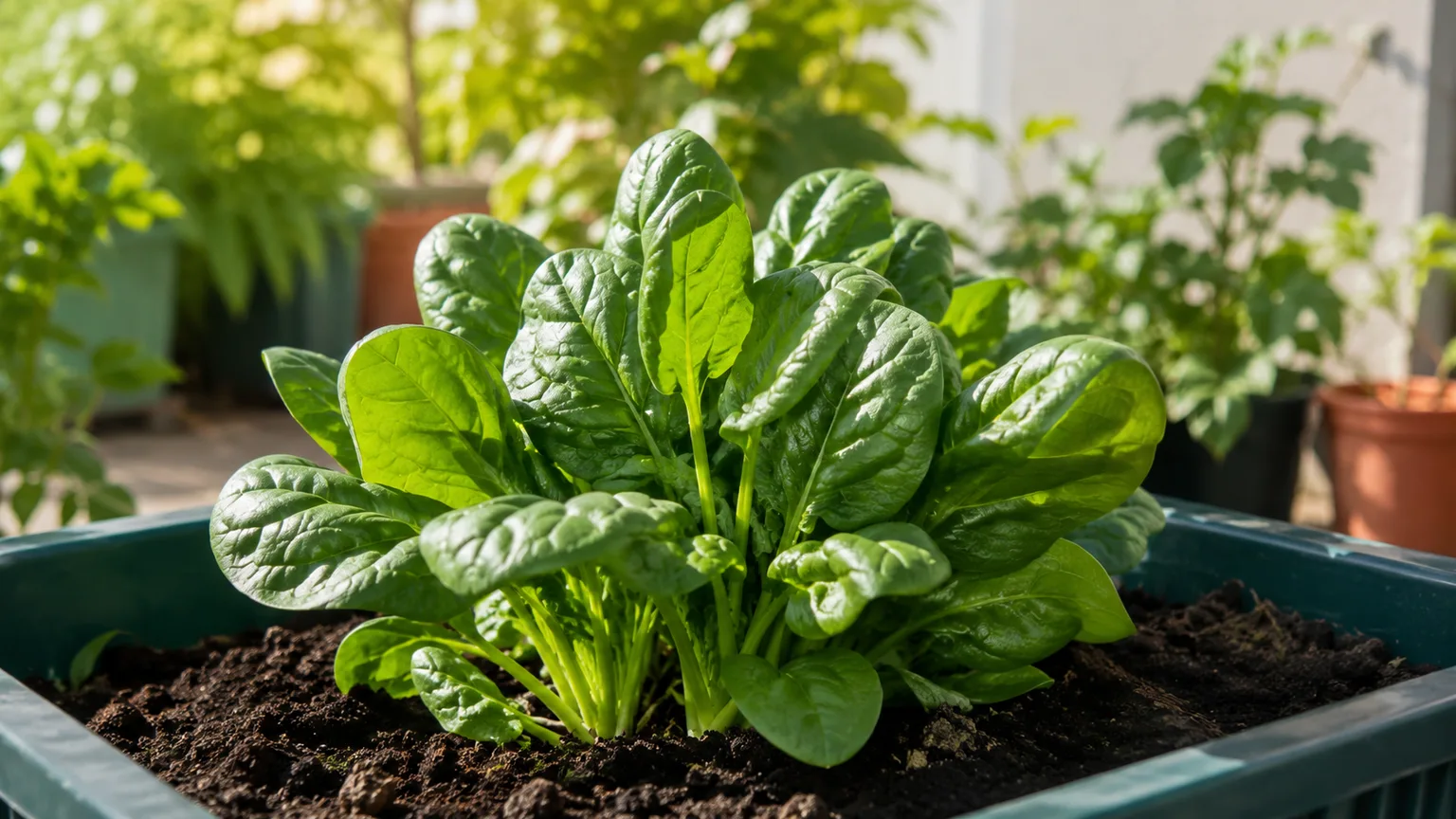 Spinach and arugula can share a cool-season bed, but harvesting and thinning keep the canopy open.
Spinach is the simplest pairing. It likes cool soil, steady moisture, and regular picking, so one bed can be watered and harvested in a single pass. Plant alternating bands rather than mixing seed randomly: spinach forms broader leaves, while arugula stays upright and lets you see which crop needs thinning.
Give full-size plants about 6 to 8 inches of room, or grow both as baby leaves and harvest sections progressively. The advantage is not that spinach magically improves arugula; it is that the two crops make efficient use of a spring or fall bed and can be cleared before a warm-season crop needs the space.
Lettuce is another low-risk neighbor. Loose-leaf types are especially useful because they can be cut young, leaving gaps for a new arugula sowing. Head lettuce needs more room and may form a dense canopy, so plant it on the north side of a narrow bed or leave 8 to 10 inches between mature centers.
Swiss chard extends the list into a longer harvest window. Young chard is compact enough for an edge, but mature plants are much larger than arugula and can shade a whole row. Use one or two plants as a bed anchor, harvest the outer leaves, and keep them far enough away that the arugula receives direct morning light.
These three are strong choices when your priority is reliable culture, not a dramatic pest claim. The trade-off is shared vulnerability: dense greens can shelter slugs and hold humidity, so thin them early and water at the soil line.
Root-zone neighbor: carrots
Carrots are a useful space-sharing partner because the edible root develops below the arugula canopy. Sow a short carrot row beside the arugula rather than scattering carrot seed through a dense patch; carrot seedlings are slow and delicate, and you need access to thin them without stepping on the greens.
The classic “deep root beside shallow root” explanation is a little too neat. Carrots do not automatically loosen every soil type, and they still compete for water while young. The practical benefit is that the crops occupy different shapes and mature at different speeds. Keep the bed evenly moist for germination, then harvest arugula from the edge while carrots continue underground.
Use carrots where the soil is already loose and stone-free. If you need to dig deeply or repeatedly to correct a compacted bed, plant the arugula in a separate row so its roots are not disturbed.
Alliums: garlic, chives, and onions
The allium group—garlic, chives, and onions—is a sensible arugula companion category because the plants are upright, edible, and useful at the bed edge. Their sulfur-containing aromas may make it harder for some insects to locate a preferred host, but scent is a supporting tactic, not a treatment. The RHS describes garlic and onion scent as a proposed deterrent in some mixed plantings, not a universal guarantee. Harvest to Table’s arugula pairing guide likewise recommends using alliums as borders while still relying on rotation and observation.
Garlic fits especially well with fall-sown or overwintered arugula. Plant the cloves in a line along the north or east edge, then sow arugula in the open soil between or just south of the row. The arugula will be harvested before garlic scapes and leaves need full room, and the garlic can remain after the greens finish.
Chives are the easiest allium for a small garden. Tuck a clump at a row end or grow it in a pot sunk near the bed. Its purple flowers are useful only if you allow some stems to bloom, and the plant needs dividing when the clump begins to crowd the path.
Onions work in a dedicated narrow row rather than as a tight ring around every arugula plant. Their upright leaves leave more room than a bushy companion, but bulb onions still need full sun and good airflow. Green onions are an even better fit for a small bed because you can harvest them early and replant the gap.
Plant alliums as borders or lanes, not as a promise that pests will stay away. If flea beetles are already severe, row cover over young arugula is more dependable than adding more aromatic plants.
Beneficial-insect herbs: parsley, dill, and cilantro
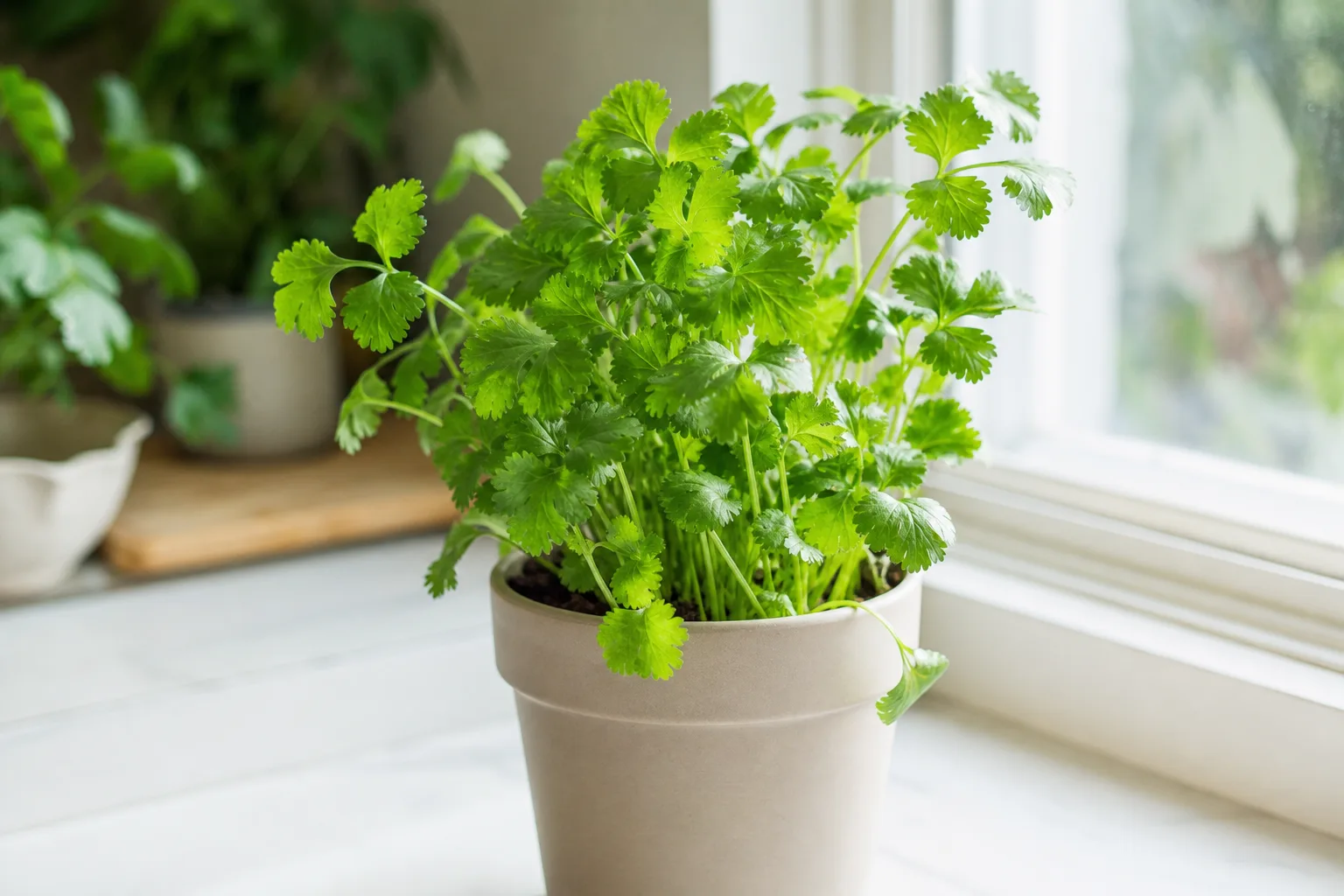 Cilantro earns its place near arugula when it is allowed to flower, because the blooms can support small beneficial insects.
Parsley is a patient, long-season companion. Its foliage stays low early, then becomes a fuller clump that can shelter beneficial insects and provide a harvest after a short arugula crop is gone. Plant it at the edge or in a pot so the mature plant does not lean into the salad row.
Dill is most useful when you treat it as a flowering habitat plant, not just a scent barrier. Penn State Extension specifically includes dill near greens because its flowers help attract aphid-eating lacewings, ladybugs, parasitic wasps, spiders, and syrphid flies. Sow a few seeds at a row end every couple of weeks, let one batch bloom, and remove the next batch if it starts shading the arugula.
Cilantro, also called coriander when it sets seed, follows a similar pattern. It grows quickly in cool weather and bolts as temperatures rise, so it pairs naturally with early spring or fall arugula. Harvest the leaves while they are tender, then leave a few plants to flower if your goal is beneficial-insect support rather than a long cilantro harvest.
The most important detail is bloom timing. A herb that never flowers may still add diversity and a kitchen harvest, but it will not provide the nectar and pollen that make flowering plants valuable habitat. Plant these herbs close enough to serve the same bed, but not so close that you create a wall of foliage around low arugula.
Flowering support: borage
Borage is a bold companion for gardeners with room at the edge. Its blue, star-shaped flowers provide a long bloom period, while its broad leaves can cast light shade over nearby soil. That can be useful in a hot shoulder season, but a mature borage plant is too large to tuck between arugula rows.
Give it a corner, the outside of a raised bed, or a spot where it can lean away from the vegetables. Cut it back after flowering if it begins to sprawl across paths, and remove volunteer seedlings where they compete with salad greens. Its value is habitat and microclimate, not a proven guarantee that arugula will be pest-free.
Mint: useful only in a pot
Mint appears on many companion lists because its strong aroma and flowers may disrupt pest-finding behavior. The practical warning is more important: mint spreads through underground rhizomes and rooting stems, and it can occupy the moisture-rich soil arugula prefers faster than a gardener can remove it.
Grow mint in a pot placed beside the arugula bed, or use a container with a fully contained root system. Keep the pot from rooting through a drainage hole into the ground. This gives you the scent and pollinator value without turning a fast salad bed into a mint-removal project.
Mint also needs checking for aphids and spider mites. A stressed or crowded mint plant is not a reliable protective plant, and a dense mint clump can reduce airflow around the arugula it was supposed to help.
Warm-weather herbs: basil, thyme, and oregano
Basil is a useful transitional companion rather than a same-season match. It needs warmer soil than spring arugula, so plant it after the danger of frost has passed, when the first arugula crop is already being harvested. A basil plant at the south or west edge can share the bed later, but it should not shade a new arugula sowing during the cool season.
Thyme and oregano are aromatic perennials that are better at the edge than in the main annual row. Their flowers can support pollinators, and their compact foliage adds diversity around a bed. Both prefer sharper drainage and less frequent watering than arugula, so a dry border, raised mound, or separate pot is safer than planting them into the dampest section of the salad bed.
Oregano spreads slowly but persistently, while thyme stays smaller and more woody. Prune either plant so it does not flop into the harvest path. The pairing works when you separate their root zones and accept that their main contribution is habitat and garden structure, not guaranteed pest control.
How to choose the right two or three companions
Start with the problem in front of you. If you want the simplest, most forgiving bed, choose spinach, lettuce, or chard. If you want to use every inch, choose carrots plus one allium. If aphids are the recurring problem, add flowering dill or cilantro and plan to let a few plants bloom. If you are gardening in a hot spring climate, prioritize light shade and succession sowing rather than adding more herbs.
Do not select companions by the longest chart. Three plants with compatible water needs and different shapes will usually be easier to manage than 10 plants competing for one small square of soil. Leave enough empty space to inspect the undersides of leaves, pull weeds, and cover young arugula if flea beetles arrive.
Match timing before planting
For a spring bed, sow arugula as soon as the soil is workable, then add carrots, onions, chives, spinach, lettuce, parsley, or cilantro. Garlic may already be overwintering, which makes it a particularly efficient border. Add basil only after the soil warms, and do not expect it to protect the first crop.
For a late-summer or fall bed, sow arugula again as nights begin to cool. Pair it with young lettuce, spinach, carrots, chard, dill, cilantro, and parsley. Keep harvesting the first batch rather than letting it become a tall, flowering screen over the new seedlings.
The most reliable continuity comes from succession. Sow a small strip every two to three weeks while conditions remain cool, as recommended in the RHS rocket guide, and remove spent plants once they become woody or begin to shade the next strip.
Use spacing and light deliberately
Space arugula plants about 6 inches apart for full-size leaves, or grow them closer for baby-leaf harvests that you thin and eat. Keep small companions roughly 6 to 10 inches away from the crowns so you can water, weed, and inspect the soil. Give tall, spreading, or flowering plants 12 to 24 inches of buffer and place them on the north or west side of the bed when possible.
Light direction matters more than a companion chart. A tall dill plant on the west edge can offer useful afternoon relief; the same dill planted south of the row can block the morning sun and make the arugula stretch. Leave a path or access gap on at least one side so harvesting does not compact the soil around shallow roots.
A practical arugula companion-bed layout
A simple bed sketch makes it easier to reserve room for succession rows, edge plants, and access before the canopy fills in.
For a 4-by-8-foot bed, try this arrangement:
- Put a narrow row of garlic or onions along the north edge. They stay relatively upright and will not take the best light from low arugula.
- Sow two short rows of arugula in the center, with a 6-inch path or open strip between them if you plan to use row cover.
- Sow spinach and loose-leaf lettuce in one row on each side of the arugula. Harvest baby leaves first so the bed opens as the crop matures.
- Tuck carrots into one edge row, where you can thin them without disturbing the arugula. Add chives at a corner instead of repeating them around the whole perimeter.
- Place parsley, dill, or cilantro at the west end. Leave one or two herbs to flower, but cut back any stem that shades the center rows.
- Keep borage, mint, thyme, oregano, and basil outside the main bed or in pots. Borage and mint can spread; thyme and oregano prefer drier soil; basil arrives after the first cool crop.
This layout is deliberately modest. It gives arugula a clear center, preserves access for harvesting, and makes it possible to cover the crop when flea beetles appear. It also creates a succession gap: when the first arugula row finishes, you can sow a new strip without pulling every companion plant.
What not to plant beside arugula
There are fewer hard “bad companion” rules than internet charts suggest, but several situations are poor fits.
- Dense brassica blocks: kale, broccoli, cabbage, mustard, and arugula share the same family and can share pests. They are not automatically incompatible, but grouping them can make a pest outbreak easier to spread and complicates rotation. Use row cover and avoid putting arugula into soil that has just carried a heavily diseased brassica crop.
- Tall, hungry crops: corn and full-size sunflowers can block light for too many hours. If you use a small trellis or a tall companion, put it north or west of the arugula and harvest the greens before the canopy closes.
- Invasive mint in open soil: this is the clearest “do not” on the list. Keep it contained.
- Dry-soil herbs in the wettest part of the bed: rosemary is often listed near arugula, but the watering schedules conflict. Thyme and oregano can also struggle if the bed is kept constantly damp for greens.
- Warm-season nightshades as a same-time crop: tomatoes, peppers, and eggplants need warm conditions and can eventually shade or outcompete cool-season arugula. They can follow arugula in succession, but they are not ideal neighbors for a dense, all-season planting.
Strawberries are another pairing to consider carefully. They can occupy valuable moisture and edge space, and their runners can invade a small arugula bed. Grow them nearby only when you have enough room to keep the runners out of the salad row.
Common mistakes and quick fixes
Mistake: planting every companion at once. A crowded bed is hard to water and harder to inspect. Start with one reliable leafy partner, one border allium, and one flowering herb.
Mistake: treating scent as pest control. Garlic, onions, mint, basil, thyme, and oregano may change the smell and structure of a bed, but they do not replace scouting. Check arugula twice a week for flea beetle holes, aphids, slug damage, and stressed seedlings.
Mistake: using shade in the wrong direction. Light shade can slow bolting during hot weather, while all-day shade makes thin, weak leaves. Place tall plants on the north or west side and keep the center row open.
Mistake: ignoring crop timing. Basil will not help a March arugula crop if it cannot grow until May. Garlic, carrots, spinach, lettuce, chard, dill, cilantro, and parsley are better choices for the first sowing.
Mistake: letting companions overstay. Pull bolting arugula, thin lettuce, cut back borage, divide chives, and remove mint runners. A companion is useful only while it leaves the main crop enough light, water, and air.
Mistake: skipping the basics because the bed is diverse. Keep soil covered with a thin organic mulch, water at the base in the morning, rotate brassica-family crops, and use row cover for young plants when flea beetles are active. Those steps have a more predictable effect than adding a sixth aromatic herb.
Conclusion
The best companion plants for arugula are not simply the plants that appear on the longest chart. They are the neighbors that share cool, evenly moist conditions, occupy a different layer or harvest window, or provide flowers and structure without crowding the greens.
For a first bed, pair arugula with spinach or lettuce, add garlic or chives along an edge, and place dill or cilantro where a few blooms can support beneficial insects. Keep mint contained, keep dry-soil herbs on the edge, succession-sow every few weeks, and treat companion planting as one layer of garden management—not a substitute for spacing, airflow, row cover, or crop rotation.



