Best Container-Friendly Trees for Pots
Find container-friendly trees that fit patios and balconies, plus honest limits on pot size, root space, watering, feeding, pruning, and winter protection.
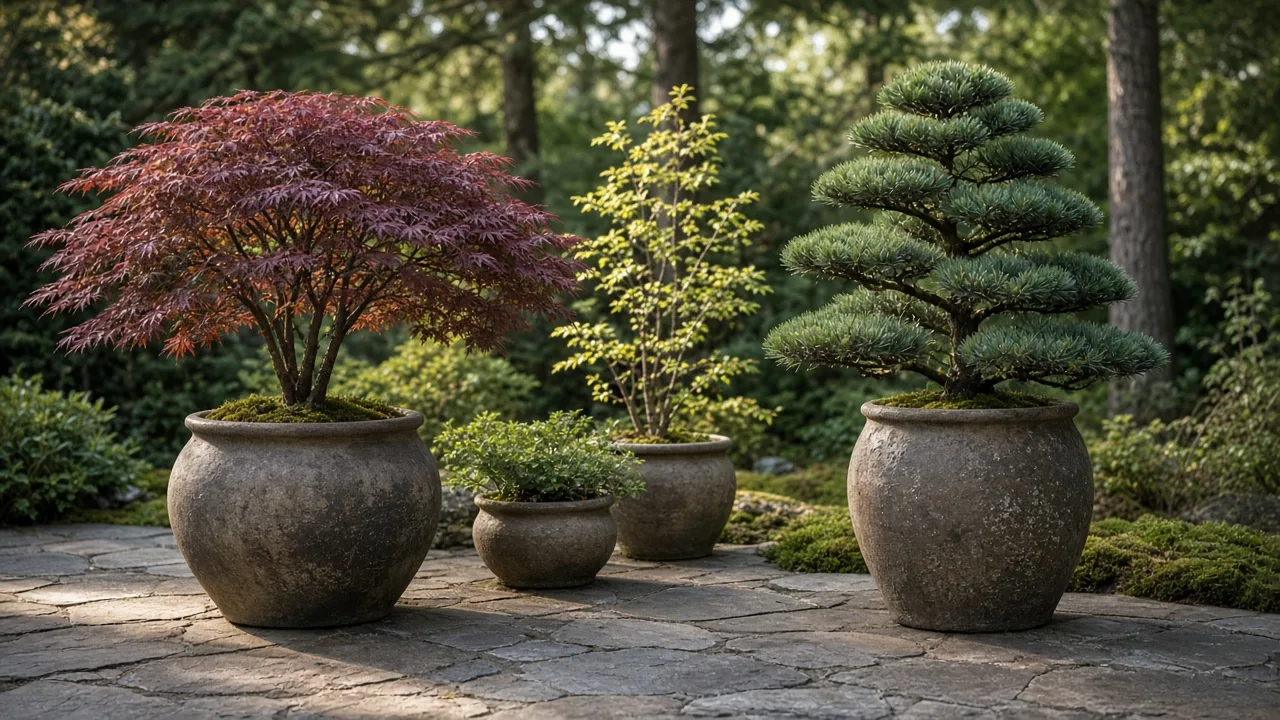
A tree in a pot can turn a bare balcony into a garden, frame a doorway, supply lemons or figs, or bring autumn color to a patio where planting in the ground is impossible. The catch is that a container is not a smaller version of the earth. It is a shallow, fast-changing root environment that exposes a tree to drying, freezing, overheating, wind, and nutrient loss.
The best container-friendly trees are not simply trees sold in small pots. They have a naturally restrained habit, a root system that can function in limited volume, or a cultivar and rootstock selected for smaller growth. They also fit the light and winter conditions you can actually provide. Use the list below to choose by the job you want the tree to do, then use the setup and care rules to keep the roots healthier for the long haul.
What makes a tree container-friendly?
Start with four questions. Will the mature canopy fit? A tree that is compact at the nursery can still become a large, top-heavy plant in a few seasons. Will the roots tolerate confinement? Some trees stay productive with periodic root pruning; others become stressed, weak, or unstable when their roots are restricted.
The third question is whether the plant responds well to light pruning. A tree that branches after a careful cut is easier to keep proportional than one that resents repeated reduction. The fourth is climate. A frost-tender tree may be excellent in a pot because it can move under cover, but it is not an easy choice if you have nowhere bright, cool, and protected for winter.
Containers also magnify mistakes. Penn State Extension explains that roots in a nursery container can circle along the sides and eventually girdle a trunk if the defect is carried forward. The same source warns that container-grown plants can dry quickly after their root environment changes. Inspect the root ball before buying, and do not confuse portability with low maintenance. Penn State Extension’s root guidance is worth reading before you plant any long-lived tree.
Choose the tree by your space, not the label
Match the tree to the hardest condition in the site. A roof terrace with afternoon sun, reflected heat, and wind needs a different plant from a sheltered north-facing courtyard. A balcony also has a load limit: a large wet pot can weigh far more than the dry container you carry home, so confirm the space can safely hold it before choosing a mature specimen.
For a sunny patio, shortlist citrus, olive, bay, fig, pomegranate, crape myrtle, or a full-sun conifer. For bright but dappled light, Japanese maple and star magnolia are more comfortable. For year-round structure, choose a dwarf spruce, mugo pine, juniper, or another genuinely compact conifer. For fruit, pay attention to cultivar, rootstock, pollination, and whether the crop is worth the extra watering and feeding.
The Royal Horticultural Society’s container-tree guidance recommends naturally small trees, dwarf conifers, restricted fruit forms, Japanese maples, olives, bay, and citrus. It also cautions against fast-growing, vigorous trees that eventually become leggy in a pot. That is the useful distinction: a tree can survive in a container for a while without being a good permanent container subject. See the RHS list of trees for containers when you want to compare a less familiar cultivar.
Japanese maple: best for color and partial shade
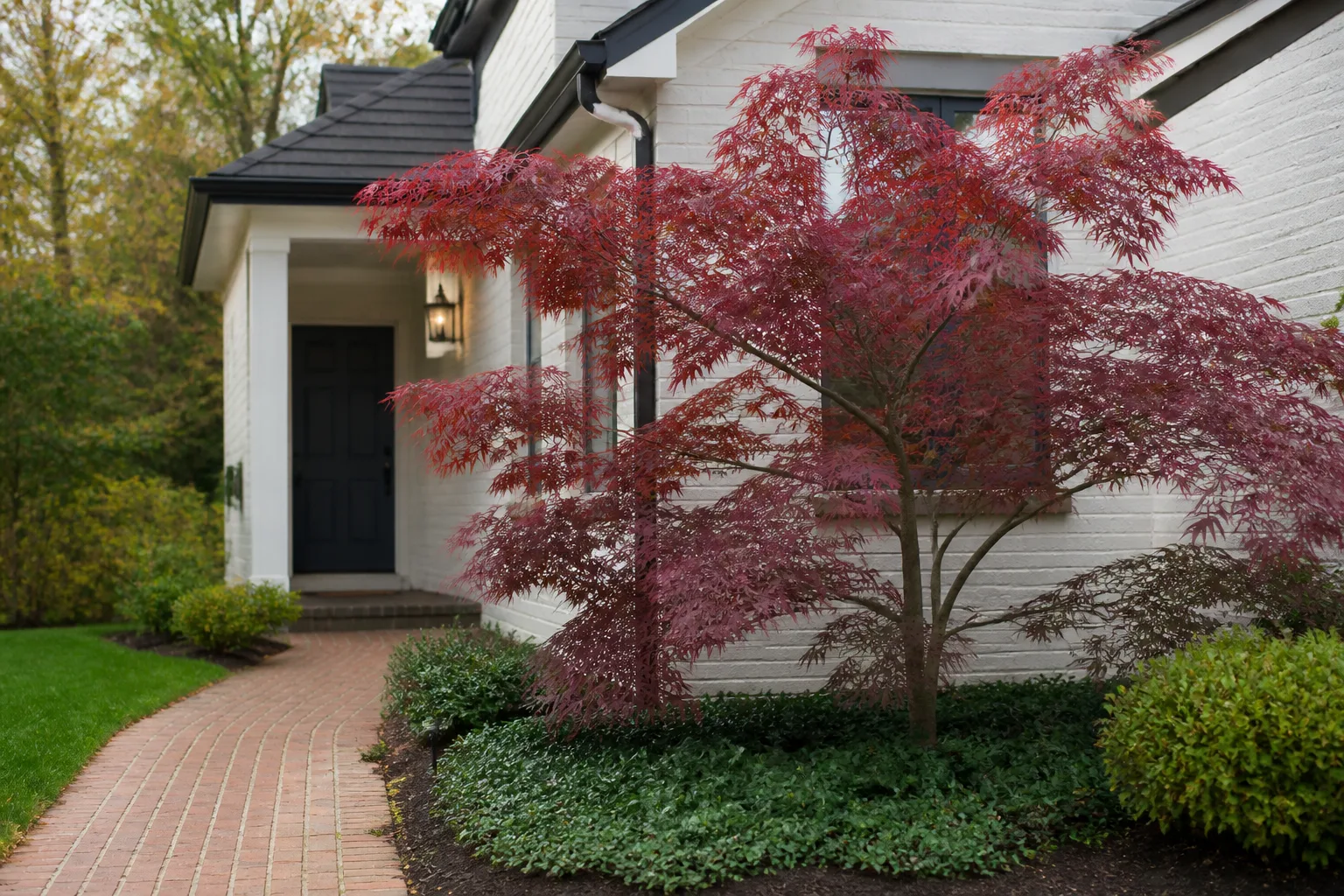
Japanese maple (Acer palmatum) is one of the strongest choices when the main goal is foliage. Cultivars range from upright small trees to cascading forms, with leaves in green, red, bronze, or gold. A container also lets you place the tree where its fine leaves can be seen at eye level rather than lost among larger landscape plants.
Give it bright light or gentle morning sun with protection from the hottest afternoon rays. Wind is often a bigger problem than cold: a gusty balcony can dry or shred the leaves, while a sheltered patio may suit the same cultivar perfectly. Keep the mix evenly moist but never saturated, and choose a pot with enough width and weight that the canopy cannot tip it.
Buy for the named cultivar and mature habit, not just the color of the plant in front of you. A laceleaf maple may stay lower and wider than an upright type, and a slow-growing cultivar may be easier to manage than a vigorous seedling. The tree can live in a pot for years when the root ball, light, and moisture are balanced, but it will still need repotting or root renewal as the roots fill the container. Epic Gardening’s container-tree overview is useful for comparing compact forms, but treat any mature-size estimate as a starting point and verify the cultivar label.
Citrus: best for fruit and a sunny patio
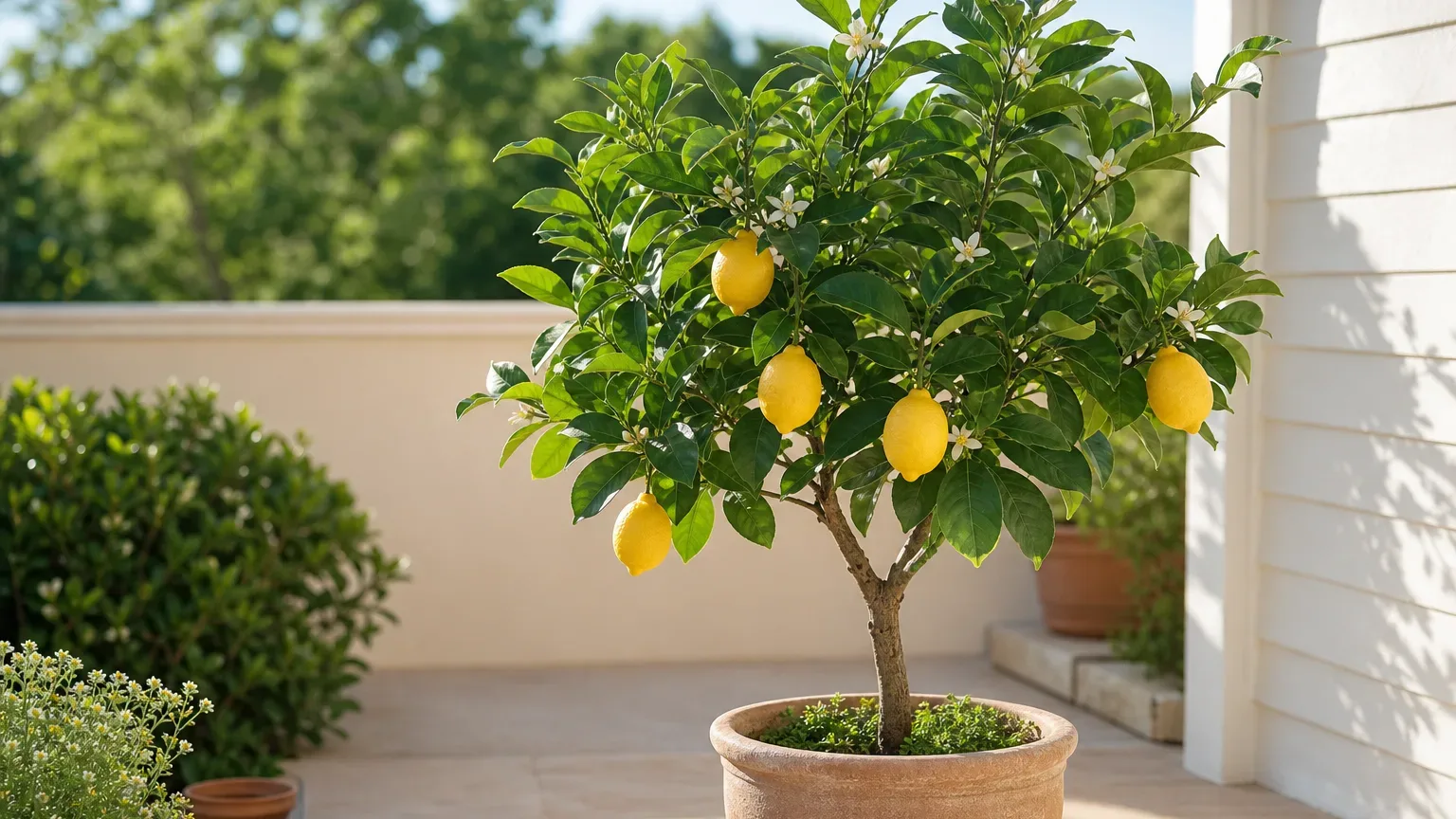
Lemon, orange, kumquat, and lime trees are excellent candidates for a movable container because they offer glossy evergreen foliage, scented flowers, and edible fruit. The same features make them demanding. Fruit production requires strong light, a long growing season, regular nutrition, and a watering routine that avoids both drought and soggy roots.
Choose a genuinely compact citrus cultivar, not a standard tree you plan to “keep small” by cutting it back forever. Meyer lemon, calamondin, kumquat, and dwarf orange are common container candidates, but their exact winter needs vary. Most need several hours of direct sun, and an indoor location that looks bright to your eyes may still be too dim for reliable flowering and fruiting.
Use a fast-draining citrus or long-term container mix, and never leave the pot standing in a saucer of water. Water thoroughly when the root zone has begun to dry, then empty the outer cachepot or saucer. Feed during active growth with a citrus fertilizer according to its label; more fertilizer cannot compensate for low light and can create salt stress or weak, lush shoots.
Plan the move before you buy. A citrus tree that spends summer on a sunny deck should be acclimated gradually when it moves to stronger outdoor light, and it should return indoors or to a frost-free shelter before cold nights damage new growth. If you cannot supply bright winter light, choose citrus for foliage and occasional fruit rather than promising yourself a heavy harvest.
Olive and bay laurel: evergreen Mediterranean structure
Olive and bay laurel provide the clipped, architectural look many gardeners want from a patio tree. Olive has narrow silver-green leaves and a drought-tolerant reputation; bay has dense evergreen foliage that can be trained as a standard or topiary and harvested for cooking. Both prefer bright light and excellent drainage, and both look better when the pot is heavy enough to counterbalance the canopy.
An olive tree is a good fit for a sunny, sheltered container in a warm climate. Let the mix dry somewhat between thorough waterings, but do not let a small pot become bone dry during a heat wave. Fruit production is a separate ambition from simply maintaining the tree: flowering, pollination, winter temperatures, and cultivar all influence whether you harvest olives.
Bay laurel is more forgiving of shaping, which makes it useful beside an entry or at the end of a path. Avoid keeping either plant in a dark room simply because it is labeled suitable for containers. “Can move indoors” means you have a bright, cool, pest-monitored winter space—not that the tree will thrive in a dim living room.
Dwarf conifers: year-round shape without annual moving
Dwarf Alberta spruce, dwarf mugo pine, dwarf globe spruce, hinoki cypress, and compact junipers give a pot structure through every season. They are especially useful on patios where a deciduous tree would leave an empty silhouette in winter. Their slow growth also means you are less likely to be repotting or pruning every month.
The word dwarf still needs a cultivar check. Dwarf forms vary widely in eventual height and width, and some are only slow-growing rather than truly small. Read the mature dimensions and spread, then allow space around the pot for air circulation. Full sun is a safe starting point for many conifers, but afternoon shade can protect foliage in very hot locations.
Drainage matters more than a fixed watering schedule. Conifers dislike a root ball that stays saturated, but their foliage can continue losing moisture during dry, windy winter weather. Raise the container so holes stay open, water when the root zone is drying, and protect the pot from prolonged freezing if the tree’s roots are less hardy than its branches.
Star magnolia and crape myrtle: flowering focal points
Star magnolia (Magnolia stellata) earns its place for fragrant, white, star-shaped flowers in late winter or early spring. It is a better container candidate than a large southern magnolia because its natural size is more restrained, but it is still a woody tree that needs a substantial pot and room for its roots. Choose a sheltered position so an early flower display is not immediately shredded by wind or a late freeze.
Crape myrtle offers a different season of interest: long summer flower clusters, attractive bark, and a graceful multi-stem or small-tree form. Select a dwarf or compact cultivar and give it abundant sun. In a cloudy, cool site it may survive while flowering poorly, which is a disappointing trade for a plant chosen mainly for bloom.
Both trees demonstrate why “container-friendly” is not the same as “maintenance-free.” They need an airy mix, a stable container, regular moisture while actively growing, and pruning that respects their natural structure. Do not chop a tree into a tight ball just because it is near a doorway; make the cultivar and pot size do most of the size control.
Fig, dwarf apple, and pear: compact edible trees
Figs are among the more satisfying fruit trees for containers. Root restriction can help keep a fig compact and encourage fruiting, and a pot lets gardeners in colder areas move it into a sheltered garage, greenhouse, or other protected place after leaf drop. Give it sun, water consistently while fruit is swelling, and a large container with drainage holes.
Dwarf apples and pears can also produce a useful crop, but the rootstock is central to the decision. A compact cultivar grafted onto a dwarfing rootstock is much more practical than a vigorous tree in a small pot. Some apples and pears also need a compatible pollination partner, so check the cultivar label before expecting fruit from one tree.
The RHS recommends selecting a rootstock that controls vigor and using a pot around 18–20 inches in diameter for many fruit trees, with adjustments for the tree and root system. It also notes that fruit in containers usually needs more careful watering than fruit in the ground. Use the RHS fruit-in-containers guide for rootstock, pollination, and training details.
Fruit trees are not the low-maintenance option on this list. They need enough sun to ripen fruit, feed during active growth, and close observation during hot weather. If your goal is a decorative tree with occasional fruit, one well-chosen fig or citrus may be more satisfying than a mini-orchard you cannot water consistently.
Juniper, mugo pine, and staghorn sumac: use with a caveat
Hollywood juniper and dwarf mugo pine can work well outdoors when you want sculptural evergreen form. They prefer strong light and a mix that drains freely. Mugo pine is naturally rounded and compact in dwarf cultivars; Hollywood juniper is more vertical and twisted, making it a strong focal point but potentially a wind sail if the pot is narrow or light.
Staghorn sumac is dramatic for its branching form, red fruit clusters, and fall color, but I would treat it as a temporary or closely managed display tree, not a universal recommendation for permanent pot culture. It can become vigorous, broad, and difficult to keep balanced in a container. If you grow it, use a large, stable pot, monitor suckers, and check whether its spread and local behavior suit your space.
This is where honest limits matter. A plant may tolerate a pot for a few seasons and still be a poor choice for ten years. If you need a tree that can remain in one container with predictable effort, choose a named dwarf conifer, maple cultivar, bay, or fruit tree on suitable rootstock before choosing a large, vigorous species for its short-term drama.
Match the container to the root ball and canopy
Choose the pot after choosing the tree. Start with a container only slightly larger than the existing root ball, then move up in stages as roots fill the available space. A pot that is dramatically oversized holds a large volume of wet mix around a small root system, which slows drying and increases the risk of root damage.
For a mature specimen, many container trees end up in a pot about 18–24 inches wide, but that is a planning range, not a universal prescription. A fig, citrus, maple, or dwarf conifer may need a different volume based on its root ball, cultivar, climate, and canopy. A wide pot is usually more stable than a tall narrow one, and a heavy frost-proof terracotta or stone container can resist wind better than lightweight plastic.
Balance mobility against stability. If you must move a citrus or fig indoors, a lighter pot on a sturdy plant caddy may be safer than a massive ceramic container. If the tree will stay outside on a windy terrace, weight and a low center of gravity matter more. Never add a dense layer of stones as a false drainage solution; use open drainage holes and a suitable mix instead. Practical container advice from Real Homes’ potted-tree guide likewise puts stability, drainage, and cultivar selection ahead of decorative pot style.
Build a root-friendly potting setup
The container needs multiple drainage holes, not just one small opening. Raise it on pot feet or spacers so the holes do not seal against the patio. A saucer can protect a surface during summer watering, but empty it after the pot drains and never let roots sit in standing water.
Use a long-term container mix with enough structure to hold the tree upright and enough air space for roots. A soil-based or loam-based mix can suit permanent woody plants; a peat-free commercial mix amended according to the tree’s needs can also work. Avoid digging ordinary garden soil into a pot because it can compact, drain poorly, and become heavy when wet.
At planting, slide the tree out and inspect the root ball. If roots are circling densely, tease them outward or make a few clean vertical cuts through the outer mat with a sanitized, sharp tool. Do not bury the trunk flare or graft union. Set the top of the root ball at the correct height, backfill without packing the mix into a hard mass, water thoroughly, and top up if the mix settles.
Penn State Extension notes that cutting circling roots can help roots regenerate into surrounding soil rather than continuing to girdle the trunk. In a container, that principle means correcting a nursery defect early and then monitoring the pot before roots form another tight outer ring.
Water and feed without forcing weak growth
Watering frequency is a result, not a calendar instruction. Sun, wind, pot material, root mass, canopy size, temperature, and mix texture all change how quickly a container dries. Check below the surface with a finger or wooden skewer, lift the pot occasionally to learn its dry weight, and water deeply when the tree’s preferred dry-down has been reached.
Water slowly until some drains from the bottom so the full root ball is moistened. A dry root ball can repel a quick splash, leaving the center dry while water runs down the pot wall. In hot weather, a tree in full sun may need checking daily; in winter, a dormant deciduous tree may need far less. Evergreen trees can still dry during cold wind, so inspect them rather than assuming winter means no water.
Container mix loses nutrients faster than ground soil, so most trees benefit from feeding during active growth. Use a controlled-release fertilizer or liquid feed suited to the tree and follow the label. Fruit trees may need a different nutrient balance from conifers, and a slow-growing dwarf tree does not need aggressive feeding. Do not fertilize a tree with wet, sour-smelling soil, damaged roots, or severe drought stress until the root problem is corrected.
Prune and repot on a schedule that fits the tree
Prune for structure, health, and a realistic size—not because every tree must look like a clipped lollipop. Remove dead, damaged, crossing, or weakly attached wood first. For size control, shorten a healthy shoot back to a suitable side branch or bud instead of leaving long stubs. Remove only a modest portion of live growth at one time.
Timing depends on the tree. Deciduous trees such as Japanese maple and star magnolia are often shaped while dormant, while citrus, bay, and some tropical or Mediterranean plants can be adjusted during active growth. Check the cultivar’s pruning window before making a major cut, and never use severe pruning to compensate for a pot that is too small or a site that is too dark.
Repot when roots circle densely, emerge from drainage holes, the mix dries unusually fast, or growth stalls despite suitable light and water. Some established trees can stay in the same container if you refresh the top layer and root-prune carefully; others benefit from moving up one size. The RHS advises staged potting and regular maintenance rather than placing a small tree straight into its largest possible container.
Overwintering: the decision that determines success
Before buying a tree, decide where it will spend its hardest season. Hardy roots may survive outdoors in the ground but freeze in an exposed pot because the container has little insulation. Wrap the pot, group it in a sheltered position, raise it off cold, wet paving, and protect the canopy from drying wind when appropriate.
Tender citrus, olive, bay, fig, and pomegranate may need a frost-free greenhouse, bright porch, conservatory, or cool garage depending on the species. A dark, heated room can be almost as difficult as outdoor frost because it encourages weak growth while reducing the tree’s ability to use water. Move plants gradually between outdoor and indoor conditions, inspect for pests, and reduce watering when light and temperature fall.
Salt is another winter issue for outdoor evergreen pots. Road spray, de-icing salts, and salty runoff can scorch foliage and damage roots. Keep containers away from plowed snow piles, rinse foliage only when conditions allow it to dry quickly, and choose a sheltered spot rather than placing the tree beside a heavily salted walkway.
The move itself is stressful. Do not combine a major repot, hard prune, abrupt light change, and indoor relocation on the same day unless the plant is in immediate danger. Make one change at a time where possible, and give the tree stable conditions while it adjusts.
Troubleshoot a failing container tree
The soil stays wet for days. Check for an oversized pot, blocked drainage holes, compacted mix, a saucer that never empties, or a low-light location. Do not add fertilizer to a tree with declining roots; improve drainage and inspect the root ball if the smell is sour or the leaves wilt despite wet soil.
The leaves brown at the edges. In a sunny pot, first check whether the root ball is drying too far between waterings. Wind, salt, fertilizer salts, reflected heat, and damaged roots can produce similar symptoms. Correct the environmental cause before cutting away every browned leaf.
The tree leans or keeps blowing over. The pot may be too narrow, too light, or placed in a wind tunnel. Move it to shelter, use a wider and heavier container, and stake temporarily if the root ball is newly planted. Do not solve a top-heavy tree by burying the trunk deeper.
There are flowers but little fruit. Check light, cultivar, pollination, temperature, and water consistency. A dwarf apple or pear may need a compatible partner; citrus may flower but drop fruit when light or roots are stressed. Fruit set is not proof that the tree is receiving enough light for a full crop.
The tree drops leaves after moving indoors. Expect some adjustment, especially after a sharp change in light, temperature, humidity, or watering. Look for pests, drafts, and wet mix, then stabilize the plant in the brightest suitable position. Avoid repeated moves, feeding, and emergency repotting until you know which condition changed.
Roots are circling at the pot edge. Do not simply cover them with more mix. If the tree is otherwise healthy, repot one size up and correct the outer roots with clean cuts or careful teasing. If the canopy is large and the root ball is severely congested, replace the plant rather than trying to force a vigorous tree into a permanently undersized pot.
Conclusion
The best container-friendly tree is the one whose mature size, root behavior, light needs, and winter plan match your actual space. Choose Japanese maple for sheltered color, citrus for a sunny fruiting project, olive or bay for evergreen structure, dwarf conifers for year-round form, flowering trees for seasonal impact, and figs or dwarf fruit trees when you are ready for the extra water and feeding that crops require.
Buy the cultivar and rootstock—not just the common name. Start with a pot only slightly larger than the root ball, insist on open drainage, correct circling roots before they become a trunk problem, and make the first winter decision before the tree comes home. With those constraints handled, a potted tree can stay healthy and useful for years instead of becoming an expensive plant that survives only until its first stressful season.



