14 Creative Tree Stump Ideas for Your Home and Garden
Turn an old tree stump into a planter, seat, birdbath, or garden feature. Choose by wood condition, sun, space, and the upkeep you can manage before you begin.
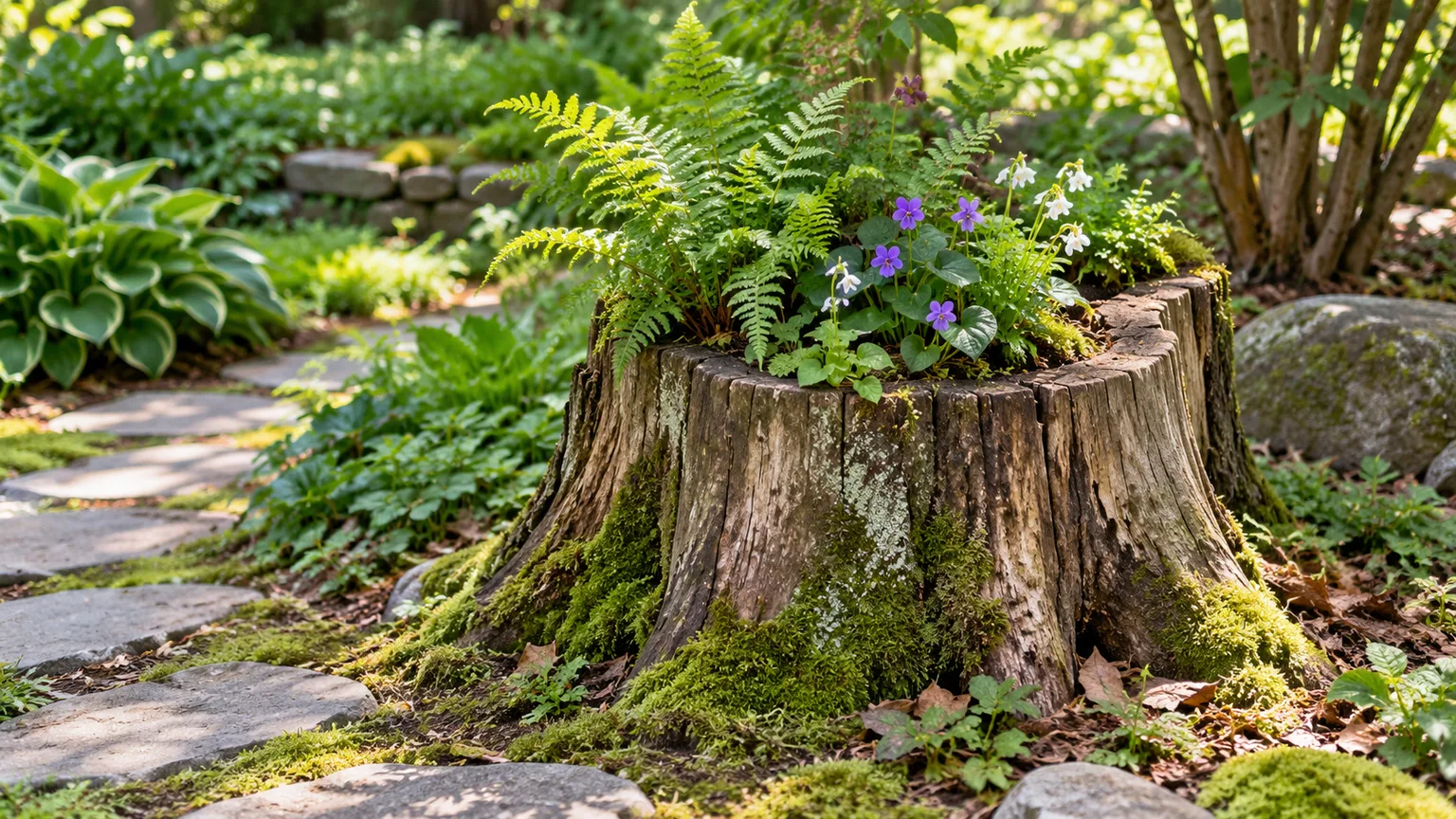
A leftover stump can become a planter, a seat, a bird stop, or a quiet focal point in a shade bed. The best use depends on what the wood can safely support, how much sun the spot receives, and whether you want the stump to weather naturally or keep it dry and clean.
Some projects barely alter the stump; others require hollowing or moving wood. Before choosing, look at its condition and location. A soft, cracked stump beside a path is not a good stool, while an old stump in a quiet corner may be more valuable left to decay than sealed, carved, or dug out.
Choose a Tree Stump Idea That Fits the Site
First decide what job you want the stump to do. If the goal is color, place a container on top. If you want plants to root in the stump, you need a cavity with drainage and enough soil depth. A feature meant for sitting needs firm wood and a stable base; a wildlife corner can be left rough and allowed to change.
Check the stump after rain and again when the surface is dry. Probe the top and sides with a screwdriver or sturdy stick, looking for deep softness, loose bark, a hollow base, major cracks, and wobble. A little surface weathering is normal; a seat or table should not move under gentle pressure. If the stump is still sending up vigorous shoots, it may not be fully dead, so avoid building a permanent feature until you decide whether to keep or remove the tree.
| Your goal | Best starting idea | Skip or rethink it if |
|---|---|---|
| Flowers with minimal work | Set a pot on top | The top slopes sharply or is too low to see |
| Plants rooted in wood | Hollow planter | The stump is soft, narrow, treated, or poorly drained |
| A place to sit | Outdoor stool | The base wobbles, cracks, or sits in a busy path |
| Birds | Removable basin or feeder | You cannot clean it regularly or keep food dry |
| Wildlife | Leave the wood rough | The stump is close to a house, play area, or frequent foot traffic |
| Indoor furniture | Use fully prepared wood | It is fresh, damp, infested, or crumbling |
Dead wood can keep supporting fungi, insects, and wildlife as it breaks down, but that same decay gradually weakens it. Penn State Extension describes how dead trees and stumps provide food and habitat, and UF/IFAS explains that a stump or log can shelter wildlife while its condition changes with age. That is why a natural habitat project and a load-bearing seat need very different standards of tidiness and inspection. See Penn State Extension’s overview of dead wood for wildlife and UF/IFAS guidance on habitat wood in a yard.
If the stump is unstable, infected by a disease that could affect nearby plants, or in the way of a path, fence, or future planting, decoration may only postpone the decision. LeafyPixels has separate guides to removing a stump without a grinder and ways to kill a tree stump.
Prepare the Stump and Check for Safety
Clear leaves and loose debris from the top, then inspect the stump before adding soil, water, or furniture. If a large tree was recently removed, confirm that remaining trunk and roots are not unstable; if any standing trunk remains, have an arborist assess it rather than treating it as a garden ornament. Keep seats and play areas away from a stump that could shed loose wood or conceal a sharp, splintered edge.
Hollowing is optional. A pot or shallow bowl set on a stump gives you a similar look without cutting into the wood. If you hollow it, use hand tools only when you know how to control them; leave chainsaw work to an experienced tree professional. Do not hollow wood that is rotten, visibly insect-damaged, or too narrow to leave a strong rim. Make drainage holes at the lowest point and avoid a sealed plastic liner that traps water against the wood.
Match the project to the previous treatment. If the tree or stump was treated with herbicide, do not grow edible herbs or vegetables in or on that wood unless the product label or a local extension specialist confirms it is suitable. Keep birdbaths and feeders cleanable, and keep wildlife wood away from siding and foundations. If you choose an open water feature, use a removable watertight basin rather than assuming the stump itself will hold water.
Decide whether decay is part of the design. A stump will weather outdoors; paint or thick sealant can slow surface wear but will not make soft wood sound again. A habitat stump should remain mostly untreated, while furniture needs dry, stable wood and a finish made for its setting. Plan to replace a feature if the wood softens, splits, or starts to lean.
14 Tree Stump Ideas for Home and Garden
1. Carve a Small Planter Into a Broad, Sound Stump
A hollow stump planter is best when the wood is still firm and the stump is wide enough to hold a useful pocket of soil. Remove the soft center gradually with a drill and chisel, leaving a thick outer wall. Stop before the rim becomes thin or breaks into loose pieces. A shallow cavity works well for annual flowers and compact, fibrous-rooted plants; a deep cavity does not turn a stump into a permanent raised bed.
Drainage determines whether the planter works. Make an opening at the bottom so excess water can leave instead of pooling against the roots, then add a light, free-draining potting mix. Choose plants for the actual light at the stump: shade-tolerant ferns and small woodland plants in a sheltered corner, or compact annuals where it gets several hours of sun. Avoid edible herbs if the tree received an unknown chemical treatment, and expect the cavity to change as the stump decays.
2. Use the Top as a Plant and Seasonal Display Pedestal
The easiest tree-stump idea is also one of the most reversible: set a pot on the cut surface. This gives colorful containers a little height, keeps them from disappearing behind a border, and lets you change the display without digging into the stump. Fine Gardening shares a garden example where a stump and its exposed root system became the visual anchor for nearby planting; the same principle works on a smaller scale when you group one substantial pot with lower plants around the base.
Keep the display proportionate. A very wide, heavy pot can look top-heavy on a narrow stump, and a tiny pot may disappear on a broad trunk. Use a level, stable surface, and place a saucer under pots that drain so water does not sit against the cut wood. Seasonal branches, pumpkins, or a weatherproof lantern can replace the planter for a few weeks; bring lightweight decorations in before strong wind instead of fastening them to loose, decaying bark.
3. Build a Woodland Stumpery Around It
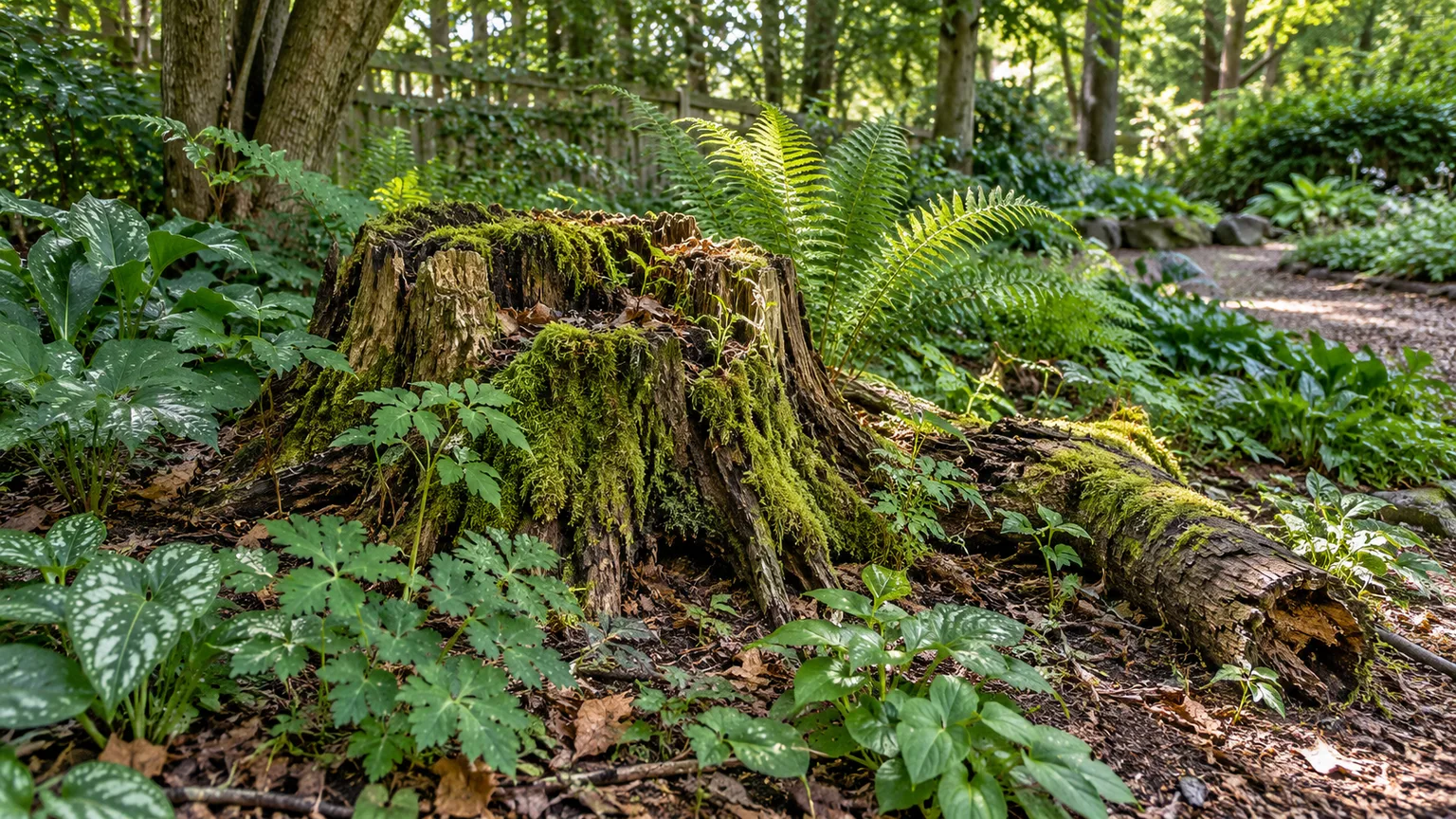
A stumpery uses stump sections, logs, and root shapes as a framework for shade-loving plants. You do not need a collection of old trees: one stump can anchor a small bed with ferns, moss, and low groundcovers, while a short log or two creates a natural transition to the surrounding garden. The point is to make the wood look intentionally placed, not to hide every rough edge.
Start with the light and moisture already present. Ferns suit many shaded, evenly moist sites; in hotter or drier yards, choose locally suitable woodland plants that tolerate the real conditions rather than watering constantly to copy a forest floor. Fine Gardening’s garden-photo feature on stumperies shows a stumpery built with logs, filled pockets of soil, and ferns and companion plants. Leave some wood visible, and remember that the stump will gradually soften and alter the shape of the bed.
4. Make a Small Fairy or Gnome Garden
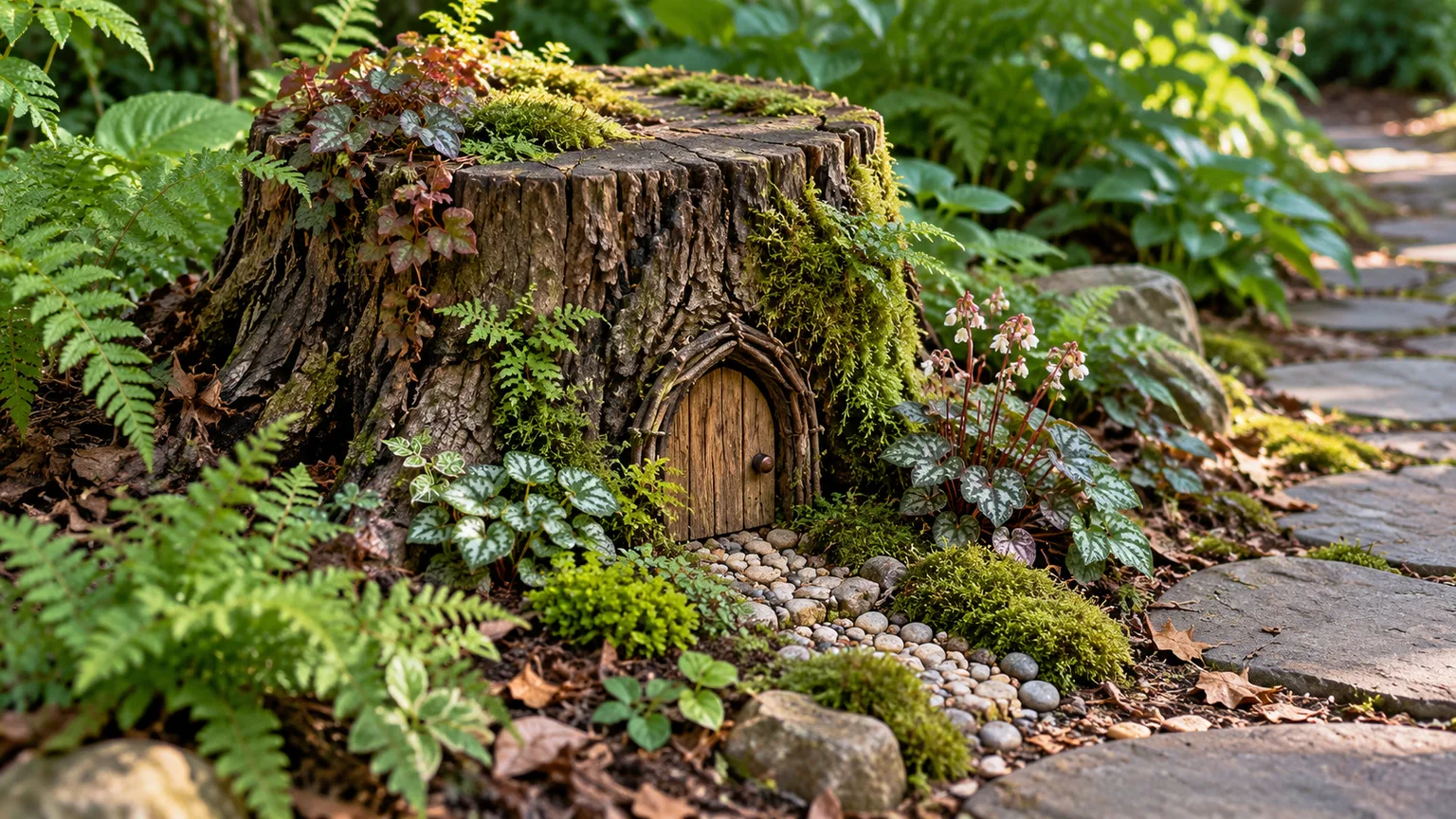
A stump’s bark, cracks, and irregular edges give a miniature garden a natural-looking backdrop. Add a small weatherproof door, a pebble path, a few compact plants, and one or two simple ornaments rather than filling every hollow with plastic decorations. A door fixed near the base can make a broad stump feel like a tiny house; a shallow tray on top can become a changeable miniature garden.
This idea is easy to adapt with children because the project can grow one detail at a time. Keep small pieces away from very young children and avoid plants or berries that are toxic if touched or eaten. Use outdoor-rated, non-battery decorations or bring delicate pieces inside during storms. Do not dig into the stump simply to attach a door; screws placed in already-soft wood can loosen as the stump rots, and a removable detail is easier to maintain.
5. Let the Stump Become a Garden Sculpture
A stump can work as sculpture without carving it. Its rings, bark, branching roots, and natural cracks already create a distinct shape, especially when the surrounding plants are kept low enough to reveal it. If you want a more playful focal point, set a broad, weatherproof cap on a short stump to suggest a mushroom, or add one carefully made face or abstract feature.
Keep any added piece stable and sized for the stump. A heavy stone or wood cap can roll if the top is sloped, and drilling deeply into decaying wood to attach an object may make the stump split faster. If you want detailed carving, hire a trained chainsaw artist rather than trying to make precision cuts with a tool you do not routinely use. A simpler option is to clean the base, edge the bed, and let the stump’s natural texture carry the design.
6. Turn a Stable Stump Into an Outdoor Seat
A broad stump can make an informal garden stool or a spare seat beside a patio, but only while it is solid, level, and free of deep splits. Brush off bark chips and check that the base does not rock. Sand only the sitting surface enough to reduce splinters; a perfectly polished finish is unnecessary outdoors and can become slippery when wet.
Treat a stump seat as a seasonal feature, not a permanent chair. Recheck it after winter and after long wet periods, since decay can hollow the center or loosen the outer wood while the surface still looks usable. Do not place it on a raised deck or beside a fire pit where a fall would be more serious. Gardenista’s guide to stump stools and tables notes that traditional stump furniture needs time to dry before bark removal and surface work; its example is a useful reminder that a stump must be prepared before it can act like furniture.
7. Make a Rustic Side Table
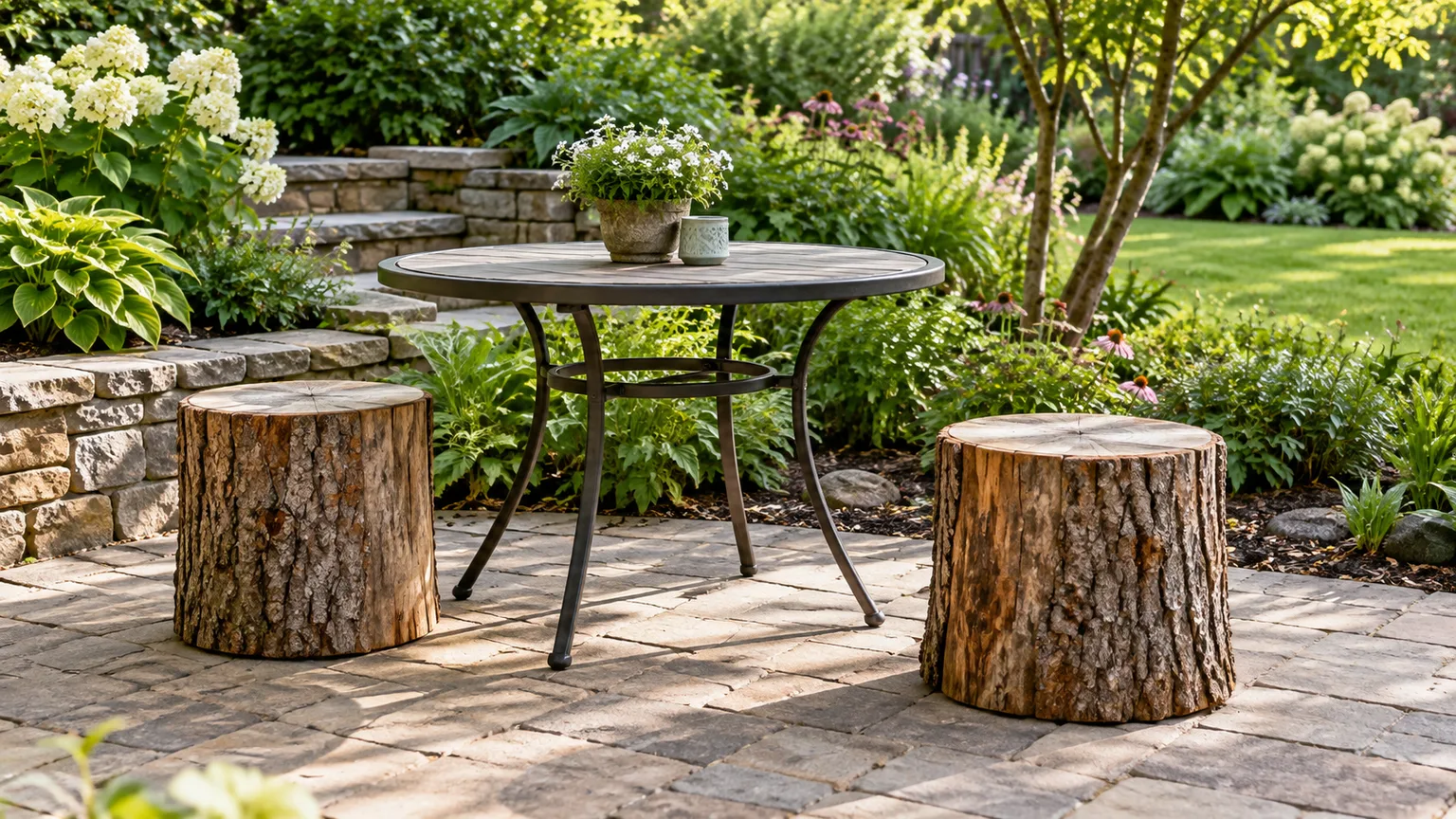
If the stump is too low or uneven for a seat, make it a small outdoor side table for a plant, watering can, or garden gloves. Add a removable, level top if the cut surface has a slope, but keep the top small enough that it cannot tip. A table placed near a bench gives the stump a clear purpose and prevents it from feeling like an obstacle left in the lawn.
Wood outdoors will keep moving as it takes on and loses moisture. Use a finish intended for exterior wood if you want a cleaner tabletop, follow that finish’s label, and expect to refresh it. Do not treat a coat of varnish as a structural repair: cracks, soft spots, and insect galleries mean the wood should not carry breakable objects or anything hot. Keep drinks and food on a removable tray that you can wash, rather than directly on rough bark or a surface where water can collect.
8. Set a Birdbath on a Removable Basin
A stable stump is a convenient pedestal for a shallow birdbath basin. The basin should lift off so you can empty, scrub, and refill it; the stump itself is porous and can crack or soak up water if used as a bowl. Choose a height you can comfortably reach, and position the bath where birds have nearby cover but can still see approaching predators.
Clean water is part of the design, not an optional extra. The CDC recommends emptying and scrubbing water-holding items such as birdbaths at least once a week to reduce mosquito breeding. A removable bowl makes that job simple. If the stump begins to tilt or crumble, move the basin to a more stable stand instead of trying to brace it with loose stones.
9. Create a Bird-Feeding Station
Use a sturdy stump to raise a platform feeder or support a pole feeder, as long as the feeder stays level and easy to clean. Keep seed dry and remove wet, spoiled food; fallen hulls can accumulate beneath the stump, so put a washable tray or a small sweepable surface below it if mess is a concern. A feeder can also be seasonal, giving you a use for the stump only during colder months or when natural food is scarce.
Consider what else can reach the food. A low stump may be easy for squirrels, cats, or dogs to access, while a high, unstable feeder can be difficult to refill safely. Do not nail a feeder into soft bark that is already peeling. Mount a feeder on a post anchored beside the stump if the wood itself cannot hold fasteners, and keep the route to refill it clear and dry.
10. Mount a Species-Appropriate Nest Box
A sturdy stump can support a nest box, but the box should be selected for birds that actually live in your area. Entrance-hole size, interior dimensions, placement, and ventilation vary by species; a decorative birdhouse with the wrong opening may be attractive to people and unsuitable for nesting. The Royal Society for the Protection of Birds’ nest-box guide explains that design and placement should match the birds you hope to support, so check a local bird organization or extension guide before buying or building one.
Attach the box to sound wood with appropriate outdoor hardware, and make sure it can be opened for seasonal cleaning if the design requires it. Do not climb onto a stump or use a wobbly ladder to reach a box. A short post installed behind the stump is safer if the stump top is unstable, and it avoids damaging an old cavity that may already be used by wildlife.
11. Leave It as a Wildlife Habitat
A rough stump in a quiet corner can become the least labor-intensive idea on this list. Leave some bark, let moss and fungi appear naturally, and place a log or a few branches nearby to create shelter at ground level. UF/IFAS notes that dead wood can support a succession of organisms as it decays, and Penn State Extension describes its value as food, shelter, and nesting habitat. A native stump or log can also gradually return organic matter to the soil.
Habitat and safety still need to be balanced. Keep dead wood away from house siding and places where people walk or play, and avoid piling it against a building. Check why the tree died before moving its wood around; an invasive pest or contagious plant disease can change the right handling method. Do not hollow the stump and assume it will become a low-maintenance honeybee hive. A decaying stump is habitat; managed honeybees require a suitable hive and knowledgeable care.
12. Plant a Garden Bed Around the Stump
If hollowing is not practical, use the ground around the stump as a small island bed. Start by clearing turf and weeds, then add a curved edge and plants that match the shade, sun, and soil moisture. The stump stays visible in the center while the bed makes the whole spot feel deliberate. This works particularly well where surface roots make mowing awkward, because the bed absorbs that irregular outline instead of forcing a straight lawn edge over it.
Do not pile soil high against the stump or bury the root flare of nearby living trees. Plant in pockets between surface roots and keep the stump itself exposed enough to inspect. If the bed is sunny because a tree was recently removed, do not assume the old shade plants will still thrive; the light at the site may have changed dramatically. Fine Gardening’s stump-garden example shows how planting around visible roots can turn an awkward remnant into the center of a designed bed.
13. Use a Stump to Frame a Small Water Feature
A split log or hollowed stump can frame a small water feature, but wood is not a watertight trough. Set a removable basin or liner into the stump, or let water run over the wood into a separate basin where it can drain. A simple recirculating pump creates movement; if the feature is not circulating, empty and scrub the basin regularly instead of leaving stagnant water in the cavity.
Water should flow away from the house, not toward a foundation, basement window, or neighboring yard. Keep cords and pumps rated for outdoor use and follow their installation instructions. If the stump is too decayed to support a basin, place a lightweight container beside it and use the stump as a visual backdrop. The idea is the sound and look of water near natural wood, not a plumbing repair or a long-term pond carved into an unstable trunk.
14. Bring a Prepared Stump Indoors as Furniture
A dry, stable piece of stump wood can become an end table, plant stand, or low stool in a sunroom. This is a different project from decorating the stump in place: the wood must be cut, moved, dried, checked for insects and rot, made level, and finished for indoor use. Gardenista’s guide to stump furniture describes a drying period before bark removal and surface repair in traditional stump furniture making; a large fresh section may need much longer than a few weeks to dry through.
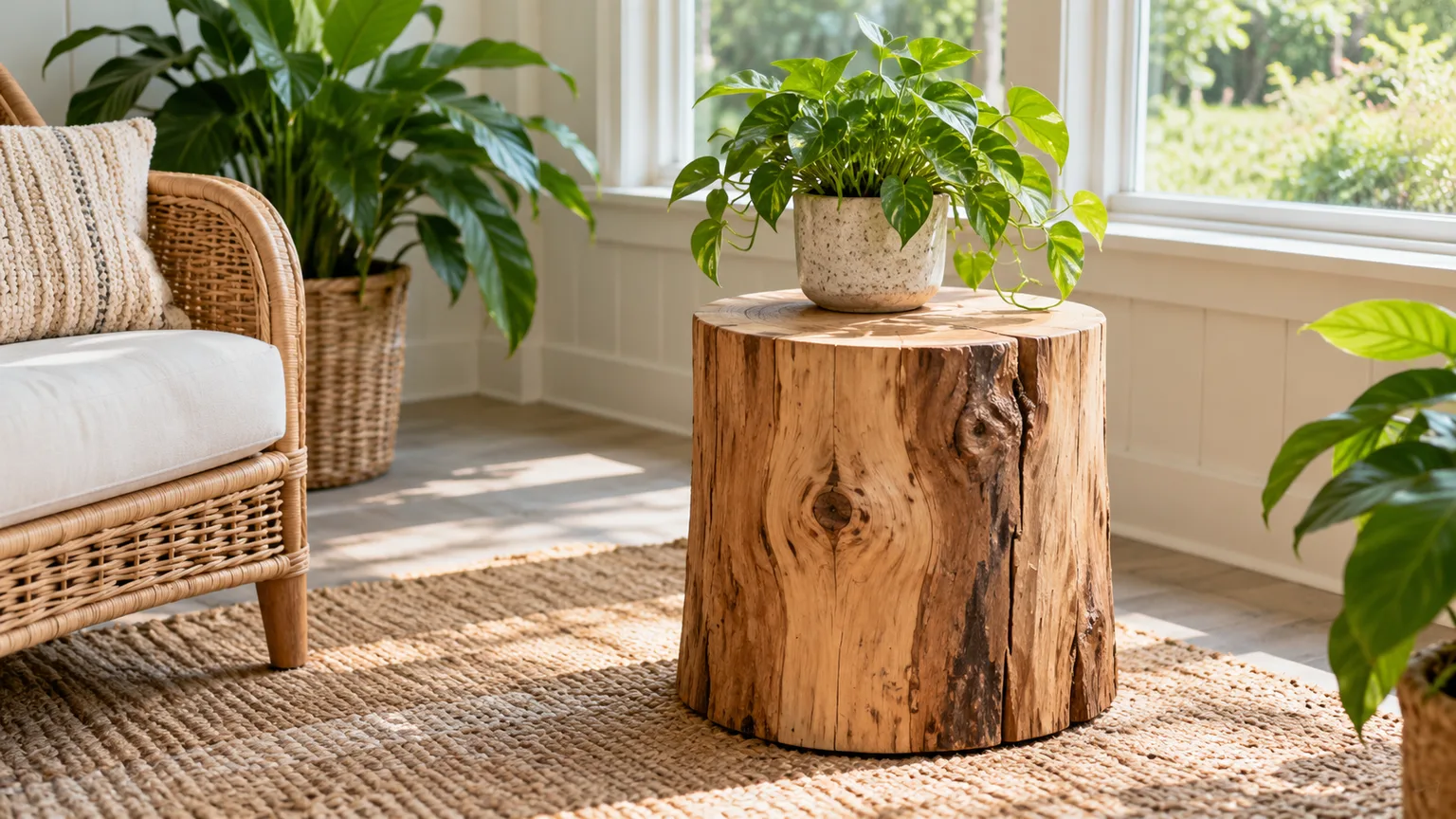
Do not drag a damp stump into a living room and assume the bark will stay attached. Fresh wood can crack as it dries, bring insects indoors, or stain flooring as moisture escapes. Use a kiln-dried piece or ask a woodworker about safe preparation if you want a long-lasting table. Add felt feet after the base is level, keep the piece away from direct heaters, and set a plant in a waterproof saucer so soil and drainage water do not soak into the wood.
Conclusion
A stump is easiest to reuse when the project works with its size, condition, and location. Set a pot on a sound surface for a quick change, hollow a firm stump only if it can drain, use nearby planting to create a woodland bed, or keep the wood rough as habitat in a quiet corner.
Check seats, tables, and bird features regularly because outdoor wood changes. If the stump is soft, unstable, in a busy route, or close to a structure where decay creates a problem, choose a safer use or arrange removal instead of trying to preserve it as furniture.



