How to Choose Tulip Types for a Colorful Spring Garden
Compare tulip groups by bloom time, height, flower shape, and use so you can choose varieties that suit your garden and create a longer spring display.
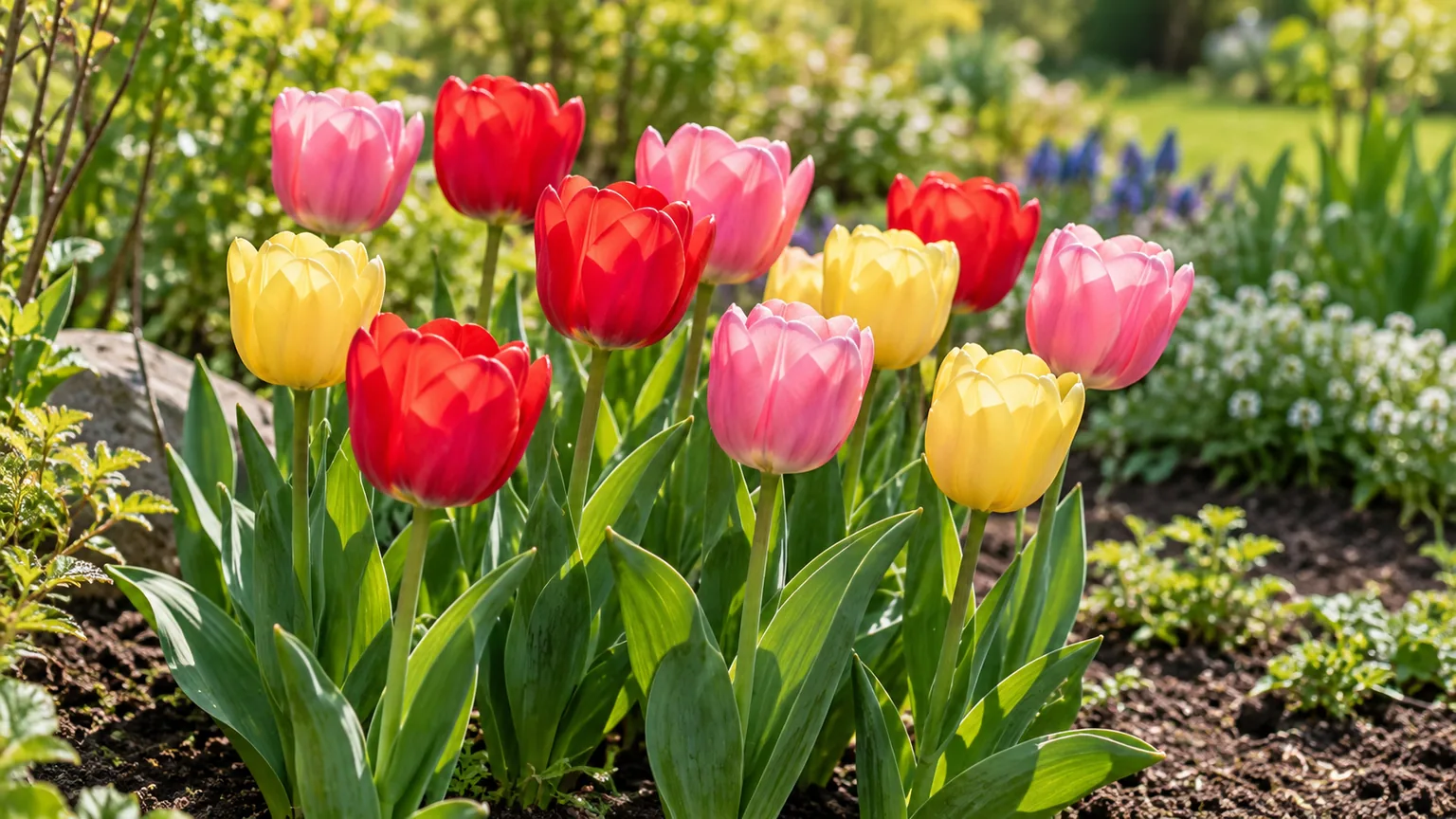
Tulips are often sold by color, but the group behind a bulb tells you more about how it will behave. Height, bloom window, flower shape, stem strength, and the chance of flowering again all vary, so a well-planned bed starts with purpose: do you want the earliest color, a reliable cut flower, a long display, or bulbs that may naturalize?
The names can be confusing because a tulip group and a named cultivar are not the same thing. “Darwin Hybrid” is a horticultural group; ‘Queen of Night’ is a cultivar within a group. Once you separate those labels, comparing tulips becomes much easier.
Start with a group, then choose a cultivar
Tulip sellers use 15 horticultural divisions, organized largely by ancestry, bloom time, and flower form. The divisions are useful shopping shorthand, but they do not guarantee an exact flowering date: local spring temperatures, planting depth, exposure, and the cultivar itself shift the calendar. A label such as “late spring” is more transferable than a date printed for another region.
The same distinction matters for longevity. Some tulips are bred mainly for a striking first display, while species tulips and some established hybrids can return under favorable conditions. Even a variety described as perennial may fade in a warm-winter climate, wet summer soil, or crowded bed. Treat repeat flowering as a useful tendency rather than a warranty.
The 23 tulip types, from early to late
Use this list as a menu. The first 15 entries are horticultural groups; the final eight are named cultivars that show how much variation can exist inside those groups. Iowa State Extension’s overview of tulip types for home gardens explains the formal divisions and illustrates representative cultivars. The RHS tulip selection is useful when checking names and garden merit, while the University of Minnesota bulb guide covers bulb planting basics.
Early and midseason groups
| Type | What it contributes | Best use |
|---|---|---|
| 1. Kaufmanniana | Low plants with wide-opening flowers and patterned foliage | Front of a sunny bed or rock garden |
| 2. Greigii | Compact habit and often striped or mottled leaves | Edging and small spring borders |
| 3. Fosteriana (Emperor) | Large, simple blooms on relatively sturdy stems | Bold early color and cutting |
| 4. Species tulips | Smaller wild-derived forms; performance differs by species | Naturalistic drifts and rock gardens |
| 5. Single Early | Classic cups that open near the start of the tulip season | Containers and early beds |
| 6. Double Early | Many petals and a rounded, peony-like profile | Sheltered beds where heavy flowers are protected |
| 7. Triumph | Mid-height single flowers in a broad color range | Mixed borders and dependable seasonal color |
| 8. Darwin Hybrid | Tall, large flowers; often among the stronger choices for repeat bloom | Mass planting and cut flowers |
These are not interchangeable just because they flower in the same season. A low Kaufmanniana tulip can disappear behind a vigorous perennial, while a tall Darwin Hybrid may need shelter from strong wind. Put the expected height beside the site conditions when comparing a bulb packet.
For a fast first pass, group bulbs as early, midseason, or late and only then compare their colors. The practical Gardeners’ World tulip guide makes the same useful distinction: flowering windows vary by weather and region, and mixing types can stretch the display. Its advice is written for a UK climate, so translate its month labels to your local season rather than copying the calendar.
Late and specialty groups
| Type | What it contributes | Best use |
|---|---|---|
| 9. Single Late | Tall, simple cups that extend color toward the end of spring | Back of a border and cutting |
| 10. Double Late | Full, layered flowers that can be heavy in rain | Sheltered focal patches |
| 11. Lily-flowered | Pointed petals that flare outward | A refined late-season silhouette |
| 12. Fringed | Petal edges with a crystalline or serrated fringe | Close-up interest near a path |
| 13. Viridiflora | Green markings remain visible on the petals | Long-lasting color contrast |
| 14. Parrot | Twisted, ruffled, irregular petals | A small, high-impact display |
| 15. Rembrandt-type modern cultivars | Deliberately patterned petals that echo historic broken-color tulips | A focal point; buy named, virus-free stock |
“Rembrandt tulip” needs a little context. Historic broken-color tulips acquired their streaks through a virus, which weakened bulbs and could spread. Modern cultivars sold with Rembrandt-like patterns are bred for the look; do not seek or propagate diseased tulips to recreate it.
Eight named cultivars worth comparing
These cultivar names make the broader groups more concrete. Availability and exact traits can differ by supplier, so check the current bulb label rather than assuming a photograph or catalog description applies to every stock source.
| Cultivar | Group | Why gardeners choose it |
|---|---|---|
| 16. ‘Leen van der Mark’ | Triumph | Contrasting color and a classic cup for mixed beds |
| 17. ‘Negrita’ | Triumph | Deep violet tones that pair well with pale spring flowers |
| 18. ‘Purple Prince’ | Single Early | Compact early color for a container or border edge |
| 19. ‘Orange Emperor’ | Fosteriana | A bright, large-flowered option for an early display |
| 20. ‘Miranda’ | Double Late | A full, layered flower suited to a sheltered showpiece |
| 21. ‘Ballerina’ | Lily-flowered | Slender orange flowers and a more vertical late-season shape |
| 22. ‘Flaming Spring Green’ | Viridiflora | Green-and-white patterning that reads clearly in a pale scheme |
| 23. ‘Queen of Night’ | Single Late | Dark maroon-purple flowers that anchor a late tulip palette |
This is a comparison set, not a universal ranking. If a cultivar is unavailable locally, look for another bulb in the same group and compare its expected height, bloom window, and naturalizing notes.
Choose tulips for your garden’s job
Before choosing colors, write down the practical job. That prevents a common mismatch: planting delicate, heavy-headed flowers in an exposed site, or buying a short early variety for the back of a deep border where it will vanish behind new foliage.
For repeat blooms
Start with species tulips and Darwin Hybrids, then consider Kaufmanniana, Greigii, and Fosteriana types if the local supplier identifies them as returning well. The flowers still need the right environment: full sun during growth, free-draining soil, and enough space for the leaves to recharge the bulb after bloom. Tulips planted into a damp summer bed can rot even if they looked healthy in spring.
If you want a formal annual display, choose whichever colors and flower forms you love, then plan to replace bulbs as performance declines. Many gardeners treat double, parrot, fringed, and other highly ornamental tulips as a one- or two-season show. That is not a failure of care; some cultivars are selected more for their flower than for naturalizing.
For wind, containers, and cutting
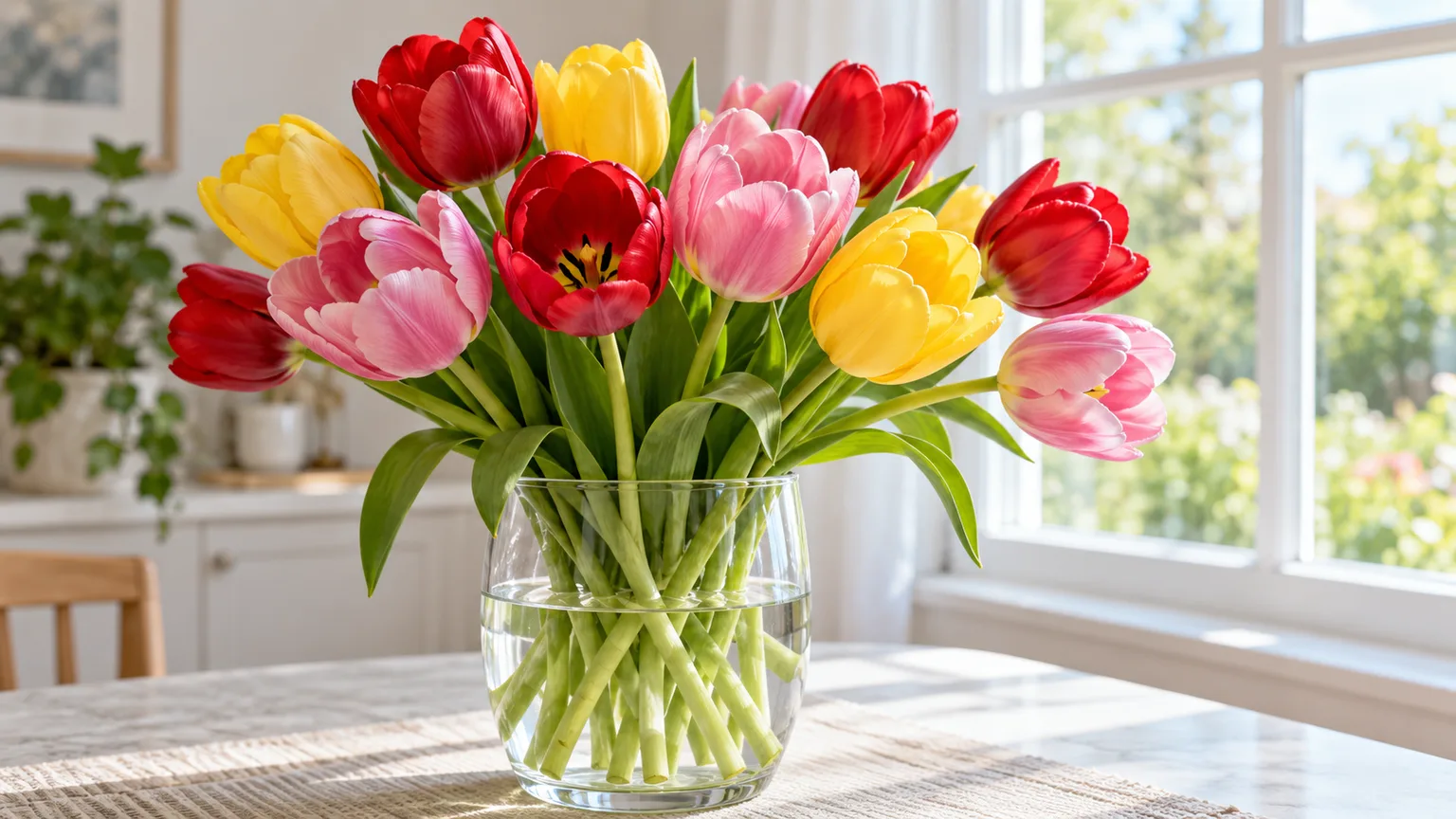
Windy sites favor shorter, sturdy stems and sheltered placement. A fence or hedge can reduce exposure, but do not crowd tulips against it if the soil there is dry or compacted. Tall late tulips work better where neighboring shrubs or a building interrupt gusts without shading the bed during the spring growth period.
For containers, choose varieties with similar height and bloom time, and use a pot with generous drainage holes. The container dries and cools faster than ground soil, so check moisture during active growth and protect the pot from repeated freeze-thaw cycles. A mixed packet can be charming, but a single group gives a more even display in a small pot.
For cutting, prioritize stem length and strength, then plant enough bulbs to cut a few without emptying the entire border. Cut when the bud has color but is still closed, use a clean vase, and expect stems to continue elongating indoors. If you want the garden to return next year, leave the foliage on the plants you are not harvesting.
Build a spring succession instead of a color pile
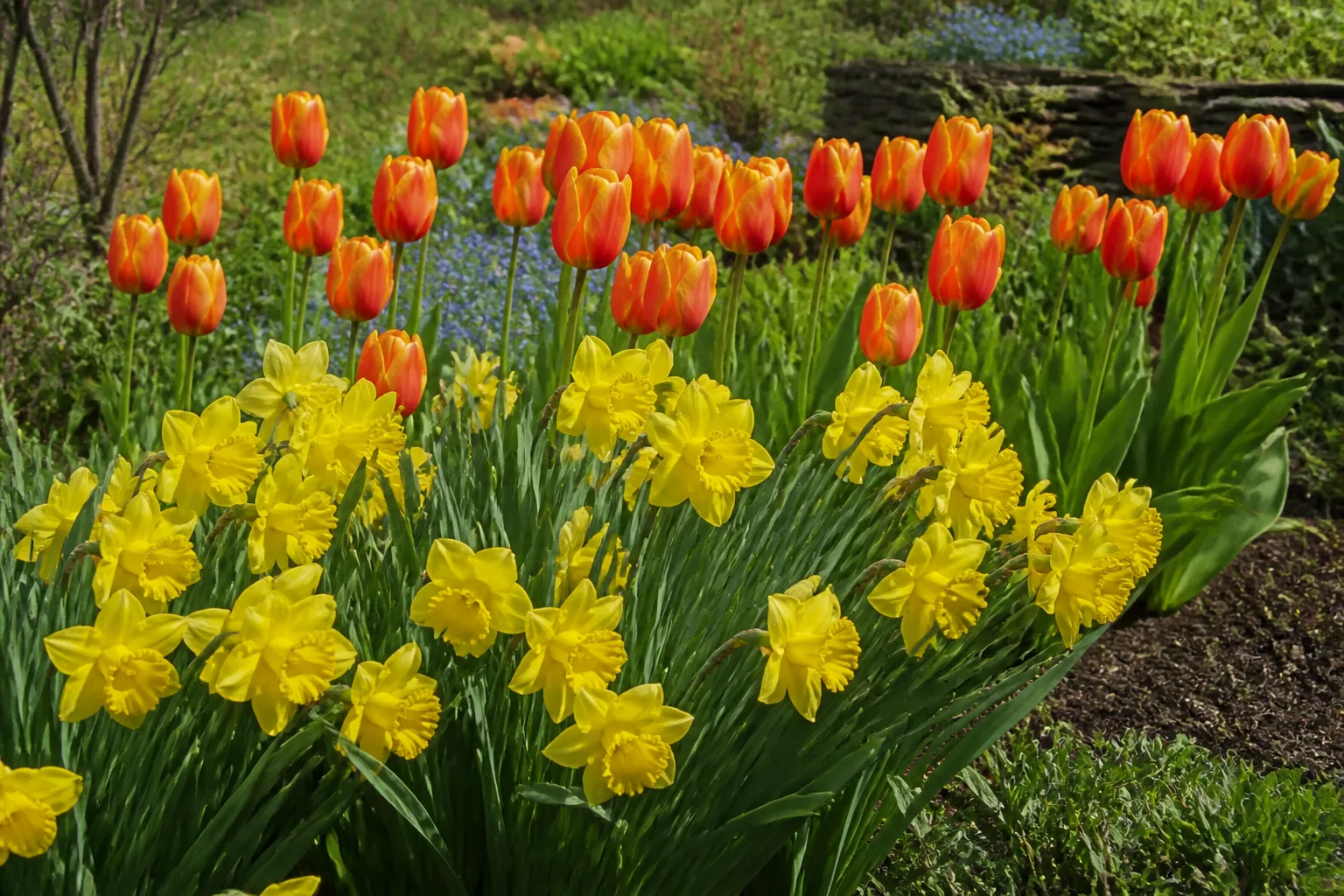
For a longer show, combine early, midseason, and late groups rather than planting 23 cultivars that all bloom at once. A practical sequence is Kaufmanniana or Fosteriana near the front, Triumph or Darwin Hybrid in the middle, and Single Late, Lily-flowered, or Viridiflora bulbs for the final act. Local weather may compress or stretch each phase, so use group labels as a sequence, not as a calendar guarantee.
Repeat the same two or three colors across all three windows. That creates continuity while the flowers change. Plant in clusters of at least five to seven bulbs for a visible patch; scattered single bulbs often look accidental unless the design is deliberately naturalistic. Keep taller varieties behind shorter ones, and leave room for nearby perennials to cover fading leaves later.
Think about what the bed looks like between waves, too. Early Kaufmanniana and Greigii tulips can sit among low groundcovers, while later tall stems can rise behind emerging perennials. Avoid planting every bulb in a straight row unless the border is formal; a loose triangular group reads more naturally from the path and gives you room to replace only one section if it declines.
If you are working with a small bed, select one early group and one later group instead of trying to represent every division. A tight palette of cream, yellow, and dark purple can still feel varied when the flower shapes change. In a large border, repeat a few reliable groups in several places so the eye follows color across the garden rather than stopping at a single isolated patch.
Match the sequence to your local spring
Keep a simple bloom record after the first year: note when the first flowers open, when the main group peaks, and when the late types fade. Your climate may shift catalog timing by weeks, so local observations help you adjust the next planting. If early and late groups overlap, choose varieties with a clearer difference in bloom time or add a different spring perennial to bridge the gap.
Plant bulbs for roots, not leaves
In most temperate climates, tulips are planted in fall after soil temperatures cool but before the ground freezes. This gives the bulb time to form roots before winter. In mild-winter regions, follow local extension guidance and select cultivars suited to the climate; tulips may need a reliable cold period and may be less perennial in warm, wet conditions. The University of Minnesota bulb planting guide explains why fall planting supports root establishment and why drainage matters.
Choose a site that gets strong spring sun and drains quickly after rain. Loosen compacted soil across the bed instead of digging isolated pockets that can collect water. If a test hole stays wet for hours after irrigation, raise the bed or choose another site; adding a handful of gravel beneath each bulb does not fix poorly drained soil and can create a perched wet pocket.
Plant bulbs pointed end up at the depth and spacing specified on the package. A common starting point for large tulips is roughly two to three bulb-heights deep, but the supplier’s instructions and local winter conditions take priority. Set bulbs into firm soil, backfill, water once to settle the bed if the soil is dry, and mark the area so later digging does not slice through dormant bulbs.
Buy firm bulbs that feel heavy for their size, with no soft spots, fuzzy mold, or crushed basal plate. A papery outer skin can be scuffed without harming the bulb, but a bulb that is shriveled or spongy is less likely to establish. If planting must wait, keep bulbs dry, cool, and ventilated rather than sealed in a damp plastic bag; inspect them before they go into the ground.
For containers, depth and drainage matter more than decorative pot shape. Choose a pot deep enough for the bulbs and soil above them, with several unobstructed drainage holes; a shallow bowl can leave bulbs exposed to extreme temperature swings. Use fresh potting mix, not dense garden soil, and avoid leaving the container sitting in a saucer of water after rain. In very cold areas, group pots against a sheltered wall or move them into an unheated protected space so the soil does not repeatedly freeze and thaw.
Keep the foliage until it has done its work
After flowering, remove the spent flower head if you do not want seed to form, but leave the leaves and green stem. Those leaves photosynthesize and replenish the bulb for next spring; tying them into knots or cutting them while they are green reduces the plant’s ability to store energy. When the foliage has yellowed and released easily, remove it or let it disappear beneath nearby perennials.
Water during active growth if rainfall is scarce, but do not keep dormant bulbs wet through summer. A light top-dressing of compost can improve soil over time; heavy feeding is usually unnecessary in fertile ground. If you plan to lift bulbs for a dry summer rest, wait until the foliage has died down, label the varieties, and store only healthy bulbs in a cool, airy place. Many gardeners leave hardy bulbs in the ground instead.
When a tulip comes back without flowers
Leaves without a flower often point to a bulb that has become too small to bloom, a cultivar losing vigor, shade during spring growth, premature leaf removal, or a previous season of poor drainage. First check what changed: did a tree canopy fill in, did irrigation keep the bed wet in summer, or were leaves cut as soon as flowers faded? Correct that condition before buying more bulbs.
If a clump is crowded, wait until leaves have died back and divide it carefully, keeping only firm, healthy bulbs. If the cultivar is known to decline after a strong first year, replanting is the realistic fix. Tulips are not guaranteed to multiply like daffodils, and replacing a tired patch is often simpler than trying to nurse undersized bulbs through another weak season.
Conclusion
The best tulip type is the one that suits the site and the result you want. Start with bloom timing and stem height, decide whether you value repeat flowers or a one-season display, and then choose a cultivar whose color and form fit the plan. Plant into cool-season soil that drains well, let the leaves fade naturally, and use several bloom groups if you want spring color to unfold rather than arrive all at once.