Which Kale Should You Grow? Compare 21 Types for Your Garden
From curly Scotch to Lacinato and Siberian kale, compare 21 varieties and choose for baby leaves, containers, fall planting, or winter harvest by zone.
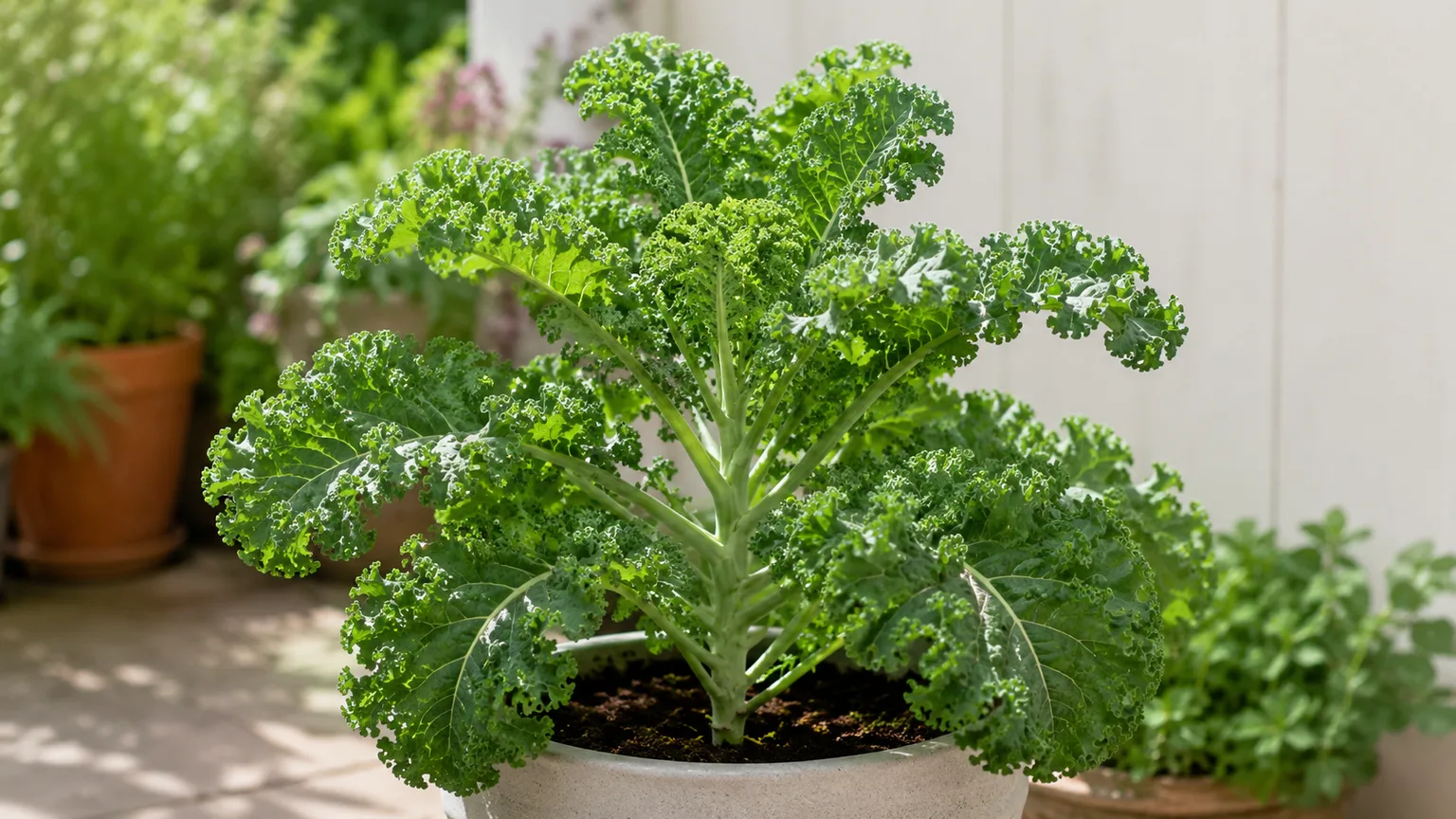
Kale seed catalogs can make the choice feel harder than it is. Most varieties differ in a handful of practical ways: leaf texture, mature size, color, speed to harvest, and how well they handle cold. Start with the kind you like to eat and the season you can grow it, then choose a cultivar that fits your bed or container.
This guide compares 21 kale varieties across four familiar groups: curly Scotch types, Lacinato and broad-leaf types, Russian or Siberian kales, and one perennial form. The group names are useful for shopping, but they are not always strict botanical boundaries. The Royal Horticultural Society’s profile of the Brassica oleracea Acephala Group describes the range well: cultivars can have smooth or blistered leaves, wavy or deeply serrated edges, and green leaves with purple veins or margins.
The fastest route is to choose by job: Vates, Starbor, or Prizm for a smaller footprint; Toscano or Black Magic for long, dark leaves; Red Russian or Siberian for tender, cold-season picking; and Redbor or Scarlet when color matters. Treat those as starting points, not guarantees. Seed companies may use slightly different descriptions, and your planting date, water, soil, and heat affect performance as much as the cultivar name.
How to choose a kale variety
Think about the harvest before the leaf color. If you mostly cook kale in soups or braises, broad leaves with a substantial midrib may be useful because you can strip and slice them quickly. If you want thin ribbons for salads, baby leaves for a mix, or crisp leaves for chips, you may prefer tender Russian types or a finely curled cultivar. A variety grown for ornamental color can still be eaten, but its garden appearance alone does not tell you how tender its mature leaves will be.
Read days to maturity carefully
Seed packets do not always count maturity from the same starting point. A number may refer to days from direct sowing, from transplanting, or to the first baby-leaf harvest rather than a full-size plant. Compare varieties using the packet’s own definition, and add the time your seedlings need if you are starting indoors. Utah State University Extension’s kale guide, for example, lists Starbor, Red Russian, and Scarlet as productive choices in Utah and gives approximate maturity figures; it also emphasizes that rapid, unstressed growth affects flavor and quality. Use a catalog number as a planning estimate, not a promise.
For a fall crop, count backward from the weather your garden actually gets. Utah State’s planting guidance recommends selecting early-maturing cultivars and planting roughly 50–75 days before the anticipated maturity date; a short, cool autumn may require a faster variety than a long mild one. In spring, the goal is to establish plants before heat pushes them toward tough leaves or bolting. Check local frost dates, the seed packet, and your own growing-season length before buying.
Decide whether seed saving matters
If you want to save seed, look for open-pollinated rather than F1 hybrid varieties, and confirm the label with the seed seller. Seed from an F1 plant may not come true to type in the next generation, so its leaves, size, or maturity can be unpredictable. Open-pollinated seed gives you a better starting point for selecting and saving plants, although kale is commonly grown as a biennial and seed production requires keeping selected plants through another season.
For a first garden, dependable harvest matters more than seed pedigree. Choose a variety sold locally or by a seed company with clear days-to-maturity and spacing information. Once it performs well in your climate, you can trial a second type for flavor or color. The USDA Agricultural Research Service’s Brassica collection reflects how broad this crop family is; a name on a packet is one useful identity, not a full prediction of how a plant will behave in every garden.
Curly Scotch and frilly kale varieties
Curly kales have ruffled or crinkled leaves that hold texture when chopped and can be attractive in edible borders. They span compact plants for close picking and larger plants that need more elbow room. The words “Scotch” and “curly” describe a look gardeners recognize; read the cultivar’s size and seed description before assuming every curly kale stays small or has the same cold tolerance.
1. Dwarf Blue Curled Scotch (Vates). Vates is a compact, blue-green kale with tightly curled leaves and a long record as a reliable garden choice. Its smaller stature makes it a sensible first trial for a raised bed or roomy container, particularly when you want repeated outer-leaf harvests rather than a giant plant. It still needs enough soil volume and steady moisture to keep new leaves coming; compact does not mean miniature or drought-proof.
2. Darkibor. This hybrid is a dense, dark-green curly kale with a tidy habit. Choose it when you like classic frilled leaves and want a uniform row for harvesting several plants at once. Its tight curls can trap soil and small insects, so rinse leaves thoroughly and look under the folds while scouting. The uniformity of a hybrid may suit a planned bed better than a gardener who wants to save seed from the crop.
3. Prizm. Prizm is bred for shorter leaf stems and a generous amount of leaf tissue, which can reduce trimming at the kitchen counter. It is a practical option if you cook kale often and want a curly type that regrows after outer leaves are picked. Treat regrowth as a benefit of good growing conditions, not an unlimited supply: harvest only a few mature outer leaves at a time and keep the central growing point intact.
4. Redbor. Redbor pairs deeply curled foliage with burgundy to purple color that becomes more pronounced in cool weather. It can bridge the vegetable patch and ornamental border, especially where a green crop would disappear among other plants. Use it for visual contrast and edible leaves, but allow space for a full-size plant and do not choose it solely for its color if your priority is compact container growing.
5. Scarlet. Scarlet is an open-pollinated red-leaf kale often sold for both young leaves and full-size harvests. Its color and ruffled shape make it easy to spot in a mixed bed, while the open-pollinated seed can appeal to gardeners interested in seed saving. The plant may be less uniform than a hybrid selection, so expect some variation instead of a perfectly matched row. Utah State Extension includes Scarlet among varieties with good production and eating quality for its region.
6. Starbor. Starbor is a compact hybrid with dark blue-green curls. It earns its place when bed width or container space is limited, and Utah State Extension lists it among its recommended varieties for production, eating quality, and cold hardiness. That regional recommendation is more useful than a broad “best kale” label, but it still cannot guarantee the same results in a hot coastal garden or a short northern season. Check the packet for final spacing.
7. Winterbor. Winterbor is selected for a frilled blue-green leaf and cold-season use. Its name signals the intended growing window, but it does not mean the plant will keep producing through every freeze without protection. In exposed gardens, wind and repeated hard freezes can damage leaves; a low tunnel or row cover may extend picking. Choose it when you want the familiar curly texture and plan to harvest through cool weather.
8. Meadowlark. Meadowlark has narrower, frilly leaves on upright plants, which can make individual leaves easier to handle than a dense, wide rosette. It suits gardeners who want a tall plant with tender foliage but should not be selected as a dwarf just because the leaves are relatively narrow. Give it room above the soil line and access along the row so you can remove outer leaves without crushing the plant.
9. Red Ursa. Red Ursa combines broad, frilly foliage with a colored stem and veins. It is a choice for gardeners who want a more dramatic plant but still plan to eat the leaves. Catalog descriptions sometimes call it a stabilized cross; if seed saving is important, check whether the supplier identifies the specific seed lot as open-pollinated and how the cultivar is maintained. The colored stems are a useful identification clue, not a measure of flavor or hardiness.
Lacinato and broad-leaf kale varieties
Lacinato kale has long, narrow leaves with a puckered or blistered surface. “Dinosaur,” “Tuscan,” and “Cavolo nero” are common names associated with this style, though labels vary. The leaves lie flatter than tight curls, so they are quick to inspect and slice into ribbons. Larger leaves can have a firm center rib; strip it for a tender salad or chop and cook it with the leaves.
10. Black Magic. Black Magic is a dark blue-green Lacinato-type kale with upright leaves. The narrow shape makes it convenient to harvest a few leaves at a time, and the cultivar is often presented as a productive, garden-friendly alternative to older Tuscan types. Give it a cool-season window and enough room for airflow. It is not a heat-proof kale; a hot spell can slow leaf quality even when the plant survives.
11. Dazzling Blue. Dazzling Blue brings smoky blue-green leaves together with purple midribs and veins. It is an appealing pick when you want the Lacinato form with more color, especially in a winter bed where cool weather intensifies the contrast. The colored ribs may look striking, but select it for the combination of appearance and leaf shape rather than assuming it is more cold tolerant than every green Lacinato cultivar.
12. Madeley. Madeley is a broad-leaf, blue-green kale with rounded leaves that can resemble collards more than the finely curled types. Its shape is useful if you prefer larger leaves that are simple to wash and prepare. In regions where plants can overwinter, leaving a healthy plant in place may provide young spring growth, but the plant’s second-year flowering changes its role from leaf crop to seed or flower stalk. Remove it when the leaves become coarse or the bed needs space.
13. Toscano (Nero di Toscana). Toscano, also sold as Lacinato, Tuscan, or dinosaur kale, is the classic long, dark, heavily puckered type. The tall leaves are easy to gather in bundles and work well sliced thinly for soups, sautés, and braises. Unlike a tight curly kale, its blistered surface is relatively easy to inspect. It needs more vertical room than a dwarf cultivar and can become substantial in a long, mild season.
14. Arun. Arun is a hybrid with large, blue-green leaves and prominent midribs that are easy to remove during preparation. It may appeal to gardeners who want broad leaves without stripping tiny curly foliage from the stem. Descriptions emphasize sturdier growth and improved tolerance of warmth, but tolerance is relative: for best leaf quality, give it a cool-season planting and even moisture rather than using the claim as a reason to sow into midsummer heat.
15. Portuguese kale (Beira). Beira is grown for large, fleshy, wavy leaves and thick ribs that are useful in dishes where stems are cooked, including Portuguese caldo verde. It needs a longer season and more garden space than baby-leaf kale, so it is a better match for a generous bed and a gardener who wants substantial leaves. It is described as less frost tolerant than many other kales; in a cold climate, do not rely on it as your main winter crop.
16. Mamba. Mamba is a Lacinato-type hybrid valued for upright, fairly uniform plants and dark, savoyed leaves. The vertical growth habit makes it easier to reach leaves in a close row, although the final plant still needs spacing for mature foliage. It is a useful comparison with Toscano if you want a similar leaf style but prefer a hybrid seed lot. The supplier’s local trial and maturity note should guide the choice.
Russian and Siberian kale varieties
Russian and Siberian types are often recognized by flatter, lobed or scalloped leaves rather than the long, blistered Lacinato blade. Gardeners prize them for tender young greens and cool-weather harvests. Common names can overlap, so distinguish the exact variety on the seed packet instead of assuming that every “Russian” kale is botanically identical. Savvy Gardening’s practical comparison of kale types also emphasizes that the groups vary in texture, cold response, and growth habit.
17. Early Hanover (Premier). Early Hanover is a smooth-leaved, upright kale that can be useful when you want broad leaves without the heavy curl of Scotch types. Its relatively compact habit may suit a raised bed, and slower bolting can be helpful where spring warms quickly. “Early” is still relative to local weather and the seed company’s maturity count; sow on time and harvest steadily before summer heat stresses the crop.
18. Ragged Jack (Red Russian). Red Russian has gray-green, lobed leaves with purple stems and veins. The young leaves are tender enough for salad mixes, while mature leaves can be cooked after the central rib is removed. The two common names are often used for the same or closely related seed offerings; check the packet for the actual cultivar and species designation. It is a strong choice if you want one plant that can supply both baby greens and larger leaves.
19. True Siberian. True Siberian is a vigorous, blue-green kale with frilled leaves and a reputation for cold tolerance. It is a sensible candidate for a fall planting intended to keep producing after light frosts. In regions with a severe winter, however, hardiness depends on plant establishment, wind exposure, snow cover, and protection—not just the cultivar. Plant early enough for a good root system before freezing weather arrives.
20. White Russian. White Russian has pale gray-green leaves and light ribs, giving it a softer look than the purple-stemmed Red Russian. It is a useful choice when you want a Russian-type kale for a mix of baby and mature leaves without strong red coloring. Since both names and seed lots vary by supplier, compare packet photos and maturity notes if you are choosing between White and Red Russian for a specific bed.
Specialty and perennial kale
21. Perennial kale (often sold as perennial tree kale). Perennial kale is the outlier in this list: rather than replanting each season, a healthy plant can persist for several years in a suitable mild climate. It is grown for blue-green leaves, branching habit, and its unusual perennial use, but availability and exact identity can vary. Treat it as a long-term edible shrub, not a guaranteed replacement for annual kale in a cold winter. Confirm hardiness and overwintering advice from the seller for your region.
The group names above are shopping shortcuts, not a complete botanical key. The RHS profile describes the Acephala Group as a cultivated group related to wild cabbage, with leaves ranging from smooth to very blistered. The USDA Brassica collection likewise reflects the diversity maintained across this crop genus. When taxonomy matters—for example, if you are comparing seed-saving isolation or disease rotation—use the exact botanical and cultivar name from a reliable supplier, not a common name alone.
A quick comparison of the 21 varieties
Use this table to narrow the list before reading packet details. “Best fit” describes the job a variety may suit; it is not a guarantee that it will be the top performer in every climate.
| Variety | Leaf look | A useful reason to try it |
|---|---|---|
| Early Hanover (Premier) | Smooth, lobed | Broad leaves and a compact upright habit |
| Ragged Jack (Red Russian) | Lobed, purple-veined | Baby leaves or cooked mature leaves |
| Red Ursa | Frilly, colored ribs | Color plus a substantial harvest |
| True Siberian | Frilled, blue-green | A fall crop for cool-weather picking |
| White Russian | Pale gray-green | Russian-type leaves without red stems |
| Black Magic | Long, dark, blistered | Easy-to-strip Lacinato leaves |
| Dwarf Blue Curled Scotch (Vates) | Compact, curly | Smaller beds and repeated outer-leaf harvest |
| Dazzling Blue | Blue-green, purple veins | Lacinato form with strong color |
| Madeley | Broad, rounded | Larger leaves and simpler washing |
| Meadowlark | Narrow, frilly | Upright growth and slender leaves |
| Toscano (Nero di Toscana) | Long, deeply puckered | Ribbons for soups and sautés |
| Perennial kale | Blue-green, branching | A persistent crop in a suitable mild climate |
| Arun | Broad, blue-green | Large leaves with an easy-to-remove rib |
| Portuguese kale (Beira) | Wavy, thick-ribbed | Cooking leaves and stems together |
| Darkibor | Dense, curly | Uniform curly plants in a planned row |
| Mamba | Upright, dark Lacinato | A uniform hybrid with a narrow-leaf style |
| Prizm | Curly, short-stemmed | More edible leaf and less trimming |
| Redbor | Deeply curled, purple | Edible color for a mixed border |
| Scarlet | Frilly, red | Color with open-pollinated seed potential |
| Starbor | Compact, dark curly | A smaller footprint with extension support |
| Winterbor | Curly, blue-green | A cool-season curly type |
Choose by harvest, space, and season
Baby leaves and raw dishes
For salads, smoothies, or a quick handful of tender greens, choose a variety whose packet specifically permits baby-leaf harvest. Red Russian, White Russian, Vates, Scarlet, and Prizm can all be picked young; plant a short row more densely for baby leaves, then thin by harvesting. Tenderness depends on age and growing conditions, so take small leaves before hot weather, drought, or an overlong wait makes them tougher. For a steady supply, sow a small patch every couple of weeks during the cool part of the season instead of planting the entire packet at once.
Lacinato types work well when you want larger leaves for ribbons or cooked dishes, while Portuguese kale is intended for a heavier leaf-and-stem harvest. A cookbook preference can settle the choice faster than color: pick one style you already know how to prepare, then try a contrasting type in a short second row. That keeps a seed experiment from taking over the whole bed.
Containers and compact beds
Start with Vates, Starbor, or another packet explicitly described as compact. For full-size plants, Utah State and Illinois Extension both give a starting spacing around 12 inches between plants, with rows about 24 inches apart; Illinois notes a broader 12–18-inch in-row range. Leave more space for large cultivars or where airflow is poor. A pot needs enough depth and soil volume to hold moisture between waterings; tiny decorative pots dry too quickly for a leafy crop. In a container, one healthy plant is often more useful than squeezing several mature plants together.
Harvest the oldest outer leaves first and keep the central crown intact. If the plant crowds the rim, becomes top-heavy, or the soil dries by midday, the problem may be container size rather than cultivar choice. A wider planter gives the leaves room to spread and makes it easier to inspect both sides for caterpillars. For a mixed container, pair kale only with crops that share its cool-season timing and water needs.
Fall and winter harvests
For winter greens, shortlist True Siberian, Red Russian, Starbor, Red Ursa, and Winterbor, then compare regional recommendations and local seed notes. Utah State Extension lists Starbor and Red Russian among its productive, cold-hardy choices; Savvy Gardening describes Siberian forms as useful for winter cropping. Those sources give evidence for trying these types, not a universal hardiness rating for every cultivar or garden. A sheltered bed with established plants will usually fare better than a wind-exposed pot with late transplants.
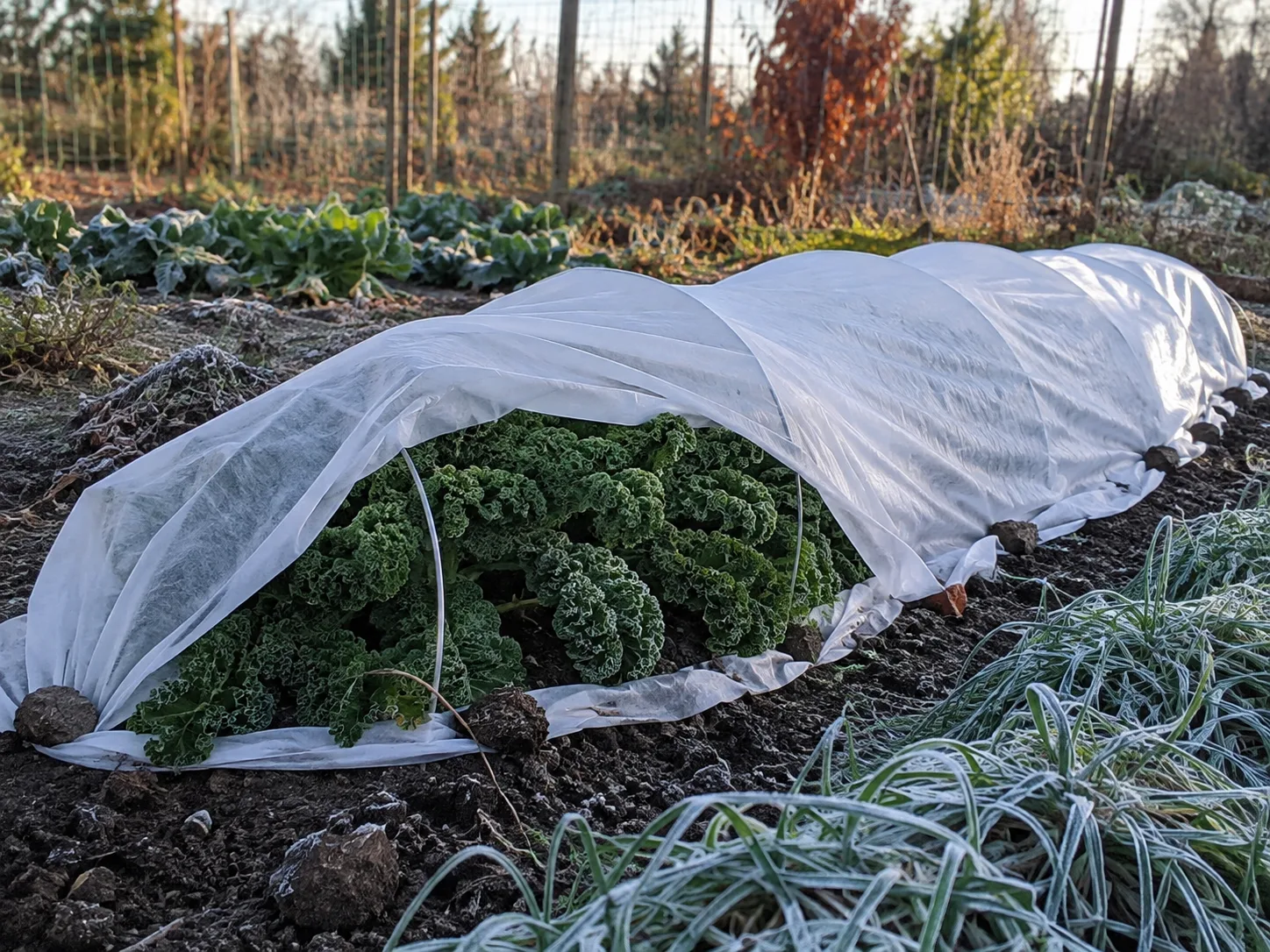
Kale tolerates cool weather, and many gardeners find leaves milder after frost. But one light frost does not guarantee a sweeter crop, and a hard freeze can damage exposed leaves. Keep plants actively growing with even moisture before cold weather; protect them with row cover or a low tunnel when the forecast threatens damaging cold. For timing, use the local first-frost date and count backward by the seed packet’s stated maturity period, leaving a buffer for slow germination and short autumn days.
A reliable growing plan for any kale
Kale is a cool-season crop that performs best when it grows steadily before heat or severe winter weather. Utah State University Extension recommends a sunny spot, fertile well-drained soil, and even moisture; its guide notes that growth and leaf quality decline when high summer temperatures and water stress set in. University of Illinois Extension’s kale profile likewise describes kale as a cool-season vegetable, recommends early cultivars for fall planting, and gives a practical spacing range. These basics are more important than choosing a cultivar advertised with a single standout trait.
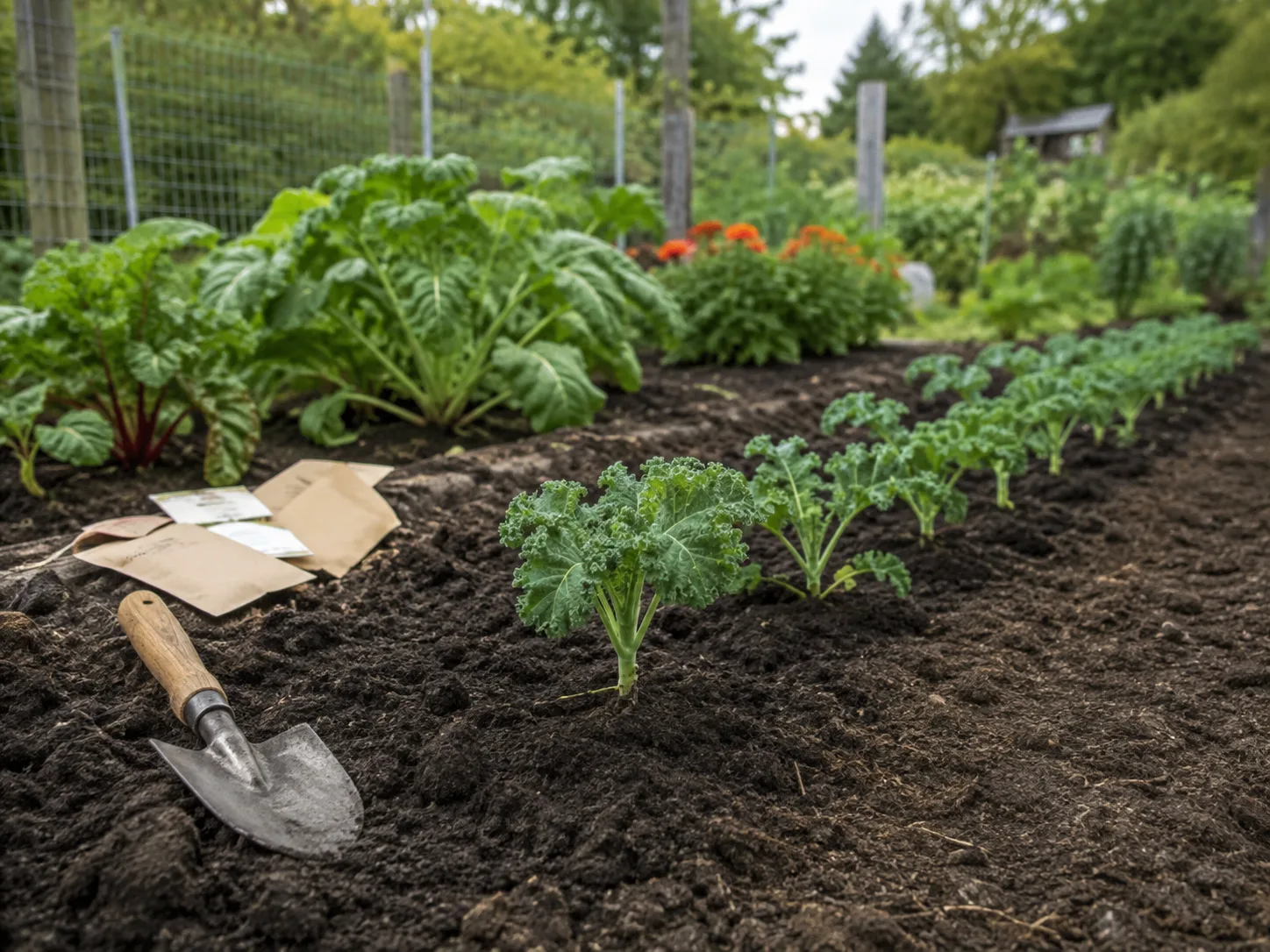
Sow seeds directly or transplant sturdy seedlings, following the packet for depth and timing. Space plants according to their mature size, not the tiny cell they arrive in. Keep the root zone consistently moist without leaving it waterlogged, remove weeds while plants are small, and avoid overfertilizing without a soil-based reason. If you transplant, water them in and give them time to establish before heavy harvesting. For a fall crop, do not wait until the first frost is close to start seeds; a mature plant handles cool weather better than a newly emerged seedling.
Once plants have several full leaves, harvest a few large outer leaves at a time. Avoid stripping every leaf at once; the central growing point makes the next flush. Inspect undersides and curled areas regularly for caterpillars, aphids, or flea-beetle damage. A light, permeable row cover installed at planting can reduce access by flying pests and buffer wind, but secure its edges and check plants beneath it so pests are not trapped inside.
If you want an extended autumn harvest, choose a bed where you can add cover before temperatures drop. Young, recently transplanted kale is more vulnerable than an established plant, and a container chills more quickly than soil in a raised bed. The RHS kale growing advice gives a useful seasonal reference for its UK climate; translate the month-by-month timing to your local frost pattern rather than copying the calendar dates exactly.
Common selection mistakes to avoid
Buying by color alone. A purple leaf may brighten a bed, but it does not tell you the plant’s size, harvest window, or flavor. Read the full packet description and compare the mature habit. A red ornamental-looking cultivar is still a food crop only if the seed source identifies it as edible kale; avoid assuming that every decorative cabbage sold for landscaping is the same as a named culinary variety.
Treating a maturity number as a universal deadline. Catalogs differ on whether the count begins at sowing or transplanting, and baby-leaf timing is not the same as full-size harvest. Start seeds with enough margin for your season and use the packet’s definition. If you missed the window for a slow variety, sow a faster cultivar or use the crop for baby greens rather than expecting a mature winter plant.
Crowding every plant into one row. Compact leaves do not eliminate airflow or watering needs. Dense planting can make scouting harder and keep lower leaves damp. If your goal is baby greens, sow closely and harvest young; if you want full-size plants, use the spacing for mature foliage. Do not confuse these two growing systems.
Expecting every kale to love summer. Kale may survive warm spells, but leaf quality can decline, plants may bolt, and pests can build. If your summers are hot, plan spring and fall crops, choose a variety described as slower to bolt, and use afternoon shade only as a targeted aid—not a substitute for a suitable planting date. Re-sow when the next cool window begins.
Conclusion
Choose kale by the harvest you want. Vates, Starbor, and Prizm offer compact or easy-to-prepare leaves; Toscano and Black Magic provide the long, puckered Lacinato style; Russian and Siberian types are useful for tender young greens and cool-weather picking; and Redbor or Scarlet add color. For a first season, grow one variety that suits your climate and one small trial row with a different texture. Compare the packet’s maturity definition, mature size, and seed type, then let your own garden decide which deserves a permanent place.