Water Plants With Coffee Safely: A Practical Guide
Can you water plants with coffee? Learn why brewed coffee differs from grounds, which plants need caution, and the safest way to handle a leftover cup.
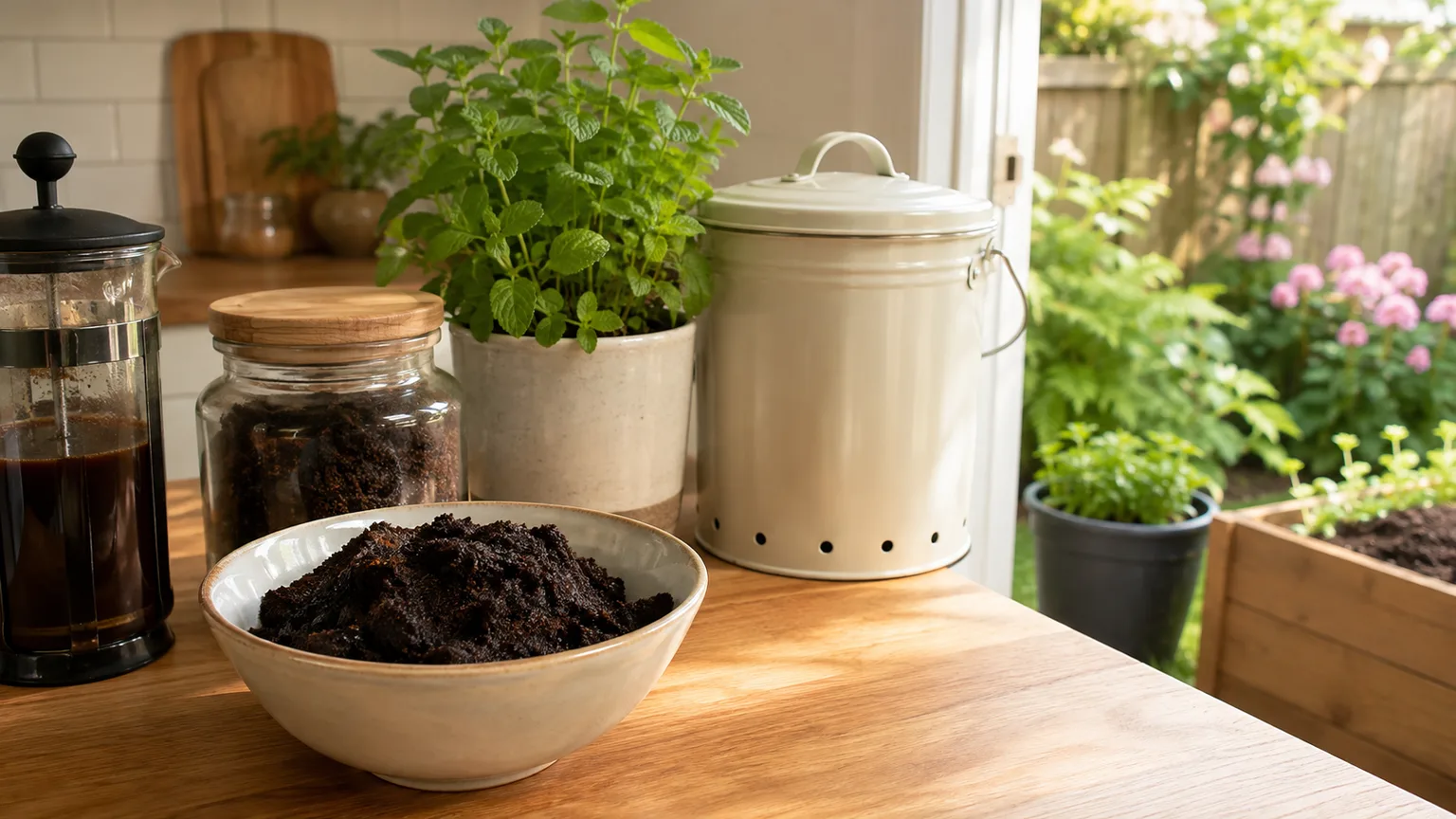
If you have a little plain coffee left in the pot, you may be able to use it on a plant once. That does not make coffee a dependable fertilizer, a soil-pH treatment, or a sensible replacement for the water your houseplants normally need. For most plants, plain water is the better choice because it supplies moisture without leaving an unpredictable mix of caffeine, acids, and dissolved coffee compounds in a small container.
The main point of confusion is that brewed coffee and used coffee grounds are different materials. The solid grounds contain much of the bean’s nitrogen-rich organic matter; some of those compounds never make it into the cup. Washington State University Extension’s review of coffee grounds and Texas A&M AgriLife’s grounds guidance discuss compost and soil uses, but do not establish a reliable coffee-to-water recipe or weekly schedule for houseplants. If you still want to test leftover coffee, keep the trial small, use only plain cooled coffee, and stop if the plant or potting mix changes for the worse.
Is coffee good for plants? The short answer
Plants can take up water from a diluted coffee solution, but that is not the same as proving that coffee improves their growth. A cup’s composition changes with bean, roast, brewing method, strength, and any additions. Without a measured fertilizer analysis or a tested dilution for a particular plant and potting mix, you cannot know whether that pour provides a useful nutrient amount or simply adds unnecessary dissolved compounds.
That distinction matters more indoors than it might seem. A potted plant has a limited amount of mix, a confined root zone, and usually no rainfall to wash residues away. Repeating a coffee treatment because a plant “likes acid” can quietly replace a straightforward moisture routine with an unmeasured chemical experiment. If the plant is healthy, growing in the right light, and getting appropriate water and fertilizer, there is no care problem that coffee needs to solve.
The practical answer is therefore conditional: plain water should remain your regular irrigation; coffee is optional and best skipped unless you have a specific reason to experiment. Do not use coffee to rescue a wilting plant, correct yellow leaves, feed a plant that is not growing, or lower soil pH. Those symptoms have many causes, and coffee is not a diagnostic treatment. First check whether the potting mix is too dry or too wet, whether the container drains, and whether the plant’s light and growing medium suit its species.
Liquid coffee and coffee grounds are not interchangeable
It is easy to see “coffee contains nitrogen” and conclude that any form of coffee is fertilizer. That leap confuses the bean, used grounds, and the liquid in your cup. Brewing is an extraction process: hot water dissolves some compounds and leaves others behind. The composition of the leftover liquid is not the same as the composition of the grounds, and neither is a standardized plant food.
Washington State University Extension explains that many nitrogen-rich proteins and other less soluble components remain in spent grounds after brewing. It also describes the breakdown of those grounds over time and recommends using them in compost or, under specific conditions, as a thin landscape mulch. Those findings do not give a dose for watering a houseplant with coffee. Texas A&M’s guidance likewise concerns used grounds as an organic material and compost ingredient, not liquid coffee as a measured feed.
What brewing removes—and what the liquid still contains
Brewed coffee contains water and dissolved substances extracted from the roasted beans. Depending on how it was made, those can include caffeine, acids, aroma compounds, and small amounts of soluble minerals. Their levels vary considerably from one cup to another. A light drip coffee, espresso shot, instant coffee, and cold-brew concentrate are not interchangeable inputs for a plant, even when they all look like “coffee.”
That variation is why a household dilution cannot be treated like a fertilizer label. Commercial plant foods state nutrient percentages and give application directions for a known concentration. A leftover cup does not tell you how much nitrogen, caffeine, or acidity remains in it, and the color of a weak-looking liquid does not measure its safety. The liquid may contribute a little of something, but the amount is too uncertain to justify replacing a balanced fertilizer or setting a recurring feeding schedule.
Why grounds belong in a different conversation
Used grounds are solid organic matter. Soil microorganisms can decompose that material and gradually make some of its nutrients available. WSU notes that coffee grounds can be composted and cautions that thick, finely textured layers may compact and impede air and water movement. Its recommendations include limiting grounds to a modest portion of a compost pile and avoiding their use around areas where seeds are germinating.
Those are useful practices for coffee grounds, but they should not be used to claim that the cup of coffee itself contains the same fertilizer value. A pot of brewed coffee poured into a pot does not add the same physical organic matter as a layer of grounds, and a handful of used grounds does not behave like diluted liquid. If your goal is to recycle grounds, compost them. If your goal is to water a houseplant, use water and follow the plant’s moisture needs.
Coffee should never replace a plant’s normal watering routine
Houseplants do not need water on a fixed weekly rhythm. How quickly potting mix dries depends on light, temperature, humidity, pot size, root density, the mix itself, and the plant’s growth rate. A small plant in a bright, warm room can use water faster than a large plant in a cool, low-light corner. Applying coffee every seven or ten days simply because a calendar says so can overwater one plant and leave another too dry.
The safest way to decide whether to water is to check the plant and its pot. Follow the species’ normal care needs, feel the mix at an appropriate depth, lift the container if weight is a useful cue, and account for whether the pot has drainage holes. When the plant needs water, use room-temperature plain water and wet the root ball evenly. Let excess water leave the pot, then empty the saucer or cachepot so the roots do not stand in runoff.
Check the pot before you choose a liquid
Before watering, ask three simple questions: Is this plant ready for water? Can extra liquid drain away? Is anything already sitting in the saucer? If the upper mix is still damp for a plant that prefers to dry between waterings, do not add coffee or plain water yet. If the root ball is dry and the plant’s care routine calls for watering, water it normally instead of using a leftover drink as a shortcut.
This check prevents the most common mistake: treating coffee as a “boost” that can be poured on top of a plant’s usual watering. Moisture is still moisture. Adding a cup of any liquid to wet mix prolongs saturation and limits oxygen around roots. That is especially risky in decorative pots without drainage, dense mixes, or plants that need the root zone to dry between waterings. Coffee does not make overwatering safer.
If you use coffee in a one-time test, it should replace, not add to, a watering that is due. Keep the total volume appropriate for the pot, allow drainage, and do not leave the runoff behind. On the next watering, return to plain water. One careful trial gives you a better chance of noticing a problem than repeatedly changing multiple parts of the plant’s care at once.
Why weekly advice cannot fit every houseplant
Some gardening articles suggest diluting leftover coffee and using it weekly; others describe a more occasional application. For example, Evergreen Seeds gives a one-part-coffee-to-four-parts-water recipe and says not to exceed weekly use, while Blooming Expert presents more than one dilution and describes a less frequent schedule. These are editorial recommendations, not a shared extension standard for all houseplants. The difference is a reason to avoid presenting either interval as universally safe.
A pot’s capacity to buffer acidity and residues differs from a garden bed’s much larger volume of soil. Potting mix also contains bark, peat or coir, perlite, compost, and fertilizer, each of which affects drainage and chemistry differently. Even two plants of the same species can respond differently when one is in a small nursery pot and the other in a large, freely draining container. There is no dependable “once a week” rule that accounts for those variables.
How to try plain leftover coffee cautiously
The lowest-risk recommendation is to skip the experiment and put the leftover coffee down the drain or into a compost system suitable for your household. If you choose to try it anyway, think of it as a single observation, not a plant-care practice. Select one established plant, change nothing else about its routine, and watch the new growth and the soil surface before deciding whether to repeat it. There is no need to risk an entire collection to use a few ounces of coffee.
Use only cooled, plain black brewed coffee
Use coffee that is fully cool and contains nothing except brewed coffee and water. Do not pour hot coffee around roots: warm liquid can raise the temperature of a small root ball, especially in a small dark pot or on a sunny sill. Do not use coffee with milk, cream, sweetened creamer, sugar, honey, flavored syrup, or oil. Those additions are not plant nutrients in a controlled form, and sticky organic residues on the mix can become a nuisance indoors.
Avoid cold-brew concentrate, espresso concentrate, coffee extracts, and very strong coffee. They are more concentrated than an ordinary cup and have no established houseplant dose. Decaffeinated coffee is not a guarantee of zero caffeine, nor does it turn coffee into balanced fertilizer. When you cannot tell what went into the coffee or how concentrated it is, use plain water or choose another disposal route.
Dilute and test one plant, not the whole collection
There is no extension-validated universal dilution ratio for watering houseplants with brewed coffee. The ratios online are rules of thumb, and a dilute-looking cup does not reveal its pH or caffeine concentration. If you insist on trying a small test, take the conservative end of the blog recommendations: mix one part ordinary black coffee with at least five parts plain water. Treat that as a cautious, one-time trial—not a proven safe dose, a monthly treatment, or a substitute for fertilizer.
Only test on a mature, otherwise healthy plant whose growing-medium requirements you know. Do not choose a seedling, a newly rooted cutting, a stressed or recently repotted plant, or a specimen with root damage. Use the diluted mixture only when that plant is actually due for water; apply a modest amount to the potting mix and allow it to drain. If the plant is doing well, there is no reason to repeat the test.
Apply a small soil drench and keep coffee off leaves
Pour slowly over the mix, not onto foliage, crowns, flowers, or the sides of a cachepot. Coffee is not a foliar feed, and there is no established reason to coat leaves with it. Residue on leaves can leave visible marks, while liquid trapped where leaves overlap may stay wet longer than the surrounding air allows. Use a clean watering can so sugary or milky residue from a coffee mug does not transfer to the plant or pot.
Afterward, check that liquid exits the drainage holes and discard the runoff. Do not let a pot stand in coffee-infused water. Make a note of the date and the exact plant if you are testing the response; otherwise, it is easy to forget and repeat an experiment before you know whether the plant changed. Watch for several weeks, including the next new leaves, but remember that a symptom appearing afterward does not prove coffee caused it.
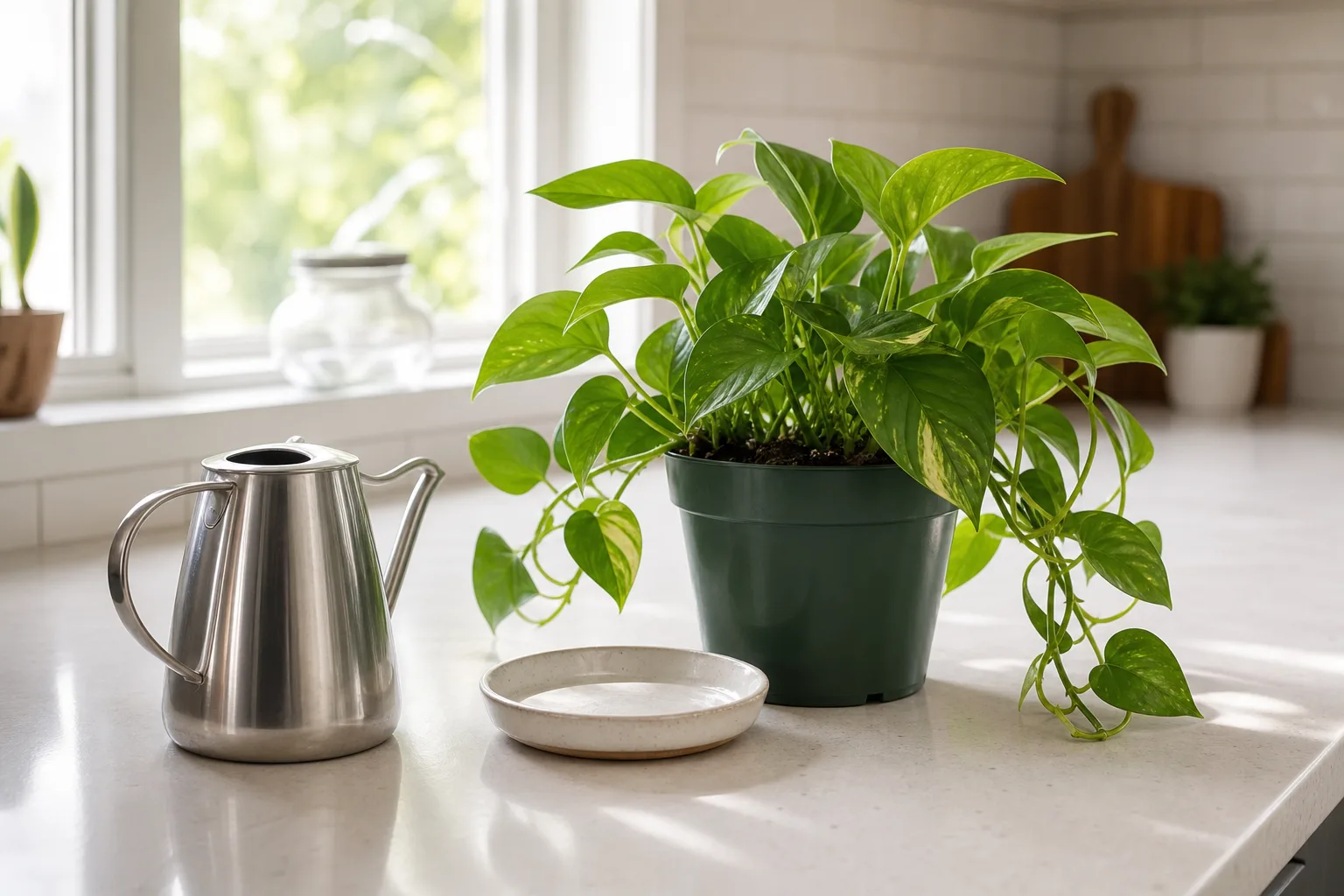
Which houseplants are the least-bad candidates?
There is no reliable universal list of “coffee-loving houseplants.” A plant that tolerates slightly acidic growing conditions does not necessarily benefit from coffee, need extra acidity, or tolerate caffeine and soluble residues. The label “acid-loving” describes a preferred growing environment; it is not permission to replace the plant’s normal irrigation with an unmeasured brew.
Acid tolerance is not the same as a need for coffee
Ferns, African violets, and some other houseplants are commonly described in gardening advice as candidates for diluted coffee. That claim should be treated cautiously. A fern’s preferred moisture and medium depend on the species, while African violets need a carefully managed, airy mix and are sensitive to problems at the crown and roots. Orchids are another poor match for a blanket coffee recommendation because their roots may grow in bark or moss rather than standard potting soil, and their watering needs depend on that medium.
If you are considering a test, check the plant’s actual growing-medium and pH guidance rather than inferring from its common name. If it calls for a specific orchid bark, violet mix, or neutral-to-slightly-acidic potting blend, coffee is not a substitute for that material. If your goal is to change soil pH, use a soil test and a product with directions intended for that purpose. A coffee cup cannot tell you what the root zone currently measures or how much it would take to change it.
For outdoor acid-preferring plants such as blueberries or azaleas, brewed coffee is still not a dependable soil acidifier. The volume of a garden bed, the soil’s buffering capacity, rainfall, and irrigation all matter. WSU’s extension discussion of coffee grounds warns that the pH of decomposing grounds changes and cannot be assumed to make soil acidic. If soil pH is the real problem, test the soil and follow region-specific extension guidance rather than applying coffee by habit.
Skip coffee for sensitive or dry-growing plants
Do not experiment with coffee on seedlings, cuttings that are still forming roots, visibly stressed plants, or plants that need very fast drainage and a dry interval. Succulents and cacti are not sensible candidates: extra liquid at the wrong time can be harmful even when it is plain water, and coffee adds no clear benefit. The same caution applies to plants with a history of root rot, pots without drainage, and plants that have recently received fertilizer salts or other amendments.
Skip it if the plant has a special watering method, such as a sensitive crown, a mounted orchid, or a self-watering reservoir with a wick. Coffee residue could accumulate where the system holds water, and that is not a tested use for the reservoir. If a plant has yellow leaves, brown tips, or slow growth, diagnose light, moisture, drainage, pests, and nutrient history first. A symptom is not proof that the plant needs acidity, nitrogen, or coffee.
What to do with coffee grounds instead
If the reason you are saving a cup is to recycle coffee waste, used grounds are a better-defined material for a compost pile than a houseplant’s watering can. WSU Extension recommends grounds as one part of a diverse compost mix and advises keeping them at no more than 20 percent of the pile by volume. Mix them with other household or garden materials rather than making a solid layer of grounds. The same extension publication cautions that fresh grounds can be phytotoxic in some settings and that thick, compacted layers can interfere with air and water movement.
Texas A&M AgriLife’s “Grounds in the Garden” guidance also discusses coffee grounds as a source of organic matter and nutrients that become available as microbes break them down. That time-dependent process is unlike pouring a liquid into a pot and expecting a measured feeding response. Composted grounds are more practical as part of an outdoor soil-building routine, while a balanced fertilizer labeled for houseplants is the clearer choice when an indoor plant actually needs nutrients.
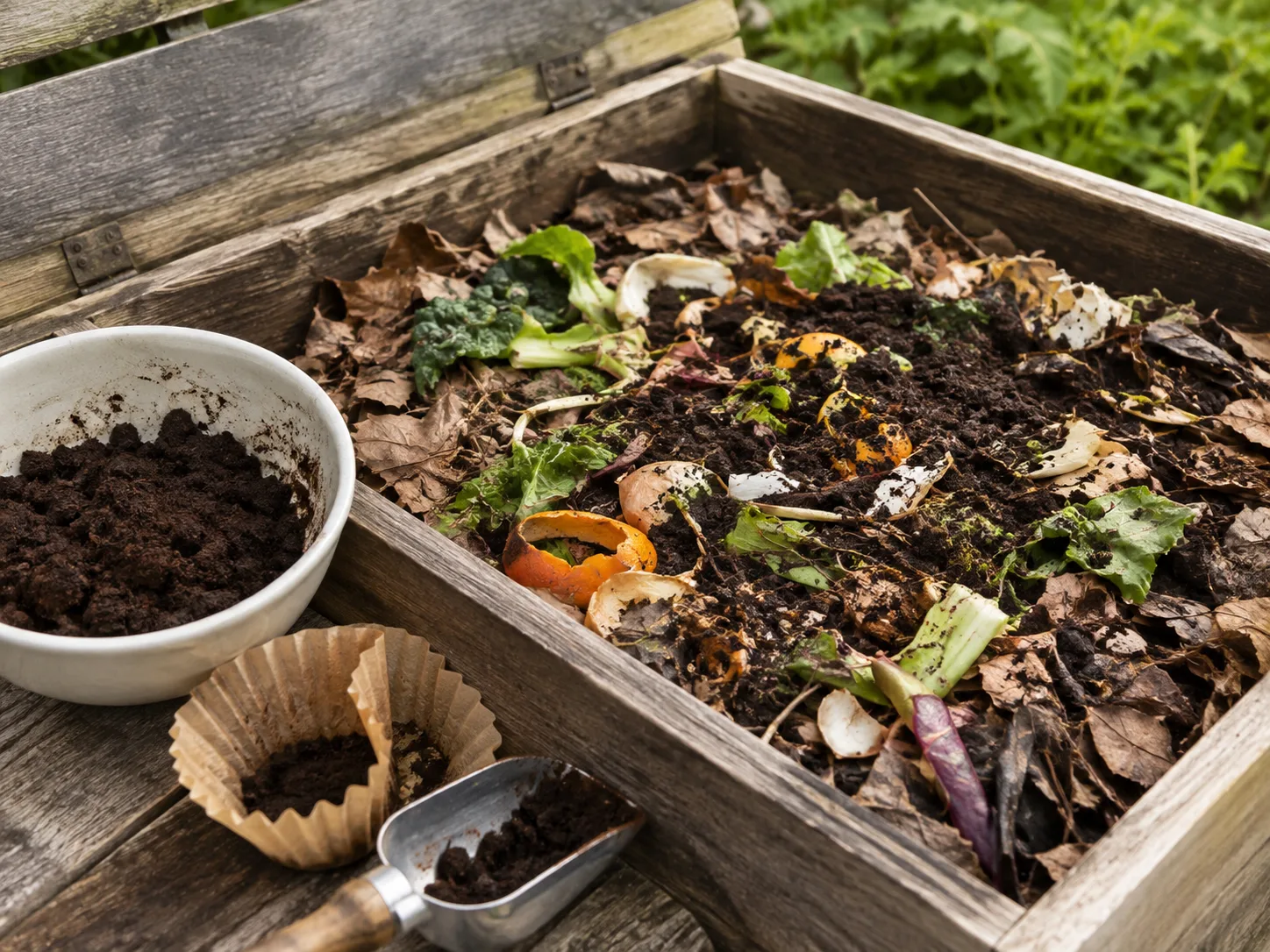
Compost grounds for a lower-risk garden use
Let grounds cool before adding them to compost, then distribute them with dry leaves, shredded paper, or other carbon-rich material. Avoid putting a dense, wet clump into one pocket of the pile. WSU recommends limiting grounds to a portion of the compost rather than letting them dominate; this helps preserve a varied mix for the organisms that process the pile. Finished compost can then be used according to the needs of the garden and the quality of the material.
This is a recycling choice, not a promise that coffee grounds alone will feed a plant or make a garden bed acidic. Texas A&M’s article gives nutrient figures for grounds, but those figures are not an analysis of brewed coffee and are not a guaranteed value for every batch. Treat grounds as one ingredient in a compost system. For a specific outdoor nutrient deficiency, a soil test and an amendment selected for that deficiency are more precise than either grounds or leftover liquid.
Keep dense grounds away from pot surfaces and seeds
Do not dump wet grounds into a houseplant pot or spread them as a thick surface blanket. The fine particles can dry into a compacted crust that water may run across instead of soaking through. Indoors, that layer also stays in a small volume close to stems and roots, where persistent wet organic material can become unpleasant and difficult to remove without disturbing the plant.
Keep fresh grounds away from seed-starting trays and freshly sown beds. WSU notes that experiments have found reduced germination and growth in some species exposed to coffee grounds. If you want to use grounds in the landscape, compost them first or follow a local extension recommendation for the specific site and material. For a houseplant, plain watering and a suitable potting mix remain simpler and more predictable.
If you already watered a plant with coffee
A small amount of plain, cooled coffee used once is usually a reason to observe, not to panic. Empty any liquid left in the saucer, make sure the pot can drain, and return to the plant’s normal moisture routine. Do not immediately flood the container with several rounds of water; if the mix is already wet or drains poorly, that response could create a bigger root problem than the original splash.
If the coffee contained milk, sugar, syrup, or creamer, remove any visible surface residue you can reach without damaging roots. For a modest amount in a pot with open drainage, let the mix drain fully and avoid further additions. If a large volume of sweetened or dairy coffee soaked the pot, the mix smells sour, or a sticky layer remains, remove and replace only the contaminated upper mix when feasible. A severe case with soggy soil and a deteriorating plant may call for inspection of the roots and repotting into fresh, appropriate mix—but do not repot solely because of a teaspoon of plain coffee.
Watch for changes in the plant’s overall condition, but do not diagnose from one yellow leaf or a brown tip. Those symptoms can come from inconsistent watering, dry air, old foliage, light stress, fertilizer salts, pests, or root trouble. If a problem develops, look at the pattern: Is new growth affected? Is the mix staying wet much longer than usual? Are roots firm or mushy? Has the plant recently moved or been fertilized? Use those clues to choose the next step, and stop coffee applications while you investigate.
For outdoor plants, a small pour onto open ground is generally less concentrated than the same volume in a small pot because the liquid disperses through more soil. Still, do not make it a routine. Keep sweetened or dairy drinks out of the garden, avoid pouring coffee near seedlings, and use a compost pile if you want to reuse grounds. If a pet may have consumed coffee or grounds, contact a veterinarian or animal poison-control service; plant-use advice is not a substitute for pet-safety guidance.
Conclusion
You can experiment with leftover coffee, but you do not need to—and plants do not need a weekly coffee treatment. Plain water is the reliable choice for routine houseplant watering. Brewed coffee has no standardized nutrient analysis or proven houseplant dose, and advice about dilution and frequency varies among gardening publications. Acidity alone does not make coffee a useful fertilizer or a dependable way to adjust soil pH.
If you decide to test it, use only cooled, unsweetened black coffee, dilute it generously, choose one healthy established plant, and apply it only when that plant is due for water. Watch the response, then return to plain water. Recycle used grounds in a mixed compost pile instead of treating them as liquid fertilizer or packing them onto potting soil. That approach uses coffee waste where it is better understood and keeps your plant’s watering routine simple.



