7 Ways to Keep Deer Out of Your Yard and Garden
Keep deer out of your yard with a practical plan: fencing, protected beds, repellents, motion deterrents, and deer-resistant plants that still need backup.

Deer rarely need to be “gotten rid of” to stop damaging a yard. The practical goal is to make your beds difficult to enter, less rewarding to browse, or both. A good plan starts with the damage you have, the plants you cannot replace, and how much maintenance you can realistically do.
No method makes a landscape completely deer-proof. Hungry deer may sample plants they usually avoid, especially in late winter, during drought, or when nearby cover has little food. The most dependable approach is layered: use a barrier around the plants that matter most, then add a temporary deterrent while the garden establishes.
Start by Measuring Deer Pressure
Before buying a repellent or hanging objects in the trees, inspect the pattern. Freshly nipped flower buds, ragged stems, hoof prints, and smooth bites on shrubs point to browsing. A browse line—the lower branches that have been stripped to a consistent height—suggests repeated visits rather than one curious animal. Tracks and scat can help, but they are not a substitute for looking at the plant damage.
Classify the problem for the next week:
- Light pressure: an occasional bite, mostly at dawn or dusk, with no crop loss.
- Medium pressure: repeated visits, missing buds, and damage to several beds.
- High pressure: plants eaten to the ground, deer entering daily, or a vegetable crop lost overnight.
Light pressure can justify a motion sprinkler or repellent rotation. Medium pressure usually needs protected beds plus a second layer. High pressure calls for exclusion first. This simple classification prevents a common waste: trying five scent products on deer that are already walking through an open gate every night.
1. Build a Physical Barrier
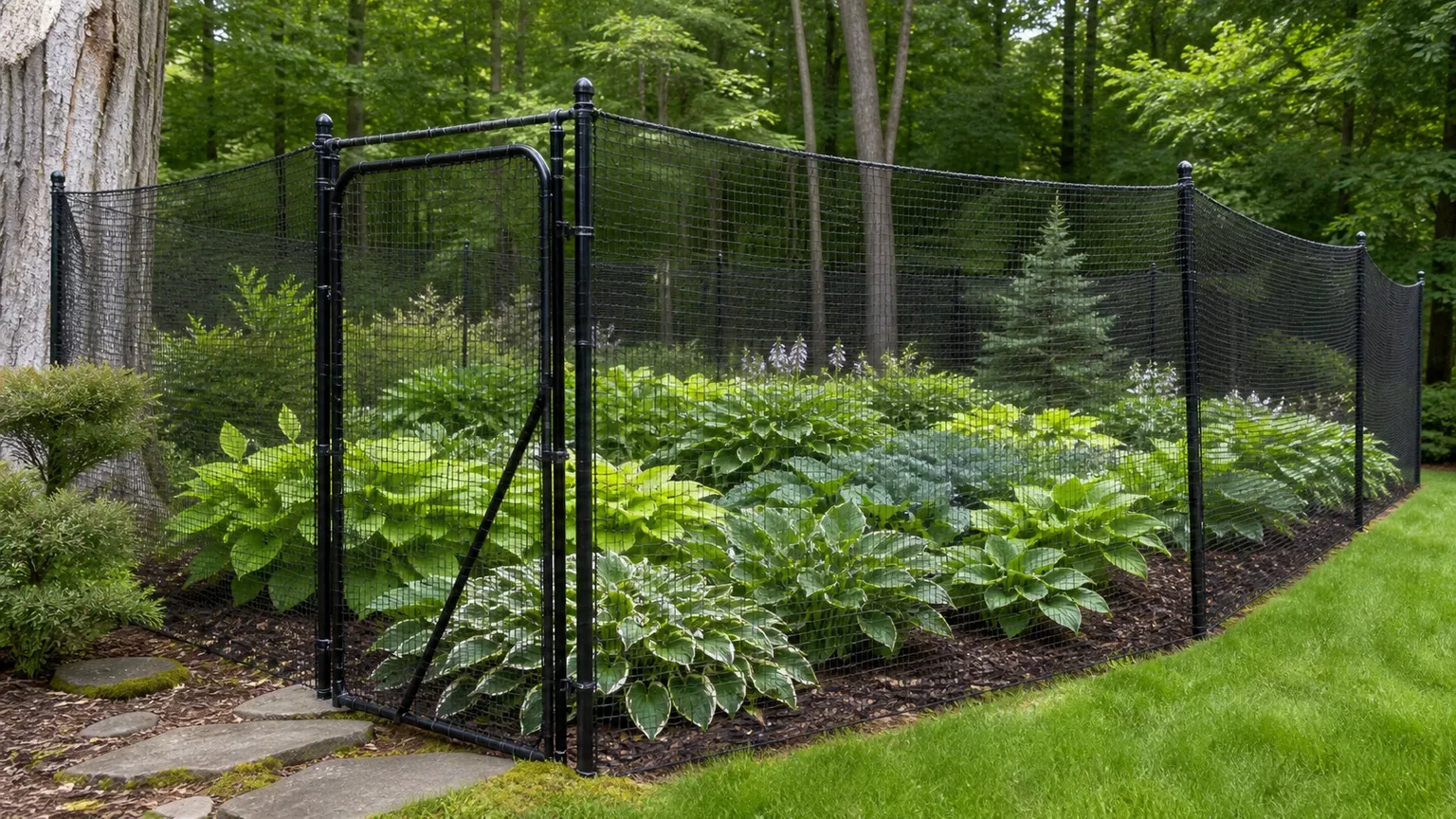
When the question is “What is the most effective way to keep deer out of a yard?”, the answer is a properly designed fence. Penn State Extension’s integrated deer-management guidance consistently treats exclusion as the most reliable long-term option because it does not depend on a deer continuing to fear a smell or sound.
For a full perimeter, an 8-foot fence is the usual planning height for white-tailed deer. Deer can clear lower fences, and a fence that is tall in one section but slopes down near a gate creates a launch point. If an 8-foot perimeter is impractical, enclose only the vegetable garden, young fruit trees, or the ornamental bed with the highest replacement value.
Fence Height, Gaps, and Maintenance
Use welded wire or sturdy mesh attached to sound posts. The bottom should sit close to the ground, with no broad gap that lets deer push underneath. Check corners, gates, and changes in grade first; those are the places a barrier fails before the mesh itself does.
For a small bed, a double-fence arrangement can work even when two shorter fences are easier to build than one very tall one. The visual and physical width between barriers makes jumping less attractive. Keep the inner bed far enough from the outer fence that a deer cannot use the first fence as a step.
An electric fence can be useful around a farm or large garden, but it is not a casual wire strung at random height. Follow local rules and manufacturer directions, mark it clearly, keep vegetation from shorting it, and use a wildlife-management professional if you are unsure about installation. Never use a setup that could trap, injure, or shock people, pets, or non-target wildlife.
Fence success is mostly maintenance. Walk the line after storms, repair bent mesh, keep gates latched, and trim vegetation that gives deer a reason to test the edge. A barrier with one open gate is not a partial success; it is an invitation.
2. Protect High-Value Beds With Covers and Cages
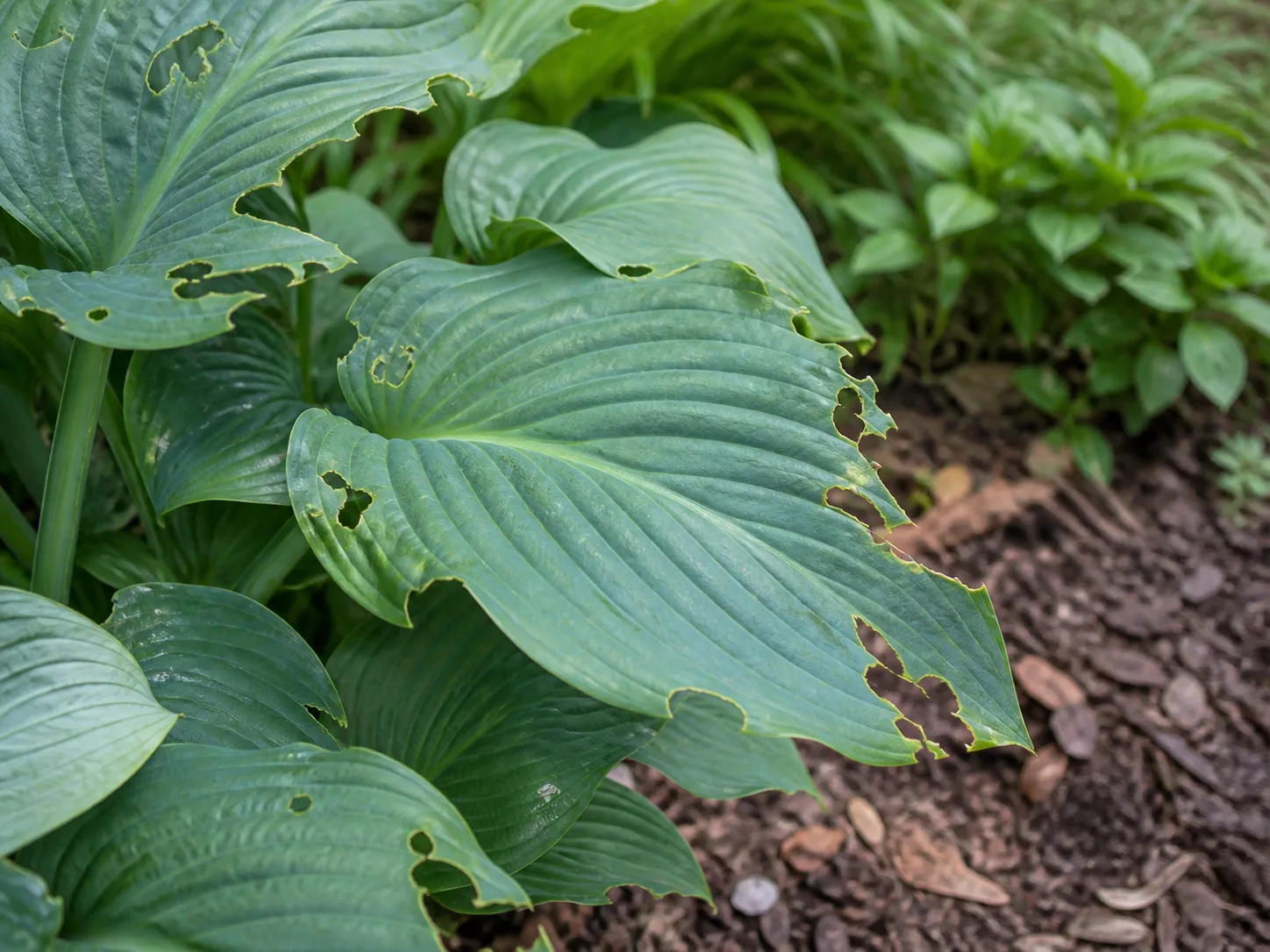
You do not have to fence an entire property to save a garden. Row cover, netting, chicken wire, hardware cloth, and temporary cages can protect tender growth during the short window when it is most attractive.
Use hoops over beans, lettuce, young brassicas, and other low crops, then secure the fabric at the sides with pins, boards, or buried edges. A loose cover that lifts in wind is quickly pushed aside. For shrubs and young trees, build a cage wider than the foliage so deer cannot reach through the mesh and nibble the outside branches.
The important detail is reach distance. A cage that touches the plant protects the center but leaves the outer leaves exposed. Support netting above the growing point, and inspect it often so branches do not grow into the mesh. Remove or adjust covers for pollination, irrigation, and harvest when necessary, then replace them before evening browsing begins.
Use netting with visible, appropriate mesh and keep it taut. Loose netting can entangle wildlife and pets. If a cover is only needed while seedlings establish, mark the removal date on your calendar; temporary protection is most effective when it is not forgotten until the plant has outgrown it.
3. Use Repellents as a Rotating Layer
Commercial deer repellents work by making foliage smell, taste, or feel less rewarding. Formulas may use odor sources, bittering agents, egg solids, garlic, or hot compounds. The U.S. Forest Service comparison of commercial deer repellents is a useful reminder that performance varies by product and conditions. Their value is real but limited: they are a deterrent, not a wall.
Apply a labeled product to the plants and timing stated on the label. Do not assume a product safe for ornamentals is safe for edible crops, and do not spray flowers, vegetables, or herbs with a homemade mixture unless the ingredients and application are appropriate for that use. Keep children, pets, and pollinators in mind, and follow the reentry and harvest directions.
Why Scent Sprays Stop Working
Rain, irrigation, new growth, and hungry animals all reduce the effect. Deer may also habituate to a familiar odor. Rotate products with different active or odor strategies, reapply after heavy rain, and place the repellent where browsing is happening rather than treating an entire property indiscriminately.
Do not rely on hanging bars of soap, human hair, or predator urine as permanent protection. These may change deer behavior briefly, but their effect is inconsistent and fades as deer learn that the smell is not linked to danger. A repellent is most useful while a fence is being built, after transplanting, or during a short flush of vulnerable new growth.
4. Add Motion and Water Deterrents
A motion-activated sprinkler combines surprise, sound, and a physical cue without leaving a chemical residue on plants. Aim the sensor across the approach path, not directly at the most valuable plant, and adjust sensitivity so it does not fire constantly at every bird or passing branch.
These devices work best when the deer is still learning the yard. Move the unit as the animal changes routes, keep batteries charged, and expect reduced performance in freezing weather or when water supply is unreliable. A sprinkler placed behind a fence cannot fix an open gate; it is a layer, not the foundation.
Motion lights and alarms may startle deer, but outdoor animals quickly learn repeated, predictable signals. Ultrasonic devices are also a poor choice as a stand-alone plan because the sound may not change behavior consistently and may affect pets or other wildlife. If you use a device, measure success by fewer fresh bites—not by whether it activates.
5. Move Scare Objects and Noise Often
Flags, reflective tape, pinwheels, kites, predator silhouettes, and an occasional radio can make a bed feel unfamiliar. Their weakness is predictability. A scarecrow that stays in one place becomes scenery.
Move objects every few days, combine visual movement with a different approach route, and remove them when they stop changing behavior. Do not use loud noise as a nightly neighborhood strategy, and do not play predator recordings continuously. Noise can disturb people, pets, nesting birds, and other wildlife while still failing to protect the garden.
This method is most useful for short-term protection: newly planted shrubs, ripening fruit, or the first week after a deer discovers a bed. Pair it with covers or repellent during the learning period.
6. Change the Plant Menu
Replace the most frequently damaged plants at the edge of the yard with plants deer tend to avoid because of strong scent, bitter compounds, prickly or fuzzy leaves, or tough texture. Examples often include lavender, thyme, oregano, sage, boxwood, lamb’s ear, yarrow, daffodils, and Russian sage. Local extension plant lists are a better starting point than a universal “deer-proof” list because deer preferences vary by region and food availability.
Use these plants as a design strategy, not a magical perimeter. Put less-preferred aromatic plants around a bed, but protect the center if deer pressure is high. Rutgers Cooperative Extension’s deer-resistant plant guidance notes that plant preference varies with local deer pressure and available food. A hungry deer may eat a supposedly resistant plant, and a newly planted specimen is more vulnerable than an established, woody one.
Treat toxicity carefully. Some plants deer avoid are poisonous to people or pets, and a plant that is safe for deer is not automatically safe for dogs or children. Check the mature size, moisture needs, and local invasiveness before buying. A plant that survives browsing but fails from drought is not a successful deer solution.
Planting for resistance also means removing obvious favorites from the easiest approach. Keep highly palatable hostas, roses, daylilies, tender fruit, and young trees inside a barrier or close to the house where they are easier to monitor. Garden Design’s deer-resistant plant guide makes the same important caveat: “deer-resistant” means less preferred, not immune.
7. Remove Easy Food and Access Cues
Deer are drawn to a yard that offers a dependable meal and a quiet route. Clean up fallen fruit, keep vegetable scraps out of open compost, and avoid feeding wildlife near garden beds. Bird-feeder seed scattered on the ground can attract more than birds, so use trays and clean spills regularly.
Prune dense vegetation that creates a hidden approach, especially along a fence, driveway, or wooded edge. This will not stop deer by itself, but it can make a motion detector more useful and improve your view of damage. Close gates before dusk, repair low sections of fence, and avoid planting a buffet right beside a gap in the perimeter.
Do not chase or corner deer. A frightened animal can injure people, pets, or itself. Remove attractants and make the garden harder to access instead.
Match the Method to the Damage
Use this quick decision rule:
| What you see | Best first move | Add if needed |
|---|---|---|
| A few bites on one bed | Motion sprinkler or repellent | Move a visual scare device |
| Repeated browsing on flowers | Cage or net the bed | Rotate repellent during bloom |
| Vegetables disappearing overnight | Fence or full bed enclosure | Secure row covers and gates |
| Young tree stripped | Wide trunk cage | Repellent on reachable foliage |
| Daily visits across the yard | Perimeter exclusion | Consult wildlife control |
The goal is to spend effort where it changes access. If deer are eating through a repellent after two applications, stop escalating the same product and install a physical layer.
What to Do After Deer Browse a Plant
First, protect the plant from a second visit. Then inspect the damage before pruning. Iowa State University Extension’s deer-damage guide recommends judging susceptibility and browsing patterns before choosing a response. If only tender tips and flower buds are gone, leave healthy stems in place; the plant may branch again. Remove torn, dangling tissue with clean pruners, but do not shear an entire shrub in an attempt to make the damage look even.
Water during prolonged dry weather, refresh mulch without piling it against stems, and wait for new growth before fertilizing. A stressed plant pushed with excess nitrogen may produce soft growth that is attractive to deer and vulnerable to weather. For young trees, check for stripped bark and girdling; a trunk cage must allow growth while keeping deer mouths away from the bark.
Record the date, plant, damage height, and weather. Patterns make the next intervention more precise. If the same bed is hit after a barrier is installed, inspect the perimeter before blaming the plants.
Common Deer-Control Mistakes
Using one deterrent forever. Deer learn. Rotate placement and combine a deterrent with exclusion.
Building a low fence around a favorite crop. If deer can clear it, the fence may protect nothing. Use height, a double barrier, or a secure cover.
Leaving the gate open “for just one evening.” One successful entry teaches an animal where the food is.
Calling a plant deer-proof. Preferences change with season, region, herd pressure, and drought. Use “less preferred” and keep a backup plan.
Spraying without reading the label. A garden remedy can harm plants, contaminate edible crops, irritate skin, or violate local requirements.
Ignoring the approach route. A protected bed beside an opening, fallen fence, or quiet hedge is still easy to find.
When to Call a Wildlife Professional
Call your local extension office, wildlife agency, or licensed wildlife-control professional when deer are entering daily, damaging trees and structures, creating traffic hazards, or ignoring several properly maintained layers. Ask what methods are legal in your area; relocation, trapping, and lethal control are regulated and should never be improvised.
A professional can distinguish deer damage from rabbits, groundhogs, and other browsers, assess the perimeter, and recommend a humane integrated plan. Bring photos of tracks, browse height, damaged plants, and fence gaps. The more specific the evidence, the less likely you are to spend money on the wrong solution.
Conclusion
The best way to keep deer out of a yard is to stop treating every deterrent as a complete answer. Start with exclusion around the plants that matter most, protect young or edible growth with covers, and use repellents, motion, and moving scare objects as temporary layers. Then change the plant menu and remove easy access cues so the yard becomes less rewarding over time.
If the damage is light, begin with one reversible layer and observe for a week. If the damage is repeated, add a barrier before buying another gadget. If deer are winning every night, protect the garden physically and get local wildlife guidance. That approach is kinder to the animals, easier on your budget, and much more dependable than hoping one smell will keep a hungry deer away.