How to Prune Strawberries: Runners and Old Leaves
Learn how to prune strawberries by cultivar: remove runners, protect the crown, renovate June-bearing beds, and leave productive leaves on everbearing plants.
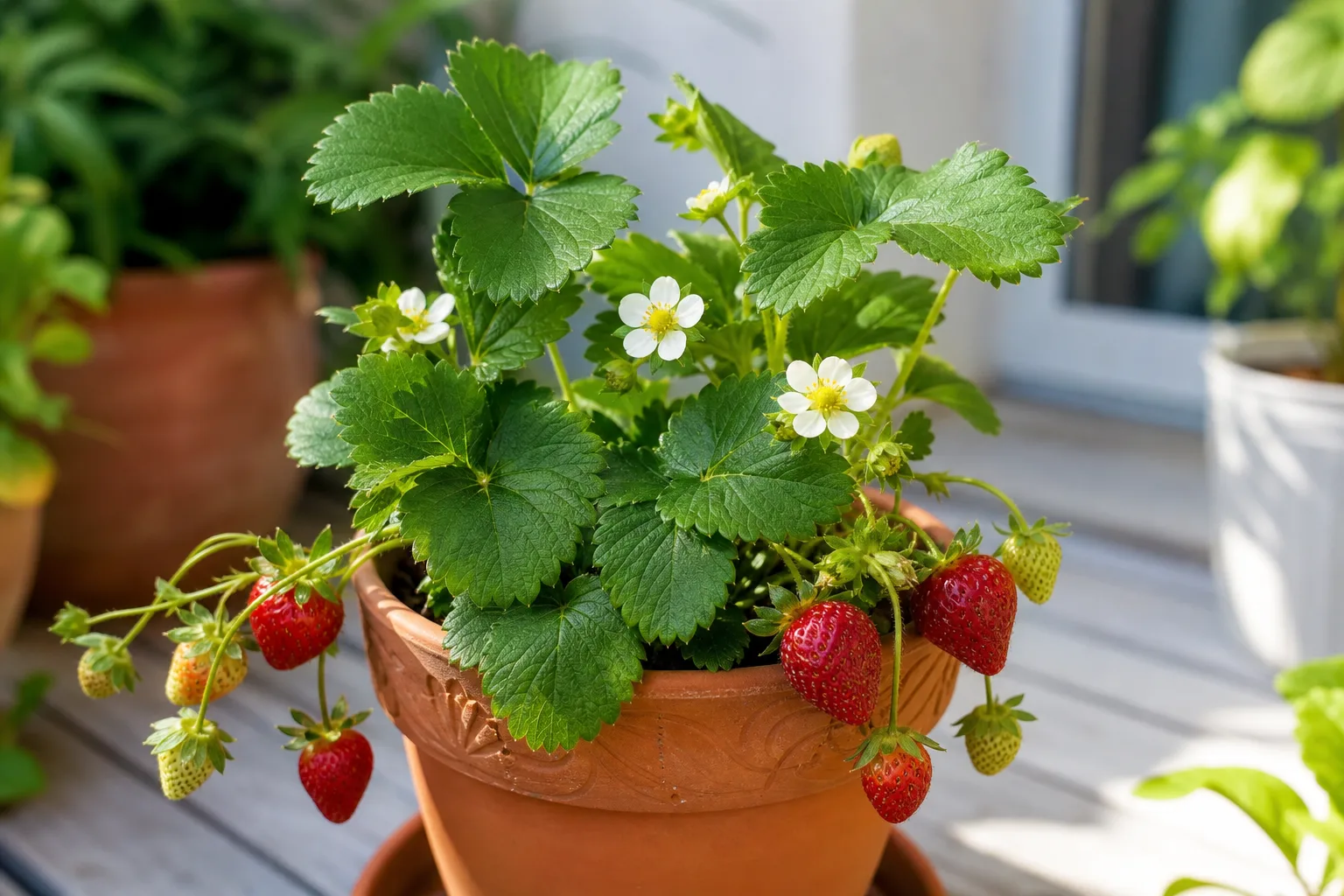
Strawberry pruning is not one operation. It can mean snipping runners, removing a damaged leaf, or cutting back an entire June-bearing bed after harvest. Those cuts have different purposes, different seasons, and very different consequences for the next crop.
The safest rule is to identify the cultivar and the growing system before you pick up the pruners. June-bearing strawberries often benefit from post-harvest renovation; everbearing and day-neutral plants usually need selective cleanup while their green canopy stays in place. The same runner that is unwanted in a container may be exactly what you want in a matted row.
Start With the Cultivar and Growing System
Strawberries are commonly sold as June-bearing, everbearing, or day-neutral, but nursery labels are not always consistent. Check the plant tag, order record, or cultivar name before pruning. “Everbearing” and “day-neutral” are sometimes used interchangeably in retail descriptions even though their flowering responses are not identical, so treat the label as a starting point and observe when the plant flowers and fruits. Utah State University Extension notes that many newer plants sold as everbearers are actually day-neutral types. Utah State University Extension
The growing system matters just as much. A June-bearing plant in a matted row is expected to make daughter plants, while the same type in a hill system is managed as a single productive mother plant. A rule such as “remove every runner” is therefore correct for one bed and counterproductive for another.
June-Bearing Strawberries
June-bearing cultivars form flower buds as days shorten in fall, then bloom and produce one concentrated crop in spring or early summer. After fruiting, the plant has a long stretch in which it can rebuild leaves, crowns, roots, and runners before the next season’s flower buds develop. That post-harvest window is why June-bearing strawberries are the main candidates for renovation.
In a traditional matted-row bed, you do not remove every runner. You allow selected daughter plants to root within the row, then contain the row so it does not become a solid, airless carpet. In a spaced-row or hill system, you remove more runners because the point is to keep a smaller number of vigorous crowns. Penn State Extension lists cultivar differences in runner production as well as disease susceptibility, which is a useful reminder that “June-bearing” does not describe one identical plant. Penn State Extension
Everbearing and Day-Neutral Strawberries
Everbearing strawberries generally make smaller crops in more than one window, often in spring and again in late summer or fall. Day-neutral plants are less dependent on day length and can flower and fruit repeatedly when temperatures are favorable. In cool conditions they may produce across much of the season; in hot weather flowering can slow or stop until temperatures moderate. The University of Wisconsin Extension describes day-neutral production as a longer-season system in which runners are continually removed to protect fruit production. University of Wisconsin Extension
These plants need their leaves while they are still producing. Remove a dead, diseased, or badly damaged leaf, but do not mow a healthy everbearing or day-neutral plant in midsummer just because the bed looks untidy. You may lose the foliage supporting flowers and fruit, and you can expose the crown to heat and water stress at the moment the plant is trying to make another crop.
Know the Crown Before You Cut
The crown is the short, compressed stem at the center of the plant. Leaf stems, flower stalks, runners, and new crowns arise from it; roots originate at its base. It is not a woody trunk, and it is easy to mistake the brown lower leaf bases for dead wood that should be cut away.
Find the crown before making a low cut. Brush aside mulch and soil until you can see where the leaf stems emerge, but do not dig into the root zone. The crown should sit at soil level with its top exposed, not buried and not hanging above dry soil. Strawberry roots are shallow, so aggressive hoeing or a deep mower blade can injure a plant even when the cut leaves look clean. UConn Extension places most strawberry roots in the upper soil layer and warns that renovation cuts must stay above the crown. University of Connecticut Extension
When removing an individual leaf, follow its stem outward from the crown and cut the stem at its base without gouging the center. When removing a runner, follow the thin stem back to the mother plant and snip it before the cut reaches the crown. The objective is a clean separation, not a close shave.
Separate the Three Pruning Jobs
Think of strawberry pruning as three distinct jobs:
- Runner control directs energy and space. A runner is a stolon that travels from the mother plant and can form a rooted daughter plant at a node.
- Selective cleanup removes dead, diseased, or broken tissue that is no longer helping the plant and may shelter disease.
- Renovation resets an established June-bearing bed after its crop by removing much of the old leaf canopy, narrowing the row, thinning plants, and supporting new growth.
The first two jobs can happen during the growing season. Renovation is a scheduled reset and should not be used as a generic synonym for “trim the plant.” This distinction prevents the most common mistake: treating a day-neutral strawberry that is still flowering like a June-bearing plant that has finished its single crop.
Choose the Right Timing by Season
During harvest, preserve healthy leaves, flowers, and fruiting stems. You can remove runners at any time if your system does not need them, and you can remove diseased tissue as soon as you see it. If a small newly planted crown is trying to fruit before it has established, remove early flowers according to the plant type and local growing guidance so the plant can build roots and crowns first.
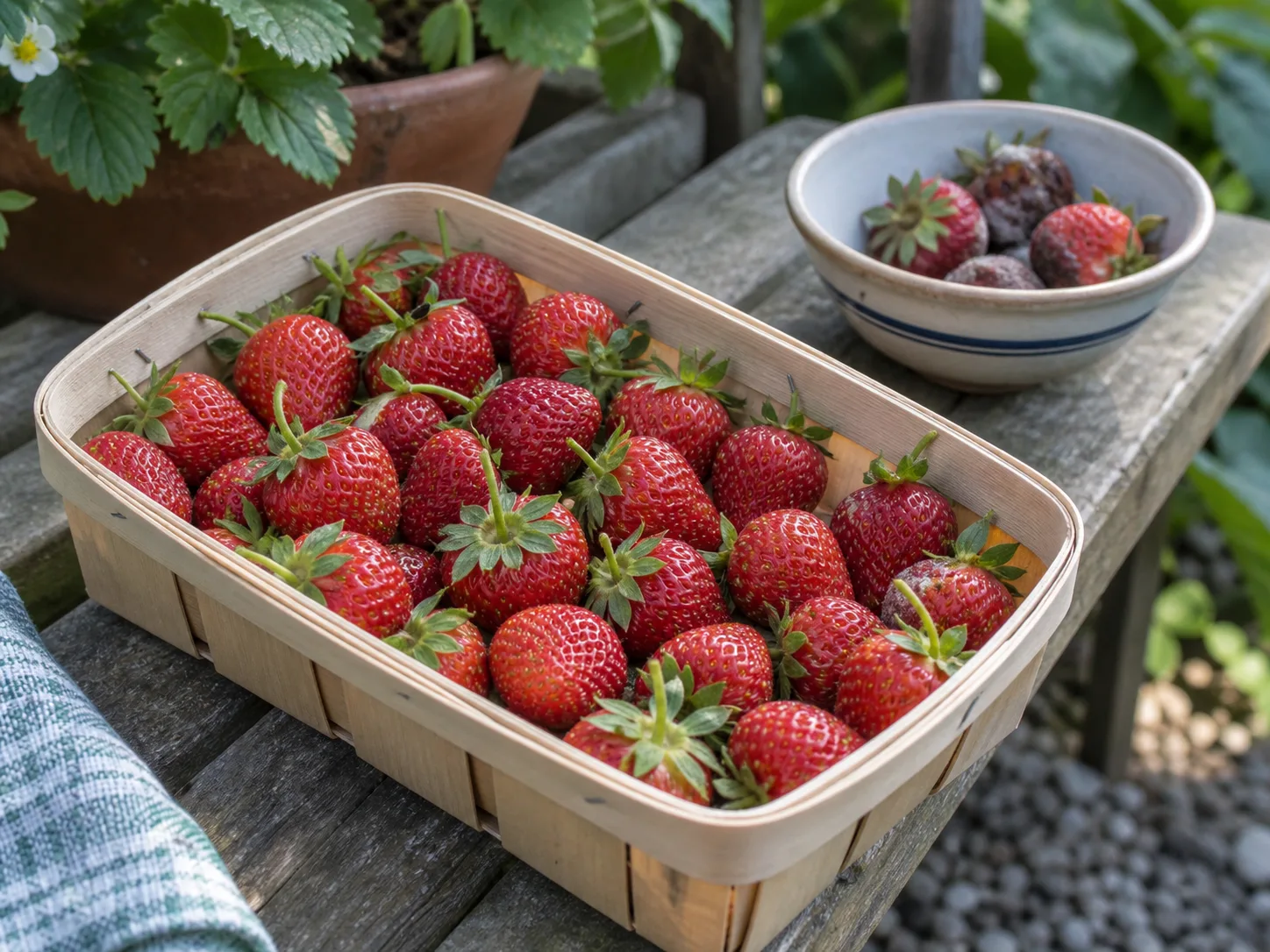
For first-year June-bearing plants, removing flowers through the first growing season is common because it shifts effort toward establishment and runner production. Small everbearing and day-neutral transplants may also benefit from having the first flower cluster or the first several weeks of flowers removed, but do not keep pinching indefinitely. Once the plant is growing strongly, allow flowers to set fruit; the exact cutoff depends on transplant size, planting date, temperature, and the cultivar.
For June-bearing beds, begin renovation soon after the last harvest is complete. UConn Extension recommends cutting back old leaves about eight to ten days after picking finishes and cautions that delaying too long can remove next year’s flower buds. Other extension schedules may say immediately after harvest, so use the harvest-end signal rather than a fixed month. University of Connecticut Extension
In fall and winter, avoid a blanket cleanup that strips green leaves from a perennial crown. Remove only tissue that is clearly dead or diseased, and leave healthy foliage to protect the crown until the plant’s normal dormant-care routine calls for winter mulch or spring cleanup. A late haircut is especially risky when the plant is still forming buds or when cold weather is approaching.
Prepare Tools and the Bed
For a few plants, use sharp bypass snips or hand pruners. A sharp blade makes a small cut that is less likely to tear the leaf stem or runner. For a large June-bearing matted row, a mower or hedge shears may be efficient, but only after you have confirmed the bed is finished fruiting and set the cutting height high enough to clear the crowns.
Before cutting, harvest ripe fruit and remove rotten berries from the bed. Clear loose straw or dense mulch from the crown line so you can see where the plant begins, but leave a clean layer between plants afterward to keep fruit off bare soil. If you have been working around a plant with obvious disease, clean soil and plant residue from the blades before moving to a healthy section. Do not compost suspicious diseased leaves with a cool home pile that may not heat reliably.
Plan where the removed runners will go before you start. A healthy rooted daughter can become a replacement plant; a runner that is already crowded into a walkway or tangled through another crown is usually better discarded than rescued. That small decision keeps “propagation” from becoming a second overcrowding problem.
Remove Runners Without Sacrificing the Mother Plant
Inspect each runner from the mother plant outward. If the runner is unwanted, snip it close to the mother plant without cutting into the crown, then remove the loose stem from the bed. If it has already rooted in a useful position, you can leave it attached until the daughter plant has several healthy leaves and resists a gentle lift; then cut the connecting stem and transplant if needed.
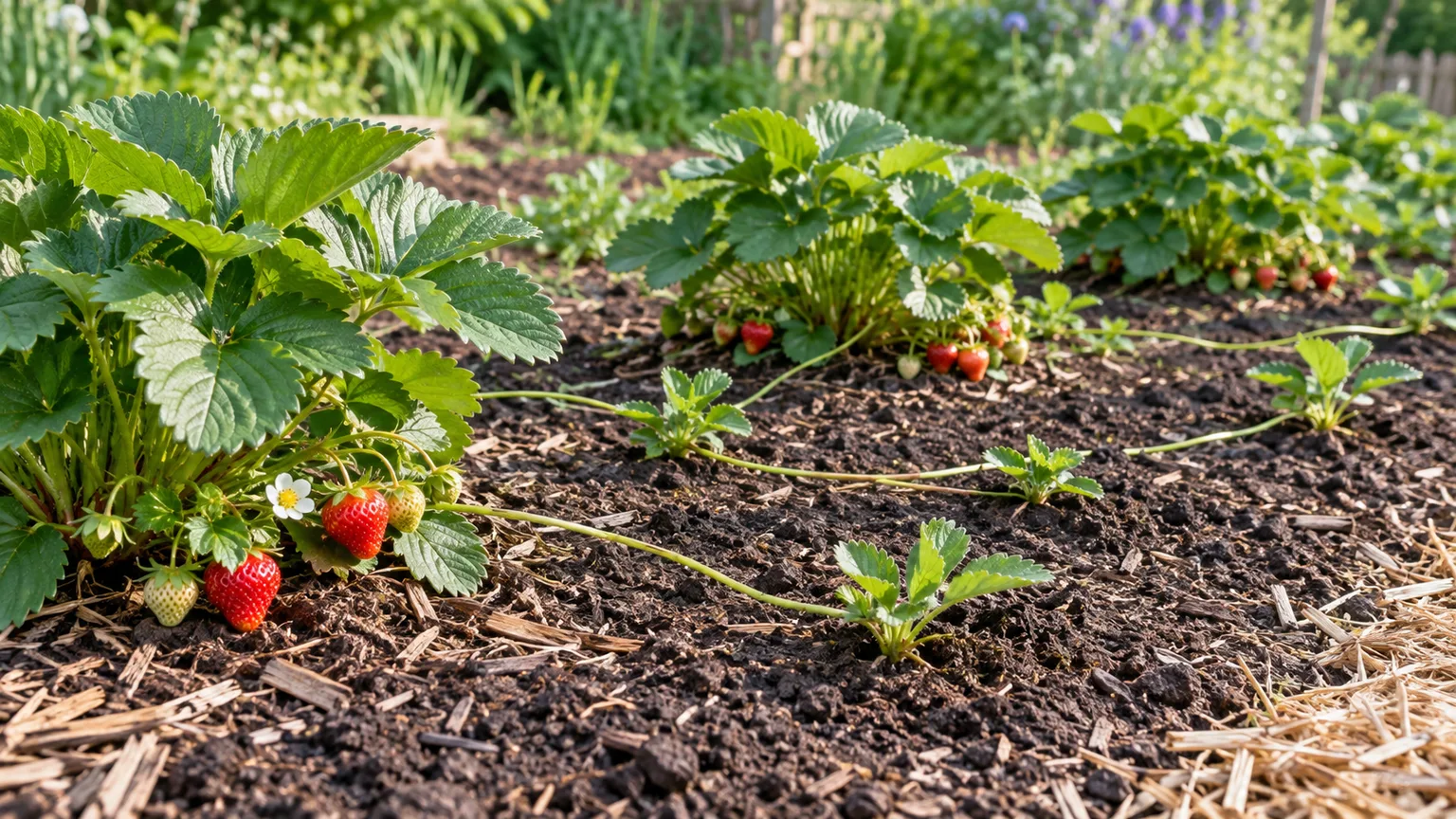
In a matted-row June-bearing system, let a limited number of runners root in the open part of the row. Guide them into gaps rather than allowing every daughter to root wherever it lands. The row should remain narrow enough for light and air to reach the canopy and for you to harvest without stepping on plants. Remove runners that cross into paths, widen the alley, or create a dense center.
In a spaced-matted-row system, select the strongest daughter plants around the mother and remove the rest as they appear. UConn Extension describes selecting the first few runners and removing extras; the precise number depends on spacing, vigor, and the size you want the row to reach. In a hill system, remove all runners so the mother plant can keep producing crowns and flower stalks rather than investing in daughter plants.
For everbearing and day-neutral plants, runner removal is usually more frequent because the goal is sustained fruit production in a compact bed. Check weekly during active growth, especially after rain or feeding, and remove runners while they are short. If you want replacement plants, reserve a separate propagation plant or a few selected runners rather than allowing the whole fruiting bed to root itself into a thicket.
Renovate June-Bearing Beds After Harvest
Renovation is most useful when a June-bearing bed is still vigorous but has become crowded, weedy, or full of old foliage after its main crop. It is not a magic treatment for a patch with widespread crown rot, a virus-like decline, severe root damage, or years of poor vigor. In those cases, start over with clean plants in a new site rather than repeatedly cutting the same exhausted crowns.
Mow or Cut Above the Crown
Once the final berries are picked and the timing window is open, cut the leaf canopy down to roughly 1 to 1½ inches above the top of the crowns, adjusting upward if your mower or bed makes the crown line hard to see. The height is a safety margin, not a target to chase at the expense of the crown. Never set a mower so low that it scrapes soil or catches the central growing point.
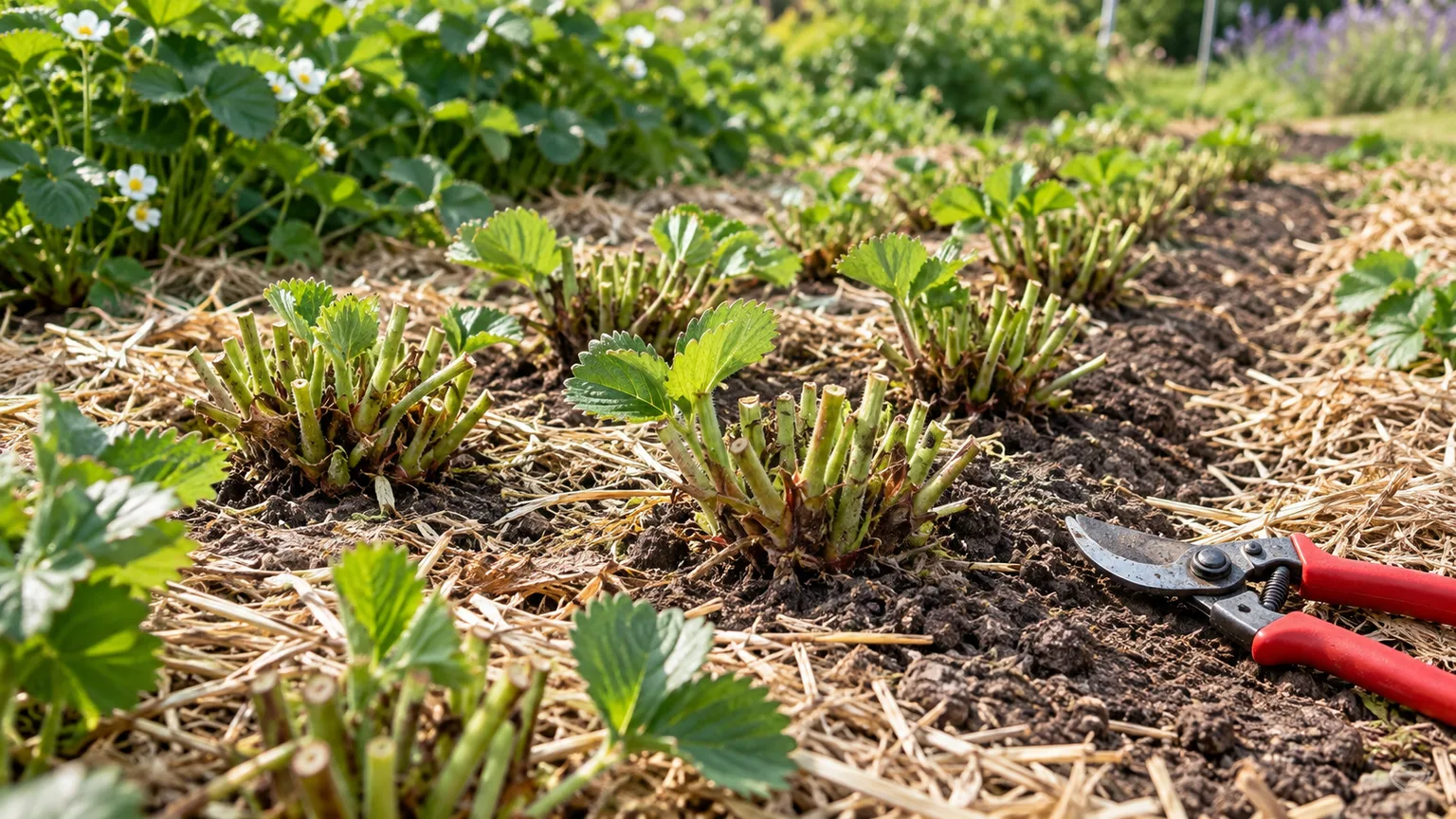
For a small bed, hand clippers or hedge shears give you the control to work around uneven crowns. For a large, level matted row, a mower set high can remove old foliage quickly. Rake the clippings out of the bed, particularly when leaves are spotted or diseased, then inspect the surviving crowns. Epic Gardening likewise emphasizes harsh cutback for June-bearing plants and much lighter cleanup for repeat-fruiting types. Epic Gardening
Thin Rows and Replace Worn-Out Plants
After cutting, remove weeds and thin the planting so the remaining crowns have room for new leaves and runners. Narrow the row with a hoe or careful cultivation rather than tearing through the crown zone. A formal bed may be narrowed to about 10–12 inches; a traditional matted row may be allowed to remain wider when the cultivar, climate, and disease pressure support it. The point is open, harvestable growth—not a universal measurement.
Pull or dig out woody, weak, badly crowded plants and make room for strong daughter plants. Strawberry beds naturally age because crowns become crowded and disease pressure accumulates. BBC Gardeners’ World Magazine gives roughly three to four years as a common productive window, while other extension guidance notes that cultivar, disease, climate, and system change that lifespan. Use declining berry size, weak new growth, and repeated disease as stronger signals than the calendar alone. BBC Gardeners’ World Magazine
Decide How Much Old Foliage to Remove
Healthy green strawberry leaves are working organs. They capture light, support roots and crowns, and help the plant build the energy needed for flowers, fruit, and runners. A leaf that looks old is not automatically useless, and a few brown edges do not justify stripping the plant.
For a June-bearing renovation, remove the old canopy because the plant has finished its concentrated crop and has time to replace that foliage. For everbearing and day-neutral plants, remove only leaves that are dead, diseased, broken, or lying on wet soil. If a repeat-fruiting plant is unusually dense, thin a few outer leaves to open air around flowers rather than removing the entire canopy.
A useful test is to ask what the plant will do next. If it needs green leaves to keep flowering and ripening fruit, preserve them. If it has finished its single spring crop and is entering its rebuilding window, a properly timed renovation can be beneficial. If you cannot identify the cultivar or whether harvest is truly finished, choose selective cleanup and runner control until you can confirm it.
Know When Pruning Is Harmful
Do not perform a full cutback while a June-bearing plant is still ripening berries. The leaves are feeding the current crop, and the remaining flower and fruit stems make the harvest unfinished even if the bed looks tired. Harvest first, then renovate promptly.
Do not mow an everbearing or day-neutral bed in the middle of its production cycle. These plants may have flowers or immature berries hidden under the canopy, and their next harvest depends on keeping enough leaf area. Summer heat and drought make a severe cut even more stressful. Epic Gardening recommends limiting day-neutral cleanup to dead, dying, or diseased tissue rather than removing the whole plant canopy. Epic Gardening
Do not prune drought-stressed plants simply to make them look tidy. Water the root zone deeply if the soil is dry, let the plant recover, and remove only tissue that is unmistakably dead. Likewise, do not make a major cut immediately before a hard freeze, a heat wave, or a stretch of drying wind. The exposed crown and reduced leaf cover leave less margin for recovery.
Finally, do not use pruning to solve a site problem it cannot fix. Waterlogged soil, root rot, virus-weakened plants, poor pollination, frost injury, excess nitrogen, and severe weed competition require different remedies. A neat haircut can hide the symptom for a week without restoring the plant’s ability to fruit.
Use Runners to Build the Next Generation
Runners are clones, not seeds. A daughter plant rooted from a healthy mother will normally carry the mother’s cultivar traits, which makes runners useful for renewing a bed. Choose runners from the strongest, most productive, disease-free plants rather than from the plant with the biggest number of stems.
To root one, place the daughter rosette on the soil surface or in a small pot of moist mix while it remains attached to the mother. Pin the rosette gently so its crown touches the medium, keep it evenly moist, and wait for new growth and root resistance before cutting the connecting stem. Once separated, plant it immediately at the same crown depth and water it until established. BBC Gardeners’ World Magazine describes the same basic pegging method for propagating runners and recommends replacing aging plants with fresh stock. BBC Gardeners’ World Magazine
Do not keep every runner. A crowded bed of weak daughters may produce fewer, smaller berries than a bed with fewer vigorous crowns. In an everbearing or day-neutral hill planting, it is often smarter to buy or start a small replacement group separately and keep the fruiting plants focused on fruit.
Adapt Pruning for Containers and Raised Beds
Containers behave like a hill system even when the cultivar is a vigorous June-bearer. Space is limited, so remove runners unless you are rooting them in a second pot. Letting a runner hang over the rim may look attractive, but it diverts resources and can root wherever the pot touches damp ground. A dedicated pot of moist mix beside the container is a better propagation target.
Raised beds drain well but can dry quickly, and their accessible edges make runner management easier. Keep runners within the bed if you want a small matted row; remove those reaching over the edge into paths. Do not cultivate deeply between crowns in an attempt to make a sharp boundary because the roots occupy the shallow upper soil layer.
In either setting, avoid burying the crown under compost or mulch after pruning. Apply a thin surface layer around—not over—the crown, keep irrigation consistent, and inspect containers more often during hot weather. A pruned plant with a smaller root volume has less reserve if the potting mix dries out.
Give the Plants the Aftercare They Need
Renovation works because the plant is given the conditions to replace what you removed. Water deeply after cutting and whenever the shallow root zone dries, but allow excess water to drain. Drip or soaker irrigation keeps leaves and fruit drier than frequent overhead watering; if you must use a sprinkler, morning is safer than evening so foliage can dry. UConn and USU Extension both describe strawberries as shallow-rooted and emphasize consistent moisture without waterlogging. University of Connecticut Extension Utah State University Extension
Feed according to a soil test and the product label, not by piling on nitrogen. June-bearing beds are commonly fed after renovation to support new leaves and runners, with later feeding timed to local recommendations. Everbearing and day-neutral plants have ongoing nutrient demands because they continue flowering and fruiting, but a pale plant in wet soil may have a root problem rather than a fertilizer shortage. Water fertilizer into the root zone and keep granules off the crown.
Replace or refresh mulch after the bed is clean. Straw or another suitable mulch keeps berries off soil, moderates moisture, and reduces splash onto leaves and fruit. Keep the crown visible, and remove old debris that could harbor pests or disease. The aftercare period is when new daughter plants root and the next flower buds begin developing, so a neglected bed can fail even when the cutting itself was correct.
Troubleshoot a Weak or Unproductive Patch
Start with the pattern, not the pruners. If berries are small across a dense June-bearing row, overcrowding and competition are likely; renovate, narrow the row, and remove weak old plants. If an everbearing plant stopped producing after a hard summer haircut, restore moisture and light and wait for new leaves rather than cutting more.
If flowers appear but fruit is misshapen, look at pollination weather, frost, insects, and canopy conditions. Dense, wet foliage can encourage gray mold and other disease, but opening the plant with selective thinning is only one part of the fix. Remove rotten fruit, improve air movement, avoid wetting the canopy late in the day, and identify a disease before choosing a treatment.
If a plant wilts despite wet soil, do not respond with more water or fertilizer. Inspect the crown and roots, improve drainage, and remove plants with advanced crown or root decline. If the whole patch has lost vigor after several years, replace it in a different bed when possible; renovation can renew a sound planting, but it cannot reverse every soil-borne disease or age-related collapse.
Avoid the Most Common Pruning Mistakes
The first mistake is using the word “prune” without deciding whether you mean runners, damaged leaves, or renovation. The second is trusting a month on the calendar more than the plant’s harvest stage. A June-bearing plant in a warm climate may finish well before a June-bearing plant in a cool one.
Other avoidable errors include cutting into the crown, mowing so low that soil and roots are disturbed, leaving diseased leaves in the row, rooting every runner, and feeding heavily after a stressful cut. Do not assume that more open space always means a better harvest: removing too many crowns from a matted row can reduce the number of fruiting sites, while leaving too many creates competition.
The professional habit is to make the smallest cut that achieves the goal. Remove a runner when space is the problem, one diseased leaf when disease is the problem, and a full old canopy only when a vigorous June-bearing bed has finished fruiting and is ready for renovation. That restraint protects the plant’s next decision—new roots, new crowns, new flowers, or new fruit.
Conclusion
To prune strawberries well, match the cut to the plant’s fruiting biology. Remove unwanted runners throughout active growth, preserve healthy leaves on plants that are still flowering, and reserve full renovation for a vigorous June-bearing bed just after its harvest ends. Everbearing and day-neutral plants usually need light, repeated maintenance rather than a midsummer mow.
Find the crown before cutting, keep tools sharp and clean, guide only the runners you actually need, and follow pruning with water, appropriate feeding, weed control, and sensible replacement. Once you see runners as both competitors and the next generation of plants, strawberry pruning becomes a series of small, deliberate decisions instead of a risky haircut.