When to Plant Cucumbers for the Best Harvest
When to plant cucumbers depends on frost, soil temperature, variety, and setup. Use this guide to time sowing, transplanting, and harvest.
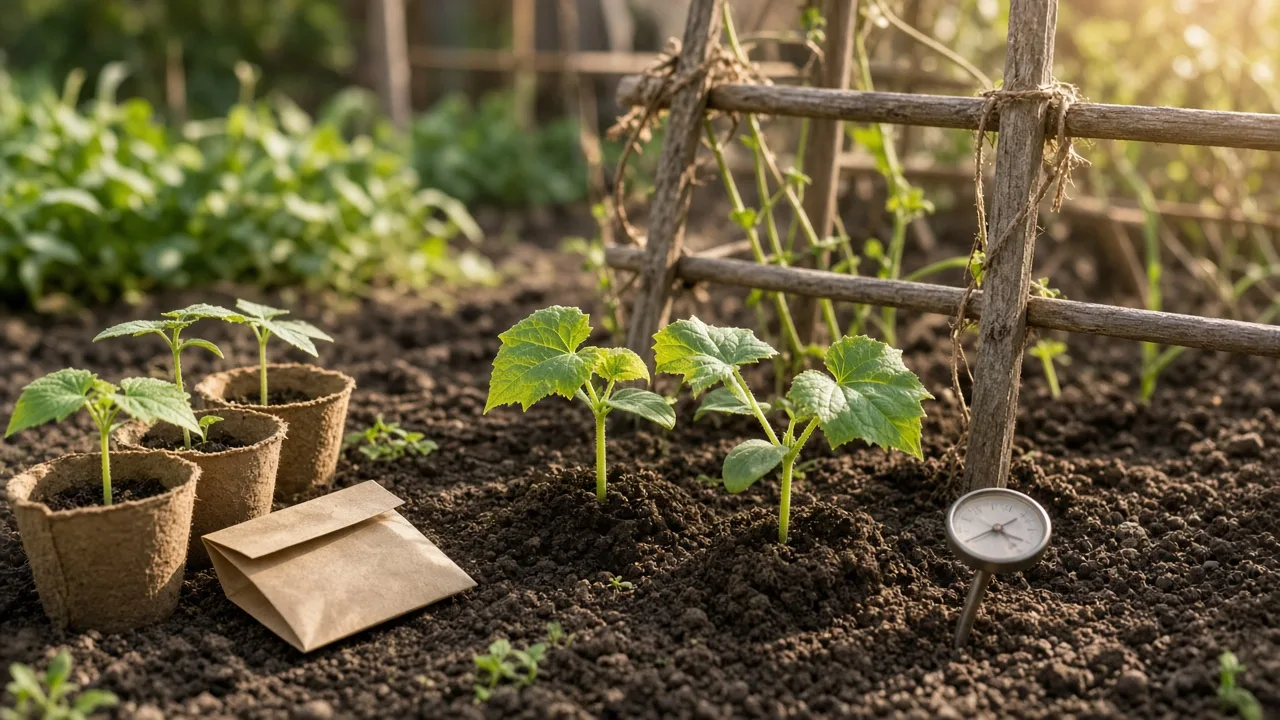
If you want one practical answer, plant cucumbers after the last spring frost, when the soil is at least 60–65°F. For direct-sown seeds, waiting until the bed is closer to 65–70°F usually gives faster, more even emergence. The calendar date might be April in one garden and June in another; the plant responds to warmth, not the name of the month.
The safest planting decision uses two checks together: the forecast must be past freeze risk, and the soil at seed depth must be warm enough for a warm-season crop. Starting seeds indoors can move the first harvest earlier, but cucumber seedlings dislike root disturbance and should not be raised so far ahead that they become tangled, root-bound, or difficult to harden off.
This guide turns those rules into a planting plan for in-ground beds, raised beds, containers, and protected growing spaces. It also explains how variety, short seasons, succession sowing, watering, support, pollination, and harvest timing change the answer.
The Short Answer: Wait for Warm Soil and No Frost
Cucumbers are frost-sensitive annual vines. Set them outdoors only when the risk of a damaging freeze has passed and the soil has warmed consistently. The Royal Horticultural Society describes outdoor cucumbers as tender plants that should be sown or planted after conditions warm, while practical growing guidance from Farmers’ Almanac places the minimum soil target at 60–65°F after frost danger has passed. Farmers’ Almanac and the Royal Horticultural Society both support using warmth as the trigger rather than a universal date.
For most home gardens, use this simple go/no-go test:
- Your local last-frost date has passed, or you have a reliable protection plan for a brief cool night.
- The soil at the depth where the seed or root ball will sit is at least 60°F, with 65–70°F preferable for direct sowing.
- The next week has warm days and nights, not a forecast of cold rain followed by several chilly nights.
- The bed drains well and is ready to water evenly.
If only the first condition is true, wait. A warm afternoon can make the air feel like planting weather while the bed remains cold and wet below the surface. A few extra days of patience often save a week of staring at seed that has not emerged.
Use Two Clocks: Frost Date and Soil Temperature
The last-frost date is an air-temperature planning tool. It helps you avoid exposing leaves and stems to a freeze, but it does not tell you whether a raised bed, dark container, heavy clay bed, or shaded plot is warm enough for cucumber roots. The University of Maryland Extension’s Maryland Grows explains that soil can lag behind warming air and that different growing spaces can show noticeably different readings, which is why a soil thermometer is more useful than a calendar alone. Read the University of Maryland Extension soil-temperature explanation.
To check your own planting site, move aside mulch and insert a soil thermometer into the upper couple of inches of the bed, roughly where a seed will be placed. Take readings in two or three spots rather than trusting one warm edge beside a wall. Check at the same general time of day for several days so one burst of afternoon sun does not make the soil seem ready when the overnight temperature sends it backward.
The target is not a magic switch. 60°F is a practical minimum; 65°F is a more forgiving direct-sowing target; 70°F gives especially quick germination for a heat-loving cucumber. Epic Gardening advises waiting until soil is above 60°F and notes that 70°F or warmer is better for direct sowing. Treat these as working thresholds, not a promise that every seed will emerge on the same day. Epic Gardening’s cucumber growing tips also explain why direct sowing is gentle on cucumber roots.
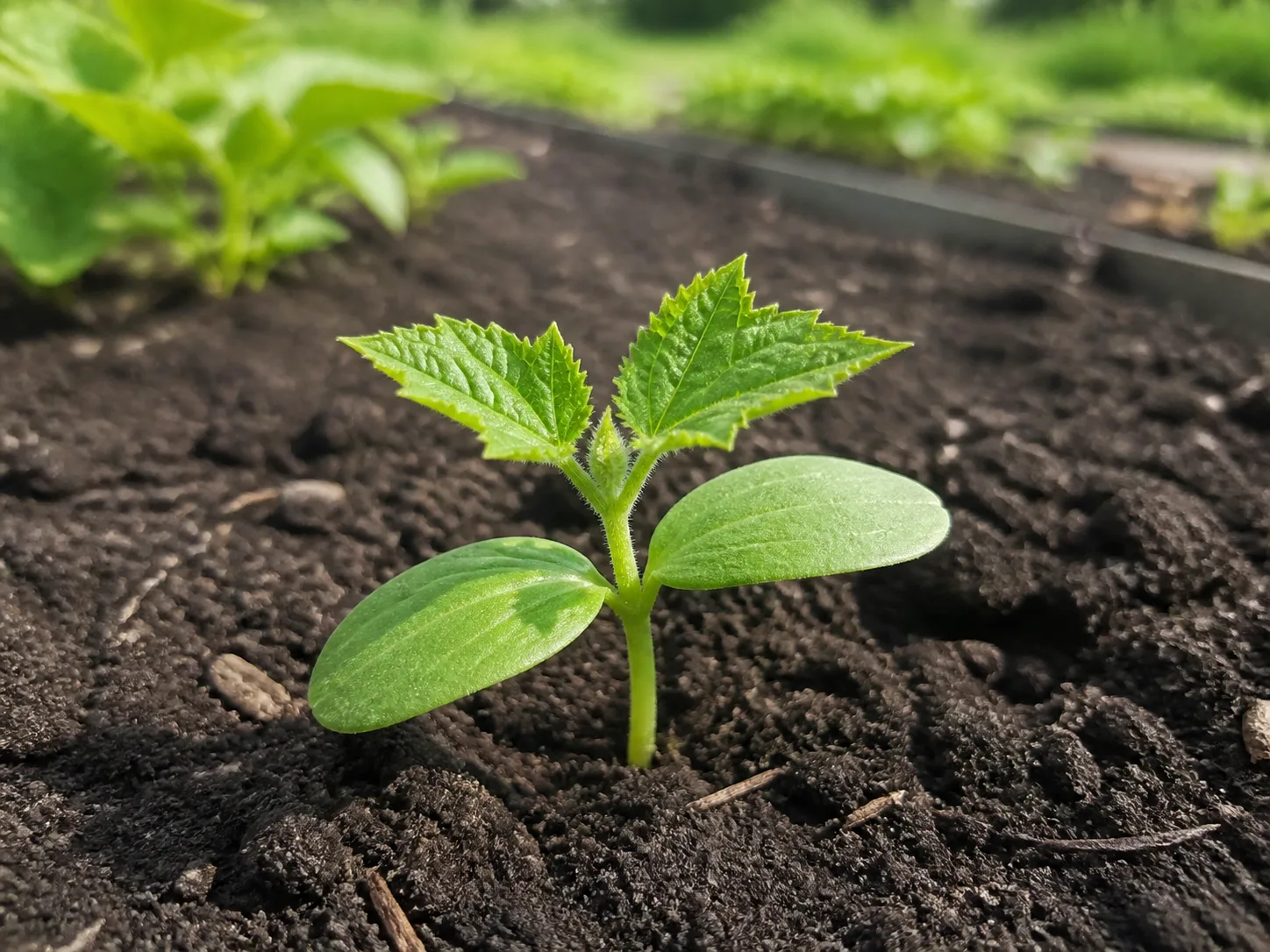
Cold soil creates several problems at once. Germination slows, seedlings can sit in damp mix long enough to rot, and roots may not grow quickly enough to support the first leaves. A transplant can survive a cool spell and still lose valuable time because its roots stop expanding while the gardener waits for real warmth.
Do not use a thick layer of mulch to hide a cold bed. Mulch is excellent once the soil is warm and the plants are established, but applying it heavily too early can slow the warming you need. Keep the surface open for the first warm-up, then add clean straw, shredded leaves, or compost around—not against—the stem after seedlings are growing.
Choose the Planting Method for Your Climate
The choice between direct sowing and transplanting is really a choice between root comfort and calendar control. Direct sowing gives the cucumber an undisturbed root system, while an indoor start gives a short-season gardener a few weeks of protected growth before outdoor conditions are safe.
Direct Sow: Best for Warm, Stable Weather
Direct sowing is usually the simplest and most reliable method once the ground is warm. Plant seeds about 1 inch deep, or follow the depth on your packet, and keep the seed zone evenly moist until emergence. If you sow more than one seed at a spot to insure against failure, thin the extras while they are small rather than letting several plants compete for water and light.
Direct sow when you have enough growing season left for the variety’s days-to-maturity estimate plus a weather buffer. This method is especially useful in warm climates, in a raised bed that has already warmed, and for gardeners who do not want to disturb cucumber roots. It is also a good fit for bush types grown in their final container.
The tradeoff is that a late cold snap, crusted soil, slug pressure, or a week of heavy rain can erase the head start you expected. If the season is short, use protection such as a temporary cloche or floating row cover, but make sure the cover is secured against wind and removed or opened as flowers need pollinating.
Indoor Starts: A Head Start With a Deadline
Start cucumber seeds indoors about three to four weeks before the local last frost if your season is short or spring warmth arrives late. Use individual biodegradable pots or soil blocks when possible, because cucumbers have roots that resent being pulled apart. Sow one seed per container, keep the mix warm and evenly moist, and give seedlings strong light as soon as they emerge.
The deadline matters more than the start date. Transplant when the plant is compact, actively growing, and holding its potting mix together, with a few true leaves rather than a long, tangled vine. The University of Georgia Cooperative Extension recommends well-developed roots and mature leaves when using cucurbit transplants; the same logic applies here: a sturdy young plant is easier to establish than an oversized seedling. UGA Cooperative Extension’s home-garden squash guidance provides the broader cucurbit benchmark for soil, transplant condition, moisture, and pollination.
Harden seedlings for about a week before planting them outside. Begin in bright shade protected from wind, then increase the amount of morning sun and outdoor exposure each day. Do not move a tender indoor plant straight from a warm windowsill into bright, windy conditions just because the calendar says the frost date has passed.
Match Timing to Variety and Growing Setup
The words on a seed packet can change your planting plan. A compact bush cucumber may finish sooner and suit a patio pot, while a long-vining slicer may need a sturdy support and more days of warm growth. A pickling variety is generally harvested smaller; a slicing variety may need more time to reach its intended size.
Bush, Vining, Pickling, and Slicing Types
Choose a bush cucumber when space is limited or when you want the plant to stay compact in a container or small raised bed. Bush does not mean maintenance-free: the plant still needs sun, water, fertile mix, and enough room for air movement. Because compact varieties can finish earlier, they are useful when your frost-free season is short or when you want a second planting.
Choose a vining cucumber when you can install a trellis, A-frame, or other support. Vines can produce over a longer window, and growing upward keeps fruit cleaner and makes daily scouting and picking easier. The Royal Horticultural Society recommends choosing varieties for the growing site, with outdoor types for sunny, sheltered locations and greenhouse types for protected spaces. Its cucumber guide also lists variety differences in fruit size, disease resistance, and cropping season.
For harvest planning, read the packet’s days to maturity as an estimate, not a countdown that starts the moment you buy seed. Weather, variety, transplanting, shade, water stress, and pollination all affect the first pick. Add a week or two of buffer when you are deciding whether a late planting has enough time.
Greenhouse, Raised Bed, Container, and Ground
A greenhouse or high tunnel may let you sow earlier, but only if the growing space stays warm overnight and the variety suits protected growing. A sunny greenhouse can become too hot later, so early planting is not a substitute for ventilation, steady moisture, and shade management during heat waves.
Raised beds often warm earlier than heavy in-ground soil, but they can also dry quickly and lose heat on a cold night. Containers heat up quickly in sunlight and are easy to move under cover, yet their smaller volume swings from warm to cold and from moist to dry faster than a garden bed. Check the actual soil or potting mix in the place where the cucumber will grow rather than borrowing a temperature reading from a different part of the yard.
The growing setup also determines your support plan. Put a trellis in place before or at planting time so you do not push stakes through expanding roots later. If you are growing along the ground, leave enough room for vines and use a clean surface or mulch to keep developing fruit off wet soil.
Build a Reliable Cucumber Planting Window
Use relative timing instead of copying a month from a different climate. This table is a starting framework; your soil reading, forecast, variety, and first fall-frost date make the final call.
| Garden situation | Spring planting rule | Best strategy |
|---|---|---|
| Cool, short season | Wait until after frost and 65–70°F soil | Start a short-season variety indoors 3–4 weeks early, then harden off carefully |
| Moderate season | Plant after frost when soil reaches 60–65°F | Direct sow if warmth is stable; transplant for an earlier first pick |
| Mild, long season | Plant as soon as frost risk is low and soil is warm | Sow in rounds 2–3 weeks apart while weather remains favorable |
| Hot summer or mild winter | Use the spring or fall window, not peak heat | Work backward from the first fall frost and protect young plants from extreme heat |
The most useful late-season rule is to count backward. Start with the expected first fall frost, subtract the packet’s days to maturity, then subtract another 10–14 days for cool nights, transplant recovery, or a slower-than-average season. If the result lands in a period of extreme heat or cold, choose a faster variety or wait for the next suitable window rather than forcing the crop.
Northern Short-Season Gardens
Northern gardeners often face the hardest timing balance: plant too early and cucumbers sulk in cold soil, but wait too long and the first frost arrives before the vines have finished. Use indoor starts to protect the first few weeks, select a variety with a short days-to-maturity estimate, and prepare the bed before the weather turns warm so planting can happen as soon as conditions line up.
A temporary row cover can protect a young planting from wind and a light chill, but it does not make a freeze harmless. Anchor it so it does not abrade leaves, check the temperature underneath on sunny days, and remove it when flowers open if the variety needs insect pollination. In a very short season, a warm raised bed or dark container can improve the odds, but the thermometer still gets the final vote.
Mild Spring and Long-Season Gardens
In a moderate or long season, direct sowing often beats a complicated indoor-start routine. Once soil is warm and the forecast is settled, plant the first round, then sow another round two to three weeks later if you have room and the weather remains favorable. Succession sowing spreads risk: one planting may be slowed by cold, pests, or disease while the next catches up.
Do not keep adding cucumber plants simply because the season is long. Dense vines compete for water and air, and a succession crop planted into exhausted or disease-prone soil may perform worse than the first crop. Move the next planting to a different part of the bed when possible, remove declining plants promptly, and keep the support structure open enough to scout.
Hot-Summer and Fall Gardens
In a hot climate, the question is often not whether the soil is warm enough but whether the air is too hot for comfortable flowering and fruit set. Plant the spring crop early enough to mature before the worst heat, or time a fall crop so it reaches flowering and harvest during a more moderate stretch. A midsummer planting can fail even when the seed germinates if heat, drought, and pests arrive together.
For a fall crop, count backward from the first expected frost and add a buffer for shortening days. Young plants need consistent water while they establish, but mature vines may slow as nights cool. Choose a quick variety, start seeds in a protected spot if that gives you better control, and transplant only when the new bed is ready and the plants are still compact.
How to Plant Cucumbers Step by Step
- Choose the sunniest practical site. Aim for at least six hours of direct sun, with more light helpful for vigorous vines and fruit production. A sheltered position protects young plants from drying wind without trapping humid air around the leaves.
- Prepare fertile, well-drained soil. Cucumbers need moisture, but their roots should not sit in water. UGA Extension describes a slightly acidic cucurbit soil range around pH 5.8–6.8 and recommends organic matter for soil structure; a soil test is more useful than guessing with lime or fertilizer. In a new bed, its guidance allows 4–5 inches of organic matter incorporated 8–10 inches deep, while an established bed usually needs a more modest compost refresh. See the UGA soil and culture guidance.
- Sow or transplant at the right depth. Direct sow seeds about 1 inch deep, or use the packet’s depth. Set transplants at the same depth they grew in their container, keeping the stem base at soil level and handling the root ball gently.
- Give vines enough room. For trellised vining cucumbers, spacing around 12–18 inches can work when the variety and support allow it. Sprawling plants need much more ground space, while bush types should follow the packet’s container or bed spacing.
- Install support immediately. Use a sturdy trellis, net, or A-frame that can carry wet foliage and fruit. Guide young tendrils gently; do not wait until a tangled vine is lying across neighboring crops.
- Water the seed zone thoroughly. Keep the surface evenly moist through germination, then shift toward deeper watering at the root zone as the plant grows. A light mulch layer after the soil warms helps slow evaporation and reduces weed competition.
The bed should be ready before the seed goes in. If you are still moving compost, searching for a trellis, or deciding where irrigation will run, you are likely to disturb the seed or transplant during its most vulnerable week. Prepare first, plant second, and label the variety and date so the days-to-maturity estimate becomes useful.
Protect the First Two Weeks
The first two weeks are when a correct planting date can still be undone by uneven care. Check moisture with your finger near—but not directly on—the stem, and water when the upper layer begins to dry. Newly seeded soil should not be allowed to crust, while a saturated bed needs drainage and air rather than another watering.
If nights turn unexpectedly cool, use a row cover, cloche, or overturned container only if it provides ventilation and cannot crush the leaves. Remove protection in the morning when the sun heats the cover, and do not leave flowers sealed away from pollinators. Cold protection buys a little flexibility; it does not turn cucumbers into a cold-season crop.
Avoid a heavy nitrogen feeding just because the plant looks small. A strong root system, warm soil, full sun, and steady water matter more at establishment than forcing soft leaf growth. Once the plant is growing, use a soil test or a labeled vegetable fertilizer rate instead of piling on manure or fertilizer that can produce a leafy vine with disappointing fruit set.
Plan for Pollination, Water, and a Trellis
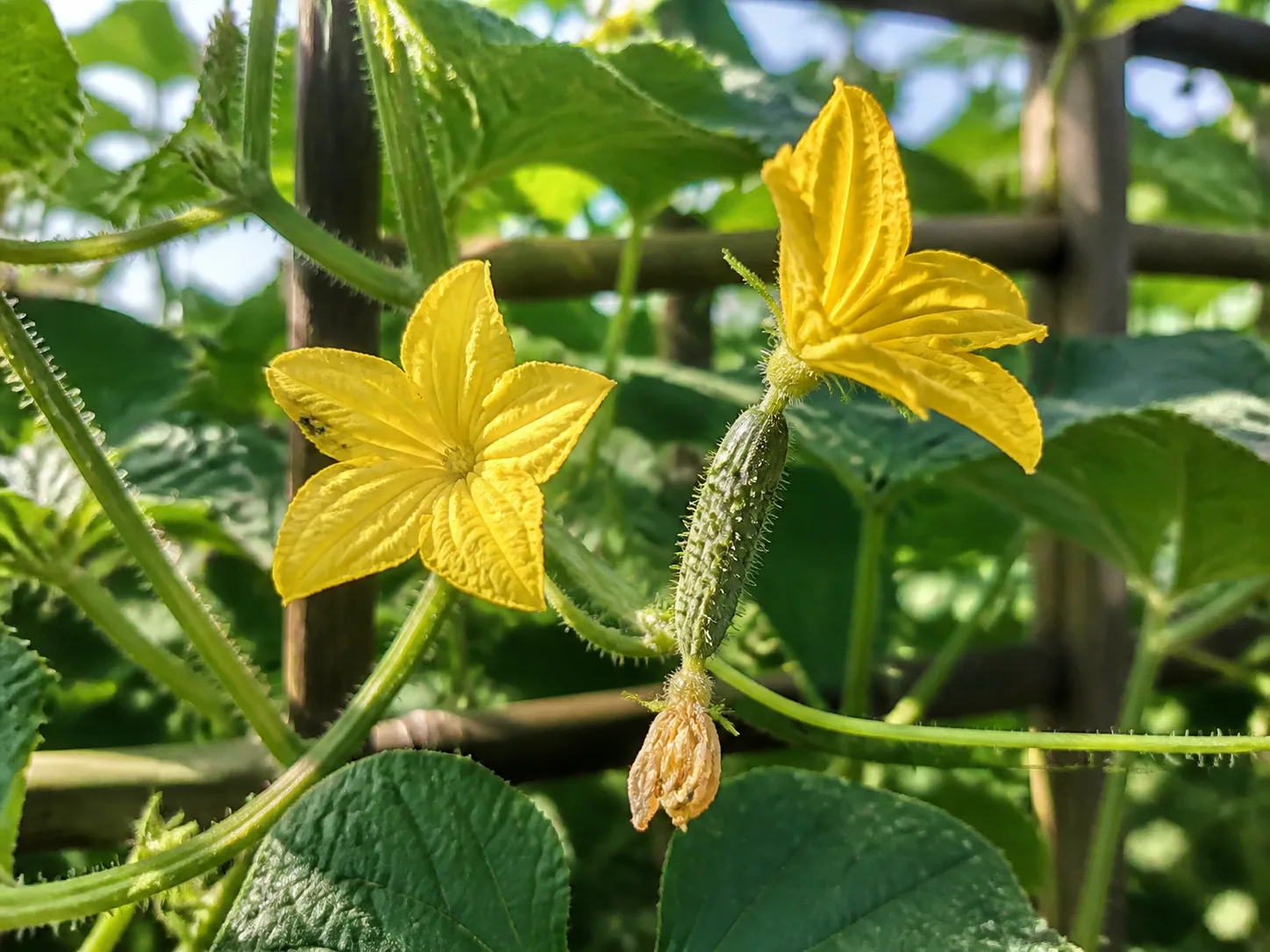
Timing determines when flowers appear, but the harvest depends on what happens after flowering. Outdoor cucumber varieties commonly produce male and female flowers, and bees or other insects move pollen between them. A female flower has a tiny cucumber-shaped swelling behind the blossom; if it shrivels instead of enlarging, poor pollination may be part of the problem. Give flowering plants access to pollinators, avoid spraying when bees are active, and hand-pollinate only when needed.
Some greenhouse or modern hybrid varieties are parthenocarpic and set fruit without pollination, so read the seed packet before assuming every flower needs a bee. The Royal Horticultural Society notes that some protected varieties are mainly female-flowered and should not be pollinated, while outdoor types generally need pollination. That distinction matters if you move a greenhouse variety outside or let pollinators into a protected structure.
Water consistently as fruit begins to form. A broad starting range is about 1–2 inches per week from rain and irrigation combined, adjusted upward in hot, windy weather and downward when soil stays wet. UGA Extension gives established cucurbits a general 1–1½-inch irrigation benchmark, while Farmers’ Almanac and Epic Gardening use a 1–2-inch range; the useful takeaway is steady root-zone moisture rather than a rigid weekly number.
Water at the base in the morning when possible, use drip or a soaker hose, and keep leaves as dry as practical. Mulch reduces evaporation and splashing, and vertical training improves airflow and makes it easier to find cucumber beetles, wilted leaves, or fruit hidden beneath the canopy. Secure the vine before the fruit becomes heavy; a trellis that bends or tips over can damage roots and stems at the worst moment.
Harvest Timing That Rewards Your Plant
Most cucumbers begin producing in roughly 50–70 days, depending on variety, temperature, and whether you are counting from seed or transplant. Use the packet as a reminder to start checking, not as permission to leave fruit untouched until one exact date. Epic Gardening and Farmers’ Almanac both place common cucumber harvests within that general range, while the RHS harvest guidance emphasizes checking fruit size and color.
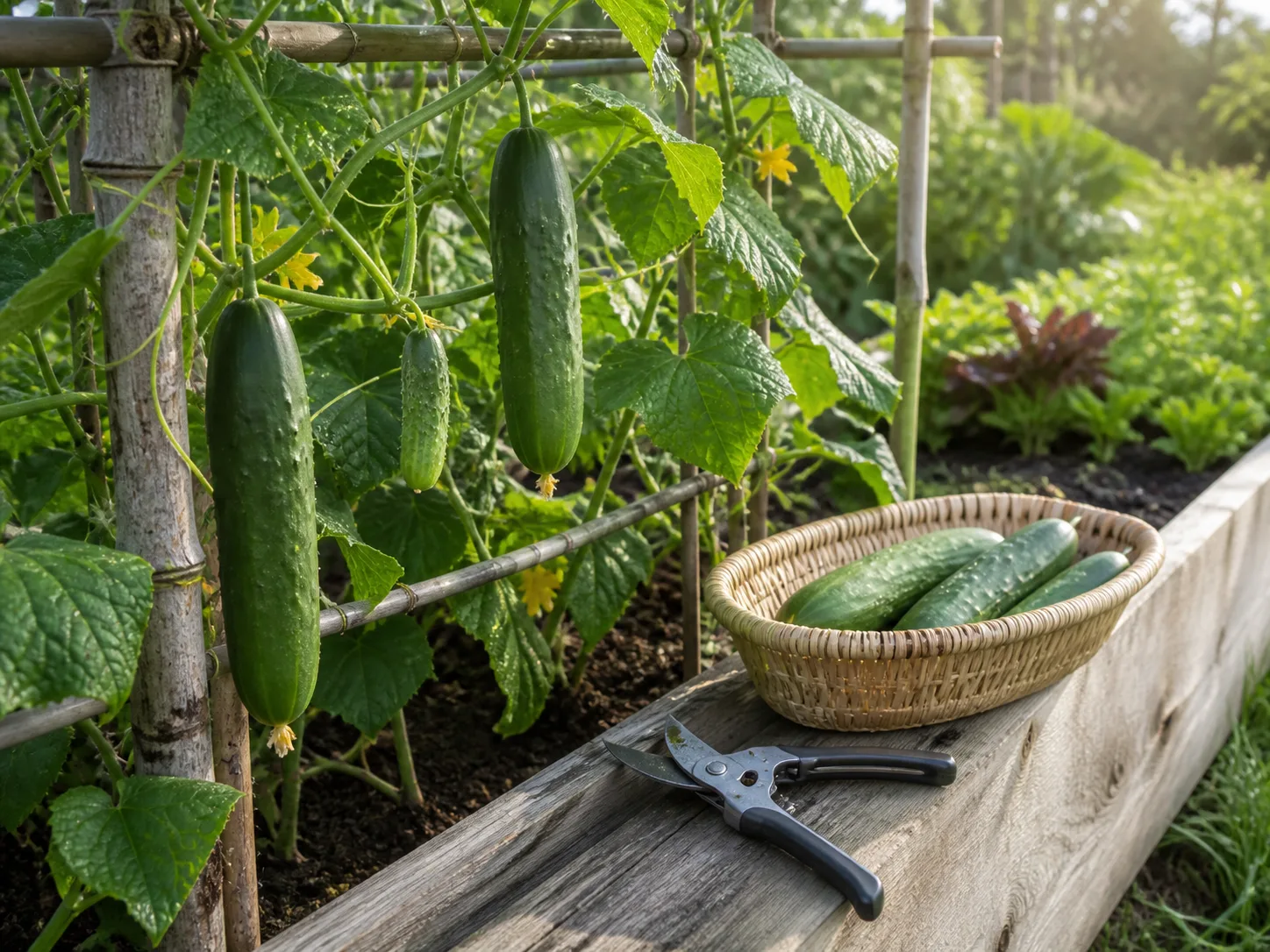
Pick when fruit is firm, evenly colored, and the size the variety promises. Many slicing types are good around 6–8 inches, while pickling types are commonly picked around 3–5 inches, but mini, lemon, Armenian, and specialty varieties need their own packet guidance. Yellowing, swelling, softness, large seeds, or a dull surface usually means the fruit stayed on the vine too long.
Harvest with clean snips or a knife instead of twisting the fruit from the vine. Check every day or two once production begins; cucumbers can change size quickly in warm weather. Regular picking prevents one oversized fruit from diverting the plant’s energy and keeps new flowers and fruit coming.
If fruit is bitter, inspect the conditions before blaming the variety. Uneven moisture, drought, heat, and leaving fruit too long are common stress points. Keep water consistent, shade the plant from extreme afternoon heat only when necessary without starving it of light, and harvest at the intended immature size.
Common Timing Mistakes
Planting by month alone is the most common error. A gardener in a sheltered raised bed may be ready before a gardener in a shaded clay plot in the same town, while a cold spring can shift every bed later. Use your local frost information as a starting boundary and your thermometer as the planting check.
Starting seeds too early creates oversized seedlings that are harder to transplant and more likely to stall. Cucumbers do not reward being held in a tiny pot for many weeks. If outdoor soil will not be ready for another month, delay the indoor sowing or plan a smaller plant that can be moved without tearing its roots.
Treating a warm day as a warm season causes early seed rot and transplant shock. Look at the forecast for the next several nights, not just the afternoon high. A row cover can protect an established young planting from a brief chill, but it cannot replace warm soil or eliminate freeze risk.
Using the wrong days-to-maturity math makes late planting look safer than it is. Count from the actual sowing or transplanting date, add time for recovery and cool weather, and work backward from the first fall frost when planning a second crop.
Crowding plants and postponing support turns a timing win into a care problem. Give vines room, install the trellis at planting, and keep the root zone evenly moist. Good airflow and easy picking are not cosmetic benefits; they help you notice pests, disease, drought stress, and overripe fruit early.
Feeding instead of fixing conditions is another trap. If cucumbers are leafy but not flowering, check sun, soil temperature, water consistency, variety, and pollination before adding fertilizer. More nitrogen cannot compensate for a cold root zone or a vine planted where bees cannot reach the flowers.
Conclusion
The best time to plant cucumbers is the first date when frost risk is past, soil is at least 60–65°F, and the forecast supports steady warmth. For direct sowing, 65–70°F soil is a kinder target; for short seasons, start seeds indoors three to four weeks early and transplant compact seedlings only after hardening them off.
After that first decision, keep the rest of the season connected to the same logic. Match the variety to your climate and space, prepare fertile draining soil, install support before the vine runs, keep moisture even, protect young plants from a stray chill, and count backward from the first fall frost for succession crops. Plant when the conditions are ready—not merely when the calendar says you should—and your cucumbers have a much better chance of reaching the crisp, productive harvest you planned for.