When to Trim Holly Bushes: Timing and Pruning Tips
Learn when to trim holly bushes for healthy growth, how timing changes by variety, and when to prune for berries, formal hedges, or a major size reduction.
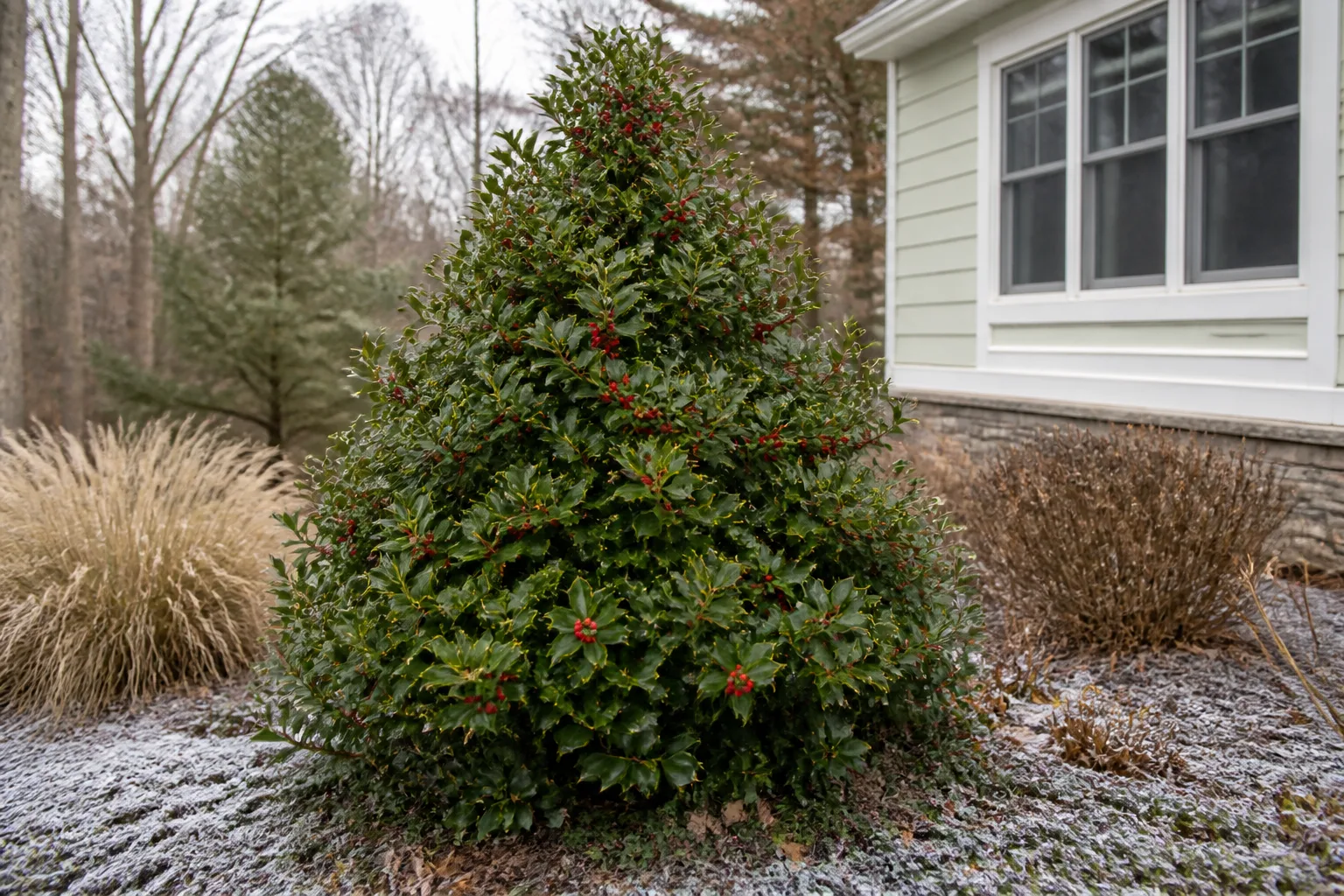
For most established hollies, late winter to early spring—just before strong new growth begins—is the best time for planned structural pruning. It is a useful window to remove winter damage, correct crossing branches, and make measured size adjustments while the shrub is about to resume growth. The calendar date shifts with climate: use the plant’s stage and local weather, not a fixed month.
That answer changes if berries are the point. If you want the flowers and fruit left on a particular holly, postpone elective shaping until flowering has finished and fruit is visible, and accept that cutting berry-bearing stems will remove that display. Light cleanup of dead, broken, or diseased wood can happen when needed; a large reduction, a summer hedge trim, and a handful of holiday branches are different jobs with different trade-offs.
The best time: late winter to early spring
For routine shaping or a planned size reduction, aim for the end of winter or the beginning of spring, shortly before the shrub begins its main flush of growth. In colder regions, that may mean waiting until the most severe freezes have passed; in milder areas, hollies may be ready for light structural work earlier. Look for swelling buds and improving conditions, rather than copying a date from a different climate.
There is a practical reason for this timing. Cuts made before vigorous growth can be followed by a season in which the plant forms new foliage, while a cut made during hot, dry weather may be followed by slower recovery. The University of Delaware Cooperative Extension recommends late winter or early spring for general pruning of evergreens, just before growth begins, while distinguishing that schedule from dead, diseased, or broken wood that can be removed when noticed (the university’s evergreen-pruning guide).
Do not interpret “late winter” as permission to shear every holly hard every year. Many hollies grow slowly and hold a useful natural form without frequent cutting. If the shrub is healthy, fits its space, and has no branches that need correction, leaving it alone is often the best pruning decision.
Match timing to your pruning goal
Before picking up shears, decide what you want the next growing season to deliver. A gardener focused on berry display may wait longer than someone correcting a broken branch or keeping a clipped hedge within its allotted space.
| Your goal | Useful timing | Main trade-off |
|---|---|---|
| Remove a dead, broken, or clearly diseased branch | As soon as it is safe and practical | Little reason to wait; avoid cutting healthy canopy unnecessarily |
| Reduce size or improve branch structure | Late winter to early spring, before strong growth | Cutting flowering shoots can reduce that season’s flowers and berries |
| Keep a formal hedge or topiary | Light shaping after the spring flush; stop early enough for new growth to harden before cold weather | Frequent clipping can remove flowers and fruit and create dense outer growth |
| Keep berries on the plant | Wait until flowers have finished and fruit is visible before elective shaping | Berry-bearing stems cut later lose that season’s display |
Treat these windows as a decision aid, not a universal schedule. Local frost patterns, the kind of holly, how much you plan to remove, and whether the shrub is already stressed all affect the safest choice. A few hand-pruner cuts and a renovation that removes a large portion of the canopy should not share one calendar rule.
Preserve flowers and berries
If berries matter, plan around the plant’s flowering and fruiting, not just the month. Holly flowers are small and easy to overlook; once you can see that flowering has finished and fruit has set, you can decide how much of the berry display you are willing to sacrifice for shape. Any live branch you remove may carry flowers, developing fruit, or mature berries, so no timing trick can preserve berries on the stems you cut.
Berries also depend on more than pruning. Many hollies have separate male and female plants, and fruit forms on female plants after pollination; a female shrub with no suitable pollinator nearby may set few berries even if you never prune it. The University of Arkansas System Division of Agriculture Cooperative Extension explains that only female hollies bear fruit and that severe pruning is best timed for the plant’s recovery, in late winter to early spring in its regional guidance (Arkansas Extension’s holly advice).
Practical timing guides do not always give the same month because they are balancing different aims. Better Homes & Gardens emphasizes pruning before spring growth for recovery, while Gardeningetc recommends spring work and advises waiting until flowers have passed and berries have begun if fruit display matters (Better Homes & Gardens; Gardeningetc). The useful synthesis is simple: do necessary structural work before active growth, but delay nonurgent shaping if keeping this year’s flowers or berries is more important.
Maintain a hedge or topiary
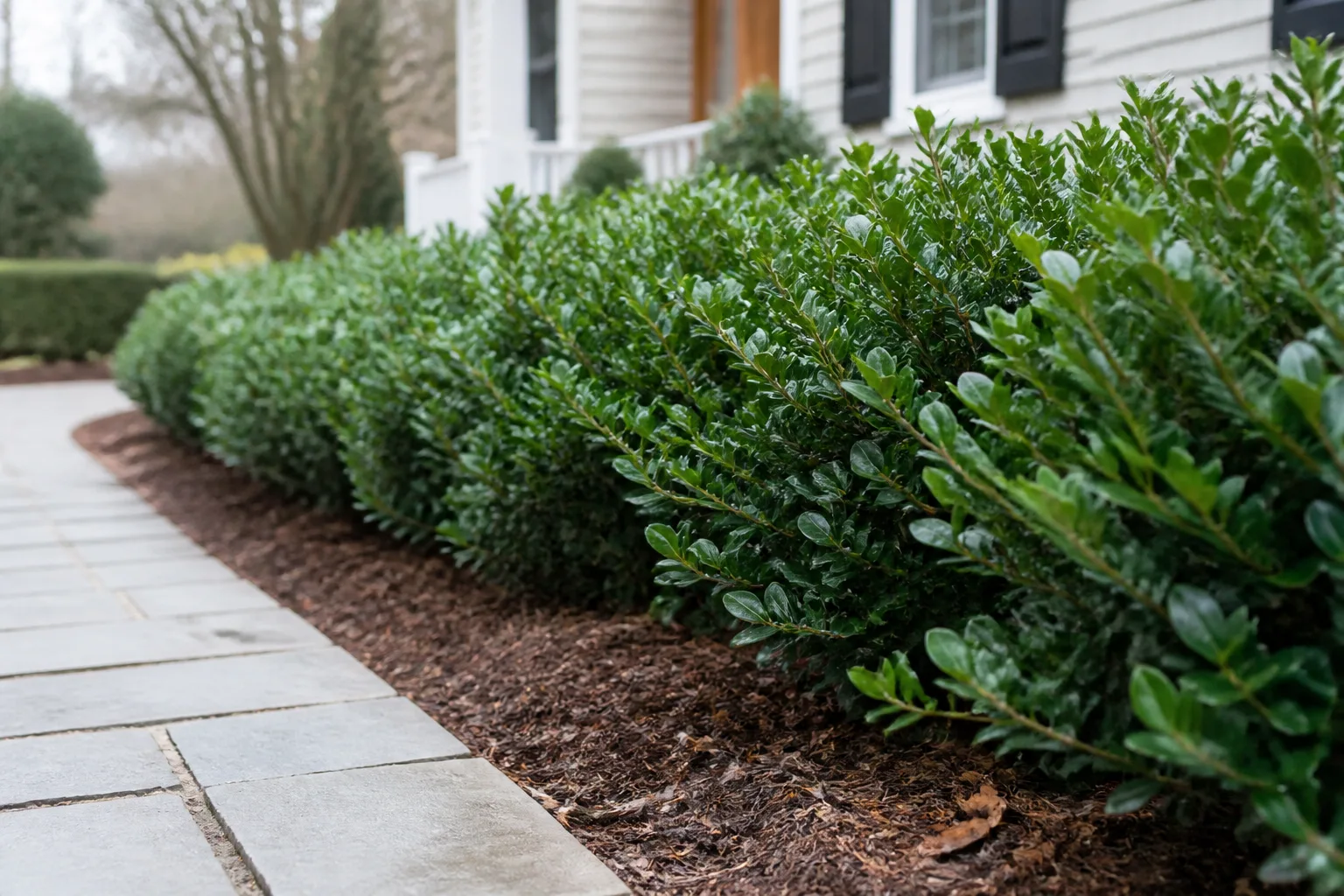
A formal hedge is a different job from preserving an untrimmed shrub’s natural outline. Once the shape is established, you can make small touch-up cuts during the growing season, after the first flush has developed. Use light, selective corrections rather than repeatedly cutting deep into old, leafless wood; if berries are part of the effect, wait until fruit is visible before shaping those sections.
Finish seasonal clipping early enough for the new tips to harden before cold weather. A late cut can prompt tender growth at the wrong time in frost-prone climates, and clipping the outside repeatedly without thinning can leave an over-dense shell. For a hedge that is meant to be leafy all the way down, maintain a slightly narrower top than base so daylight reaches lower branches.
Take winter greens or fix damage
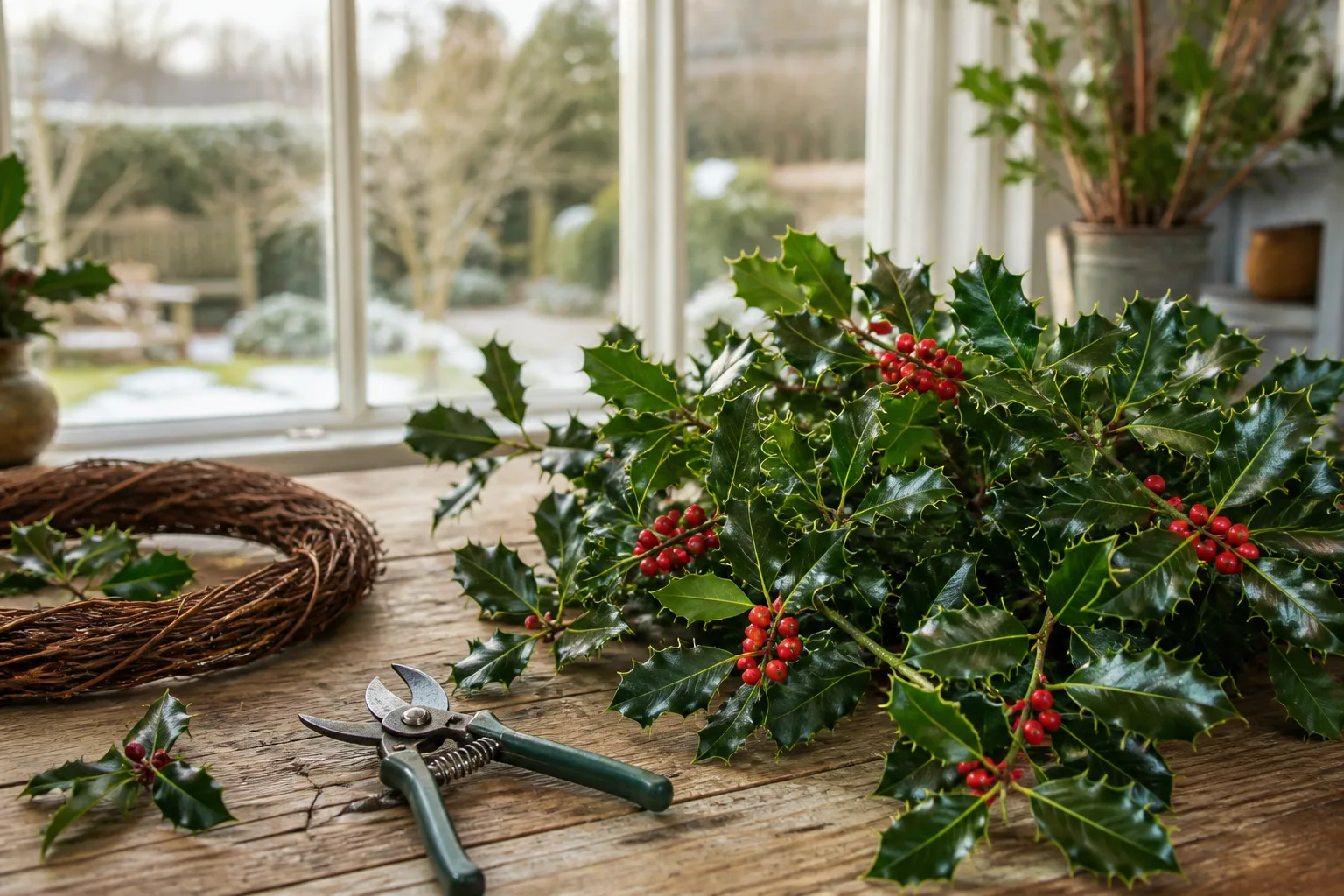
Cutting a few healthy stems for a wreath or vase is light harvesting, not a reason to postpone every other maintenance task. Take a small, balanced amount from several parts of the shrub, and avoid stripping one side or cutting into a structural leader simply because its berries are convenient. For a more detailed harvest plan, see our guide to pruning holly for holiday decor.
Dead, broken, and obviously diseased branches are exceptions to the planned pruning calendar. Delaware Extension says that dead, diseased, or broken evergreen wood can be removed at any time; cut back to healthy growth or to the branch collar rather than leaving a stub. If disease is uncertain, identify the problem before removing large sections, and clean tools between affected plants.
Identify your holly before you cut
“Holly” covers evergreen and deciduous shrubs and trees with quite different habits. A dense small-leaved Japanese holly may tolerate repeated shaping better than a naturally upright American holly that you want to grow into a tree. A winterberry loses its leaves but can hold showy fruit on bare stems, so a winter cut has a different visual cost from the same cut on an evergreen hedge.
Check the plant label, compare the leaves and growth habit, or look up the cultivar before attempting a major reduction. If you cannot identify it, start conservatively: remove only obvious dead or damaged wood, observe how it responds through a growing season, and delay severe renovation until you know what it is. Correct identification matters most when you are considering hard cuts, not when removing a snapped twig.
Evergreen hollies
American holly, Chinese holly, Japanese holly, yaupon, inkberry, and many popular landscape hybrids keep their leaves through winter, but they are not interchangeable. Their mature sizes and ability to tolerate clipping vary, and some are grown primarily for a natural shape while others are selected for compact hedges. Let the variety’s mature form guide how often you trim; do not force a naturally pyramidal or rounded plant into a tight box unless you are prepared to maintain that shape.
Most small corrections can be made with bypass pruners, taking a shoot back to a side branch or a healthy bud. A Japanese holly maintained as a formal hedge can handle more frequent light shaping than a slowly growing specimen holly, but that tolerance does not make a deep cut into bare inner wood invisible. Delaware Extension notes that American holly is pruned at a node above a lateral bud to maintain its natural form, while some shrubby Chinese and Japanese hollies can tolerate more severe pruning and additional light shaping during the growing season (Delaware Extension).
Winterberry and other deciduous hollies
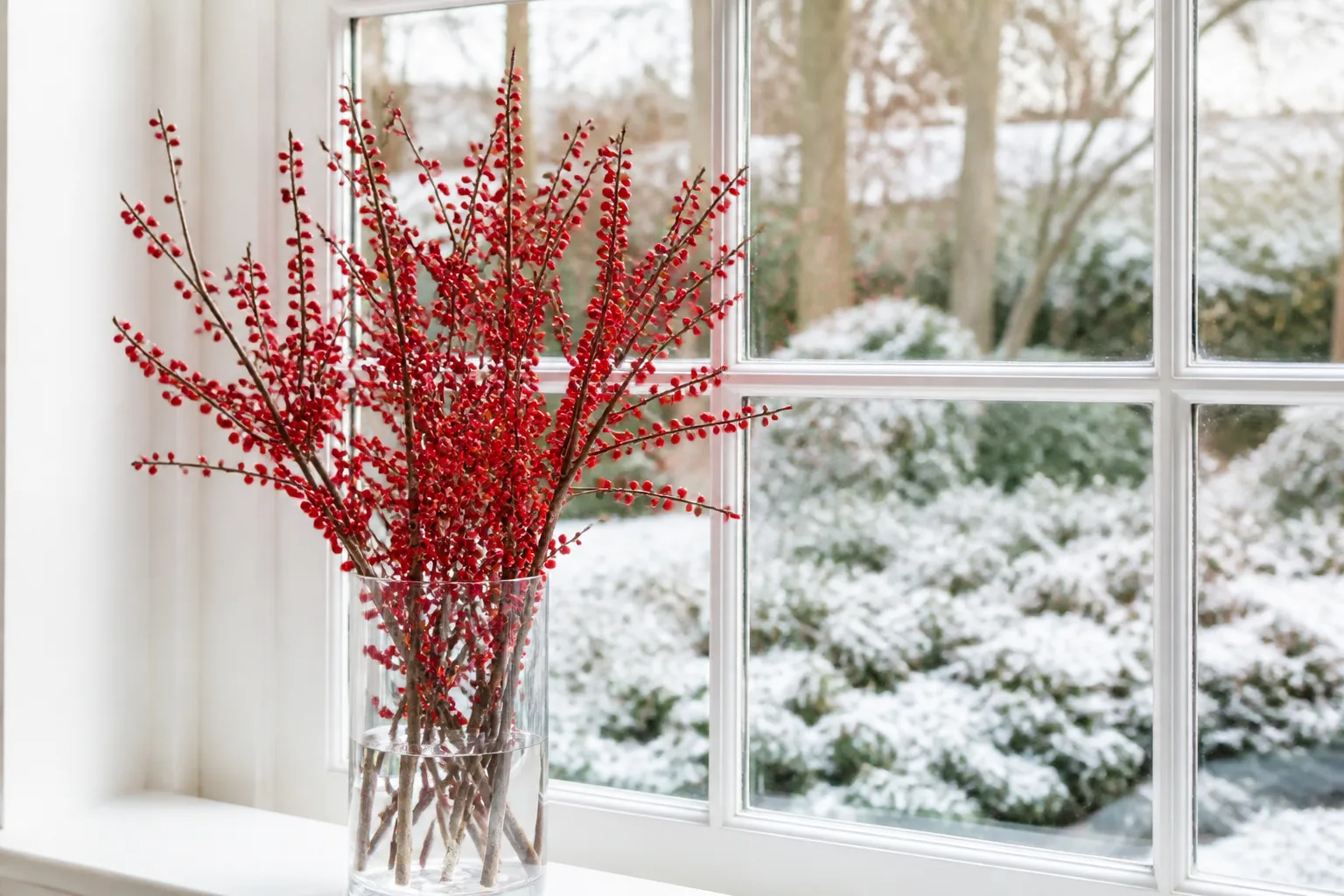
Winterberry (Ilex verticillata) and possumhaw (Ilex decidua) drop their leaves, making their branch framework and fruit easier to see in winter. If you grow a female plant for red, orange, or yellow berries, a winter prune can remove the very stems that make the shrub valuable at that time of year. Wait until you no longer need the display before elective shaping, or remove only the oldest stems you can spare.
These deciduous types still need the right pollination conditions to fruit well. The Arkansas Extension’s holly guidance identifies winterberry and possumhaw as deciduous hollies and notes that female plants carry the visible fruit. Do not assume sparse berries mean the shrub needs hard pruning; first check the plant’s sex, nearby pollinators, light, age, and whether branches were cut before fruit set.
When to wait before pruning
Put the tools down if the holly is under drought stress, newly planted and struggling, or still recovering from a severe cut. A weak shrub has less capacity to replace foliage, and removing healthy branches will not fix waterlogged soil, root injury, poor planting depth, or a location that is too small for its mature size. Address the underlying stress before elective shaping.
In regions with cold winters, avoid a major late-season cut that could trigger soft new shoots just before frost. New growth may not have enough time to harden, and an exposed shrub can suffer more winter injury than one left undisturbed. Gardeningetc recommends finishing summer shaping by mid- to late summer; the exact cutoff depends on how long your local growing season lasts and when damaging cold normally arrives.
Do not prune simply because a branch looks bare in the middle of winter. Some hollies shed older leaves or carry dormant buds that are hard to see; wait until you can distinguish dead wood from live wood unless a damaged branch presents an immediate hazard. When uncertain, scratch a tiny spot of bark: green tissue just beneath suggests the stem is alive, while dry brown tissue throughout may indicate dead wood, but check more than one point before removing an entire limb.
Set a limit and choose the right tools
Start with a specific goal and a conservative ceiling. For routine work, remove only what solves the problem; a common safe rule is to take no more than about one-third of the live canopy in a season, and less if the plant is slow-growing, stressed, or already sparse. This is a practical limit, not a guarantee that every holly can recover from one-third removal.
Choose bypass hand pruners for small shoots, loppers for thicker branches within their rated capacity, and a pruning saw for larger limbs. Hedge shears are useful for maintaining a formal exterior, but they remove many tips at once and can conceal poor structure if used as the only tool. Wear gloves, long sleeves, and eye protection around spiny foliage, and keep your face out of the branch path as cut limbs spring free.
Sharp tools make controlled cuts easier. Clean them before you begin and again between plants if you suspect disease; do not use a dull blade that crushes or tears stems. For branches beyond comfortable reach, heavy limbs, or cuts near roofs and utility lines, hire an insured arborist rather than working from an unstable ladder.
A careful step-by-step pruning method
-
Look at the entire shrub first. Walk around it and identify the problem: height, width, crossing branches, deadwood, or an uneven outline. Decide what the plant should look like when you stop, not just what you want removed first.
-
Find the live structure. On an evergreen holly, part the foliage to see which stems actually carry leaves and where branches cross. On a deciduous holly, inspect the bark and buds before assuming bare branches are dead; make a small test scratch if needed.
-
Remove the three Ds. Take out dead, damaged, or diseased branches before shaping. For a damaged lateral branch, cut back to a healthy side branch; for a whole limb, cut just outside its branch collar without leaving a long stub or cutting flush against the trunk.
-
Thin before shortening. Remove a few crowded or rubbing branches at their point of origin, choosing the weaker or poorly placed one. Thinning opens light and air into the shrub; it also keeps the outline more natural than shortening every branch at the same height.
-
Make selective heading cuts where needed. To reduce a branch’s length, cut back to a healthy outward-facing side shoot or bud. This gives the remaining stem a direction to grow and avoids the blunt stubs that often sprout several crowded shoots.
-
Pause and reassess. After every few cuts, step back and view all sides. Stop when the original problem is corrected; do not keep cutting to make every surface perfectly smooth if doing so would expose bare interior branches.
This method is slower than shearing, but it gives you more control over where the plant grows next. The Alabama Cooperative Extension System distinguishes selective pruning from indiscriminate shearing and advises that timing depend on whether a plant is grown for foliage or for flowers and fruit (Alabama Extension’s woody-plant pruning guide). On a berry holly, that distinction is especially useful because the clipped outline can look tidy while the fruit display disappears.
Keep holly hedges leafy from top to bottom
A hedge that is flat or wider at the top can shade its own lower branches. As the bottom loses light, leaves thin out and the hedge becomes bare near the ground even when the top looks dense. Shape each side so the base is a little wider than the crown, creating a slight trapezoid rather than a vertical wall.
If the hedge has become lopsided or bare at the bottom, do not keep shearing its top into a tighter, taller shell. First check whether the plants are overcrowded, shaded, or too mature for the space; pruning cannot restore light that the site does not provide. Correct the profile gradually, opening selected branches and reducing the upper width in stages if a single season’s cut would remove too much live growth.
Use hedge shears only on the small amount of new growth needed to maintain the planned outline, then inspect inside the hedge for dead, crossing, or rubbing stems. For a more natural screen, selective branch cuts usually look better and preserve more of each plant’s character than repeated flat clipping.
Reduce an overgrown holly in stages
First decide whether the holly is merely untidy or genuinely too large for its site. A modest size correction can often be made by reducing selected branches to well-placed laterals. If the shrub has been repeatedly sheared into a dense shell, opening it up with selective cuts may take more than one season, because inner branches can be sparse where they have been shaded for years.
For a multi-stemmed shrub that needs renewal, a staged plan is less risky than cutting the whole plant to a stump. In late winter or early spring, remove some of the oldest stems close to the ground, then let the remaining framework carry the plant while new shoots develop; continue the renovation in a later season if the holly responds well. The exact proportion depends on species, vigor, and structure, so treat a one-third reduction as a cautious limit for ordinary annual work rather than a prescription for every renovation.
Some vigorous Japanese hollies and other broadleaf types can recover from much harder renewal cuts, but the response is not universal and the plant may look bare for a long time. Better Homes & Gardens specifically cautions that not all hollies tolerate severe pruning; identify the type before cutting it close to the ground. If you cannot confirm that it will resprout from old wood, do not use a drastic cut as a guess.
For a holly tree or tall screen, reduce height back to a suitable lateral branch rather than making a flat top cut that leaves a cluster of stubs. If the only solution requires removing large limbs, climbing, or cutting close to a structure, bring in a qualified arborist. In some gardens, replacing a badly sited mature holly with a cultivar that fits the space is kinder to both the plant and the homeowner than years of severe trimming.
Aftercare: help the shrub recover
After pruning, clear clippings from the crown and ground so you can see whether additional damage is present. Water deeply if the root zone is dry, then let the soil drain normally; holly does not need to be kept constantly wet. Arkansas Extension notes that hot, dry weather can slow the rebound after severe pruning, which is why local guidance places major cuts before the heat of summer.
Do not automatically compensate for a cut with heavy fertilizer. A plant that is already growing in adequate soil may need no extra feeding, and excess fertilizer can push soft growth without correcting a poor site or damaged roots. If you do fertilize, follow a soil-test or local extension recommendation for the specific plant and region.
Watch for new growth through the coming season, but do not expect an overpruned holly to refill instantly. New shoots may emerge unevenly, and exposed inner stems can remain visible until foliage fills in. Keep the plant watered during dry spells and delay another hard cut until you can judge where it has recovered.
Common holly-pruning mistakes
Shearing every branch to the same plane is the fastest way to create a tidy outside and a shaded, woody interior. Use shears for a formal hedge that already has a healthy structure; use hand pruners and loppers for selective cuts inside a specimen shrub or tree-form holly.
Taking too much at once can leave bare patches and reduce flowers or berries. If a plant needs a major change, identify the variety, remove only the most important stems first, and reassess after new growth. A severe cut may be possible for some hollies, but “tolerates pruning” does not mean that every shrub will quickly regain a full, attractive shape.
Pruning by date alone ignores local frost and growth stages. Late winter in a warm region may already be active spring in a colder one, while a late-summer trim can be safe in a long-season climate and too close to frost elsewhere. Use budbreak, flowering, fruit set, weather, and the amount of growth you plan to remove.
Cutting berry stems and expecting the display to remain unchanged sets up disappointment. If winter fruit is the reason you planted the shrub, preserve the berry-laden branches you want to see and prune around them; if you need substantial shaping, accept that the display may be reduced.
Cutting into old bare wood without checking the species can expose branches that will not leaf out quickly. Before shortening a stem, look for a viable side branch or bud and leave enough green growth for the plant to continue filling that area. If the shrub’s interior is already bare, make small cuts and accept a gradual recovery instead of stripping the outside.
When to call an arborist
Get professional help for tall hollies, heavy limbs, branches over a roof or walkway, or cuts near electrical lines. The plant’s spines make a high pruning job more awkward, and a falling branch can injure you even when the cut itself is straightforward. Do not climb a ladder while reaching into a dense, spring-loaded canopy.
An arborist can also advise whether a mature holly should be reduced, renovated, or replaced. Ask how the proposed cuts will preserve the branch framework and where new shoots are expected to grow; a promise that a large shrub will “grow back” is not enough if it will leave bare stems for years. When you are unsure of the species or diagnosing widespread dieback, your local cooperative extension can help identify the plant and distinguish normal leaf drop from a serious problem.
Conclusion
For most planned size and structure work, trim holly in late winter or early spring just before vigorous growth begins. If berries are a priority, wait until flowers have finished and fruit is visible before elective shaping, and remember that each cut removes what is on that stem.
Match the method to the plant: thin naturally shaped hollies selectively, clip formal hedges lightly and early enough for new growth to harden, and renovate an overgrown shrub only after identifying the variety and planning recovery. Remove hazardous or dead wood when needed, stop when the actual problem is solved, and leave a healthy holly untouched when it already fits its space.



