How to Grow and Care for White Willow
White willow needs a spacious, consistently moist site. Get practical planting, watering, pruning, cultivar, and regional invasive-status guidance.
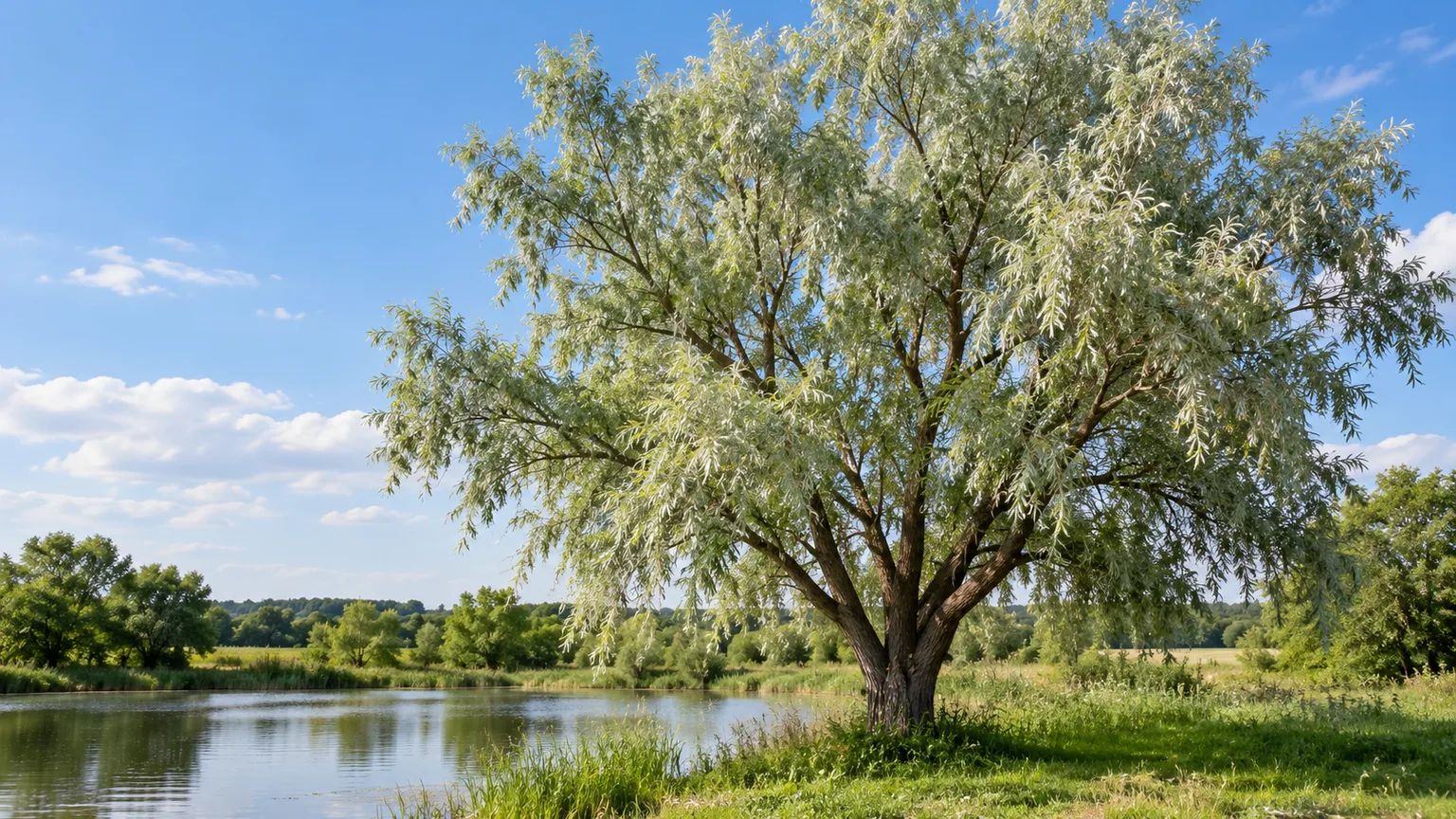
White willow (Salix alba) can make sense beside a spacious pond, stream, or damp open landscape where its size, leaf litter, and eventual branch maintenance are acceptable. It is a poor default shade tree for a small suburban yard: a mature tree commonly reaches about 50 to 80 feet tall and 40 to 70 feet wide, its roots seek moisture, and its wood is prone to breakage. The Missouri Botanical Garden profile of white willow lists it as a high-maintenance tree and generally discourages residential use, while identifying moist sites such as stream edges and low spots as the places where it can fit.
That distinction matters more than any fertilizer or pruning schedule. Before shopping, decide whether you have the open root zone and long-term maintenance capacity this tree needs, then check whether white willow is considered invasive or restricted in your county, watershed, or state. The Invasive Plant Atlas of the United States profile identifies the species as exotic and compiles regional listings; its distribution and legal status are not uniform, so a local check is essential.
Is White Willow the Right Tree for Your Site?
Choose white willow for a large, naturally moist property where an expansive crown, dropped leaves and twigs, and occasional branch cleanup are part of the landscape plan. A broad pond margin or low area with room between the tree and infrastructure can work; a narrow lawn, street planting, or foundation bed usually cannot. Fast growth gives quick shade, but it also means the tree can outgrow a site before its owner expects it to.
The decision is especially important near water. White willow was introduced to North America and has escaped cultivation in some regions, so planting it beside a stream or wetland can put seed and broken, rooting twigs in a path to natural areas. If your goal is erosion control or habitat, ask a local extension office, conservation district, or native-plant nursery about regionally native willows first; using a species suited to the watershed is generally more responsible than placing an introduced ornamental in a riparian corridor.
If the space is too tight or local guidance discourages the species, choose a smaller native tree or shrub rather than relying on repeated topping to contain a white willow. A pruning plan can preserve a sound young structure, but it cannot turn a 70-foot tree into a safe small-yard specimen. The guide to willow species and landscape uses can help compare a compact shrub willow with a large tree before you decide.
How to Identify White Willow
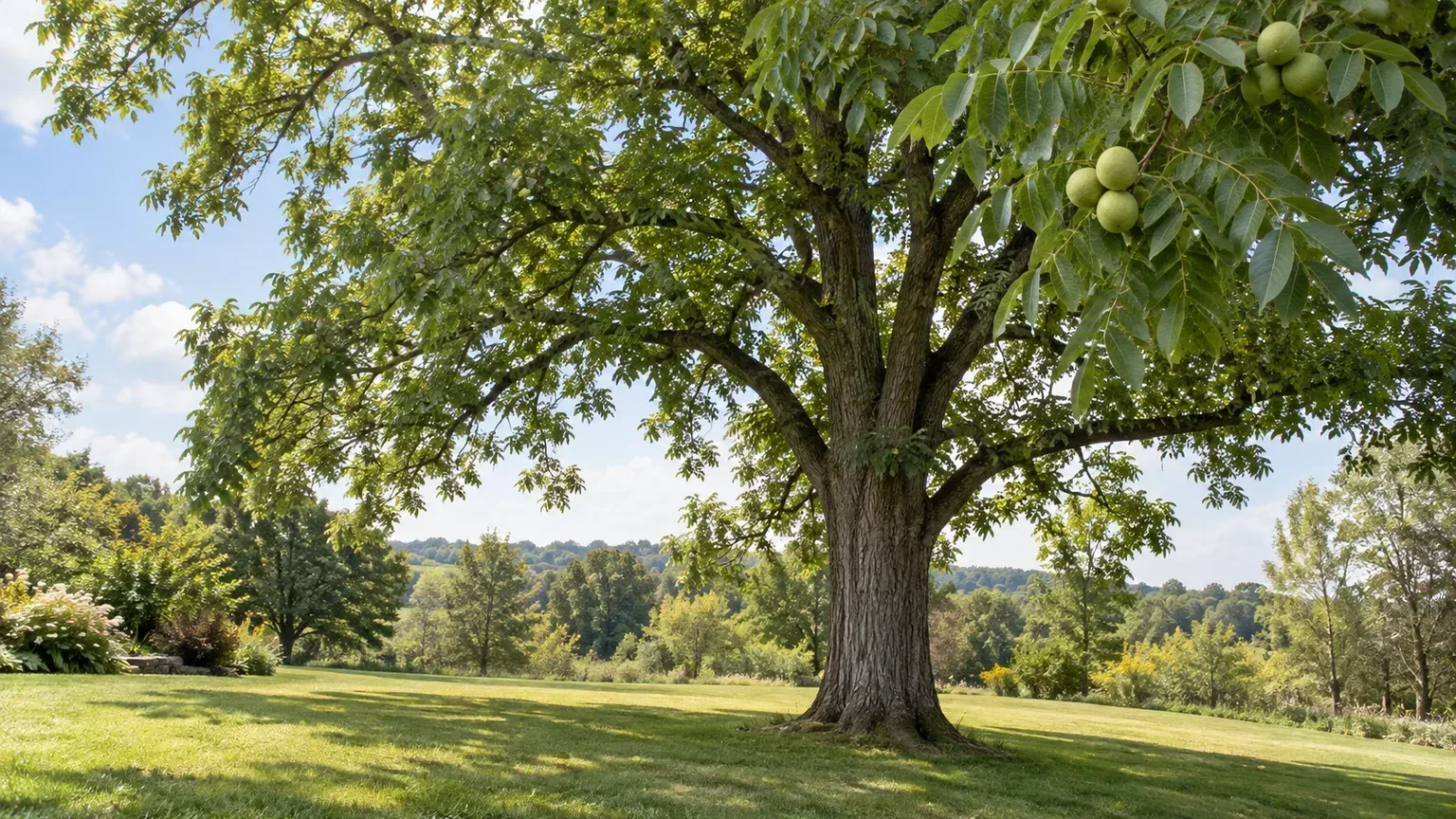
White willow is a deciduous tree with narrow, lance-shaped leaves that are gray-green above and noticeably pale or silky beneath. The leaves have fine teeth along their edges and taper toward the base; when a breeze flips the canopy, the light undersides give the tree a silvery cast. Mature specimens develop an upright trunk and a broad, loose crown rather than the strongly cascading outline most people associate with weeping willow.
The species is native to Europe, northern Africa, and central Asia, not North America. The Missouri Botanical Garden lists typical mature dimensions of 50 to 80 feet by 40 to 70 feet and hardiness zones 2 through 8, though local climate, provenance, and cultivar can shift performance. Nursery listings may also sell named forms for colored winter stems or a pendulous habit, so use the botanical name and cultivar on the label rather than assuming every plant called a “white willow” will look or grow exactly like the straight species.
Choose a Planting Site That Can Handle a Willow
Start by looking beyond the tree’s crown. Willows can have shallow, spreading, moisture-seeking roots; those roots are useful on an appropriate stream bank but can become a conflict around drains, pipes, pavement, septic systems, and foundations. Do not use a generic spacing rule as a guarantee. Check the actual utility map, locate underground services before digging, and give the tree an open area based on its mature spread plus maintenance access.
Sun, soil, and moisture
White willow grows in full sun to partial shade, but a sunny site generally supports a stronger, more balanced crown. Aim for at least six hours of direct light when possible, with enough surrounding space that nearby trees and buildings do not shade the canopy as it develops. Shade tolerance is not a reason to squeeze this large tree into a crowded corner.
The useful soil target is consistently moist but reasonably aerated, not a dry, compacted bed and not necessarily a permanently submerged planting pit. The Missouri Botanical Garden describes white willow as a tree for average to wet, well-drained soil and warns against dry soils. It tolerates clay better than many ornamentals, but heavy soil that stays stagnant around a newly planted root ball can still deprive roots of oxygen; a wetland margin and a poorly drained hole beside a patio are not the same setting.
Before planting, observe the site after rain and during a dry spell. If water stands for days, determine whether this is a natural seasonal wet area or a drainage failure that threatens nearby structures; if the ground dries hard in summer, estimate how you would water a large expanding root zone. The Garden Design willow overview also emphasizes reliable moisture and notes that willows may shed leaves during a dry spell. Avoid planting simply because a spot feels damp in spring.
Space, roots, and regional status
Set the tree well away from sewer connections, septic drain fields, water lines, foundations, retaining walls, and narrow paved paths. Roots do not “break” sound pipes as if they were drills, but they can exploit existing leaks, joints, or damaged sections and can lift or displace paving as they expand. If a utility corridor or drain field occupies the likely root zone, pick another species instead of hoping a root barrier will solve the problem; barriers reduce some conflicts but do not make a large willow risk-free.
White willow’s regional status deserves the same care as its physical footprint. The Invasive Plant Atlas records it as an exotic species and links to jurisdictional listing sources. That is evidence to check local rules, not proof that every state has banned it or that every planting becomes invasive. A tree near a stream, drainage ditch, or wetland has a greater route for seed movement than one in an isolated, managed landscape, so be especially conservative there.
When to Plant White Willow
Planting during a cool, mild period reduces stress while roots begin to settle in. Spring after the ground is workable or early fall before hard freezes are common choices; in a cold region, leave enough time for roots to establish before winter. Avoid planting into hot, dry weather unless you can provide reliable irrigation and protect the root ball from drying.
Planting a container or bare-root tree
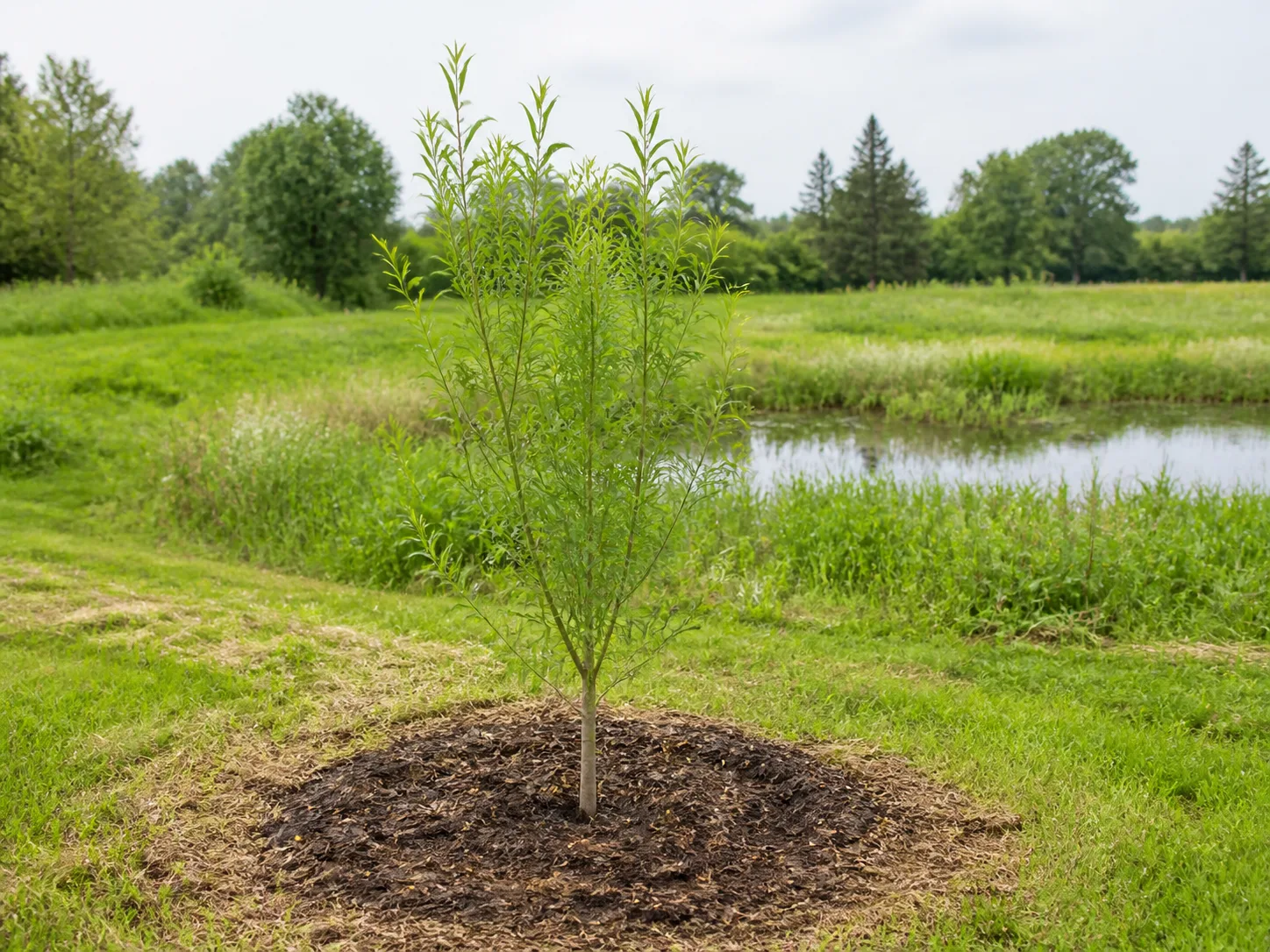
Before digging, confirm the tree’s identity, mature size, cultivar, and local status, then locate underground utilities. Dig a hole roughly twice the width of the root ball but no deeper than the root ball itself. A broad, shallow planting area encourages roots to move into surrounding soil rather than remaining in a narrow amended pocket.
Remove the container and inspect the roots. Loosen circling roots gently and cut any that are severely girdling; do not shred a healthy root system simply to make it look loose. Set the root flare at or just above the surrounding grade, backfill with the native soil you removed, and water as you fill so soil settles around roots without creating a deep basin against the trunk. The Garden Design planting guidance likewise recommends a hole wider than the root ball and setting its top level with surrounding ground.
For bare-root material, keep roots shaded and damp until planting, spread them naturally in a wide hole, and avoid bending them upward into a cramped space. Firm the soil with your hands or a light foot press, not heavy tamping that compacts it. Apply a two- to three-inch mulch layer over the root zone, extending outward as far as practical, while leaving several inches clear around the trunk to prevent constant bark contact.
Water slowly after planting until the root ball and nearby soil are evenly moist. If the site is windy or the tree arrives with a tall, narrow canopy, stake only when needed for stability and use flexible ties that do not rub the trunk; check them regularly and remove them once roots hold the tree upright. A stake should not immobilize the trunk for years or compensate for a badly matched site.
Watering White Willow Through Establishment
A newly planted white willow needs regular checks because a wet landscape can still contain a dry root ball. During the first growing season, feel the soil several inches down at the edge of the root ball; water deeply when it is beginning to dry, then let excess water drain before repeating. The goal is an evenly moist root zone, not a fixed daily schedule that keeps every soil type saturated.
In the second and third seasons, extend the check outward as roots spread. Water during prolonged dry weather, especially when new foliage wilts, leaf edges scorch, or the soil under the mulch feels dry; do not wait for severe leaf drop before responding. A slow soak that wets the root zone is more useful than brief surface sprinkling, which can leave lower roots dry while keeping the trunk base constantly damp.
Once established in a naturally moist site, the tree may need little supplemental water in ordinary weather, but drought can still stress it. Hot winds, compacted soil, nearby construction, and changes in drainage can all cause a previously settled willow to decline. The arborist-authored willow care discussion from KRL Tree Service makes the practical point that willows naturally occur where water is accessible; treat that as a site clue, not permission to overwater a planting hole or route irrigation toward a foundation.
Routine Care: Mulch, Fertilizer, and Seasonal Cleanup
White willow usually does not need routine fertilizer. It grows vigorously in suitable soil, and feeding a tree with weak wood can stimulate shoots without fixing the underlying cause of poor growth. If foliage is pale or growth is unexpectedly sparse, check moisture, drainage, light, root injury, compaction, and pest signs first; use a soil test before adding nutrients rather than applying a high-nitrogen lawn product near the trunk.
Refresh organic mulch as it decomposes, keeping it in a broad, shallow layer rather than piling it into a volcano. A clear collar around the trunk keeps bark visible for inspection and reduces moisture trapped against the base. Keep lawn equipment and string trimmers away from the trunk, since repeated bark wounds can become entry points for decay and make a large tree harder to manage safely.
Expect seasonal cleanup. Catkins, narrow leaves, twigs, and storm-damaged branches may accumulate below the crown, so this is not a low-litter choice beside a deck, pool, driveway, or frequently used walkway. Rake or collect fallen leaves when they smother groundcover or show signs of a recurring disease; in a naturalized area, leaving healthy leaves to decompose is usually less work and can protect the soil.
White Willow Cultivars and Their Trade-Offs
Named white willow cultivars can change the form or stem color, but they do not automatically remove the species’ need for water, room, and inspection. Golden willow (Salix alba var. vitellina) is grown for yellow winter stems and is often managed as a coppiced multi-stem shrub, where vigorous annual shoots provide color. ‘Tristis,’ commonly called golden weeping willow, has pendulous golden branches, while var. caerulea is associated with cricket-bat wood; these are different landscape forms, not interchangeable small-yard trees.
The Missouri Botanical Garden notes that the species is dioecious, meaning male and female flowers occur on separate plants, and that several cultivars are selected for distinctive forms or winter twigs. Ask the nursery for the full botanical label, mature size, expected pruning regime, and whether the selection is male or female if seed production matters to you. A cultivar name without a trustworthy size description is not enough to decide it fits the available space.
Be wary of “fast-growing” as the sole selling point. Fast growth can mean quicker shade, but it also brings more frequent structural decisions, larger amounts of pruning waste, and an earlier need to assess branch unions and clearance. If you want golden stems but cannot accommodate a tree, compare a suitable shrubby willow or a non-willow alternative with a local horticulturist before buying.
Prune for Structure, Not to Shrink a Mature Tree
Prune white willow while it is young enough for corrective cuts to remain small. Late winter or very early spring, before vigorous growth begins, is a practical window in many climates; local weather and the tree’s condition matter more than a fixed calendar date. Start with dead, damaged, or crossing branches, then decide whether you want a single-trunk tree or a multi-stem form and keep that architecture consistent.

Train a young willow while cuts are small
For a tree form, identify a healthy, upright leader and remove or shorten competing leaders gradually rather than stripping the crown. Keep well-spaced scaffold branches with broad attachments; remove rubbing, inward-growing, or unusually narrow-angled branches before they become heavy. A small amount of thoughtful training every year or two is easier on the tree than allowing a tangled framework to develop and then removing large limbs.
Use hand pruners for small shoots, loppers for branches within their rated capacity, and a pruning saw for larger limbs you can safely reach from the ground. Make clean cuts just outside the branch collar, where the limb meets the trunk, rather than cutting flush or leaving a long stub. Clean tools between trees when disease is suspected, and avoid removing a large share of the live crown in one season; excessive canopy removal can trigger weak, upright regrowth.
The Gardening Know How guide to pruning willows advises building a central leader and removing crowded or weak branches while a tree is young. That principle applies more usefully to white willow than trying to force a mature tree into a small outline. If the tree is intended for pollarding or coppicing, learn the correct cycle for the exact cultivar and begin while it is young; do not improvise a severe cut on a mature specimen.
Leave large-tree work to a qualified arborist
White willow’s weak wood and large canopy make climbing, ladder work, and large-limb removal a safety issue. Hire an ISA Certified Arborist or other locally credentialed tree-care professional when limbs overhang a house, power line, road, play area, or neighbor’s property, or when a major branch has split. Never climb into a mature willow with a chainsaw or ask an unqualified crew to top it to reduce height.
Topping removes branch ends indiscriminately and usually creates clusters of weak shoots rather than a structurally smaller tree. If the canopy is already too large for the site, have an arborist assess whether selective reduction, staged removal, or replacement is the sound choice. A young tree can be trained; an overgrown tree should not be treated as a renovation project unless a qualified professional judges it recoverable.
Common White Willow Problems
Many visible problems start with the planting site. Sparse growth can follow shade, drought, compacted soil, or root disturbance; yellowing can follow either dry soil or prolonged saturation. Before reaching for fertilizer or a pesticide, compare the affected leaves with healthy growth, check moisture at more than one depth, inspect the base for buried bark or injury, and note whether symptoms are limited to one branch or spread across the crown.
Wind, heavy snow, ice, and decay can expose the weak-wood problem. If a branch fails, look for cracks at the attachment, cavities, dead tips, or repeated breakage rather than treating each limb as an isolated accident. Keep people away from a hanging limb and call an arborist if a defect sits above a target; do not make a rushed cut from a ladder.
Read symptoms before treating pests or disease
Willows can host aphids, scale insects, borers, lace bugs, caterpillars, and sawfly larvae, and may develop leaf spots, rust, cankers, or blights. The Missouri Botanical Garden lists these as recurring pest and disease concerns for S. alba. A few insects or cosmetic leaf spots do not automatically call for treatment, especially on a large tree where broad spraying can affect beneficial organisms and expose people or wildlife.
Look for a pattern: sticky honeydew and sooty residue can accompany sap-feeding insects; skeletonized leaves suggest chewing larvae; expanding sunken lesions or dieback deserve closer attention than scattered old spots. Photograph the affected leaves, note the date and weather, and ask a local extension diagnostic service or qualified arborist to identify a serious or spreading problem. Fungicides and insecticides should be considered only after identification and according to the product label and local law.
Remove small dead or diseased twigs during suitable dormant-season pruning and clear diseased debris where local guidance recommends it. Do not remove major limbs or inject chemicals based on a web photo alone. If the tree declines after nearby trenching, grading, or utility work, report that history to the diagnostician because root injury may explain symptoms that look like a disease.
Flowers, Catkins, and Seed Spread
White willow usually flowers in spring, often around April or May in temperate Northern Hemisphere gardens, though the date varies with climate. Its flowers are small and grouped in catkins: male catkins show yellow anthers, while female catkins are greener and less conspicuous. Because the species is dioecious, a tree’s sex affects whether it produces pollen or seed, and a lone specimen will not necessarily provide both.
After pollination, female trees form capsules that release small, silky-haired seeds carried by wind or water. That biology matters in a damp landscape: the same water route that makes a site suitable can also move seed toward a ditch or natural wetland. If you are planting near riparian habitat, treat seed spread and the local invasive listing as part of the decision, not a problem to consider after the tree is established.
Propagate White Willow Responsibly
Willow stems can root readily, which makes propagation straightforward but also makes containment important. For a small trial, take a healthy dormant cutting from a plant you own or have permission to use, trim it into a pencil-thick section with several buds, and insert the basal end into a clean pot or nursery bed of moist, free-draining medium. Keep the medium evenly damp and the cutting sheltered from drying wind while roots form; new leaves alone do not prove it has a strong root system.
Keep new plants in containers or a managed nursery area until they are vigorous and correctly identified. Do not toss pruned stems into wet ground, compost them where they can root, or move cuttings into a public stream or drainage ditch. Before planting a propagated tree, repeat the checks for space, utilities, cultivar, and regional status; an easy-to-root cutting still becomes a large tree.
Conclusion
White willow is best treated as a large, site-specific tree for open, reliably moist ground—not as a fast shade tree for any backyard. Give it room for a 40- to 70-foot spread, keep it clear of utilities and structures, confirm the local status, and accept that weak wood and seasonal litter call for ongoing attention.
If the site passes those checks, plant during a cool season, keep the root ball evenly moist as it establishes, mulch without touching the trunk, and train the young framework before it becomes difficult to reach. If the space, water, or local ecology does not fit, choose a smaller or native alternative; that is often the most useful care decision you can make.