Why People Are Using Fewer Lawn Sprinklers
Lawn sprinklers are not disappearing. Learn which yard zones need sprinklers, which benefit from drip irrigation, and how to cut water waste.
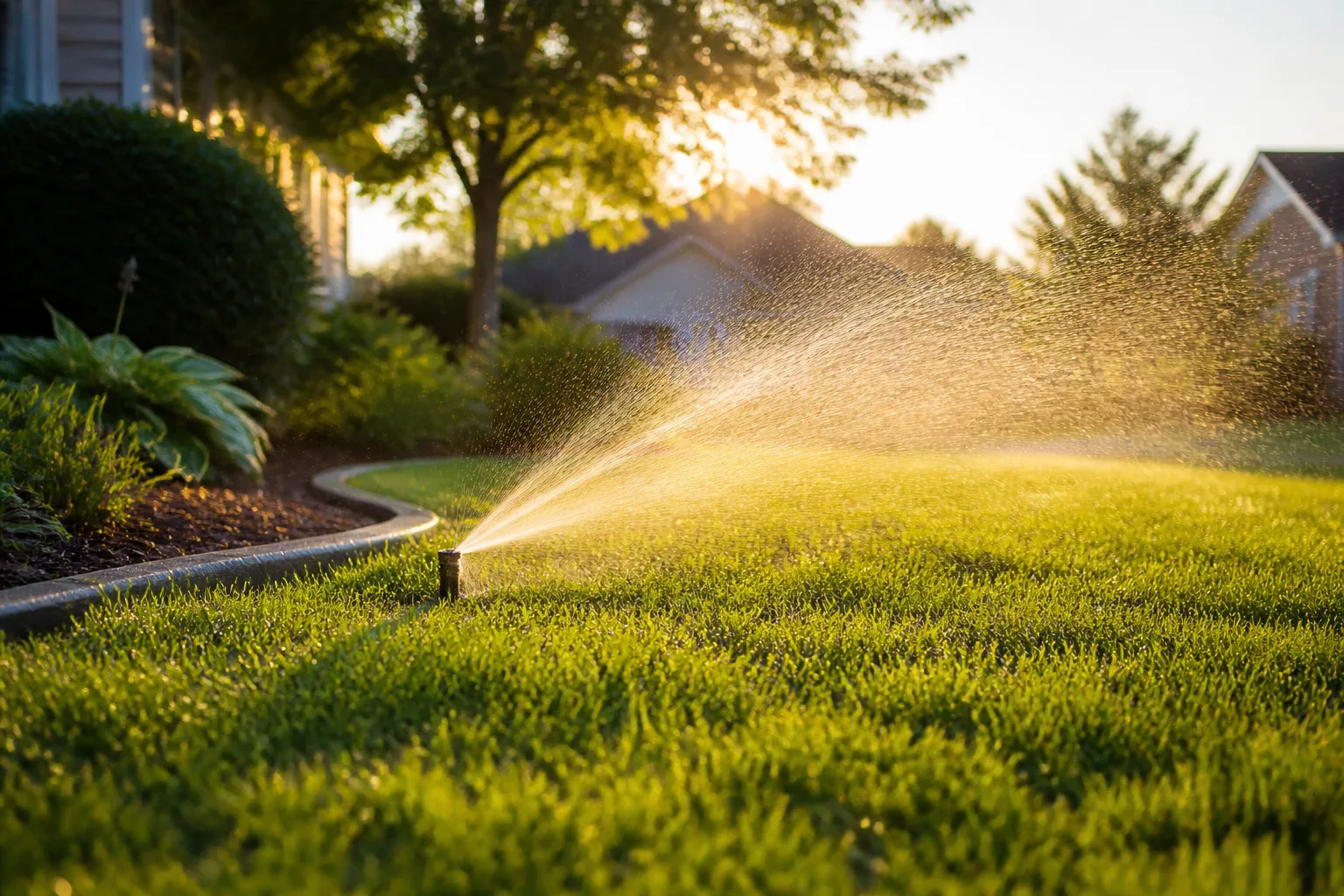
Homeowners are using fewer broadcast sprinklers in some parts of the landscape, but that does not mean the lawn sprinkler is obsolete. The real change is more specific: drip irrigation is replacing overhead spray in garden beds, around trees, on slopes, and anywhere water is better delivered to individual root zones than scattered across empty ground.
If you have a broad, continuous lawn, sprinklers may still be the most practical way to apply water evenly. If your system sprays sidewalks, soaks shrubs from above, runs on a fixed calendar, or waters the entire yard as if every plant had the same needs, the better move is usually to redesign the zones and schedule—not automatically remove every pipe.
The Short Answer: Sprinklers Are Not Disappearing
People are moving away from old-style sprinkler habits for three sensible reasons: water is expensive in many communities, overhead spray loses water to wind and evaporation, and many yards contain more planted beds than turf. That combination makes targeted irrigation attractive, especially where local drought rules limit when a system can run.
The important distinction is coverage versus precision. Turf is a dense, continuous planting that needs relatively even moisture across a surface. A flower bed contains individual plants with different root zones and water needs, often separated by mulch or bare soil. A sprinkler can blanket a bed when only a few plants need water; drip can do the reverse by wetting the soil where roots are actually growing.
The EPA WaterSense microirrigation guidance says microirrigation can use 20 to 50 percent less water than conventional sprinkler systems when it is installed and managed properly. That is a system-level opportunity, not a promise that every drip kit will cut a particular bill by the same amount. A clogged emitter, poor spacing, excess runtime, or a leak can erase the advantage.
What Changed in Residential Irrigation
The modern alternative is not one magic product. It is a more deliberate division of the yard into irrigation zones: sprinklers for turf, dripline or emitters for planted beds, and separate low-volume watering for trees, containers, or newly planted shrubs. Smart controllers can help, but they cannot correct the wrong head spacing, a broken pipe, or a zone that mixes plants with incompatible watering needs.
Water Loss Happens Above the Soil
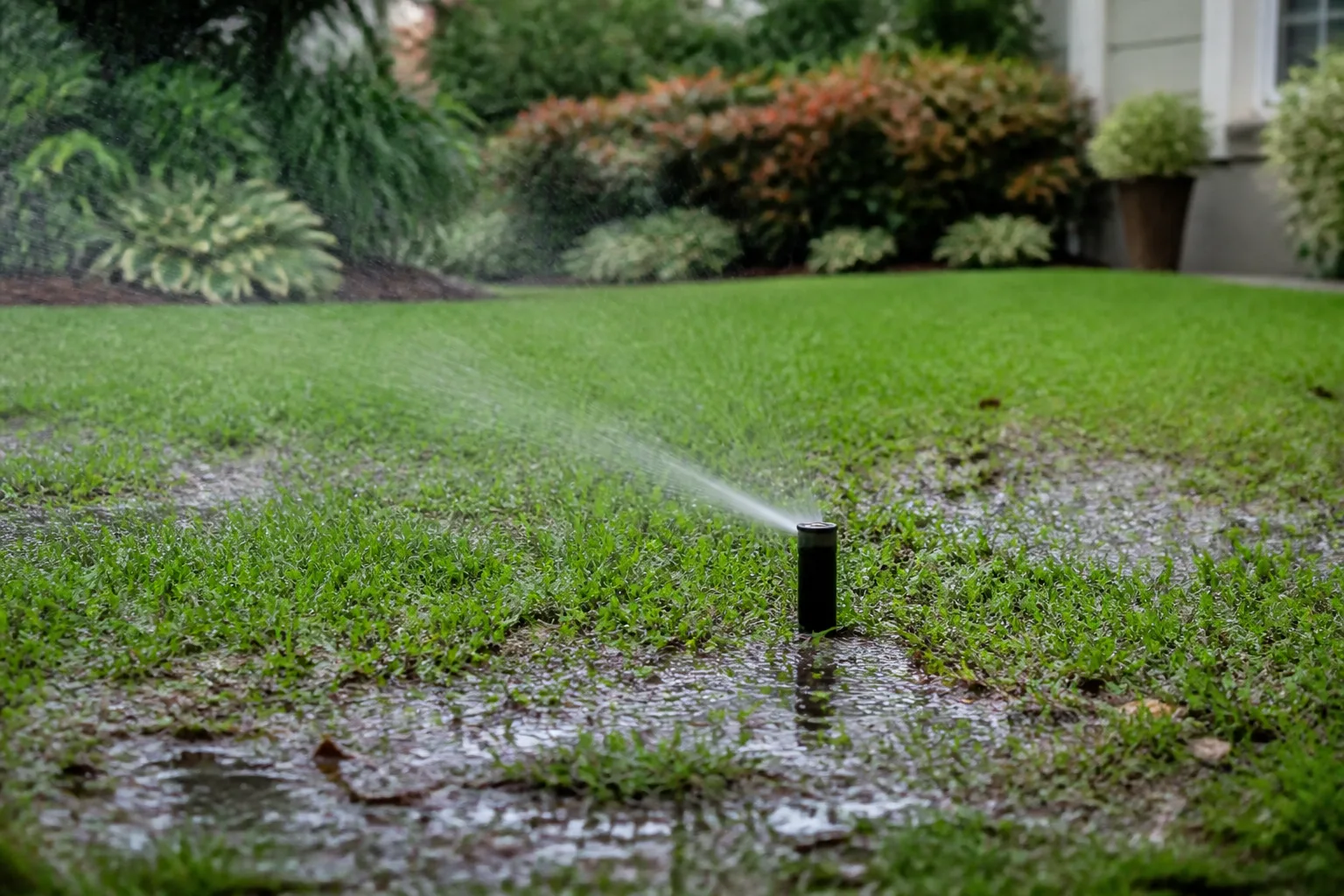
Every drop sprayed through the air has to survive wind, heat, and the distance between the nozzle and soil. Some water lands outside the target area, some evaporates before it reaches the ground, and some arrives faster than compacted or clay soil can absorb it. Runoff down a driveway is not a sign that a lawn needed a longer cycle; it is evidence that the application rate exceeded infiltration at that moment.
Colorado State University Extension describes drip irrigation as low-flow, low-pressure watering applied at or just below the soil surface. Its home-garden guidance reports more than 90 percent efficiency for drip compared with roughly 50 to 70 percent for sprinkler irrigation, while also warning that any system can waste water when the schedule is excessive. The figure is best understood as an application-efficiency comparison, not a guarantee that drip is always the right tool.
Wind makes the difference more obvious. A spray pattern can distort on an exposed lot, sending water toward pavement or neighboring property. Ground-level emitters largely remove wind drift, which is why drip is especially useful for beds and slopes. That same precision makes drip less suited to a large expanse of turf where the goal is a continuous, uniform wetting pattern.
The Lawn-and-Garden Mismatch
Many older systems were installed to make one controller and one set of zones do everything. A lawn, a hedge, a row of annuals, and a shade tree may all be connected to the same valve even though they dry at different speeds and need different application rates. That setup can make a sprinkler look wasteful when the real problem is that the zone is doing several incompatible jobs.
The same mismatch appears with portable hose-end sprinklers. They are convenient for a small lawn, but a single position can leave dry corners while overwatering the center. Moving the sprinkler helps, but a quick catch-can test is more reliable than judging by how shiny the grass looks while water is running.
A yard can also appear to be using fewer sprinklers simply because its planted areas have changed. Mature shrubs may shade soil that once dried quickly, a new patio may reduce the turf footprint, or a bed may have been mulched and replanted with species that need less frequent irrigation. Recheck the landscape map at the beginning of each season; the system should follow the current yard rather than an old plan.
The water bill is a useful clue, but it is not a diagnosis. A bill can rise because of a hidden irrigation leak, a municipal rate change, a longer dry spell, or extra household use. Compare the bill with rainfall and controller runtimes, then inspect the system before blaming the irrigation method.
Drip Irrigation Is Growing, but It Is Not a Lawn Replacement
Drip irrigation uses tubing and emitters to release small amounts of water at the soil surface or near the plant base. It is often a better fit for ornamental beds because it wets a defined root zone without repeatedly splashing leaves, flowers, siding, fences, or paths.
Where Drip Wins
Choose drip or another low-volume system when the landscape contains distinct plants rather than one unbroken carpet. The strongest use cases are:
- Flower and shrub beds where plants are spaced apart.
- Vegetable rows and raised beds where water can be placed beside the crop.
- Newly planted shrubs and trees whose root balls need targeted establishment watering.
- Slopes and berms where slow application can reduce runoff and erosion.
- Foundation or narrow side-yard beds where spray would hit the house or pavement.
- Containers and small planting pockets that dry at a different rate from the lawn.
Drip also keeps foliage drier than overhead irrigation. That does not make plants disease-proof, but it removes one source of prolonged leaf wetness for susceptible crops. It can also reduce weed germination between plants because the bare spaces receive less water than they would under a wide spray pattern.
The design details matter. Colorado State Extension recommends a filter and pressure regulator, and it notes that emitters must be placed so the wetted soil reaches the plant’s roots. Spacing depends on soil: water spreads differently in sand, loam, and clay. A line with too few emitters can leave half a root system dry while giving the homeowner the false confidence that water is running.
Where Drip Fails
Drip is a poor substitute for a large recreational lawn when the tubing cannot deliver uniform coverage across dense turf. A grass area needs water distributed across the surface, not a series of isolated wet spots. Installing enough closely spaced emitters to imitate a sprinkler pattern may be more complicated, more exposed to damage, and no more useful than a properly designed sprinkler zone.
New grass seed is another exception. Seed needs consistent moisture near the surface while it germinates, and a temporary oscillating or fine-spray setup may be easier to adjust than a permanent drip grid. Once the grass is established, move toward deeper, less frequent watering rather than keeping the seed-starting schedule.
Drip has its own failure modes. Small emitters clog, tubing can be cut during weeding or edging, exposed lines become a trip hazard, and water application is difficult to see. It also should not be treated as a set-and-forget system. Inspect filters, flush lines, check flow at the far end, and move emitters outward as shrubs and trees grow.
The Most Practical Setup Is Usually a Hybrid
Most residential yards do not need an either-or decision. They need the irrigation method to match the planting. A hybrid layout often saves more water and maintenance time than replacing a good lawn zone with a system designed for individual plants.
Keep Sprinklers in Turf Zones
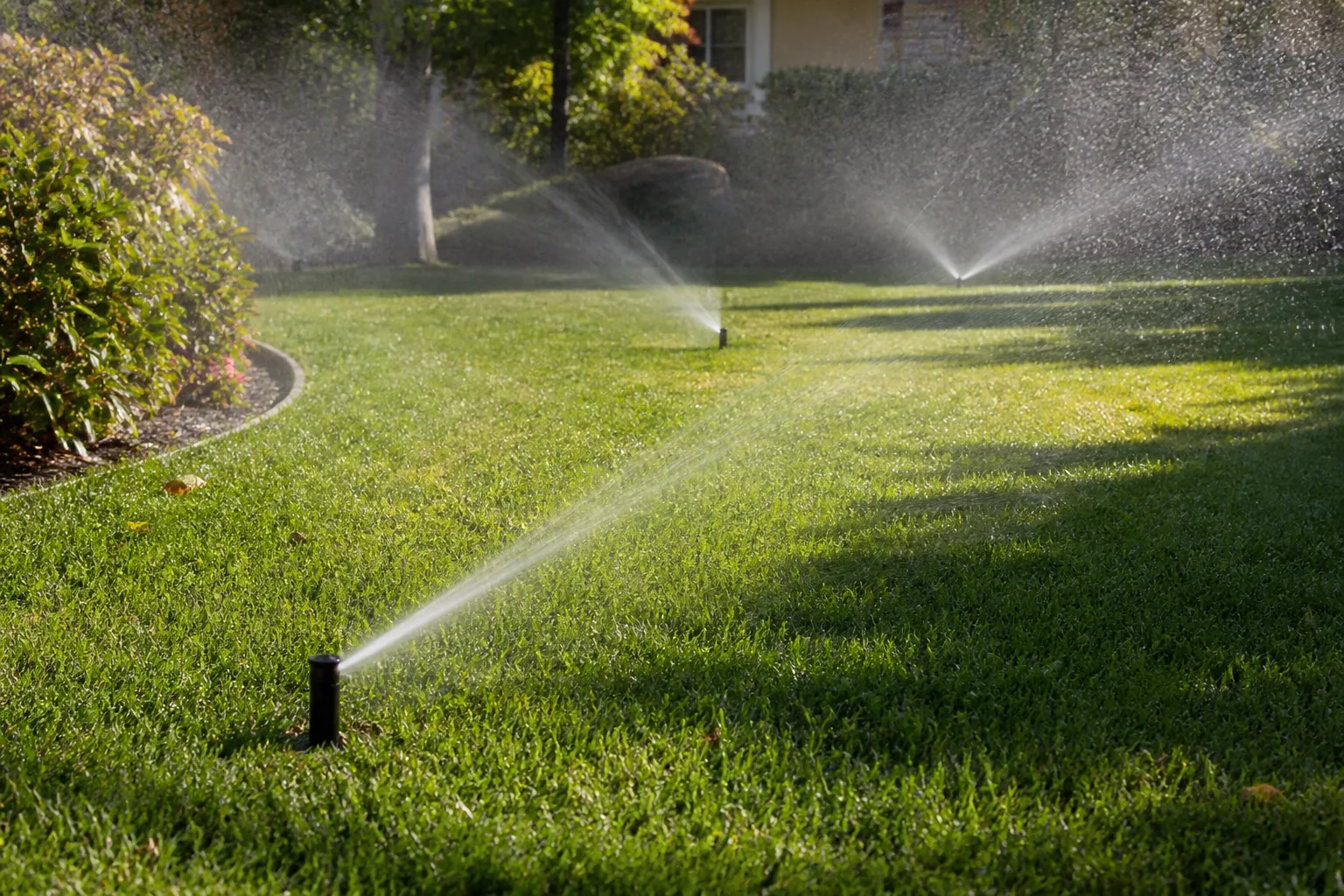
Keep or install sprinklers for broad, continuous turf, play areas, and other spaces where people need a clear surface without exposed tubing. A sprinkler zone can be efficient when heads have matched precipitation rates, overlap correctly, stay level, and do not spray pavement or buildings.
Lawn-care guidance from Hunker makes the same practical distinction: sprinklers remain relevant for lawns, while professionals often favor drip for gardens. For turf, the improvement may be a lower-precipitation rotating nozzle, corrected head spacing, a repaired valve, or a weather-aware schedule—not a completely different delivery method.
Convert Beds and Trees to Drip
If sprinklers are watering beds, convert those areas first. A dedicated drip zone can run at a different pressure and for a different duration from the lawn. Do not attach drip and high-pressure spray heads to the same active zone; their flow and pressure requirements are not compatible.
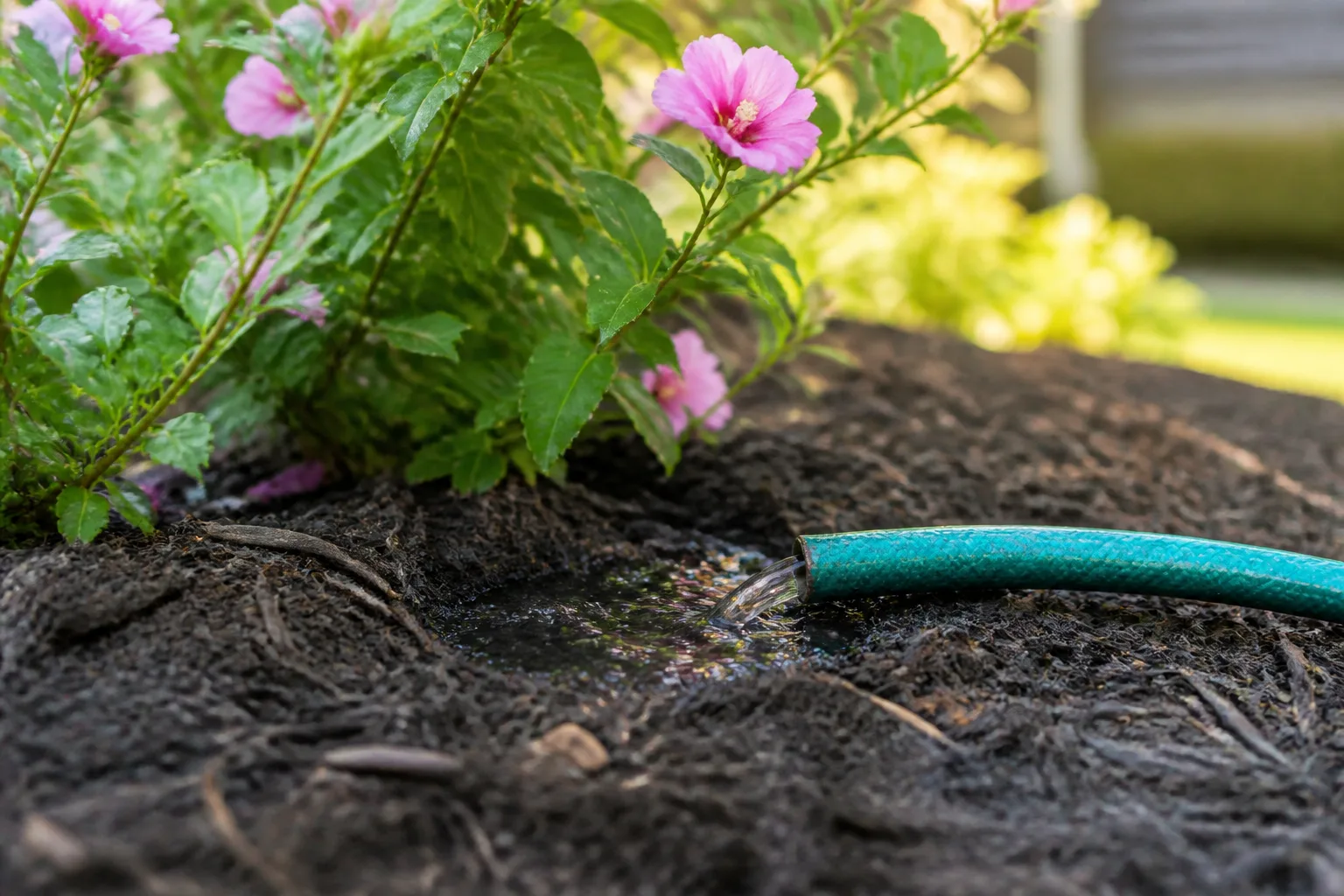
For a small bed, a hose-bib kit can be enough if it includes backflow protection, filtration, pressure regulation, and a timer. For a permanent system, have the zone sized for the available flow and the number of emitters. Epic Agriculture’s comparison of drip and sprinklers also emphasizes the hybrid approach: use precision watering for beds and broad coverage for turf, rather than forcing one system to do both jobs.
When converting, keep the old sprinkler supply line if it is sound. It can often feed a new drip manifold, but the old heads and unused outlets must be capped or redesigned so the zone does not lose pressure. Label the valve and record which plants it serves; the notes will matter when a future owner, gardener, or repair technician adjusts the system.
How to Make an Existing Sprinkler System Worth Keeping
Before buying a new controller or paying to remove buried pipe, measure what the existing system is doing. The goal is not to make every zone run longer. It is to make the application even, match the schedule to actual drying, and stop paying for water that never reaches roots.
Audit Coverage Before Changing Hardware
Place several straight-sided, shallow containers across one sprinkler zone: near the head, halfway between heads, at the edge of the pattern, and in any area that usually looks brown. Run the zone for a fixed time and compare the water depth in each container. This simple catch-can test reveals poor overlap, overspray, and a distribution problem that a timer upgrade cannot solve.
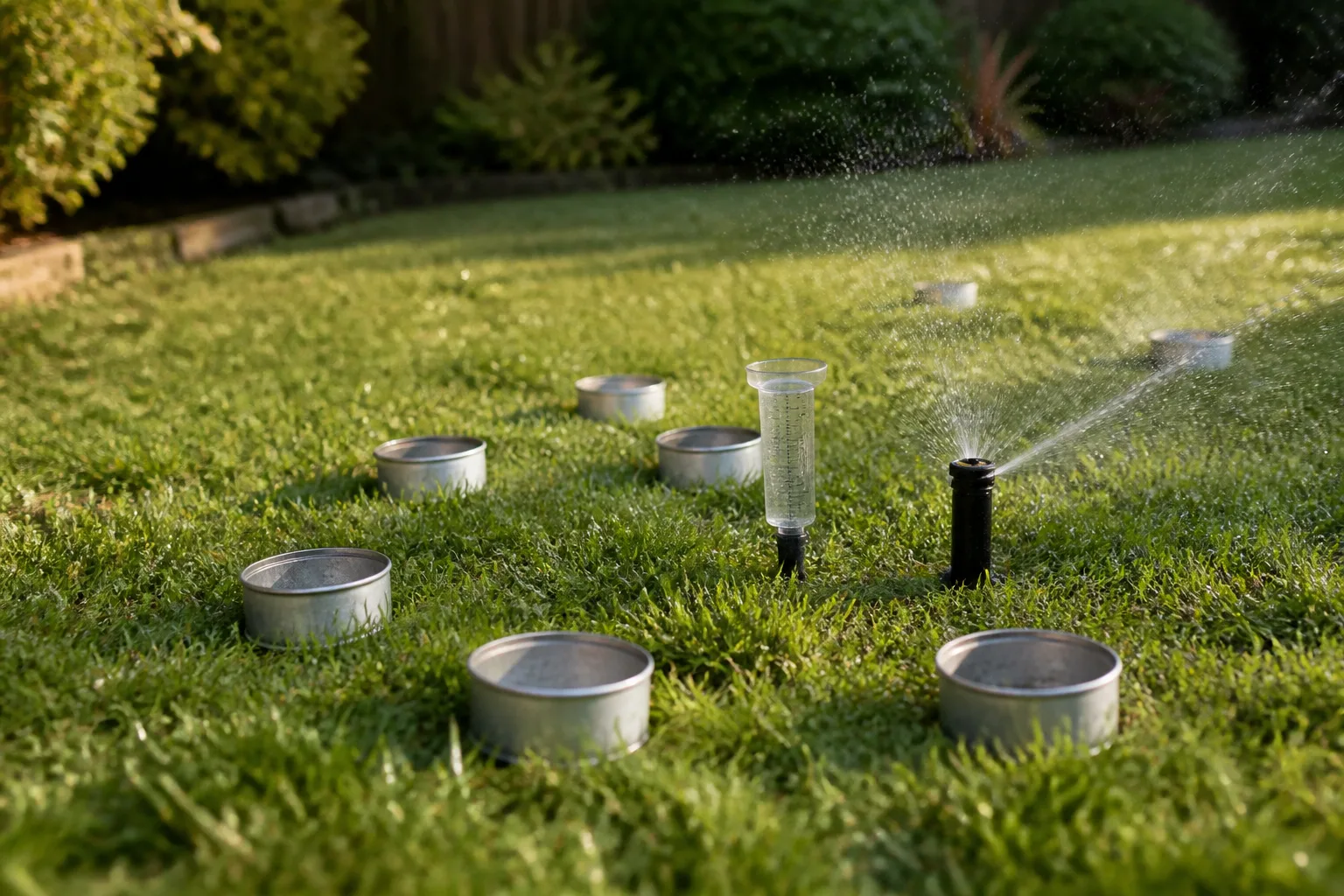
Walk the zone while it runs and note tilted or buried heads, misting, clogged nozzles, broken risers, water pooling, and spray crossing sidewalks. Check whether a head is watering a shrub bed more heavily than the turf. If one area stays dry, first check coverage and soil infiltration before increasing the runtime for the whole zone.
Utah State University’s Center for Water Efficient Landscaping points homeowners toward water checks and catch cups because measurement is the starting point for efficient landscape irrigation. A short audit can tell you whether the best next step is nozzle repair, head relocation, a new zone, cycle-and-soak programming, or professional redesign.
Schedule for Soil, Weather, and Grass
Water early in the day when practical, but do not let a clock override the soil. If rain has already soaked the root zone, skip the cycle. If water begins pooling or flowing off a slope, pause the zone and let the soil absorb the first application before starting another.
For established turf, aim for deep watering with a dry interval rather than short daily sprinkles. The right interval depends on grass type, soil, temperature, wind, shade, mowing height, and rainfall. Better Homes & Gardens’ lawn-watering guidance suggests watching for evening leaf curl, a blue-gray cast, or footprints that remain visible instead of relying on midday wilting alone.
Clay soil often needs cycle-and-soak programming: run the zone for a shorter period, pause long enough for water to infiltrate, and repeat. Sandy soil may accept water quickly but drain quickly, so it can need more frequent checks. Neither soil should be managed by a universal “run for 30 minutes” rule.
New seed and new sod follow a different schedule from established turf. Seed needs a consistently moist surface during germination, while established grass benefits from deeper applications. Homes & Gardens warns against watering simply because the timer says it is time when soil is already damp, rain has arrived, or water is pooling.
Upgrade Heads Only When the Pattern Fits
If the audit shows that a zone is broadly sound, consider replacing fixed spray nozzles with multi-stream rotating nozzles or other lower-precipitation heads suited to the zone. These can apply water more slowly and reduce misting, but the change only works when the new nozzles are matched to the head spacing and operating pressure.
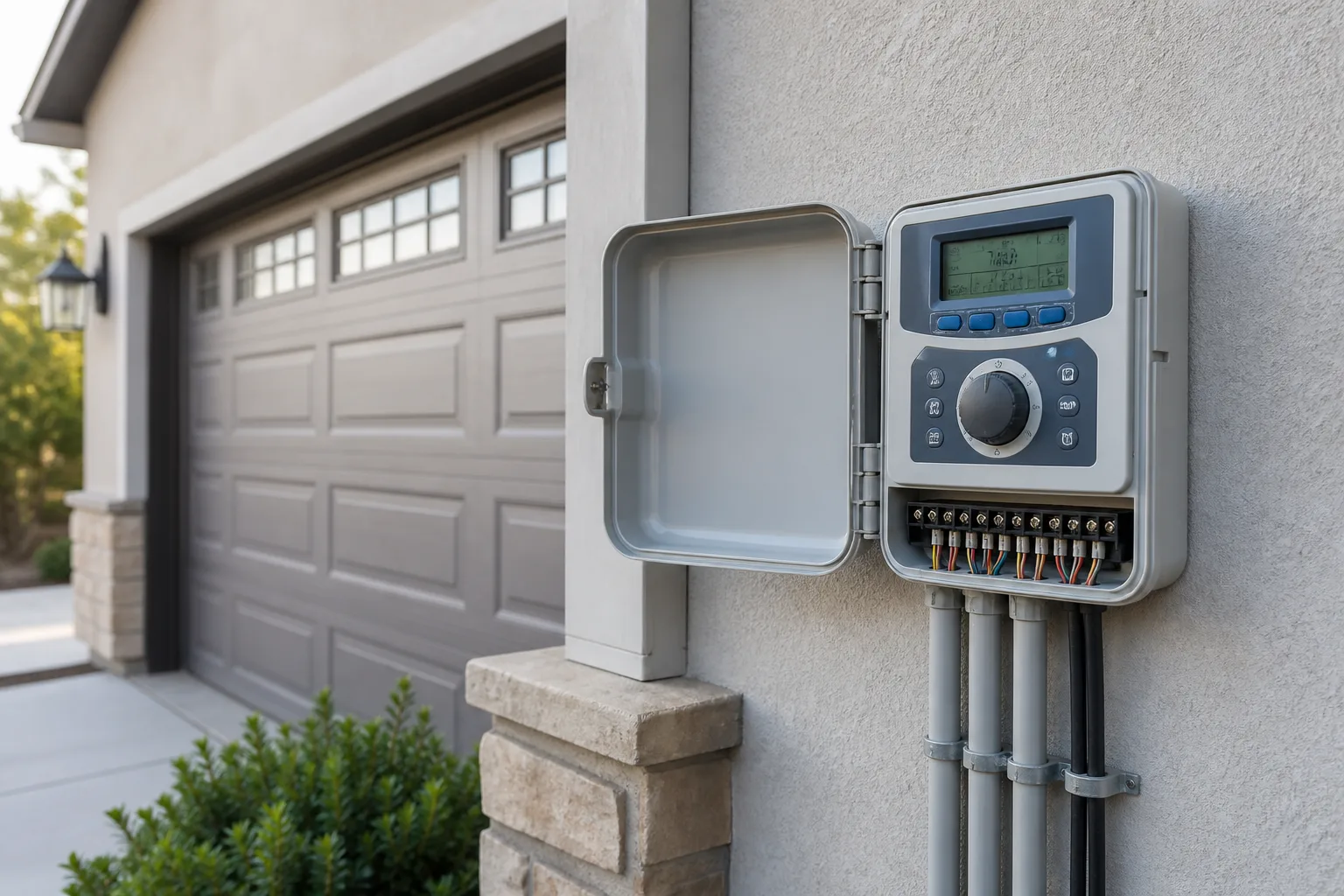
A weather-based controller is useful when the problem is a rigid schedule. It can skip a cycle after rain and adjust for changing conditions, but it is not a soil sensor in every yard and should still be checked. A controller cannot see a cracked lateral line, a blocked filter, a head spraying the street, or a lawn that has gone dormant.
Do not upgrade hardware before checking water pressure and flow. A low-pressure system may need fewer heads per zone, while a high-pressure system may need regulation to prevent misting. Keep records of the nozzle type, arc, radius, and precipitation rate so future repairs do not create a mismatched zone.
Lawn Care That Lowers Irrigation Demand
Irrigation is only one part of the water budget. A lawn with compacted soil, scalped grass, poor species selection, and no organic matter may stay stressed even when the timer runs longer. Fixing those conditions can reduce the amount of supplemental water the lawn needs and make every irrigation cycle more effective.
Soil and Mowing Matter More Than a New Timer
Probe the soil after watering with a screwdriver or narrow trowel. You are checking whether moisture reached the active root zone, not whether the surface looks dark. If the probe stops at a dry layer, improve the application in smaller cycles and address compaction; if the soil stays saturated, more runtime will make the problem worse.
Mow high enough to leave useful leaf area, especially during hot or dry weather. Taller grass shades the soil and protects it from rapid surface drying. Keep blades sharp and avoid removing a large portion of the leaf in one cut, because a lawn stressed by mowing may look as if it needs water when the more immediate issue is mowing shock.
Improve soil based on a test rather than dumping amendments blindly. Organic matter can help some soils hold and transmit water, while aeration can improve infiltration where traffic has compacted the surface. The best amendment and timing depend on the soil, grass, and local climate.
Choose Grass and Rainwater Realistically
Grass species change the irrigation decision. Warm-season turf often handles heat and drought differently from cool-season turf, while some cool-season lawns can enter dormancy instead of dying during a dry spell. A regional extension office can help identify the grass and explain local dormancy and watering rules before you decide that a brown lawn needs a permanent irrigation overhaul.
Rain barrels are useful for containers, vegetable beds, and small planted areas, but they rarely replace the water needed for a large lawn. Treat stored rainwater as a supplement and check local rules, barrel capacity, mosquito prevention, overflow routing, and the time required to distribute it. A barrel connected to a downspout cannot solve a lawn-wide coverage problem by itself.
If you want to reduce irrigation demand further, shrink the turf footprint where it does not serve a clear purpose. Replace awkward strips, steep edges, and unused corners with regionally appropriate ground covers, shrubs, or mulched beds—but choose plants for the actual sun, soil, and mature size instead of assuming every “drought-tolerant” label means no water after planting.
Should You Remove an Unused Sprinkler System?
Usually, no—not as a first step. Digging out an underground system can disturb roots, damage hardscape, create a large repair area, and cost more than capping a water supply and leaving accessible pipe in place. If the system is no longer needed, the safer sequence is to stop automatic cycles, close or cap the supply, drain exposed portions where freezing is a concern, and mark valve boxes and capped lines.
Removal becomes more reasonable when pipes are repeatedly leaking, a renovation will already expose the yard, the system conflicts with a new landscape plan, or the components are so damaged that keeping them creates ongoing risk. Get a clear estimate that separates controller, valves, heads, trenching, haul-away, landscape repair, and any backflow work. You may find that removing only the obsolete bed zones and keeping the turf zone provides the best balance.
Use this order when deciding what to do with your own yard:
- Identify what each zone actually waters.
- Measure coverage and inspect for leaks or overspray.
- Separate turf from beds, trees, containers, and slopes.
- Correct soil or mowing problems that are driving excess demand.
- Change the schedule before changing all the hardware.
- Convert only the zones that benefit from drip.
- Cap, drain, or remove unused components after the redesign is clear.
That sequence avoids the most common expensive mistake: replacing a system before determining whether the system, the schedule, or the landscape layout is the real problem.
Conclusion
Homeowners are using fewer sprinklers where overhead spray is a poor match for the landscape, not because sprinklers stopped working. Drip irrigation is a strong choice for beds, shrubs, trees, vegetables, containers, and slopes; sprinklers remain the practical choice for broad turf that needs uniform coverage.
Start with measurement. Test the sprinkler pattern, check soil moisture, look for runoff, separate incompatible zones, and adjust for grass type, weather, and local rules. In many yards, the best water-wise upgrade is a hybrid system with a tested sprinkler zone for the lawn and a filtered, regulated drip zone for everything else.



