The 9 Best Grow Lights for Plants and Seedlings
Compare the 9 best grow lights for houseplants, herbs, seedlings, and larger collections, plus PPFD, distance, timer, spectrum, and setup advice.
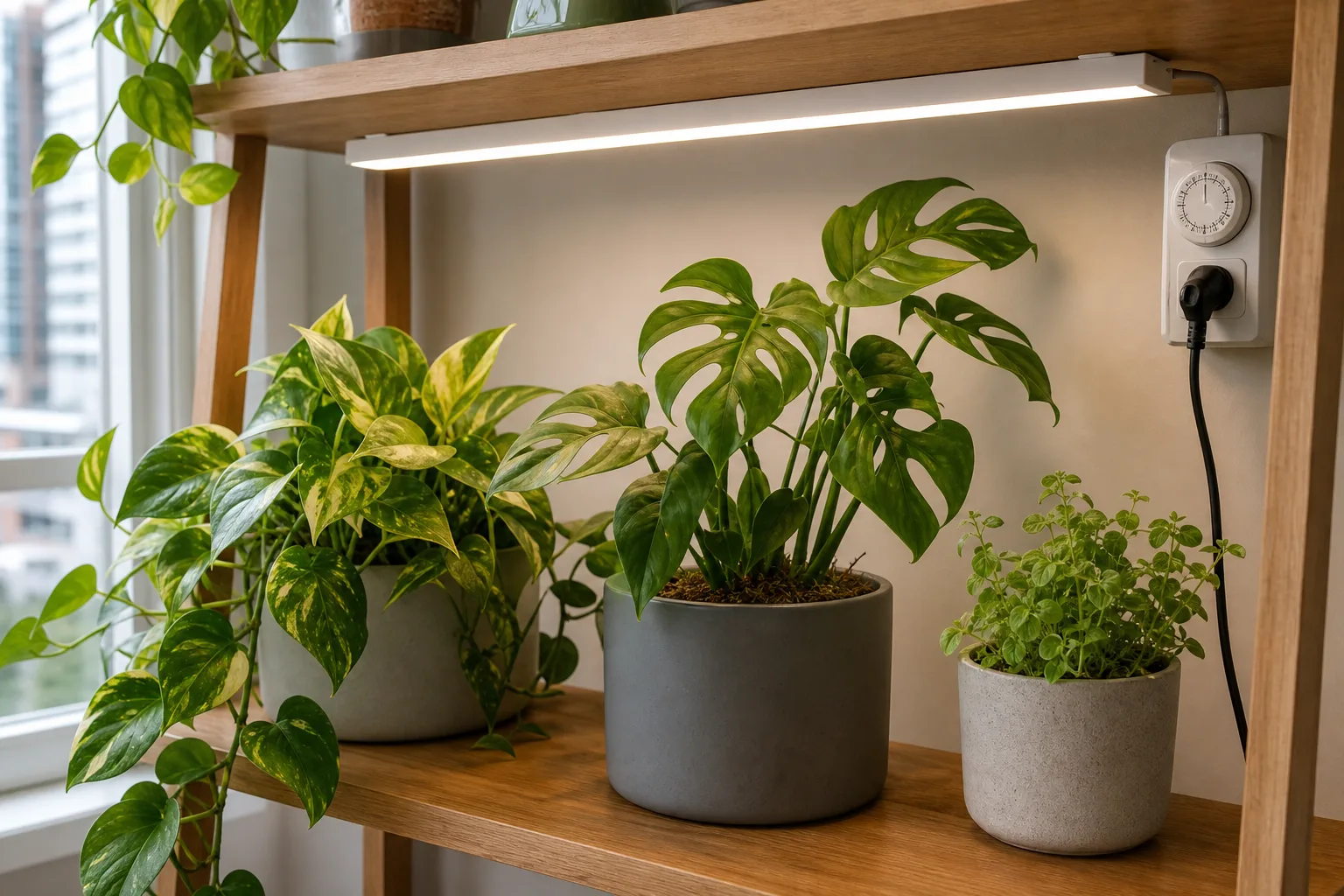
The best grow light is the one that gives your plants enough usable light over the whole canopy, fits the space you actually have, and can run on a dependable schedule. A 10-watt bulb can be the right answer for one pothos on a side table and a terrible answer for a tray of tomato seedlings; a powerful panel can solve a dark grow shelf while overwhelming a small fern.
This review sorts nine useful fixtures by job rather than pretending there is one universal winner. I considered light form, adjustability, coverage, timer and dimmer controls, installation, likely heat, and the point at which each option stops making sense. Product specifications change by variant and market, so confirm the exact model, voltage, wattage, warranty, and published light map before buying.
The short list: match the light to the job
| Best for | Pick | Why it stands out | Main compromise |
|---|---|---|---|
| Most beginners | LBW LED Grow Light With Stand | Adjustable stand and flexible heads | Looks functional, not decorative |
| A few houseplants | AeroGarden Trio | Small three-head footprint and simple controls | Limited height for tall plants |
| Many plants or trays | Mars Hydro TS1000 | High output and broad working area | Needs hanging space and a separate timer |
| Several small pots | Leoter Four-Head | Flexible heads, clip mount, dimming | Clamp needs a stable edge |
| One plant on a budget | GE BR30 LED bulb | Fits a normal lamp socket | Lamp direction and timer are your problem |
| A stronger bulb | SANSI BR30 24W | More output from a familiar screw-in format | No built-in coverage or height control |
| An under-shelf setup | Soltech Grove | Slim, directional, and easy to hide | Permanent mounting can limit future changes |
| A living-room pendant | Soltech Aspect Gen 2 | Dimmable pendant design with long cord | Higher cost and a focused beam |
| Seedling trays | iGrowtek 2-Foot Bar | Compact bar with adjustable stand | Outgrown quickly by tall plants |
If you are unsure, start with the plant list rather than the product list. A low-light foliage plant often needs a gentle supplement; seedlings, herbs, succulents, citrus, and fruiting vegetables demand more light and better coverage. A fixture that lets you dim or raise the source is usually easier to live with than a fixed-output light that is either too weak or too intense.
How to choose by plant, footprint, and room
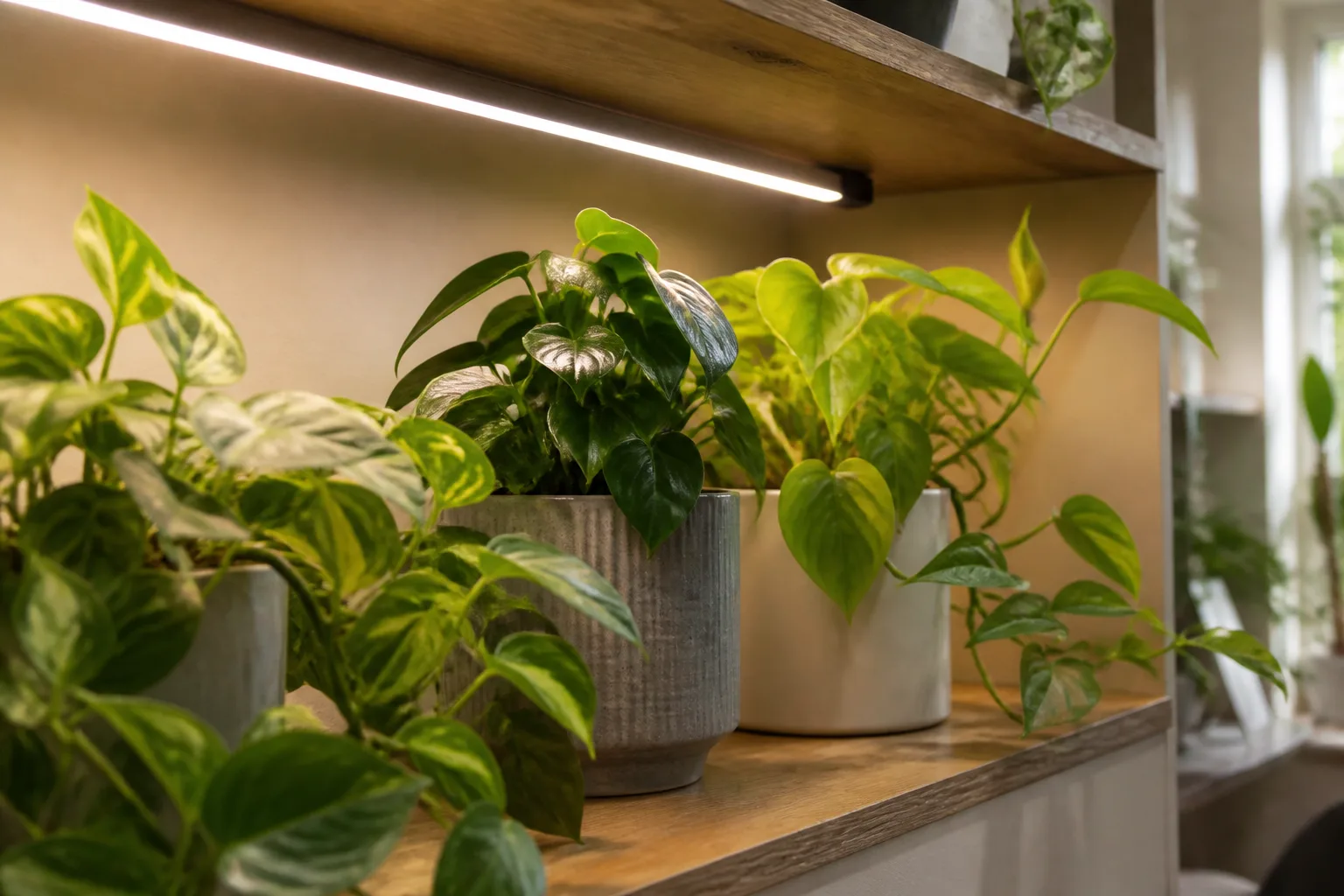
For one or two plants, a screw-in bulb or clip-on lamp is usually the least disruptive choice. It uses furniture you already own and lets you move the light when the plants move. For a 10-by-20-inch seed tray, choose a bar or panel that covers the full tray; a bright spot over the center can still leave edge seedlings stretching.
For a plant shelf or collection, prioritize the geometry of the light. A wide bar distributes light across a row, a multi-head lamp aims at separate pots, and a pendant creates a pool below it. For a dark room or high-light crops, look for a dimmer and a manufacturer PPFD chart at several heights. For ordinary houseplants, a timer and comfortable color temperature may be more valuable than raw output.
The nine picks below are recommendations by use case, not a laboratory ranking of identical fixtures. A product page may publish watts, color temperature, beam angle, or PPF while omitting PPFD at the height you need. When that happens, treat the missing data as a buying limitation, not as proof that the light is weak or strong.
1. LBW LED Grow Light With Stand: best all-around starter
The LBW LED Grow Light With Stand is the most forgiving starting point for a mixed collection of seedlings, herbs, cuttings, and small houseplants. Its adjustable stand and gooseneck-style heads let you change both height and angle, while a timer and multiple brightness settings reduce the amount of daily fiddling.
This is the type of setup that works well when the plants are not all the same height. Put the light over a tray today, shift one head toward a spider plant tomorrow, and fold the stand away between seed-starting seasons. The trade-off is visual: it reads as gardening equipment, so it is better for a utility shelf, basement, office, or plant corner than a carefully styled living room.
Choose it when flexibility matters more than a sleek fixture. Do not buy it for a tall floor plant or a large fruiting crop; its usefulness depends on keeping the heads close enough and the illuminated area compact enough to avoid weak edges.
2. AeroGarden Trio Grow Light: best tabletop light for houseplants
The AeroGarden Trio makes sense for a bookshelf, counter, or small plant grouping where appearance and simplicity matter. Three adjustable heads can be aimed at separate pots, and the control system is less intimidating than a bare panel with a tangle of wires. It is a good match for compact foliage, small herbs, cuttings, and a few seedlings.
Its limit is height. The heads and base are designed for a small tabletop zone, not for a mature monstera, a tall pepper, or a deep shelf where plants sit far below the source. The compact footprint also means you should count the canopy, not the number of pots: three tiny plants may fit, but three broad plants can shade one another.
Use the timer and keep the light centered over the foliage rather than angled across it. If the newest leaves are pale or the stems lean, the plants may be asking for more intensity than this tabletop format can provide; move to a bar or hanging light rather than simply extending the day indefinitely.
3. Mars Hydro TS1000: best for a dedicated growing area
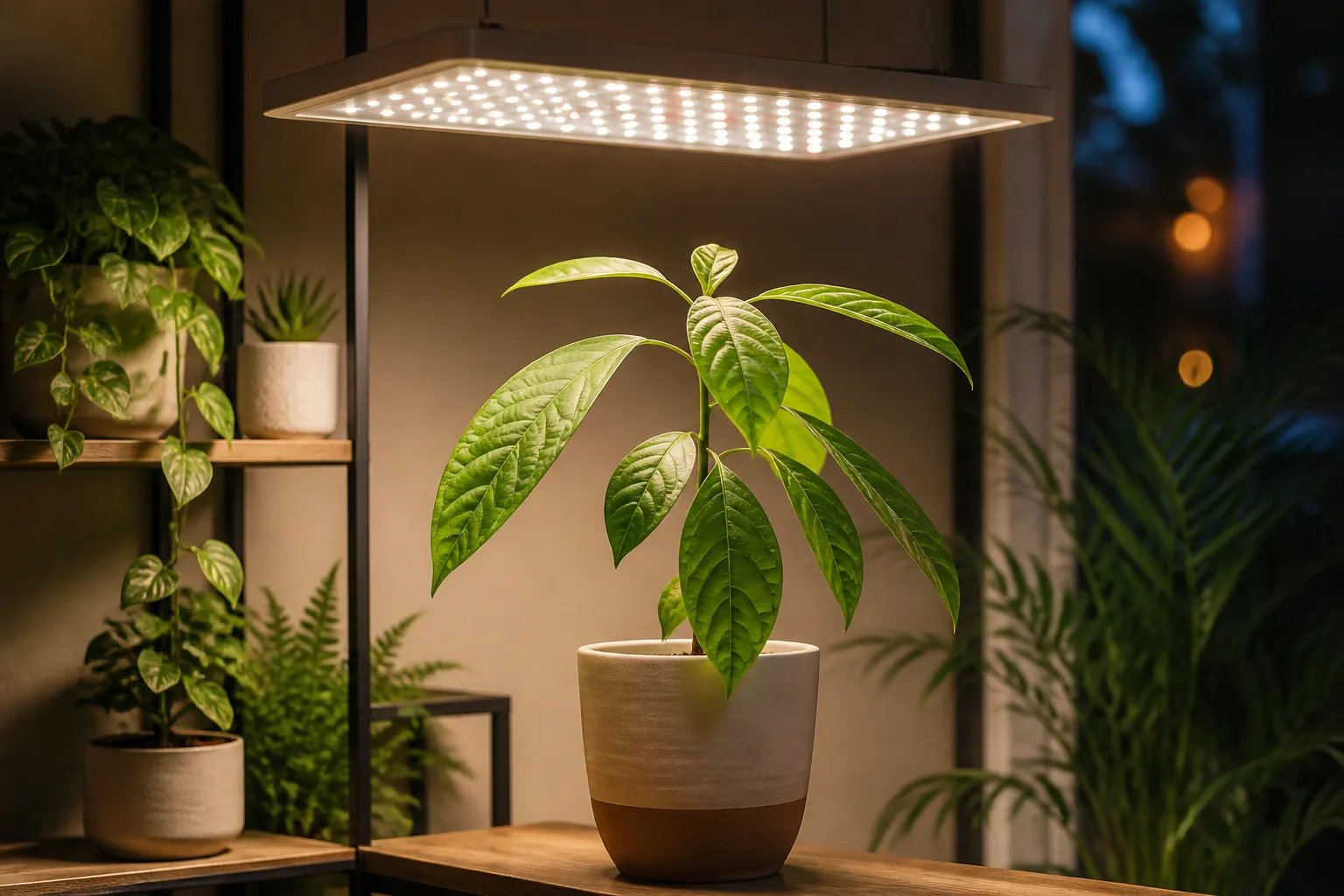
The Mars Hydro TS1000 belongs in a basement, grow tent, utility room, or purpose-built shelf where output and coverage matter more than decoration. Its 150-watt class panel is suited to a larger seedling area or several plants sharing a defined footprint, and its dimming capability gives you a way to start gentler before increasing intensity.
This is not the convenient choice for one plant beside the sofa. A panel of this type needs a secure mounting plan, open space around the fixture, and a separate timer if the specific version does not include one. A smart plug can automate the schedule, but check that the light returns to the correct state after a power interruption.
Use a panel when you want a more even canopy and room to grow into the setup. Hang it high enough to cover the edges, then use the dimmer or the maker’s height chart to avoid blasting newly emerged seedlings. A cheap light meter that reads lux can help you compare positions, but it does not replace a PPFD map.
4. Leoter Four-Head Grow Light: best adjustable clip-on
The Leoter four-head light is a practical answer for several small plants packed along a shelf edge. Flexible arms make it possible to put one head over a cutting, one over a trailing plant, and the others over seedlings without buying a multi-tier stand. Its clip mount saves table space, and the remote-style controller commonly offers dimming, color modes, and timed intervals.
The clamp is the deciding factor. A thin shelf lip, wobbly side table, or overloaded power cord can let the fixture sag or fall, changing the light pattern overnight. Mount it to a stable surface, route the cord so it cannot tug the clamp, and check that the heads do not touch leaves.
Choose the neutral or full-spectrum setting for a living space unless you have a specific reason to use red and blue channels. The red-and-blue “blurple” look can be useful in a dedicated grow area, but it is not automatically more effective for a mixed houseplant shelf, and it makes it harder to judge leaf color.
5. GE BR30 LED Grow Light Bulb: best budget single-plant option
The GE BR30 LED Grow Light Bulb is the simplest solution when you already own a lamp with the correct socket. It is compact, easy to replace, and useful for one small plant, a propagation station, or a seasonal plant that needs supplemental winter light. The familiar flood-bulb shape also spreads light more broadly than a tiny spotlight.
The bulb is only half the setup. You still need a fixture that points down or sideways safely, a timer, and a way to adjust the distance as the plant grows. Keep the lamp away from drapes, paper, water splashes, and unstable shelves, and confirm the lamp’s maximum bulb rating before installing it.
This is a budget pick, not a tray solution. One bulb placed above a row of seedlings often creates a bright center and dim edges, so use two fixtures or switch to a bar when the growing area becomes wider than the beam. Expect some audible hum from certain variants and place it where that sound will not become a daily annoyance.
6. SANSI BR30 24W Grow Light Bulb: best higher-output bulb
The SANSI BR30 24W Grow Light Bulb is the bulb-format choice for a plant that needs more intensity than a small supplemental bulb can provide. It fits a standard screw-in socket, which makes it useful for a work lamp, pendant, or adjustable reflector you already own. SANSI’s current catalog also shows that its bulb and fixture range varies widely, so verify the exact 24-watt model rather than assuming every SANSI bulb has the same output.
The benefit is straightforward installation; the limitation is control. A fixed-output bulb does not let you soften the light when a plant comes out of a dim corner, and the bulb’s actual effect depends heavily on reflector shape and distance. Use a movable fixture for the first week so you can back it away or angle it without relocating the plant.
For product details, compare the maker’s stated wattage, socket, spectrum description, and any PPFD information on the exact listing. The SANSI product catalog is useful for confirming that variants are not interchangeable. If the light map is absent, start farther away and watch the newest leaves before moving closer.
7. Soltech Grove: best under-shelf or wall-mounted light
The Soltech Grove is made for the awkward spaces where a tripod or hanging pendant would get in the way. Its slim bar can sit under a shelf or mount on a wall, keeping the light source close to a row of small plants while reducing spill into the room. It is especially useful for seedlings, small foliage, and a narrow display shelf.
Mounting is both its advantage and its constraint. Adhesive can fail on dusty or textured surfaces, and a fixed bar is less forgiving when a plant grows above the available height. Use the included hardware or a suitable removable mounting method for your surface, leave room to service the cord, and decide whether you want a temporary station before drilling.
Pick Grove when you know where the plant shelf will live. If the collection changes every month, a movable bar is a better investment. If you like the look but need a wider canopy, add another properly spaced bar rather than tilting one narrow source so far that the back plants receive little light.
8. Soltech Aspect Gen 2: best decor-friendly pendant
The Soltech Aspect Gen 2 is the most convincing choice here for a living room, bedroom, or entry space where the fixture itself needs to look intentional. The manufacturer lists a 36-watt draw, integrated 10–100% dimming, a 3000K warm-white light, an 18-foot fabric cord, a 60-degree beam angle, a timer for U.S. and Canadian orders, and a five-year warranty. Those details make it easier to tune the light for a plant group instead of treating brightness as an on-or-off decision.
The focused beam is also the reason placement matters. Soltech’s guide gives different hanging ranges for high-light, medium-light, and low-light plants; a higher light spreads farther but becomes less intense. The Aspect Gen 2 specifications and grow guide are the right place to confirm the current model’s range and included accessories.
Choose it for a stable plant arrangement and a fixture you will keep visible. Do not use a single pendant to pretend that a whole room is evenly lit: rotate plants, group plants with similar needs, and check the outer leaves for lean. The higher purchase price buys design, adjustability, and a long installation cord; it does not eliminate the need to match intensity to the plants.
9. iGrowtek 2-Foot Grow Light: best compact seedling bar
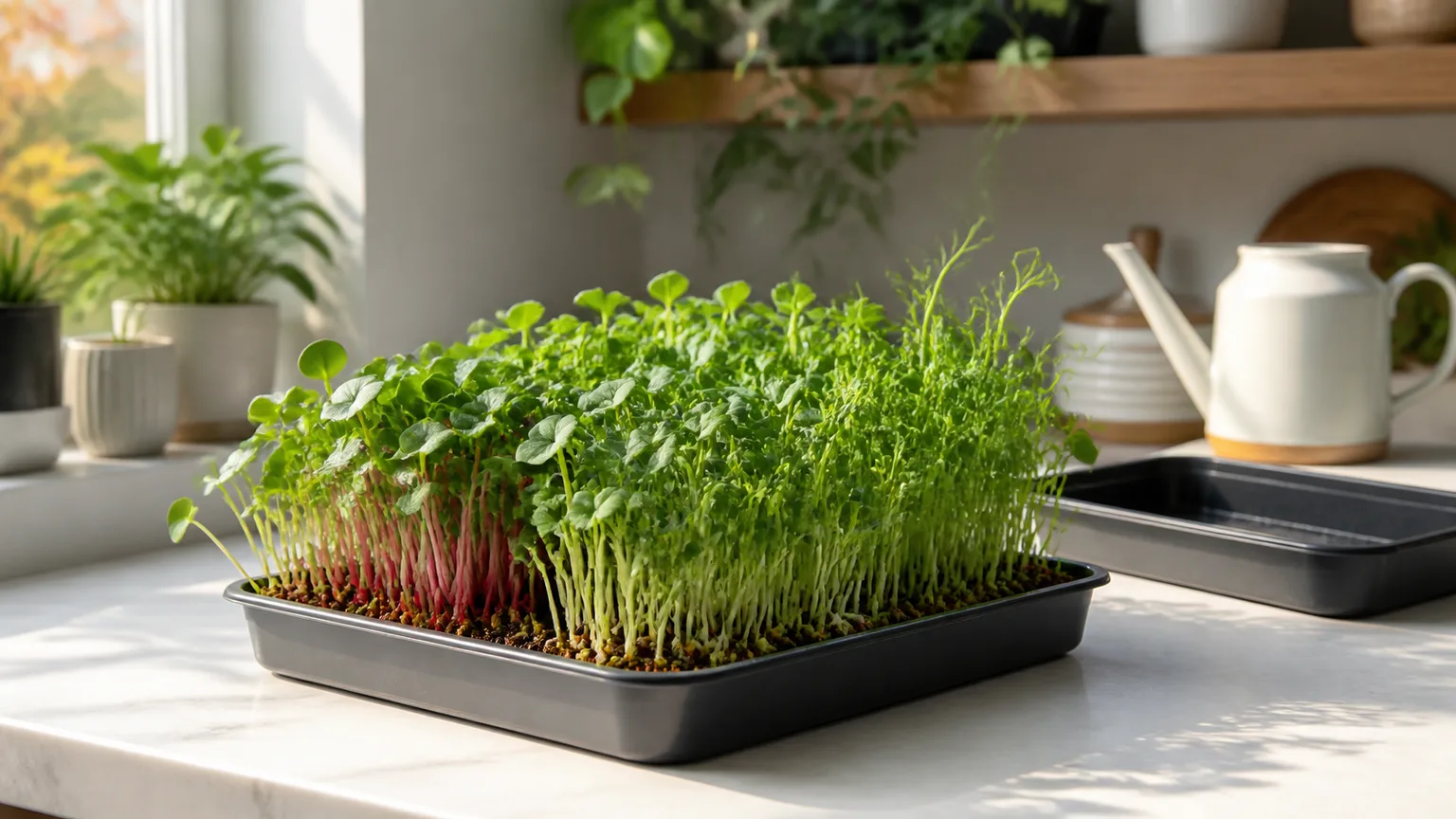
The iGrowtek two-foot bar is sized for seed-starting trays and small propagation shelves. A raised stand lets you adjust the fixture as seedlings gain height, and the narrow footprint works on a table or basement shelf without requiring a full grow tent. It is a practical seasonal tool for someone who starts a modest number of plants each year.
Its ceiling arrives quickly. Once seedlings become tall, the short stand and narrow bar stop covering the crop well, and there is no reason to keep forcing a mature tomato or pepper under a seedling fixture. Plan the handoff before sowing: seedlings may move to a larger light, a greenhouse, or an outdoor hardening area when weather permits.
The fixture’s lack of a built-in timer is a small cost that becomes important over six weeks. Add a grounded timer rated for the electrical load and check it after installation. For seedlings, consistent daily light, darkness, and close-to-even coverage matter more than a long feature list.
What the numbers actually mean
The label “full spectrum” is not a performance grade. It tells you something about the light’s color distribution, but not how much light reaches your leaves, how evenly it reaches them, or whether the fixture covers the area you plan to grow. A modest full-spectrum bulb can be excellent for a pothos and inadequate for fruiting peppers.
PPFD matters more than a wattage headline
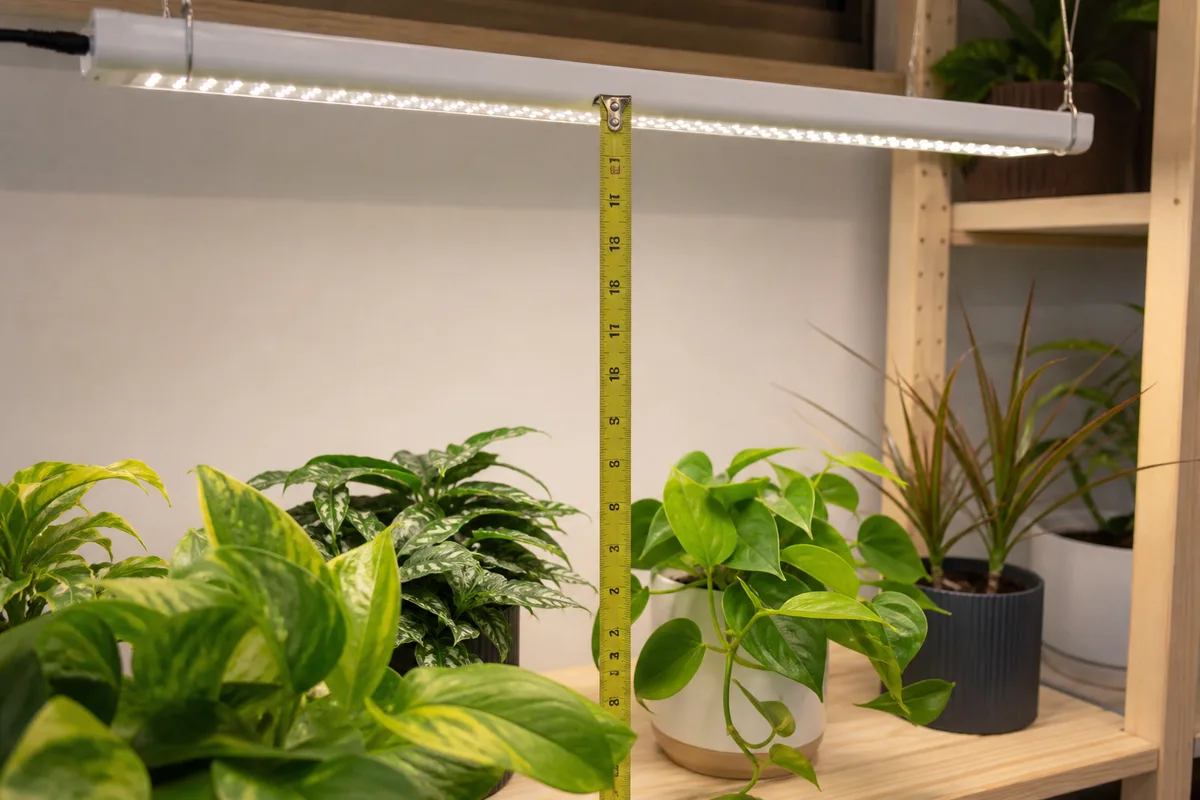
Wattage measures electrical input, not the amount of plant-usable light at the canopy. Lumens and lux describe brightness as humans see it, so two lights that look equally bright can deliver different amounts of photosynthetically useful radiation. Joe Gardener’s interview with professional horticulturist Leslie Halleck makes this practical distinction clearly and recommends treating PPF and PPFD as more useful plant-light terms than wattage alone. (Joe Gardener)
PPFD is the instantaneous amount of photosynthetic photons arriving at a square meter each second, reported in micromoles per square meter per second. A PPFD map matters because the center of a fixture can be much brighter than its edges. For a shelf or tray, look for average, minimum, maximum, mounting height, and the size of the mapped footprint.
PPF is the total photosynthetic photon flow leaving the fixture each second. It helps compare fixtures in broad terms, while PPFD answers the more useful question: how much light reaches this plant at this height? If a manufacturer publishes neither, compare real plant response cautiously and choose a dimmable or adjustable fixture that gives you room to correct.
You can also estimate DLI, or daily light integral, from PPFD and hours: DLI = PPFD × 3,600 × hours ÷ 1,000,000. You do not need to calculate DLI for every houseplant, but the idea prevents a common mistake: extending the timer to compensate for an extremely weak light forever. More hours cannot fully fix poor coverage, and more intensity cannot fix a schedule that never gives the plant darkness.
Full-spectrum is useful, but not a magic label
Blue and red photons are especially important to photosynthesis and plant form, but plants respond to a distribution of wavelengths, not a marketing word. Gardening Know How summarizes the practical roles of blue light in compact vegetative growth and red light in flowering, fruiting, and germination, while also noting that full-spectrum LEDs are a convenient all-purpose choice. (Gardening Know How)
The best spectrum depends on the crop and the purpose. A white full-spectrum light is easier to live with and lets you inspect leaf color; a red-and-blue fixture can be useful in a closed grow space but is visually harsh. In a peer-reviewed lettuce study, LED treatments with defined blue and red peaks produced comparable or better growth traits than fluorescent treatments at the tested irradiances, but that result does not establish one universal recipe for every houseplant. (Frontiers in Plant Science)
Do not pay extra for spectrum controls you will never use. For most home growers, a well-distributed white LED with a timer, a dimmer, and a documented footprint is a more useful purchase than a cheap fixture boasting many colors without intensity data.
How to set up any grow light safely
Treat the first setup as an observation period. Put the source above the canopy, keep the light from touching foliage, plug it into a timer, and record where the fixture sits, how bright it is, and which plants share the footprint. Change one variable at a time so you can tell whether a problem came from intensity, watering, temperature, or the plant’s transition from a window.
Distance, coverage, and acclimation
There is no universal “six inches” or “24 inches” rule for every LED. A low-output bar may need to sit close; a high-output panel may scorch leaves at that same height. University of Illinois Extension gives about six inches and 14–16 hours as a starting point for its indoor-growing example, but a modern LED’s optics and output can be very different, so use that as context rather than a fixed law. (University of Illinois Extension)
Start with the maker’s recommended distance or PPFD chart. If no chart exists, use the highest practical position that still gives compact, upright growth, then lower or dim the light gradually over several days. Move plants toward a new light in stages if they came from a dark room; sudden high intensity can bleach or brown leaves even when the fixture is working correctly.
Keep the source as centered and level as the space allows. A light mounted far to one side can produce a plant that leans, with one face receiving much more light than the other. Rotate pots weekly only when the light is supplemental and the plant tolerates it; for a seedling tray, fix the geometry instead of asking every stem to compensate.
LEDs usually feel cooler than incandescent or high-intensity discharge fixtures, but “cooler” does not mean “no heat.” Check the leaf surface and the room temperature around a dense shelf, keep vents clear, and do not drape fabric over a fixture. Dust the light occasionally after switching it off and letting it cool; a clean lens and a secure cord are small maintenance tasks with a large safety payoff.
Photoperiod, darkness, and the timer habit
As a starting range, run many houseplant setups for about 12–14 hours per day and many seedling setups for about 14–16 hours, then give the plants a predictable dark period. Illinois Extension recommends 14–16 hours in its indoor-growing guidance, and Savvy Gardening describes using a 16-hour timer for early seed starting because a winter windowsill may provide fewer usable hours and less consistent intensity. (Savvy Gardening)
Those ranges are starting points, not a crop law. A plant receiving bright window light may need less supplemental time than the same plant in a basement. Flowering plants can also respond to uninterrupted dark periods, so avoid leaving lights on all night just because the room seems brighter and the leaves look fine.
Use a timer rather than memory. Set the “on” time to a routine you can notice, keep the cord and power strip dry, and check the schedule after a power outage or when changing daylight-saving settings. Penn State Extension’s account of low-light houseplants is a helpful reminder that different species and even different cultivars respond differently to a new light environment; watch the plant rather than treating the fixture label as a guarantee. (Penn State Extension)
Troubleshoot the plant, not just the light
Long, thin stems and wide gaps between leaves usually mean the plant is receiving too little intensity, too few hours, or light from the wrong angle. First move the source closer only if the fixture’s instructions allow it; otherwise increase brightness, improve coverage, or reduce the area being lit. Do not immediately add fertilizer, because more nutrients cannot replace missing photons.
Bleached patches, crispy edges, upward-cupped leaves, or a hot, dry canopy suggest too much intensity, too little distance, or heat stress. Dim the fixture or raise it, then give the plant several days before judging the new setting. A new leaf can show the correction even while older damage remains, so do not keep changing the light because an already damaged leaf does not recover.
Uneven growth across a tray points to coverage before it points to a nutrient problem. Measure or compare the edge plants with the center plants, raise the fixture for a wider spread, add a second bar, or use a reflector that does not block airflow. A narrow spotlight over many pots is often the wrong tool, even if the center plant looks excellent.
If growth is healthy but the soil dries much faster, check both the room and the light. Better growth can increase water use, while a warm fixture or poor airflow can increase evaporation. Adjust watering to the potting mix and root system rather than watering on the same calendar you use for a shaded plant.
Finally, give a moved plant time to acclimate. The strongest choice on paper can still fail when a plant jumps from a north-facing corner to a close, bright LED overnight. Use a dimmer, greater initial distance, or shorter exposure for a few days, and keep notes so the successful setting can be repeated for the next plant.
Conclusion
For most beginners, the LBW stand is the easiest all-around way to learn what a grow light can do because it moves with the plants and provides basic timing and brightness control. Choose the AeroGarden Trio for a compact, visible tabletop group, a bulb such as GE or SANSI when one fixture already exists, and the iGrowtek bar when the immediate job is a small seedling tray.
Move up to Soltech Grove or Aspect when the light needs to become part of the room, and choose the Mars Hydro panel when you have a dedicated growing area that can use its output. Whatever you buy, judge success by compact new growth, even canopy coverage, and a repeatable light-dark schedule—not by wattage, color claims, or the brightest spot in the center of the fixture.



