Why Is My Succulent Growing Tall and Leggy?
Why is your succulent growing tall and leggy? Learn how to confirm etiolation, add light safely, decide whether to cut, and propagate the pieces.
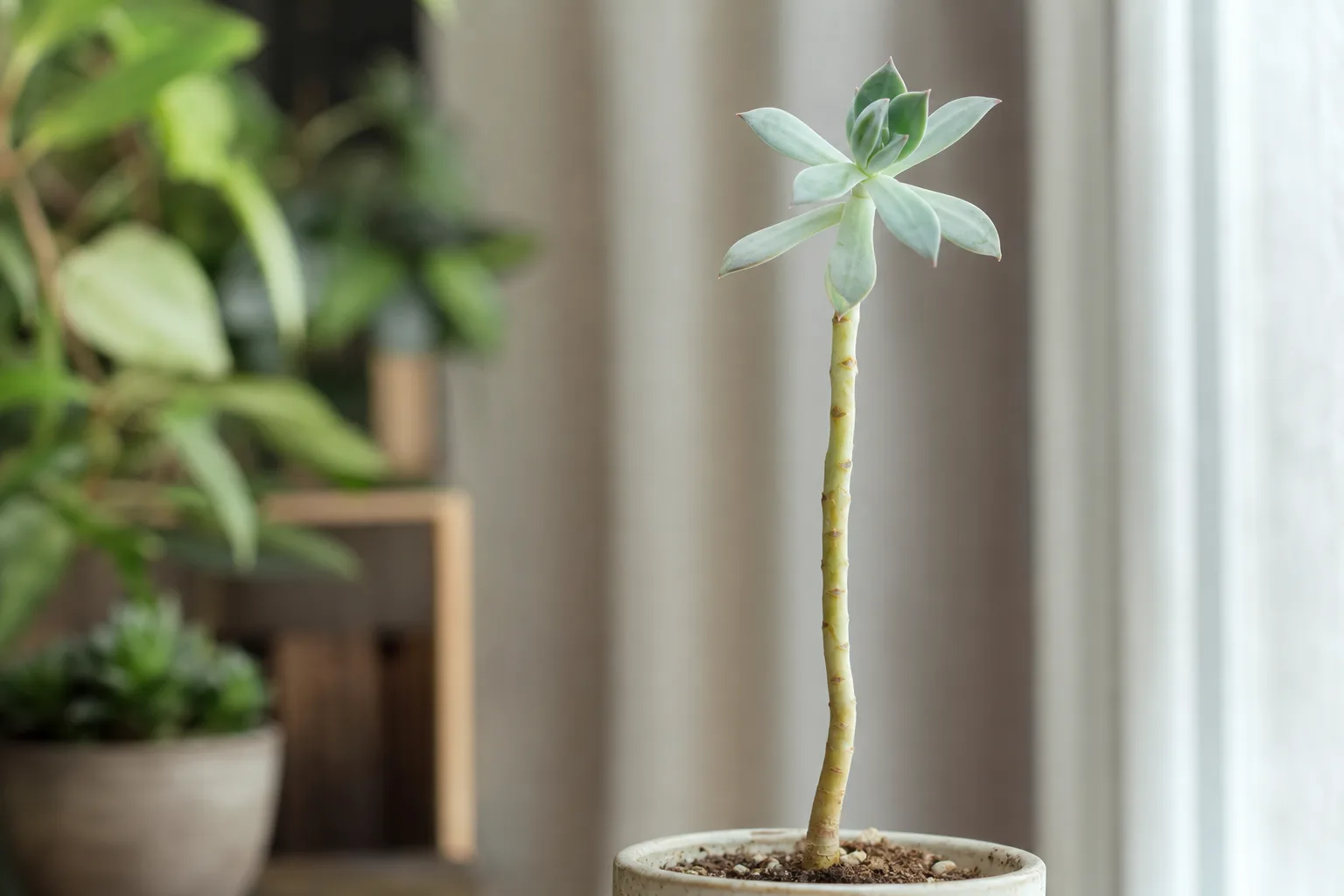
If a succulent that used to form a tight rosette is now tall, leaning, pale, or separated by long gaps, it is usually responding to too little usable light. Gardeners call this etiolation: the plant stretches its stem and spaces its leaves while trying to place more leaf surface near a light source.
The important distinction is that etiolation is not a shape you can reverse by moving the pot. The stretched sections stay stretched. You can, however, stop the problem from advancing, grow compact new leaves, and—if the plant is a good candidate—cut and re-root a healthier-looking top.
Start with light, not fertilizer or extra water. Confirm that the plant is actually light-starved, move it gradually into a brighter position, then decide whether the existing shape is acceptable or whether a propagation reset is worth the risk.
The short answer: low light caused the stretch
Most indoor succulents need a bright location to keep a dense form. The Royal Horticultural Society’s succulent growing guide notes that most cacti and succulents prefer bright light or full sun, while also pointing out that some rainforest succulents need semi-shade and more regular watering. That exception matters: “succulent” describes water-storing tissues, not one universal light recipe.
For a typical Echeveria, Sedum, Sempervivum, Graptopetalum, or many jade plants, a dim room, a north-facing window, a shelf several feet from glass, or winter daylight filtered through buildings may not provide enough intensity. A plant can look green and alive while still stretching because it has enough light to survive, but not enough to build the compact growth you want.
Overwatering can make the situation worse, but it is usually not the original reason the stem became long. In low light, the pot dries slowly; frequent watering keeps roots wet for too long, and a damaged root system can then cause weak or collapsing growth. Treat light and moisture as linked checks, not competing diagnoses.
What etiolated growth looks like
Etiolation often starts subtly. A new leaf may be smaller, the rosette may open wider than before, or the newest section may lean toward one window. By the time the problem is obvious, the stem may have long bare sections and leaves that point outward or downward rather than overlapping in a compact spiral.
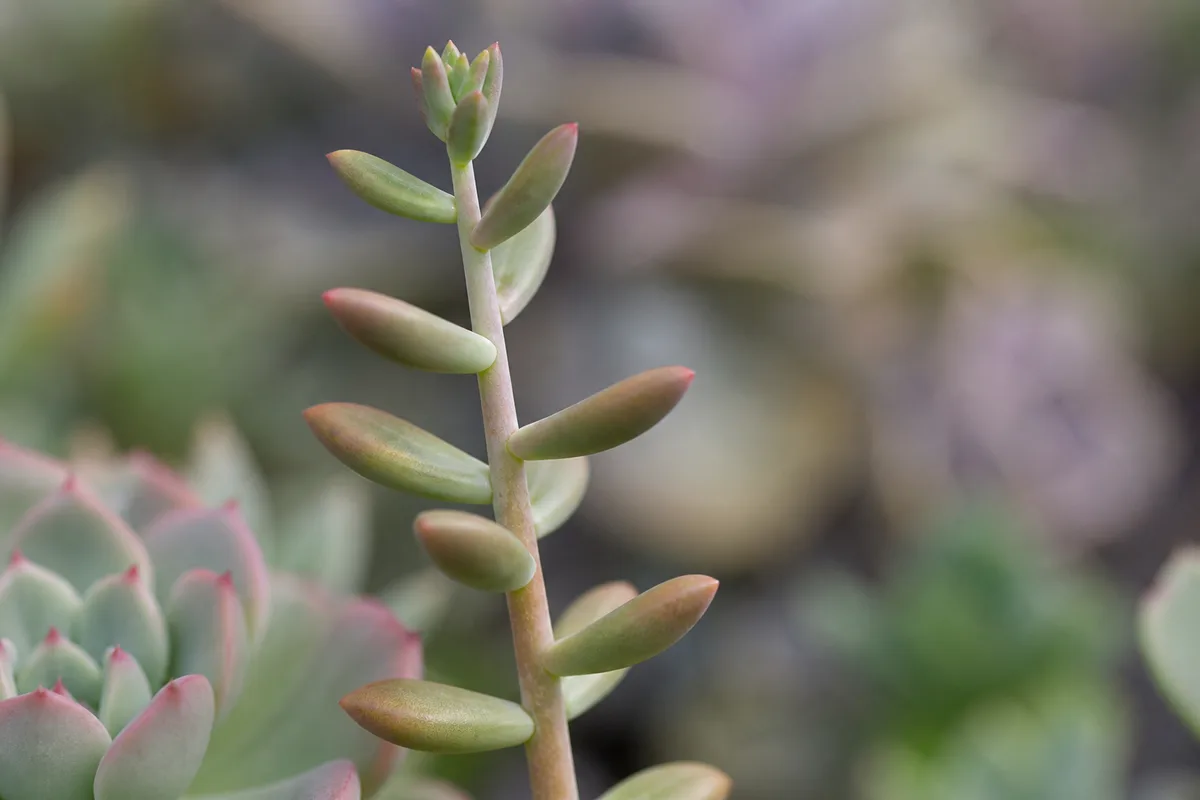
Use the plant’s recent growth as your evidence. Older leaves can naturally drop from the lower stem as a succulent matures, but a sudden change in spacing, color, direction, or leaf size is a stronger clue that the current light is inadequate.
Normal height versus a light-starved shape
Not every tall succulent is leggy. A jade, Aloe, Aeonium, or branching Sedum may naturally develop a trunk or upright stems, and a trailing plant such as Burro’s Tail is supposed to hang rather than form a flat rosette. Some plants also stretch during a flower stalk, which is a normal temporary structure rather than etiolation.
Look for new growth that is different from the plant’s established habit. A naturally upright plant still tends to produce leaves at a characteristic spacing and color. An etiolated rosette usually shows several clues together: unusually long internodes, a one-sided lean, paler new growth, a more open center, or a clear reach toward the nearest bright area.
There is a useful early warning before a bare stem appears. If the outer leaves begin tilting down and the rosette opens noticeably, improve the light while the plant is still compact. The Succulent Eclectic describes leaves changing orientation to capture more light and recommends reading the plant’s shape as a signal rather than waiting for dramatic stretching. (The Succulent Eclectic’s etiolation guide)
If the stem is soft, translucent, blackened, or foul-smelling, stop calling it a simple light problem. Those signs point toward rot or severe tissue damage. A pest infestation, root loss, or a broken stem can also create a sparse-looking plant; inspect the soil, roots, and leaf undersides before cutting healthy tissue.
Why succulents stretch toward light
Light powers photosynthesis, the process that turns light, water, and carbon dioxide into sugars used for growth and repair. The RHS explains that low light can produce weak, pale, spindly growth because the plant cannot make enough food to function normally. In practical terms, the succulent is reallocating growth toward reaching the light rather than maintaining its compact architecture. (RHS: How plants use light for growth)
The direction of the window matters, but distance and obstruction matter just as much. Light intensity falls quickly as a plant moves away from the glass, and a sheer curtain, insect screen, neighboring building, overhang, or dusty window can reduce what reaches the leaves. A bright-looking room to your eyes can still be a low-light environment for a sun-loving rosette.
Seasonal change is a common trigger. A succulent that stayed compact on a sunny sill in June may stretch after the sun’s angle shifts, days shorten, or the plant is moved behind a curtain for winter. New furniture can also cast a shadow over the pot. Check the actual light at the plant’s height rather than relying on where the plant looked happy months ago.
Fix the light before changing the water
The first repair is to improve the plant’s light supply, but do it in a way the leaves can tolerate. A succulent raised indoors under filtered light may be poorly prepared for several hours of intense, unobstructed afternoon sun; moving it directly from a dim shelf to hot glass can cause pale bleached patches or tan, crispy sunburn.
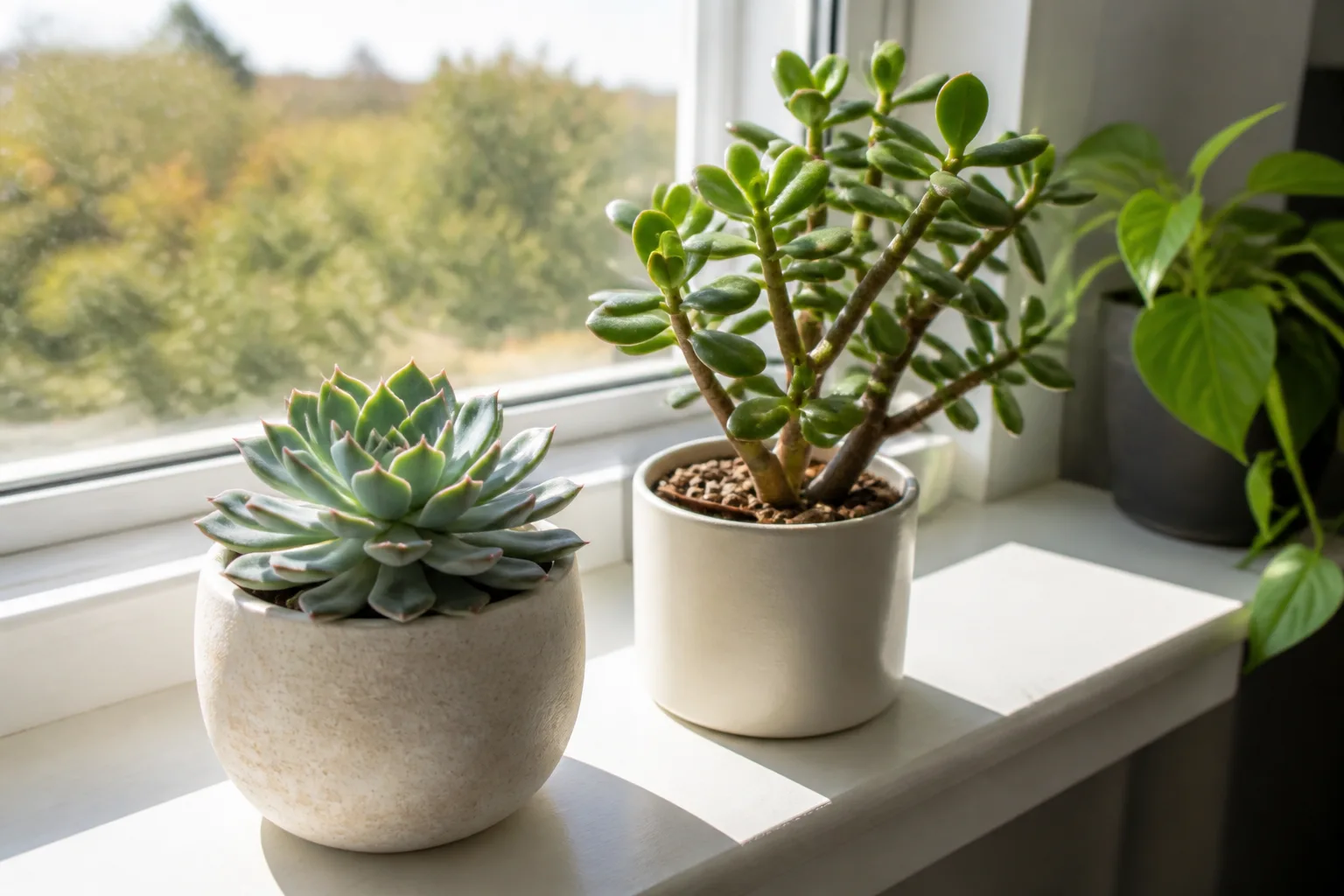
Give the plant a stable new position and watch the newest growth. If the new leaves remain close together, hold their color, and stop leaning, the light correction is working. The old bare stem will not fill in along its length, but the plant is no longer spending new growth on the same search for light.
Find the brightest safe window
For a desert-type succulent, start with the brightest window you can provide and adjust for the season. A south- or west-facing window may work well in winter or in a mild indoor climate, while summer glass can become much hotter than the plant’s former shelf. An east-facing window often supplies gentler morning sun; a few feet back from a harsh west window may be better for a sensitive species.
Move in stages if the plant has been in low light. Put it closer to the bright window for a few days, then expose it to more direct sun in small increments while checking the leaves. The exact schedule depends on the window, season, cultivar, and climate, so use the plant’s response as the stop signal: sudden tan patches, bleached areas, crisp spots, or a sharply stressed appearance mean the increase was too fast.
Turn the pot every week or two once it is in a good position. Better Homes & Gardens recommends rotating succulent pots so all sides receive more even light and moving plants closer to a window or adding supplemental light when winter levels fall. Rotation cannot undo a bare stem, but it can prevent a new one-sided lean.
Do not put a low-light succulent directly beside a hot pane just because “more sun” sounds like the answer. Haworthia, some Gasteria, Christmas cactus, and other shade-tolerant or rainforest-adapted succulents may prefer bright filtered light rather than the same exposure as an Echeveria. Epic Gardening’s shade-succulent guide makes the useful point that shade-tolerant succulents still need light; shade means partial or filtered sun, not a dark corner.
Use a grow light as a measured supplement
A grow light is useful when the brightest window is still weak, especially in winter or in a room with limited glass. Use an LED grow light designed for plants, position it according to its own instructions, and use a timer for a consistent daily schedule. More wattage or a longer schedule is not automatically better; a light that is too far away may be ineffective, while one too close can stress leaves or heat the pot.
Treat the first two weeks as a test. Keep the light over the growing tip or rosette, not only over the side of the pot, and look for compact new growth rather than judging by the old stem. If the plant remains pale and continues to lengthen, the fixture may be too weak, too distant, blocked by a narrow beam, or running for too few hours.
There is no need to add a grow light and move the plant into blazing sun on the same day. Change one major variable at a time so you can tell what helped and so the leaves have a chance to acclimate. If a grow light is the only option, it is often safer to increase exposure gradually than to run an intense fixture at full strength immediately over a plant accustomed to dim light.
Should you cut a leggy succulent?
Cutting is optional. It is a way to replace the visible shape, not a treatment that makes the old stem compact. Before reaching for shears, check that the plant is firm, actively growing, free of spreading rot, and already being moved toward adequate light. A cutting made from a weak plant in a dark, wet pot simply creates another recovery problem.
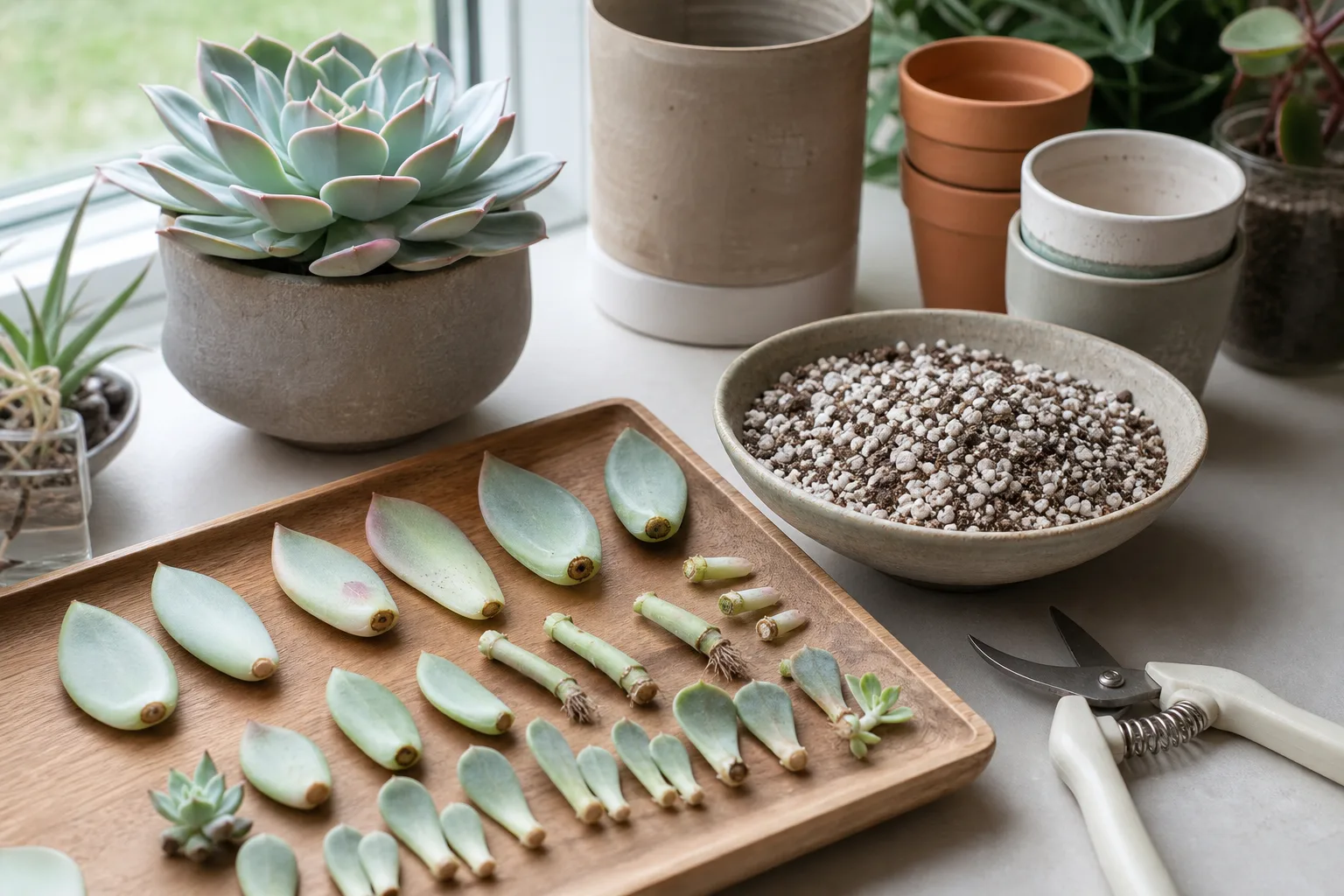
The right choice depends on how much healthy tissue remains and what the species can propagate from. A compact plant with only a small amount of stretch may look better if you leave it alone. A severely elongated rosette with a long bare stem is usually a better candidate for a top cutting, provided the growing tip and leaves are healthy.
Leave mild stretch in place
Keep the plant intact when the stem is sturdy, the leaves are plump, and the new growth has only started to open. Improve the light, rotate the pot, and allow the next growth to show whether the correction is working. A small amount of bare stem can become part of the plant’s character, especially on branching types that naturally develop a trunk.
This is also the least disruptive option for plants that do not reliably root from cuttings or leaves. Some succulents are easy to propagate from a leaf; others are better divided, rooted from a stem, or simply left to grow. If you do not know the plant’s identity, identify the species or cultivar before making a large cut.
Do not bury a long stem just to hide it. A deeper planting can leave leaves or stem tissue in contact with wet mix, destabilize the plant, and increase the chance of rot. If the plant is top-heavy, a smaller corrective cut or a heavier pot is safer than placing healthy tissue below the soil line.
Behead severe stretch for a reset
For a healthy rosette on a long, bare stem, cut the top above the stretched section with a sharp, clean blade. Leave a healthy growing tip and enough stem beneath the rosette to plant it securely. The exact length is less important than having a firm cutting with intact leaves and a clean cut; avoid keeping tissue that is soft, discolored, or damaged.
The rooted base can remain in its pot if its roots are healthy. New shoots may emerge from nodes below the cut, but this is not guaranteed for every species or every plant. The top cutting is often the faster route to a compact-looking specimen because it already has the rosette or growing point.
Do the work during active growth when your conditions support rooting, rather than immediately before a cold, dark, or chronically wet period. Keep the light ready before you cut. The goal is to give both the top and the base enough energy to recover without forcing them into soft growth.
How to propagate the pieces
Propagation is not one identical recipe for all succulents. The RHS guide to growing cacti and succulents matches the method to the growth habit: branching plants can use stem cuttings, clump-forming species can produce offsets, and some fleshy-leaved plants such as Echeveria and Crassula are suitable for leaf cuttings.
After any cut, keep the pieces dry and protected from harsh direct sun while the wound seals. The RHS says callusing can take from about a day to a week depending on the plant; Better Homes & Gardens gives five to seven days for many stem cuttings. These are useful ranges, not a stopwatch. A thick stem in humid conditions may need longer than a thin cutting in a warm, dry room.
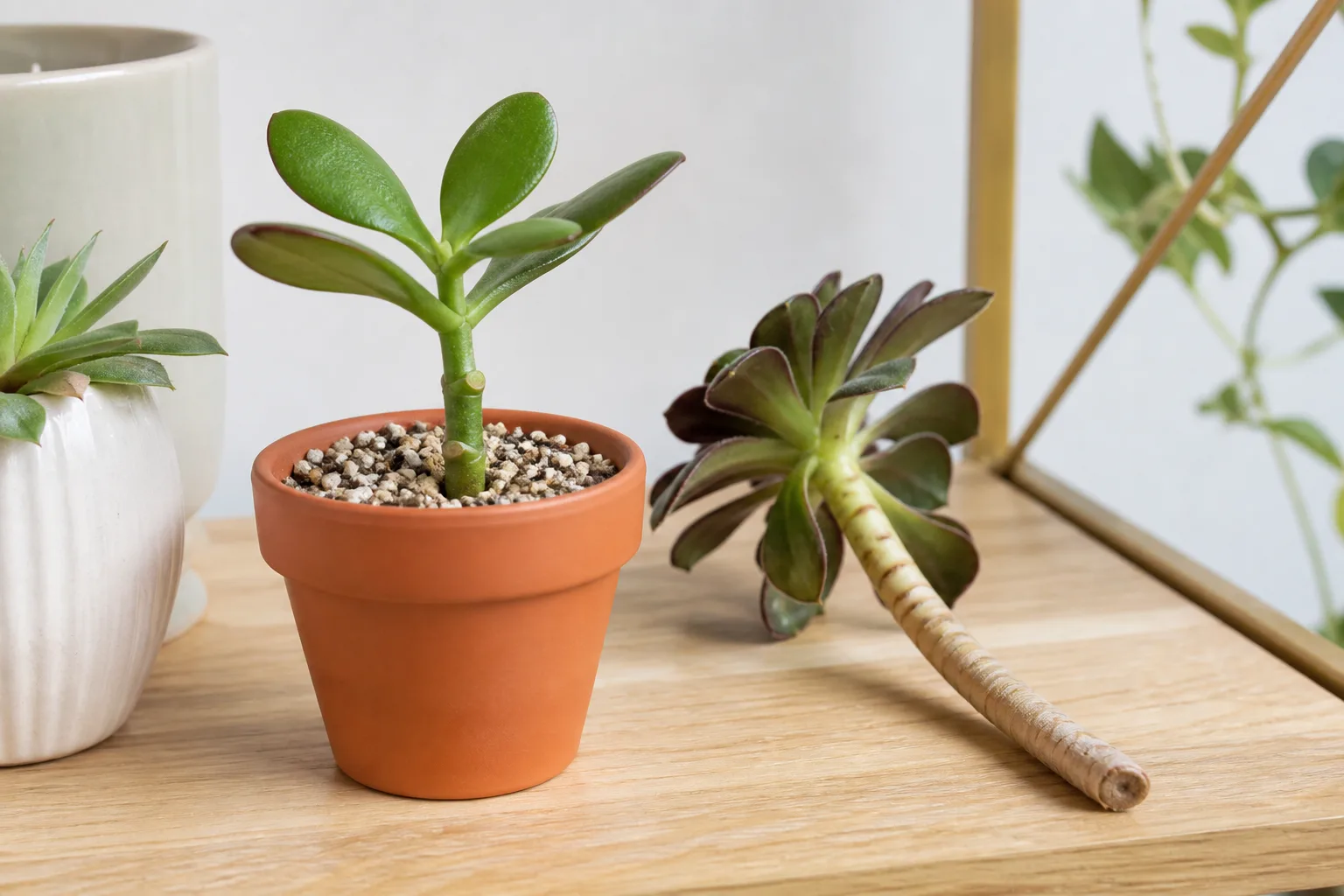
Use a small pot with a drainage hole and a gritty, free-draining succulent mix. Do not plant a fresh, wet cut into saturated soil. A sealed wound, modest moisture, warmth, and bright but not scorching light give the cutting a better starting point than a constantly wet pot on a dark shelf.
Re-root the top rosette or stem
Trim away the lower leaves that would otherwise sit below the mix, leaving a short bare section of stem. Place the cutting in a small pot so the stem is supported and the leaves stay above the surface. If the cutting wobbles, add a thin layer of grit around it or use a small support; do not bury the rosette to make it stand.
Wait until the cutting has callused before planting. Then keep it in bright, indirect light or gentle morning light while roots form. Water sparingly only after the mix has dried and the cutting has had time to begin rooting; heavy early watering can rot a cutting before it can absorb the moisture.
Rooting times vary widely. A firm cutting can look unchanged for days or weeks and still be alive. Test progress only with a very gentle resistance check after a reasonable interval; tugging repeatedly can tear new roots. Once it resists and begins producing new growth, transition it toward the brighter light needed to keep the new rosette compact.
Give the rooted base a second chance
After removing the top, place the rooted base in bright light and keep its existing root zone on the dry side until the cut has dried. Do not respond to the bare stem by watering on a schedule. The base still has roots and stored water, and its immediate job is to seal the wound and activate a new growth point.
If new shoots appear, let them develop before pruning again. Some plants branch below the cut; others produce one new rosette or take much longer. The base may never regrow in the exact shape you imagine, which is why keeping the top cutting is valuable when the original rosette is healthy.
A bare section without leaves is less reliable than a cutting with a growing tip. It may produce new growth from a node if the species has viable buds, but do not count on a leafless stick to root or branch. If the base is soft, hollow, or declining at the soil line, discard the diseased portion and preserve only firm, healthy tissue.
Try leaf propagation when the species allows it
Leaf propagation works best when a leaf is removed cleanly with its attachment point intact. Echeveria, many Sedum, Graptopetalum, Crassula, and Kalanchoe are common candidates; the method is much less dependable for plants whose leaves do not contain the right growing tissue. BHG’s propagation guide notes that many succulents can produce roots and new leaves from a mature leaf, but it does not make the method universal.
Twist or peel a healthy lower leaf away without crushing or cutting its base. Lay it on top of slightly moist or dry gritty mix in bright, filtered light, with the attachment end exposed. Do not bury it and do not mist it repeatedly; the leaf supplies stored moisture while roots and a tiny plantlet form.
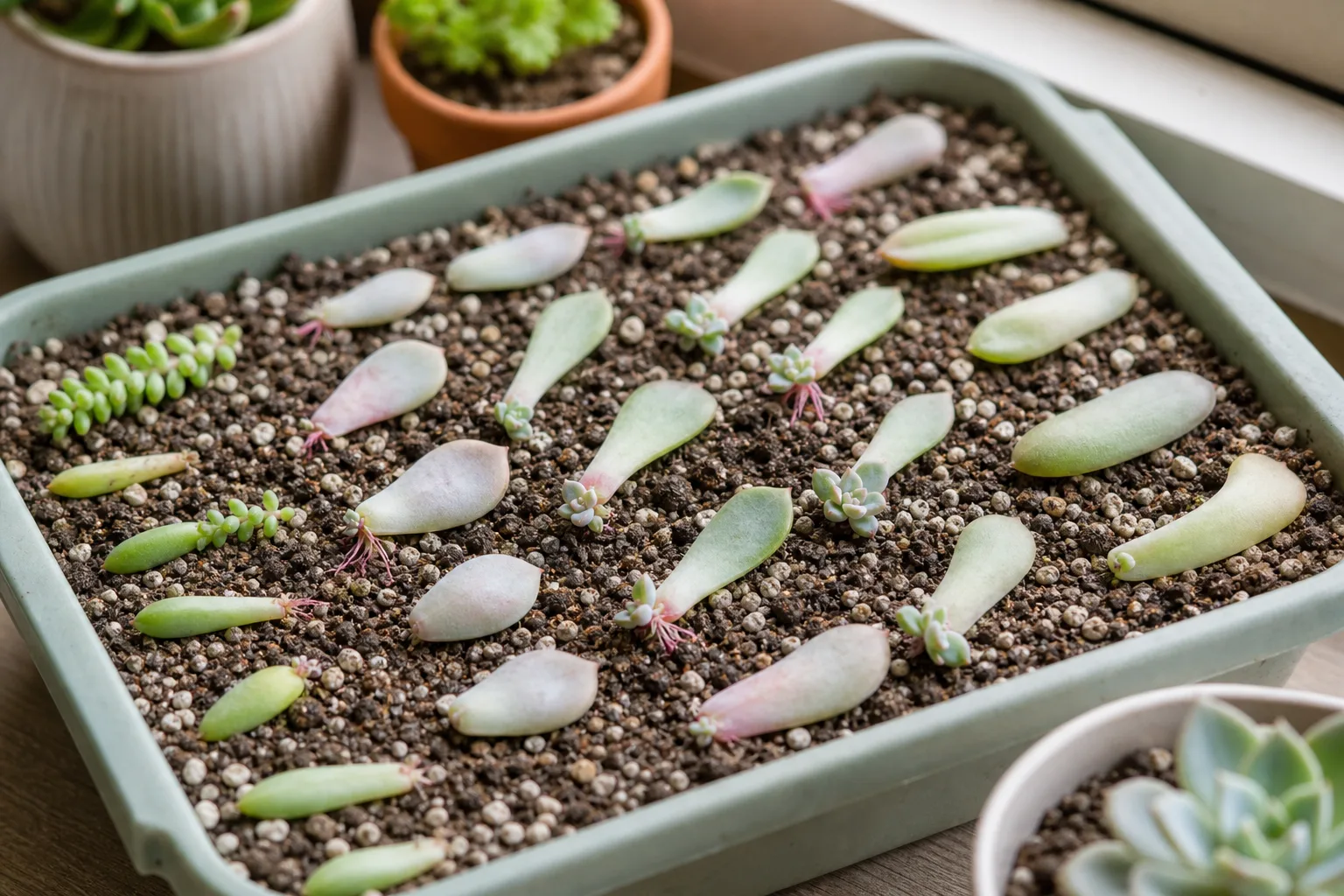
Once roots appear, keep the mix only lightly moist and wait for the plantlet to strengthen. Do not separate the new plant too early or remove the original leaf while it is still feeding the baby. When the plantlet has several leaves and its own roots, pot it up gently and increase light gradually.
Expect failures. A leaf that tears, is cut through the attachment point, is already shriveled, or comes from a species that does not leaf-propagate may simply dry up. Use several healthy leaves if you want to experiment, but do not strip a stressed parent plant of its remaining leaves.
Use offsets instead of cutting
Some succulents make pups or offsets around the base. Aloe, Haworthia, Sempervivum, and many clumping types are often better propagated by separating a rooted offset than by cutting a single rosette in half. Wait until the offset is large enough to handle and, ideally, has roots of its own.
Remove the plant from its pot only when the mix is reasonably dry and you can see what you are separating. Detach the offset with clean hands or a clean blade, preserve its roots, and plant it at the same depth in a small draining pot. A tiny pup with no roots may survive in some genera, but it needs more careful moisture control than an established offset.
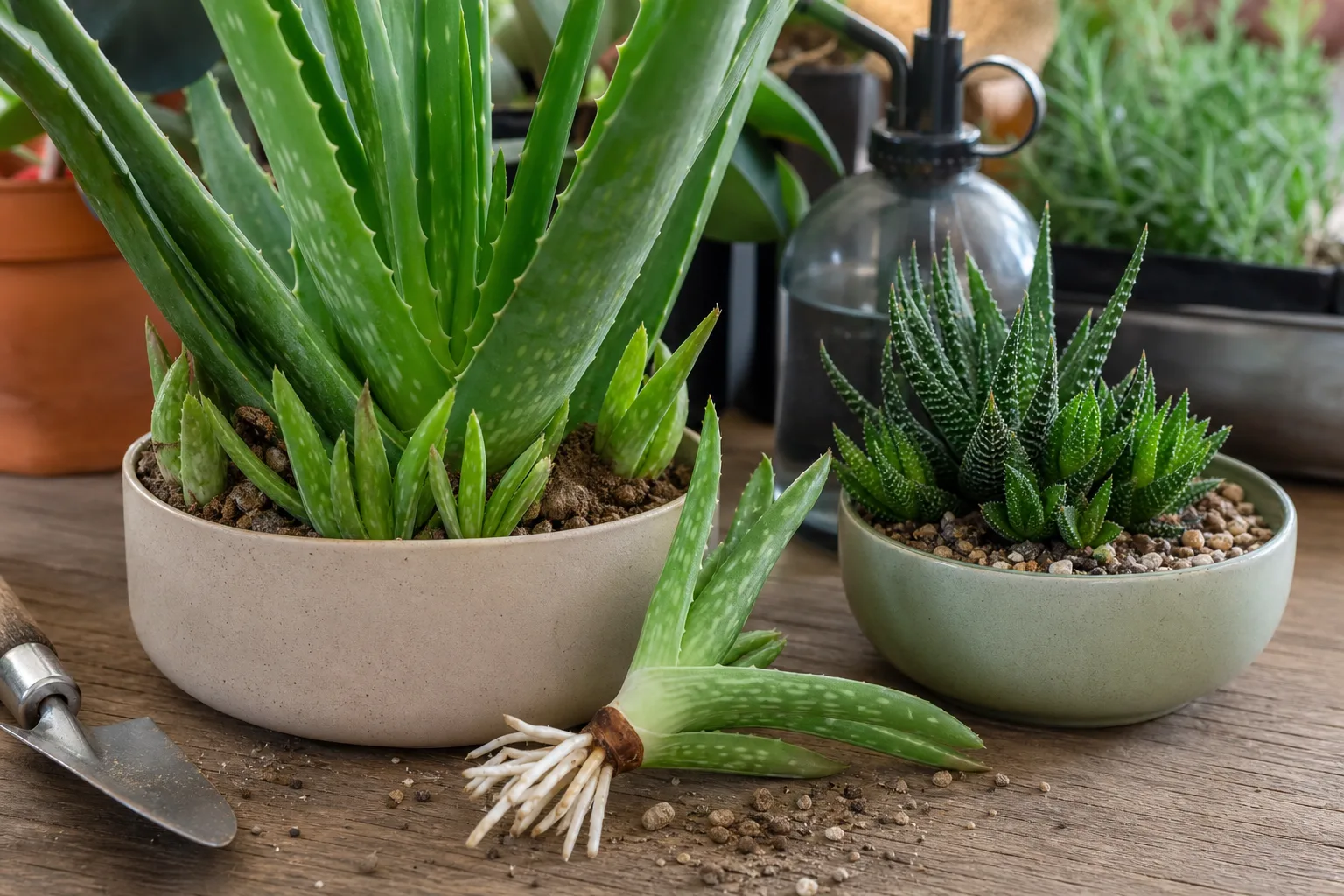
Offsets are also a reason not to behead every crowded succulent. If the plant is healthy and already making babies, separating a rooted pup gives you a new compact plant with less wound tissue and less uncertainty than a large top cut. Correct the light for the parent and pups at the same time so the new plants do not stretch in their first season.
Prevent the next round of leggy growth
Prevention is a repeating observation, not a one-time move. Check the plant after seasonal changes, when you rearrange furniture, and whenever the newest leaves look farther apart than the previous set. A compact rosette should not need to be turned into a daily sun-chasing project, but it does need light that matches its species and your growing season.
Keep the pot close enough to the useful part of the window that the leaves—not just the room—receive strong light. Rotate it on a regular schedule, clean dust from smooth leaves, and use supplemental light before the plant has already produced a long bare stem. If a plant repeatedly stretches in the same spot, the location is the problem; pruning alone will only reset the symptom.
Match water and fertilizer to the light
Water thoroughly when the mix is dry enough for that species, then let excess drain completely. Do not water more often because the plant is stretching. A low-light pot often dries more slowly, and the combination of weak light and constantly damp mix can cause root damage that looks like thirst.
Use a pot with a real drainage hole and a mix that remains porous rather than compacting into a dense block. The RHS recommends free-draining, gritty compost for most cacti and succulents and warns against leaving them standing in water. Let the plant’s species, season, pot size, and soil dryness set the interval rather than a calendar reminder.
Fertilizer cannot replace light. Feeding a plant that is already stretching may produce larger, softer growth without fixing the spacing. Feed only during active growth, at the product’s label rate for succulents, and skip feeding a plant that is recovering from rot, a major cut, or very low-light stress until it has resumed healthy growth.
Humidity is also not the usual cure for a desert-type succulent stretching. Some tropical succulents are exceptions, but raising humidity around an Echeveria or Sedum will not supply the missing light and may slow drying. Solve the light problem first, then provide the moisture level appropriate to the plant you actually have.
When to expect compact new growth
Judge success by the next growth, not by the old stem. A plant may need several weeks to settle after a move, and a fresh cutting may spend its early energy on roots before it produces leaves. If the newest leaves are closer together, the plant is holding its color, and the lean is no longer worsening, your conditions are improving even if the original plant still looks awkward.
If the new growth continues to stretch, revisit the light source rather than cutting again. Measure distance from the window or grow light, look for obstructions, check whether the fixture is designed for plant use, and confirm that the plant is not being watered so frequently that the root zone remains wet. A repeated failed correction usually means the light is still inadequate or the plant’s species needs a different exposure.
Seek a different diagnosis when the plant is collapsing, has a soft or black stem, smells sour, drops leaves rapidly, shows cottony pests, or stays wilted in wet soil. Propagation can save firm healthy tissue from a rotting plant, but it cannot make diseased tissue safe. Cut back to clean tissue only after identifying the damage and keep suspect plants away from healthy ones while you inspect them.
Conclusion
A succulent growing tall and leggy is usually telling you that its light is not strong or consistent enough for compact growth. Move it toward a brighter, species-appropriate position gradually, rotate it, and let the next leaves show whether the change worked. Do not expect the bare stem to shrink or refill.
If the plant is healthy but severely stretched, you can keep it as-is or use a clean top cut to restart a compact rosette. Callus the pieces, choose stem, leaf, or offset propagation according to the plant’s growth habit, and keep water restrained until roots form. The lasting fix is not the cut—it is giving the new growth enough light from the start.