When Not to Fertilize Your Lawn (Heat, Rain, Dormancy)
Find the best time to fertilize a lawn by grass type, soil moisture, forecast, and product. Avoid fertilizer burn, runoff, stripes, and wasted money.
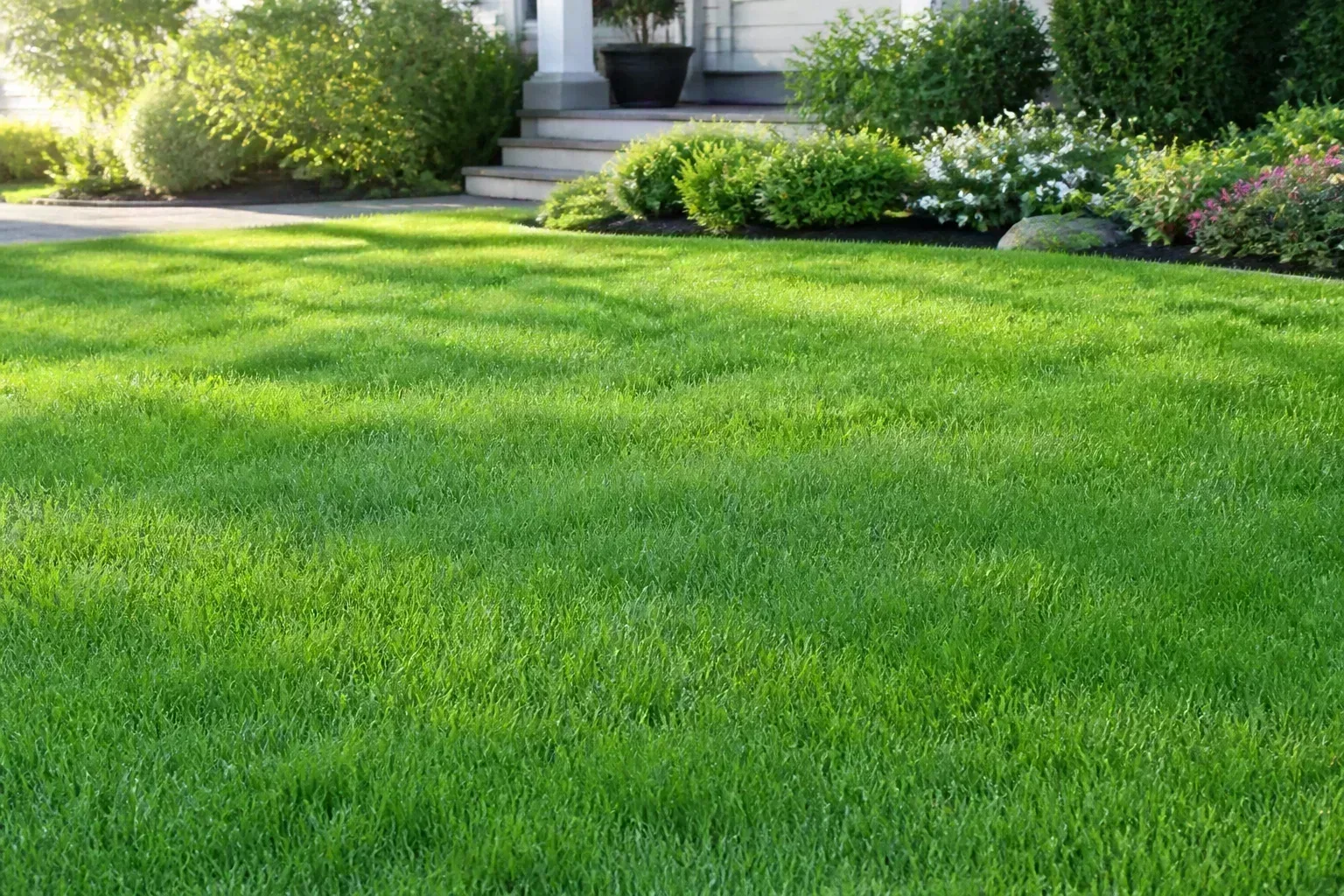
If your lawn looks thin, pale, or tired, fertilizer is not automatically the answer. The worst time to fertilize is when the grass cannot use the nutrients safely: during peak heat, drought, dormancy, waterlogged conditions, or just before a storm that can carry fertilizer away.
The better rule is simple: feed actively growing turf when the soil is moist but not saturated, the foliage is dry enough for the product you are using, and the forecast gives you time to water it in without a downpour. Your grass type and the fertilizer label decide the details.
The fast answer: wait for active growth and a workable forecast
Do not fertilize because the calendar says it is a lawn-care weekend or because a rough patch looks brown. First ask whether the grass is growing. Regular mowing, new blades, and a lawn that has greened up after dormancy are better signals than a date on the calendar. Penn State Extension’s turfgrass fertilization guide notes that both excessive amounts and poor timing can injure turf and contribute to water contamination, while nutrient needs vary with species, soil, irrigation, and use.
For most homeowners, the stop signs are several days of extreme heat, drought-stressed or dormant grass, frozen ground, standing water, heavy rain within the next day, or wet foliage that will trap granular fertilizer on the blades. If any one of those conditions is present, waiting is usually cheaper and kinder to the turf than forcing an application.
Use the three-gate timing check before you spread
Run these three checks in order. The first tells you when the lawn generally wants nutrients; the second tells you whether it can use them today; the third tells you whether the product will stay where you put it.
Gate 1: Identify cool-season or warm-season turf
Cool-season grasses such as Kentucky bluegrass, tall fescue, perennial ryegrass, and fine fescue grow most strongly in the cooler portions of spring and fall. Many slow sharply or go semi-dormant in hot summer weather. Warm-season grasses such as Bermudagrass, zoysiagrass, St. Augustinegrass, centipedegrass, and buffalograss grow most strongly after the soil and nights warm up, then slow or go dormant in cold weather.
Mixed lawns complicate the picture. If you cannot identify the species, observe when the lawn does most of its growing and check the seed or sod records if you have them. A local extension office can help identify turf from a clear sample or photograph; do not assume a neighbor’s schedule fits your lawn just because the yards are nearby.
Gate 2: Confirm that the grass is actively growing
Active growth does not mean the lawn must be bright green. It means the plants are producing new leaves and roots and have enough moisture to use nutrients. If the lawn is recovering from heat, drought, disease, flooding, or a winter freeze, correct the stress first and wait for growth to resume.
Mowing frequency is a useful clue. A lawn that needs regular mowing is generally active; a brown lawn that has stopped growing is not. Better Homes & Gardens’ lawn-fertilizing guidance summarizes the same principle: nutrients are much less useful when cold or drought has slowed the plant to a near standstill.
Gate 3: Check soil moisture, weather, and runoff risk
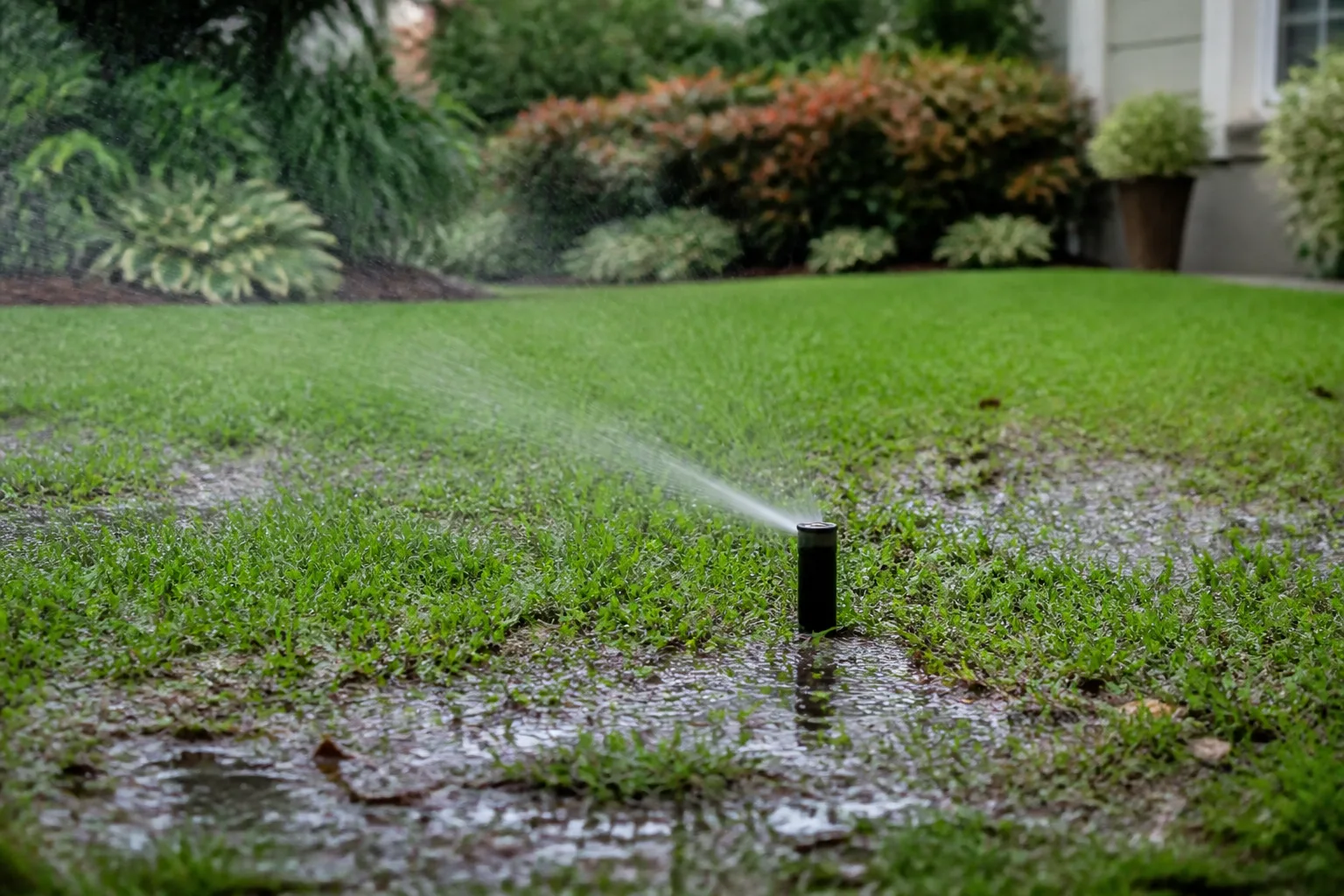
The ideal soil is moist enough to dissolve or carry nutrients into the root zone but not so wet that water is pooling or moving across the surface. Look at the next 24 hours, not only the next hour. A light, predictable shower can help granular fertilizer, but a thunderstorm or prolonged heavy rain can wash product off the lawn, through soil, or into drains and waterways.
Also decide how the product will be watered in. Granular products often need irrigation after spreading; liquid products may need a rain-free period so they can dry and remain on the foliage or soil as the label directs. If you cannot water at the required time and the forecast is not cooperating, postpone the application.
Worst time #1: peak heat, drought, or summer dormancy
Do not use fertilizer to push a heat-stressed lawn back to green. During prolonged heat or drought, grass may close down growth and spend its available moisture maintaining the crown and roots. Adding soluble salts can make the water imbalance worse, while nitrogen can prompt tender growth that the plant cannot support.
Summer dormancy is not the same as dead grass. Many turfgrasses turn brown to survive unfavorable conditions and can resume growth when moisture and temperature improve. Fertilizing while the lawn is dormant does not reliably wake it up; it can leave unused nutrients in the soil and increase burn or runoff risk. Water according to local restrictions and the grass’s needs, then wait for natural green-up and active mowing before considering feed.
Temperature cutoffs are only rough guides because humidity, soil moisture, sun exposure, wind, and grass species change the risk. A spell of very hot days above 90°F is a clear reason to pause, but a cool week after rain may be a better window even if the calendar still says midsummer. The lawn’s condition matters more than a single number.
Worst time #2: frozen, waterlogged, or winter-dormant soil
Winter is normally a no-feed period for dormant turf. When the soil is frozen or the grass is not growing, roots cannot make useful use of a routine fertilizer application. Snowmelt or winter rain can move nutrients away before spring growth begins, especially on slopes, compacted soil, or near pavement.
Waterlogged soil is another stop sign, even when the grass is technically green. Saturated ground has little air-filled pore space and may shed water across the surface instead of accepting it. Walking a spreader over it can also compact the soil and create wheel marks. Wait until the surface drains and the turf can support foot traffic without squishing or rutting.
Late-fall feeding is not the same as winter fertilizing. Cool-season turf may benefit from a properly timed late-fall application while leaves are slowing but the soil is still workable. Penn State Extension’s seasonal lawn guide describes this window as a possible replacement for an early-spring feeding, with the caveat that quick-release nitrogen on sandy soil can leach. Use the product label and regional extension guidance rather than treating the first hard frost or a holiday date as universal.
Worst time #3: just before heavy rain or runoff
Heavy rain is one of the clearest reasons to wait. A storm can move granular fertilizer before it dissolves evenly, carry dissolved nitrogen and phosphorus toward drains and streams, or push nutrients below the active root zone. Penn State Extension specifically cautions against applying phosphorus where runoff is likely, including frozen soil and paved surfaces.
The practical forecast rule depends on formulation. Better Homes & Gardens’ reviewed rain guidance says not to spread granular fertilizer when moderate to heavy rain is likely within 24 hours; a light shower of about a quarter inch or less may be useful if the label calls for watering in. Liquid fertilizer generally needs a rain-free period after application, so follow that product’s label rather than assuming rain will help.
If rain has already passed, do not rush onto a saturated lawn. Let standing water disappear, allow the grass blades to dry if the label requires it, and check whether the soil is still soft enough to rut. A calm post-rain window is often safer than trying to beat the storm.
Worst time #4: when grass is wet with dew
Wet foliage creates a time-of-day trap. Granules can stick to damp leaf blades instead of falling through the canopy to the soil, concentrating salts in small spots and creating stripes or brown flecks. That is why some current lawn guidance recommends avoiding a dewy morning and applying once the foliage is dry.
You will also find practical advice recommending early morning because temperatures are lower. Both ideas point to the same useful condition: choose a cool application window with dry foliage, then water the product in exactly as the label directs. In many yards that means late morning after dew dries and before peak heat; in others it means early evening, provided the grass is dry and the product has enough time to be watered or absorbed.
Do not treat dew as a universal substitute for irrigation. Some granular products can be applied before light moisture, while others warn against wet blades. The bag’s instructions control. If the label says to apply to dry turf, wait; if it says to water immediately, have the sprinkler ready before opening the hopper.
Worst time #5: when disease or pests are the real problem
Fertilizer cannot diagnose a lawn. Brown patches may come from drought, compacted soil, mower scalping, pet urine, insects, fungal disease, poor drainage, or a broken irrigation zone. If you respond to every discoloration with nitrogen, you may intensify lush disease-prone growth, waste money, and hide the actual cause.
Inspect the pattern before feeding. Uniform pale color across a growing lawn can point toward nutrition, while sharply defined circles, leaf lesions, thinning around tree roots, or damage concentrated along an irrigation edge suggest a different investigation. Look at the roots and soil where possible, check mower height and watering coverage, and use a local extension diagnostic service when the cause is unclear.
Pause fertilizer if the turf is visibly diseased, heavily infested, or declining despite adequate moisture. Address the confirmed problem first, then resume a measured fertility plan once the lawn is growing and able to use the nutrients.
What time of day is best for fertilizing?
There is no single clock time that beats every climate and product. The best time is when the grass is actively growing, foliage is dry enough for the product, temperatures are not at their daily peak, and you can complete the required watering or rain-free interval.
For granular fertilizer, a late-morning application after dew dries is a conservative choice in many climates. An early-evening application can also work when the grass is dry and the label does not require an extended drying period. Avoid the hottest afternoon hours, windy conditions that scatter granules, and late-night applications that leave soluble product on wet foliage for hours.
For liquid fertilizer, follow the label’s instructions for leaf wetness, drying time, and rain. A product intended for foliar uptake may have a different timing rule from a liquid soil drench. If the label is missing or unreadable, do not guess at the dilution or weather window; identify the product first.
Seasonal fertilizer windows by grass type
The calendar is a planning aid, not a command. Start with the period when your grass is actively growing, then adjust for local weather, soil, irrigation, mowing, and the fertilizer’s release speed.
Cool-season lawn schedule
Cool-season turf usually has useful feeding windows in mid- to late spring, late summer or early fall, and late fall. The early-spring application should be modest if the lawn received a well-timed late-fall feeding; a heavy nitrogen surge can produce leaf growth faster than roots can support.
The high-value window is often late summer into early fall, after the worst heat has eased. Penn State Extension describes this period as important for recovery and carbohydrate storage, with slightly higher nitrogen use possible than in spring when a slow-release source is used. This is a better response to a rough August lawn than automatically feeding during the hottest week.
Late fall can support roots and spring green-up while reducing the flush of soft top growth associated with heavy early-spring nitrogen. Stop when growth has essentially stopped or the soil is freezing. On sandy sites or in areas with substantial winter rain, be especially cautious with quick-release products and use a soil test to avoid adding nutrients the lawn does not need.
Warm-season lawn schedule
Warm-season turf generally waits until late spring or early summer, when it has fully greened up and is growing consistently. Feeding too early can put fertilizer onto a lawn still emerging from dormancy, when uptake is limited and the risk of injury is higher.
Once active, warm-season grass may accept measured applications through summer if moisture is adequate and the product label supports that interval. More fertilizer is not automatically a better lawn: higher nitrogen can increase mowing, water demand, disease pressure, and soft growth. A final fall application, where appropriate for the species and region, needs to leave enough time before frost or dormancy; do not keep pushing nitrogen after growth slows.
Centipedegrass and buffalograss can have different fertility needs from Bermudagrass, zoysiagrass, or St. Augustinegrass. A schedule built for one warm-season species can overfeed another, so use a local recommendation or soil test instead of copying a generic four-application calendar.
| Lawn situation | Usually wait | Consider feeding when |
|---|---|---|
| Cool-season grass in hot, dry midsummer | Heat or drought has slowed growth | Temperatures moderate, moisture is adequate, and new growth resumes |
| Cool-season grass in fall | Soil is frozen or turf is dormant | The lawn is actively growing before late-fall shutdown |
| Warm-season grass in early spring | Turf is still brown or only partly green | The lawn has greened up and is mowing regularly |
| Any grass before a storm | Moderate or heavy rain is forecast | The forecast allows the product to stay put and be watered correctly |
Granular vs. liquid fertilizer: use different weather rules
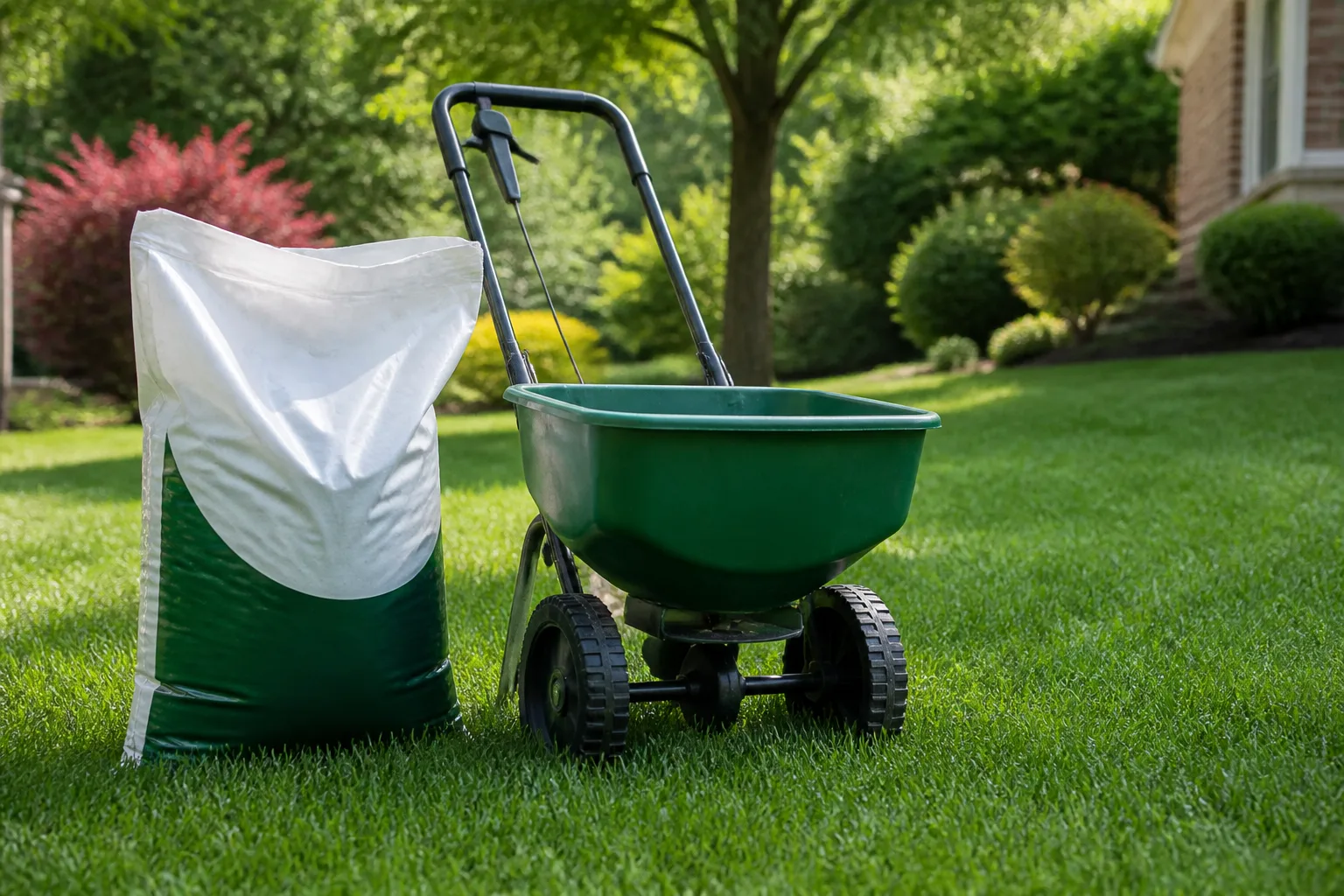
Granular fertilizer is convenient for broad coverage, but it needs to reach the soil and receive the right amount of moisture. Granules left on blades can burn, while a downpour can move them beyond the lawn. Spread them evenly on the formulation’s approved surface, then water in as directed; do not substitute a storm for a measured application when the forecast is uncertain.
Liquid fertilizer can act quickly and may be useful for a targeted area, but the concentration and drying requirements matter more. Rain immediately after application can dilute or remove it, and spraying in extreme heat can increase leaf stress. Use the label’s dilution, coverage, protective-equipment, and rain-free instructions exactly; do not assume that a liquid lawn feed behaves like a granular product with water added.
Slow-release nitrogen often gives a wider margin for error than a large dose of quick-release nitrogen because nutrients are released over a longer period. It is not risk-free, though. Rate, weather, soil type, irrigation, and the percentage of slow-release nitrogen all affect what the grass and surrounding environment receive.
How to apply fertilizer without stripes or burn
The safest application starts before you fill the spreader. Mow if the lawn needs it, but avoid mowing drought-stressed or waterlogged turf just to meet a schedule. Read the label, measure the lawn area, inspect the spreader, and keep fertilizer away from pavement, drains, ponds, and garden beds unless the product is specifically intended for those areas.
Calibrate the spreader and split the rate
Use the spreader setting printed for your product as a starting point, not as proof that the machine is calibrated. Worn gates, tire pressure, walking speed, and fertilizer particle size can change the output. A simple calibration pass over a measured area catches a dangerous over-application before it covers the whole lawn.
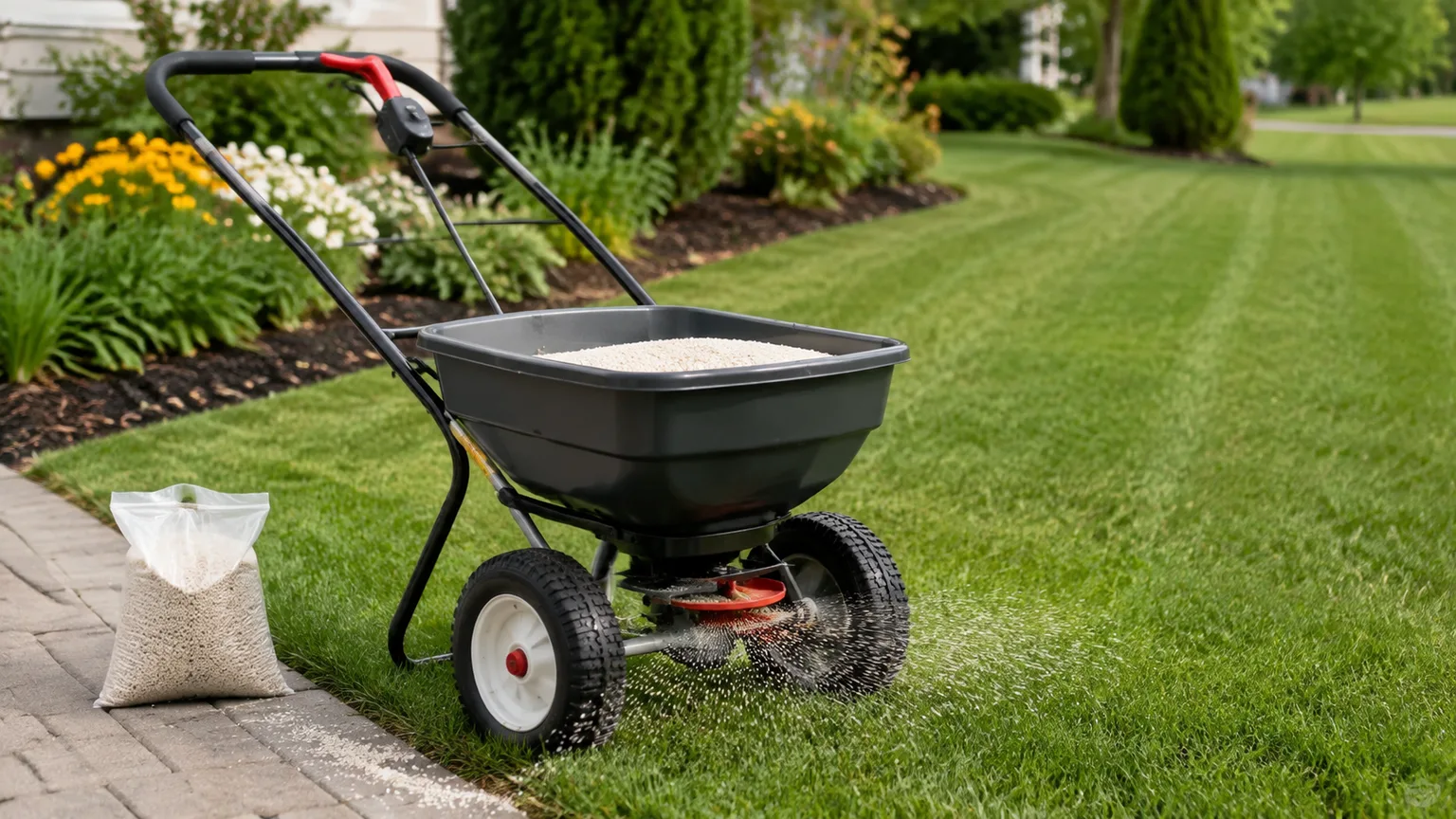
For even coverage, apply half the measured amount in one direction and the other half perpendicular to it. A broadcast spreader covers ground quickly but needs a buffer and side-shield near hard surfaces; a drop spreader is slower but more precise. Gardening Know How recommends starting with the perimeter, overlapping passes slightly, and watering after application, while the product label remains the final authority.
Keep the hopper closed whenever you stop or turn. Do not dump leftover fertilizer on one patch to empty the spreader, and do not sweep granules from pavement into a storm drain. Brush or blow product back onto the lawn where the label permits, then wash equipment over a permeable lawn area rather than a driveway. Gardening Know How’s lawn-fertilizing sequence also recommends a measured spreader pass, slight overlap, and watering after application.
What to do if you already fertilized at the wrong time
Act according to what went wrong. If granules landed on a sidewalk, driveway, patio, or street, collect them promptly and keep them out of drains. If the product is sitting visibly on grass blades, check the label for the required watering amount and apply only that instruction; do not compensate with repeated soaking or another dose.
If heavy rain arrived soon after application, do not reapply automatically. Some fertilizer may have remained, some may have moved, and the lawn’s next need depends on the product, rate, soil, and runoff. Wait for the turf to dry and resume active growth, then use the normal schedule or a soil test rather than guessing.
For brown stripes or patches after feeding, compare the damaged pattern with your spreader passes and check whether the product was overapplied or left unwatered. Stop fertilizer, water according to the label and local restrictions, and give the grass time to recover. If injury spreads, the lawn smells sour, or the cause could be a pesticide or chemical spill, contact your local extension office or a turf professional with the product name and application rate.
Conclusion
The worst time to fertilize your lawn is not one universal hour or month. It is any time the grass is dormant or stressed, the soil is frozen or saturated, a heavy storm can carry nutrients away, or the product cannot be applied and watered according to its label.
Before you spread, identify the grass type, confirm active growth, check soil moisture and the 24-hour forecast, and choose a cool window with dry foliage. Then apply the measured rate evenly, keep fertilizer off hard surfaces, and let soil testing and local recommendations—not a rough-looking patch or a generic calendar—decide what your lawn needs next.



