Are Raised Beds Better for Fall Vegetables?
Compare raised beds with in-ground planting for fall vegetables, including drainage, soil temperature, root space, frost protection, and cost.
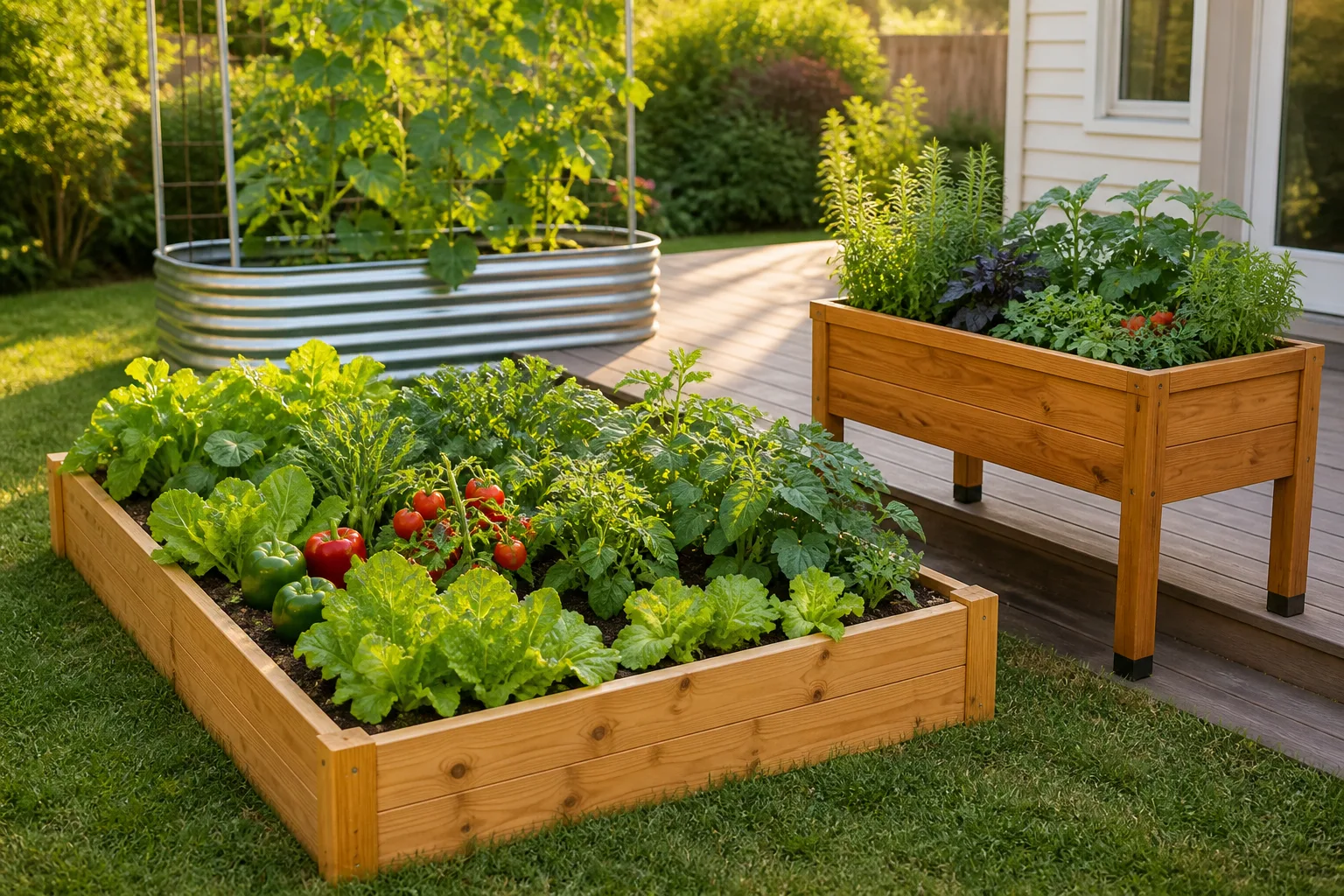
If your native soil is compacted, slow-draining, rocky, or contaminated, raised beds are usually the better home for fall vegetables. They let you create a loose, workable root zone and make it much easier to cover young crops when cold weather arrives.
But a raised bed is not automatically warmer or lower-maintenance in autumn. Its exposed sides and smaller soil mass can lose heat faster than the ground, and its loose mix can dry out sooner in wind. The practical answer is to put shallow, quick crops in raised beds when you need soil control, while leaving deep-rooted or winter-sensitive crops in deep, well-drained ground when that soil is already good.
The short answer: choose by drainage, depth, and winter exposure
Use a raised bed for fall vegetables when the site stays wet after rain, the native soil is difficult to work, you need a clean soil mix, or you want a compact bed that can take a row cover. Choose an in-ground bed when the soil is fertile and well-drained, roots can explore deeply, and the garden benefits from the ground’s larger reserve of moisture and heat.
The decision can be made with three questions. Will water drain away? Is there enough root depth for the crop? Can you protect the bed from the coldest nights? If a raised bed answers all three better than the ground, use it. If it only looks tidier but adds drying, filling, or frost risk, it may not earn its keep for one short season.
This is also why “raised bed” needs a precise definition. A bottomless, low-edged bed that sits on native soil behaves differently from a waist-high box on legs or a lined bed over concrete. The first can borrow moisture and root space from below; the last two behave more like large containers and need closer management.
Why fall changes the raised-bed decision:
Spring and fall are opposites in a raised bed. A bed warms quickly when the sun returns, which helps early sowing, but the same exposed sides allow it to cool quickly after sunset and after a cold front. The ground changes temperature more slowly because its larger mass stores summer warmth.
Garden Therapy makes the useful distinction that in-ground soil cools and freezes more slowly while raised soil responds faster to air temperature. That does not make raised beds bad for fall; it means the benefit shifts from “warmest place” to best-controlled place. A raised bed can win on drainage and coverability even when it loses on overnight insulation.
Fall also begins with warm soil. Gardenary’s practical fall-gardening guidance emphasizes that late-summer soil can be ready for quick germination, while cooler air improves the quality of many greens and reduces the stress of summer heat. In an elevated bed, that warm starting soil can help seedlings establish quickly, but only if the seed zone does not dry between waterings.
Where raised beds genuinely help
The strongest raised-bed advantage is control. You control the soil texture, the planting density, the walking routes, the irrigation line, and the cover you can attach to the frame. That matters more in fall than a small difference in daytime soil temperature because fall harvests are governed by a narrowing window between establishment and hard cold.
Better control of root-zone moisture
Raised beds drain excess rain more readily when they are open beneath and placed on a site that does not hold water. This is particularly valuable for radishes, carrots, beets, and turnips, whose roots need oxygen as well as moisture. A wet, compacted in-ground patch can cause poor germination, forked roots, rot, and a surface that seals after every storm.
The trade-off is that drainage is not the same as water conservation. A loose raised-bed mix has less access to deep moisture, and an elevated box may be exposed to wind on all sides. Colorado State University Extension notes that dense block plantings need more frequent irrigation even though drip or soaker systems can use water efficiently. Build in a way to deliver water evenly, then check the soil rather than assuming fall rain is enough.
Cleaner soil and easier access
A raised bed gives you a defined place to amend soil without repeatedly disturbing a whole yard. You can remove stones from a carrot strip, add mature compost to the upper root zone, and keep foot traffic on mulched paths. A three- to four-foot bed is usually reachable from both sides, so you can thin seedlings and harvest without stepping on the growing soil.
That access is a production advantage, not just a comfort feature. Fall crops are often planted close together, and small seedlings disappear quickly under weeds or slugs. A reachable bed makes it more likely that you will thin, water, inspect, and harvest on time. It also makes a temporary low tunnel or frost cloth easier to install and remove.
Where in-ground beds can win
Good native soil is an asset, not a problem to hide under a frame. If it drains within a reasonable time, has been improved with organic matter, and is free of contamination, planting directly into it avoids the cost and work of building a box and importing a full rooting medium.
Better insulation and deeper moisture
In-ground soil generally changes temperature more slowly. That can protect a late fall crop from sharp swings, especially in a sheltered bed with a thick mulch layer. It also gives roots access to a larger volume of soil, which can hold moisture during a dry spell after the first cool rains fail to arrive.
This advantage is most noticeable in a mild winter climate or when you want vegetables to sit in place for months. A bottomless raised bed can approach the same behavior if its soil connects freely with the ground below. A box with a solid base cannot; it must be managed as a container, and a small container reaches freezing temperatures sooner.
More room for deep-rooted and sprawling crops
Deep-rooted crops such as parsnips need more than a shallow layer of soft soil. A low frame over hard clay does not create deep soil; it creates a shallow pocket above hard clay. Likewise, pumpkins, winter squash, and other sprawling plants can overwhelm a compact raised bed even if their roots would grow well there.
Before choosing the box, measure the actual root zone. If the bed is bottomless and the soil beneath is workable, a four- to six-inch edge may simply define the bed. If the bottom blocks roots, plan on roughly eight to twelve inches of suitable soil as a practical minimum for many vegetables, with more depth for crops that need it. Colorado State University Extension also warns against creating a sharp boundary between unlike soils, because water and roots can stall at that interface; its raised-bed construction guidance explains how that connection should work.
Match the bed to the fall crop
Do not ask whether raised beds are better for vegetables as a group. Ask which vegetables need the raised-bed feature you can provide: clean soil, drainage, access, protection, or fast succession planting.
Best bets: greens, radishes, and short roots
Raised beds are excellent for leaf lettuce, spinach, arugula, kale, Swiss chard, radishes, beets, and short varieties of carrots. These crops fit a concentrated planting area, reward regular harvesting, and benefit from soil that is crumbly enough for direct seeding. Radishes and baby greens can be succession-sown in narrow blocks after earlier plants are harvested.
Block planting makes particularly good use of a raised bed. CSU Extension’s raised-bed planting guide suggests beds about three to four feet wide, with walkways that keep feet out of the soil, and gives close spacing ranges such as two to three inches for radishes, four to six inches for spinach and beets, and seven to nine inches for leaf lettuce. Start with the wider end of the range if your soil is new or fertility is uncertain; crowded plants compete for water and have poorer air circulation.
Watchouts: brassicas, garlic, and overwintering crops
Broccoli, cabbage, cauliflower, and kale can all grow successfully in raised beds, but large brassicas need more room and a longer establishment period than a quick radish crop. Set transplants early enough that they build a strong root system before cold weather, and give them enough spacing that leaves dry after rain.
Garlic, onions, and leeks are not automatically better in raised beds. Garlic needs drainage and a cold period, but the deciding factors are planting date, variety, and winter protection. A ground-level bed with excellent drainage may hold an overwintering crop more steadily; a raised bed may be preferable where winter rain turns the native soil into a puddle.
Peas deserve a realistic warning. They can be planted in a raised bed, but fall peas often have a shorter, less reliable harvest in some regions and need a trellis that will not shade compact greens. Colorado State’s planting guide calls fall pea yields questionable in its regional example, so treat peas as a climate-specific experiment rather than a guaranteed use for the bed.
Use your first frost date as the planting deadline
“Plant in August” is not a universal rule. Start with your area’s average first frost date, then count backward from the crop’s days to maturity. Add a buffer for germination, transplant recovery, shorter days, and the fact that a plant’s packet estimate usually assumes favorable growth.
For a quick crop, the calculation might be: first frost in 60 days, 25 days to baby-leaf harvest, plus 10 to 14 days for establishment and weather slippage. That gives you a useful deadline about 35 to 40 days before the average frost, not the day the forecast first shows a cold night. For a head-forming brassica or a full-size carrot, count farther back.
Use the local frost date as a planning reference, not a promise. Elevation, wind, nearby pavement, slope, and the bed’s exposure can move your actual frost earlier or later. If a packet lists a variety’s maturity range, choose a fast cultivar for a late start and sow small amounts at intervals rather than betting the whole season on one date.
Refresh a raised bed for fall
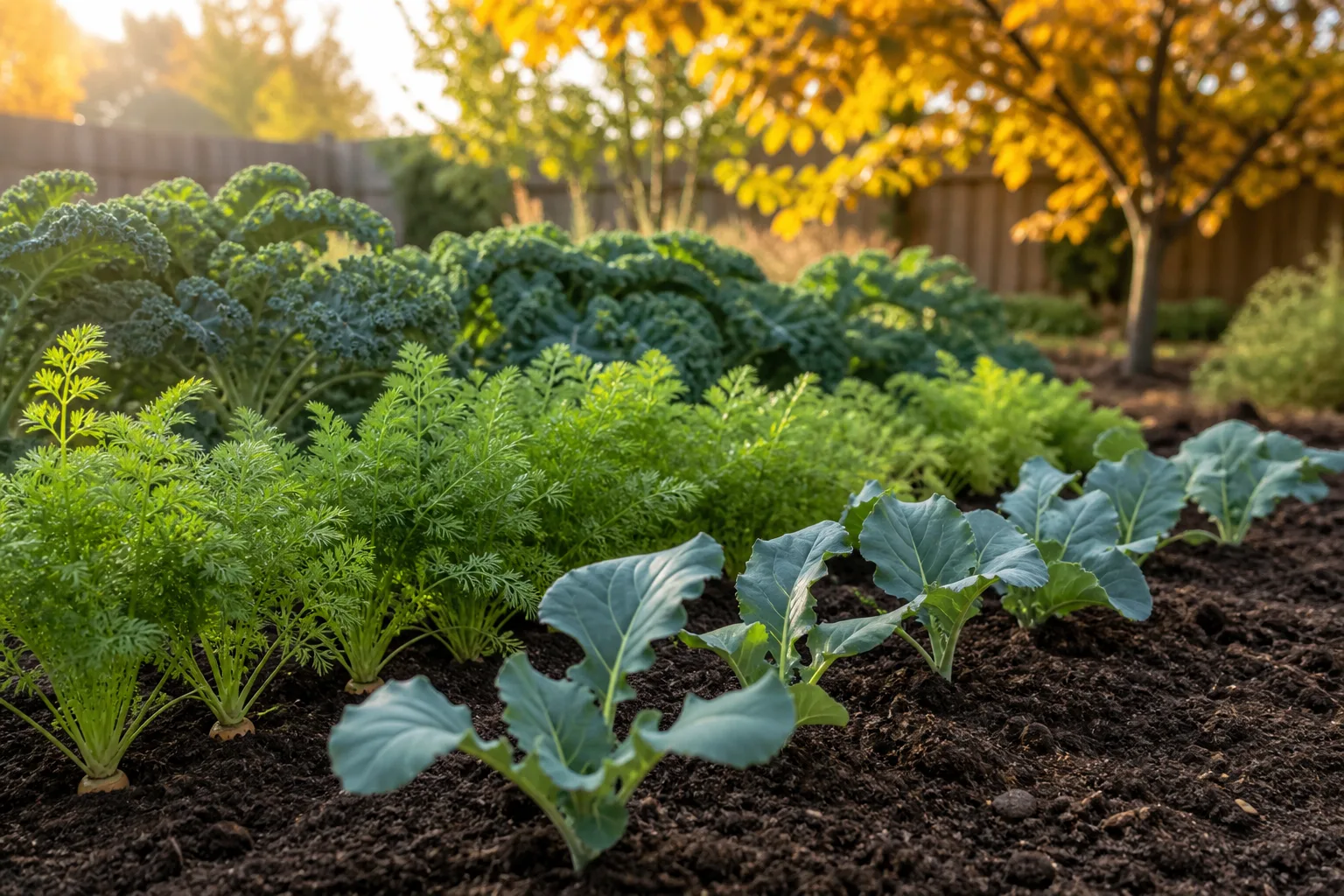
Begin by removing spent summer crops and diseased foliage. Pull weeds before they seed, rake away thick debris that could hide slugs, and inspect the edges for gaps where soil has settled. Do not bury visibly diseased plant material in the bed just because it is organic; remove it according to your local composting practice.
Test or at least inspect the soil before adding fertilizer. A raised bed that produced tomatoes all summer may still contain nutrients, while a dense second crop can increase demand. Mature compost is a useful structure amendment, but it is not a universal substitute for a soil test or a balanced fertility plan. Avoid adding a deep layer of raw manure immediately before sowing salad greens.
If you are filling a new bed, do not create a perched water table with a fine layer over a coarse one or seal the bottom without a drainage plan. Colorado State University Extension also points out that “topsoil” has no guarantee of quality and that some compost-based mixes can carry excess salts. Buy or mix a consistent growing medium, blend the transition into the native soil when roots will cross it, and make sure the bed can drain after a heavy storm.
Make the bed easy to cover
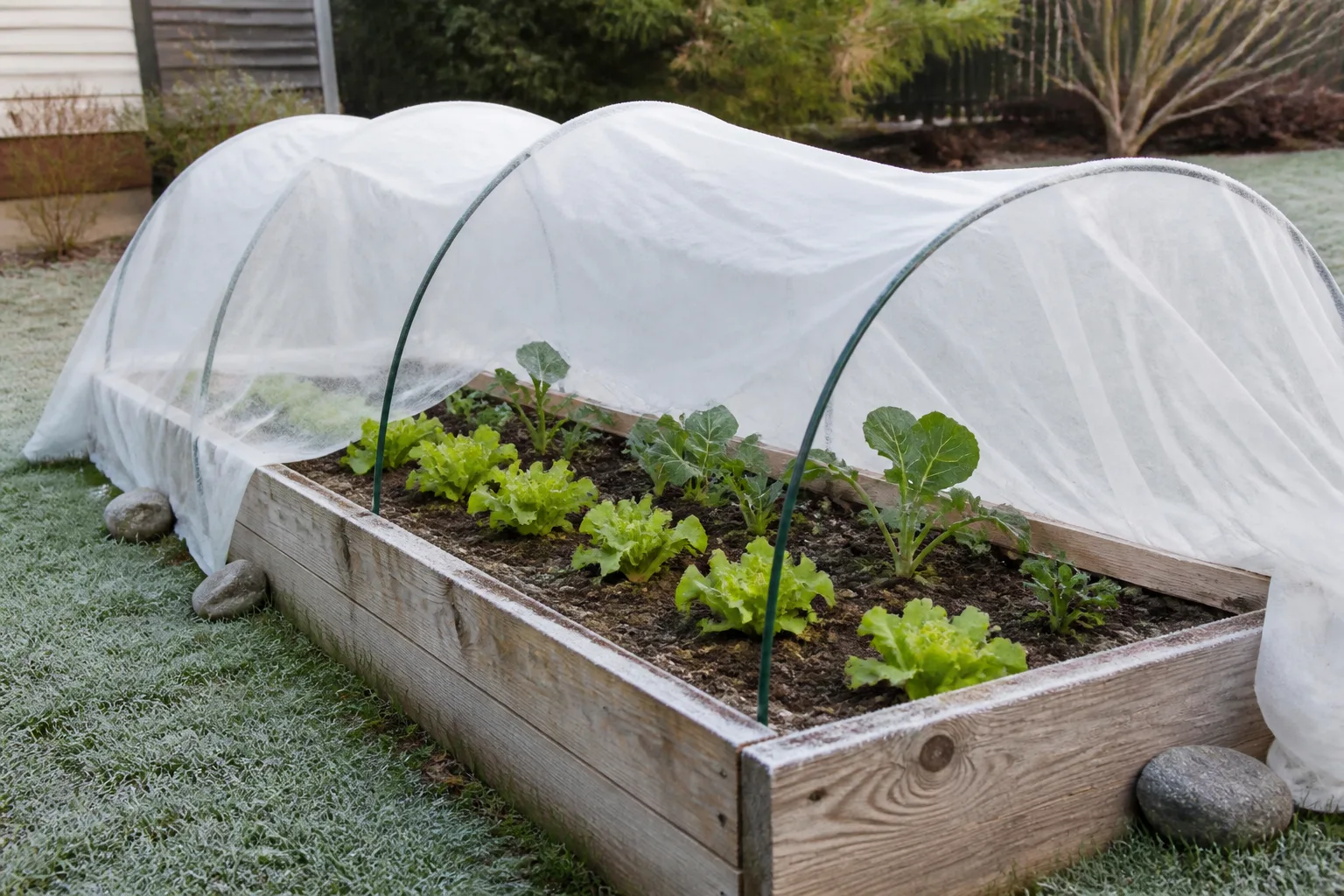
Install hoops, stakes, or a simple support before seedlings need protection. A frame lets row cover or frost cloth rest above the foliage instead of crushing it, and it makes the difference between a two-minute cover job and a dark scramble in the evening.
Anchor the edges so wind cannot lift the fabric. Use breathable row cover for light frost and insect exclusion; use plastic only over a support and with ventilation, because plastic touching foliage can transmit cold and a sealed tunnel can overheat when the sun rises. A cover protects the plant’s surrounding air from radiational frost, but it does not turn a raised bed into a heated greenhouse.
Water fall vegetables without chasing the calendar
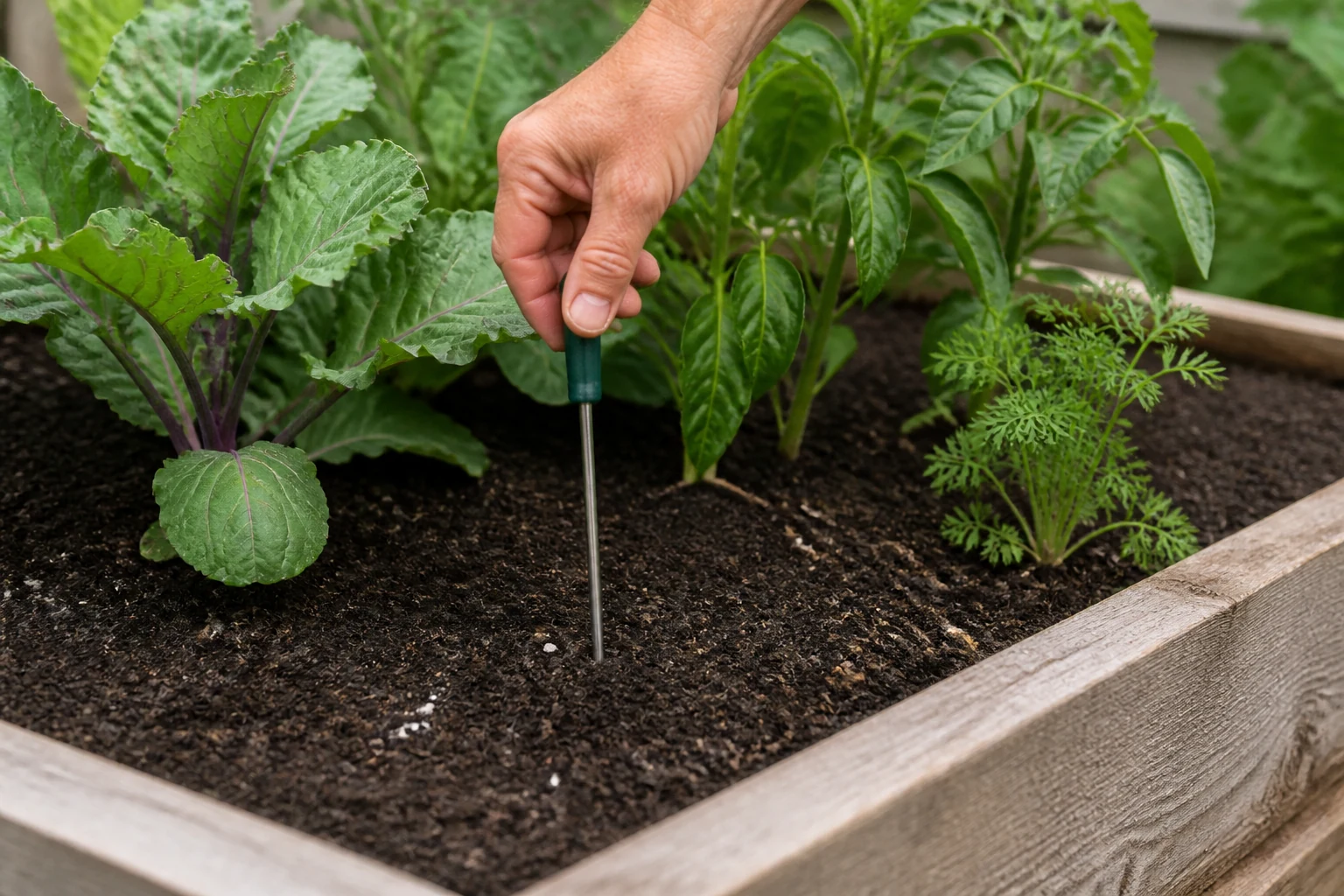
Seeds need a consistently moist surface until they germinate. This is the period when a raised bed can surprise gardeners: cool air reduces evaporation, but a shallow seedbed in loose mix can still dry quickly in sun and wind. Check the top inch with a finger or lift a small corner of cover every morning during the first week.
After germination, shift from frequent surface sprinkles to deeper, slower watering that wets the root zone. Drip lines and soaker hoses are useful because they can deliver even moisture without repeatedly wetting leaves. If you use a hose or sprinkler, water early enough for foliage to dry and check several points in the bed; the edge may be drier than the center.
Do not water by calendar alone. Feel the soil below the surface, account for rain, and notice whether leaves stay limp through the cool part of the day. Waterlogged soil has its own failure signs—yellowing, slow growth, algae, and a sour smell—so a raised bed that drains poorly needs correction, not more irrigation.
Mulch and frost protection that actually work
Mulch is most useful after seedlings are established. A thin layer of clean, fine material reduces splash, slows moisture loss, and buffers temperature swings without burying small stems. Keep mulch slightly away from plant crowns, especially where damp conditions already favor slugs.
For wintering onions, garlic, leeks, and hardy greens, use a loose insulating layer such as clean straw or chopped leaves when the weather has turned consistently cold. Applying heavy mulch too early can keep the bed damp and provide cover for pests; applying it after the soil has frozen solid may miss the chance to reduce repeated freeze-thaw movement. Adjust the depth to your climate and the crop’s hardiness rather than copying a fixed number.
Cover and mulch solve different problems. Row cover moderates the air immediately around foliage and can exclude insects; mulch protects the soil surface and root crown. Use both when a crop needs them, and open or remove covers on warm sunny days so plants do not cook or stay wet.
A simple raised-bed fall planting plan
Start with the crops that have the shortest deadline. Reserve one block for radishes and baby greens, one for spinach or chard that can be harvested repeatedly, and one for a slower crop such as beets, carrots, or a brassica transplant. Leave a little open soil for a second sowing instead of planting every square inch on day one.
Prepare the bed while summer crops are still finishing. As soon as a space opens, add a modest amount of finished compost, smooth the surface, and water it before direct sowing. Mark each block with the sowing date and variety; a simple note prevents you from thinning or harvesting the wrong row six weeks later.
Plan two or three sowings of fast crops about a week apart if your weather allows. The first may mature in lingering summer warmth, the second may hit ideal fall conditions, and the third may provide small leaves for cover-protected harvest. If heat is still intense, use shade cloth or sow late in the day, but do not postpone every planting until the forecast feels autumnal.
Mistakes that erase the raised-bed advantage
The first mistake is building a shallow box on top of compacted ground and assuming the label “raised” fixes drainage. If water cannot move down and away, the box can become a bathtub. Test the site after rain, keep the bottom open when appropriate, and do not block an existing drainage path with a solid frame.
The second is using a very light mix that dries like a container. Soil needs air spaces, but it also needs enough fine material and organic matter to hold water between irrigations. If the bed dries at the edges, improve the mix gradually, mulch after establishment, and run irrigation so the entire root zone—not just the center—gets wet.
The third is planting too densely because raised beds look efficient. Close spacing can reduce bare soil, but crowded leaves stay wet longer and compete for nutrients. Use a spacing appropriate to the mature plant, then harvest baby greens early to open airflow.
The fourth is treating the first frost date as a finish line. A crop planted on that date will not be mature on that date. Count backward, choose varieties with a realistic maturity window, and use a cover to extend harvest rather than to rescue seedlings that never established.
Finally, do not ignore cost and labor. A new frame, soil, irrigation, and frost supports may be worthwhile for years, but they are a large investment for a gardener who already has good ground soil. Start with one small bed or convert a defined in-ground block with paths if you are still testing what you like to grow.
When a hybrid garden is the smartest choice
Many fall gardens work best as a mix. Put lettuce, spinach, radishes, beets, and carrots in the raised bed where clean soil and access make frequent sowing and harvesting easy. Put parsnips, broad beans, sprawling squash, or long-term overwintering crops in a deep in-ground area when that soil drains well.
The hybrid approach also spreads risk. If an exposed raised bed freezes early, the ground plot may carry the last harvest; if a wet autumn saturates the yard, the raised bed may keep roots healthy. You can even use a low-edged, bottomless bed as a transition—defined enough for block planting, but still connected to the larger soil mass below.
The best system is the one that makes the next correct action obvious. If you can reach the bed, keep it evenly moist, cover it quickly, and give each crop enough root room, raised beds are a strong fall tool. If your ground already offers those conditions, keep the money and effort for seeds, compost, and a good row cover.
Conclusion
Raised beds are better for fall vegetables when they solve a real site problem: poor drainage, compacted or questionable soil, limited access, or the need for a bed that is easy to cover. They are not inherently warmer through autumn, and their exposed soil can cool and dry faster than the ground.
Choose the bed by crop and climate. Use raised soil for quick greens, radishes, beets, carrots, and other crops that benefit from a clean, workable root zone; use deep, well-drained ground for crops that need insulation, moisture reserves, or more root space. Set the planting deadline from your local first frost date, water the seed zone carefully, mulch after establishment, and prepare frost supports before you need them. That measured approach gives you the advantages of raised beds without pretending every fall garden needs one.



