11 Begonia Varieties for Gardens and Containers
Compare 11 begonia varieties by flowers, foliage, light, habit, and winter care so you can choose the right plant for beds, pots, or baskets.
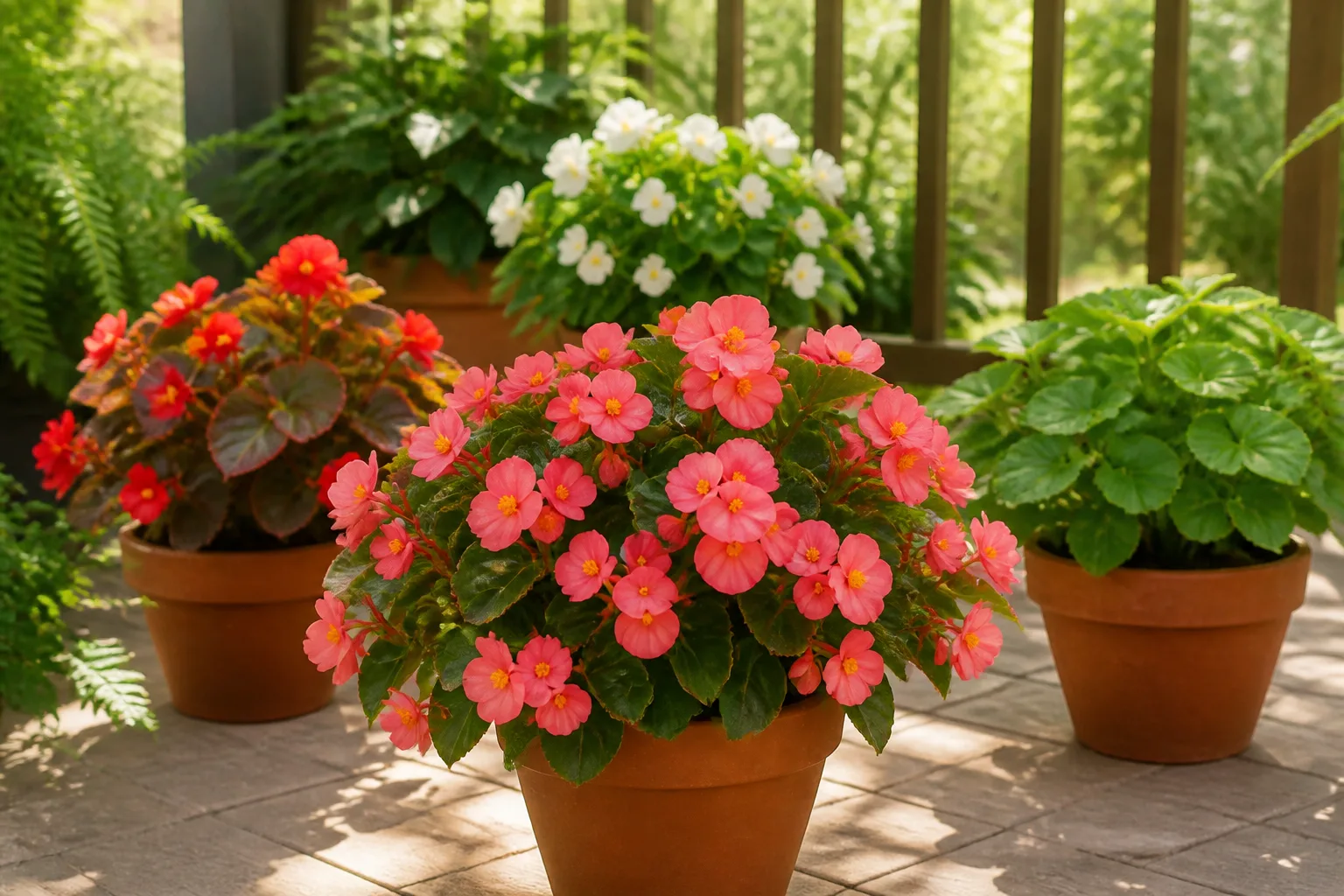
Begonias are often sold as if they were one easy shade plant, but that label hides several very different habits. A compact wax begonia can edge a bed, a tuberous begonia can fill a pot with dinner-plate flowers, a cane begonia can add height, and a Rex begonia can make an indoor container interesting even when it barely flowers. The right choice depends less on the color you like at the nursery and more on what your space can provide.
The 11 cultivars and series below cover the most useful garden and container roles: dependable bedding color, upright flower pots, cascading baskets, architectural cane stems, and foliage-first houseplants. Use the descriptions as a selection guide, then read the care notes because the same routine will not suit a wax begonia and a Rex begonia equally well.
Choose a begonia by its job, not just its flower color
Start with the display you want to build. For a low mound in a border or window box, choose a fibrous-rooted wax begonia. For a sheltered pot with large, ruffled flowers, choose a tuberous type. For a hanging basket, look for a trailing tuberous or boliviensis-derived cultivar. If your goal is dramatic leaves rather than a flower count, Rex and polka dot begonias are better candidates than bedding types.
| Your main goal | Best begonia direction | What to plan for |
|---|---|---|
| Continuous low bedding color | Wax or fibrous-rooted types | Compact plants, regular summer feeding, seasonal replacement in cold climates |
| Large, showy flowers | Tuberous types | Bright shade, shelter from wind, careful watering, tuber storage if frost is expected |
| A basket that spills over the edge | Trailing tuberous or boliviensis hybrids | A light but moisture-holding mix and more frequent checks as the basket dries |
| Height and hanging flower clusters | Cane or angel wing types | A stable pot, bright filtered light, pinching, and support as stems lengthen |
| Patterned foliage | Rex or other rhizomatous types | Indoor bright filtered light, humidity with ventilation, and no water sitting on leaves or crown |
| A perennial experiment in a mild garden | Hardy begonia such as Begonia grandis | A sheltered, well-drained site and realistic expectations about local winter cold |
Botanically, these categories are useful because roots and stems predict how a plant handles stress. Fibrous-rooted types have a conventional fine root system; tuberous types store energy in a swollen underground organ; rhizomatous begonias spread from a creeping stem; and cane begonias rely on upright, segmented stems. The Fine Gardening overview of Begonia describes this breadth as a collection of groups adapted to different flower and foliage displays, not a single care template.
Match the begonia to the light and microclimate you have
Think bright shade, not darkness. Begonias usually flower or hold their best foliage in plenty of indirect light, morning sun, or dappled light under a thin canopy. A dark north-facing corner may prevent a flower-heavy cultivar from performing, while hot afternoon sun through glass or reflected from a pale wall can scorch leaves even when the plant is technically labeled “sun tolerant.”
Tuberous and Rex begonias are the least forgiving of harsh direct sun. Wax begonias, especially bronze-leaved forms, can take more light, but “more tolerant” does not mean invulnerable in a hot climate. The RHS outdoor begonia guide gives the broad rule—sun or partial shade—then separates the groups because their cultivation needs differ. In a hot summer, use early sun followed by afternoon shade as the safest compromise for a mixed display.
Microclimate matters as much as compass direction. A covered porch protects heavy tuberous flowers from rain and brittle stems from wind; a balcony may be bright enough but dry out a small pot twice as fast as a shaded garden bed; and a humid indoor room can help a cane or Rex begonia while stagnant air raises disease risk. Move a container a few feet before you change the soil or fertilizer. If leaves bleach, crisp at the edges, or wilt soon after the sun reaches them, the site is telling you the light or heat load is too high.
The 2025 RHS begonia trial at Hyde Hall is a useful reminder that cultivar performance is not theoretical. The trial assessed begonias in both open ground and pots, and several entries maintained flower and foliage quality in a sunny, exposed site even though begonias are commonly associated with shelter and partial shade. That finding supports a careful “test the cultivar” approach, not a blanket instruction to put every begonia in full sun.
11 begonia varieties worth growing
These choices are organized by the job they do in a garden or container. Series names can vary by nursery, so use the plant tag’s mature size and light advice when it conflicts with a generic description.
1. ‘Bedding’ wax begonia
‘Bedding’ represents the compact, fibrous-rooted wax begonia style: rounded glossy leaves, a low mounding habit, and small flowers carried steadily through the warm season. Its yellow-splashed green foliage gives it more presence than an ordinary green-leaved bedding plant, so it can serve as the focal point of a shallow pot or repeat in a border without becoming visually flat.
Use it where you want a tidy plant roughly 6–12 inches tall that spreads wider than it rises. Give it partial shade or gentle morning sun; enough light helps the variegated foliage retain contrast, but hot afternoon exposure can bleach or scorch the leaves. Because this type is fibrous-rooted rather than tuberous, it is usually the simplest choice for gardeners who want a seasonal display without lifting and storing a dormant organ.
2. ‘Richmond’ begonia
‘Richmond,’ often sold as a sun begonia, is a larger fibrous-rooted choice with bronzy-green leaves, reddish undersides, a shrubby outline, and persistent flowers. The color shift is especially effective in hanging baskets where the undersides are visible, or in a raised pot where the plant can be seen from below rather than hidden among bedding plants.
This is a good bridge between the low, compact wax forms and taller cane begonias. It wants more light than a delicate Rex begonia, but it still benefits from protection from the fiercest afternoon heat in hot regions. In a container, plan for a final height and spread in the neighborhood of 18–24 inches, and use a broad, stable pot rather than a narrow one that tips when the canopy fills.
3. Ambassador series
The Ambassador series is a classic compact wax-begonia direction for beds, edging, window boxes, and repeated container color. It offers pink, red, and white flowers over green foliage, with a tidy 8–12-inch habit that works when you want several plants to read as one low mass.
Choose Ambassador when reliability and proportion matter more than unusual foliage. It can handle full to partial sun better than many foliage begonias, particularly where the sun is not paired with punishing heat, but partial shade keeps the leaves and flowers fresher in summer. Bronze-leaved or dark-leaved selections generally tolerate stronger light than green-leaved ones because the foliage is often bred for sun-facing bedding use; still, judge the actual plant after a week in its site.
Spacing is part of the performance. Tuck plants close enough to make a continuous display, but leave air movement around the foliage rather than creating a damp, crowded mat. Water at the soil line in the morning, and pinch only if young plants are becoming uneven; a full, branched plant usually needs little grooming once established.
4. Cocktail series
Cocktail begonias are compact wax types valued for dark bronze foliage and small white, pink, or red flowers. The foliage supplies contrast in a pot that also contains chartreuse, silver, or plain green companions, and the 6–8-inch stature makes the series useful for the front edge of a container rather than the centerpiece of a tall arrangement.
This is one of the better choices for a brighter patio, but do not confuse “dark leaf” with “full sun everywhere.” In a cool or moderate climate, Cocktail may take several hours of direct light; in a hot climate, give it morning sun and filtered afternoon light. A pot that becomes hot against concrete or metal can stress roots even when leaves are not visibly scorched.
5. ‘Double Up White’ begonia
‘Double Up White’ is a compact fibrous-rooted wax begonia with double white flowers that stand out against green foliage. Its flowers are small, but their density makes the plant look bright from a distance, which is why it works well in a pale container, a moon garden, or a shaded entry where a large-flowered plant would look too heavy.
Because double-flowered forms are commonly selected for showy blooms rather than seed production, they often need little routine deadheading. Remove collapsed flowers and yellow leaves when they collect in the canopy, particularly after rainy weather, so decaying material does not sit against healthy stems.
Give it shade from the hottest afternoon rays and keep the pot evenly but not constantly wet. The white flowers can look washed out in harsh glare, while dappled light gives the plant better contrast. It is a strong choice for someone who wants a neat, flower-forward container without the winter storage work of a tuberous begonia.
6. Solenia ‘Dusty Rose’ begonia
Solenia ‘Dusty Rose’ is a tuberous hybrid with frilled rose-colored flowers, succulent-feeling heart-shaped leaves, and a compact, shrub-like shape. It supplies the larger, more layered flower form people often want from a begonia while staying manageable in a pot, reaching roughly 8–12 inches in many growing conditions.
Give this cultivar more light than a Rex begonia but protect it from the most intense heat. Bright morning light or filtered sun supports flowering; a sheltered patio prevents wind from snapping stems and knocking buds loose. The container should drain freely because tuberous begonias store water and can rot when the mix remains saturated.
7. Nonstop ‘Mocca Yellow’ begonia
Nonstop ‘Mocca Yellow’ brings yellow flowers to the tuberous-begonia palette and is often chosen for its ability to keep flowering through demanding summer conditions. The series is compact, about 8–12 inches tall in typical descriptions, and suited to pots where its warm color can be seen at eye level.
Its heat tolerance is a relative advantage, not a license to let the pot dry out or bake. USDA Agricultural Research Service work on Begonia semperflorens shows why this distinction matters: heat and humidity can overwhelm ordinary commercial bedding selections, while breeding lines with inherited stress tolerance performed better under Gulf Coast conditions. That research, described in the USDA ARS AgResearch Magazine, supports choosing resilient genetics while still managing the root zone and exposure.
Use ‘Mocca Yellow’ in part shade to shade when summers are hot, or in brighter light where nights and afternoons are moderate. Feed during active growth according to the fertilizer label, keep fallen flowers from matting on the soil, and check the pot daily during hot weather. A yellow-flowered plant that suddenly stops opening buds is more likely to be heat, drought, or root stress than a signal to pour on extra fertilizer.
8. Nonstop ‘Rose’ begonia
Nonstop ‘Rose’ and its rose-toned selections create a full, rounded display of double or semi-double flowers in a compact tuberous form. The series is a natural fit for a single-variety pot, a sheltered window box, or the center of a seasonal arrangement where you want a concentrated block of color rather than a fine-textured filler.
Wind protection is particularly valuable when flowers are heavy and stems are soft. Place the container near a wall or under a covered porch, but do not push it into a dark corner; the goal is bright filtered light with enough air movement for foliage to dry. If buds fall, inspect the plant in order: feel the mix, check for recent heat or wind, look for water sitting on foliage, and only then consider whether the plant is simply between flushes.
9. ‘Torch Pink’ angel wing begonia
‘Torch Pink’ is a cane-like or angel wing begonia with elongated, spotted or shaped leaves, upright stems, and clusters of pink flowers. It gives a container vertical structure without the massive size of some cane cultivars and can move indoors when outdoor nights become too cold.
Bright filtered light is the sweet spot. Too little light produces long, weak stems and fewer flower clusters; harsh direct sun can scorch the foliage. Pinch the growing tips during active growth to encourage side branches, then stake the plant if the stems begin to lean under their own weight. A heavy ceramic pot is useful for a tall cane plant, while a plastic nursery pot inside a stable cachepot makes seasonal moving easier.
Indoors, keep the plant away from hot glass and heating or cooling vents. Water when the upper layer begins to dry, but do not keep the pot on a permanently wet saucer. Good humidity helps, yet stagnant, constantly damp air is not the same as a healthy humid atmosphere; ventilation is part of disease prevention.
10. Rex begonia
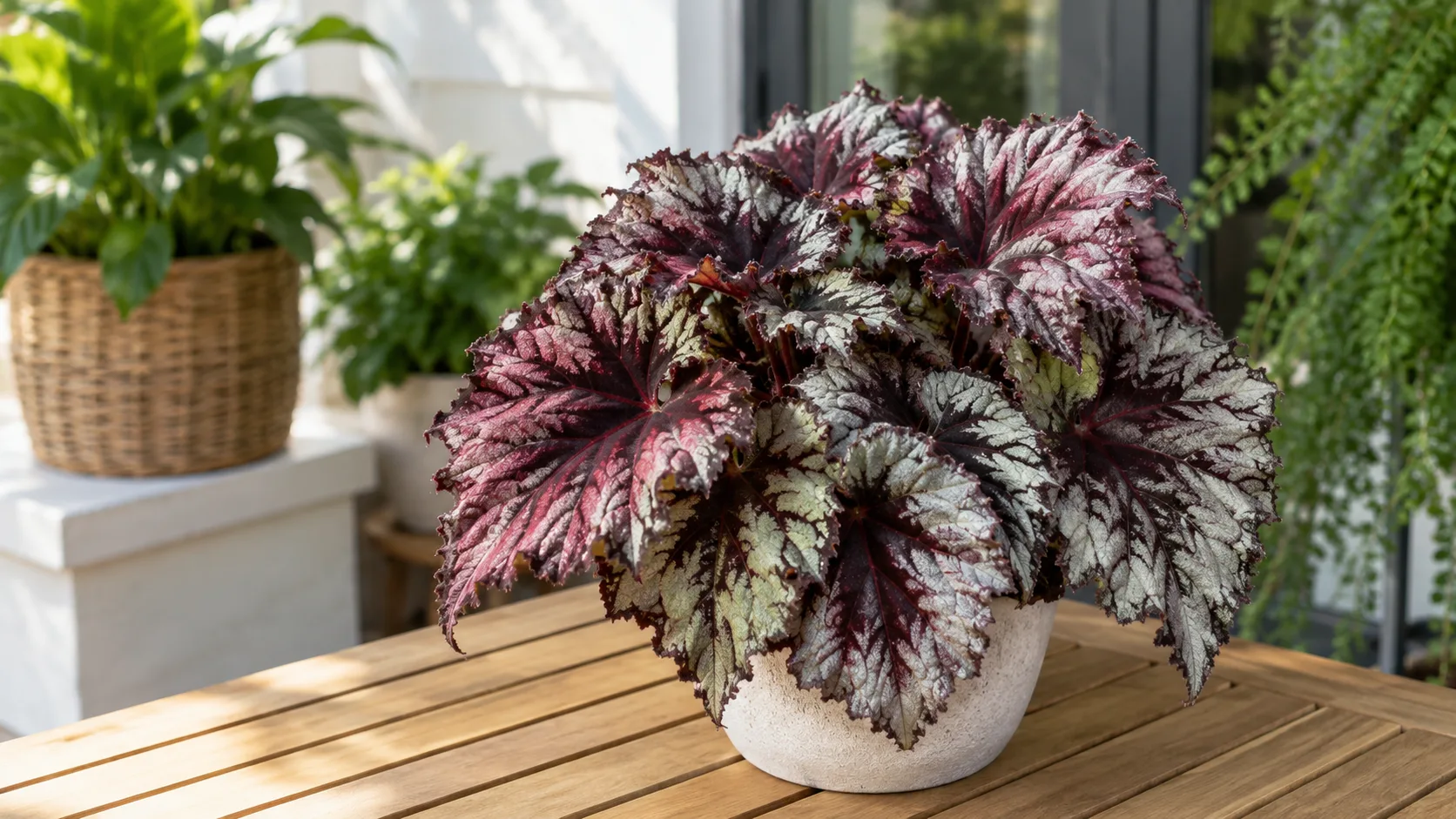
Rex begonias are foliage specialists. Their leaves may combine silver, purple, green, burgundy, pink, metallic sheen, and strong veins in patterns that make a flowerless pot feel finished. The exact height varies widely by cultivar, but the group is generally compact enough for a table, shaded balcony, terrarium-style display, or bright room.
Use Rex when the growing site is bright but protected from direct midday or afternoon sun. The RHS houseplant guidance for begonias recommends bright filtered light, moist but well-drained compost, reduced winter watering, and attention to humidity with ventilation. In practical terms, water the mix thoroughly when it has begun to dry at the surface, let excess drain, and keep water off the leaves and crown.
Rex is a poor choice for a hot, exposed flower pot that you expect to water casually. The shallow, richly patterned leaves show stress quickly, and a humid room without air movement can invite mildew. A plant stand near an east-facing window or a shaded patio in mild weather is usually easier than a bright south-facing sill. Use its foliage as the focal point and accept that flowers are secondary.
11. Polka dot begonia
Polka dot begonia, Begonia maculata, is a cane begonia recognized by elongated green leaves marked with pale spots and red or orange undersides. Its upright stems and hanging flower clusters give it a stronger vertical presence than a Rex begonia, making it useful in a tall indoor container or a sheltered summer patio display.
Give it bright indirect or filtered light, warmth, and a pot with fast drainage. It can spend warm months outdoors in dappled shade, but acclimate it gradually rather than moving it from a dim room straight into sun. Rotate the pot so new growth stays balanced, and pinch long stems above a node if you want a bushier plant instead of a single tall cane.
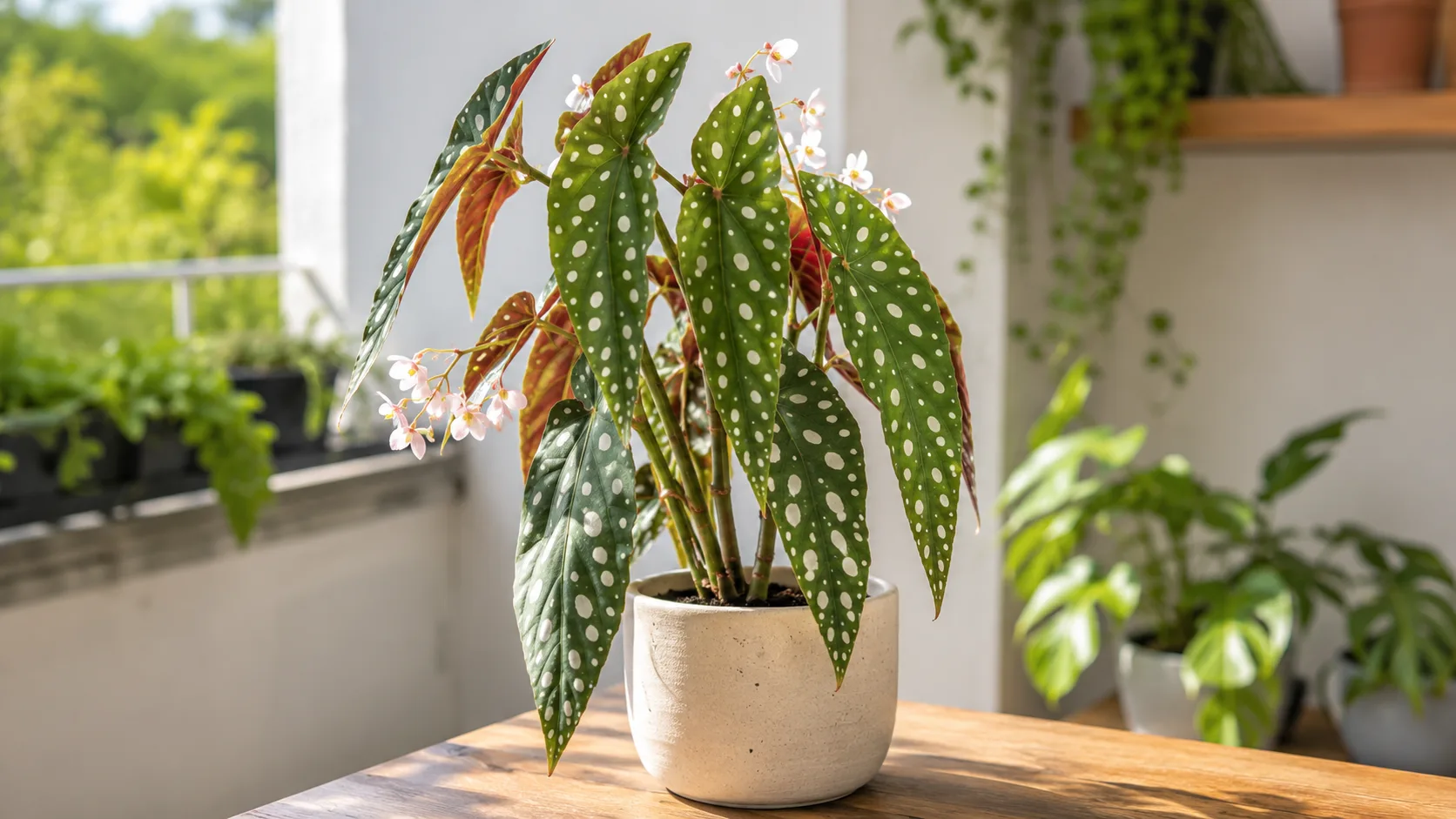
The spotted leaves are a feature, not a sign of disease, but new brown edges, leaf drop, or limp stems need a closer look. Low humidity, overwatering, low light, and sudden temperature changes can produce similar complaints. Check the root-zone moisture and the light pattern before misting, fertilizing, or repotting; changing several variables at once makes it hard to learn what the plant actually needed.
Build the container around drainage and mature habit
The pot is part of the growing system, not just a color choice. Every begonia container needs a drainage hole, and the pot should be large enough for the plant’s mature habit without holding a huge reservoir of unused wet mix. If you love a decorative pot with no hole, use it as a cachepot and keep the begonia in a smaller draining nursery pot that can be lifted out to water.
Choose a light, porous container mix rather than garden soil or topsoil. A commercial peat-free multipurpose mix can work when it drains freely; if it feels dense or stays wet, blend in a modest amount of perlite or fine bark rather than building a complicated recipe. The root-zone goal is simple: moisture remains available, but air returns quickly after watering.
Match material to your watering habits. Terracotta dries faster and can help an overwaterer, but it may demand daily checks in a hot, windy spot. Plastic and resin hold moisture longer and weigh less in a hanging basket. Glazed ceramic is stable for a tall cane begonia but can conceal slow drying. Use a pot one size larger than the root ball when repotting, not a giant container that forces a small root system to sit in a wet, cold mass.
Water, feed, and groom for a long season
There is no honest universal watering schedule for begonias. Pot size, material, wind, humidity, root mass, sun, and rainfall all change the drying rate. Check the surface and the upper inch or two of mix, then water thoroughly when that layer has begun to dry rather than giving a shallow splash every day. A small pot in a hot basket may need attention daily; a shaded, large ceramic pot may wait several days.
Water the soil, not the foliage, especially late in the day. Wet leaves that stay damp, crowded growth, and poor air movement create a better environment for powdery mildew and leaf spots. The BBC Gardeners’ World begonia guide recommends regular watering and feeding, while the RHS advises avoiding wet foliage and keeping compost moist but well drained. Those instructions fit together: consistency matters, but saturation and leaf-wetting are not care goals.
Container begonias use nutrients quickly because their root volume is limited. During active summer growth, use a balanced or bloom-oriented liquid fertilizer at the label rate, or a controlled-release product mixed into the potting medium as directed. Tuberous and bedding begonias are commonly fed with a higher-potassium fertilizer during flowering, while foliage-first Rex types may be fed during active growth without trying to force them into a bloom-heavy routine. Never apply concentrated fertilizer to a bone-dry or heat-wilted root ball; rehydrate first and follow the product label.
Groom according to the plant. Remove collapsed flowers and yellow leaves from dense bedding and tuberous displays, pinch cane tips to make branching, and remove insignificant flowers from foliage begonias if they distract from the leaves. Do not strip healthy green leaves just because a plant is entering a seasonal slowdown. Green tissue is still producing energy, and premature cutting can reduce the strength of a tuber or the vigor of a plant you want to carry indoors.
Overwinter the begonia you want to keep
First decide what you are trying to preserve. Tuberous begonias can be lifted and stored dormant; wax begonias may be overwintered as living plants or cuttings but are often replaced because they are inexpensive; cane, Rex, and polka dot begonias can transition indoors if you have adequate light, warmth, and pest-control space. Hardy begonia, such as Begonia grandis subsp. evansiana, is a different case and may remain outdoors in a sheltered, well-drained site in a suitable climate.
For a tuberous begonia, start before a hard freeze. As days cool, reduce watering and let the foliage yellow naturally. Lift the tuber before freezing weather, remove loose soil, let it dry in a cool, airy place, and store it frost-free in barely moist peat-free medium or sand. The RHS recommends a cool storage environment around 7°C (45°F) for many tuberous begonias and occasional checking so stored tubers do not shrivel or rot; the exact method can vary by cultivar and local humidity.
Do not seal a damp tuber in a plastic bag. Rot often begins with storage moisture trapped around damaged tissue. Check every few weeks, discard any soft or foul-smelling sections, and keep sound tubers cool but not frozen. In spring, start the tuber in a shallow pot with the hollow side up, cover it lightly, and water sparingly until shoots appear. The White Flower Farm tuberous begonia guide also emphasizes a light, well-drained medium and the need to lift tubers in frost-prone regions.
Fix failure by matching symptoms to conditions
When a begonia looks unhappy, resist the urge to fertilize or repot immediately. Start with three checks: how wet the mix is below the surface, what light the plant receives during the hottest hours, and whether the crown or stems are firm. These tests separate the most common problems—drought, waterlogging, scorch, low light, and rot—without changing five variables at once.
Brown, crispy edges usually point to a dry root ball, low humidity, hot direct sun, salt buildup, or a combination. Feel the mix first. If it is bone-dry, water thoroughly and adjust the checking interval; if it is wet, move the plant from harsh light and inspect roots rather than watering again. Rex and cane begonias are especially likely to show dry-air or heat stress indoors, while a small outdoor basket can simply be running out of water before evening.
Yellow leaves and leaf drop are not a single diagnosis. Low light, overwatering, underwatering, temperature shock, and normal aging can all play a part. If several leaves yellow while the mix stays wet and stems soften, suspect root stress; if the mix is dry and the plant is in bright heat, rehydrate and shade it. Remove only damaged leaves, then watch new growth rather than trying to make old leaves green again.
Bud drop or flowers that fade quickly often follows dry compost, hot sun, wind, or a sudden move. Tuberous flowers are heavy and easily damaged, and a swinging container can lose buds even when roots are healthy. Shelter the pot, check moisture more often, and keep watering consistent. More fertilizer will not compensate for missing light.
Mildew or leaf spots become more likely when foliage stays wet, air is stagnant, plants are crowded, or the canopy is stressed. Remove badly affected leaves, improve spacing and ventilation, water at the soil line, and avoid spraying the leaves late in the day. For pesticide decisions, identify the disease or pest and follow the product label and local regulations; a generic home remedy can injure tender foliage or fail to address the cause.
Leggy growth is usually a light and pruning problem rather than a request for more food. Move the plant closer to bright filtered light, rotate it, and pinch soft growing tips on cane or fibrous-rooted types. Do not hard-prune a tuberous begonia in full flower simply to make it compact; wait for a natural seasonal slowdown or use a cultivar whose mature habit fits the pot.
Conclusion
The best begonia for your garden is the one whose habit matches both the space and the care you can sustain. Choose wax begonias for compact seasonal color, tuberous begonias for large flowers in a sheltered pot, cane types for height, and Rex or polka dot begonias when foliage is the real attraction. Then give the plant bright shade or filtered light, a draining container, steady moisture, and protection from frost.
If you want the least winter work, start with a wax begonia or a modern bedding cultivar and treat it as seasonal color. If you enjoy a yearly ritual, tuberous begonias reward careful storage; if you have a bright indoor spot, a Rex or cane begonia can become a long-term collection plant. The name on the tag matters, but the final decision is simpler: match the roots, light, mature size, and winter plan before you buy.



