Mold on Soil on Alocasia Cuprea: Corm-Safe Scraping &
Quick answer
Mold on soil on Alocasia Cuprea almost always signals moist organic mix at the surface around a slow-growing corm—often from watering on a calendar while the top 2–3 cm never dry. First step: scrape off the fuzzy top layer with a spoon, let the upper profile pass a chopstick dry test before the next soak, and check whether winter dormancy or a humid bathroom is keeping the surface damp.
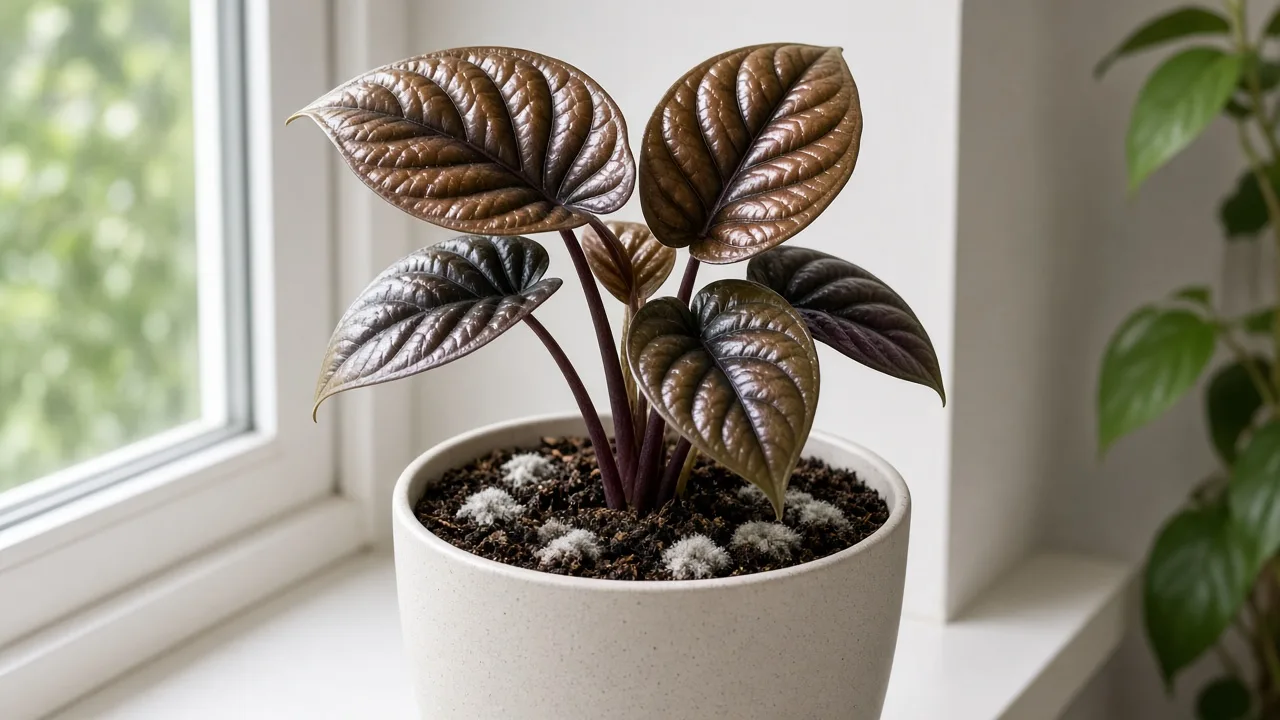
Mold on Soil on Alocasia Cuprea: Causes, Checks & Fixes
This guide covers mold on soil on Alocasia Cuprea. See also the general Mold on Soil guide, watering, and light pages for this plant.
Mold on Soil on Alocasia Cuprea: Causes, Checks & Fixes
Quick answer
Mold on soil on Alocasia cuprea ‘Red Secret’ is almost always a surface moisture problem around a slow corm, not a disease attacking the metallic mirror leaves. Cuprea is built for bright indirect light with moist, well-drained mix that dries predictably between soaks; peat-heavy soil that stays damp at the surface is exactly where saprophytic fungi colonize organic debris in consistently wet potting media.
For how surface mold behaves on houseplant soil in general, see our mold on soil hub. On Cuprea, the useful clues are white or gray fuzz at the rim of a heavy pot in a humid bathroom, a dark damp mix surface that never lightens, calendar watering while the top 2–3 cm stay wet, and firm copper mirror leaves above a wrong soil line—not spotted or chewed foliage.
First step: scrape off the moldy top inch of mix with a spoon, bag and trash the material, and let the upper 2–3 cm pass a chopstick dry test before the next soak. Make that one correction before repotting, fungicide sprays, or misting mirror leaves.
When to use this page vs other Alocasia Cuprea guides
This page is the soil-surface entry when fuzzy growth appears on a Cuprea pot.
| Pattern | Read next |
|---|---|
| Tiny dark flies hovering at the rim with damp mix | Fungus gnats |
| Soft black petioles, sour smell, mushy corm on probe | Root rot or overwatering |
| Yellow mirror leaves with a heavy wet pot | Yellow leaves and overwatering |
| Light pot, crisp brown edges, dry deep mix | Underwatering |
| Mix stays wet despite sparse watering | Soil guide — drainage and pot size |
| Pot looks empty in winter but corm is firm below | Overview — dormancy, not mold alone |
What mold on soil looks like on Alocasia Cuprea
On this plant you usually notice fuzzy growth at the pot rim and soil surface before any corm damage. One or two firm copper mirror leaves can look perfect while the soil story is wrong.
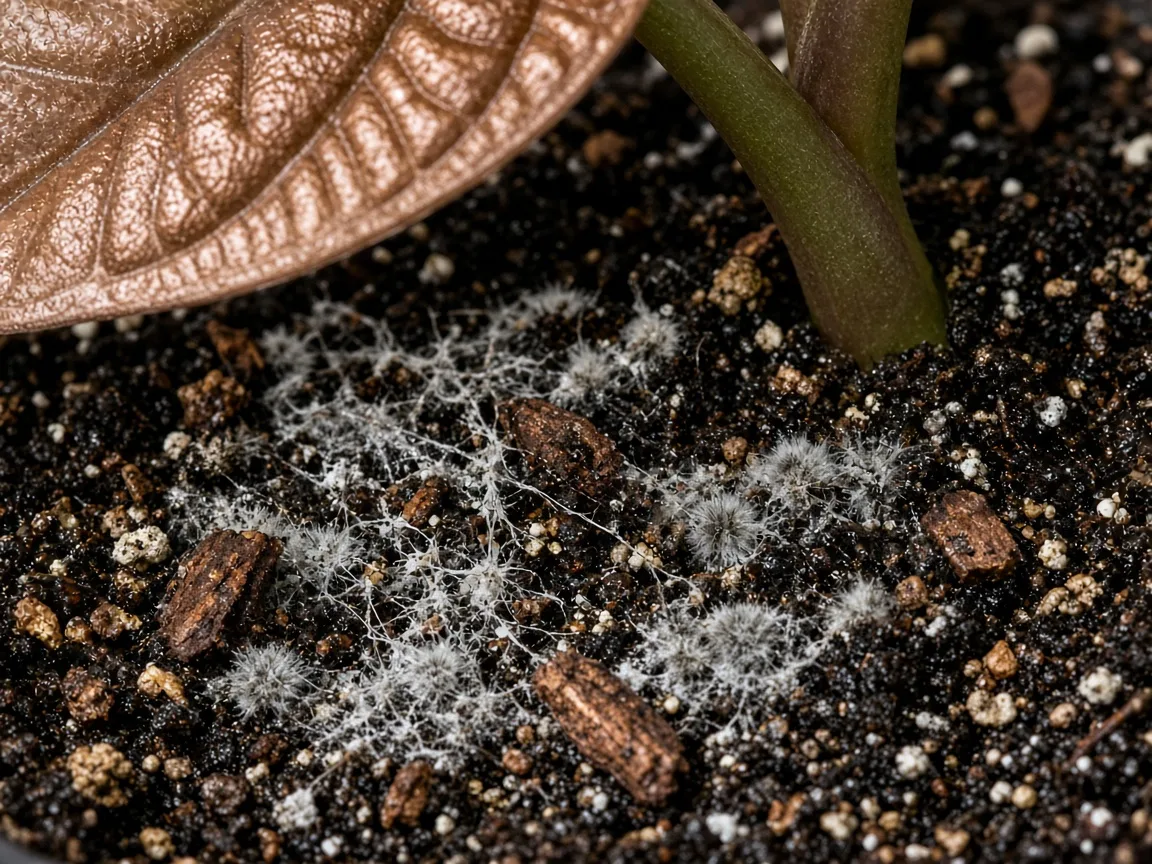
White or gray saprophytic fuzz on moist aroid mix at the Cuprea soil line—the bullate mirror leaves above can stay firm while the surface stays too wet.
Typical harmless surface mold:
- White, gray, or occasionally tan fuzzy patches on the top of the mix
- Growth concentrated where organic debris collects—fallen leaf bits, peat fines, or decorative moss
- Soil surface still cool and damp to the touch days after watering
- Firm copper-bronze mirror leaves and stiff petioles when you gently probe below the fuzz
Signs the wet conditions behind mold are hurting Cuprea:
- Mold returns within days of scraping
- Small dark flies rise when you disturb the surface—fungus gnats sharing the same damp habitat
- Pot feels heavy long after the last watering
- Yellow mirror leaves or soft petioles at the base despite moist soil
- Sour or swampy smell from the pot—distinct from normal earthy potting mix
Because Cuprea stores reserves in a compact underground corm, mirror leaves can stay glossy while the root zone is already stressed. Do not treat surface mold as purely cosmetic when the pot stays heavy and damp.
Mold vs lookalikes on humid aroid pots
Several surface growths share bathroom and terrarium space with jewel alocasias. Identifying what you see prevents the wrong fix.
| What you notice | Likely cause | Where it sits | First check |
|---|---|---|---|
| White/gray fuzzy threads on damp soil | Saprophytic surface mold | Top 1–2 cm of organic mix | Chopstick dry test; scrape and dry surface |
| Smooth green film on soil and pot rim | Algae on constantly wet surface in low light | Sun-facing side of damp mix | Reduce watering; brighten indirect light slightly |
| Hard white or tan crust | Mineral salt buildup from fertilizer or hard water | Dry soil surface after evaporation | Flush mix; scrape crust—soil beneath is dry, not fuzzy |
| Store-bought moss on top | Decorative top-dressing holding moisture | Surface layer only | Remove moss; mold often grows underneath |
| Brief white threads after repotting | Normal mycelium in fresh peat before first dry-down | Fresh mix surface | Disappears once top 2–3 cm dry; no sour smell |
Why Alocasia Cuprea gets mold on soil
Overwatering a slow corm in a humid room. Cuprea uses water slowly compared with faster Alocasia × amazonica hybrids. Watering every seven days because a calendar says so—while the top 2–3 cm never dry—keeps the surface permanently hospitable to fungi feeding on organic matter in moist potting media. See overwatering on Alocasia Cuprea when yellow leaves and soft petioles accompany the fuzz.
Peat-heavy or dense mix in an oversized pot. Standard indoor peat holds moisture at the surface long after the corm has enough water. An extra-large pot adds wet volume around a small root system—exactly the pattern Brooklyn Botanic Garden links to chronic damp soil problems. The soil guide covers chunky perlite-bark blends; dense peat alone is the fastest route to both mold and corm rot.
Winter dormancy with summer watering. The RHS alocasia guide notes reduced watering in cooler winter conditions when growth slows. Cuprea may drop every leaf while the corm stays alive below—yet owners often keep soaking on the summer rhythm. That leaves damp organic mix above a nearly inactive corm, perfect for surface mold while you assume the empty pot needs rescue water.
Cachepots and standing saucer water. Empty runoff within 30 minutes after every soak. A decorative outer pot that traps water keeps the bottom profile anaerobic and the surface humid—mold at the rim plus sour smell points toward root rot, not fuzz alone.
High humidity without matching airflow. Cuprea wants 65–80% humidity, but a closed terrarium or steamy bathroom with poor air movement slows evaporation at the soil line. Mirror leaves love the moisture; the mix surface does not need to stay wet between drinks.
Mirror-leaf watering: keep mold at the soil line
The bullate copper foliage is what draws collectors to Cuprea—and it can mislead diagnosis. Healthy mirror leaves do not prove healthy soil.
Cuprea’s watering checkpoint is depth-based, not leaf-based:
- Push a chopstick or finger 2–3 cm into the mix near the corm, not at the rim alone.
- If the probe comes out clean and dry, a thorough soak is due per the watering guide.
- If the probe clings or feels cool at depth, skip the drink—even when mirror leaves look slightly dull from high humidity rather than thirst.
NC State Extension describes alocasias as needing moist, well-drained soil and warns that root rot follows overwatering. On Cuprea, “moist” means the corm accesses water in the lower profile after the upper 2–3 cm have dried—not a permanently dark surface that grows mold and eventually attracts fungus gnat larvae in the same damp organic layer.
Dormant Cuprea pots: mold above a sleeping corm
Late autumn and winter trigger a pattern unique to corm-based jewel alocasias: the pot looks empty while the corm below stays firm.
During dormancy, Cuprea may shed every mirror leaf. The instinct is to water more because nothing green remains visible. That is how surface mold appears on a pot you think is “dry” simply because it has no foliage.
Dormancy mold checklist:
- Corm still firm when you gently brush aside the top inch—no hollow or mushy feel
- No sour smell; fuzz is surface-only saprophyte on damp peat
- You have been watering on the summer schedule while the RHS recommends cooler, drier winter conditions
- New red-flushed spears absent for weeks—expected in dormancy, not a call for extra soak
Correction: scrape surface mold, then shift to dormancy watering—roughly every 2–4 weeks or when the deep mix is barely damp, not on a seven-day calendar. Proven Winners notes that overwatering in winter is the most common alocasia killer—mold is often the first visible sign before corm rot starts.
How to confirm the cause
Work through these checks before repotting or spraying anything:
- Surface moisture test — Press into the top 2–3 cm. If it feels cool and clings days after watering, the mix is too wet for Cuprea.
- Pot weight — Lift the container. A heavy pot long after watering confirms saturation throughout, not just surface mold.
- Corm firmness — Gently move aside the top layer near the stem base. Firm corm tissue suggests mold is a moisture warning only. Mushy or hollow tissue means rot may already be underway—follow the root rot guide.
- Smell check — Earthy odor is normal. Sour or rotten smell points to anaerobic decay in wet soil.
- Gnat check — Flies rising when you disturb the surface mean larvae are feeding in damp organic soil in the same layer as the mold.
- Season and placement — Mold in a dim winter bathroom after unchanged weekly watering is a strong overwatering signal on slow-growing Cuprea.
If the corm is firm, petioles are stiff, and mirror leaves are intact, you are likely dealing with cosmetic surface fungus on wet mix—not an active Cuprea disease.
First fix for Alocasia Cuprea
Scrape off the moldy top inch of growing media with a clean spoon or fork, bag the material, and trash it—not the compost pile.
University of Maryland Extension recommends removing the upper layer when algae or fungal growth appears on indoor plant soil. Leave the plant in place and let the top 2–3 cm pass a chopstick dry test before the next thorough soak. Do not mist mirror leaves, top-dress with fresh peat, or fertilize while correcting moisture.
That single action—scrape plus dry-down—tells you within one to two weeks whether the problem was surface habitat alone or chronic saturation needing mix or pot changes.
Step-by-step recovery
After the first fix, work through these steps in order based on what you find:
Days 1–3: Dry the surface without bone-drying the corm
- Skip scheduled water until the chopstick test clears at 2–3 cm depth
- Empty any standing water in saucers or cachepots
- Increase gentle airflow at the soil line—a small fan on low helps humid bathrooms without lowering leaf humidity
Days 4–14: Read the plant’s response
- Mold should not return if the surface actually dried
- Watch for new red-flushed spears or firm petioles—positive signs on Cuprea
- If tiny flies appear, add a yellow sticky trap at the rim and see fungus gnats for larval monitoring
If mold returns within a week:
- Top-dress scraped areas with perlite instead of peat to break surface tension
- Review pot size—Cuprea prefers staying slightly snug; oversize pots hold unused wet mix
- Refresh the top 1.5 inches with chunky aroid blend per the soil guide
If sour smell or soft corm appears:
- Stop here and switch to the root rot protocol—do not keep scraping over decaying tissue
Recovery timeline
Surface mold with firm corm: Fuzz should not reappear within 7–10 days after scraping and correcting the dry-down rhythm. Mirror leaves do not need to change for the fix to work—the soil line is the metric.
Mold plus early overwatering stress: Yellowing on lower mirror leaves may stabilize over two to three weeks once the top profile dries predictably. Old yellow tissue rarely reverts to full copper; judge success by stopped spread and clean new spears.
Mold during winter dormancy: Surface fuzz may clear slowly because the corm drinks little. Allow three to four weeks of corrected dormancy watering before assuming failure on an empty-looking pot.
Escalation signs: Mold returns within days, petioles soften at the base, several leaves collapse at once, or probing finds mushy corm—treat as same-day root rot triage.
Mistakes to avoid
- Misting mirror leaves instead of fixing soil moisture — humidity on foliage does not replace a dry-down check at the corm.
- Spraying fungicide on the soil surface first — saprophytic mold is a symptom; moisture management is the cure unless a lab confirms pathogenic fungus (rare on indoor Cuprea).
- Repotting on day one — unnecessary stress on a rot-sensitive corm when firm tissue and surface-only fuzz are present.
- Adding fertilizer to “strengthen” the plant — do not feed a stressed Cuprea until new growth looks healthy for two weeks and watering is stable.
- Watering an empty winter pot on a calendar — the most common route from harmless mold to corm rot on jewel alocasias.
- Stacking scrape, repot, prune, and pesticide the same day — make one correction, read the response, then escalate.
How to prevent mold next time
Align watering, mix, and pot size with Cuprea’s slow corm rhythm:
- Water when the top 2–3 cm are dry, then soak until runoff and empty the saucer—see the watering guide
- Use chunky perlite-bark aroid mix in a pot only one size up; refresh the top inch each spring
- Cut watering 60–70% in autumn and winter when dormancy is likely
- Top-dress with perlite if peat surfaces stay dark between drinks
- Remove fallen leaf debris from the soil line promptly
- Scout the rim weekly in humid bathrooms, terrariums, and after repotting
Healthy Cuprea pots should show a lighter, drier surface between soaks—not permanent dark dampness that feeds mold.
Related Alocasia Cuprea guides
- Overview — dormancy, mirror-leaf colour changes, and when an empty pot is still alive
- Watering — chopstick depth test and seasonal rhythm after mold clears
- Soil — chunky aroid recipe when peat-heavy mix keeps the surface wet
- Overwatering — when yellow mirror leaves and heavy pots accompany surface fuzz
- Fungus gnats — tiny flies sharing the same damp organic habitat
- Root rot — sour smell, soft corm, and mushy petioles after chronic wet mix
Related tool
Use the Plant Problem Diagnosis Tool to narrow causes for mold on soil on this plant before changing multiple variables at once.