Alocasia Cuprea Soil Mix: Chunky Aroid Recipe & pH Guide
Alocasia Cuprea Soil Mix: Chunky Aroid Recipe & pH Guide
Alocasia Cuprea Soil Mix: Chunky Aroid Recipe & pH Guide
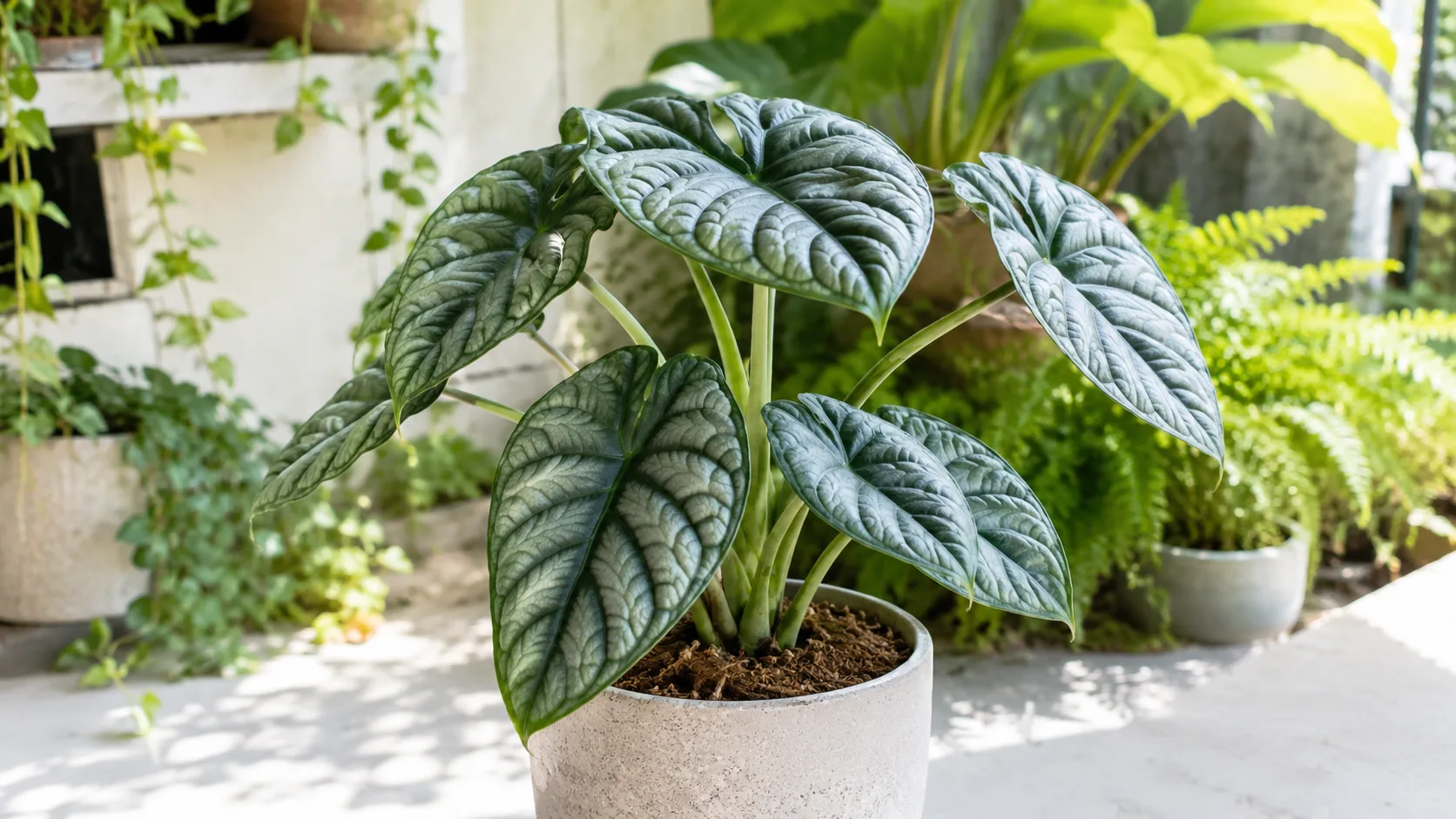
Alocasia Cuprea (Alocasia cuprea) is a slow-growing jewel alocasia whose metallic copper leaves depend on a substrate most shop potting soils cannot provide. The species is native to Borneo (Sabah), where it grows in shallow rainforest debris that holds moisture briefly and re-aerates within hours. Indoors, that biology translates to one rule: chunky, well-draining aroid mix that stays evenly damp between waterings but never sits saturated around the corm. Standard houseplant soil compacts, seals off oxygen, and is the fastest route to the yellow leaves and mushy petioles covered in the Alocasia Cuprea watering guide.
This guide gives you the exact DIY recipe, ingredient swaps, pH window, store-bought shortcuts, refresh schedule, and warning signs that your current mix is failing—before the underground corm rots.
Why Alocasia Cuprea Needs a Chunky Aroid Mix, Not Bagged Houseplant Soil
The RHS Alocasia cuprea profile lists the plant’s moisture preference as moist but well-drained—the same tension every aroid grower tries to solve in a pot. NC State Extension describes the genus preference as slightly acidic, moist, well-drained, humus-rich, fertile loam and notes that root rot follows overwatering. For Cuprea specifically, NC State lists the ‘Red Secret’ cultivar with deeply ridged, metallic red foliage—the form most collectors grow.
Borneo understory debris and what that means indoors
In habitat, Cuprea roots spread through leaf litter, bark fragments, and mineral grit over limestone-influenced soils. Rain passes through quickly; the upper layer stays breathable. A dense peat plug in a plastic pot recreates the opposite: water pools at the bottom while the surface looks dry. Pair the wrong substrate with the Alocasia Cuprea overview guidance on bright indirect light and high humidity, and rot risk rises fast.
The shallow corm: why oxygen matters more than moisture
Cuprea stores energy in a corm sitting just below the substrate surface—not a deep taproot system. Fine white feeder roots branch off it and need air-filled pores between waterings. When mix compacts, those roots suffocate in days even if you water on a reasonable schedule. The Missouri Botanical Garden summarizes the genus need as consistently moist, organically rich, well-drained soils and notes that soil-based potting mixes retain moisture better than soilless mixes—useful context, but Cuprea still needs more chunk and less density than that sentence implies for a slow jewel alocasia in a small pot.
How Cuprea Soil Differs From Polly, Dragon Scale, and Philodendron
If you grow Alocasia Polly successfully, treat Cuprea as the pickier sibling. Polly is a taller Alocasia × amazonica hybrid with a slightly wider humidity window and more root mass relative to pot size. Cuprea’s slow corm and compact habit mean snug pots, sharper drainage, and less forgiveness when mix stays wet through winter dormancy.
Compared to a trailing philodendron aroid mix, Cuprea often needs more bark and less total volume in the pot—the philodendron recipe is a useful starting point, but increase structural chunk by roughly five percent and never size up aggressively after repot.
Sharper drainage than larger alocasia hybrids
The RHS alocasia growing guide recommends peat-free houseplant compost with added horticultural grit at roughly three parts compost to one part grit when repotting. That ratio is a genus baseline; Cuprea benefits from orchid bark or pine fines replacing part of the grit fraction for longer-lasting air pockets in small containers.
Snug pots and slow roots
Cuprea prefers staying slightly pot-bound. An oversize container filled with unused wet mix is a common soil-related rot trigger. The Alocasia Cuprea repotting guide covers pot sizing; this soil guide assumes you match mix texture to a one-size-up repot at most.
Core Mix Components for Alocasia Cuprea
Every reliable Cuprea substrate combines four roles: moisture reservoir, aerator, structural chunk, and small amendments. The RHS guide to houseplant growing media explains that aerators like bark and pumice create air pockets roots need, while coco coir holds water then releases excess—both roles matter for alocasias that dislike drying out completely.
Coco coir or peat-free compost as the moisture base
Coco coir is the modern default: near-neutral pH, rewets easily, and breaks down slower than peat. Peat-free indoor compost works as the base if it is not already loaded with fine forest products that compact quickly. Pre-moisten coir before mixing so it blends evenly.
Perlite and pumice for aeration
Perlite is light, cheap, and drains fast but floats and breaks down over 12–18 months. Pumice is heavier, lasts longer, and anchors small pots. For Cuprea, either works; many growers blend both. The RHS growing media guide also notes vermiculite as highly water-retentive—useful in dry homes but reduce the fraction in humid rooms where mix already stays damp.
Pine bark or orchid bark as structural backbone
Bark is what keeps the mix “chunky” and prevents collapse into a fine sponge. Medium orchid bark or small pine bark fines suit four- to six-inch jewel alocasia pots. Skip chunks over half an inch—they create dry voids fine Cuprea roots cannot colonize.
Optional charcoal, worm castings, and what to skip
A small dose of horticultural charcoal buffers impurities; worm castings add slow nutrients but should stay at 10 percent or less to avoid burning shallow roots. Skip garden soil, moisture-control crystals, and straight cactus mix without amendment.
Best DIY Alocasia Cuprea Soil Recipe (By Volume)
If you want one recipe to memorize, this 40-30-20-10 blend matches credible aroid practice and adapts cleanly to local ingredients.
The 40-30-20-10 baseline ratio
By volume:
- 40% pre-moistened coco coir or peat-free potting compost
- 30% perlite, pumice, or a 50/50 blend
- 20% medium orchid bark or pine bark fines
- 10% combined: horticultural charcoal (~half), worm castings (~quarter), optional dolomitic lime or mycorrhizal scoop (remainder)
One eight-quart batch fills roughly two six-inch pots—enough for a repot plus top-dress.
Step-by-step mixing method
- Break up coir clumps in a clean tub until texture is uniform.
- Add perlite/pumice and mix until white/gray particles distribute evenly.
- Add bark; texture should feel loose, not heavy.
- Fold in charcoal and castings last.
- Pot Cuprea into a container with drainage holes, water once to settle, and discard saucer water.
After potting, link watering rhythm to the Alocasia Cuprea watering guide—soil and water schedule must agree.
Adjustments for dry vs humid homes
- Dry air (under 45% humidity): Raise coir to 45–50%, add a tablespoon of vermiculite per quart, keep bark at 15%.
- Humid homes (60%+): Drop coir to 35%, raise bark to 25% and perlite/pumice to 35%, add extra charcoal.
Pot-weight test: After a full soak, lift the pot. Water again only when weight drops noticeably—usually when the top 2–3 cm is dry. If mix stays wet beyond five to seven days in summer, it is too moisture-retentive or the pot is too large.
Target pH for Alocasia Cuprea: 5.5 to 6.5
LeafyPixels plant data and most aroid practice center on pH 5.5–6.5 for Cuprea. NC State describes alocasia soils as slightly acidic without a numeric range; coco coir and bark-based mixes usually land in the target window without adjustment. Peat-heavy bases run more acidic and may need a light dolomitic lime dose at mixing time.
Why slightly acidic substrate matters
Micronutrients like iron and manganese stay available in the low-six pH band. Above 6.5, pale new growth can appear even when fertilizer is present. Below 5.5, some nutrients leach excessively.
Testing runoff and fixing drift from tap water
Test runoff with a probe every few months. Alkaline tap water is the most common reason a good mix drifts high over time. The University of Maryland Extension notes that salt buildup from water and fertilizer damages sensitive roots—leaching with roughly twice the pot volume of water resets chemistry when crust appears on the surface.
Why Standard Potting Soil Fails Cuprea
Bagged indoor mix is engineered for general foliage plants that tolerate longer wet spells. Cuprea fails it on three counts:
- Compaction: Fine particles settle; air porosity drops below what corm roots tolerate (NC State Extension).
- Water retention: Bottom half can stay wet ten days while the surface looks ready to water.
- pH drift: Neutral mixes with composted forest products pull substrate out of the slightly acidic band Cuprea prefers.
Adding a handful of perlite to standard mix helps but does not replace the bark structural fraction that keeps pores open month after month.
Store-Bought Aroid Mixes Worth Using
Proven Winners recommends a well-draining potting mix that retains moisture, amended with orchid bark, perlite, or coco coir for alocasias. Purpose-built aroid blends are acceptable straight from the bag in humid rooms; in dry homes or for Cuprea specifically, stir in extra perlite and bark until the texture feels visibly chunky.
Quick check: if the first ingredients are peat, perlite, and forest products with no bark or coir listed prominently, plan to amend before potting a jewel alocasia.
Refreshing and Replacing Old Cuprea Soil
Refresh the top 1.5 inches every spring and fully repot every 12–18 months as active growth resumes—details in the Alocasia Cuprea repotting guide. Avoid full repots during winter dormancy when root regrowth slows and wet unused mix lingers longer.
Signs mix is spent: water runs straight through with poor absorption, surface dries while the bottom stays wet, white salt crust forms, or roots circle the pot bottom. Partial top-dress buys months of better aeration on stable plants; full repot means shaking off old mix, trimming soft roots, and potting into fresh blend one size up at most.
Soil Warning Signs Before Corm Rot Hits
Substrate problems show up before total collapse:
- Sour smell from the pot = anaerobic mix; inspect roots before the next watering.
- Mold on the surface after repeated wet-dry cycles—see mold on soil if fuzz persists after adjusting water.
- Yellow leaves with wet mix—escalate to root rot steps if petioles go soft.
- Mix drying in under a day in summer = too coarse or pot too small; add a little coir at next refresh.
- Mix wet beyond a week in active growth = too fine, too big a pot, or too little light—soil alone will not fix the last one; check the light guide too.
Common Soil Mistakes That Kill Jewel Alocasias
- Using cactus mix unamended— dries too fast for slow corm roots; blend 50/50 with coir and bark if needed.
- Coco + perlite only without bark— collapses into a sponge within months.
- Heavy worm castings or compost against the shallow corm.
- Repotting into a much larger pot— unused wet soil invites rot.
- Watering on a calendar instead of checking the top 2–3 cm— even perfect mix rots if never allowed to dry down slightly.
- Dense top-dressing over the corm— traps moisture against the most vulnerable tissue.
Conclusion
Alocasia Cuprea soil success is a balance: chunky, slightly acidic, fast-draining, and evenly damp between waterings. The 40-30-20-10 blend of coco coir, perlite or pumice, bark, and small amendments hits that balance in one bucket. Target pH 5.5–6.5, refresh the surface each spring, fully repot every 12–18 months, and keep the plant in a snug pot with a drainage hole.
When uncertain, add more bark and pumice rather than less—Cuprea forgives a slightly dry mix far more easily than a compacted wet one. Test runoff pH twice a year if your tap water is hard, and let substrate quality support the rest of the care cluster: watering, light, and fertilizer only work when the root zone breathes.
When to use this page vs other Alocasia Cuprea guides
- Alocasia Cuprea overview — Whole-plant context, dormancy, and mirror-leaf colour changes before you tune substrate.
- Alocasia Cuprea watering — How often to water once mix is correct; soil and water must agree.
- Alocasia Cuprea repotting — Full repot steps, pot size, and seasonal timing beyond mix refresh.
- Root rot on Alocasia Cuprea — When substrate changes alone are not enough.
- Mold on soil — Surface fuzz that persists after fixing drainage.