Brown Tips on Alocasia Cuprea: Humidity & Water Checks
Quick answer
Brown tips on Alocasia Cuprea are dry necrosis on the rippled copper-bronze margins of mirror leaves—usually low humidity below 65%, fluoride in tap water, or roots that cannot hydrate edges while the corm sits in wet mix. First step: place a hygrometer beside the foliage and poke the top 2–3 cm of mix with a chopstick at the same time before trimming or repotting.
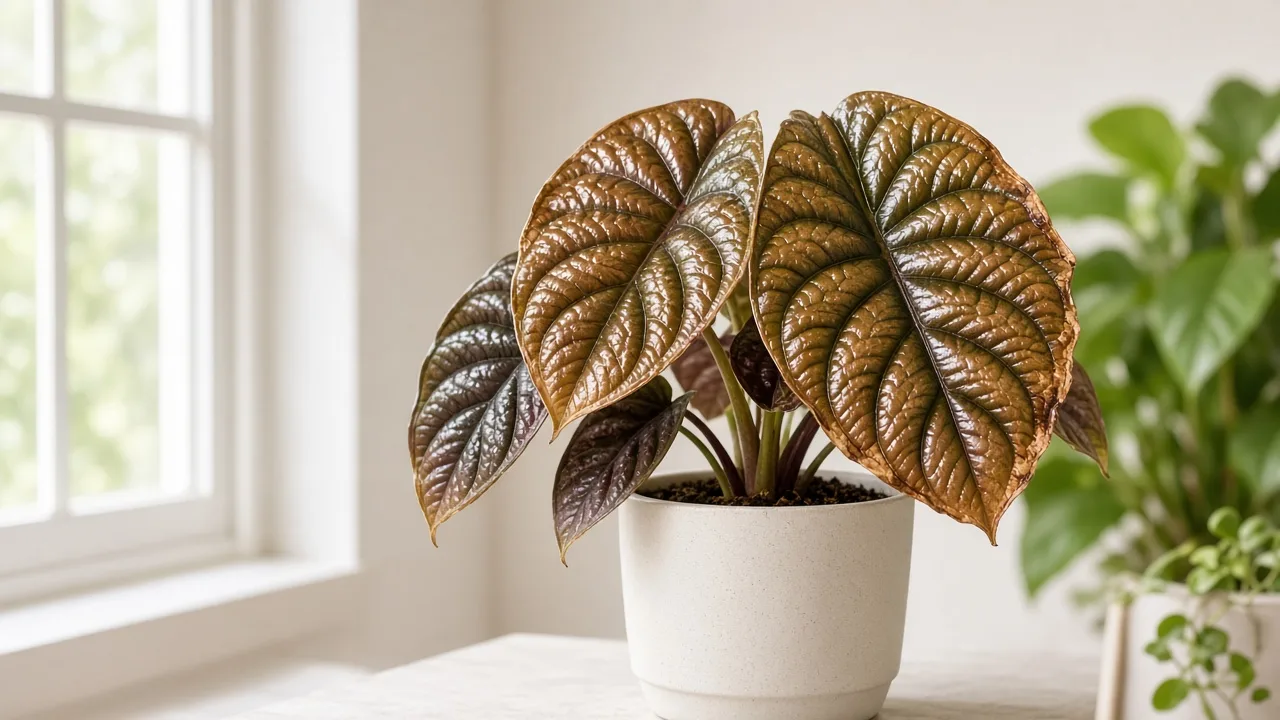
Brown Tips on Alocasia Cuprea: Causes, Checks & Fixes
This guide covers brown tips on Alocasia Cuprea. See also the general Brown Tips guide, watering, and light pages for this plant.
Brown Tips on Alocasia Cuprea: Causes, Checks & Fixes
Quick answer
Brown tips on Alocasia Cuprea (Alocasia cuprea, Red Secret / Mirror Plant) are dry necrosis on the rippled outer edge of its copper-bronze mirror leaves—not whole-blade failure. For how margin burn works on houseplants in general, see our brown tips hub. On Cuprea, the bullate rippled margin is the farthest tissue from the underground corm, so dry winter air, fluoride in tap water, and roots that cannot move water despite wet mix all show here first—often while the metallic centre still looks fine.
First step: place a hygrometer beside the foliage and poke the top 2–3 cm of mix with a chopstick on the same day. If RH stays below 50% near the leaves, raise humidity before you change watering. If humidity reads above 65% but tips keep crisping on new spears while mix stays damp, shift to water quality. Do not trim, repot, and fertilize on the same day.
When to use this page vs other Cuprea guides
| Pattern | Read next |
|---|---|
| Brown spreading across the whole mirror leaf or soft limp tissue | Brown leaves |
| Heavy wet pot, yellow lowers, sour smell, mushy petioles | Overwatering |
| Light dry pot, cupped leaves, dusty mix | Underwatering |
| Winter crisping near a heat vent with moist soil | Low humidity |
| Fine stippling and webbing on purple undersides | Spider mites |
| Pale or silvery new spear without crispy margins | Overview — normal colour change |
This page covers tip-only and margin crisping on Cuprea mirror foliage. Whole-blade browning follows a different moisture path.
What brown tips look like on Alocasia Cuprea
Cuprea carries oval bullate leaves flushed copper-bronze above with a dark reddish purple underside and deeply indented veins that catch light like a mirror. Brown tips here are tan-to-dark-brown papery necrosis along the rippled margin or at the leaf point while the metallic centre stays green and firm.
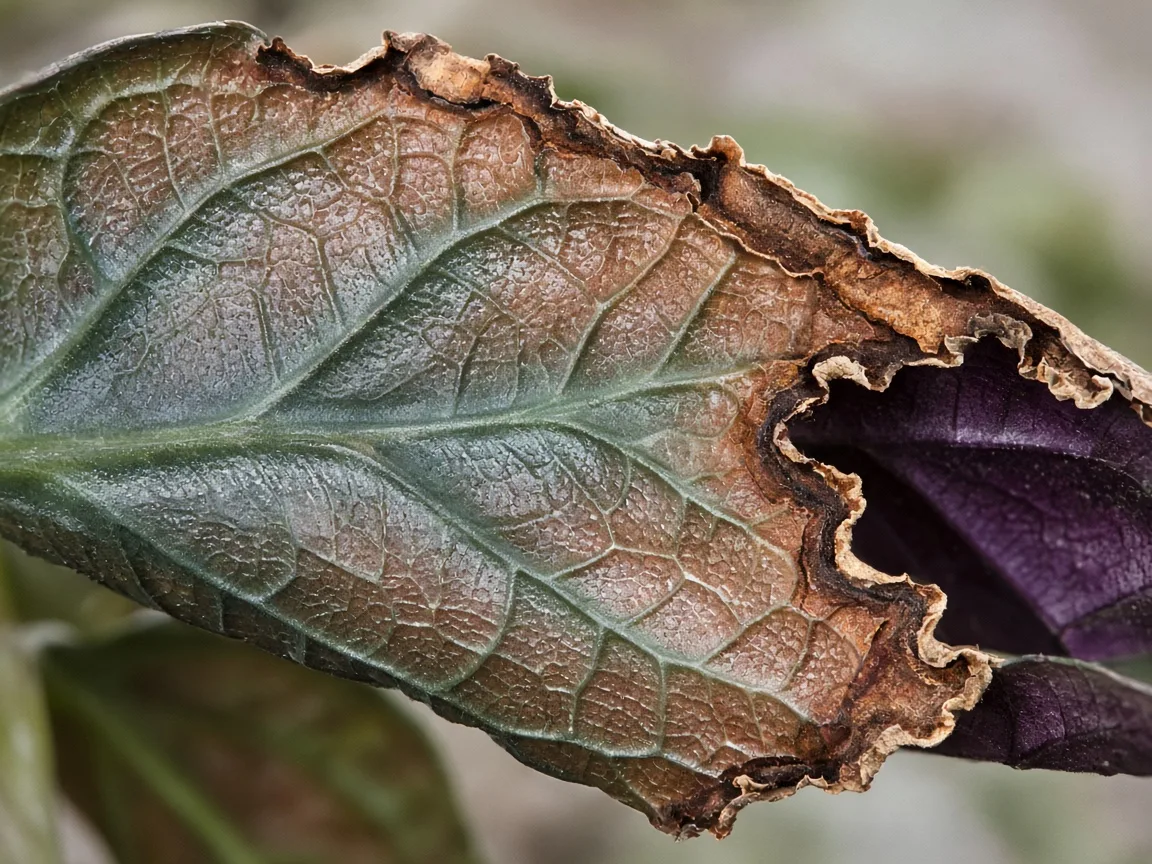
Dry tan margins on rippled copper-bronze edges—the dead tissue will not re-green; watch whether the next unfurling spear opens with a clean edge.
Typical patterns:
- Dry crispy tip or rippled margin only — interior mirror tissue remains copper-green; petiole base stays firm
- Slow creep inward over weeks, not overnight spread across the whole blade
- Oldest leaf margins first near a heater, open winter window, or bathroom fan
- Newest red spear with burned edges before full unfurl — active ongoing stress, not dormancy alone
- Symmetrical dry margins on both sides of the blade — humidity or water chemistry, not one-sided sun scorch
Not tip burn: A young spear flushed red or silvery before the cuticle darkens to copper — normal mirror-leaf colour change on Cuprea. Soft brown patches with yellow halos (fungal leaf spot), one-sided bleaching on glass-facing tissue (direct sun), stippling with webbing (spider mites), or whole lower leaves yellowing on wet soil (overwatering).
Mirror-margin anatomy: why Cuprea tips burn first
This section is Cuprea-specific — it does not apply to broad-leaf Alocasia × amazonica hybrids like Polly.
- Bullate ripples concentrate transpiration at the margin. The indented veins create more edge surface area than a flat arrowhead leaf. When room air drops below Cuprea’s 65–80% comfort zone, those rippled edges desiccate before the crown wilts.
- The mirror cuticle hides early stress. Copper-bronze colour can make a margin look healthy from across the room while the outer millimetre is already necrotic. Inspect leaves at arm’s length, not from the doorway.
- Slow corm growth means fewer replacement leaves. Cuprea holds one to three mirror leaves at a time indoors. One badly burned margin is a large share of the plant’s photosynthetic area — tip burn feels more alarming than on faster alocasias even when the corm is still firm.
- Purple undersides show salt and drought differently. Fluoride and mineral burn often appears as dry tan on the upper rippled edge while the purple underside stays intact — unlike whole-blade yellowing from wet roots.
Always compare the newest fully opened mirror leaf to the lowest oldest leaf. Burn climbing inward on fresh copper growth is more urgent than one fading tip on a leaf the plant is about to shed in dormancy.
Red-spear confusion: colour change vs true burn
Cuprea’s most common misdiagnosis happens on new growth, not old leaves.
Young leaves emerge flushed red and mature to coppery bronze on the upper surface with a dark purple underside. A pale or silvery spear still unfurling is not automatically tip burn — the metallic cuticle darkens as the leaf hardens over one to two weeks.
Run this before treating a red spear:
- Find a spear that has fully opened and hardened to mirror copper — not one still rolled.
- Bend the outer rippled margin gently. Papery dry tan that crumbles = dead tissue (true burn).
- Flexible red or silvery tissue without crisp edges = normal colour development; wait for the leaf to mature.
- If a hardened copper leaf shows new crispy margins within days of opening, stress is active — humidity, water chemistry, or roots.
Do not mist a red spear daily to “fix” colour. Brief leaf wetting does not raise room humidity and can spot bullate foliage in stagnant air.
Why Alocasia Cuprea gets brown tips
Alocasia cuprea evolved in Borneo’s humid forest understory as a slow jewel alocasia with a corm below the surface. Indoors, margin burn usually traces to one of four mismatches between that biology and typical home conditions.
Low humidity — the most common indoor trigger
Heated and air-conditioned rooms often sit at 25–40% relative humidity in winter. Alocasias need medium to high humidity, and low humidity can cause browning on leaf edges. Cuprea’s target is 65–80% at leaf height — higher than the larger Polly hybrid most shops sell beside it.
Dry air shows on Cuprea as crisp rippled margins while soil still feels moist at 2–3 cm depth. A bright bathroom with a humidifier often works; a dim living-room corner with central heating does not, even if you water on schedule.
Fluoride and minerals in tap water
Fluoride in municipal water can cause tip and margin necrosis on sensitive houseplants. Dissolved salts from hard tap water produce the same margin burn over months. Cuprea’s textured mirror leaves concentrate chemistry damage at the rippled edge before roots fail — owners often raise humidity again while new spears keep emerging with burned tips.
Standard carbon-filter pitchers remove chlorine taste but often leave fluoride behind. Rainwater, distilled water, or filters rated for fluoride removal are safer for long-term Cuprea culture.
Wet-corm root stress
Cuprea rots faster than larger alocasia hybrids when overpotted or overwatered. NC State Extension recommends moist, well-drained soil for alocasias — drained, not saturated. Chronic wet mix suffocates fine feeder roots on the corm; damaged roots cannot hydrate distant rippled margins reliably.
The trap: crispy tips on damp soil with a still-firm corm. The leaf edge looks dry, so owners add water — worsening root stress. See overwatering if lower leaves yellow while the top 2–3 cm never dries.
Salt buildup and heavy feeding
Jewel alocasias are light feeders. Salts from hard water plus full-strength fertilizer on dry mix accumulate at margins. White crust on the soil surface or rim supports a salt diagnosis — flush the pot and review the fertilizer guide.
Drafts, direct sun, and dormancy aging
Hot dry air from heating registers or cold drafts from frequently opened doors stress rippled margins the same way low humidity does. Afternoon sun on copper mirror leaves can scorch the window-facing side only — a different pattern from symmetrical dry-air burn.
In fall and winter, Cuprea may drop older leaves while the corm rests. Brown tips on the lowest leaf only while you have already cut watering sharply and the corm stays firm may be normal senescence — not an active emergency. If new spears still unfurl with burned edges during rest, look at humidity and water quality instead of watering more. Overwatering in winter is the most common alocasia killer.
How to confirm the cause
Work through these checks in order. The goal is one primary cause.
- Humidity at leaf level — Hygrometer beside foliage for 24 hours. Below 50% strongly favors dry-air burn. Above 65% with ongoing browning on new copper leaves shifts suspicion to water chemistry or roots.
- Newest mirror leaf vs oldest — Active burn on the freshest hardened leaf means stress is ongoing. Tips only on the lowest leaf while new growth stays clean points to aging or past drought.
- Red-spear colour check — Unfurling red or silvery tissue without crisp edges is likely normal; hardened copper with new crispy margins is not.
- Water source — Tap vs filtered vs rainwater. Persistent margin burn despite adequate humidity points to fluoride or hard-water minerals.
- Soil moisture rhythm — Chopstick the top 2–3 cm per the watering guide. Bone-dry for days then heavy soak stresses roots; wet for a week in normal light impairs them.
- Corm firmness — Press the pot side gently. Firm corm with wet mix supports root-stress diagnosis; soft corm means escalate toward root rot.
- Placement — Heaters, AC vents, open winter windows, and direct afternoon sun on the affected face.
If humidity is low and soil swings between desert-dry and soggy, fix humidity first, then stabilize watering. Changing both at once makes it hard to read Cuprea’s slow response.
First fix for Alocasia Cuprea
Raise ambient humidity to at least 65% near the foliage.
A cool-mist humidifier running several hours daily is more reliable than misting, which wets bullate leaves briefly without changing room air. Grouping plants or a pebble tray adds modest support but rarely closes a large winter gap on its own. Move the pot off radiator tops and away from bathroom exhaust fans while you test.
Run this for two weeks before trimming, repotting, or increasing fertilizer. Cuprea margins stop getting worse once transpiration stress eases; existing brown tissue will not turn green again.
If humidity is already above 65% and tips keep browning on new hardened spears, your first fix shifts to water quality: switch to rainwater, distilled water, or fluoride-filtered water for four to six weeks and judge the next unfurling leaf.
If humidity is adequate, water is filtered, and tips still crisp while mix stays wet, stop watering until the top 2–3 cm dries and inspect corm firmness — see overwatering before adding more moisture.
Step-by-step recovery by cause
After the first fix is in place:
Dry-air margin burn
- Keep humidifier running to hold 65–80% RH at leaf height.
- Move Cuprea off radiator tops and away from drafty windows.
- Wait two weeks, then trim cosmetic damage along the natural rippled curve with clean scissors — leave about 1 mm of brown margin.
- Monitor the next unfurling spear for clean edges.
Fluoride or mineral burn
- Switch water source immediately.
- Flush salts if white crust is visible: run lukewarm water through the chunky aroid mix at roughly three times the pot volume; drain fully.
- Resume watering only with low-mineral water.
- Skip fertilizer until two clean new mirror leaves unfurl.
Root stress from wet substrate
- Stop watering until the top 2–3 cm dries.
- Move to bright indirect light per the light guide; do not fertilize.
- If lower leaves keep yellowing or the corm softens, unpot within 48 hours and follow the root rot path.
- Do not water more because tips look dry — that worsens the cycle on corm-based jewel alocasias.
Do not repot solely for brown tips. Repot only if roots are circling tightly, water runs straight through in seconds, or rot is confirmed.
Recovery timeline
Existing brown tissue does not heal. Plan on two to four weeks to judge success by new growth, not old mirror leaves.
| Timeframe | What to expect |
|---|---|
| 1–2 weeks | Browning on older leaves should stop spreading once humidity, water, or watering stabilizes |
| 2–4 weeks | Next unfurling spear should show cleaner rippled margins if the fix matched the cause |
| 4–8 weeks | Two clean new copper leaves confirm the routine is sustainable for slow Cuprea growth |
If every new hardened spear still emerges with burned tips after a month of corrected humidity and filtered water, inspect roots and review whether heater placement or fertilizer timing is still off.
Lookalike symptoms
| What you see | Likely cause | Quick check |
|---|---|---|
| Crispy dry rippled tips; centre copper-green | Low humidity or uneven watering | Hygrometer below 50%; irregular dry-down |
| Brown on sun-facing side only | Direct-light scorch | Afternoon sun on that face |
| Red flexible spear, no crisp edge | Normal colour change | Leaf still unfurling; cuticle not copper yet |
| Lower yellow leaves + wet soil | Overwatering / root stress | Sour smell; mushy roots on inspection |
| Stippling + fine webbing on purple underside | Spider mites | Magnify newest leaves |
| Tips brown after heavy feed | Salt / fertilizer burn | White soil crust; recent full-strength dose |
| Oldest leaf tips only in winter dormancy | Normal aging | Firm corm; watering already cut back |
Mistakes to avoid
- Misting as your only humidity plan — Brief leaf wetting does not raise room humidity on bullate Cuprea foliage.
- Watering more because tips are brown — Without checking soil and corm firmness first, extra water worsens rot risk on Cuprea.
- Treating a red unfurling spear as burn — Wait for the leaf to harden to copper before diagnosing crispy margins.
- Cutting deep into green mirror tissue — Aggressive trimming wounds healthy cells. Cuprea contains irritant oxalate crystals typical of alocasias; wear gloves when handling sap during pruning.
- Feeding a stressed plant — Fertilizer on damaged roots adds salt stress at rippled margins.
- Ignoring winter dryness — The same watering rhythm that worked in summer may leave roots too wet or air too dry when growth slows and furnace air drops humidity.
Cuprea care cross-check
| Factor | Healthy target | Brown-tip warning sign |
|---|---|---|
| Humidity | 65–80% RH at leaf height | Crispy rippled margins; spears stick unfurling |
| Water source | Rainwater, distilled, or fluoride-filtered | Burned tips despite good RH on new growth |
| Watering | Top 2–3 cm dry before next drink | Wet mix + crispy tips; or dusty dry pot + papery edges |
| Light | Bright indirect; no hot afternoon sun | One-sided scorch on window-facing margins |
| Mix | Chunky aroid, fast drain | Dense peat holding water; sour smell |
| Corm | Firm when pot is squeezed gently | Soft corm with yellow lower leaves on wet soil |
How to prevent brown tips next time
- Run a humidifier or keep Cuprea in a room that holds 65–80% humidity during heating season.
- Water when the top 2–3 cm dries, not on a fixed calendar. Cut frequency sharply through dormancy.
- Use low-mineral water if your tap is hard or fluoridated; flush the pot every four to six weeks during active growth if you feed regularly.
- Keep Cuprea in bright indirect light without direct sun that can scorch copper mirror leaves.
- Inspect new spears weekly during active growth; clean margins on the newest hardened leaf confirm the system is working.
When to worry
Brown tips alone rarely kill Alocasia Cuprea if the corm stays firm. Escalate if:
- Most new hardened spears emerge with burned margins within two weeks despite humidity above 65% and filtered water
- The corm softens, soil smells sour, and lower leaves yellow while mix stays wet
- Browning races inward on multiple leaves overnight after a fertilizer or pesticide application
- The plant produces no new growth for two months in warm bright conditions after you corrected care
- Fine webbing and stippling spread across purple undersides — switch to the spider mite path
Cosmetic tips on a few older mirror leaves while new growth stays clean is normal maintenance, not an emergency.
Conclusion
Brown tips on Alocasia Cuprea are the plant telling you its water balance at the rippled mirror margin is off — usually from dry indoor air, tap-water fluoride, salt buildup, or roots that cannot hydrate edges while the corm sits in wet mix. Measure humidity at leaf level, confirm substrate moisture at 2–3 cm depth, and rule out normal red-spear colour change before you reach for scissors or fresh soil. Old damage stays brown; success is clean rippled edges on the next copper leaves Cuprea unfurls.
Related Alocasia Cuprea guides
- Alocasia Cuprea overview — mirror-leaf colour, dormancy, and baseline culture
- Alocasia Cuprea watering — corm-safe dry-down rhythm
- Alocasia Cuprea light — bright indirect placement without scorch
- Alocasia Cuprea soil — chunky aroid mix that drains fast
- Low humidity on Alocasia Cuprea — when dry air on moist soil is the confirmed primary issue
- Overwatering on Alocasia Cuprea — wet-corm stress with crispy margins
- Alocasia Cuprea problems — browse all common issues on this species
Related tool
Use the Plant Problem Diagnosis Tool to narrow causes for brown tips on this plant before changing multiple variables at once.