Brown Leaves on Alocasia Cuprea: Causes, Checks & Fixes
Quick answer
Brown leaves on Alocasia Cuprea usually mean corm rot from wet mix, dry-air crisping on bullate mirror leaves, or sun scorch on the copper surface. First step: press the soil 2–3 cm down and feel whether the underground corm is firm or mushy before you water or prune.
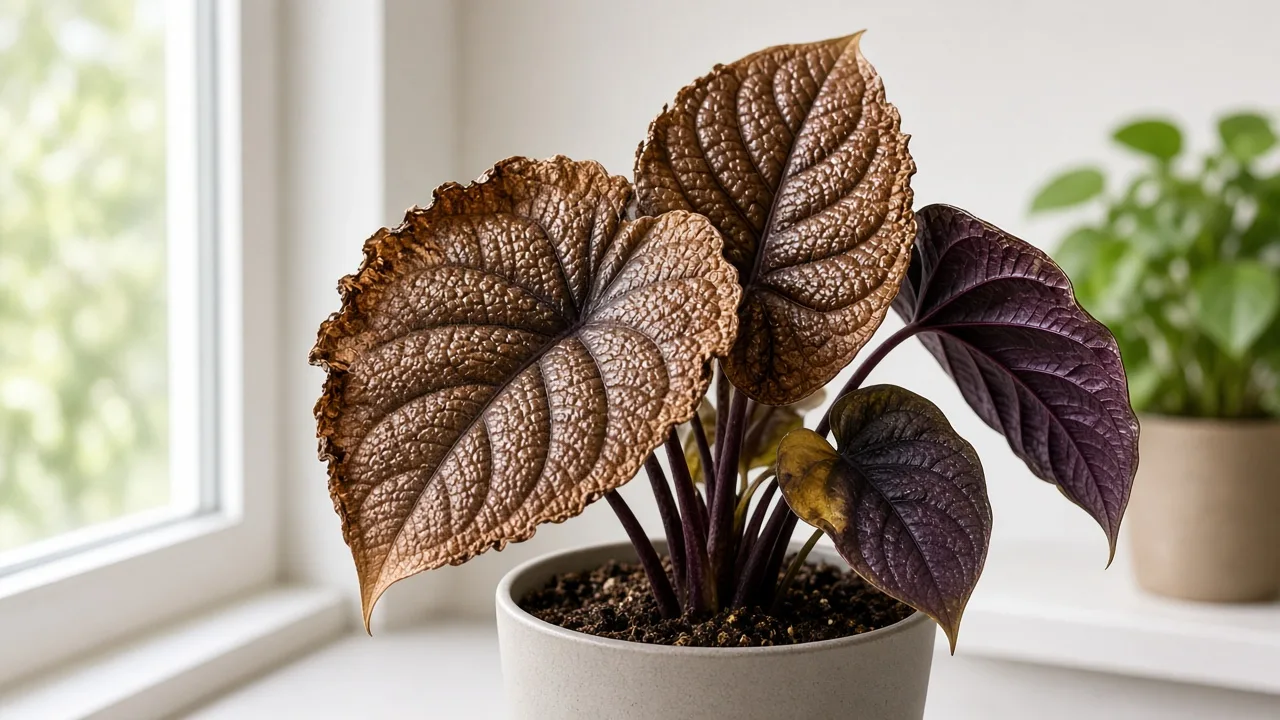
Brown Leaves on Alocasia Cuprea: Causes, Checks & Fixes
This guide covers brown leaves on Alocasia Cuprea. See also the general Brown Leaves guide, watering, and light pages for this plant.
Brown Leaves on Alocasia Cuprea: Causes, Checks & Fixes
Quick answer
Brown leaves on Alocasia Cuprea (Alocasia cuprea) alarm collectors because the mirror-finish foliage is the whole point of the plant. Healthy Cuprea holds glossy copper-bronze leaves with a dark purple underside. Brown means dead tissue—from a rotting corm, dry indoor air, sun burn, pests, or the normal end of an old leaf.
First step: stick your finger 2–3 cm into the mix and press gently near the corm. Soft brown petioles on wet, heavy soil point to overwatering or root rot. Crispy brown margins with a light pot and firm corm mean low humidity or drought. Tan patches only on the window side with firm tissue mean too much direct sun.
For how brown leaf tissue develops in general, see our brown leaves guide. On Cuprea, the pattern almost always ties to corm moisture, humidity at the bullate leaf surface, or light hitting the metallic cuticle.
When to use this page vs other Cuprea guides
- Brown tips — if only the margins crisp while the leaf centre stays copper
- Yellow leaves — yellow before brown, often with wet soil
- Overwatering — full dry-down protocol for this corm-backed plant
- Root rot — mushy corm, sour smell, collapsing petioles
- Low humidity — edge crisping without wet soil
- Spider mites — stippled bronze surface with fine webbing
What brown leaves look like on Alocasia Cuprea
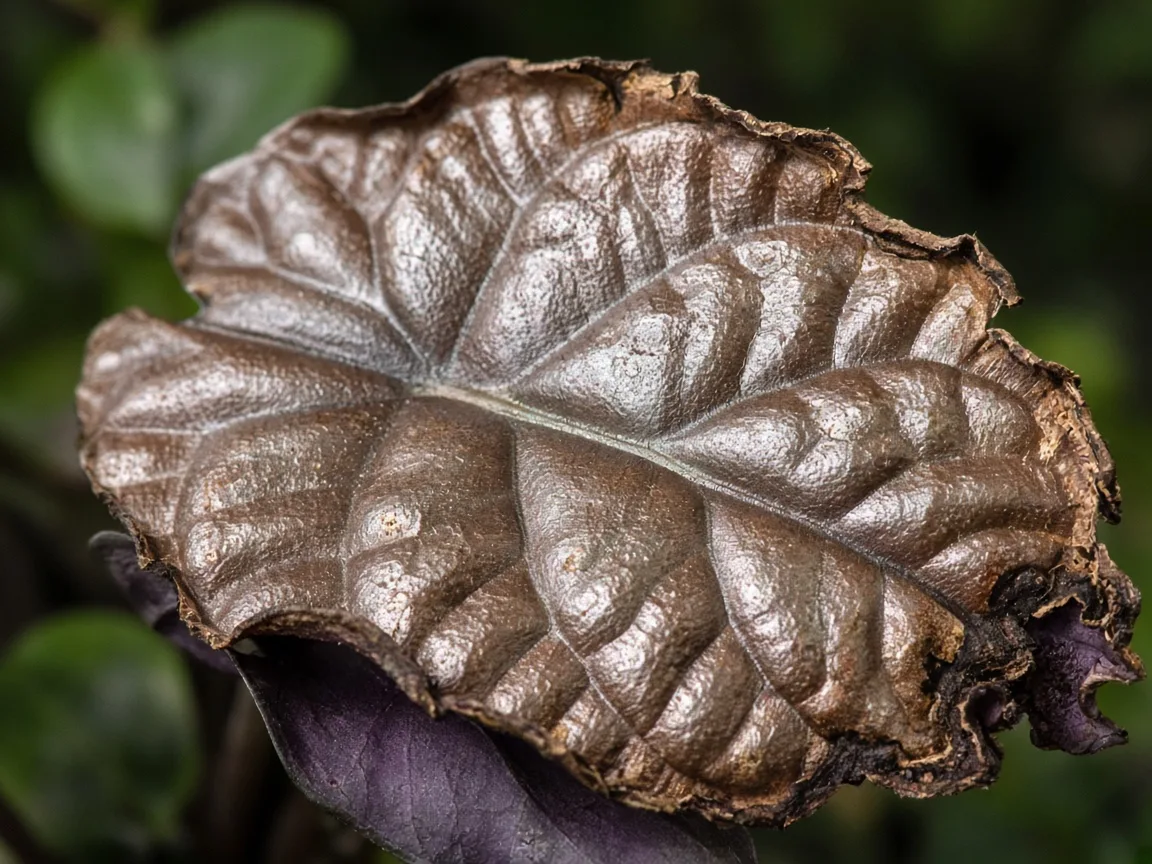
Brown tissue on Cuprea’s bullate copper leaf — compare crispy dry margins with mushy petiole bases on the same plant.
Overwatering / corm rot brown:
- Leaves yellow, then turn brown and thin from the petiole outward
- Petioles feel soft or collapse at the soil line
- Mix stays wet for days; pot feels heavy
- Corm feels mushy when probed through the drainage hole
- Often several leaves fail together
Low-humidity / drought brown:
- Crispy brown tips or margins on otherwise firm leaves
- Bullate mirror surface looks dull, not glossy
- Pot is light; top 2–3 cm of mix is bone dry
- Corm still firm below the surface
Sun scorch brown:
- Tan to dark brown patches on the upper copper surface
- Damage concentrated on the brightest side of the pot
- Tissue papery dry, not soft
- Soil moisture and corm firmness normal
Pest brown (spider mites):
- Fine stippling that bronzes patches of the mirror leaf
- Webbing on leaf undersides and petiole axils
- NC State Extension lists spider mites as a common alocasia pest
Dormancy / aging brown:
- One oldest leaf browns slowly while a new red-flushed spear may still open
- Happens in late autumn or winter when growth slows
- No sour smell; corm firm when checked
Do not confuse a young red spear with damage. The RHS Alocasia cuprea profile notes young leaves emerge flushed red and mature to copper-bronze above with a dark reddish purple underside—that colour journey is healthy, not a brown-leaf crisis.
Why Cuprea browns from the corm up when the mix stays wet
Cuprea is a slow jewel alocasia built around an underground corm, not a deep mat of drought-tolerant roots. NC State Extension warns that root rot and leaf spots follow overwatering on alocasias, and that yellowing leaves often signal too much water, too little water, or poor light. On Cuprea the failure mode is faster than on larger hybrids because the corm sits in a small pot of chunky aroid mix that must dry predictably between drinks.
When the corm rots, it cannot supply the petiole. Brown spreads from the attachment point outward while the mirror leaf loses its gloss. Proven Winners identifies overwatering in winter as the most common alocasia killer—owners keep watering a bare-looking dormant pot and cook the corm below.
Mirror-leaf humidity: why edges brown before the whole leaf
The bullate, rippled cuticle that gives Cuprea its mirror sheen is also thin and humidity-sensitive. Indoor air below roughly 65% often shows up first as crispy brown leaf margins while the centre still looks copper. That pattern is different from rot: petioles stay firm, soil follows a normal dry-down, and damage is marginal rather than spreading from the base.
Cuprea’s light needs are bright but filtered—an understorey plant in its native Borneo range. Too much direct sun heats the metallic upper surface and produces dry tan scorch patches on the side facing the glass. The RHS alocasia growing guide recommends bright filtered light and warns against cold draughts and winter overwatering; scorched mirror leaves do not recover their sheen once tissue is dead.
How to confirm the cause
| Pattern | Petiole base | Corm | Soil / pot |
|---|---|---|---|
| Yellow → brown, soft | Mushy | Soft | Wet, heavy |
| Crispy margins | Firm | Firm | Dry top 2–3 cm |
| Window-side tan patches | Firm | Firm | Normal dry-down |
| Stippling + webbing | Firm | Firm | Normal; check undersides |
| One old leaf, winter | Firm | Firm | Reduced watering |
Lift the pot. A heavy, wet container with limp petioles confirms rot risk before you unpot. A very light pot with firm corm and crispy edges points to humidity or underwatering—not more water.
First fix for Alocasia Cuprea
If petioles are soft and soil is wet: stop watering immediately. That single action prevents further corm damage while you decide whether to unpot. Do not prune, repot, and fertilize on the same day.
If margins are crispy and the top 2–3 cm is dry: run one thorough soak until water drains, empty the saucer, then resume the watering rhythm—water only when the top 2–3 cm is dry. Add a humidifier or pebble tray if humidity is chronically low.
If scorch patches appear on the bright side: move the plant to bright indirect light without hot direct beams. Remove only fully dead leaf tissue.
If stippling and webbing are present: isolate the plant and rinse leaf undersides before any spray—see spider mites.
If one old leaf browns in winter and the corm is firm: let dormancy run its course. Reduce watering to every 2–4 weeks and wait for spring growth.
Lookalikes to rule out on Alocasia Cuprea
| What you see | Likely cause | Next page |
|---|---|---|
| Yellow then brown, soft petioles, wet mix | Corm rot | Root rot |
| Crispy edges, light pot, firm corm | Dry air or drought | Low humidity |
| Tan patches on window side | Sun scorch | Light guide |
| Stippled bronze + webbing | Spider mites | Spider mites |
| Red new spear, older leaf browning alone | Normal aging or dormancy | Overview |
Rot vs. humidity: Soft yellow-brown petioles with sour-smelling wet soil mean corm failure—do not mist and keep watering. Crispy margins on firm petioles with dry topsoil mean raise humidity or soak once, not a repot.
Red spear vs. brown crisis: A flushing red new leaf beside one browning older leaf is normal Cuprea growth. Multiple leaves collapsing together on wet soil is not.
Step-by-step recovery
- Check corm firmness through the drainage hole or by gently probing near the soil line.
- Rot pattern: stop watering, unpot if petioles keep softening, trim black mushy corm tissue, repot into fresh dry chunky mix per the root rot guide.
- Humidity / drought pattern: one deep soak, then dry-down; target 65–80% humidity around the foliage.
- Sun scorch: relocate to filtered light; snip only fully dead blades.
- Pest pattern: isolate, rinse undersides, treat per the pest page if mites are confirmed.
- Monitor the next spear for 3–6 weeks—a healthy new leaf should emerge flushed red, then harden to copper without edge crisping.
What not to do
- Do not keep watering when petioles soften and soil stays wet—brown spreads as the corm fails.
- Do not mist heavily on wet soil—surface moisture does not fix rot and can worsen fungus gnats.
- Do not assume a pale or red new spear is damage—wait for the leaf to mature before judging colour.
- Do not repot into a much larger pot after brown leaves—oversized containers hold water Cuprea’s slow roots cannot use.
- Do not fertilize a stressed plant before moisture, light, and corm health are stable.
When to worry
Treat as urgent when petioles collapse, the corm feels hollow or mushy, several leaves brown within a week on wet mix, or the pot smells sour—salvage window narrows quickly on this species.
Lower urgency: one browning oldest leaf on an otherwise firm plant with a new spear opening, especially in winter dormancy.
Recovery timeline
Humidity and light corrections often stop edge browning within 1–2 weeks. Corm rot recovery takes several weeks to months depending on how much tissue was lost.
Judge success on the next spear: it should open flushed red, then mature to glossy copper-bronze without soft petioles. Old brown blades rarely regain their mirror finish—focus on new growth and a firm corm.
How to prevent brown leaves
Water only when the top 2–3 cm of mix is dry, using the finger or chopstick test from the watering guide. Use fast-draining aroid mix and a snug pot, not a deep cachepot holding standing water.
Keep 65–80% humidity around the bullate leaves. Place Cuprea in bright indirect light without afternoon sun on the glass. Cut winter watering by 60–70% when dormancy is likely—the RHS growing guide advises reducing water in winter and keeping plants above about 18°C.
Inspect leaf undersides weekly during dry heating season. Catch mites before stippling bronzes large patches of mirror foliage.
Related Alocasia Cuprea guides
- Overview — mirror-leaf colour changes and dormancy
- Problems hub — all sibling symptoms
- Watering — corm-safe dry-down checks
- Soil — chunky mix that prevents corm rot
- Light — filtered brightness without scorch
Conclusion
Brown leaves on Alocasia Cuprea mean dead tissue on a plant prized for metallic mirror foliage. The corm and the top 2–3 cm of soil tell you which path to take: soft petioles on wet mix demand a watering stop and possible rot rescue, while crispy margins on a firm corm point to humidity or drought. A flushing red new spear is often healthy growth, not a crisis. Judge recovery on the next copper leaf and a firm corm—not on blades that have already browned.