Underwatering on Alocasia Cuprea: Mirror Leaf Checks & Fixes
Quick answer
Underwatering on Alocasia Cuprea shows up as a light pot, dry mix through the top 2–3 cm, slightly cupped or drooping mirror leaves with crisp brown edges, and a dull copper finish—not a heavy wet pot with yellow lower leaves. First step: lift the pot and probe moisture at 2–3 cm depth; if the mix is dry and the pot feels light, give one thorough soak until excess drains, then wait for the next dry-down cycle.
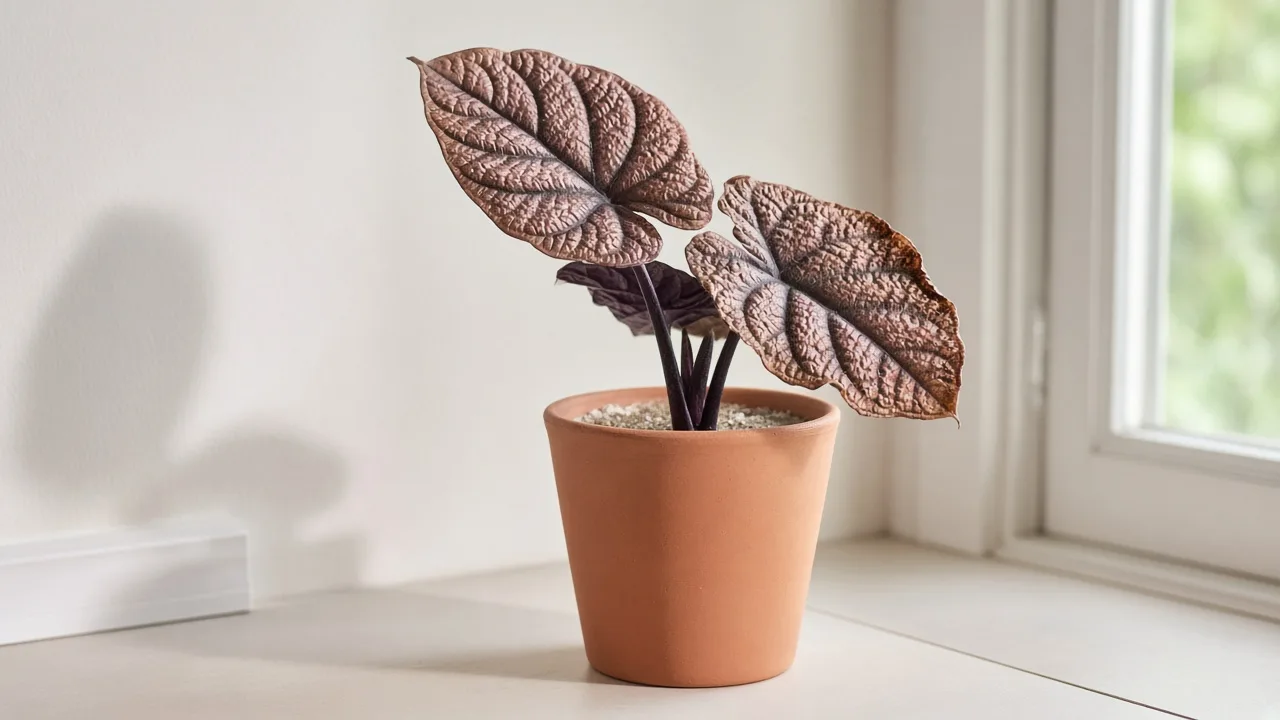
Underwatering on Alocasia Cuprea: Causes, Checks & Fixes
This guide covers underwatering on Alocasia Cuprea. See also the general Underwatering guide, watering, and light pages for this plant.
Underwatering on Alocasia Cuprea: Causes, Checks & Fixes
Quick answer
Underwatering on Alocasia Cuprea (Alocasia cuprea) is the dry-side stress path on a slow jewel alocasia whose underground corm stores reserves but still needs working roots to hydrate bullate mirror leaves. Alocasia prefers moist, well-drained, humus-rich soil indoors—not bone-dry mix for weeks at a time. For how chronic drought damages houseplants in general, see our underwatering guide. On Cuprea, the pattern is a light pot, dry mix through the top 2–3 cm, slightly cupped or drooping copper-bronze blades with crisp brown edges, and a dull mirror finish—not a heavy wet pot with yellow lower leaves.
First step: lift the pot and push a finger or chopstick 2–3 cm into the mix. If the upper root zone is dry and the pot feels light while mirror leaves cup inward but stay firm, give one thorough watering until excess drains from the hole. Do not pour daily small splashes—that moistens only the surface while the corm zone stays dry.
When to use this page vs other Alocasia Cuprea guides
| Pattern | Read next |
|---|---|
| Light dry pot, cupped firm mirror leaves (this page) | Stay here |
| Heavy wet pot + yellow lower leaves | Overwatering |
| Limp mirror leaves on wet soil | Drooping leaves or wilting |
| Brown tips without obvious dry pot | Brown tips or low humidity |
| Inward cup on dry mix | Curling leaves |
| Mushy corm on damp mix | Root rot |
| Pale silvery new spear, no cupping | Pale leaves — normal colour change before copper darkens |
| Long-term dry-down rhythm after recovery | Watering guide |
What underwatering looks like on Alocasia Cuprea
On a healthy Cuprea, thick bullate leaves with a metallic copper-bronze mirror surface and dark purple underside sit upright on short stiff petioles—often only one or two blades at a time. Underwatering changes that silhouette from the edges and turgor inward, usually on a light, dry pot, not a heavy wet one.
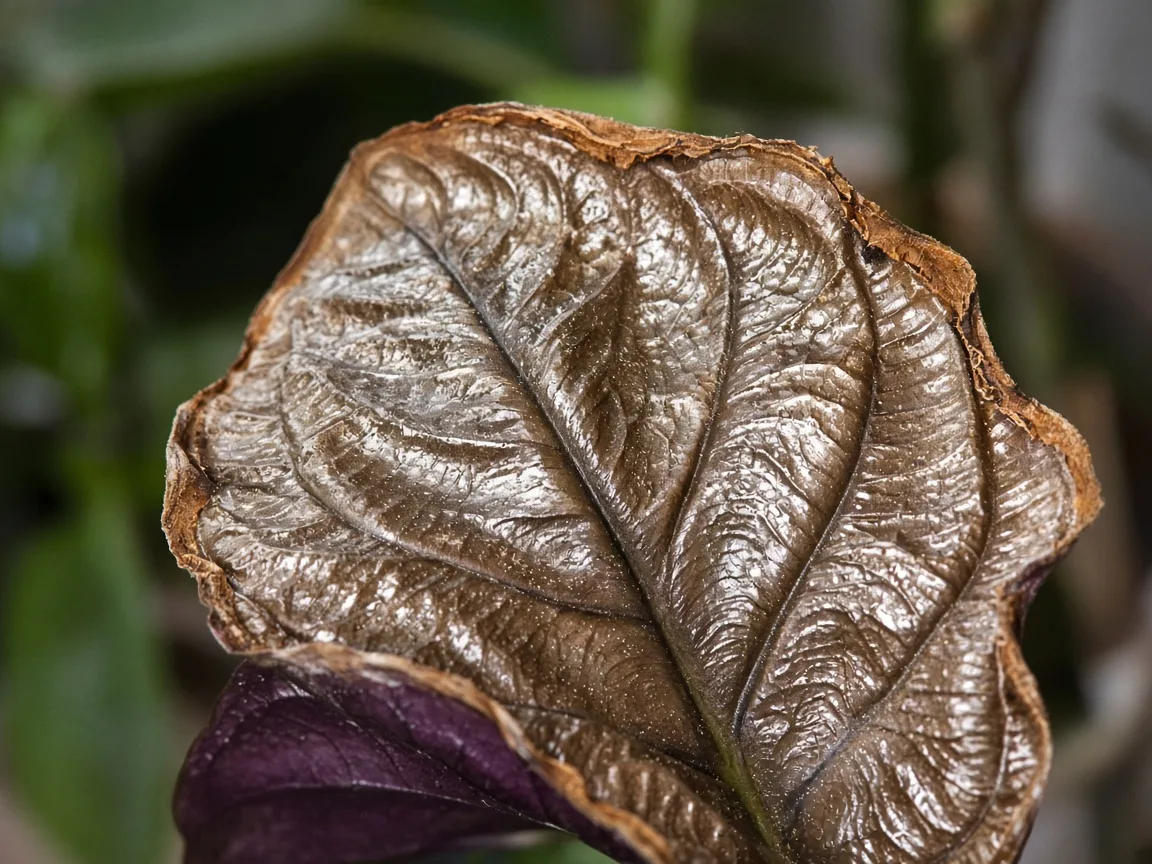
Cupped mirror copper leaves with dull cuticle and crisp brown margins on a light dry pot—underwatering on Alocasia Cuprea, not yellow lower leaves on wet soil.
Early signs:
- Light pot when lifted—noticeably lighter than right after a thorough soak
- Pale, crumbly surface mix in chunky aroid bark that pulls slightly from the pot edge
- Inward cupping or slight droop on mirror blades that still feel firm, not mushy
- Dull copper-bronze finish losing the mirror sheen before wide brown sections appear
- Dry crispy brown edges on the oldest outer leaf, often the first to show drought stress
- Slowed red-spear emergence—no new mirror leaf for weeks during warm active growth
Advanced signs:
- Several petioles drooping on bone-dry mix through the upper root zone
- Lower leaf drop after extended drought while the corm still feels firm
- Paper-thin leaf feel along the bullate blade—tissue has lost turgor
- Hydrophobic dry pockets—water runs straight through while the center stays powder-dry
- Slightly soft corm on a very light pot after weeks without water in bright heat—reserves are emptying
A single brown tip on one aging lower leaf in a heated dry room may be low humidity rather than pot drought. Underwatering adds light weight + dry top 2–3 cm + multiple cupped mirror leaves to that picture.
The mirror copper drought signature
Cuprea is a slow-growing jewel alocasia whose rippled bullate cuticle reflects light like polished copper—but that mirror surface dulls when turgor drops from root-zone dryness. When underwatered, the oldest outer mirror leaf cups first, often with crisp margins while the central red-flush spear stays partially rolled.
Young leaves emerge flushed red and mature to copper-bronze above with a dark purple underside—a pale or silvery new spear is normal colour development, not automatically thirst. Underwatering adds cupping on a light dry pot and dull mirror finish to that picture. Owners sometimes read dull copper as a light problem and move the plant closer to a window—which can accelerate dry-down if watering checks do not keep pace.
Corm check: Press gently at the soil line. A firm corm with light dry pot and cupped firm leaves confirms thirst. If the corm feels mushy on wet soil, that is not underwatering—see overwatering. Cuprea tolerates brief dry intervals better than chronic saturation because the corm stores water and starch, but prolonged drought still empties those reserves.
Reading the top 2–3 cm dry-down check
Cuprea watering on LeafyPixels follows a species-specific rule: water when the top 2–3 cm of chunky aroid mix has dried, then drain fully. That matches Proven Winners’ guidance to water Alocasia when the top 2–3 inches of soil are dry and matters for thirst diagnosis.
Before you assume a cupped Cuprea needs water:
- Insert a finger or chopstick to mid-pot depth. If only the top centimetre is dry but the lower half is still moist, wait—especially in a cool dim room.
- Lift the pot. Light weight plus cupping firm mirror leaves at top 2–3 cm dryness points to underwatering.
- Compare to your normal rhythm from the watering guide. If you have not checked in weeks during a warm bright spell, dry-down may have passed without obvious wilt.
The RHS recommends watering Alocasia when the top of the compost has become dry and turning the pot slightly at each watering—good habits that prevent both chronic wet feet and accidental drought in a snug container.
The bright-window summer dry-down surprise
Cuprea needs bright indirect light to hold copper mirror colour and compact form—often an east window, sheer-curtained south or west glass, or a full-spectrum LED 12–18 inches above the crown. Underwatering frequently appears in that brighter setup, not in the dim corner where owners expect alocasias to need little water.
Signs you are in this trap:
- Pot weight drops sharply within a week of the last soak
- Surface mix in chunky aroid bark turns pale and dusty while new red-spear growth stalls
- Mirror leaves cup on a light pot—unlike the overwatering trap where mix stays dark and heavy
- Copper finish dulls faster than on a Cuprea in moderate light on the same calendar
The fix is not to move Cuprea back into deep shade—that produces soft leggy petioles. It is to check the top 2–3 cm dry-down more often in brighter, warmer placements. See the Cuprea light guide for how placement changes your watering interval.
Low humidity vs underwatering on mirror leaves
This is the most common misread on Cuprea because both problems show crisp brown edges. The split is soil moisture, not leaf texture alone.
| Signal | More likely cause |
|---|---|
| Crisp edges + dry top 2–3 cm + light pot | Underwatering (this page) |
| Crisp edges + moist mix + heavy pot | Low humidity |
| Cupping + dry mix + dull copper | Underwatering |
| Cupping + wet mix + yellow lower leaves | Overwatering or root rot |
If air humidity is low, plants transpire quickly and become at risk of wilting if water is lost from the leaves faster than it can be absorbed by the roots—Cuprea wants 65–80% humidity. Misting mirror leaves does not replace root-zone moisture and can leave permanent dull spots in the bullate grooves. If edges crisp while soil stays damp, raise ambient humidity with a humidifier rather than adding more water to the pot.
Losing one leaf matters on a one-to-two-leaf Cuprea
Most healthy Cuprea plants in good light carry one to three leaves at a time. Unlike a sprawling pothos, this slow jewel alocasia does not mask drought damage with dozens of blades.
When the only mirror leaf cups on bone-dry mix, you may lose the plant’s entire visible crown for the month. A distorted copper blade stays visible for weeks because jewel alocasias grow slowly and drop older leaves seasonally.
Heavy drought on soft tissue can also weaken the corm if the plant is already stressed from overwatering or winter dormancy. A firm corm below the surface can still push a clean red-flush spear in spring—but only if you stop the dry cycle before reserves empty completely.
Treat early cupping as urgent on this species not because drought is uniquely deadly, but because each mirror leaf is a large fraction of the whole plant.
The dry-top / wet-bottom trap (not true thirst)
In winter or in an oversized decorative cachepot, the surface of chunky mix can look pale and dry while the bottom stays cold and saturated. Owners see cupped mirror leaves, feel dry crust on top, and water again—worsening corm rot below.
True underwatering means the whole root zone has dried, not just the top centimetre. Before soaking:
- Lift the pot. A light container suggests real drought; a heavy one with only dry surface crust suggests the trap.
- Probe mid-depth with a skewer. If it comes out damp on a heavy pot, you are not underwatered—see drooping leaves for wet-soil droop.
Cuprea should stay in a snug pot in fast-draining mix and never sit in standing water—oversized pots exaggerate this dry-top pattern.
Winter dormancy: dry corm vs dry mix
Cuprea may drop every leaf in late autumn or winter while the corm rests. During dormancy you reduce watering sharply—to every 2–4 weeks—but you do not let the corm desiccate completely. A bare pot in heated dry air can still underwater the sleeping corm even when no mirror leaves show thirst signals.
Dormancy underwatering signs:
- Corm feels slightly shrunken or softer than firm—not mushy rot, but not plump
- Mix is dust-dry through mid-pot on a very light container
- You have not watered for six or more weeks in a warm dry room
Winter protocol: give just enough water to keep the corm from drying out, not a full summer soak on a schedule. Proven Winners recommends reducing Alocasia watering in fall and winter while keeping soil slightly moist—not wet, not bone dry. Resume normal top 2–3 cm dry-down checks when a green or red-flush spear emerges in spring.
The first fix: one thorough soak
When you have confirmed dry mix through the top 2–3 cm and a light pot:
- Water at the soil line until excess runs freely from the drainage hole—keep mirror leaves dry.
- Empty the saucer or cachepot immediately. Never let Cuprea sit in standing water.
- Wait for the next dry-down cycle before watering again. One good soak beats daily dribbles that never reach the corm.
If water runs straight through on hydrophobic dry mix, set the nursery pot in a shallow tray of room-temperature water for 20–30 minutes so the root ball wicks moisture evenly—then drain fully. A very dry pot may need re-wetting in stages before the center absorbs water normally.
Do not fertilize, repot, or mist foliage on day one. Let turgor recover for one to two weeks, then return to the overview baseline for light, humidity, and soil.
Recovery timeline and what improves first
Mild cupping from a missed watering often relaxes within 24–48 hours after a proper soak if the corm and roots are firm. Crispy brown edges on older mirror leaves do not re-green—judge success by the next one or two red-flush spears opening with clear copper-bronze colour.
| Timeframe | What to expect |
|---|---|
| 1–2 days | Petioles firm; cupping eases on mildly stressed blades |
| 1–2 weeks | Pot weight cycle becomes predictable again |
| 2–6 weeks | New mirror leaf unfurls with copper sheen if light and humidity are stable |
| Older damaged leaves | Brown margins remain; may be removed once a replacement leaf is fully open |
If every leaf stays cupped on wet soil after you watered, stop adding moisture and check for root rot—that pattern is uptake failure, not thirst.
Mistakes to avoid
- Watering on a calendar instead of the top 2–3 cm dry-down test
- Daily small splashes that wet only the surface crust
- Misting mirror leaves when edges crisp—fix humidity or soil moisture separately
- Assuming droop always means thirst on a heavy wet pot
- Skipping checks in bright summer windows when chunky mix dries fast
- Letting the corm dry completely in winter dormancy in heated air
- Fertilizing a drought-stressed plant before hydration stabilizes
- Confusing normal red-flush spear colour with underwatering when the pot is heavy and mix is damp
How to prevent underwatering next time
Build a pot-weight memory: lift the container when the top 2–3 cm is dry versus right after a thorough soak. That tactile check beats any app reminder for this compact species.
Pair prevention with cluster basics:
- Snug pot in fast-draining chunky aroid mix—not an oversized decorative cachepot
- Bright indirect light without scorching direct sun on mirror tissue
- 65–80% humidity from a humidifier, not mist on bullate leaves
- Seasonal rhythm—more frequent checks in summer growth, reduced but not zero water in dormancy
Browse all Cuprea problems if symptoms overlap or recovery stalls after one measured correction.
Related Alocasia Cuprea guides
- Alocasia Cuprea overview — full light, water, humidity, and dormancy baseline for jewel alocasia
- Alocasia Cuprea watering — top 2–3 cm dry-down rhythm and pot-weight checks
- Drooping leaves on Cuprea — wet vs dry corm checks when petioles sag
- Curling leaves on Cuprea — drought cup vs wet-root curl
- Overwatering on Cuprea — limp leaves on wet soil, gnats, yellow lower leaves
- Low humidity on Cuprea — crisp edges with moist mix
- Brown tips on Cuprea — dry-air edge burn without obvious drought
Conclusion
Underwatering on Alocasia Cuprea is a dry root-zone problem on a corm-backed jewel alocasia—not a reason to mist mirror leaves or water on autopilot. Lift the pot, read the top 2–3 cm of mix, and match one thorough soak to one confirmed dry cycle. Most cupping resolves when watering rhythm, light, and humidity align; the tissue that recovers first is the new copper mirror leaf at the crown, not every older blade that already crisped.
Related tool
Use the Plant Watering Calculator to narrow causes for underwatering on this plant before changing multiple variables at once.