Overwatering on Alocasia Cuprea: Corm-Safe Dry-Down & Fixes
Quick answer
Overwatering on Alocasia Cuprea almost always means the underground corm has been sitting in saturated aroid mix too long—often from calendar watering while the top 2–3 cm never dries, winter rescue water on a dormant corm, or an oversized peat-heavy pot. First step: stop watering, push a chopstick into the upper profile to confirm damp mix, lift the pot for weight, and empty any cachepot runoff before you consider repotting.
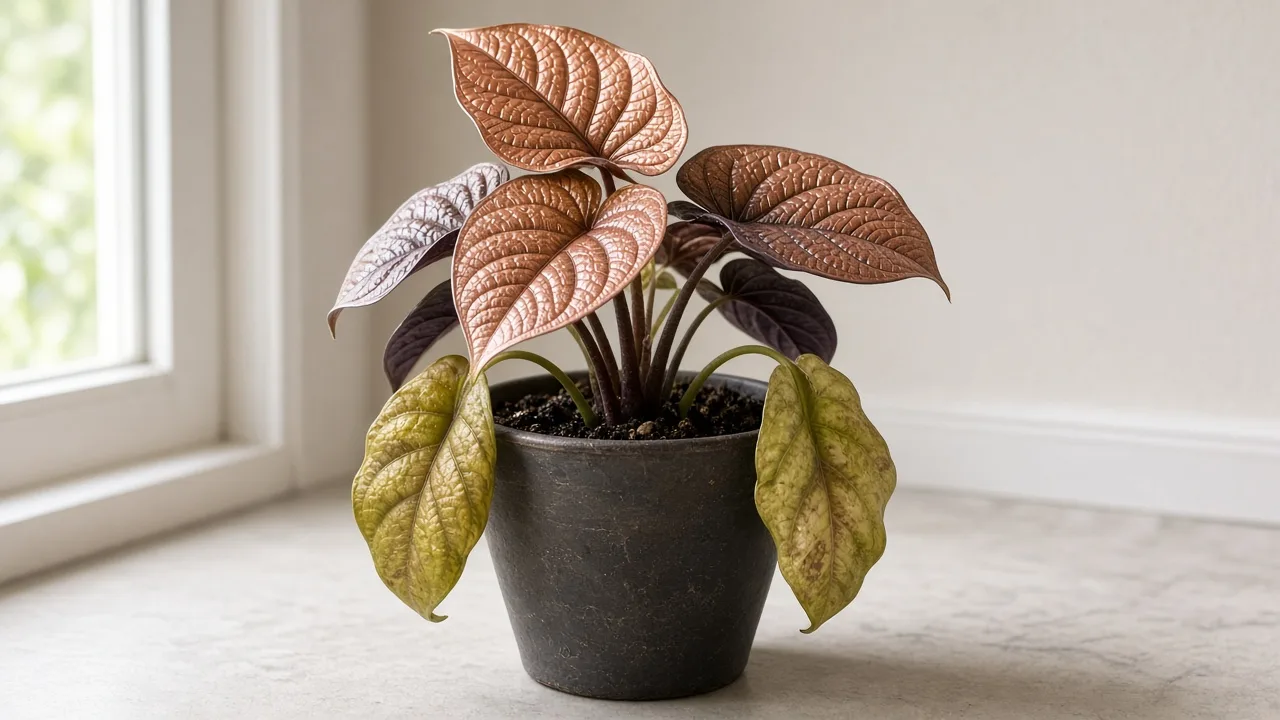
Overwatering on Alocasia Cuprea: Causes, Checks & Fixes
This guide covers overwatering on Alocasia Cuprea. See also the general Overwatering guide, watering, and light pages for this plant.
Overwatering on Alocasia Cuprea: Causes, Checks & Fixes
Quick answer
Overwatering on Alocasia cuprea ‘Red Secret’ is almost always a corm-and-mix problem, not a leaf disease. Cuprea stores reserves in a compact underground corm and pushes stiff copper mirror leaves on slow petioles. Alocasias need moist, well-drained soil—the critical word is drained. When the top profile stays wet for days in peat-heavy mix, roots lose oxygen and cannot take up water even though the pot feels soaked.
For how chronic wet mix damages roots in general, see our overwatering hub. On Cuprea, the useful clues are lower yellow mirror leaves on a heavy pot, soft petioles at the soil line, fungus gnats at the rim, a sour smell from drain holes, and calendar watering while the top 2–3 cm never pass a chopstick dry test—not pale new red spears that are still normal before the copper cuticle darkens.
First step: stop watering, push a chopstick or finger into the top 2–3 cm of mix to confirm it is still damp, lift the pot for weight, and empty any standing water in cachepots or saucers. Make that one correction before repotting, pruning every leaf, or adding fertilizer.
When to use this page vs other Alocasia Cuprea guides
This page is the wet-soil and corm entry when mirror leaves yellow or petioles soften on chronically damp mix.
| Pattern | Read next |
|---|---|
| Light pot, dry surface, crisp brown edges | Underwatering |
| Mushy corm, black petiole bases, sour roots on probe | Root rot |
| Tiny flies at pot rim on damp mix | Fungus gnats |
| Limp copper blades without obvious wet soil | Drooping leaves |
| Bottom leaves yellowing on otherwise firm corm | Yellow leaves |
| Mix stays wet despite sparse watering | Soil guide — drainage and pot size |
| Pot looks empty in winter but corm is firm below | Overview — dormancy, not thirst |
What overwatering looks like on Alocasia Cuprea
On a healthy Cuprea—sold as Red Secret or Mirror Plant—glossy copper-bronze leaves with a dark purple underside stand upright on stiff petioles in a compact 30–60 cm clump. Young leaves emerge flushed red before the metallic cuticle darkens. Overwatering changes that silhouette from the bottom up.
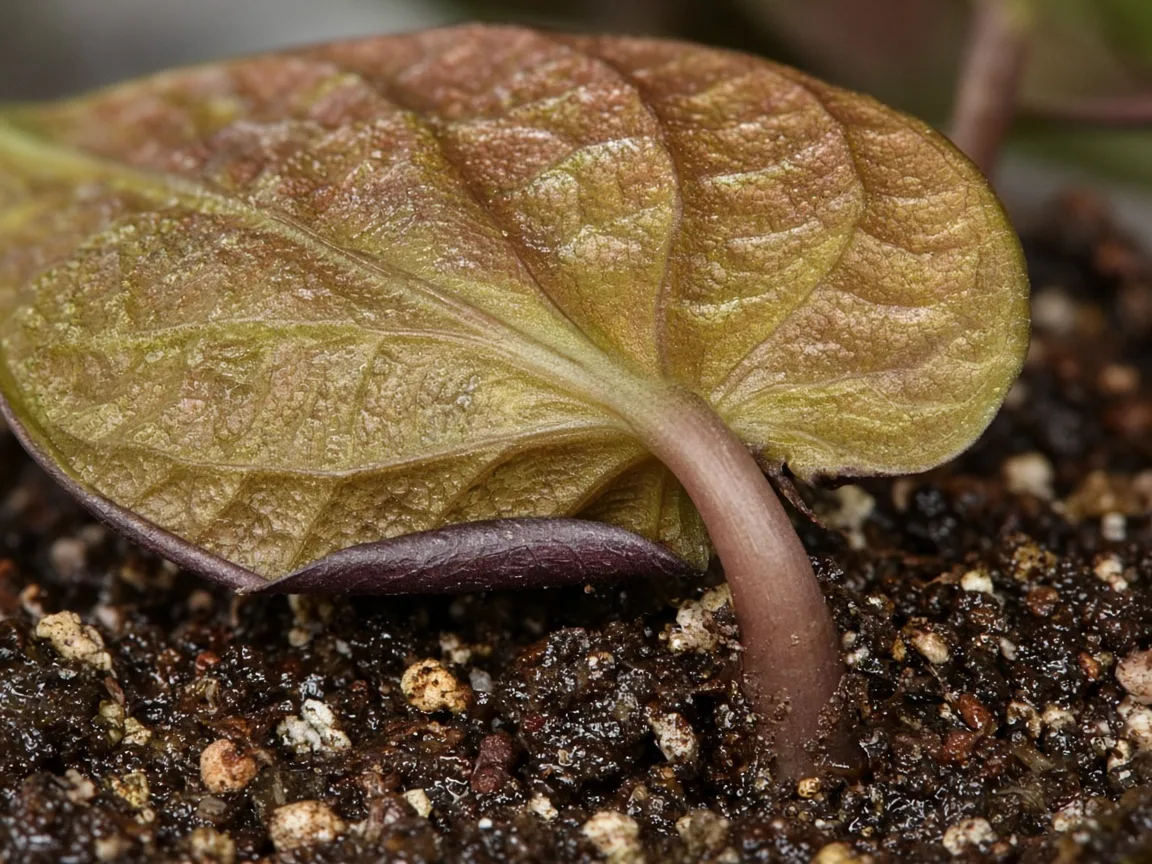
Overwatering on Alocasia Cuprea—yellowing lower copper mirror leaf with a soft petiole base where chronic wet mix meets the underground corm.
Typical wet-soil signs:
- Lower mirror leaves turn yellow first while upper copper blades still look firm
- Petioles feel soft or bend easily at the soil line—not just limp from dry air
- Mix stays dark, cool, and heavy for days after the last soak
- Pot weight stays high even though you have not watered recently
- Fungus gnats hover at the rim or walk on a damp surface that never lightens
- Faint sour or musty smell from drain holes when you lift the nursery pot from a cachepot
- New red-flushed spears stall, emerge smaller, or rot before unfurling
What is not overwatering on Cuprea:
- A pale or silvery new spear that firms and darkens to copper within a week—normal mirror-leaf maturation
- One older bottom leaf yellowing on an otherwise light, dry pot—often natural senescence on a slow corm with only one or two active leaves
- Winter leaf drop with a firm corm below bare mix—see dormancy on the overview before adding rescue water
Established Cuprea plants carry limited leaf mass compared with taller Alocasia × amazonica hybrids. Losing one mirror leaf to wet roots is a bigger percentage hit on this jewel species—and corm rot advances quickly once the storage organ softens.
Mirror-leaf yellowing vs normal red flush — colour traps
Cuprea owners often panic at colour change. Separating stress yellow from normal development prevents the classic mistake of watering an already-wet corm because a leaf “looks wrong.”
| What you see | Likely meaning | Next check |
|---|---|---|
| Entire lower mirror blade fades yellow-green on wet dark mix | Overwatering or early root stress | Chopstick dry test, pot weight, corm firmness |
| New spear flushed red, stiff petiole, mix drying normally | Normal young-leaf colour | No action unless mix stays wet |
| Pale silvery unfurling leaf that darkens to copper over days | Cuticle maturation | Compare petiole firmness and soil moisture |
| Yellow with brown mushy petiole base | Advancing rot | Root rot page—probe corm immediately |
| Crisp brown edges on firm leaves, light dry pot | Dry stress or low humidity | Underwatering or low humidity |
The bullate mirror surface can dull to flat olive-bronze under chronic wet-root stress before full yellowing appears. That dulling plus a heavy pot is a wet-soil warning even when only one leaf has turned colour.
Why Alocasia Cuprea gets overwatered
Calendar watering on a slow corm. Cuprea uses water slowly. Watering every seven days because an app reminder says so—while the top 2–3 cm never dry—keeps the profile permanently saturated. Proven Winners notes that overwatered alocasias show drooping, yellowing, soft leaves, mold, root rot, and fungus gnats—the full wet-soil cluster Cuprea collectors see in humid bathrooms.
Peat-heavy or dense mix in an oversized pot. Standard indoor peat holds moisture at the surface long after the corm has enough water. An extra-large decorative pot adds wet volume around a small root system—exactly the pattern that causes root rot from slow drainage or overwatering on alocasias. The soil guide covers chunky perlite-bark blends; dense peat alone is the fastest route to corm failure on this species.
Winter dormancy with summer watering. The RHS alocasia guide warns that overwatering while dormant can cause roots to rot. Cuprea may drop every leaf while the corm stays alive below—yet owners often keep soaking on the summer rhythm, assuming the empty pot needs rescue water. That leaves damp organic mix above a nearly inactive corm through autumn and winter.
Cachepots and standing saucer water. Empty runoff within 30 minutes after every soak. A decorative outer pot that traps water keeps the bottom profile anaerobic. Gnats at the rim plus sour smell points toward root rot, not thirst.
Low light slowing dry-down. A Cuprea in a dim corner uses less water while the same weekly soak continues. Wet soil in low light also encourages fungus gnats and surface mold. Cross-check light placement when the pot stays heavy despite sparse watering.
Mistaking droop for thirst. Limp copper mirror blades on wet soil mean roots are failing—not that the plant needs more water. Wilting with moist soil often indicates roots cannot absorb water—the opposite of underwatering. See drooping leaves when the main symptom is sagging petioles rather than yellow wet-soil leaves.
Corm-safe dry-down: Cuprea’s watering checkpoint
This jewel alocasia is built around one inspection habit: the top 2–3 cm of chunky aroid mix must dry before the next thorough soak.
- Push a dry chopstick or finger to that depth—not just the surface crust.
- Lift the pot. A light container means dry; heavy and cool means wait.
- If damp, do not water—even if mirror leaves look slightly limp on an otherwise wet profile.
- When dry, soak until runoff, then empty saucers and cachepots immediately.
The RHS recommends watering alocasias once the top 5 cm (2 in) of compost has dried from April to October, then reducing sharply in winter. Cuprea’s slower corm metabolism often needs the tighter 2–3 cm window in a snug pot. Full seasonal rhythm lives on the watering guide.
Never bone-dry a Cuprea in active summer growth that already shows crisp edges and a light pot—that is underwatering. The goal is alternating moist deep mix with a dry upper profile, not permanent saturation or desert dryness.
How to confirm overwatering before you repot
Work through these checks in order. You need two or more wet-soil signals before treating as confirmed overwatering—not a single yellow leaf.
| Check | Overwatering signal | Healthier signal |
|---|---|---|
| Top 2–3 cm chopstick test | Damp, dark crumbs cling | Dry, mix lifts cleanly |
| Pot weight | Heavy days after last soak | Lightens predictably between drinks |
| Lower leaf pattern | Yellow from bottom up on wet mix | Single old leaf yellow on dry firm corm |
| Petiole at soil line | Soft, bends, may blacken | Firm, green-brown, no mush |
| Corm probe (gentle) | Soft, foul smell | Firm like a potato |
| Drain-hole smell | Sour or musty | Neutral earthy |
| Insects | Fungus gnats at rim | None, or pests on leaves only |
If the corm is still firm and only the surface stayed wet, dry-down alone may be enough. If the corm is soft or petioles are mushy, move to the root rot salvage path—overwatering has already advanced.
The first fix to try
Stop watering and let the top 2–3 cm of mix dry while keeping the corm from desiccating.
That single action breaks the anaerobic cycle without stacking repotting, leaf pruning, and fertilizer on the same day. Move the pot to bright indirect light with good air movement—not a cold draft—and tilt it slightly so excess moisture can drain from the bottom profile.
Do not:
- Add more water because mirror leaves look limp on already-wet soil
- Fertilize a yellowing Cuprea to “push new growth”
- Mist copper mirror leaves (does not fix roots; can trap moisture on bullate surfaces)
- Repot immediately if the corm is still firm—wait until the upper profile dries and you can assess roots calmly
After the top layer dries (usually 5–10 days in a warm room):
- Resume one measured soak per the watering guide, emptying all runoff
- Remove any standing cachepot water permanently
- Scout weekly at the soil line for gnats or new yellowing
If yellowing continues on the next dry cycle or the corm softens, proceed to repot into fresh chunky mix in a snug pot—see recovery steps below.
Step-by-step recovery when the corm is still firm
Mild overwatering on Cuprea—heavy pot, early lower yellowing, firm corm—often stabilizes without full salvage.
- Stop watering until the top 2–3 cm pass the chopstick test.
- Improve airflow around the pot base; remove decorative moss top-dress that holds surface moisture.
- Empty cachepots after every future soak.
- Resume watering with one thorough drink only when the upper profile is dry; note how many days that takes.
- Track new growth—the next red-flushed spear should emerge stiff, not stall or rot at the tip.
Prune only fully yellow or mushy leaves with clean shears. Firm copper blades with minor spotting may stay if the corm is recovering—Cuprea runs lean on leaf count.
When to repot or escalate to root-rot salvage
Repot when inspection shows advancing damage, not just because you feel anxious about yellow leaves.
Repot promptly if:
- Corm feels soft or smells foul when you gently probe below the surface
- Petiole bases are black and mushy
- Yellowing climbs rapidly up the plant on wet soil
- Mix smells sour throughout, not just at the bottom
Repot method (spring or active growth preferred):
- Slide the plant out and rinse roots under lukewarm running water.
- Trim brown, mushy roots with sterile scissors; keep firm white/tan roots.
- Inspect the corm—discard only if it is fully soft through; firm corm with some rot can recover in fresh mix.
- Repot into a snug container only one size larger with chunky perlite-bark aroid mix per the soil guide.
- Water once lightly to settle mix, then let the top 2–3 cm dry before the next soak.
- Hold fertilizer until new stiff growth appears for two weeks.
Full rot salvage detail lives on root rot on Alocasia Cuprea.
Recovery timeline and what improvement looks like
Cuprea recovers slowly. Judge progress by the corm and new spears—not by old mirror blades.
| Stage | Timeline | Good signs | Warning signs |
|---|---|---|---|
| Stabilization | 1–2 weeks after dry-down | Yellowing stops spreading; mix dries on schedule | More leaves collapse; corm softens |
| Early recovery | 2–6 weeks | Firm corm; new red spear emerges | Spear rots before unfurling |
| Established rhythm | 6–12 weeks | New copper leaves hold stiff petioles | Chronic heavy pot; gnats return |
Recovery is judged by new growth, not by older yellow blades greening up. Lower mirror leaves that already yellowed on wet soil usually will not return to full copper sheen.
Lookalike symptoms on jewel alocasias
| Symptom | Often confused with overwatering | How to tell apart |
|---|---|---|
| Limp mirror leaves | Underwatering | Wet heavy pot vs. light dry pot; chopstick test |
| Pale new spear | Overwatering | Stiff petiole + drying mix = normal red flush |
| Brown crisp edges | Overwatering | Dry pot + low humidity—see brown tips |
| Whole plant flop overnight | Overwatering | Cold draft or repot shock—check temperature and recent potting |
| Empty winter pot | Overwatering | Firm dormant corm—reduce water, do not soak |
Mistakes to avoid on Alocasia Cuprea
- Watering the calendar, not the corm — the most common Cuprea killer in humid bathrooms where mix dries slowly.
- Rescue-soaking a leafless winter pot — overwatering in winter is the most common alocasia killer; dormant corms need minimal moisture.
- Upsizing to a decorative cachepot without drainage — traps runoff around a slow root system.
- Fertilizing yellow leaves — pushes growth on roots that cannot support it.
- Removing every mirror leaf at once — Cuprea may hold only one or two active leaves; keep healthy blades for photosynthesis during recovery.
How to prevent overwatering next time
- Water when the top 2–3 cm of mix has dried—track days between soaks per season.
- Use chunky aroid mix in a snug pot only one size up at repotting.
- Empty cachepot runoff within 30 minutes every time.
- Cut winter watering 60–70% when growth slows or leaves drop—see overview dormancy notes.
- Match light to water use—dim corners need longer dry intervals; see light guide.
- Scout weekly at the soil line during the first month after repotting or when bringing a new Cuprea home.
Related Alocasia Cuprea guides
- Alocasia Cuprea overview — full light, water, humidity, and dormancy baseline for jewel alocasia
- Alocasia Cuprea watering — top 2–3 cm dry-down rhythm and pot-weight checks
- Alocasia Cuprea soil — chunky perlite-bark mix and snug pot sizing
- Root rot on Alocasia Cuprea — mushy corm, soft petioles, sour smell
- Yellow leaves on Alocasia Cuprea — bottom-up yellowing patterns beyond wet soil alone
- Fungus gnats on Alocasia Cuprea — flies at the rim on chronically damp mix
- Alocasia Cuprea problems — browse all common issues on this species
Conclusion
Overwatering on Alocasia Cuprea is a corm-and-mix problem before it is a leaf problem. Stop the next soak, confirm damp mix with a chopstick, lift the pot for weight, and protect the firm underground corm from rescue watering. Most mild cases stabilize when the top 2–3 cm dry on schedule; advancing mush means root rot salvage. Recovery shows up as stiff new red-flushed spears—not as every older yellow mirror blade turning green again.
Related tool
Use the Root Rot Risk Checker to narrow causes for overwatering on this plant before changing multiple variables at once.